
WordPress sites are adopting AI faster than any other web technology category, and the impact is already visible.
Over 61% of WordPress site owners now use at least one AI tool for content creation or marketing. WordPress teams are using that access to write content, automate workflows, run chatbots, and process customer data at a scale that was simply not possible before.
But as AI adoption grows, so does the risk. More AI tools running with less oversight means unreviewed outputs reaching your audience, sensitive data entering public AI systems, and AI agents taking actions on your site with no audit trail behind them.
This is why AI Governance for WordPress has become as important as the AI tools themselves. In this blog, we break down AI Governance, its importance for WordPress, the risks of getting it wrong, and how to implement it effectively—with tools like miniOrange MCP Server AI Policy Enforcement for WordPress for sites already using MCP-connected agents.
What Is AI Governance?
AI Governance is the set of rules, checks, and processes that make sure AI Tools on your site do the right thing, in the right way, every single time.
Think of it like a manager at work. A good manager does not just hire people and walk away. The manager sets clear expectations, checks the work, fixes mistakes, and makes sure everything meets the right standard before it reaches a customer.
AI Governance does the same thing for your AI Agents, like ChatGPT, Claude, Gemini, or Cursor.
Artificial Intelligence Governance refers to the policies, controls, and review steps that ensure that AI agents stay accurate, safe, and ethical throughout the AI lifecycle (from the moment you install an AI Tool to the moment you stop using it).
In simple words, Artificial Intelligence Governance answers four questions every WordPress site owner needs answered before AI causes a problem:
- Who approves AI-generated content before it goes live?
- What data is your team allowed to share with AI tools?
- How do you check whether AI systems are producing accurate outputs?
- Who is responsible when AI gets something wrong?
Responsible AI Governance is not only for large enterprises. It applies to every WordPress site, publisher, agency, and online store developing and deploying AI tools. If AI touches your site, AI Governance and ethics apply to you.
AI Governance vs. AI Ethics vs. AI Compliance
Most people use these three terms interchangeably. However, they mean very different things, and confusing them leads to real gaps in how you protect your site and your users.
| Aspect | AI Ethics | AI Governance | AI Compliance |
|---|---|---|---|
| What it is | The values guiding how AI should behave | The rules and checks that put those values into action | The legal requirements your AI must meet |
| Simple definition | What AI should and should not do | How do you make sure AI follows those rules every day | The minimum legal standards required by law |
| Who decides it | Your organization, team, and society | Your team, managers, and site owners | Governments, regulators, and legal bodies |
| Is it required? | No, but it is the right thing to do | Not always legally required, but essential for safe AI use | Yes, legally required in many regions |
| Real WordPress example | Deciding your AI chatbot should never give medical advice without a disclaimer | Creating a review step where a human editor checks every AI-generated health article before publication | Following GDPR rules when your AI tool collects or processes user data from EU visitors |
| What happens without it | AI produces unfair, biased, or harmful content with no guiding principles | AI outputs go live without checks, errors reach users, and no one is accountable | Your site faces legal fines, investigations, and regulatory penalties |
| WordPress failure example | An AI writing tool generates product descriptions that stereotype certain customer groups | A WooCommerce chatbot sends 500 customers the wrong shipping policy because nobody reviewed its responses | A contact form connected to an AI tool sends user emails to an external server without consent, violating GDPR |
| How they work together | Sets the standard for what good AI use looks like | Enforces that standard through daily processes and review steps | Confirms you meet the legal minimum across every region you operate in |
| Who is responsible | Every person involved in choosing and using AI on your site | Named team members owning specific AI workflows | Legal counsel, compliance officers, and site administrators |
| Best practice for WordPress | Write an AI ethics statement that your team follows when choosing and using AI tools | Build a human review step into every AI content workflow on your site | Audit your privacy policy every quarter to reflect current AI data processing |
AI ethics tells you what good AI use looks like. AI Governance is how you make it happen. AI compliance keeps you out of legal trouble. A WordPress site needs all three working together.
Why AI Governance Matters More in 2026
In 2025, 88% of organizations reported using AI in at least one business function, up from 78% the previous year. More AI tools are running on more sites with less oversight than at any point before.
AI incidents are up 56.4% year-over-year, with only 9% of small companies monitoring their AI systems for accuracy, drift, or misuse. For WordPress site owners, that number is a warning, not a statistic to scroll past.
Several shifts in 2026 specifically make deploying AI Governance more urgent than before.
AI agents now take actions, not just produce content.
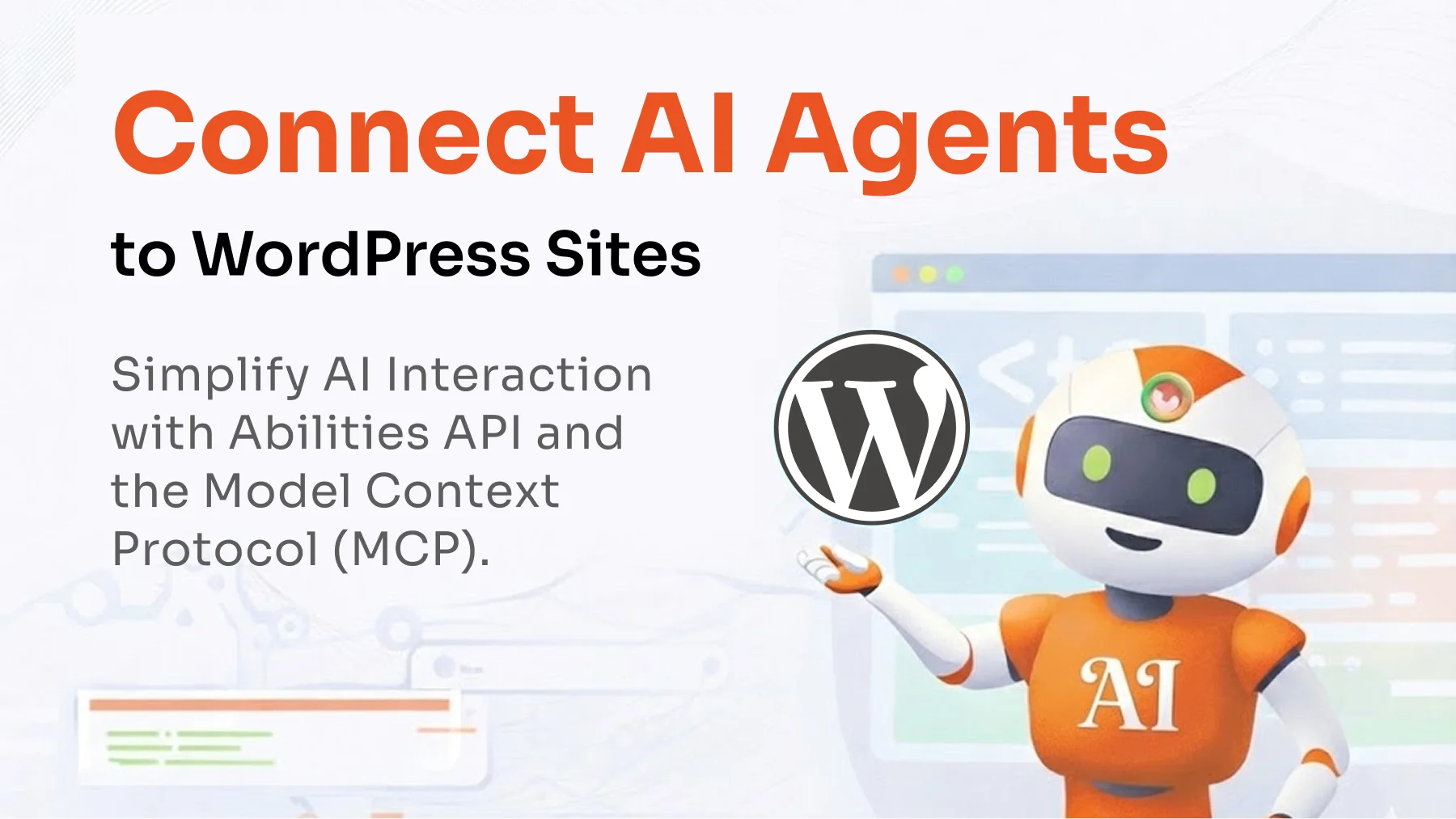
WordPress 6.9 introduced the Abilities API and Model Context Protocol (MCP). These technologies allow AI Agents to connect directly to your site and execute functions inside your plugins automatically, with no human approval required for each step.
Without strong AI Governance at the execution layer, AI agents read your data, change your settings, and trigger plugin functions with no audit trail showing what changed or why.
- Search engines now penalize ungoverned AI content: Google's helpful content systems check whether content shows real knowledge and genuine experience. Sites publishing unreviewed AI content are already losing rankings. AI Governance is essential not just as an editorial standard but as a direct search performance requirement.
- Laws are getting stricter and moving faster: The EU AI Act is now in force. With new laws enacted in 2026, organizations must answer to regulators who increasingly expect verifiable technical evidence, not verbal claims. US states, including Colorado, California, and Texas, are passing their own AI regulation laws. WordPress sites serving these users must meet these requirements now.
- Trust breaks faster than it builds: One wrong chatbot response. One hallucinated fact. One privacy violation. The biggest AI failures of 2026 so far were not technical. They were organizational: weak controls, unclear ownership, and misplaced trust. AI Governance helps catch those problems before your audience does.
Key Global Frameworks Shaping AI Governance
These four frameworks define what responsible AI development looks like around the world. Understanding them helps you build an approach to AI Governance that meets real standards, not just your assumptions.
- EU AI Act: The first major regulatory framework for AI in the world. It sorts AI applications by risk level, from low risk to completely banned. The EU AI Act entered full enforcement for high-risk AI systems in August 2026, with obligations for general-purpose AI models already in effect from August 2025. If your WordPress site serves EU users, this law applies directly.
- NIST AI Risk Management Framework: A US standard helping organizations evaluate AI systems through four steps: Govern, Map, Measure, and Manage. The NIST AI Risk Management Framework gives WordPress site owners a practical starting point for implementing an AI Governance framework without needing a legal team.
- OECD AI Principles: Guidelines agreed on by dozens of countries promote transparent AI systems, fairness, accountability, and respect for human rights. These AI principles shape how most countries write their own AI regulation today.
- India's AI Governance Guidelines: Built around seven values called the Seven Sutras, covering safety, equality, inclusivity, governance and privacy, transparency, accountability in AI systems, and protection from harm.
The Five Pillars of AI Governance
Every WordPress site using AI is different. Every comprehensive AI Governance framework, however, rests on the same five core pillars. Together, these cover every area where AI on your site touches your users, your data, and your reputation.
1. AI Capabilities
Define exactly what your AI tools are allowed to do. Some tasks AI handles on its own. Some need a human to approve first. Some AI should never touch. Writing these boundaries down stops AI from doing more than you intended.
2. Data Residency
Know where your data goes. Many AI plugins send your site content, user messages, and customer records to external servers without clear disclosure. Data governance means mapping every data flow, confirming where data is stored, and making sure it aligns with your privacy obligations.
3. Data Privacy
Define what personal data your AI tools are allowed to see and use. About 26% of organizations report that over 30% of data employees feed into public AI tools is private or sensitive information, with only 17% having technical controls to block unauthorized AI access. Set strict limits and update your privacy policy accordingly.
4. Legal Controls
Align your AI use with the laws in every country where your site operates. This covers copyright on AI-generated content, disclosure rules when AI shapes user experience, and compliance with the EU AI Act, GDPR, and CCPA.
5. Security and Resiliency
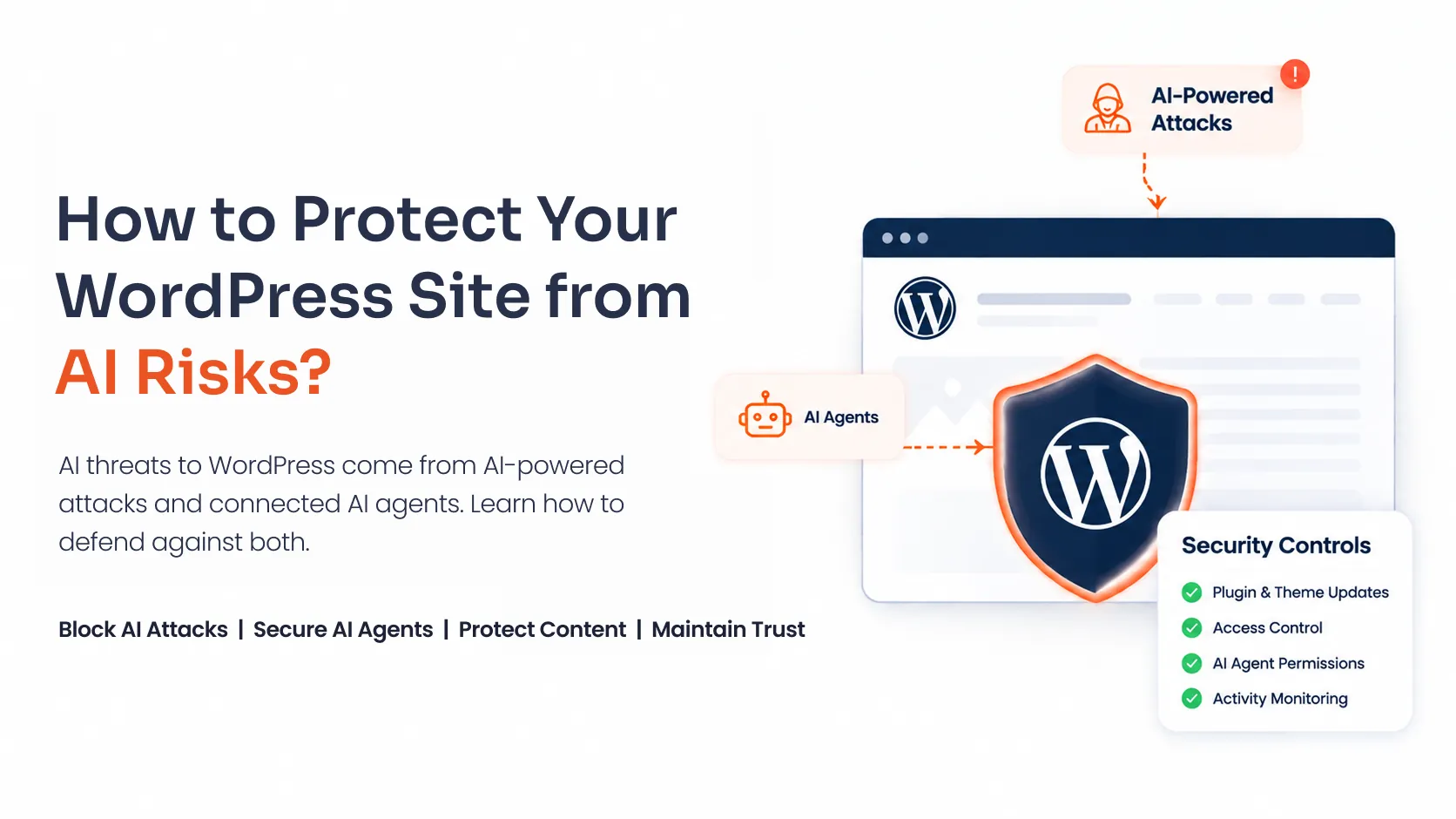
Limit what AI agents can access on your site. Remove old API keys and unused plugin connections regularly. Monitor AI operations for unusual activity. With the Abilities API now live in WordPress 6.9, AI agents execute actions directly inside your site. Security controls ensure AI stays within the boundaries you set.
The Biggest AI Governance Risks for WordPress Site Owners
Almost 88% of organizations reported confirmed or suspected AI agent security incidents in the last year, and most of them had no idea the risk existed until it was already a problem. Here is where those problems start on WordPress sites.
1. Inaccurate or Hallucinated Content
Generative AI predicts what words should come next. It does not check facts. It produces text that sounds confident and is sometimes completely wrong.
One false claim in a health or legal blog damages your credibility fast. Hallucinations are not quirks. They are safety risks. Google penalizes content misleading readers, and a single hallucination reaching your audience affects your entire site's rankings, not just the page where it appeared.
2. Privacy and Data Handling Risks
Sensitive data should never enter a public AI tool without a clear data governance policy in place. AI Governance is transitioning from optional risk management to mandatory compliance.
GDPR and CCPA apply whether a human or an AI system processed the personal data. For instance, Italy fined OpenAI €15.58 million for GDPR violations in training data processing in 2025, confirming that regulators are moving from guidance to enforcement.
3. SEO and Content Quality Risk
AI-generated text tends to be generic and thin on real insight. Publishing large amounts of unreviewed AI content erodes your site's authority over time.
Rankings drop across pages that had nothing to do with AI generation. Governance metrics like error rates and correction counts help you spot where your review process needs work before Google's algorithm does it for you through a ranking drop.
4. Copyright and Originality Concerns
AI draws on training data that includes copyrighted material. Copyright ownership of AI-generated outputs remains legally unresolved in US courts.
Litigation involving major content creators is entering decisive phases, with courts beginning to signal whether training on copyrighted data constitutes fair use. Responsible AI practices require originality checks before any AI-generated content goes live on your site.
5. Ungoverned AI Agent Access Through the Abilities API
WordPress 6.9 gave AI agents direct access to your site's core functions and plugin actions through MCP. These agents discover every action registered by every active plugin and execute them automatically.
Governance refers to the guardrails keeping those agents inside safe boundaries. Without those guardrails, 80% of organizations surveyed reported risky agent behaviors, including unauthorized system access and improper data exposure, and only 21% of executives reported complete visibility into agent permissions, tool usage, or data access patterns.
AI Governance Risk Matrix
| AI Risk Type | Example | Impact | Governance Control |
|---|---|---|---|
| Hallucinated content | AI writes a false drug interaction in a health blog | Trust loss, Google ranking penalty | Human fact-check before publishing |
| Privacy breach | The team pastes customer order data into a public AI tool | GDPR fine, legal investigation | Written data governance policy |
| Content quality decline | 40 unreviewed AI blogs go live in one month | Rankings drop site-wide | Editorial review for every AI draft |
| Copyright exposure | AI-generated image used on a product page | Legal claim from rights holder | Originality check before publication |
| Ungoverned agent access | AI agent changes site settings through MCP | Unauthorized changes, no audit trail | OAuth controls and audit logging |
Why WordPress Websites Need AI Governance
Modern AI and machine learning plugins connect directly to external AI APIs, processing your WordPress site's posts, customer data, comments, and admin actions in real time. One plugin influences your content output, search rankings, support experience, and conversion rate simultaneously.
WordPress sites now use AI technologies for:
- Blog content and article drafting
- SEO suggestions and meta descriptions
- AI chatbots handling customer questions
- Internal workflow automation
- Email generation and marketing copy
- Customer interactions and support responses
- AI-generated images and media
- Support automation and ticket handling
Without AI Governance for WordPress covering each use case, AI applications reach your users without review, sensitive data enters AI tools without controls, and errors build up with nobody tracking them. For a WordPress site competing in organic search, trust affects rankings, conversions, and long-term reputation. AI Governance for WordPress protects all three.
AI Governance Best Practices for WordPress
In 2026, competitive advantage will not come from using more AI but from governing it well. These practices give your WordPress site the structure to do exactly that.
1. Create Clear Rules for AI Use
Write down which AI tools your team is approved to use and what each tool is approved for. A short written policy stops people from making risky decisions on their own.
AI Governance requires you to review and update that policy every six months, especially when AI initiatives or laws change. Most teams skip this step entirely and pay for it later.
2. Apply the 30% Rule for AI-Generated Content
The 30% AI rule is a practical guideline for responsible use of AI in content production. No more than 30% of any published piece should come directly from an AI tool.
The remaining 70% needs human research, original thinking, and real editorial judgment. This keeps your content meeting Google's quality standards and your readers' expectations for genuinely useful, accurate information.
3. Keep Human Review in the Process
Enterprises where senior leadership actively shapes artificial intelligence governance achieve significantly greater business value than those delegating the work to technical teams alone. True governance makes oversight everyone's role.
Every AI-generated article, chatbot reply, and product description needs a real human to check it for accuracy before it goes live. Some teams formalize this through an AI ethics board, a small group that reviews AI Governance best practices and makes sure AI initiatives align with the organization's values throughout the AI lifecycle.
4. Protect Sensitive Data
Write a data governance policy listing what information never goes into AI tools. Customer names, emails, payment records, employee data, and internal financial information all belong on that list.
AI Governance training for every team member before they use any AI tool turns responsible behavior into a daily habit. Without training, policies sit in documents nobody reads.
5. Control What AI Agents Do on Your Site
Once AI agents start connecting to your site through MCP, content review alone is not enough. You need control over what those agents actually do inside your site, and a clear record of what your team did with them.
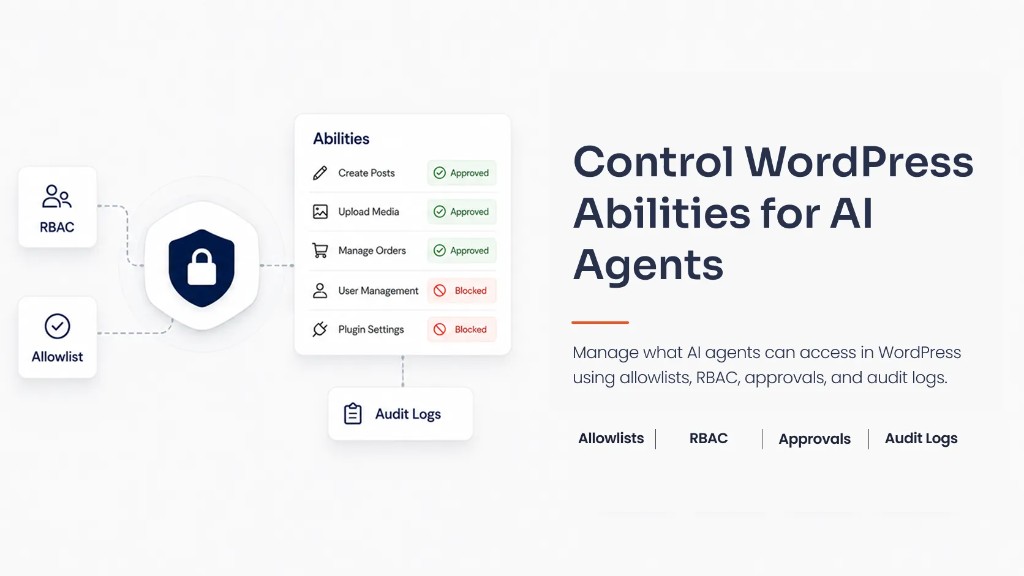
miniOrange MCP Server AI Policy Enforcement for WordPress helps enforce those boundaries at the MCP layer—so agents can only run approved abilities, blocked requests are stopped before they execute, and every attempt is logged for review.
The miniOrange AI Agent for WordPress lets you connect agents like Claude, ChatGPT, and Cursor directly inside your WordPress dashboard. You see every ability your site has registered, turn on what the agent needs, and disable everything else.
Here is a simple example. Your team uses Claude to write and publish blog posts. Inside the plugin, you enable the ability to create and edit posts. Everything else stays off.
When a team member asks Claude to publish a post, it works as expected. But if someone asks Claude to update site settings or pull customer data, Claude returns a clear message: this ability has been blocked by the site administrator.
The audit log captures everything in one place:
- Which AI agent made the request (Claude, ChatGPT, Cursor)
- Which team member triggered the action
- Which ability did the agent try to use
- Whether the request was approved or blocked
- The exact time and date of every action
That level of visibility matters. You know not just what your AI agents did, but also who on your team used them, when they used them, and what they asked the agents to do. If a blog post went live with incorrect information, you trace it back immediately. If an agent tried to access something it should not have, you would see it before it becomes a problem.
Controlled access plus a full activity log is what AI Governance at the execution layer looks like on a real WordPress site.
The Future of AI Governance for WordPress Sites
AI Governance is not slowing down. It is accelerating in a direction every WordPress site owner needs to understand now, not later.
Forrester predicts 60% of Fortune 100 companies will appoint a head of AI Governance in 2026. The AI Governance market is expected to grow from $0.2 billion in 2025 at a CAGR of 45%, reaching over $2.6 billion by 2030. It is becoming a core business function, not a compliance checkbox.
Governance will move closer to real-time enforcement.
AI Governance is no longer judged by policy statements but by operational evidence. In 2026, regulators and courts will begin clarifying responsibility when AI systems act with limited human oversight. Execution-layer controls on AI agents are shifting from best practice to legal expectation.
State-level AI laws are expanding across the US.
Colorado, California, Texas, and New York are all advancing AI regulation frameworks. Organizations will face mounting pressure to prove their AI agents are compliant, transparent, and ethical. WordPress sites serving US users need to track these requirements alongside international ones.
Agentic AI is coming to every WordPress site.
By 2027, GenAI and AI agent use will create the first true challenge to mainstream productivity tools in 35 years, prompting a $58 billion market shift. Every WordPress site using AI agents needs execution-layer governance of AI before that wave fully arrives.
Governance becomes the trust signal that separates sites.
Sites with transparent AI systems, clear disclosure practices, and accountable AI Governance earn user trust that ungoverned sites lose. In organic search, that trust converts directly into authority, engagement, and rankings. The WordPress site owners building AI Governance into their workflows today are the ones who will scale AI responsibly when the next generation of AI tools arrives.
Simple AI Governance Checklist for WordPress Site Owners
- Know which AI tools are currently active on your site
- Define approved use cases for each AI tool in writing
- Apply the 30% rule to all AI-assisted content
- Keep sensitive customer and business data out of AI tools
- Review all AI-generated content before publishing
- Assign a named owner to every AI workflow
- Update your privacy policy to reflect AI-assisted processing
- Vet new AI plugins before installing on a live site
- Register and scope all AI agents connecting through MCP
- Enable audit logging for all AI agent actions on your site
- Review your AI Governance best practices policy every quarter
Wrapping Up
AI Governance encompasses every layer of how AI is developed, deployed, and managed on your WordPress site. Clear policies, human review, data governance controls, alignment with global standards like the EU AI Act and NIST AI Risk Management Framework, and execution-layer controls for AI agents cover every point where risk exists throughout the AI lifecycle.
The future of AI on WordPress belongs to site owners who govern it well. Start with the checklist above. Assign ownership. Build review into your daily workflow. Treat AI Governance best practices as a living standard that gets better with every audit, every training session, and every policy update.
FAQs
Q. What is AI Governance?
A. Artificial Intelligence Governance refers to the rules, checks, and processes that make sure AI systems on your site behave safely and ethically. It covers who approves AI outputs, what data AI tools are allowed to use, and how errors get caught before they reach your users throughout the AI lifecycle.
Q. What are the five pillars of AI Governance?
A. The five pillars of a comprehensive AI Governance framework are AI capabilities (what AI is allowed to do), data residency (where AI-processed data is stored), data privacy (what personal data AI tools access), legal controls (alignment with AI regulation), and security and resiliency (controlling and auditing AI agent access across the AI lifecycle).
Q. What is the 30% rule for AI?
A. The 30% AI rule means no more than 30% of any published piece of content should come directly from an AI tool. The remaining 70% needs human research, original thinking, and editorial judgment. This supports responsible use of AI while keeping content quality high enough for both search engines and readers.
Q. What are the best AI Governance practices for WordPress?
A. The most important AI Governance best practices include writing down which AI tools your team is approved to use, applying the 30% rule to AI-assisted content, requiring human review before any AI output reaches your audience, protecting sensitive data with a clear data governance policy, securing AI agent access through OAuth-based controls, and reviewing governance policies every quarter.
Q. Are AI Governance and AI ethics the same thing?
A. No. AI ethics refers to the values guiding responsible use of AI, such as fairness, transparency, and accountability. AI Governance refers to the systems enforcing those values in practice every day. AI ethics tells you what good AI use looks like. AI Governance is how you make sure it actually happens across your site and team.
Leave a Comment