
Imagine a procurement manager from a verified enterprise logging into your Shopify Plus store to place a bulk order — only to find they can’t access the wholesale catalog or exclusive pricing. Therefore, admins must step in manually to verify the company and assign access, turning what should be a simple order into hours of work.
This scenario illustrates why organized B2B contacts onboarding matters. Without a streamlined process, growth in a B2B setup leads to inefficiency and risk. Each organization brings its own unique requirements: B2B-specific products, pricing rules, company catalogs, or specific visibility requirements for exclusive content. Store admins quickly get buried under registration requests, repeated verification steps, and manual access configurations.
This approach is not just slow — it’s risky. A single unauthorized user or incorrect permission could expose sensitive pricing or internal data. Ironically, the very growth you’re aiming for becomes your biggest operational challenge.
What Are The Challenges of Managing B2B Company Contacts?
In most Shopify store setups, B2B company onboarding isn’t designed for scale. B2B and B2C customers share the same environment; anyone can log in, and company-level access needs constant manual oversight.
This creates several operational and security challenges:
- Manual company creation and approvals: Every new B2B company assignment requires admins to manually create a company profile, verify & assign users, and set visibility rules. Without automation, the Shopify company approval workflow becomes a time drain.
- No automated mapping for existing companies: You’ve already created a B2B contact account for an organization and verified its domain. Yet, when a new employee of the same B2B company registers with their corporate email, the system treats them as an unverified user until you manually assign them to their company.
- No granular access control: Different B2B contacts require different access levels for product catalogs, pricing, or dashboards. Without a structured framework for user management in Shopify B2B, maintaining these permissions manually leads to inconsistency and errors.
- Limited store visibility for unregistered users: Unregistered B2B customers visiting your store have no way to explore B2B-specific store content, such as products, collections, or pricing tiers, unless they register their company.
What Is A Scalable Approach to B2B Company Assignment in Shopify Plus?
The best approach to scale B2B company assignment in Shopify Plus is not removing human judgment, but removing repetitive manual work. You decide which companies to approve; the system manages everything that follows.
This structure turns Shopify B2B company onboarding into a guided, automated experience, one where verified companies and users gain instant access, while others are filtered appropriately.
The solution is built on three key components:
Company Registration via Admin-approval
Organizations register through a structured process to set up B2B customer accounts by submitting company information and associated domains via an account request form. Mandating admin approval for company registration gives you full oversight over the onboarding process, so only verified companies move forward.
Automated Company Assignment
Once approved, automation handles future B2B contact signups. By assigning users to a B2B company by email domain, new users from a verified domain are automatically linked to their existing company account. This approach to B2B company assignment eliminates repeated verification and manual setup.
Strategic Access Control
Admins define what verified and unverified users, including B2B, non-B2B, or non-logged-in users, can see. General pages remain open to everyone, while B2B-exclusive store content, like pricing, products, is exclusive to B2B contacts from approved companies. This supports B2B merchants who sell online through company profiles and need differentiated access for each type of user on their Plus store.
Together, these three pillars form a scalable Shopify B2B company assignment process that maintains both control and efficiency.
How miniOrange Simplifies B2B Company Assignment for Shopify Plus
For merchants seeking an integrated solution, miniOrange delivers structured B2B contact onboarding and helps merchants create and manage companies for their B2B customers directly within Shopify’s ecosystem.
The integrated Shopify B2B solution from miniOrange brings company registration, automated company assignment, and access control into one unified system. Merchants gain a connected company approval workflow that simplifies verification and improves visibility across all B2B operations.
Admin-Controlled Company Registration
The process of setting up your B2B contacts as companies begins with registration, where B2B customers can create a formal company account request directly from the storefront.
Admins review each account request form through a structured approval process for company registration. After the review and verification are done, the B2B users are informed about the approval or rejection of their registration request via email notification. These approval and rejection emails can be customized to match the branding, messaging, and internal workflows of the store, ensuring clear and consistent communication during onboarding.
This gives merchants full control over which companies are approved to access B2B-specific product catalogs and pricing. Once requests are verified, B2B employees and users are automatically onboarded in their approved companies. This registration system prevents unauthorized sign-ups, maintains data integrity, and ensures a consistent onboarding experience for legitimate Shopify B2B contacts.
Automated Company Assignment
After approval, any users logging in via verified domains are automatically assigned to their respective company accounts. By assigning B2B contacts to a company by domain, any new user with a verified email address is instantly linked to their company account without any need for manual intervention from the store admin.
This automation reduces approval cycles considerably and forms the backbone for scalable B2B company assignment on Shopify Plus, ensuring all employees within an approved organization receive appropriate access automatically.
For enterprises or distributors with frequent changes to their user base, this functionality ensures consistency and control, which is integral for effective company management in Shopify Plus.
Controlling Store Visibility with Granular Access
Balancing accessibility with data security is one of the biggest challenges in B2B ecommerce. You want potential partners to discover your wholesale offerings, but without exposing confidential information like exclusive pricing or contracts.
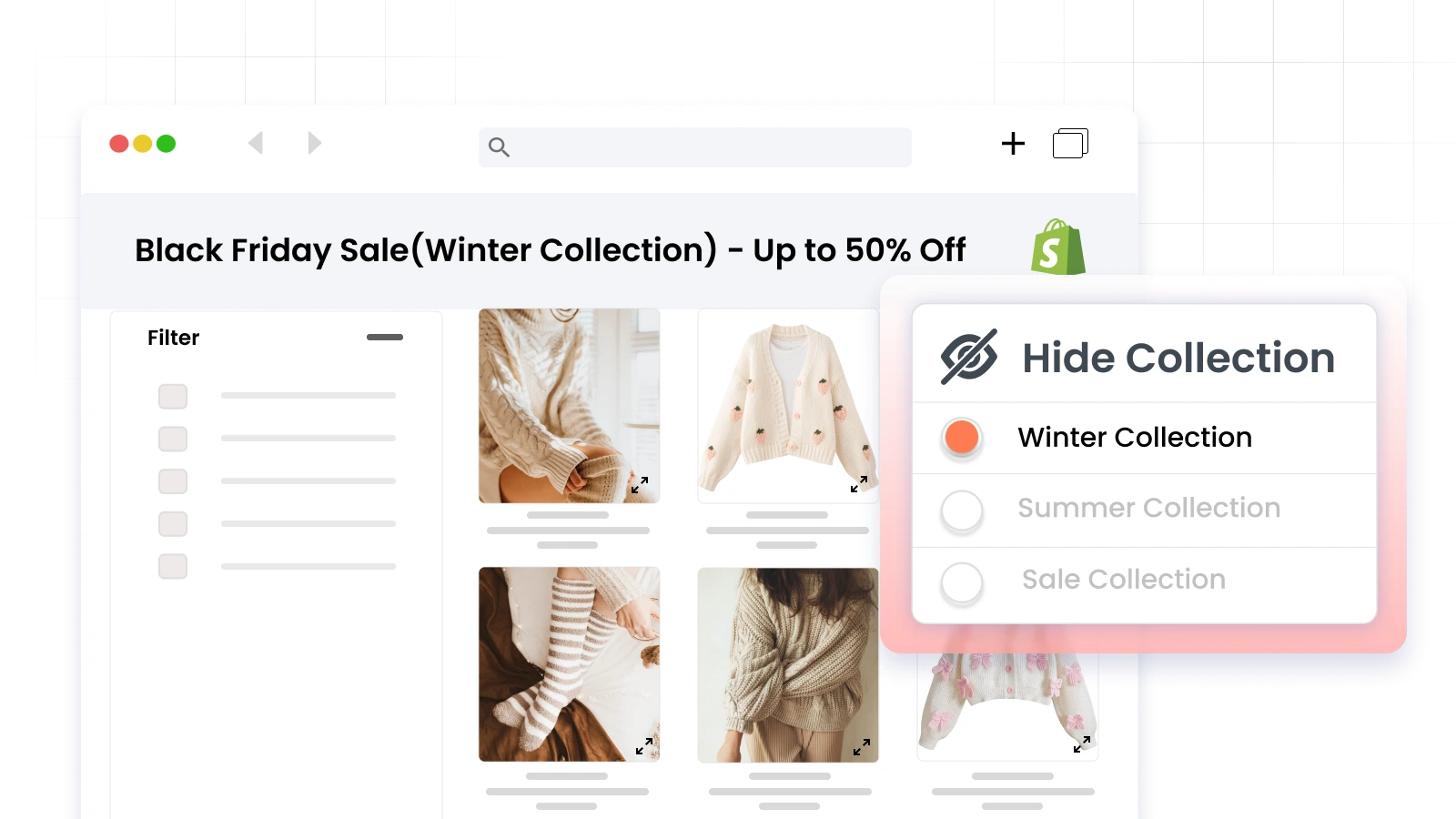
Granular access controls can help restore this balance. Public pages, such as your general collections or certain product pages, can be whitelisted by the store admin, so they remain visible to everyone. Meanwhile, B2B-exclusive store content, like bulk ordering portals, custom catalogs, and pricing tiers, are available only to verified B2B contacts. Merchants can also assign permissions to team members based on their roles in their assigned company profile, so each B2B employee has just the right level of access to fulfill their particular tasks.
This ensures that B2B company contacts have immediate access to their resources, while non-B2B or non-logged-in visitors see only general content that has been whitelisted by the store admin. By integrating these visibility and access rules, merchants can create a layered and secure Shopify B2B user management experience.
Flexible Authentication for B2B Contacts
While seamless company management is essential for handling B2B ecommerce in Shopify Plus, authentication plays an equally critical role in securing your storefront.
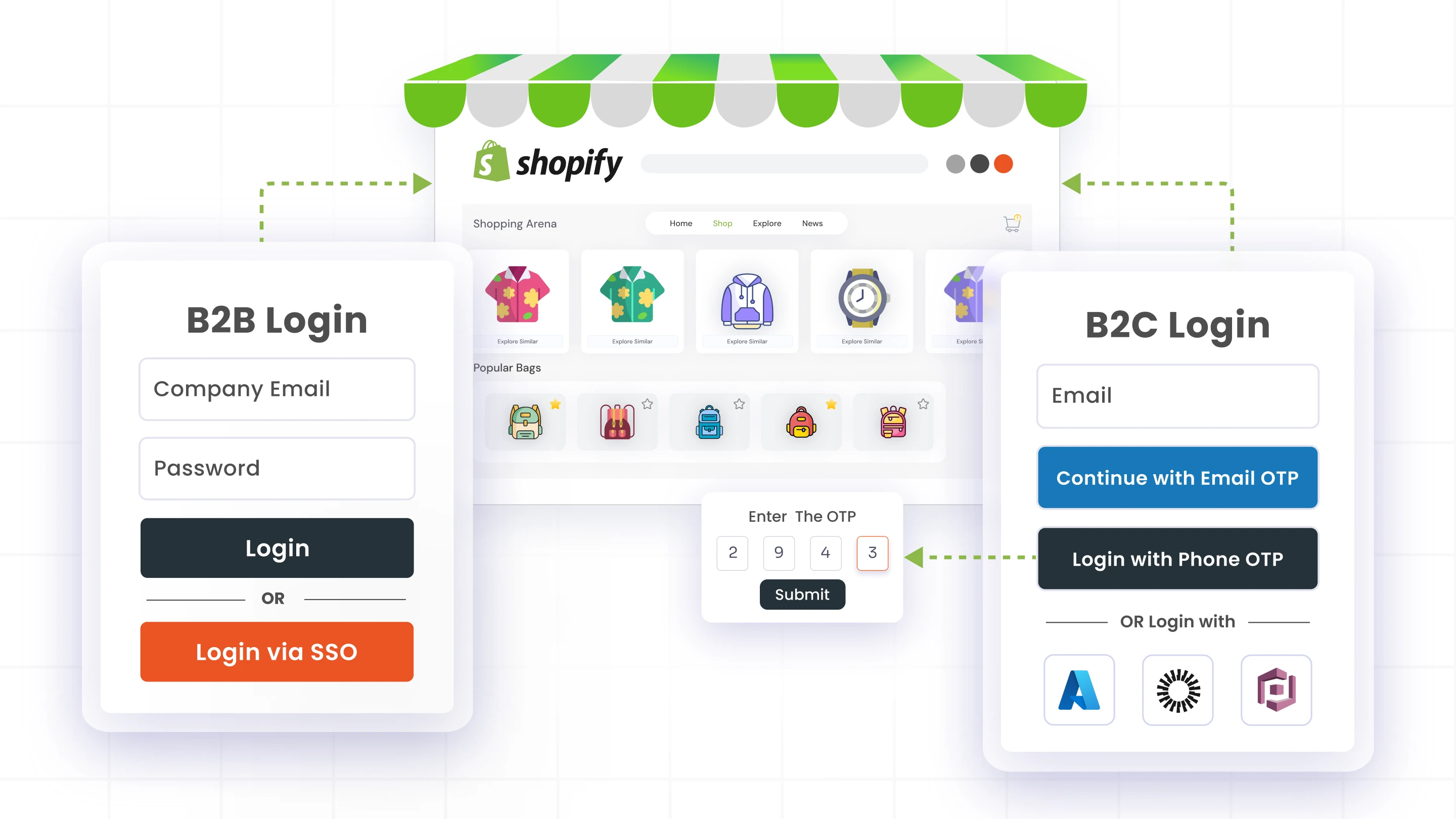
With miniOrange, merchants can enable custom authentication for B2B contacts on Shopify, offering a flexible range of secure login methods that suit diverse business requirements. Whether through traditional email-password login, email/phone OTPs, Single Sign-On (SSO) through corporate identity providers (Microsoft Entra ID, Okta, Salesforce, Auth0, etc.), or social login (Google, Facebook, Apple etc.) integrations, each option is designed to meet specific security and compliance needs. Merchants can also customize email templates for workflows such as login OTPs and password reset prompts, maintaining consistent branding and clear communication throughout the authentication experience.
This flexibility empowers Shopify B2B company contacts to log in using methods that align with their organization’s policies, while ensuring merchants maintain centralized control and visibility. It’s a crucial factor in modern B2B ecommerce, and making your Shopify store accessible to every kind of business partner without compromising security.
Frequently Asked Questions (FAQs)
Will B2B contacts be automatically assigned to their company after login?
Yes. Once approved, any new B2B company contact using a verified corporate email domain is automatically mapped to the correct company profile. This automated B2B company assignment removes repeated manual verification and ensures consistent access for all B2B employees.
Can unverified B2B contacts raise company account requests from the Shopify Plus storefront?
Yes. Unverified B2B contacts can submit an account request directly from the Shopify Plus storefront. Their request, along with required company details and email domains, is sent to the store admin, who then reviews, verifies, and decides whether or not to approve the new company. The B2B contact is notified of the approval or rejection of their request via email notification once the admin review is completed. Until approved and assigned, these users remain unverified and cannot access B2B-exclusive store content.
Can merchants restrict storefront content only to verified B2B company contacts?
Yes. Granular access controls allow merchants to restrict store access to B2B customers who belong to approved companies. Public pages remain visible to everyone, while pricing, bulk-ordering tools, and B2B-exclusive store content stay accessible only to verified company contacts.
Can Shopify Plus merchants offer multiple authentication methods for different B2B companies?
Yes. Flexible authentication allows merchants to offer options like password-based login, email/phone OTP, or Single Sign-On (SSO) using corporate/social IDP credentials, depending on the requirements of each company. This helps maintain a smoother onboarding flow without disrupting the login experience for existing B2B company contacts.
Can an employee register their B2B company without the Shopify store admin?
Yes. Employees can submit a company account request directly from the Shopify Plus storefront. Instead of relying on the store admin to manually create the company profile, employees can fill out the company registration form with their organization’s details. The request is then sent to the store admin, who reviews, verifies, and approves or rejects the company. This ensures employees can initiate the process, while merchants maintain full control over which companies are approved.
Can merchants customize email templates sent to B2B contacts during login or company registration?
Yes. Merchants can customize system emails used in B2B workflows, including login OTP emails, password reset messages, and company approval or rejection notifications. This allows merchants to align communication with their branding and ensure clear, consistent messaging across the entire B2B onboarding and authentication experience.
Conclusion
Sustainable growth in B2B ecommerce demands infrastructure that scales efficiently without sacrificing control. The traditional approach — manual verification, inefficient user management, and fragmented access — creates bottlenecks that limit progress.
By implementing structured B2B company management through admin-approved company registration, automated B2B contact assignment, and flexible authentication combinations, Shopify Plus merchants can transform these challenges into competitive advantages.
miniOrange’s tailored B2B solution helps make this possible — connecting every step so merchants can stay focused on business relationships, not backend approvals.
Ready to upgrade how you manage B2B contacts and company assignment in Shopify Plus? Reach out to us today!
Leave a Comment