

A few years ago, the goal was simple: rank on page one of Google. If your website appeared among the first 10 blue links, people would find you. That equation is changing.
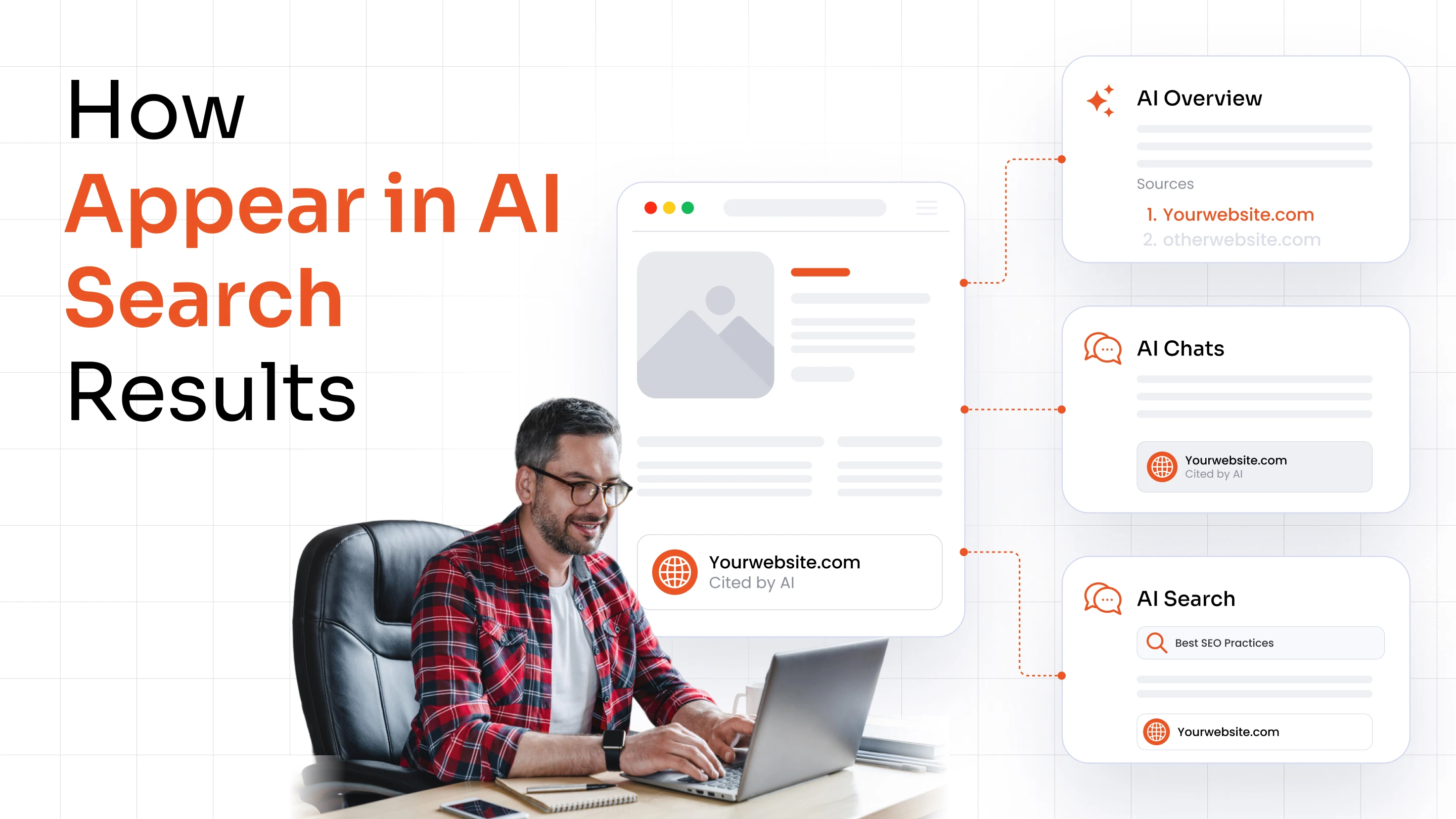
Search behavior is shifting from keyword lookups to answer-led queries. Instead of scanning a list of results, more people are turning to AI-powered search tools that read across the web, consolidate information, and deliver a direct answer. ChatGPT, Google AI Overviews, Perplexity, and Claude all work this way. Rather than pointing users toward your page, they summarize it, paraphrase it, or cite it inline.
That changes what it means to be visible. Ranking is no longer enough. Your content has to be clear, well-structured, and credible enough for an AI to trust it as a source.
This guide covers exactly how that works, what the signals are, and what you can do about it.
What Are AI Search Results?
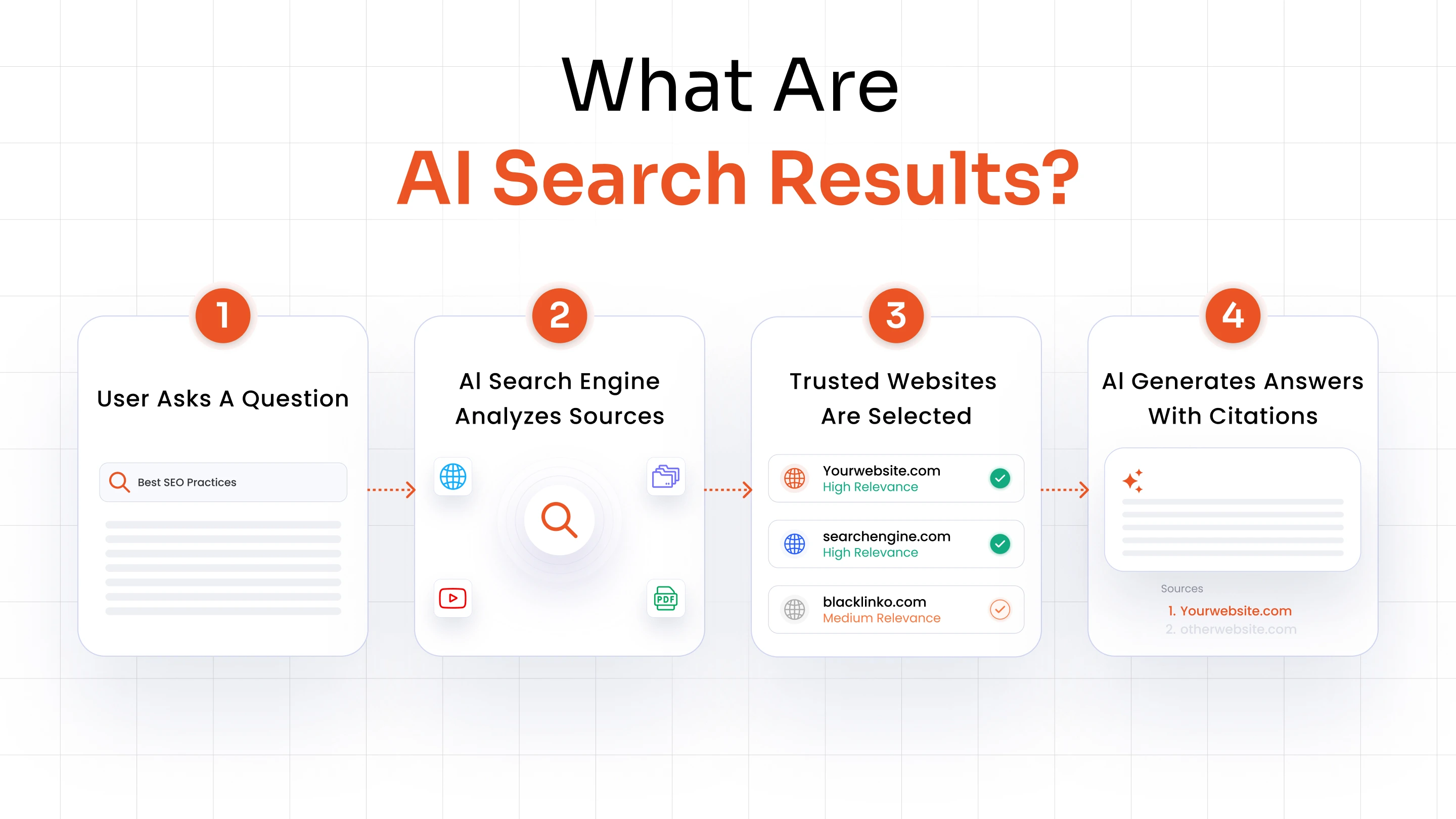
AI search results are answers generated by language models, not lists of links. When someone types a question into an AI search engine, the system retrieves relevant content from across the web, processes it through a language model, and produces a condensed response. In some cases, and more frequently these days, it cites sources.
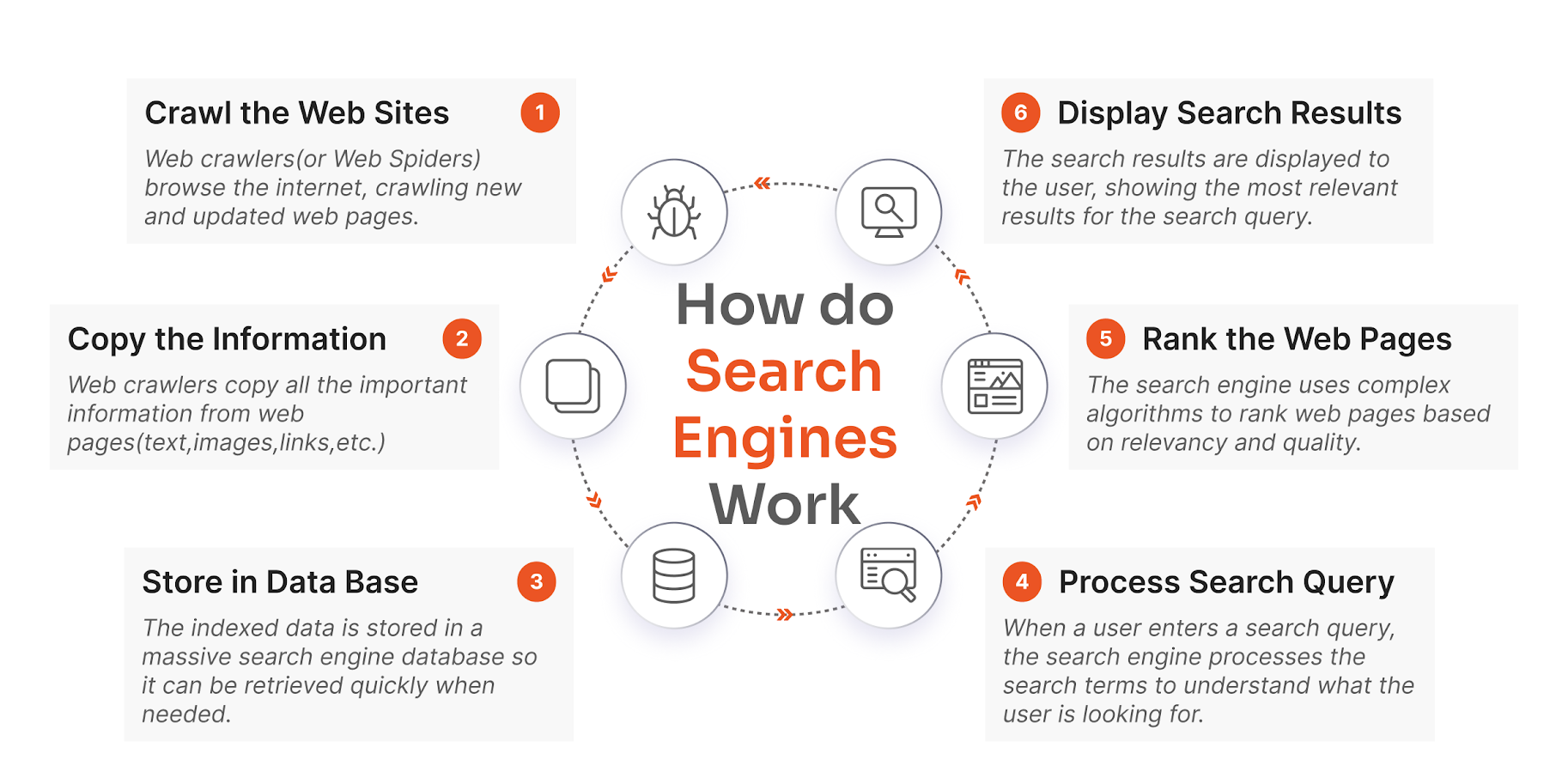
The underlying process is different from traditional search indexing. Classic search engines crawl web pages, index their content, and rank them by relevance and authority. AI search engines do that too, but they go a step further: they read the indexed content, extract meaning, and construct a response in their own words.
Where Do AI Search Results Appear?
You encounter them in several places:
- Google AI Overviews appear at the top of Google Search results, above the organic links, for many informational queries.
- ChatGPT with browsing enabled fetches and cites web sources when answering questions.
- Perplexity is purpose-built as an AI search engine, and shows cited sources alongside every response.
- Microsoft Copilot (formerly Bing Chat) layers AI-generated answers on top of Bing search results.
- Gemini in Google Search and Google Workspace pulls web content into conversational answers.
Each tool has slightly different citation and sourcing logic, but they all share the same fundamental requirement: they need content that is easy to read, easy to extract, and trustworthy enough to cite.
How AI Search Engines Choose Websites to Rank
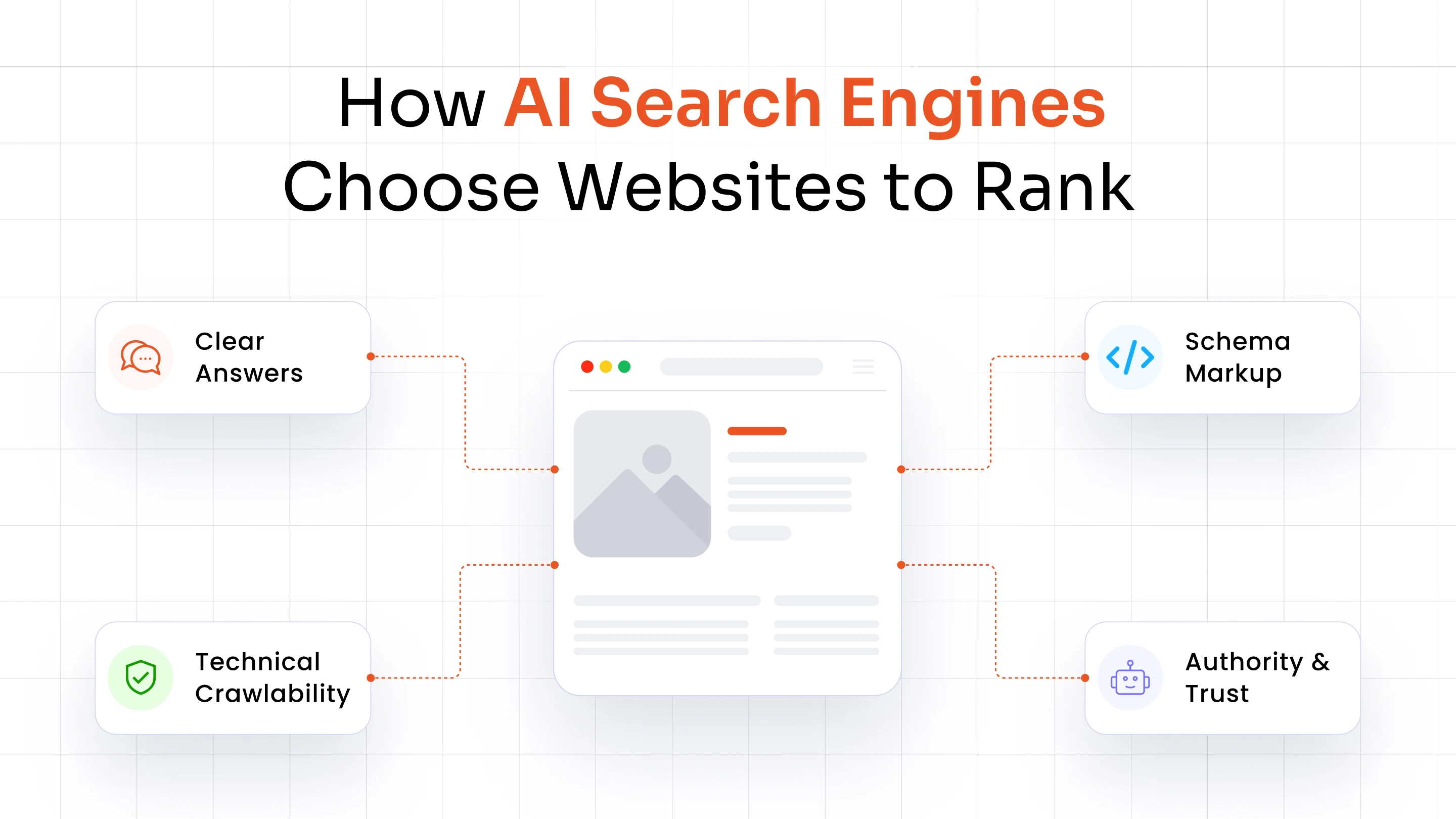
AI systems do not make citation decisions the way a human editor would. There is no manual review. The decision is probabilistic, based on a combination of signals that the model has learned to associate with quality and reliability.
The clearest way to think about it: AI engines are trying to construct an accurate, useful answer. They will draw from sources that make that job easier. If your content is clearly written, well-organized, up to date, and backed by genuine expertise, it is more likely to be selected. If it is thin, vague, or hard to parse, it will be skipped, and your AI visibility suffers accordingly.
The specific signals that matter most are:
- Relevance to the query: The content must actually answer what the user asked. Topically adjacent is not enough.
- Clarity of structure: Headings, short paragraphs, and direct answers help AI extract the right passage quickly.
- Expertise and author credibility: AI systems favor content produced by people or organizations with demonstrated knowledge in the subject.
- Trustworthiness signals: These include accurate information, cited sources, a real organizational identity, consistent branding across the web, and absence of misleading claims.
- Freshness: Outdated content on fast-moving topics is less likely to be cited than recently updated material.
- Crawlability: If a page cannot be crawled and indexed, no AI search tool can use it, regardless of content quality.
Trust Signals That Improve AI Visibility
The Google framework most widely referenced here is E-E-A-T: Experience, Expertise, Authoritativeness, and Trustworthiness. These have been part of Google's quality guidelines for years, but they matter more than ever for AI visibility because AI models use the same kind of signals to evaluate source quality.
In practice, this means: name your authors and link to their credentials. Use original data and research rather than rehashing what other sites have already published. Build a consistent brand presence across your website, LinkedIn, and relevant industry publications, all of these contribute to your AI search visibility. Cite your sources when you make factual claims. Keep your About and Contact pages complete and accurate.
Note: None of this is new advice, but it is now more consequential. An AI model deciding whether to cite your page as a source is making a trust judgment. Everything on and around your page contributes to that judgment.
How to Optimize Your Website for AI Search
AI search optimization is not a separate discipline from good SEO. Most of what makes a website perform well in traditional search also makes it perform well in AI-generated results. The difference is emphasis. AI prioritizes clarity, directness, and extractability more than traditional search does.
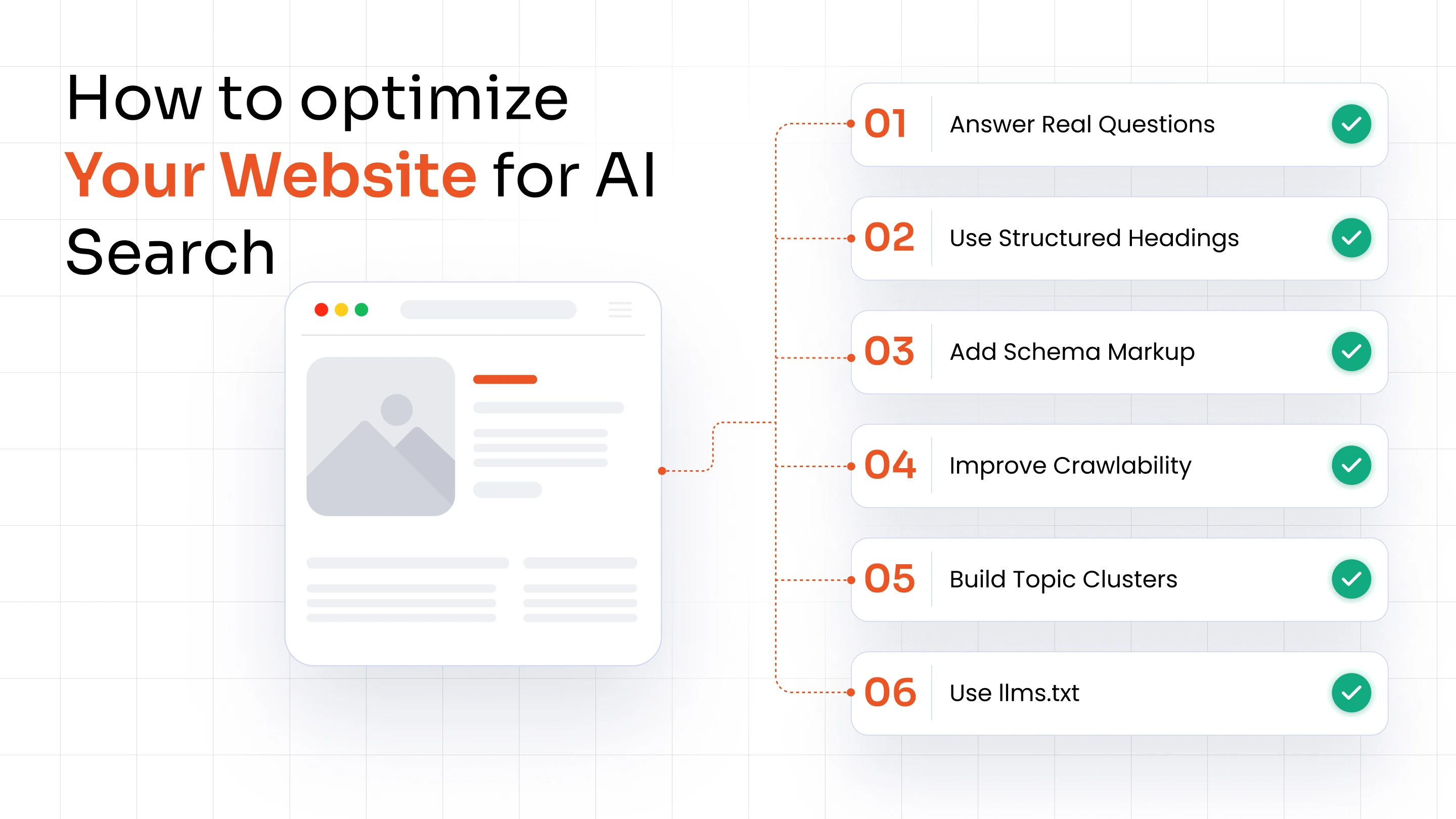
Here is what to focus on:
1. Make Content Easy for AI to Extract
AI tools read your page and look for passages that directly answer questions. If the answer is buried three paragraphs in, wrapped in context-setting sentences, they may miss it or deprioritize it.
The fix is structural. Put the direct answer in the first two or three lines under each heading. Use descriptive H2s and H3s that could stand alone as questions or statements. Keep paragraphs to three or four sentences. Use tables and short bullet lists for comparison-style content, where they genuinely help rather than just filling space.
Think of every section of your page as a self-contained answer. Someone should be able to read just that section and walk away with something useful. If they cannot, the section needs work.
2. Target Questions People Actually Ask
AI tools are primarily used for question-answering. Users type full questions: 'How do I set up SSO for Jira?', 'What is the difference between OAuth and SAML?', 'Which is better, MFA or 2FA?' They do not type three-word keyword strings the way they might have five years ago.
Your content should reflect this. Use question-style subheadings where they fit naturally. Write introductory paragraphs that state the problem or question plainly before answering it. Include a FAQ section on key pages. Cover not just the main topic but the follow-up questions your audience is likely to have.
3. Add Schema Markup and Structured Data
Schema markup is a vocabulary of tags you add to your HTML to help machines understand what a page is about. It does not change how the page looks to human visitors, but it tells search engines and AI crawlers: this is an FAQ page, this is an organization, this is a how-to guide, this author has these credentials.
Schema markup is a form of structured data. Structured data is any standardized format for providing information about a page in a way that machines can read and interpret directly, rather than having to infer it from the prose.
Where your written content tells a story for human readers, structured data states facts explicitly for crawlers: the page type, the author, the date, the topic, the relationships between content. Schema.org is the most widely used vocabulary for structured data on the web, and it is what search engines and AI crawlers expect.
The schema types most relevant for AI visibility are:
- Organization (establishes your brand identity and contact info)
- Article or BlogPosting (tells the system this is editorial content with an author and publish date)
- FAQPage (explicitly flags question-and-answer content), HowTo (for step-by-step instructional content)
- BreadcrumbList (helps establish the page's place in your site hierarchy).
4. Improve Crawlability and Technical SEO
None of the content work matters if AI crawlers cannot reach your pages. The technical foundations still apply:
- Submit and maintain an XML sitemap so that crawlers can discover all important pages.
- Review your robots.txt file and make sure it is not accidentally blocking important content from crawlers.
- Check that key pages are indexable. Use Google Search Console or a crawl tool to confirm there are no index tags on pages that you want to be discovered.
- Fix internal links. Pages that are orphaned from the rest of your site are harder for crawlers to find and for AI to understand.
- Page speed and mobile usability are crawl-efficiency signals. Slow pages that take a long time to render are less likely to be fully processed.
- Use canonical tags correctly to prevent duplicate content from splitting crawl attention across multiple URLs.
These are not exciting improvements to make, but they are the prerequisite for everything else. If a page is not crawled, it does not exist as far as AI search is concerned.
5. Build Topical Authority with Internal Links
AI engines trust websites that know their subject deeply. A single good article on a topic is less convincing than a well-linked cluster of content that covers the topic from multiple angles: overview, deep-dive, use cases, comparisons, FAQs, and how-to guides.
This is what topical authority means in practice. If your site has one post about SSO and nothing else on identity management, an AI tool has little reason to treat you as a reliable source on the topic. If you have interconnected content covering SSO, SAML, OAuth, multi-factor authentication, user provisioning, and access governance, all cross-linked logically, you look like a subject matter expert.
Build content clusters around your core topics. Link related articles together deliberately. Each piece of content you publish should link to at least two or three related pieces on your site, and those pieces should link back. This creates the kind of web of context that AI systems use to evaluate whether a source knows what it is talking about.
6. Optimize for AI Crawlers and LLMs with llms.txt
llms.txt is an emerging convention that is worth understanding. Inspired by the long-standing robots.txt standard, it is a plain-text file placed in the root of your domain at /llms.txt that gives language models guidance on how to use your site's content.
Where robots.txt controls whether crawlers can access pages, llms.txt is designed to communicate intent to AI systems directly: which pages are most important, what the organization does, which content is authoritative, and sometimes which sections should be excluded from AI training or summarization.
It is not yet a universal standard, and not all AI tools currently support it. But it is gaining traction, and early adoption signals to AI developers and tools that you are thinking about machine-readable communication seriously. If you are running a content-heavy site or one focused on a technical niche, creating a basic llms.txt file is a low-effort way to improve how AI tools interpret your site.
Note: The llms.txt concept was popularized in 2024 and is being adopted by a growing number of AI-forward companies. You can find guidance and examples at llmstxt.org.
How to Rank in Google AI Overviews
Google AI Overviews (previously called Search Generative Experience, or SGE) are the AI-generated answer blocks that now appear at the top of many Google search results pages. They are prominent, they sit above organic results, and they often reduce the need for users to click through to individual sites.
Getting featured in AI Overviews is not a guaranteed outcome for any given page, and Google does not publish a definitive list of selection criteria. But the pattern from published research and practitioner observation is fairly clear. If you want your content to appear in AI Overviews, focus on:
- Answer the search intent directly: AI Overviews pull from pages that give a complete, clear answer to the specific question being asked. Vague, tangential, or overly broad answers are filtered out.
- Use schema markup: Pages with structured data, especially FAQPage and HowTo schema, are disproportionately represented in AI Overviews. The structured context makes it easier for Google to confirm what the page is about.
- Establish topical authority: Google gives preference to sites with depth on a topic, not just a single page. Covering a subject comprehensively across multiple interconnected pages signals that you are a reliable source.
- Cite credible sources: Pages that link to authoritative external sources, studies, or data points are treated as more trustworthy than those making unsupported assertions.
- Keep content up to date: AI Overviews, like organic search, favor fresh content on topics that change over time. Audit your important pages regularly and update any information that is stale.
- Ensure the page is crawlable: This should go without saying, but pages with crawl issues, slow load times, or no index tags will not appear in AI Overviews regardless of content quality.
Common Reasons Websites Don't Appear in AI Search Results
If your website is not being cited in AI-generated answers, it usually comes down to one of these issues:
- Thin or vague content: Pages that cover a topic at a surface level, without enough depth to actually answer a question fully, are passed over in favor of more substantive sources.
- Answers buried in context: If the key answer to a question is three paragraphs into a section that starts with background and caveats, AI tools may not extract it reliably.
- Missing schema markup: Without structured data, AI crawlers have to infer what your page is about rather than being told. This increases the chance of misclassification or being skipped.
- Crawl and indexing problems: Any technical barrier that prevents an AI crawler from reaching your page removes it from consideration entirely.
- Weak authority signals: If your site is new, lacks external mentions, has no named authors, or does not clearly establish who is behind it, AI tools are less likely to treat it as a trustworthy source.
- Outdated information: Pages that contain information that has been superseded or contradicted by newer data are less likely to be cited, especially on fast-moving topics.
- Lack of topical depth: A single standalone page on a topic does not build the same authority as a connected cluster of content. If your site only covers a subject in passing, AI tools will look elsewhere.
Most of these issues are fixable with a targeted content and technical audit. Identify which of these applies to your highest-priority pages and address them systematically.
Best Practices to Improve AI Search Visibility
Use this as a working checklist across your website:
- Put the direct answer in the first two to three lines under every important heading.
- Use descriptive, specific H2 and H3 headings rather than clever or vague ones.
- Keep paragraphs to three or four sentences maximum.
- Add FAQPage schema to pages with question-and-answer content.
- Add Organization and Article schema to your key pages.
- Verify that your XML sitemap is submitted and that key pages are indexed.
- Check robots.txt to confirm you are not blocking important content.
- Audit internal links: every important page should be reachable from at least two or three others.
- Update content on high-priority pages at least once or twice a year, more often for rapidly changing topics.
- Include a named author with credentials on editorial content.
- Link to credible external sources when making factual claims.
- Build topic clusters: each core subject should have an overview, supporting articles, a FAQ, and a how-to guide.
- Create or update your llms.txt file to signal AI-readiness to crawler tools.
A concept worth knowing as you work through this list is generative engine optimization, or GEO. It refers to the practice of deliberately optimizing content so that generative AI systems can understand, trust, and cite it. In practice, most of what GEO involves is the same work described above: clear structure, strong authority signals, and technically accessible pages.
Final Thoughts
Appearing in AI search results is not a matter of gaming a new algorithm. It comes down to the same thing good content has always come down to: be clear, be accurate, be genuinely useful, and make it easy for anyone or anything reading your site to understand what you know and why you can be trusted.
The technical side matters too. A well-written page that cannot be crawled is invisible. A page with great structure and no schema is harder to categorize than it needs to be. These are problems that a solid WordPress SEO setup can address systematically.
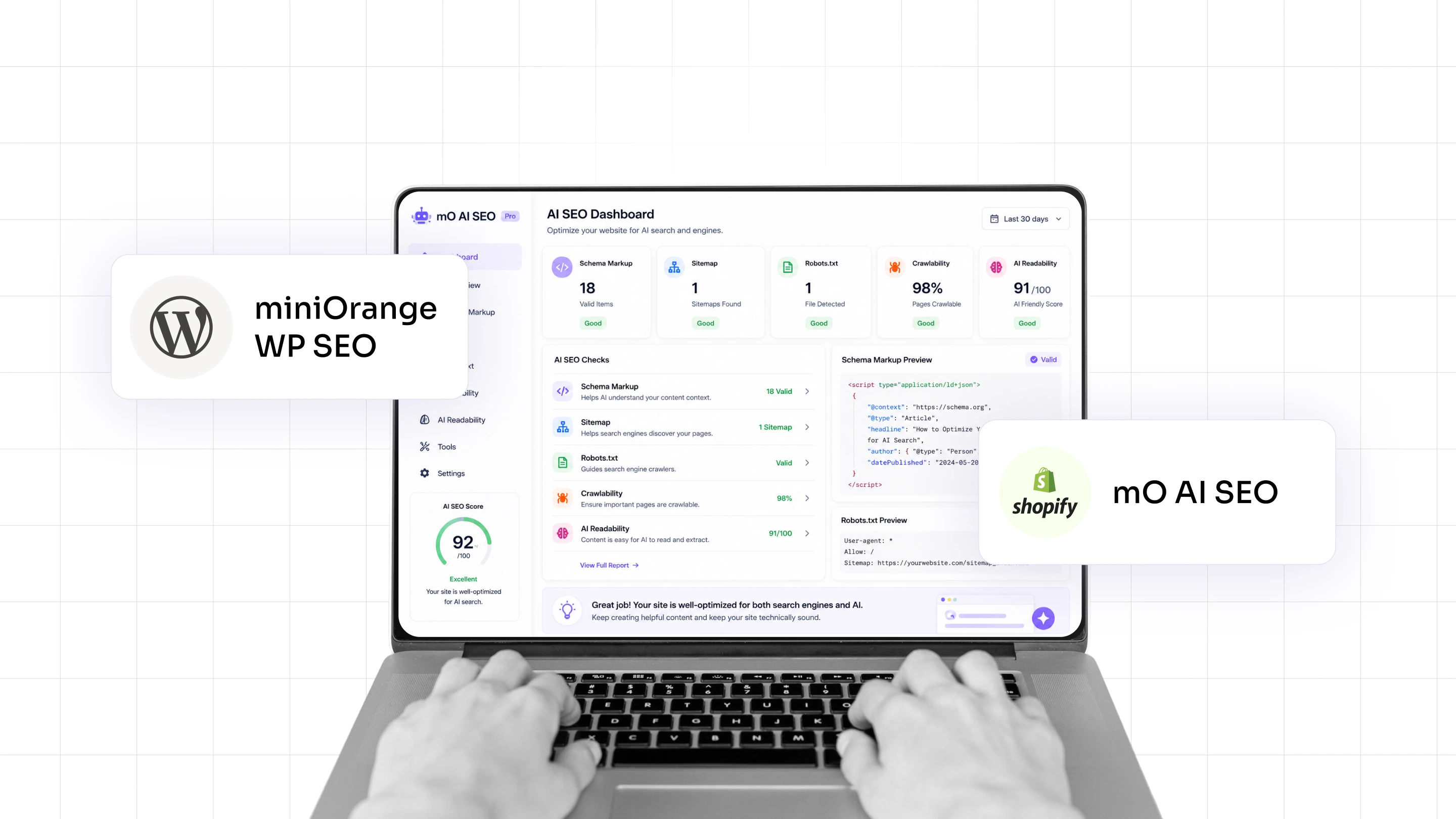
Appearing in AI search results requires structured content, schema markup, technical SEO, and an AI-readable website setup. If you are on WordPress, the miniOrange WordPress SEO plugin handles that groundwork. If you are on Shopify, the miniOrange AI SEO App does the same for your store.
Frequently Asked Questions
1. How do websites appear in AI search results?
AI search tools scan crawlable, indexed web pages for content that clearly answers a user's question. Pages that combine helpful content, accurate information, properly structured data, and genuine topical authority are more likely to be selected as sources in AI-generated answers.
2. What is AI search optimization?
AI search optimization is the practice of structuring your website's content and technical setup so that AI-powered search engines can find, understand, and cite it. It includes writing clear answers, using schema markup, building topical authority, and ensuring your pages are technically accessible to crawlers.
3. How do I rank in Google AI Overviews?
Focus on answering the search intent directly at the top of each section, using FAQPage or HowTo schema markup where relevant, building depth across related topics, citing credible sources, and keeping content up to date. Crawlability is a prerequisite for any of this to matter.
4. What is llms.txt, and does it help AI search?
llms.txt is a plain-text file placed at the root of your domain that is designed to communicate to AI language models which content on your site is most important and how it should be used. It is an emerging convention, not yet a universal standard, but it is gaining adoption and is a low-effort way to signal AI-readiness.
5. Does schema markup help AI visibility?
Yes, though it does not guarantee citations. Schema markup gives AI crawlers structured context about your page, such as whether it is an FAQ, a how-to guide, or an organizational profile. This makes it easier for AI systems to categorize and trust your content, which improves your chances of being cited in generated answers.
6. How do AI search engines choose their sources?
AI search engines look for content that is relevant to the query, clearly structured, produced by credible authors or organizations, factually accurate, and recently updated. Technical accessibility, meaning that the page can actually be crawled and indexed, is also a baseline requirement.
Leave a Comment