
The Changing Landscape of B2B Customer Login in Shopify Plus
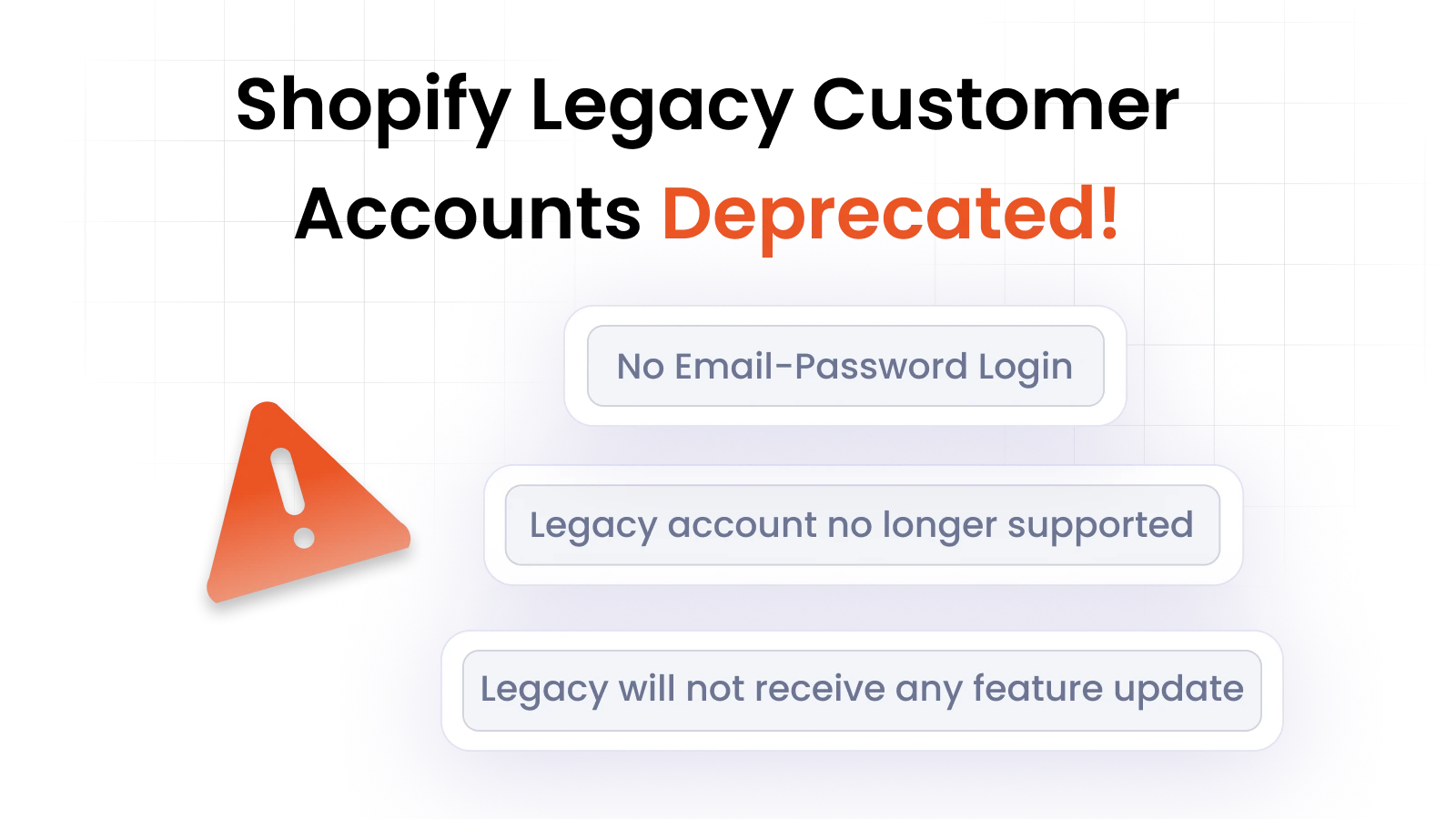
Shopify is gradually phasing out Legacy Customer Accounts in favor of a unified and modern Customer Accounts experience. This new system promises easier logins, faster checkouts, and better integration with Shopify’s modern ecosystem, marking a major step forward for store owners.
However, this shift also changes one of the most fundamental parts of online commerce — how B2B contacts log in.
In this new setup, customers use email-based OTPs to log in to the Shopify B2B store instead of the traditional email-password method. While this move simplifies login for everyday shoppers, it creates new challenges for Shopify B2B merchants who manage multiple users, shared accounts, and company-level access.
This blog explores how merchants can migrate from legacy to customer accounts in Shopify Plus without disrupting existing login flows, and how miniOrange’s flexible B2B authentication solution bridges the gap between Shopify’s evolving framework and enterprise-level requirements.
What’s Different in Shopify’s New vs Legacy Customer Accounts?
With the introduction of the new customer accounts model, Shopify has moved away from the traditional login with email & password and adopted an email-based one-time passcode (OTP) system.
Each login is now verified through a unique code sent to the customer’s email, offering a faster and more secure way to access accounts. This passwordless login design reduces friction for individual shoppers and aligns with Shopify’s focus on simplified, mobile-friendly experiences.
However, this change also removes the flexibility of credential-based login, which may create some hurdles for Shopify B2B contacts. Legacy accounts also allowed merchants to layer options like phone OTP or social login alongside passwords, but the Shopify customer accounts model does not support multiple authentication methods, limiting stores that previously relied on more adaptable login flows.
Why This Shift Poses Challenges for Shopify Plus B2B Stores
In B2B ecommerce, the login process isn’t just a security step — it’s a critical part of daily operations. Many Shopify merchants manage multiple B2B users under one account or assign different roles to handle quotes, orders, and invoices. Reliable access is essential for keeping these workflows running smoothly.
When merchants begin the migration from legacy to customer accounts in Shopify Plus, relying only on email-based OTPs can introduce unnecessary friction:
- Delays while waiting for one-time codes.
- Confusion when several users share the same company inbox.
- Reduced administrative control for businesses that depend on credential-based authentication.
- Interrupted user experience for existing buyers who are used to traditional login methods.
- Limited branding or customization options in the login screen.
- Duplicate customer accounts created when buyers log in using different email addresses.
For example, a wholesaler operating a Shopify Plus B2B store might have five staff members purchasing under one company account. With OTP-only access, each team member must wait for a shared inbox code before placing an order — slowing down a process that should be immediate.
These issues make it difficult for merchants to transition from legacy customer accounts to new customer accounts in Shopify without losing login continuity. The result? Disrupted onboarding flows and confusion for existing Shopify B2B company contacts who were used to traditional login methods.
What B2B Merchants Need for Seamless Migration to Customer Accounts
A smooth migration from legacy to customer accounts in Shopify Plus requires more than just moving customer data; it’s about preserving the familiar login experience users rely on.
As Shopify transitions to its new customer account model, merchants must ensure that existing workflows and authentication methods remain consistent for both new and existing users by:
- Maintaining the username-password option for legacy users who prefer traditional login methods.
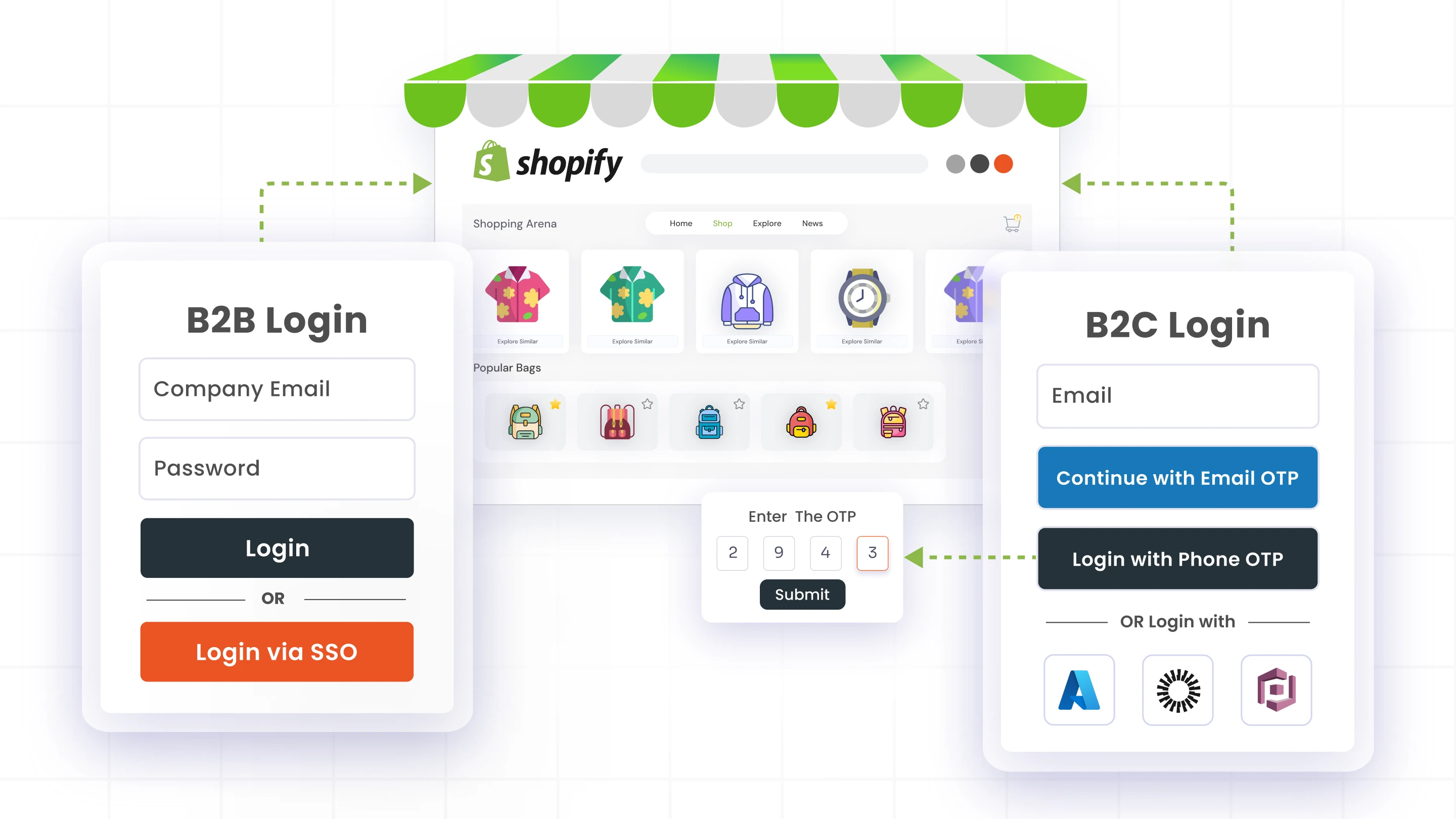
- Offering flexible authentication methods that combine email/phone OTP, password, and login via corporate or social identity providers, ensuring accessibility for all types of users.
- Simplifying onboarding for new B2B company contacts while minimizing disruption for existing ones.
- Strengthening access control & company management across teams and locations.
This approach helps merchants strike the right balance between security and convenience. By supporting multiple authentication methods during the migration to Shopify’s new customer accounts, stores can reduce login-related friction, protect buyer trust, and maintain login continuity across their B2B ecommerce operations.
How miniOrange Enables A Smooth Transition To New Customer Accounts
The shift from legacy customer accounts doesn’t have to mean giving up control over how business customers log in. For Shopify Plus B2B merchants, the main concern during migration is maintaining familiar access methods while adapting to Shopify’s new passwordless model.
miniOrange bridges this gap by offering an adaptable authentication solution for Shopify B2B that supports both legacy and modern access methods. This allows merchants to transition to new customer accounts on Shopify Plus without disrupting how their users log in or manage access.
Through this integration, merchants can:
- Keep username-password login when migrating to Shopify's new customer accounts, allowing legacy B2B company contacts to continue using their existing credentials.
- Combine multiple authentication methods within the same store — including email- or phone-based OTP, password-based login, or Single Sign-On (SSO) through external Identity Providers (Okta, Microsoft Entra ID, Google, etc.)
- Maintain granular company-level access control, giving administrators the ability to manage users, roles, and permissions across different departments or branches.
- Enable headless login flows and multi-store authentication, ensuring consistent access across web, mobile, and regional storefronts — even when the frontend is decoupled from Shopify’s backend.
In essence, miniOrange acts as a connector between Legacy & Customer Accounts, helping Shopify B2B contacts continue accessing their accounts seamlessly while merchants modernize behind the scenes.
Shopify Customer Accounts vs Legacy — Which Should You Choose?
Ultimately, the choice depends on your store’s setup and customer base. Legacy accounts offer familiarity, while new customer accounts are designed for speed and simplicity.
However, it is becoming clearer that Shopify is determined to evolve towards the new customer accounts framework eventually. So, the real question isn’t whether to switch, but rather how to migrate from legacy to new customer accounts without disrupting existing workflows.
With miniOrange, merchants can stay flexible: retaining password-based access where needed while introducing modern, secure login options for new users. No matter which system you use, you can deliver a secure, streamlined, and customizable B2B login experience that fits your business.
Closing thoughts
Migrating from legacy to new customer accounts in Shopify doesn’t have to disrupt your business. It’s not about replacing what worked — it’s about evolving securely, without losing the familiarity that drives trust and efficiency in every B2B transaction.
Whether you manage a single wholesale storefront or enterprise-scale B2B operations on Shopify Plus, miniOrange ensures that your login system remains secure, familiar, and built for growth.
Ready to learn how to make your account migration effortless and future-ready?
Explore our enhanced Shopify B2B Login solution today.
Frequently Asked Questions (FAQs)
Does migrating to Shopify’s customer accounts remove the ability to use password-based login?
By default, Shopify’s customer accounts rely only on email-based OTPs, which removes traditional password login. However, merchants can still keep username-password login when migrating to Shopify customer accounts by using miniOrange’s B2B authentication solution that preserves credential-based access for Shopify B2B contacts on legacy systems.
Can B2B employees log in using their corporate email address in Shopify B2B?
Yes. Merchants can migrate from legacy customer accounts to Shopify Customer Accounts while allowing B2B company contacts to continue logging in with their preferred login method, including their corporate email address. This ensures that legacy customers continue using familiar login methods to access their accounts during the transition.
Can you combine OTP login with other authentication methods during migration?
Yes. Using the Shopify SSO application, merchants can offer custom authentication for B2B customers during the transition to customer accounts on Shopify, including email/phone OTP, password-based login, and SSO via corporate or social identity providers. This helps maintain login continuity and supports different types of Shopify B2B company contacts.
How does migration affect multi-user access for company accounts in Shopify Plus B2B?
Shopify’s new OTP-based login can slow down teams that operate under a shared company account. With miniOrange’s custom authentication solution for B2B contact, multi-user teams can access their accounts easily without depending entirely on a single shared inbox for OTPs. This helps maintain smooth access for Shopify B2B company contacts during the migration from legacy to customer accounts in Shopify Plus, especially in environments where several employees need to place orders or manage account activity simultaneously.
Leave a Comment