

DPDP policy management establishes how an organization collects, processes, stores, shares, retains, and erases personal data in accordance with the Digital Personal Data Protection Act, 2023. It translates regulatory obligations into actionable internal policies covering consent requirements, purpose limitation, data access, retention periods, security safeguards, breach management, and Data Principal rights.
A structured policy management framework enables organizations to create, approve, publish, distribute, and periodically review privacy policies from a centralized system. It maintains version histories, tracks employee acknowledgments, monitors policy adherence, and records exceptions and corrective actions.
Privacy Policy vs. Privacy Notice vs. Consent Record Under the DPDP Act
A privacy policy, a consent notice, and a consent record serve different purposes. Treating them as interchangeable can leave gaps in the information provided to individuals.
| Document | What it explains or records | Where it appears |
|---|---|---|
| Privacy policy | General data handling practices and privacy commitments | Website, app, or policy page |
| Consent notice | Specific personal data and purposes of processing | Before or alongside the consent request |
| Consent record | The individual's consent decision and associated details | Consent management system or organizational records |
The DPDP privacy notice vs privacy policy distinction is important. A privacy policy describes broader practices, while a DPDP Act Section 5 notice explains the personal data being processed and the specific purposes.
Rule 3 of the DPDP Rules, 2025 requires the notice to be understandable independently of other information provided by the Data Fiduciary. A link to a general privacy policy does not automatically replace this standalone notice requirement.
When Should Organizations Update Privacy Notices Under the DPDP Act?
Consider a customer journey across three touchpoints:
- Website registration: The customer provides a name, mobile number, and email address for order updates.
- Mobile onboarding: The application introduces additional fields for account personalization.
- Marketing preference: A separate choice asks whether the customer wants promotional messages and personalized offers.
Each touchpoint may introduce a new data item or purpose. If the notice remains unchanged, it may no longer explain the actual processing.
Section 5(1) establishes that the notice must accompany or precede the request for consent. Individuals should receive the relevant information before making their decision.
A just-in-time privacy notice is a useful approach to support this requirement. It presents relevant information close to the point where an individual provides data or makes a consent decision. Although just-in-time delivery is not a separate statutory term, it can make notices easier to understand and connect them to the actual user journey.
What Are the Common DPDP Privacy Notice Compliance Gaps?
Small gaps in notice management can become difficult to identify across multiple teams, applications, and collection points.
1. Vague purposes
A notice stating that information will be used to improve services may not explain the actual processing. Check whether each personal data item is connected to a specific purpose.
2. Policy-only links
A consent request that directs users to a general privacy policy may not provide the standalone explanation required under Rule 3. Check whether the notice makes sense independently.
3. Missing application or form notices
A website may display an updated notice while an application or older registration form continues to show outdated information. Review every collection point.
4. Disconnected consent records
A timestamp without the corresponding notice context makes it difficult to establish what an individual was told. Check whether the exact notice version can be retrieved.
These checks form a practical DPDP notice compliance checklist and help identify gaps before they spread across customer journeys.
When Does a Change in Data Processing Require a New Consent Notice?
A notice that accurately described one processing activity may not explain a new activity introduced later. This matters when an organization adds a purpose, collects additional personal data, or expands how existing information is used.
For example, a store initially collects contact details to send order updates. It later proposes using purchase history and browsing behavior to personalize promotional offers. The original notice may not adequately explain this additional processing.
The organization should assess whether the proposed activity fits the existing specified purpose and applicable lawful basis. If it does not, the notice must be revised and the need for fresh consent assessed before proceeding.
Not every edit requires consent again. A spelling correction or layout adjustment is different from introducing a new purpose or materially changing the processing.
DPDP notice versioning helps teams distinguish these changes and identify which versions remain active across websites, applications, forms, and translated content. Without synchronized updates, one channel may continue displaying an outdated explanation.
What Evidence Must Organizations Maintain to Prove DPDP Consent?
Section 6(10) places the burden on the Data Fiduciary to prove, in a proceeding concerning consent-based processing, that notice was given and consent obtained in accordance with the Act.
A timestamp alone cannot answer these questions.
Visualize a privacy team reviewing a customer query six months after registration. The team can retrieve the consent timestamp, but can it establish which notice the customer saw, the purpose it described, and the language displayed?
The following evidence model is a recommended governance practice, not a database schema expressly prescribed by the Act.
| Evidence field | What it helps demonstrate |
|---|---|
| Notice ID and version | Which approved notice was presented |
| Approved notice text | The exact information available to the individual |
| Language | The language in which the notice appeared |
| Channel | Website, app, form, or other touchpoint |
| Display time | When the notice was presented |
| Purpose mapping | Which processing purpose was explained |
| Linked consent event | The individual's associated consent decision |
A structured DPDP notice audit trail connects the notice, channel, purpose, and consent event. It makes the relevant information easier to retrieve instead of treating each record separately.
What Are the Privacy Notice Requirements Under Section 5 and Rule 3?
Organizations should review the DPDP Act, 2023 and the final Rule 3 DPDP Rules 2025 when assessing notice content.
A practical DPDP notice requirements review should cover:
- Itemized personal data: Identify the personal data being collected or processed.
- Specified purposes: Explain each purpose for which the data will be processed.
- Goods, services, or uses enabled: Describe the relevant goods, services, or uses provided through the processing.
- Consent withdrawal: Explain how an individual can withdraw consent. The process must be as easy as giving consent.
- Rights and grievance redressal: Explain how individuals can exercise their rights and access the applicable complaint mechanism, including complaints to the Data Protection Board.
- Standalone presentation: Use clear, plain language that can be understood independently of other information.
- Language access: Provide the option to access the notice in English or a language specified in the Eighth Schedule to the Constitution.
Consider a store that currently states, "We collect your information to improve your experience."
A clearer explanation would identify the actual information and purpose: "We collect your name and mobile number to send order confirmations and delivery updates." If the store also processes purchase history to personalize promotional offers, that purpose should be explained separately where applicable.
Retention periods and vendor details may provide additional context. However, organizations should not present them as specific mandatory Rule 3 notice fields where the rule does not prescribe them.
How Do DPDP Privacy Notice Requirements Differ Across Data Principals?
The data collected, processing purpose, and applicable safeguards may differ across customer, employee, and child-related journeys. This does not mean the Act automatically requires a separate notice for every category of Data Principal. Organizations should assess the actual processing and applicable obligations.
- Customers: Explain data collected through registration, transactions, service requests, and optional marketing choices. Keep service-related processing distinct from additional purposes.
- Employees: Explain workforce-related processing, such as information used for employment administration or benefits. Section 7(i) recognizes certain legitimate uses for employment and related purposes, including safeguarding the employer from loss or liability. This is distinct from consent-based processing.
- Children: Section 9 requires verifiable consent from a parent or lawful guardian before processing a child's personal data, subject to applicable exceptions. Rule 10 addresses the manner of obtaining verifiable parental consent.
- Persons with disabilities who have a lawful guardian: The Act recognizes a lawful guardian acting on behalf of a person with a disability as a Data Principal. Section 9 and Rule 11 address relevant verifiable consent requirements. This does not mean every person with a disability automatically requires guardian consent.
The objective is to align each notice with the applicable processing context and safeguards.
How to Build a DPDP-Compliant Privacy Notice Management Workflow?
A consistent privacy notice lifecycle needs clear ownership. Marketing, Product, Privacy, Legal, and channel teams may all contribute to the information presented to individuals.
A six-stage notice approval workflow can help coordinate responsibilities:
- Inventory collection points and purposes
Identify where personal data enters the organization, including websites, applications, registration forms, and customer service channels. Map data items to their purposes. - Draft against Rule 3
Prepare the notice with the required data descriptions, purposes, and information about withdrawal, rights, and complaints. - Assign owners and obtain approval
Product or Marketing teams provide processing context. Privacy or Legal teams review the notice before approval. - Publish across relevant channels
Publish the approved notice wherever the relevant data is collected or consent is requested. Check the language and version. - Connect notices with consent evidence
Link the notice context to the relevant consent event. Verify that the correct version and associated details can be retrieved. - Monitor changes and retire old versions
Review notices whenever a purpose, data item, form, application, or consent journey changes. Update affected versions and retire superseded content.
This workflow is a governance recommendation, not a process prescribed by the Act. It helps establish ownership across drafting, approval, publication, and evidence retrieval.
What Are the DPDP Rules for Notice Language and Existing Users?
Section 5(3) gives Data Principals the option to access a notice in English or any language specified in the Eighth Schedule to the Constitution.
India has 22 languages in the Eighth Schedule. However, this provision should not be interpreted as requiring every organization to proactively publish every notice in all 22 languages. Organizations must provide the specified language option.
Translation accuracy also matters. When approved content changes, corresponding translations and channel-specific versions should be reviewed. Otherwise, one language version may continue describing an older processing activity.
The Act also addresses legacy consent. Under Section 5(2), where consent was obtained before the relevant provisions commence, the Data Fiduciary must provide the required notice as soon as reasonably practicable after commencement. Processing may continue until the individual withdraws consent, subject to the applicable provisions.
This does not mean every existing user must automatically provide consent again. Organizations should identify relevant existing consent records, prepare the required notices, and plan how to communicate them.
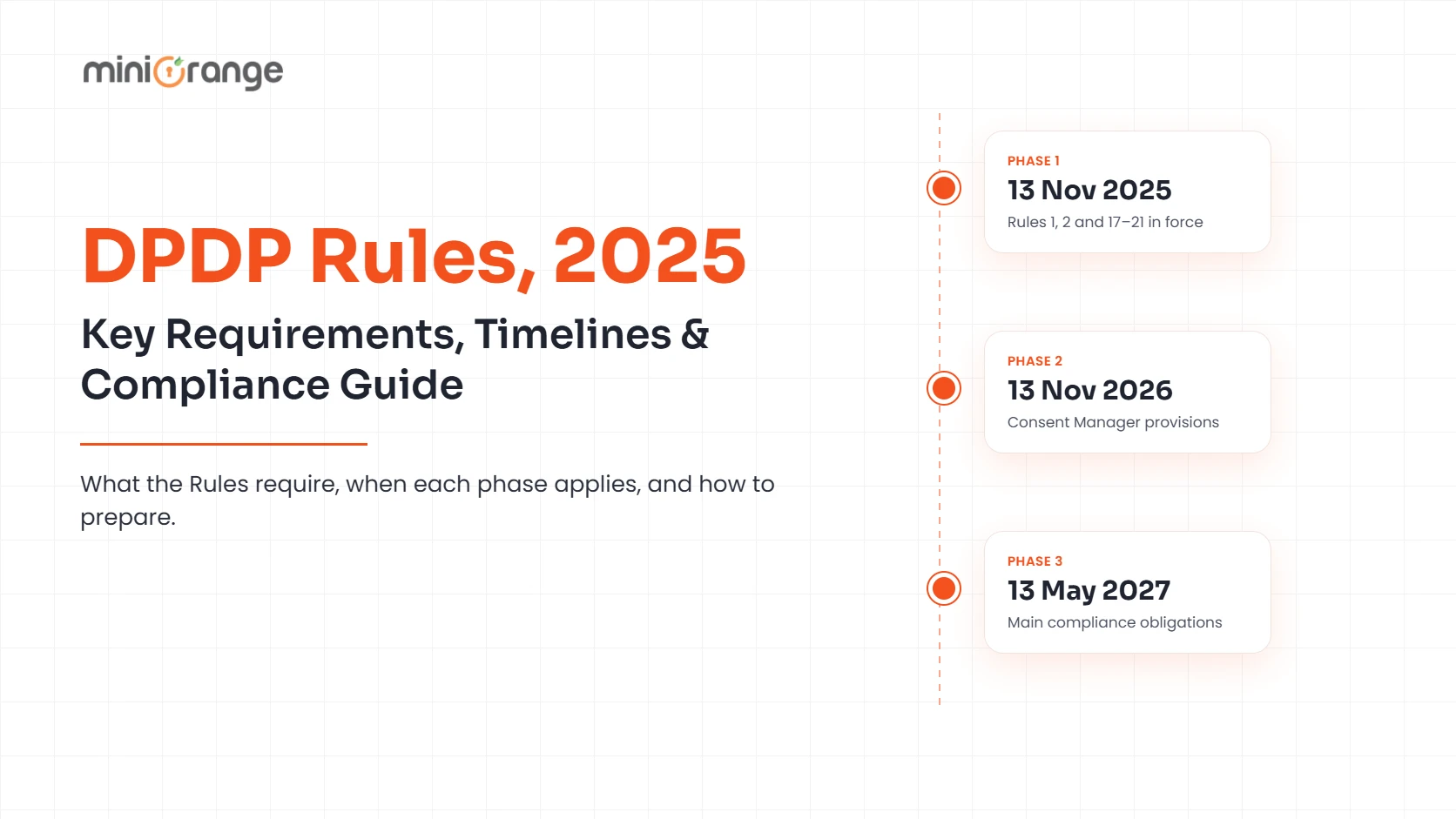
The commencement notification dated November 13, 2025 places Section 5 and the relevant provisions of Section 6 in the 18-month implementation phase. This makes May 13, 2027 the scheduled commencement date for these provisions.
DPDP Privacy Notice Compliance Checklist for May 2027
Organizations should review their existing notice practices and address gaps before the relevant provisions commence.
Use this DPDP notice readiness checklist:
- Processing inventory: Collection points and purposes are documented and mapped.
- Notice ownership: Owners, reviewers, and approval responsibilities are assigned.
- Content review: Notices are checked against Section 5 and Rule 3.
- Language access: Language options and translation processes are reviewed.
- Channel coverage: Website, application, and form touchpoints display appropriate notices.
- Existing-user plan: A process is defined for notices relating to legacy consent.
- Evidence retrieval: Notice versions and associated consent records can be retrieved.
A readiness review should go beyond checking whether a notice exists. Test whether the information is accurate, the right version appears at the right touchpoint, and the organization can retrieve supporting evidence.
How Can miniOrange Support DPDP Privacy Notice Management?
Managing notices across websites, applications, customer journeys, and business teams requires coordination between privacy processes and supporting technology.
miniOrange offers DPDP compliance and privacy-related capabilities that can support organizations working toward readiness:
- Consent Management: Support consent collection and management across relevant user journeys.
- Data Discovery and Classification: Help identify and classify personal data across organizational environments.
- Data Loss Prevention: Support controls for protecting sensitive information.
- Data Principal Portal: Provide a channel for individuals to access relevant privacy services and requests.
- Privacy Advisory Services: Support gap assessments, DPO advisory, and privacy-related guidance.
Organizations can map these capabilities to their processing activities, notice requirements, and broader governance responsibilities.
Strengthen Privacy Notice Management for DPDP Compliance
A privacy notice should reflect what an organization collects, why it collects it, and how individuals can exercise their rights. When forms, applications, purposes, and consent journeys change, the notice must keep pace.
For Data Fiduciaries, this means treating notice management as a continuous process of drafting, review, delivery, version control, and evidence retention. Review your collection points, identify where existing notices fall short, and establish a process that keeps every notice accurate and accessible.
Frequently Asked Questions
1. Is a Privacy Policy Enough Under Section 5?
No. A general privacy policy does not automatically satisfy Section 5. The DPDP Rules, 2025 require a notice that can be understood independently of other information. It must explain the itemized personal data and specified purposes, along with the required information about consent withdrawal, rights, and complaints.
2. How Do Consent Notices Differ From Records?
A consent notice explains what personal data will be processed and why. It is provided before or alongside the request for consent. A consent record captures the individual's decision and associated details. One communicates the processing; the other documents the consent event.
3. When Do Different User Groups Need Notices?
Notices should reflect the processing activity and applicable legal requirements. Customer and employee processing may require different explanations. Children's personal data requires additional safeguards and verifiable parental or guardian consent, subject to applicable exceptions. The Act does not automatically require a separate notice for every user category.
4. What Must a DPDP Notice Include?
Under Rule 3, a notice must be independently understandable and written in clear, plain language. It must include an itemized description of personal data, specified purposes, and details of the goods, services, or uses enabled. It must also provide relevant information about consent withdrawal, exercising rights, and complaints to the Board.
5. How Should Organizations Notify Existing Customers?
Organizations should identify eligible recipients, map existing consent records to relevant purposes, and deliver notices through email or in-app campaigns. Each notice campaign should link the recipient, recorded consent, purpose, and applicable notice version while accurately tracking communication outcomes. Notices must be provided as soon as reasonably practicable after commencement.
6. Must Existing Users Receive New Notices?
Yes, where consent was obtained before the relevant provisions commence, Section 5(2) requires the Data Fiduciary to provide the prescribed notice as soon as reasonably practicable after commencement. However, this does not create a blanket requirement to collect consent again from every existing user.
7. Does Every Notice Update Require Fresh Consent?
No. A spelling correction, formatting change, or layout improvement does not automatically require fresh consent if the processing scope remains unchanged. When an organization introduces a new purpose, collects additional personal data, or materially changes processing, it should review the lawful basis and assess whether fresh consent is required.
8. Are Notice Versions and Audit Logs Mandatory?
The Act and Rules do not prescribe a specific notice versioning system or database schema. However, Section 6(10) places the burden on the Data Fiduciary to prove that notice was given and consent obtained in accordance with the Act in relevant proceedings. Maintaining approved notice versions and supporting records is a practical way to support that responsibility.
9. How Can Organizations Prove Notice Delivery?
Organizations can maintain evidence connecting the notice to the relevant consent event. Useful records include the notice ID and version, approved text, language, channel, display time, purpose mapping, and linked consent decision. These fields are recommended practices, not an expressly prescribed statutory schema.
10. When Do DPDP Notice Requirements Commence?
Section 5 of the DPDP Act and Rule 3 of the DPDP Rules, 2025 fall within the 18-month commencement phase specified in the official notification dated November 13, 2025. This places their scheduled commencement on May 13, 2027.
Leave a Comment