
Data mapping under the DPDP Act is the process of identifying what personal data an organization collects, where it is stored, how it moves between systems, who can access it, and why it is processed. It connects information held across business applications, databases, cloud environments, and third-party vendors.
For organizations preparing for India's Digital Personal Data Protection (DPDP) Act, 2023, DPDP data mapping helps connect legal obligations to actual data handling practices. It supports the management of consent, privacy notices, Data Principal rights, retention, security, and erasure.
Although the Act does not expressly prescribe a standalone data mapping exercise for every organization, a documented data map provides a practical foundation for managing personal data and preparing for applicable compliance requirements.
Why Data Mapping Is the First Step to DPDP Compliance
A Data Fiduciary is responsible for complying with the Act in respect of personal data it processes, including processing undertaken on its behalf by a Data Processor. This makes visibility across the data lifecycle essential, even when information is distributed across departments, applications, and external service providers.
Data mapping for DPDP compliance establishes the relationship between personal data, its processing purpose, the applicable basis for processing, and the parties handling it.
Consider a business that collects customer details for order fulfillment and later shares those details with a marketing platform. If the organization cannot identify which records were shared, why they were shared, or the relevant consent status, it may struggle to assess whether the processing is appropriate.
Several common issues make this difficult:
- Shadow data: Personal information stored in spreadsheets, email attachments, shared folders, or unapproved SaaS tools.
- Disconnected records: Customer information duplicated across CRM platforms, analytics systems, and departmental databases.
- Unmapped processors: Vendors that receive personal data without being adequately represented in internal inventories.
- Unclear ownership: Processing activities without a clearly assigned business or technical owner.
A maintained data map helps teams investigate these gaps, assign responsibility, and connect privacy requirements to operational controls. It also provides a reference point when responding to complaints, investigating a personal data breach, or reviewing changes to processing activities.
Key Elements of a DPDP Data Map
A useful personal data inventory should document more than the applications holding personal information. It should connect each processing activity to its purpose, location, ownership, recipients, and lifecycle requirements.
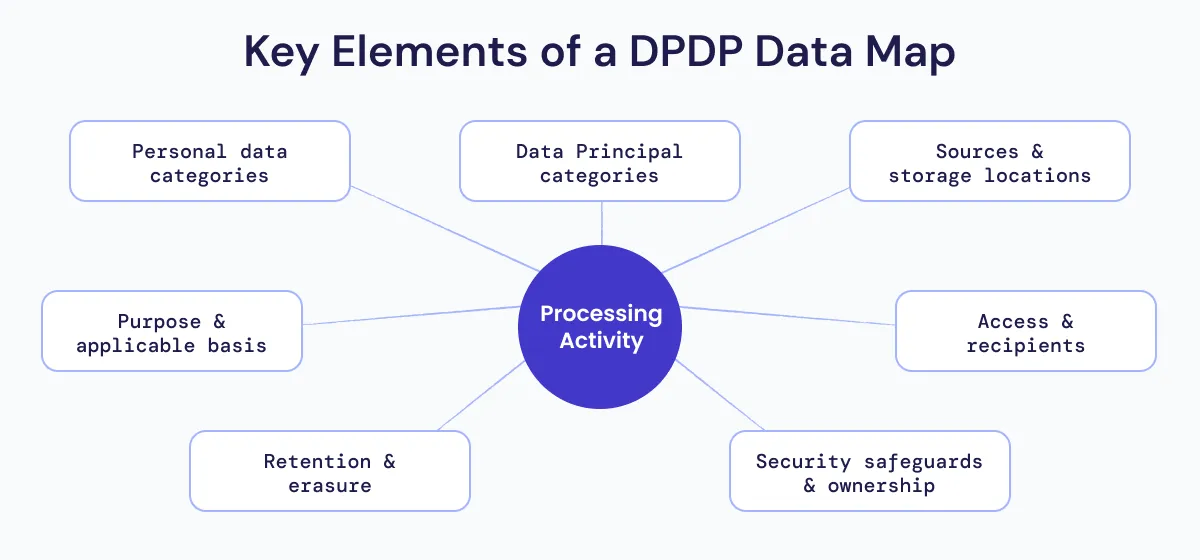
The core elements include:
- Personal data categories: Names, contact details, account information, transaction records, device identifiers, and employment information.
- Data Principal categories: Customers, employees, applicants, contractors, and children where applicable.
- Data sources and storage locations: Websites, mobile applications, databases, cloud platforms, email systems, spreadsheets, backups, and archives.
- Processing purposes and applicable basis: The specified purpose for each activity and its applicable basis, whether consent or a legitimate interest under Section 7.
- Access and recipients: Internal teams, external vendors, and other parties that access, receive, or process personal data.
- Retention and erasure requirements: Retention periods or triggers, applicable legal retention obligations, deletion procedures, and relevant systems or processors.
- Security safeguards and ownership: Access controls, encryption, logging, monitoring, responsible teams, and review dates.
These elements should be connected rather than maintained as isolated lists. For example, identifying a customer email address is only the starting point. The map should also establish why it is collected, which systems use it, which vendors receive it, and what happens when the processing purpose ends.
Common Data Mapping Gaps That Affect DPDP Compliance
Data mapping exercises often miss information because organizations document approved systems rather than examining how personal data actually moves through daily operations.
Shadow data is a significant source of these gaps. Employees may download customer records into spreadsheets, forward attachments through email, or upload information to tools that have not undergone formal IT or privacy review. These copies can remain outside the visibility of teams responsible for data governance.
Third-party processing creates another challenge. A procurement register might identify a vendor without documenting the personal data it receives, its processing purpose, storage locations, or deletion arrangements.
Organizations can also overlook:
- Test databases and development environments containing personal data.
- Archived files and backups with unclear retention requirements.
- Personal data exported into analytics platforms or reporting tools.
- Vendor integrations that introduce new recipients or storage locations.
To address these issues, validate the data map with business process owners, IT, security, procurement, and privacy teams. Compare interviews with system configurations, integration records, vendor contracts, and available access or activity logs.
The map should also be updated whenever applications, vendors, processing purposes, or data flows change. An outdated map can create a false sense of visibility while leaving important processing activities undocumented.
How Data Mapping Supports Data Fiduciary Obligations
Data Fiduciary obligations become easier to operationalize when teams can connect legal requirements to specific systems, processing activities, and accountable owners. Our guide to Data Fiduciary obligations under the DPDP Act covers these in detail.
Notice and Consent
Sections 5 and 6 address notice and consent requirements. Mapping collection points, data categories, purposes, notice versions, and consent records helps organizations assess whether their disclosures and processing practices align.
Consent Records and Withdrawal
Consent records mapping connects consent status to relevant processing activities and systems. When consent is withdrawn, this information helps identify where the associated processing must stop and where erasure obligations may arise, subject to applicable legal requirements.
Data Principal Rights
Sections 11 and 12 address rights relating to information about personal data and its sharing, as well as correction, completion, updating, and erasure. A data map helps teams locate relevant records and identify the systems and processors that may need to act on a request. See Data Principal rights under the DPDP Act for more.
Personal Data Breach Response
Section 8(6) addresses breach intimation obligations. Mapping affected systems, data categories, recipients, and relevant individuals helps teams assess the scope of a breach and identify the information needed for applicable notifications.
Retention and Erasure
Section 8(7) addresses erasure when consent is withdrawn, or the specified purpose is no longer served, subject to the provision's terms and applicable legal requirements. Mapping retention triggers, copies, and processor deletion routes helps organizations operationalize these obligations. Refer to our guide on data retention policy under the DPDP Act.
A data map does not establish compliance by itself. Its value lies in connecting legal requirements to evidence, assigned responsibilities, and repeatable processes.
Data Mapping for Significant Data Fiduciaries
Section 10 of the DPDP Act establishes additional obligations for Significant Data Fiduciaries. These include appointing a Data Protection Officer based in India, appointing an independent data auditor, and undertaking periodic Data Protection Impact Assessments and audits, as prescribed.
An accurate data map can support these activities by documenting processing purposes, data flows, recipients, system dependencies, and relevant security controls.
For example, a data map may reveal that a customer profiling process uses information from multiple applications and external providers. Reviewing these connections helps the organization examine the processing purpose, access arrangements, retention practices, and safeguards associated with the activity.
For effective assessment, organizations should use their data map to:
- Identify processing activities that may require closer risk assessment.
- Trace personal data across interconnected systems and external providers.
- Document relevant controls and assign responsibility for addressing gaps.
- Provide supporting information for audits and Data Protection Impact Assessments.
The map remains supporting documentation, not a substitute for a Data Protection Impact Assessment, an independent audit, or other applicable obligations.
Mapping Data Processors and Cross-Border Transfers
Personal data often moves between an organization and external providers supporting hosting, customer support, analytics, payroll, marketing, and other business operations. Data Processor mapping identifies these relationships and clarifies which parties handle personal data on the Data Fiduciary's behalf.
For each processor, document:
- The personal data shared and the processing purpose.
- The systems involved and relevant storage locations.
- Contractual provisions covering security, retention, and deletion.
- The processor's responsibilities and relevant onward transfers.
Section 8(1) makes the Data Fiduciary responsible for processing undertaken on its behalf by a Data Processor. Mapping these relationships helps teams identify arrangements that need contractual, security, or privacy review. See also vendor risk management under the DPDP Act.
Cross-Border Data Flow Mapping
Cross-border data transfer under DPDP requires visibility into where personal data is stored, processed, accessed, or transferred, including relevant vendor environments and onward transfers.
Section 16 permits the Central Government to restrict transfers of personal data to notified countries or territories. It does not establish a blanket prohibition on all cross-border transfers. Organizations should check applicable government notifications and consider other laws or sector-specific requirements affecting data location and transfer. Our guide on cross-border data transfers under the DPDP Act explains this further.
A documented transfer map gives privacy, legal, procurement, and security teams a clearer view of third-party data handling and the arrangements requiring further review.
Data Mapping Concepts
Understanding the components of data mapping helps organizations build an inventory that reflects actual processing rather than simply listing applications.
Data Sources and Systems
Sources include customer forms, HR portals, mobile applications, CRM platforms, financial systems, and legacy databases. Mapping connects each source to the systems that receive or store its information.
Structured and Unstructured Data
Structured data resides in organized formats such as relational databases and spreadsheets. Unstructured data includes email attachments, PDFs, documents, call recordings, and files stored in shared drives. Both can contain personal data.
Data Flows and Lineage
Data flow mapping traces information from collection through processing, sharing, storage, and erasure. Data lineage adds context about its origin and how it changes as it moves between systems.
Metadata
Metadata describes information about a data asset, such as its source, classification, owner, creation date, or last modification. It helps teams interpret records and identify relevant datasets.
Data Quality
Duplicate, outdated, incomplete, or inconsistent records can complicate rights requests, retention decisions, and reporting. Data quality checks help identify discrepancies that need correction.
Together, these concepts help organizations understand not only what personal data exists, but also how it is used and managed.
Data Mapping Process for DPDP Compliance
A structured data mapping process helps organizations move from scattered information to a maintainable view of personal data processing.
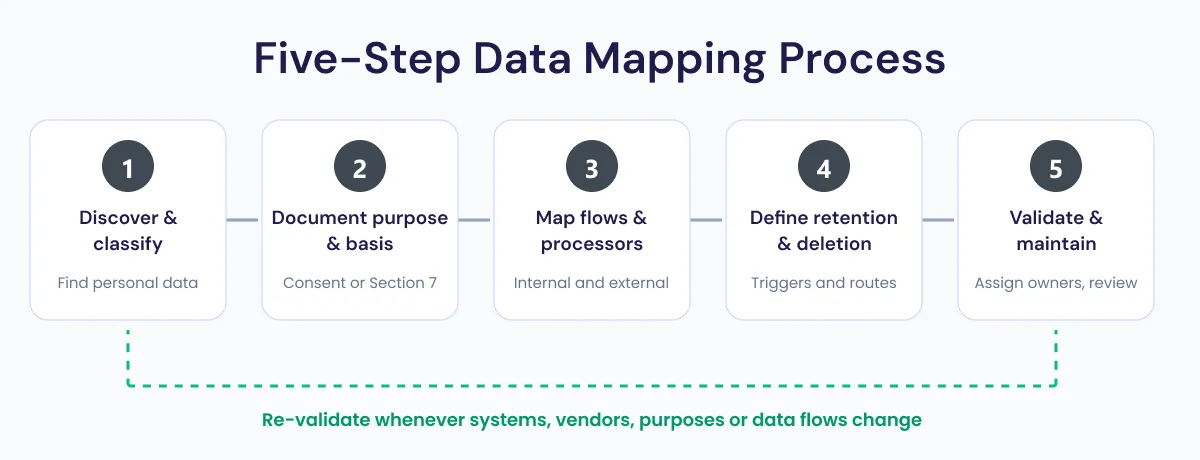
Step 1: Discover and Classify Personal Data
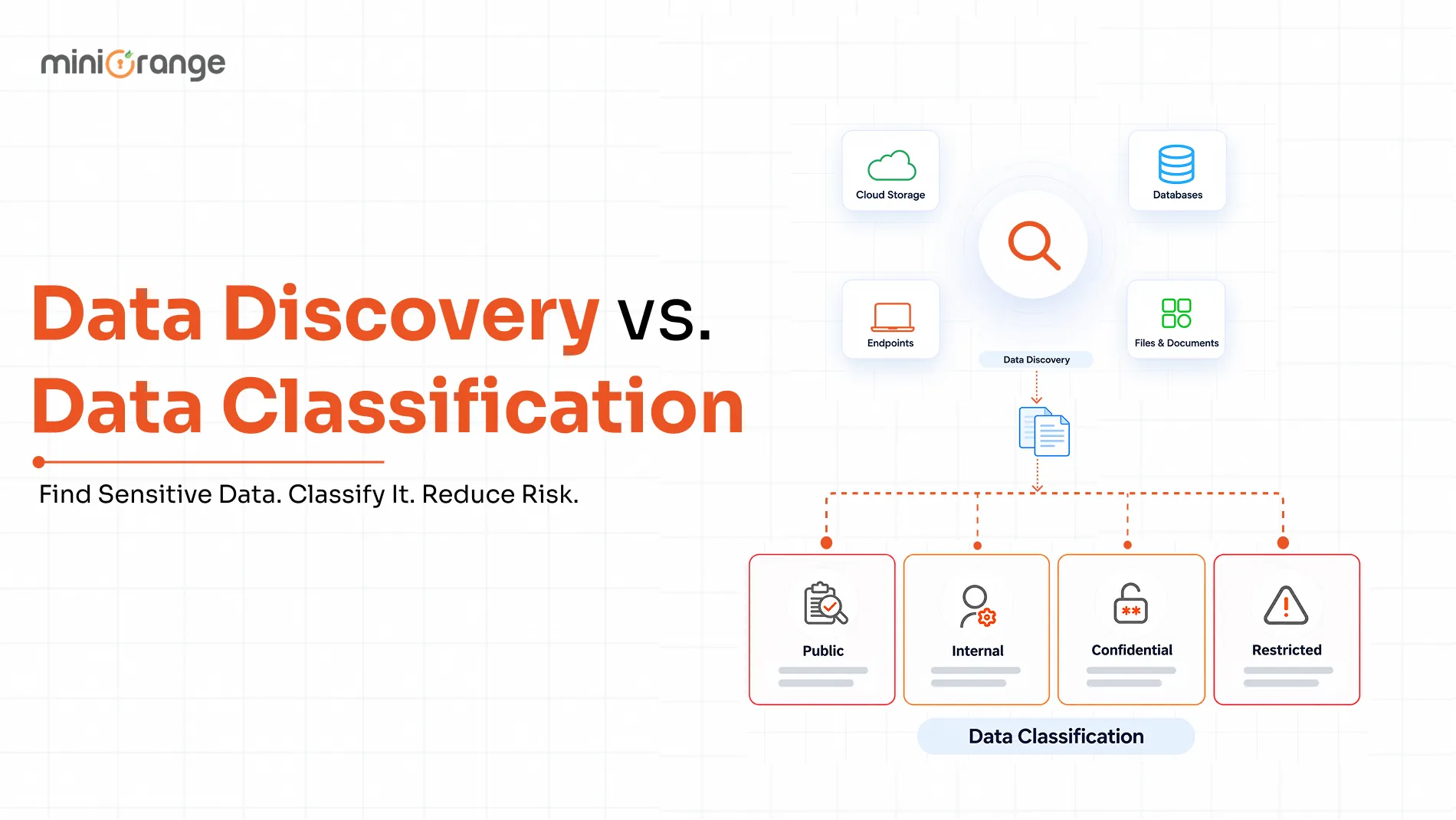
Identify collection points, applications, databases, cloud storage, email repositories, spreadsheets, and other locations that may contain personal data. Classify information by category and Data Principal group, and flag processing involving children where relevant. Our guide on data discovery and classification under the DPDP Act goes deeper.
Step 2: Document Processing Purposes and Applicable Basis
Connect each processing activity to its specified purpose and record whether the applicable basis is consent or a legitimate use under Section 7. Link relevant notices and consent records to the collection points.
Step 3: Map Internal Data Flows and External Processors
Trace how information moves between systems, teams, and vendors. Document integrations, manual exports, recipients, storage locations, and relevant cross-border transfers.
Step 4: Define Retention and Deletion Requirements
Record retention periods, triggering events, applicable legal retention obligations, and procedures for erasing personal data. Identify how deletion requests and consent withdrawals are communicated to relevant systems and processors.
Step 5: Validate and Maintain the Data Map
Check documented flows against system records, vendor agreements, and business processes. Assign owners, record unresolved gaps, and establish review triggers for changes to systems, vendors, purposes, or processing activities.
How Automated Data Mapping Improves Data Discovery
Automated data mapping and data discovery and classification tools can help identify personal data across supported repositories, detect duplicate records, and surface previously unknown storage locations.
However, automation cannot independently determine every processing purpose, establish the appropriate legal basis, or confirm that an organization's practices comply with the Act. Those decisions require appropriate business, privacy, and legal oversight.
Organizations should also consider the limitations of discovery tools across encrypted files, unsupported repositories, archived data, and systems with restricted access. Discovery results need validation before being treated as a complete inventory.
Build a Reliable Data Map for DPDP Compliance
Effective DPDP data mapping connects the personal data an organization holds with the purposes for which it is processed, the systems through which it moves, and the parties responsible for handling it. This visibility helps teams identify gaps in consent records, processor oversight, retention practices, and Data Principal rights workflows.
A data map is not a one-time compliance document. It needs to reflect changes in applications, integrations, vendors, and processing activities to remain useful. By combining data discovery with business validation, documented ownership, and regular reviews, organizations can build a more reliable foundation for managing personal data and meeting applicable DPDP obligations.
FAQs
1. Why Is Data Mapping Important for DPDP Compliance?
Data mapping for DPDP compliance helps organizations identify personal data, document processing purposes, trace data flows, locate processors, and connect privacy obligations to relevant systems. It supports the operational management of consent, Data Principal rights, security, retention, and erasure.
2. Is Data Mapping Mandatory Under the DPDP Act?
The DPDP Act does not expressly prescribe a standalone data mapping exercise or a general data inventory requirement for all Data Fiduciaries. However, maintaining a data map can help organizations implement and demonstrate compliance with several obligations under the Act.
3. What Should a DPDP Data Map Include?
A DPDP data map should document personal data categories, Data Principal groups, collection sources, storage locations, processing purposes, applicable basis, recipients, Data Processors, retention requirements, erasure procedures, security safeguards, and accountable owners.
4. What Is the Difference Between a Data Inventory and a Data Map?
A personal data inventory records what personal data an organization holds, where it resides, and why it is processed. A data map adds the relationships and flows between collection points, systems, teams, vendors, and other recipients.
5. How Does Data Mapping Help With Data Principal Rights Requests?
Data mapping helps locate personal data across relevant systems and identify the parties that received or process it. This supports the handling of applicable requests for information, correction, updating, or erasure.
6. How Does Data Mapping Support Breach Reporting Under the DPDP Act?
A data map can help identify affected systems, personal data categories, processors, and potentially affected individuals. This information supports breach assessment and the preparation of applicable notifications under the Act and Rules.
7. Do Significant Data Fiduciaries Need Data Mapping for DPIAs and Audits?
The Act establishes additional obligations for Significant Data Fiduciaries, including Data Protection Impact Assessments and audits as prescribed. Although a standalone data map is not expressly prescribed as a universal requirement, it can provide useful evidence about processing activities, data flows, and associated risks.
8. Should Data Mapping Be Manual or Automated?
A combination is often useful. Automated discovery can identify personal data across supported systems, while manual validation helps establish processing purposes, applicable basis, ownership, processor relationships, and retention requirements.
About the Author

Content Writer
Minal is an experienced B2B content writer. She has written over 250 articles across industries like UI/UX, real estate, automotive, digital marketing, SaaS, AI & ML, and cybersecurity. She brings her interest in cybersecurity to life by creating clear, engaging content tailored for technical, non-technical, and creative pieces. Her aim is to simplify complex topics, highlight product value, and connect with both technical and non-technical audiences.
Leave a Comment