
AI agents can retrieve customer records, analyze conversations, update business systems, and send information to external models, often with limited human intervention. But when these workflows involve personal data, organizations must account for how that information is accessed, used, stored, and shared.
India's Digital Personal Data Protection Act, 2023 (DPDP Act) and Digital Personal Data Protection Rules, 2025 (DPDP Rules) establish obligations for processing digital personal data. Although they do not specifically name AI agents, their requirements remain relevant to the processing activities agents perform.
DPDP compliance for AI agents starts with a practical question: can your organization control what an agent accesses, where personal data goes, and what happens to that data afterward?
DPDP Act and Rules: The Compliance Timeline
The DPDP framework has a phased commencement schedule. Organizations deploying AI agents should understand which provisions apply now and which require preparation ahead of their commencement dates.
| Commencement date | Applicable provisions | What it means for organizations |
|---|---|---|
| November 13, 2025 | Specified provisions of the DPDP Act and Rules | Initial provisions, including specified institutional and administrative arrangements, commenced. |
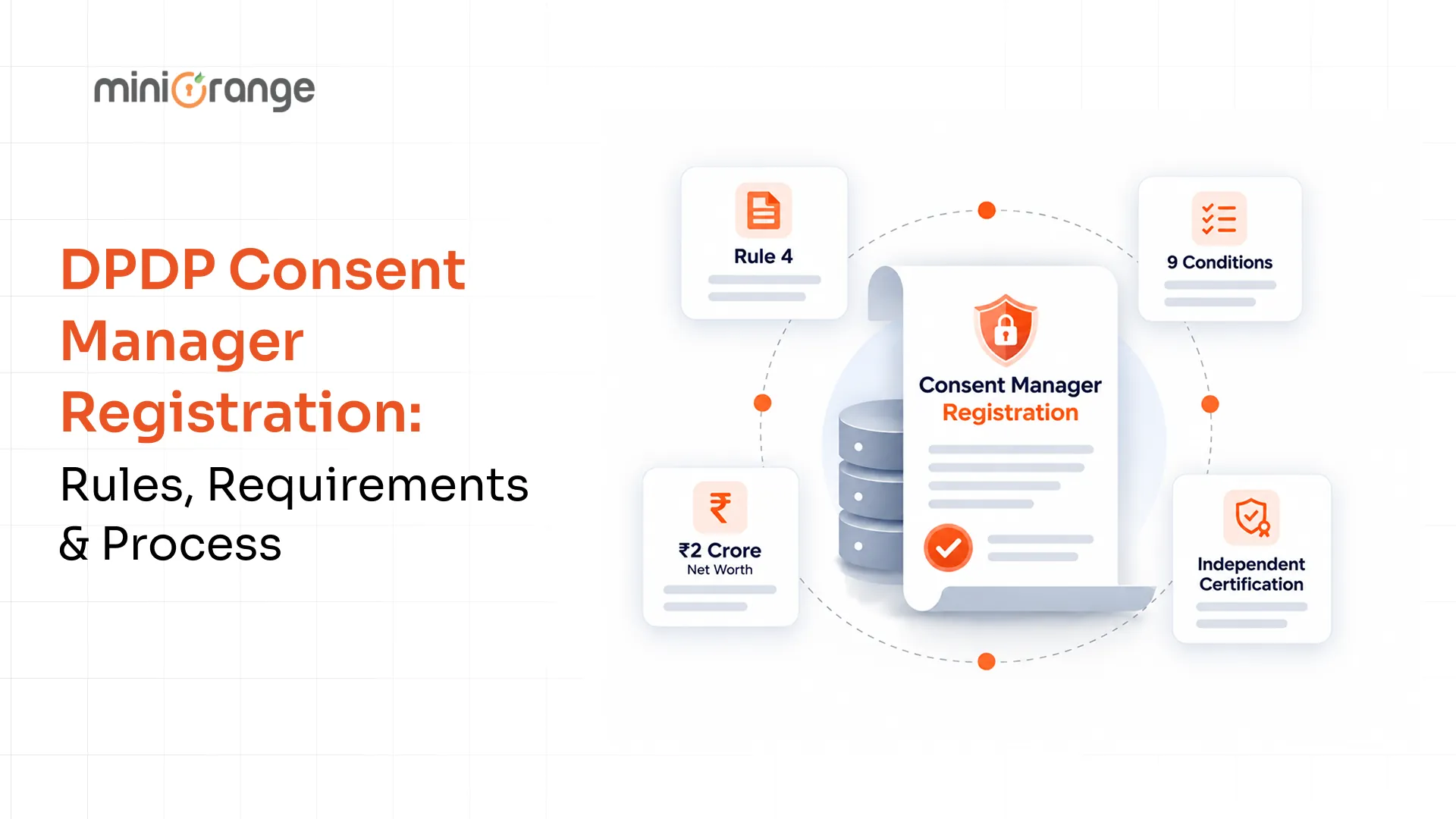
| November 13, 2026 | Section 6(9) and Section 27(1)(d) of the Act; Rule 4 | Specified provisions concerning Consent Managers and their registration framework commence. |
| May 13, 2027 | Sections 3–17 and other specified provisions of the Act; Rules 3, 5–16, 22 and 23 | The principal personal data processing obligations and related requirements in this tranche commence. |
The dates above reflect the notified commencement schedule. Organizations should consult the official notifications to determine which provisions apply to their activities.
For AI deployments, the May 2027 milestone is particularly important because the relevant provisions cover core processing obligations. However, organizations should not interpret the phased schedule as a reason to postpone security planning. Agent architecture, data integrations, logging, and retention mechanisms can be difficult to change once they are embedded in production workflows.
How Does the DPDP Act Apply to AI Agents?
The DPDP Act assigns responsibilities according to the roles involved in processing personal data. It does not need to name every technology that organizations might use to process that data.
Three roles are central to understanding DPDP compliance for AI agents.
Data Principal
- The individual to whom the personal data relates.
Data Fiduciary
- The person who determines the purpose and means of processing personal data, alone or jointly with others.
Data Processor
- The person who processes personal data on behalf of a Data Fiduciary.
Consider a customer support agent that retrieves account information, summarizes a complaint, and updates a ticket. The organization must determine the permitted purpose, establish appropriate access restrictions, and assess any third-party processing involved. Giving the agent a prompt that says "access only relevant information" does not enforce those restrictions.
Four DPDP Compliance Challenges AI Agents Create
1. Purpose Limitation: Can the Agent Access More Data Than It Needs?
An AI agent may retrieve information because it appears relevant to a request, even when the information is unnecessary for the task.
For example, an IT support agent resolving a login issue may need account status and authentication logs. It should not automatically have access to payroll records or unrelated employee information.
The risk is not simply that the model might generate an incorrect answer. It is that the underlying workflow may expose personal data that the task does not require.
What organizations should do:
- Define the permitted purpose and scope of each agent workflow.
- Restrict access to the applications, records, and operations needed for the task.
- Enforce permissions at the API, application, or data layer.
- Review permissions whenever an agent's responsibilities change.
A prompt can guide an agent's behavior, but an access policy can prevent an unauthorized request from reaching a protected resource. That distinction matters when personal data is involved.
2. Retention and Erasure: Where Does Personal Data Remain?
Deleting a customer record from a database does not necessarily remove every copy of the information created during an AI workflow. Personal data may also appear in:
- Prompt and response logs.
- Conversation histories and context stores.
- API gateway caches.
- Vector databases and embeddings.
- Monitoring platforms and diagnostic traces.
- External model providers' systems.
The DPDP framework includes requirements concerning retention and erasure. Whether a particular log, embedding, or derived representation must be erased depends on the data involved, the applicable requirements, and any relevant exceptions.
Consider this scenario: A customer requests erasure of their personal data. The organization deletes the source record but retains identifiable information in a conversation log or an external service. Its deletion workflow may therefore be incomplete.
To reduce this risk, organizations should map personal data across the entire agent workflow, document retention periods, identify deletion dependencies, and test how applicable erasure requests propagate across connected systems.
3. Non-Human Identity Governance: Who Actually Accessed the Data?
When multiple agents use the same service account, access logs may show which account retrieved information without establishing which agent initiated the operation or under whose authorization it acted.
This creates problems for investigations, access reviews, and accountability. Each agent or workload should have a distinct identity where appropriate, with permissions that reflect its intended function. An effective audit trail should help answer four questions:
- Which agent acted? Agent or workload identifier
- Who initiated the task? User or system context, where applicable
- What was permitted? Relevant authorization and permission context
- What happened? Resources accessed, actions performed, timestamps, and outcomes
These records can help organizations investigate incidents and understand how personal data was accessed. They also support a broader non-human identity governance strategy covering ownership, permissions, credential management, and revocation.
4. Breach Notification: Can You Trace an Agent's Data Exposure?
AI agents can expose personal data through excessive permissions, prompt injection, insecure integrations, or unintended transfers to external services.
An authorized API call can still contribute to a security incident if an agent is manipulated into retrieving or disclosing data for an unauthorized purpose. Whether an event qualifies as a personal data breach depends on the facts and the applicable legal definition.
Organizations should combine preventive controls with monitoring and incident response.
Controls to prioritize:
- Restrict the tools and destinations an agent can invoke.
- Apply data access policies before requests are executed.
- Detect sensitive information in prompts and responses where appropriate.
- Monitor agent activity for suspicious access or disclosure patterns.
- Maintain procedures for investigating and responding to AI-related data exposure.
Rule 7 of the DPDP Rules addresses personal data breach notifications. Organizations should align their incident response procedures with the applicable requirements and commencement dates rather than assume that every security event has the same notification obligations.
Hosted AI Models and DPDP: What Organizations Need to Assess
When an AI agent sends personal data to a hosted model API, the organization introduces an external service into its processing workflow. The implications depend on the provider's role, the contractual arrangement, the data involved, and where processing takes place.
Use the following checklist when evaluating a model provider.
Processing Arrangements
Determine whether the provider acts as a Data Processor for the relevant activities and whether the contractual terms address the parties' responsibilities.
Data Location and Transfers
Establish where personal data is processed and whether it is transferred outside India. Assess the applicable conditions and restrictions rather than assuming every hosted model involves a prohibited transfer.
Training and Secondary Use
Review whether prompts, responses, or submitted information can be retained or used for additional purposes.
Retention and Deletion
Understand how long the provider retains prompts, responses, and associated logs, and whether deletion requests can be implemented where required.
Security and Incident Handling
Evaluate safeguards, access restrictions, incident notification arrangements, and contractual commitments.
Section 16 of the DPDP Act addresses transfers of personal data outside India, subject to the applicable conditions and restrictions. A hosted model does not automatically create a prohibited cross-border transfer. The actual data flow and legal arrangement must be assessed.
Does On-Premises AI Simplify Compliance?
Running a model on infrastructure controlled by the organization can reduce dependence on external inference services and provide greater control over data location.
However, on-premises deployment does not automatically establish DPDP compliance. Organizations still need to manage access permissions, retention, security safeguards, applicable data rights, and any external services connected to the workflow.
The right deployment choice depends on the sensitivity of the data, operational requirements, integration architecture, and legal assessment.
Security Controls for DPDP-Ready AI Agents
Organizations should treat AI agent security as a combination of identity, access, data management, and operational oversight. These controls offer a practical starting point.
1. Establish Agent Identities
Assign identifiable credentials to agents and workloads where appropriate. Define ownership, permissions, credential rotation, and revocation procedures.
2. Enforce Least-Privilege Access
Limit the applications, databases, APIs, and records each agent can access. Enforce restrictions where requests are authorized, rather than relying solely on model instructions.
3. Discover and Classify Personal Data
Identify personal data across connected systems before granting agents access. Classification helps determine where restrictions and additional safeguards are needed.
4. Maintain Traceable Audit Records
Capture the agent identity, relevant authorization context, resources accessed, and actions performed. Avoid creating unnecessary copies of personal data through logging.
5. Map Retention and Deletion
Document where personal data enters logs, caches, context stores, embeddings, and external services. Test deletion workflows against applicable obligations and exceptions.
6. Test Agents Before Production
Test prompt injection, unauthorized requests, attempts to access restricted records, and unintended data disclosures. Verify that technical controls block prohibited actions.
These measures are technical and operational recommendations, not a claim that the DPDP Act mandates a particular product or architecture. Organizations should map them to their actual statutory obligations, risk profile, and deployment environment.
How miniOrange Can Support AI Agent Security
Securing AI agents requires organizations to govern both the identities accessing business systems and the data those systems contain. miniOrange offers identity security, data privacy, and AI security capabilities that can support different parts of this process.
- Identity and access management: Govern access to applications and resources used by employees and non-human workloads.
- Identity governance: Support entitlement management, access reviews, and revocation workflows.
- Data discovery and classification: Identify personal data across systems to help inform access restrictions and retention decisions.
- AI agent security: Applicable capabilities can support agent access governance, policy enforcement, and monitoring, subject to the selected product and supported integrations.
- On-premises AI: Where supported, run inference on infrastructure controlled by the organization to reduce dependence on external model services.
These capabilities can contribute to a broader DPDP readiness program. They do not replace the need to establish appropriate processing purposes, review contracts, implement organizational procedures, and assess legal obligations.
The next step is to identify which controls your AI environment already has and where access, data visibility, or governance gaps remain.
Prepare Your AI Agents Before Data Protection Obligations Take Effect
- AI agents can accelerate business processes, but every new connection to a database, application, or model provider creates another point where personal data must be governed.
- Organizations that wait until an agent is already embedded across business workflows may face a harder task: tracing data flows, separating shared credentials, rebuilding permissions, and addressing retention gaps without disrupting operations.
- Preparing for DPDP compliance means addressing these issues during design and deployment. Establish agent identities, enforce least-privilege access, map personal data flows, review third-party processing arrangements, and test controls before expanding agent access.
- The objective is not merely to make AI agents behave responsibly. It is to build an environment in which their access is controlled, their actions are traceable, and personal data remains governed throughout the processing lifecycle.
Frequently Asked Questions
1. Does the DPDP Act apply to AI agents?
The DPDP Act does not specifically name AI agents. However, its provisions can apply when an agent processes digital personal data within the scope of the law. Organizations must assess their roles, processing activities, and applicable obligations.
2. When do the main DPDP obligations take effect?
The Act and Rules have staggered commencement dates. Under the notified schedule, Rule 4 and specified provisions of the Act commence on November 13, 2026, while the principal eighteen-month tranche commences on May 13, 2027. Organizations should consult the official notifications to determine which provisions apply to their activities.
3. Can an AI agent provide consent under the DPDP Act?
An AI agent should not be treated as a substitute for valid consent from a Data Principal. Organizations must ensure that automated workflows operate within the applicable consent or other legal basis for processing.
4. Does sending personal data to a hosted AI model constitute a cross-border transfer?
Not necessarily. The answer depends on where the data is processed, whether it is transferred outside India, the parties involved, and the applicable legal requirements. Organizations should review the complete data flow and seek legal advice where necessary.
5. Are AI logs and vector embeddings subject to DPDP requirements?
They may be, depending on whether they contain or relate to identifiable personal data and how they are used. Organizations should assess logs, embeddings, caches, and other derived data representations rather than automatically treating them as either in scope or out of scope.
6. Does on-premises AI guarantee DPDP compliance?
No. On-premises deployment can provide greater control over inference and data location, but it does not eliminate obligations concerning lawful processing, access restrictions, security, retention, or data rights.
About the Author

Content Writer
Minal is an experienced B2B content writer. She has written over 250 articles across industries like UI/UX, real estate, automotive, digital marketing, SaaS, AI & ML, and cybersecurity. She brings her interest in cybersecurity to life by creating clear, engaging content tailored for technical, non-technical, and creative pieces. Her aim is to simplify complex topics, highlight product value, and connect with both technical and non-technical audiences.
Leave a Comment