
Rising concerns around data misuse, weak consent practices, lack of transparency, and increasing data breaches led to the introduction of the DPDP Act 2023, officially known as the Digital Personal Data Protection Act 2023.
As India rapidly adopted digital services across banking, e-commerce, healthcare, fintech, education, and government platforms, organizations began collecting and processing massive volumes of digital personal data, but without a unified data privacy framework governing how that data should be handled responsibly. As a result, organizations are increasingly investing in DPDP solutions to strengthen privacy governance and regulatory readiness.
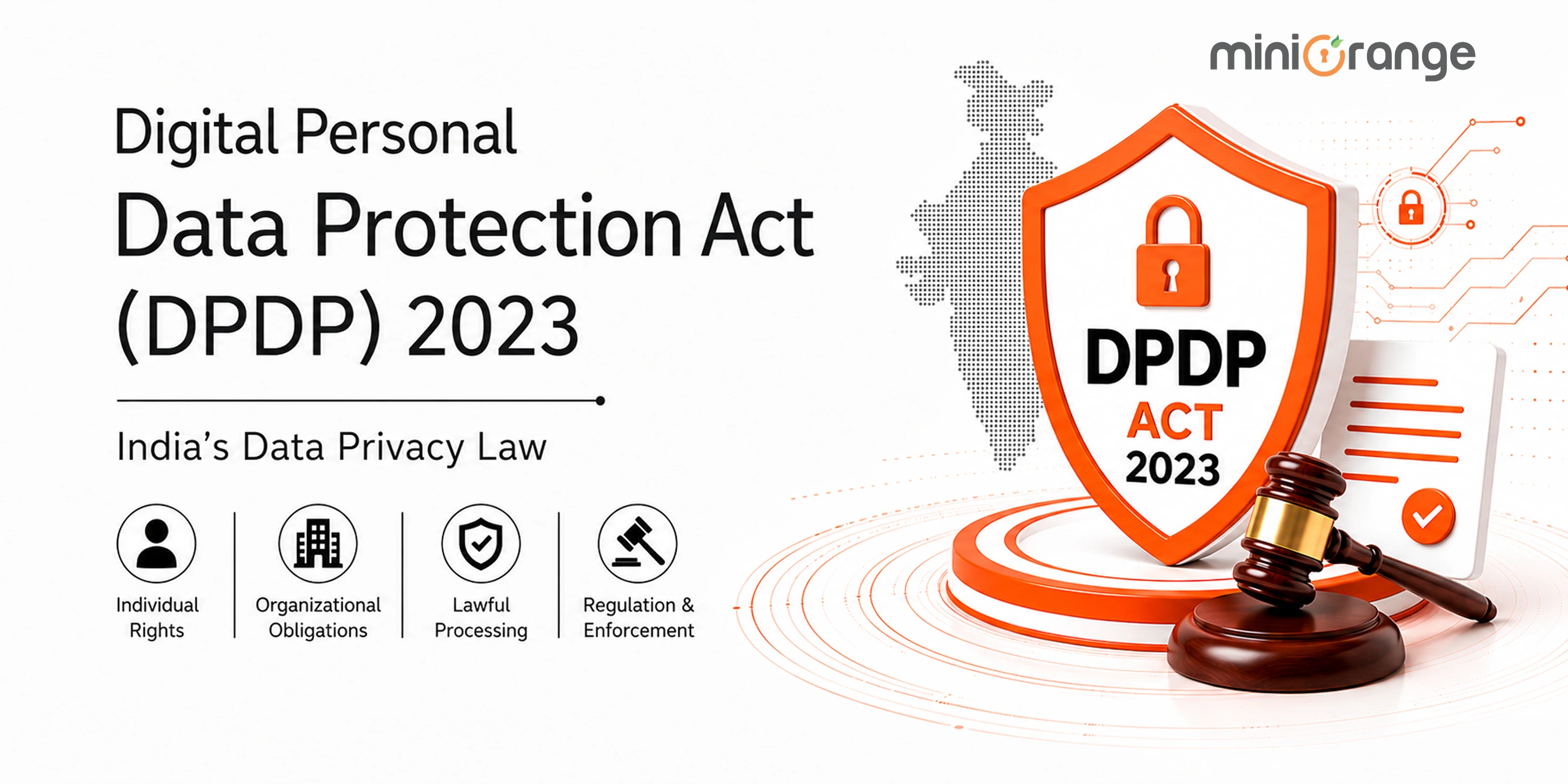 The DPDP Act 2023 establishes a structured framework for lawful digital personal data processing in India. The law defines the rights of individuals and outlines obligations for organizations, including consent management, security safeguards, data breach notification, and responsible personal data processing practices.
TL;DR
- The DPDP Act 2023 is India’s primary data privacy law governing digital personal data.
- The Act applies to organizations processing digital personal data in India and, in certain cases, foreign companies serving Indian users.
- It introduces a consent-driven framework for lawful personal data processing.
- Individuals, known as Data Principals, receive the rights related to access, correction, erasure, and grievance redressal.
- Organizations, known as Data Fiduciaries, must implement security safeguards, breach notification processes, and responsible data processing practices.
- The Act establishes the Data Protection Board of India and introduces penalties for non-compliance with DPDP requirements.
What is the DPDP Act 2023?
The DPDP Act 2023 is India’s dedicated data privacy law that regulates how organizations collect, process, store, and use digital personal data while protecting the rights of individuals.
What Does DPDP Stand For?
DPDP stands for Digital Personal Data Protection. The term is derived from the Digital Personal Data Protection Act 2023, India’s dedicated data privacy law designed to regulate how organizations collect, process, store, share, and protect digital personal data.
Under the DPDP Act 2023, digital personal data refers to any personal information that exists in digital form, whether collected online or digitized from offline records. The law applies to organizations, businesses, platforms, and entities that process such personal data for lawful purposes.
Why Was the DPDP Act Introduced?
- Growth of India’s Digital Economy
India’s rapid digital adoption across banking, e-commerce, healthcare, fintech, and government services has significantly increased the volume of digital personal data collected, processed, stored, and shared across platforms and organizations. - Increased Collection of Personal Data
Organizations increasingly rely on personal data for digital services, customer engagement, analytics, onboarding, and transactions, creating the need for stronger governance around how digital personal data is handled responsibly. - Privacy Concerns and Data Misuse
The rise in unauthorized data collection, excessive data sharing, targeted tracking, and data breach incidents raised serious concerns around privacy, transparency, consent practices, and misuse of personal information. - Need for a Dedicated Privacy Framework
Before the DPDP Act 2023, India lacked a unified data privacy law defining how organizations should lawfully process digital personal data while ensuring accountability, transparency, and privacy protection. - Recognition of Privacy as a Fundamental Right
The recognition of privacy as a fundamental right in India further strengthened the need for a structured legal framework governing digital personal data processing and individual privacy rights.
What Problem Does the DPDP Act Solve?
- Creates a unified framework for digital personal data protection in India.
- Standardizes consent and lawful data processing practices.
- Establishes rights for individuals over their personal data.
- Defines accountability and obligations for organizations processing data.
- Introduces safeguards against misuse, unauthorized access, and data breaches.
- Strengthens transparency in how organizations handle personal data.
- Establishes enforcement and grievance redressal mechanisms through the Data Protection Board of India.
Who Does the DPDP Act Apply To?
The DPDP Act 2023 applies to organizations and entities processing digital personal data in India. In certain cases, the law also applies to organizations outside India if they offer goods or services to individuals within India.
Does the DPDP Act Apply to Indian Organizations?
Yes, the DPDP Act applies to Indian organizations processing digital personal data as part of their business operations, services, platforms, applications, or customer interactions.
- Enterprises
Large enterprises processing customer, employee, partner, or operational data must comply with DPDP requirements related to consent, security safeguards, data governance, and lawful personal data processing. - Startups
Startups collecting user information through websites, mobile applications, SaaS products, or digital onboarding processes may also fall under the scope of the DPDP Act 2023. - E-commerce Platforms
E-commerce platforms processing customer information, payment details, addresses, transaction records, and behavioral data are required to handle digital personal data responsibly under the DPDP framework. - BFSI Organizations Banks, financial institutions, fintech companies, insurers, and other BFSI organizations process large volumes of sensitive personal data and are directly impacted by DPDP compliance requirements.
- SaaS Providers
SaaS providers storing or processing customer, employee, analytics, or operational data through digital platforms may need to implement privacy governance and data protection controls under the Act. - Healthcare Institutions
Hospitals, healthcare providers, healthtech platforms, and diagnostic organizations that handle patient-related digital personal data may also be subject to the DPDP Act.
Does the DPDP Act Apply to Foreign Companies?
Yes, the DPDP Act has extraterritorial applicability in certain scenarios. Foreign organizations may also be covered under the law if they process digital personal data related to individuals in India.
Organizations Offering Goods or Services in India
Any foreign company offering products, digital platforms, applications, subscriptions, or services to individuals within India may need to comply with the DPDP Act 2023.
What Type of Data Does the Act Cover?
The DPDP Act specifically applies to digital personal data processed within India or in connection with services offered to individuals in India.
- Digital Personal Data
Digital personal data includes personal information collected, stored, shared, or processed in digital form through websites, applications, cloud platforms, digital services, and online systems. - Digitized Offline Personal Data
The law also applies to offline personal data that has subsequently been digitized and processed through digital systems, databases, or electronic platforms.
Who Is Exempt from the DPDP Act?
While the DPDP Act has broad applicability, certain activities and scenarios may receive exemptions under the law.
- Personal or Domestic Use Personal data processed by individuals strictly for personal or domestic purposes is generally exempt from the applicability of the DPDP Act 2023.
- Certain Legal and Regulatory Exemptions Specific processing activities related to legal proceedings, regulatory functions, law enforcement, or judicial purposes may receive exemptions under the Act.
- Government Exemptions in Specific Scenarios The Government may exempt certain entities or processing activities in scenarios involving national security, public order, sovereignty, or other legally permitted circumstances.
Key Terms Under the DPDP Act 2023
Understanding the key terms used in the DPDP Act 2023 is important for interpreting how the law regulates digital personal data, defines privacy rights, and establishes compliance obligations for organizations processing personal information.
What is Digital Personal Data?
Under the DPDP Act 2023, digital personal data refers to any personal information that exists in digital form or has been digitized from offline records. This may include names, phone numbers, email addresses, identification details, financial information, health records, or any data linked to an identifiable individual.
Who is a Data Principal?
A Data Principal is the individual to whom the personal data relates. Under the DPDP Act, Data Principals are granted rights related to access, correction, erasure, grievance redressal, and control over how their digital personal data is processed.
Who is a Data Fiduciary?
A Data Fiduciary is any organization, business, platform, or entity that determines why and how digital personal data is processed. Data Fiduciaries are responsible for complying with DPDP requirements related to consent, security safeguards, and lawful data processing.
What is a Data Processor?
A Data Processor is an entity that processes personal data on behalf of a Data Fiduciary. This may include third-party vendors, cloud service providers, technology partners, or outsourced service providers handling digital personal data.
What is a Consent Manager?
A Consent Manager is an entity registered under the DPDP framework that enables individuals to give, manage, review, and withdraw consent for the processing of their digital personal data through an accessible and transparent platform.
What is a Significant Data Fiduciary (SDF)?
Based on Section 10(1) of the Digital Personal Data Protection (DPDP) Act, 2023, a Significant Data Fiduciary (SDF) is:
A Data Fiduciary or class of Data Fiduciaries that may be notified by the Central Government as "Significant" based on an assessment of factors such as the volume and sensitivity of personal data processed, risk to the rights of Data Principals, potential impact on India's sovereignty and integrity, risk to electoral democracy, security of the State, and public order.
How Does the DPDP Act Regulate Personal Data Processing?
The DPDP Act 2023 establishes a consent-driven framework for lawful digital personal data processing in India. The law defines when organizations can collect, process, store, and use personal data while ensuring transparency and accountability.
Consent as the Primary Basis for Processing
The DPDP Act primarily relies on consent for lawful personal data processing. Organizations must obtain consent before processing digital personal data in most situations.
What Makes Consent Valid?
The DPDP Act defines specific conditions for obtaining valid consent from individuals before processing their personal data.
Clear and Informed Consent: Individuals must clearly understand what personal data is being collected and why it is being processed.
Specific Purpose: Consent should be linked to a specific and lawful purpose for processing personal data.
Unambiguous Indication: Consent must clearly indicate agreement without misleading or unclear language.
When Can Data Be Processed Without Consent?
The DPDP Act allows processing without consent in certain lawful and legitimate situations defined under the law.
- Legitimate Uses Defined Under the Act
- Regulatory and Legal Processing Scenarios
Notice Requirements Under the Act
Organizations must provide clear notices explaining how digital personal data will be collected, processed, and used.
Clear Notices: Privacy notices should be simple, transparent, and easy to understand.
Purpose Disclosure: Organizations must explain why personal data is being collected and processed.
Withdrawal Mechanisms: Individuals should be informed about how they can withdraw consent.
Rights of Data Principals Under the DPDP Act
The DPDP Act 2023 grants individuals, known as Data Principals, specific rights over how their digital personal data is collected, processed, stored, and used by organizations.
Right to Access Information
Data Principals have the right to know what personal data is being processed, why it is being processed, and which organizations have access to it.
Right to Correction and Erasure
Individuals can request correction of inaccurate personal data and ask organizations to erase data that is no longer required for the stated purpose.
Right to Grievance Redressal
The DPDP Act allows individuals to raise complaints regarding personal data processing and seek resolution through grievance redressal mechanisms.
Right to Nominate
Data Principals can nominate another individual to exercise their rights under the DPDP Act in case of death or incapacity.
Duties of Data Principals Under the DPDP Act
Along with rights, the DPDP Act 2023 also outlines certain responsibilities for individuals while exercising their privacy rights and interacting with organizations.
Providing Authentic Information
Individuals should provide accurate and authentic personal information while interacting with organizations or digital platforms.
Avoiding Impersonation
The DPDP Act discourages individuals from impersonating another person while providing personal data or exercising rights under the law.
Avoiding False Grievances
Data Principals should avoid filing false or frivolous complaints related to personal data processing practices.
Compliance Responsibilities of Individuals
Individuals are expected to exercise their rights responsibly and comply with lawful obligations defined under the DPDP framework.
What Are the Obligations of Data Fiduciaries?
Under the DPDP Act 2023, organizations processing digital personal data must follow specific obligations to ensure lawful, secure, and transparent data processing practices.
Protect Personal Data
Data Fiduciaries must process digital personal data responsibly and prevent unauthorized access, misuse, or unlawful disclosure of personal information.
Implement Security Safeguards
Organizations are required to implement reasonable security safeguards to protect digital personal data from breaches and unauthorized processing.
Notify Personal Data Breaches
Under DPDP Rules 2025, Data Fiduciaries must notify the Data Protection Board and affected individuals immediately upon becoming aware of a data breach, and submit a detailed incident report within 72 hours. The reporting timeline begins from breach awareness, not the completion of an internal investigation.
Ensure Accuracy of Data
Organizations should ensure personal data remains accurate and updated, especially when used for important decisions affecting individuals.
Cross-Border Data Transfers
The DPDP Act permits cross-border transfer of personal data by default and only restricts transfers to countries or territories specifically notified by the Central Government. Organizations can continue using global cloud providers and overseas data processors, subject to applicable security and compliance obligations.
Establish Grievance Redressal Mechanisms
Data Fiduciaries must provide accessible grievance mechanisms for individuals to raise concerns related to personal data processing.
Erase Data When No Longer Required
Organizations should erase personal data once the purpose for processing has been completed unless retention is required under applicable laws.
Additional Responsibilities for Processing Children’s Data
The DPDP Act introduces additional obligations for organizations processing children’s personal data. Organizations may need to obtain verifiable parental consent before processing children’s personal data.
What is a Significant Data Fiduciary (SDF)?
Under the DPDP Act 2023, a Significant Data Fiduciary (SDF) is a Data Fiduciary identified by the Government based on the scale, sensitivity, and potential impact of its personal data processing activities.
How Is an SDF Identified?
The Government may classify an organization as a Significant Data Fiduciary based on several factors related to data processing activities and associated risks.
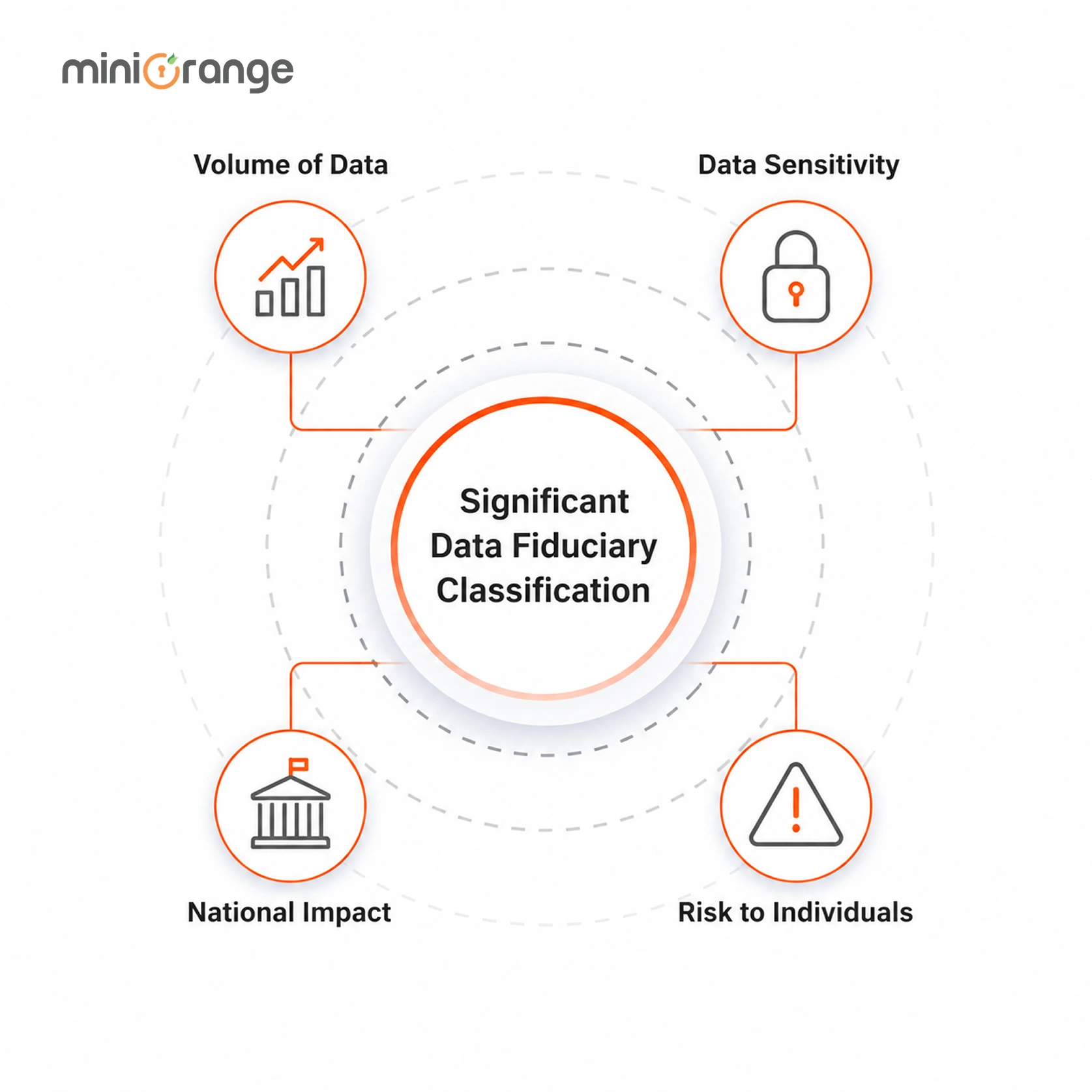
- Volume of Data Processed
Organizations processing large volumes of digital personal data may be categorized as Significant Data Fiduciaries under the DPDP framework. - Sensitivity of Data
Entities handling sensitive or high-risk personal data may face additional compliance obligations due to the nature of the information processed. - Risk to Individuals
Organizations whose processing activities could significantly impact the rights or privacy of individuals may be designated as SDFs. - Impact on National Interests
Data processing activities affecting national security, sovereignty, public order, or critical sectors may also influence SDF classification.
Additional Obligations for SDFs
Significant Data Fiduciaries are subject to additional compliance and governance requirements under the DPDP Act 2023.
Appointment of a Data Protection Officer
SDFs may be required to appoint a Data Protection Officer (DPO) responsible for overseeing DPDP compliance and grievance handling.
Independent Data Audits
Organizations classified as SDFs may need to conduct independent audits to assess compliance with DPDP requirements.
Data Protection Impact Assessments (DPIAs)
SDFs may also be required to perform Data Protection Impact Assessments to evaluate risks associated with personal data processing activities.
What Are the DPDP Rules 2025?
The DPDP Rules 2025 provide operational guidance for implementing the Digital Personal Data Protection Act 2023 and help clarify compliance expectations for organizations processing digital personal data.
Why Were the Rules Introduced?
The DPDP Rules 2025 were introduced to operationalize the DPDP Act by providing additional clarity around privacy notices, consent mechanisms, security safeguards, breach reporting, and compliance obligations.
Key Areas Covered Under the DPDP Rules 2025
- Consent Notice Standards
The Rules provide guidance on how organizations should present consent notices and privacy-related information to individuals. - Security Safeguards
Organizations are expected to implement reasonable measures to protect digital personal data from unauthorized access or misuse. - Breach Reporting
The Rules outline expectations related to personal data breach notification and reporting procedures. - Consent Managers
The DPDP Rules also define operational expectations for entities functioning as Consent Managers under the Act. - SDF Obligations
Additional compliance expectations for Significant Data Fiduciaries are further clarified under the Rules. - Data Retention & Deletion
Organizations must erase personal data once the purpose for processing is fulfilled or consent is withdrawn. Additionally, certain large digital platforms must delete personal data of users who remain inactive for 3 years and maintain records of such deletion.
What is the Data Protection Board of India?
The Data Protection Board of India is the regulatory body established under the DPDP Act 2023 to oversee enforcement, grievance handling, and compliance-related proceedings under the law.
Role of the Data Protection Board
The Board is responsible for addressing complaints, overseeing enforcement actions, and ensuring organizations comply with DPDP requirements related to digital personal data processing.
Powers and Responsibilities
The Data Protection Board may review violations, investigate non-compliance, direct corrective measures, and impose penalties under the DPDP framework.
Handling Complaints and Enforcement
The Board plays a central role in grievance handling and enforcement under the DPDP Act.
- Dispute Resolution: The Board may handle disputes and complaints related to personal data processing practices.
- Investigations: The Board may investigate instances of non-compliance or violations under the DPDP Act.
- Enforcement Actions: Organizations failing to comply with DPDP requirements may face regulatory action or corrective directions.
- Penalty Decisions: The Board may impose penalties based on the nature and severity of violations under the DPDP framework.
Penalties Under the DPDP Act
The DPDP Act 2023 introduces financial penalties and enforcement measures for organizations that fail to comply with lawful digital personal data processing requirements, consent obligations, security safeguards, and breach reporting responsibilities under the Act.
What Happens if an Organization Violates the Act?
Organizations violating the DPDP Act may face investigations, corrective directions, grievance proceedings, and financial penalties imposed by the Data Protection Board of India, depending on the nature and severity of non-compliance.
The Act allows penalties reaching up to ₹250 crore for certain violations related to failure in protecting digital personal data and implementing reasonable security safeguards.
Penalty Structure Breakdown
Penalties under the DPDP Act 2023 are tiered based on the nature and severity of non-compliance related to digital personal data processing, consent practices, security safeguards, and regulatory obligations.
| Type of Non-Compliance | Maximum Penalty |
|---|---|
| Failure to implement reasonable security safeguards to prevent a personal data breach | Up to ₹250 Crore |
| Failure to notify the Data Protection Board of India (DPBI) about a breach | Up to ₹200 Crore |
| Violations involving children’s personal data or invalid consent practices | Up to ₹200 Crore |
| Failure of Significant Data Fiduciaries (SDFs) to meet additional compliance obligations | Up to ₹150 Crore |
| Failure to fulfill Data Principal rights such as access, correction, or grievance redressal | Up to ₹50 Crore |
| Non-compliance with orders issued by the Data Protection Board of India | Up to ₹20 Crore |
| Breach of duties by a Data Principal, including impersonation or providing false information | Up to ₹10,000 |
The Data Protection Board may consider factors such as the severity of the violation, duration of non-compliance, type of personal data affected, and impact on individuals before imposing penalties under the DPDP framework.
How Businesses Can Prepare for DPDP Compliance
Organizations processing digital personal data may need to review their privacy, governance, consent, and security practices to align with the requirements of the DPDP Act 2023.
As DPDP compliance evolves, businesses should focus on understanding how personal data moves across systems, applications, vendors, and operational processes while ensuring lawful and transparent processing practices.
Understand What Personal Data Is Being Processed
Businesses should identify the types of digital personal data collected, processed, stored, and shared across websites, applications, internal systems, and third-party platforms.
This helps organizations understand where personal data exists and how it is being used across business operations.
Review Existing Consent Mechanisms
Organizations should evaluate whether consent collection practices are transparent, purpose-specific, and aligned with DPDP consent requirements.
Consent notices, withdrawal mechanisms, and privacy disclosures should clearly explain how personal data is processed.
Strengthen Data Security and Access Controls
Businesses may need to review safeguards protecting digital personal data from unauthorized access, misuse, accidental exposure, or data breaches.
Organizations should also evaluate access governance practices for employees, vendors, and third-party service providers handling personal data.
Establish Breach Response Processes
Organizations should define processes for identifying, reporting, managing, and responding to personal data breaches under the DPDP framework.
Prepared breach response processes can help improve regulatory readiness and incident handling capabilities.
Review Third-Party Data Sharing Practices
Businesses should assess how vendors, cloud providers, partners, and external service providers access or process digital personal data.
Organizations may also need to review contractual obligations and accountability related to third-party data processing activities.
Build Internal Privacy Governance Processes
Organizations may need to establish governance practices supporting lawful data processing, accountability, risk management, audit readiness, and ongoing DPDP compliance monitoring.
Privacy governance also helps align business operations with evolving data protection requirements and regulatory expectations.
Why the DPDP Act Matters for India’s Digital Future
The DPDP Act 2023 marks a significant shift in how digital personal data is governed in India. The Act strengthens the rights of individuals while establishing clearer accountability for organizations handling digital personal data.
Beyond regulatory compliance, the DPDP Act also plays an important role in building long-term digital trust across India’s digital ecosystem. By introducing structured consent practices, privacy safeguards, grievance mechanisms, and governance obligations, the law supports responsible innovation, improves transparency, and increases confidence in how personal data is collected and used.
Frequently Asked Questions
1. Is the DPDP Act similar to GDPR?
The DPDP Act and GDPR both focus on protecting personal data and strengthening privacy rights. However, the DPDP Act is India’s dedicated data privacy law and differs from GDPR in areas such as lawful processing conditions, regulatory structure, penalties, and compliance requirements.
2. What is considered personal data under the DPDP Act?
Under the DPDP Act 2023, personal data refers to any information that can identify an individual either directly or indirectly. This may include names, phone numbers, email addresses, identification details, financial information, health records, and other digitally processed personal information.
3. What are the DPDP Rules 2025?
The DPDP Rules 2025 provide operational guidance for implementing the DPDP Act, including consent notices, security safeguards, breach reporting, and compliance-related expectations.
4. What are the obligations of Data Fiduciaries?
Data Fiduciaries must process digital personal data lawfully, obtain valid consent, implement security safeguards, report applicable breaches, and provide grievance redressal mechanisms under the DPDP Act.
5. How does the DPDP Act regulate children’s personal data?
The DPDP Act introduces additional obligations for organizations processing children’s personal data, including parental consent requirements and restrictions on tracking or targeted advertising involving minors.
6. What happens if there is a conflict between the DPDP Act and other sectoral laws?
In certain scenarios, sector-specific regulations may continue to apply alongside the DPDP Act. Organizations may need to comply with both the DPDP framework and applicable industry-specific legal or regulatory requirements.
About the Author

Content Writer
Minal is an experienced B2B content writer. She has written over 250 articles across industries like UI/UX, real estate, automotive, digital marketing, SaaS, AI & ML, and cybersecurity. She brings her interest in cybersecurity to life by creating clear, engaging content tailored for technical, non-technical, and creative pieces. Her aim is to simplify complex topics, highlight product value, and connect with both technical and non-technical audiences.
Leave a Comment