
Introduction
Your phone rings. The number looks local, even familiar - so you answer. But within seconds, you're being asked to “verify your bank account” or “reset your login credentials.” Sounds suspicious? It is. That call likely came from a VoIP number, which is not a regular phone line.
VoIP (Voice over Internet Protocol) lets anyone make calls over the internet, not just through mobile networks or landlines. It powers business communication, customer support, remote work, and even the number behind that call you just answered. VoIP numbers can appear to be local or international, but they aren’t tied to a specific location or device.
And while VoIP has made communication faster, cheaper, and more flexible for businesses, it’s also opened new doors for scammers and spoofers. In this blog, we’ll explain what VoIP is, how it works, and why understanding it is key to staying secure in a world where phone numbers can no longer be trusted at face value.
What is VoIP?
VoIP stands for Voice over Internet Protocol, and it’s exactly what it sounds like: a way to make phone calls using the internet instead of traditional telephone lines.
Also known as Voice over IP, this technology turns your voice into digital signals and transmits them over the internet. So instead of relying on copper wires and landline infrastructure, VoIP lets you make calls through apps, browsers, desktops, or even your existing phone system, as long as there’s an internet connection.
Most people use VoIP every day without realizing it. If you’ve ever made a call on WhatsApp, Zoom, Google Meet, or Microsoft Teams, you’ve already used Voice over IP.
VoIP is the reason remote teams stay connected, customer service is always on, and international calling doesn’t cost a fortune anymore.
How Does Voice Over Internet Protocol (VoIP) Work
At its core, Voice over Internet Protocol (VoIP) works by converting your voice into small packets of data and sending them over the internet, much like emails or files.
Here’s how a typical VoIP call flows:
- You speak into your phone or headset.
- Your voice is instantly turned into digital data.
- This data travels through the internet to the person you’re calling.
- Their device converts the data back into sound in real time.
The entire process takes milliseconds, which is why VoIP calls feel almost instant.
Behind the scenes, a VoIP service provider handles all the heavy lifting, routing calls, assigning virtual phone numbers, managing bandwidth, and ensuring call quality. These providers also offer features like voicemail-to-email, call forwarding, video conferencing, and sometimes even CRM integrations for business users.
You don’t need traditional phone lines or SIM cards. Just a reliable internet connection, a device (phone, laptop, or VoIP desk phone), and an account with a VoIP service provider, and you're good to go.
Difference Between VoIP and Landline
| Feature | Landline | VoIP |
|---|---|---|
| Technology | Analog signals through copper wires | Digital signals over the internet |
| Hardware Required | Telephone set, wiring, exchange | Any internet-enabled device (phone, laptop, VoIP phone) |
| Mobility | Tied to a location or number | Portable and works from anywhere |
| Scalability | Needs physical lines and setup | Easily scalable through software |
| Features | Basic calling, voicemail | Call forwarding, video, voicemail-to-email, analytics, etc. |
| Cost | Often higher, especially for long-distance | Lower costs, especially for global calling |
Advantages of VoIP
VoIP has taken over traditional telephony for several reasons. Here’s why businesses and individuals are making the switch:
1. Lower Costs
You don’t pay per minute like traditional calls. Most VoIP calls, even international ones, are either free or significantly cheaper.
2. Flexibility and Mobility
With VoIP, you can take calls from your laptop, mobile, tablet, or even a browser, from anywhere in the world.
3. Easy to Scale
Adding a new team member? No need to set up a new physical line. Just create a new VoIP account and you’re set.
4. Advanced Features
Call forwarding, voicemail-to-email, video conferencing, analytics, and call recording, all baked into one system.
5. Unified Communication
Voice, video, chat, and file sharing can happen on one platform, making collaboration much easier.
Disadvantages of VoIP
Like any tech, VoIP has its trade-offs. Here are a few things to watch out for:
1. Dependent on Internet Quality
No internet, no calls. If your connection is weak or unstable, call quality drops.
2. Power Outages
Unlike landlines, VoIP systems stop working if there’s a power cut, unless you have a backup.
3. Latency and Jitter
Sometimes, digital data packets arrive out of order or late, causing echoes or delays.
4. Security Risks
Because VoIP works over the internet, it can be vulnerable to spoofing, phishing, or VoIP-based scams, especially if proper security measures aren’t in place (more on this later).
Voice, video, chat, and file sharing can happen on one platform, making collaboration much easier.
Types of VoIP Numbers and Why They Matter
Not all VoIP numbers are created equal. In fact, understanding the different types is key to knowing how scammers exploit them and how you can spot the signs.
Here are the main types of VoIP numbers:
1. Fixed VoIP Numbers
These are tied to a physical address. They’re often used by businesses and are more trusted because they go through a basic verification process. Think of them as the digital version of a landline, just smarter.
2. Non-Fixed VoIP Numbers
These are tied to a physical address. They’re often used by businesses and are more trusted because they go through a basic verification process. Think of them as the digital version of a landline, just smarter.
3. Toll-Free VoIP Numbers
These are tied to a physical address. They’re often used by businesses and are more trusted because they go through a basic verification process. Think of them as the digital version of a landline, just smarter.
4. Fixed VoIP Numbers
These look like any regular number in your city or country. A business in Delhi can get a New York number and appear local to clients abroad, which is great for business, but also a trick scammers use to appear trustworthy.
While VoIP technology makes communication borderless and cheap, the very features that make it powerful also make it exploitable.
Security Risks with Fake VoIP Numbers
Here’s the problem: VoIP numbers can be created in minutes, often with zero identity verification. That’s exactly what scammers count on.
Fake VoIP numbers are cheap, disposable, and hard to trace. Fraudsters use them to spoof local caller IDs, impersonate banks or customer service teams, and launch phishing attacks over the phone.
Common VoIP-based Scam Tactics:
1. Caller ID Spoofing
The number looks like it’s from your bank, your insurance company, or even your HR department. In reality, it's a non-fixed VoIP number masking someone in another country.
2. Phishing via Voice (Vishing)
You’re told there's suspicious activity on your account, and you're asked to “confirm” personal info. These social engineering scams rely heavily on fake VoIP numbers to sound legit.
3. One-Time Use Numbers for Fraud
Scammers use burner VoIP numbers to sign up for fake accounts, bypass 2FA, or run coupon abuse scams. Once blocked, they just create a new number.
4. Business Impersonation
Cybercriminals use VoIP to impersonate legitimate businesses and deceive users into making payments, resetting passwords, or granting internal access.
Why It's Hard to Trace VOIP
VoIP numbers, especially non-fixed ones, are not tied to a physical address. They can be generated through global VoIP service providers, free calling apps, or private APIs. Once a scam is reported, the number is usually long gone.
How to Detect Fake VoIP Numbers and Protect Your Business?
Scammers are getting better at sounding real. But there are still ways to flag suspicious VoIP activity before damage is done, especially if you're running a website, customer portal, or employee dashboard.
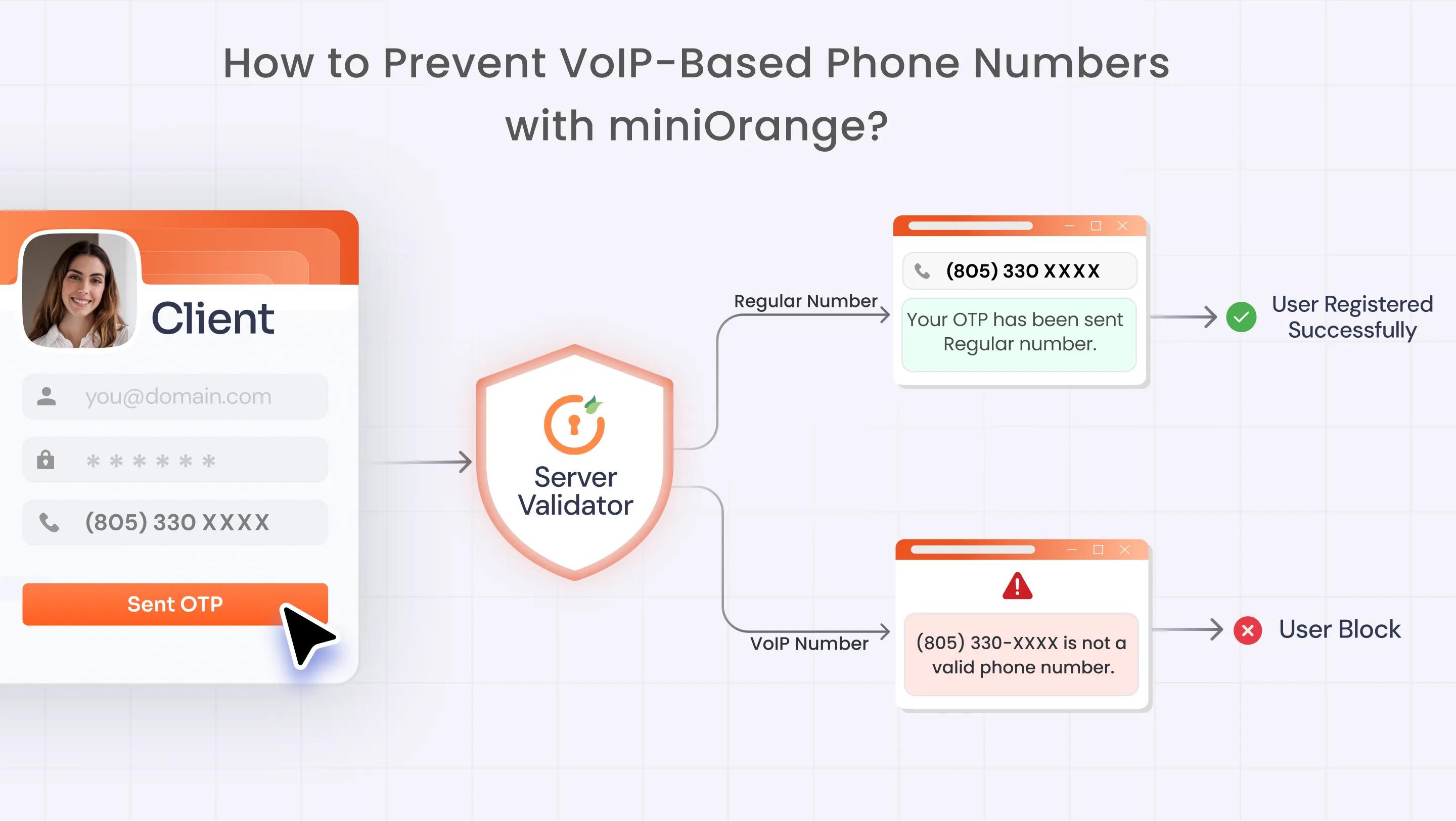
Signs of Fake VoIP Numbers:
- The caller ID doesn’t match the claimed source (e.g., a US-based bank calling from a non-fixed VoIP number).
- Multiple accounts sign up from the same IP using different VoIP numbers.
- You’re asked to verify personal details or reset passwords through unexpected calls.
- The number fails validation or appears on public VoIP spam databases.
- The numbers can be differentiated based on MCC/MNC Codes.
While detection is half the battle, prevention is where the real protection happens.
How to Protect Fake Sign-ups Done Using VOIP Numbers on Your Website?
One of the common abuse vectors for online platforms is automated sign-ups using VoIP numbers. especially non-fixed VoIP numbers that are cheap, disposable, and hard to trace. These fake sign-ups can lead to spam, coupon abuse, fake reviews, and fraud attempts.
VoIP numbers do not carry Mobile Country Code (MCC) or Mobile Network Code (MNC) — the two identifiers used in cellular networks to track a number’s origin.
Let’s break that down:
- MCC (Mobile Country Code): Identifies the country of the mobile network.
- MNC (Mobile Network Code): Identifies the specific mobile operator within that country.
- When combined, MCC + MNC form a unique six-digit code. For example, 310 (USA) + 410 (AT&T) = 310410.
These identifiers are typically used to verify the authenticity of mobile numbers. However, VoIP numbers are not tied to physical SIM cards or mobile network operators, so they don’t include MCC/MNC data, making traditional carrier-based filtering useless.
How to Detect and Block VoIP Numbers Programmatically?
You can use libraries like Google’s libphonenumber to validate phone numbers at the time of user registration. This library helps you:
- Parse and format international phone numbers
- Identify the number type (mobile, landline, VoIP)
- Flag known VoIP patterns or ranges
While libphonenumber doesn't extract MCC/MNC for VoIP numbers (since they don't have them), it can help detect non-mobile carrier numbers, which are often VoIP-based.
Best Practices to Stop VoIP-Based Fake Sign-Ups
Here are some proven strategies that you can use to protect your website from VoIP-based fake sign-ups:
1. Phone Type Validation at Sign-Up:
- Use phone validation APIs that can detect whether a number is mobile, landline, or VoIP.
2. Apply 2FA on Login and Registration:
- Even if someone signs up with a VoIP number, adding two-factor authentication (2FA), like OTPs or push notifications, will block unauthorized access.
- You can implement this easily with the miniOrange OTP Verification plugin for WordPress.
3. Block or Flag Suspicious Patterns:
- Watch for multiple sign-ups from the same IP, common VoIP prefixes, or numbers failing country-level consistency checks.
1. Combine with Email and Device Intelligence:
- Don’t rely on phone numbers alone. Add layers like email reputation scoring, device fingerprinting, and CAPTCHA.
Conclusion
VoIP has changed the way we communicate, but it’s also changed the way attackers operate.
Understanding how VoIP technology works, the difference between fixed and non-fixed numbers, and the security risks around fake VoIP numbers is no longer optional. Whether you're running a business website, managing user logins, or just trying to protect your personal data, staying alert is key.
The good news? You don’t have to do it alone.
Tools like the miniOrange OTP Verification plugin can help you secure logins, prevent unauthorized access, and add an extra layer of trust across your platform.
VoIP is here to stay, and with the right security measures, so is your peace of mind.
To know more about how the plugin protects your site from VoIP-based attacks, watch our webinar!
Frequently Asked Questions
1. What is a VoIP number?
A VoIP number is a phone number that works over the internet, not through traditional phone lines. It can be used from any device with a connection.
2.Can VoIP numbers be traced?
Fixed VoIP numbers can sometimes be traced to a verified address, but non-fixed VoIP numbers are harder to trace and often used by scammers.
3. How can I tell if a VoIP number is fake?
Look for inconsistent caller ID info, international codes disguised as local numbers, or numbers that appear in spam reports or lookup tools.
4. Are VoIP numbers illegal?
No, VoIP numbers are legal and widely used. However, some scammers misuse VoIP for fraudulent activities, which is illegal.
5. How does miniOrange 2FA protect against VoIP scams?
Even if a fake VoIP number is used to steal login details, the miniOrange OTP Verification plugin adds a second step, like an OTP or push notification, making unauthorized logins nearly impossible.
Leave a Comment