
Introduction
The way companies connect to the internet has changed rapidly. Most apps now live in the cloud, users work from anywhere, and attackers target every gap they can find. With more traffic bypassing the traditional IT security perimeter, the tools that once protected office networks can no longer keep up.
This shift has pushed businesses to adopt stronger web security controls. Two common options are to use a Secure Web Gateway and a Proxy Server. They sound similar, and they often appear in the same conversations, but they play very different roles in keeping businesses and data safe.
In this blog, we break down Secure Web Gateway vs Proxy, explain how a secure web gateway proxy works, compare SWG vs proxy capabilities, and show where each web gateway proxy solution fits. You’ll also learn the difference between SWG and proxy server functions and how to choose the right approach for your environment.
What is an SWG?
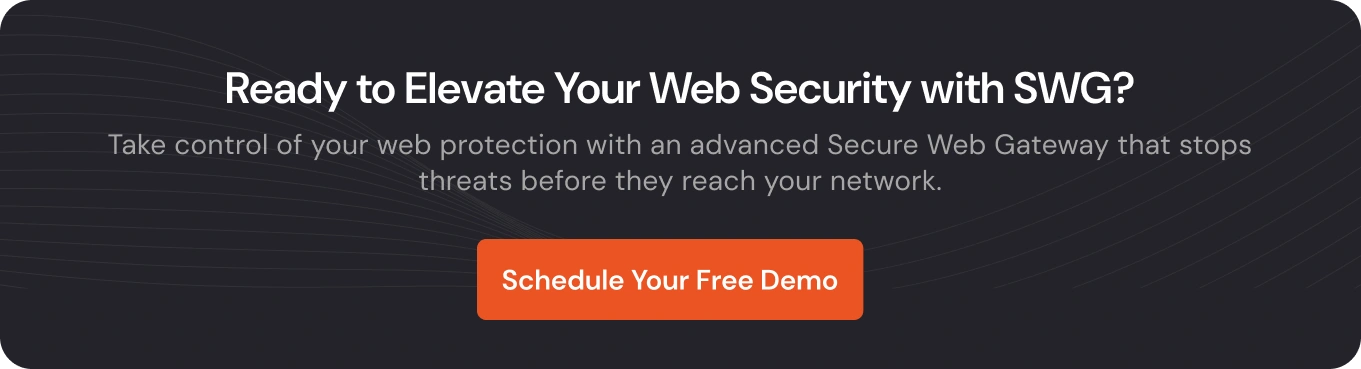
A Secure Web Gateway (SWG) is a security layer that sits between users and the internet to enforce policies and block risky user activity. A secure web gateway proxy acts as a controlled checkpoint, making sure every web request follows your rules and does not expose the business to data breaches.
An SWG examines traffic entering and leaving the network, blocking threats such as malware, phishing attempts, and suspicious downloads before they reach the user. It does this by applying controls such as URL filtering, application restrictions, and threat scanning. Each time someone tries to visit a site or use an unauthorized web app, the SWG checks that request in real time to only allow safe traffic to move through. This level of inspection is what sets it apart in the SWG vs proxy comparison.
As companies rely more on cloud tools and support teams working from a hybrid setup, the attack surface has increased. An SWG helps close those gaps by keeping internet use secure and preventing sensitive data from slipping outside the organization. For many businesses, it has become a core part of protecting people, systems, and information in any web gateway vs proxy conversation.
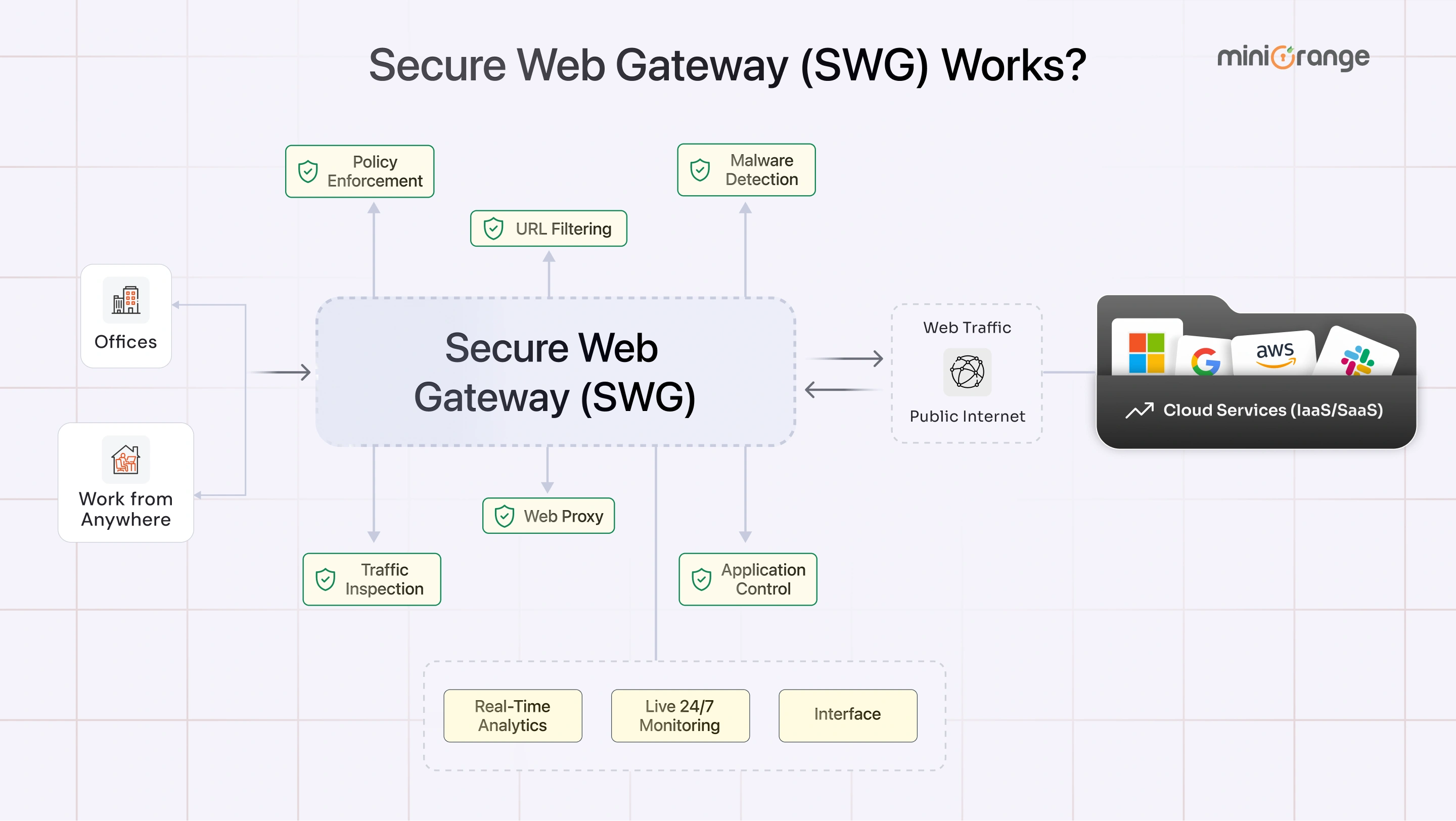
What is a Proxy Server?
A Proxy Server sits between a user and the internet and handles web requests on the user’s behalf. Instead of connecting straight to a website, the device sends the request to the proxy server first. The proxy reaches out to the site, collects the response, and passes it back to the user. This keeps the user's information out of view and provides a basic layer of privacy and protection.
Because it acts as the go-between, a proxy can also take on extra tasks. It can store frequently accessed content to speed up browsing, block sites that fall outside company policy, and apply simple access rules. Many proxies support encrypted connections, too. This further helps keep data safe while it travels.
Even though a proxy is not a full security solution, it is a helpful tool for managing traffic and controlling how users interact with the web.
Secure Web Gateway vs Proxy Server: Comparison and Differences
Both tools sit between users and the internet, but they solve different problems. Here is the difference between an SWG and a proxy server:
| Features | Secure Web Gateway (SWG) | Proxy Server |
|---|---|---|
| Main Function | Blocks web-based threats and enforces web usage policies | Routes traffic on behalf of users and hides IP addresses |
| Deployment Point | Between the user and the internet, with deep inspection | Between the user and websites, acting as a traffic relay |
| Threat Coverage | Malware, phishing, data loss, risky apps | Basic anonymity and limited filtering |
| Security Checks | Full traffic inspection with URL filtering, app controls, and threat scanning | Simple request forwarding with optional site blocking |
| Compliance Role | Enforces organizational security and data protection policies | Helps with basic access control and traffic logging |
| Ideal Use Case | Protecting users from online threats and securing all web activity | Managing outbound traffic, improving privacy, and reducing load through caching |
Are Proxy Servers and Secure Web Gateways the Same?
No. A proxy server and a secure web gateway are not the same, even though both sit between users and the internet. A proxy focuses on routing traffic and masking user identities, while an SWG adds full security inspection, threat prevention, and policy enforcement.
A proxy can help with privacy and basic control, but it does not scan for malware, block advanced threats, or prevent data loss. An SWG does all of that by inspecting traffic in real time and applying security rules across every web request.
In short, all SWGs use proxy-like functions to manage traffic, but a standard proxy does not offer the deeper protection or visibility that defines a secure web gateway.
How to Choose Between SWG vs. Proxy Server
Choosing between a secure web gateway and a proxy server comes down to what you need to protect and how much visibility you want.
If your goal is to control web access, block malicious sites, protect remote users, and enforce security policies, an SWG is the better fit. It offers deep inspection, threat prevention, data protection, and consistent security no matter where users connect from.
A proxy server works best when you only need basic traffic routing, simple site restrictions, IP masking, or caching to improve performance. It gives you control over outbound traffic but does not deliver the layered security required for modern threats.
For most organizations with cloud apps, remote work, and growing security requirements, an SWG provides more value. A proxy can still be useful in specific scenarios, but it is not a replacement for the protection an SWG delivers.

Leave a Comment