

In 2026, Single Sign-On (SSO) is no longer just a convenience feature. It has become a foundational pillar of enterprise security, user experience, and IT governance. As organizations accelerate cloud adoption and expand their SaaS ecosystems, the demand for the best SSO solutions has never been higher.
Whether you are managing a hybrid workforce, securing multi-cloud environments, or integrating hundreds of SaaS applications, choosing the right SSO platform is one of the most critical decisions your IT and security teams will make. This guide walks you through everything you need to know, from understanding what SSO platforms are to identifying the key features that matter most in 2026.
What Are SSO Platforms?
Single Sign-On platforms are an integral part of identity and access management (IAM) solutions that allow users to authenticate once and gain seamless access to multiple applications, systems, and services without re-entering credentials for each one. Rather than juggling separate usernames and passwords for every app, users log in through a single centralized identity provider (IdP) that handles authentication on their behalf.
How the Best SSO Solutions Work?
The SSO process follows a straightforward but secure sequence:
- A user attempts to access a connected application (the Service Provider, or SP).
- The application redirects the user to the SSO platform's identity provider for authentication.
- The identity provider verifies the user's credentials and applies MFA or adaptive checks as needed.
- Upon successful authentication, the IdP issues a secure token (SAML assertion, JWT, or similar).
- The token is passed back to the application, which grants the user access; no additional login is required.
- The same authenticated session is honored across all connected apps until it expires or the user logs out.
This token-based approach means credentials are never shared directly with individual applications, significantly reducing the attack surface across your entire environment.
The Role of Identity Providers
The identity provider is the engine of any SSO platform. It stores and manages user identities, enforces authentication policies, and acts as the trusted authority for all connected applications. Leading identity providers, including miniOrange, support enterprise directories like Active Directory, LDAP, and cloud directories. This enables the best SSO solutions to operate across on-premises, cloud, and hybrid environments without disruption.
Why Businesses Need SSO Solutions in 2026
The case for deploying enterprise-grade SSO platforms has grown stronger than ever. Organizations across industries are prioritizing the best SSO solutions as a core part of their 2026 security strategy.
Strengthen Security
Password-based attacks, including phishing, credential stuffing, and brute force attacks, remain the leading cause of breaches in 2026. The best SSO solutions eliminate password sprawl by drastically reducing the number of credentials users are required to manage. When combined with built-in Multi-Factor Authentication and adaptive authentication, SSO platforms enable a true Zero Trust model where every user, every device, and every access request is verified regardless of origin.
Improve User Experience
End users benefit immediately and tangibly from SSO platforms. With one secure login granting access to every connected application, employees spend significantly less time on password resets and authentication hurdles. A single set of credentials covers all approved apps whether they are cloud-based, on-premises, or part of a hybrid setup.
Simplify IT Operations
For IT and security teams, the best SSO platforms dramatically simplify access management. Instead of provisioning, deprovisioning, and auditing user access across dozens of separate systems, administrators manage everything through a single control plane. Centralized user provisioning and deprovisioning through SCIM integration removes the need for manual updates across individual applications.
Enable Scalability
As businesses grow, so does their SaaS stack. The best SSO platforms are architected to scale, supporting hundreds of application integrations without adding operational complexity. Whether an organization is onboarding a new cloud service, completing an acquisition, or expanding into new markets, a robust SSO platform adapts without requiring architectural changes.
Key Features to Look for in SSO Platforms
As you evaluate the best SSO solutions for your organization, the following capabilities are what separate enterprise-grade platforms from basic authentication tools.
Multi-Protocol Support
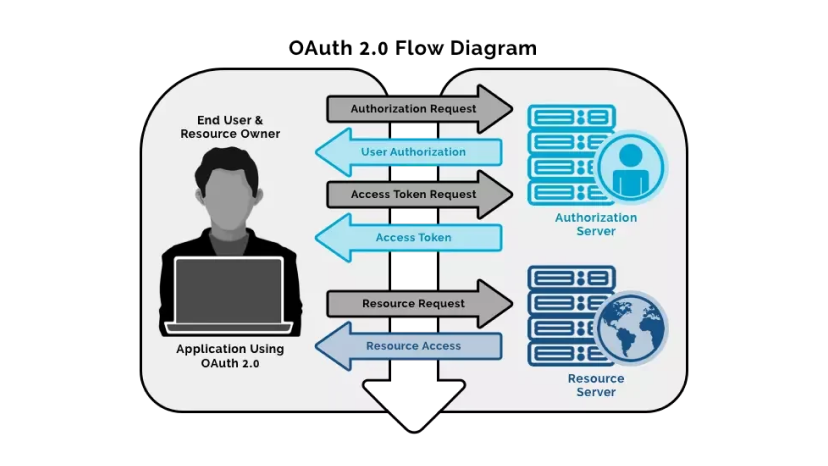
The best SSO platforms are protocol-agnostic; they communicate with any application in your ecosystem regardless of how it was built. SAML 2.0 remains the gold standard for enterprise SSO with legacy and on-premises applications. OAuth 2.0 enables secure delegated authorization for modern APIs and cloud services. OpenID Connect adds an identity layer on top of OAuth 2.0 to handle authentication for web and mobile applications. SCIM 2.0 automates user provisioning and deprovisioning across connected directories and applications.
Adaptive Authentication and MFA
Static passwords are no longer sufficient. The best SSO solutions layer risk-based authentication into the flow by using contextual signals like location, device health, user behavior, and time of access to dynamically adjust the level of verification required. High-risk login attempts trigger step-up MFA; low-risk logins from trusted devices proceed without interruption.
Integration Ecosystem
An SSO platform is only as valuable as the applications it connects to. The best SSO platforms come with extensive pre-built integration catalogs and flexible tools for connecting custom applications without prolonged implementation timelines. A strong integration ecosystem means your IT team spends less time building connectors and more time on strategic initiatives.
Explore miniOrange Integrations
Centralized Access Control
A unified administration console is essential for IT teams managing complex and growing access environments. The best SSO solutions provide granular, policy-driven access control from a single interface. Role-Based Access Control and Attribute-Based Access Control deliver fine-grained permissions that can be tailored to the specific needs of each department, application, or user group.
Flexible Deployment Options
Every organization has a unique infrastructure footprint, and the best SSO platforms accommodate all of them. Cloud-hosted deployment enables rapid rollout with minimal infrastructure overhead, making it the preferred option for organizations looking to move quickly. On-premises deployment remains available for organizations with strict data residency requirements or legacy infrastructure that cannot be migrated immediately.
Top 10 SSO Solutions & Platforms in 2026
1. miniOrange
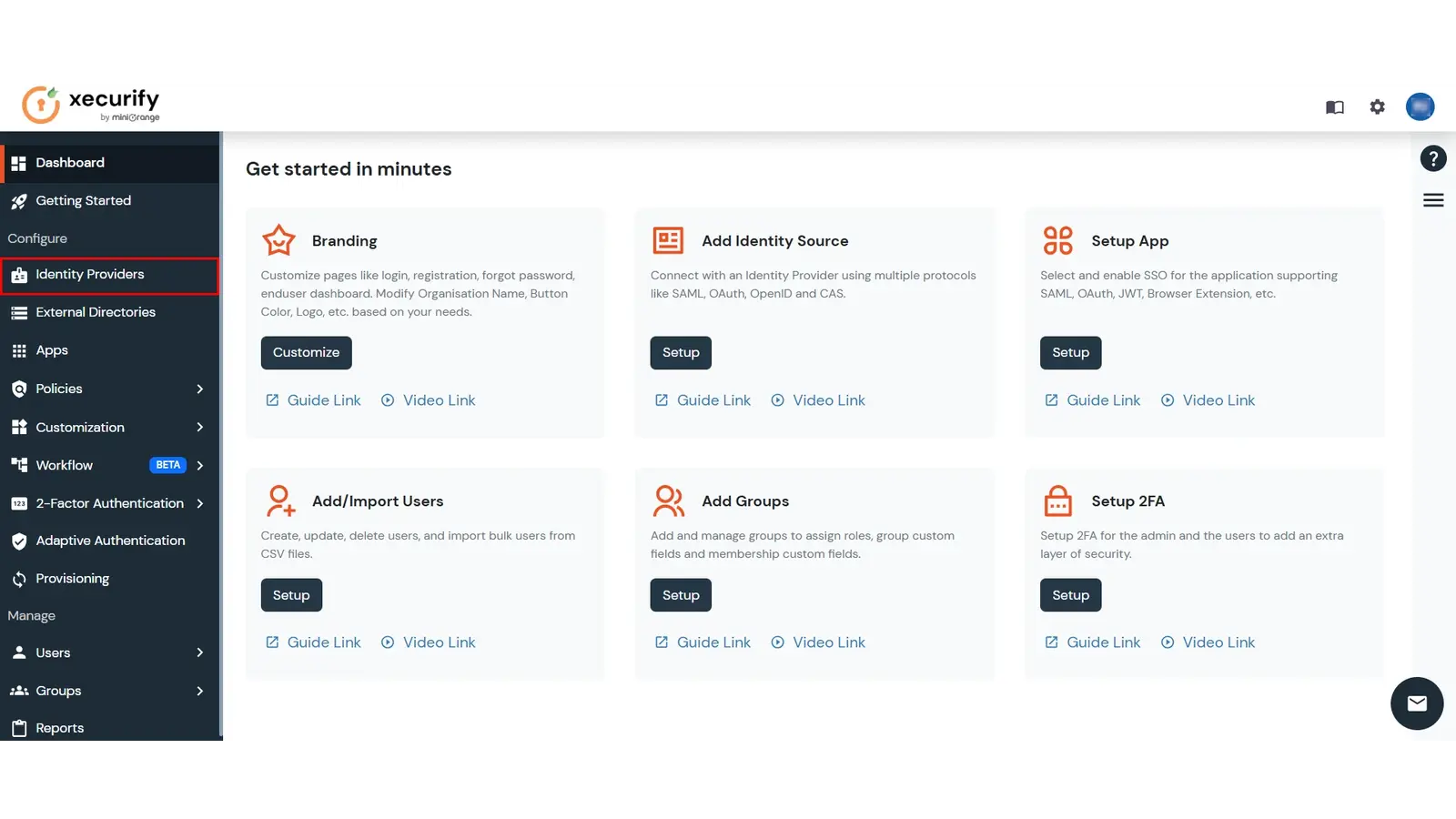
miniOrange is one of the most versatile and cost-effective SSO platforms in 2026. Built for organizations that need enterprise-grade identity security without the enterprise price tag, it delivers SSO, adaptive MFA, user provisioning, and identity brokering across cloud, on-premises, and hybrid environments.
It is particularly strong among mid-market enterprises, educational institutions, and healthcare organizations that require deep customization and responsive support. With over 6,000 pre-built integrations and full support for SAML 2.0, OAuth 2.0, OpenID Connect, and SCIM, miniOrange delivers exceptional value at a significantly lower total cost of ownership.
Key Features
- Multi-protocol SSO: SAML 2.0, OAuth 2.0, OpenID Connect, and SCIM 2.0
- MFA with 15+ authentication methods, including TOTP, biometrics, and passkeys
- 6,000+ pre-built integrations across SaaS, cloud, and on-premises applications
- Cloud, on-premises, and hybrid deployment without infrastructure compromise
- Unified admin console with RBAC, ABAC, and compliance-ready audit logs
- Transparent modular pricing that scales with organizational size and needs
G2: 4.6
2. Okta
Okta remains one of the most recognized SSO platforms in 2026 and continues to be a default choice for large enterprises building comprehensive identity programs. Its Workforce Identity Cloud covers SSO, MFA, lifecycle management, and API access management within a single platform. Okta's strength lies in its ecosystem; it connects with virtually every enterprise application available. However, its pricing sits among the highest in the category, and organizations with tighter budgets frequently find stronger value with alternatives that deliver comparable capability at a lower total cost.
Key Features
- Okta Integration Network with 7,000-plus pre-built application connectors
- Adaptive MFA with device trust and behavioral analytics via Okta Verify
- Automated lifecycle management integrated with Workday and BambooHR
- Universal Directory consolidating identities from Active Directory, LDAP, and HR platforms
G2: 4.5
3. Microsoft Entra ID
Microsoft Entra ID, formerly Azure Active Directory, is the natural SSO platform for organizations already operating within the Microsoft ecosystem. Its native integration with Windows environments gives it a clear advantage in Microsoft-heavy infrastructure. Outside that ecosystem, integration complexity increases noticeably, and organizations working heavily with non-Microsoft applications often find dedicated SSO platforms more flexible and cost-efficient for cross-platform identity management.
Key Features
- Native SSO across Microsoft 365, Azure, Teams, and SharePoint
- Conditional access policies based on location, device compliance, and risk level
- Passwordless MFA via Microsoft Authenticator, FIDO2 keys, and Windows Hello
- Hybrid identity sync between on-premises Active Directory and cloud via Entra Connect
G2: 4.5
4. Ping Identity
Ping Identity’s PingOne platform covers SSO, MFA, directory services, and API security within a unified suite. Ping Identity performs particularly well in regulated industries such as financial services, healthcare, and government, where strict compliance, advanced federation, and high-availability deployment are non-negotiable. Its support for both cloud and on-premises deployment makes it a practical option for enterprises still managing legacy infrastructure alongside modern cloud services.
Key Features
- PingFederate supports SAML, OAuth, OIDC, and WS-Federation across multi-domain environments
- PingOne DaVinci no-code identity orchestration for custom authentication flows
- Built-in API access management with threat detection and behavioral analytics
- High-availability deployment options suited to mission-critical enterprise environments
G2: 4.4
5. OneLogin
OneLogin offers a balanced feature set that appeals to mid-sized enterprises looking for straightforward deployment without the complexity of larger identity suites. OneLogin executes well on the fundamentals of SSO, MFA, and provisioning, making it a practical choice for organizations that need dependable performance without a lengthy or expensive implementation process.
Key Features
- OneLogin Protect MFA with push notifications, TOTP, voice, and SMS verification
- SmartFactor Authentication using machine learning for risk-based step-up challenges
- Real-time Active Directory and LDAP synchronization across all connected applications
- Desktop SSO extends single sign-on to Windows and Mac device logins
G2: 4.3
6. JumpCloud
JumpCloud occupies a distinctive position among SSO platforms by combining SSO with directory services, device management, and RADIUS authentication in a single cloud-based platform. JumpCloud is expanding its Zero Trust framework, making it increasingly relevant for distributed and remote-first organizations that need to secure both user identities and endpoints from a single unified console.
Key Features
- Cloud-native LDAP and RADIUS directory replacing traditional on-premises Active Directory
- Cross-platform device management for Windows, Mac, and Linux, integrated with identity
- Policy-driven SSO with conditional access based on device compliance and network location
- Support for SAML, OIDC, LDAP, and RADIUS from a single cloud console
G2: 4.4
7. Duo Security
Duo Security, part of Cisco's security portfolio, approaches SSO from a security-first perspective. Originally built as an MFA solution, Duo has expanded into a broader trusted access platform that includes SSO, device trust, and Zero Trust network access. Its deep integration with Cisco's security ecosystem makes it a natural fit for organizations already invested in Cisco infrastructure.
Key Features
- Duo SSO with a modern Universal Prompt working across cloud and on-premises applications
- Device trust verification checks health and compliance before granting application access
- Trust Monitor analyzes authentication patterns and flags anomalous login attempts
- Tight integration with Cisco Secure Access and the broader Cisco security stack
G2: 4.5
8. Frontegg
Frontegg is purpose-built for SaaS companies that need to embed enterprise-grade SSO directly into their own products rather than managing workforce identity. It has become a popular choice among B2B SaaS product teams, offering an embeddable user management platform covering SSO, MFA, audit logs, and multi-tenancy out of the box. It significantly reduces the engineering effort required to deliver enterprise identity features to customers, allowing product teams to meet enterprise buyer requirements.
Key Features
- Embeddable SSO components supporting SAML and OIDC for customer enterprise environments
- White-label self-service admin portal allowing enterprise customers to manage their own SSO
- Built-in multi-tenancy with per-tenant SSO, roles, and permission configurations
- Out-of-the-box audit trail and compliance tooling for enterprise buyer requirements
G2: 4.8
9. WorkOS
WorkOS has grown rapidly among developer-focused SSO platforms. Its API-first design means developers can integrate SSO, directory sync, and audit logs within hours rather than weeks. WorkOS abstracts the complexity of SAML and SCIM, so product teams can focus on their core application rather than identity infrastructure, helping SaaS companies unlock enterprise deals without building identity capabilities from the ground up.
Key Features
- Clean, well-documented SSO API handling SAML and OIDC without deep protocol expertise
- Directory sync via SCIM, keeping application user lists in real-time sync with customer directories
- Embeddable self-serve admin portal for enterprise customers to configure their own SSO connections
- Built-in magic link and passwordless authentication for reduced end-user friction
G2: 4.5
10. LoginRadius
LoginRadius has established a strong position in the Customer Identity and Access Management space. Unlike workforce-focused SSO platforms, LoginRadius is built around the consumer experience; prioritizing social login, progressive profiling, and consent management. It suits retail, media, and digital service companies managing millions of end-user identities who need authentication performance and customer data compliance handled within a single unified solution.
Key Features
- Consumer SSO with support for 40-plus social login providers, including Google, Apple, and Facebook
- Progressive profiling for gradual data collection, improving registration conversion over time
- Built-in consent and preference management covering GDPR, CCPA, and regional privacy regulations
- High-availability infrastructure handling billions of authentication events with sub-100ms response times
G2: 4.6
How to Choose the Right SSO Platform
Choosing the right SSO platform depends on your infrastructure, user base, compliance needs, and growth plans. These five considerations will guide your decision.
Identify Your Use Case
Determine whether you need workforce identity, customer identity, or both. Workforce SSO manages employee access while customer identity handles consumer authentication at scale.
Evaluate Integration Needs
Audit your application stack and confirm protocol compatibility across SAML, OAuth 2.0, and OIDC. Platforms with larger integration catalogs reduce implementation time considerably.
Prioritize Security Features
Look for adaptive MFA, risk-based authentication, and Zero Trust support as baseline requirements. Compliance reporting for HIPAA, GDPR, and SOC 2 is equally essential.
Consider Scalability
Choose a platform that handles growth in users, applications, and geographies without architectural changes. Federated identity support simplifies M&A security and partner onboarding significantly.
Assess User Experience
Friction in authentication drives workarounds that compromise security. Prioritize platforms offering passwordless options, self-service MFA enrollment, and seamless access across all devices.
Conclusion
Choosing the right SSO platform directly impacts security, productivity, and compliance across your organization. The best SSO solutions centralize access control, enforce consistent authentication policies, and scale without adding operational complexity.
miniOrange delivers all of this with full protocol support, adaptive MFA, and flexible deployment across cloud, on-premises, and hybrid environments. With over 6,000 integrations, transparent pricing, and dedicated support, it remains the strongest choice for organizations seeking enterprise-grade identity security without the cost or complexity of larger vendors.
FAQs
What are SSO platforms?
SSO platforms let users log in once and access multiple applications through a centralized identity provider that issues secure tokens across all connected apps.
How do SSO platforms improve security?
They reduce password sprawl, centralize access control, and enforce adaptive MFA policies, allowing instant access revocation across all applications when threats are detected.
What is the difference between SSO and MFA?
SSO enables one login across multiple apps; MFA adds verification steps to confirm identity. The best SSO platforms combine both into a single seamless authentication flow.
Which are the best SSO solutions for enterprises?
miniOrange, Okta, Microsoft Entra ID, and Ping Identity lead in 2026. miniOrange offers the strongest combination of flexibility, protocol support, and value for money.
How to choose the right SSO platform?
Define your use case, audit integrations, evaluate security features, and test user experience. Validate shortlisted platforms through free trials before making a final commitment.
Leave a Comment