
Choosing an identity governance platform affects how your organization manages identities, access, permissions, compliance, and lifecycle processes. It also influences how easily your team can adapt governance as applications, users, and identity types change.
That is why organizations evaluating SailPoint alternatives compare more than just features. They consider implementation effort, ongoing administration, total cost of ownership, identity coverage, changing access requirements, deployment requirements, and integration requirements.
The right platform should fit your existing environment while giving your team enough flexibility to manage changing identity and access needs.
What Does SailPoint Do?
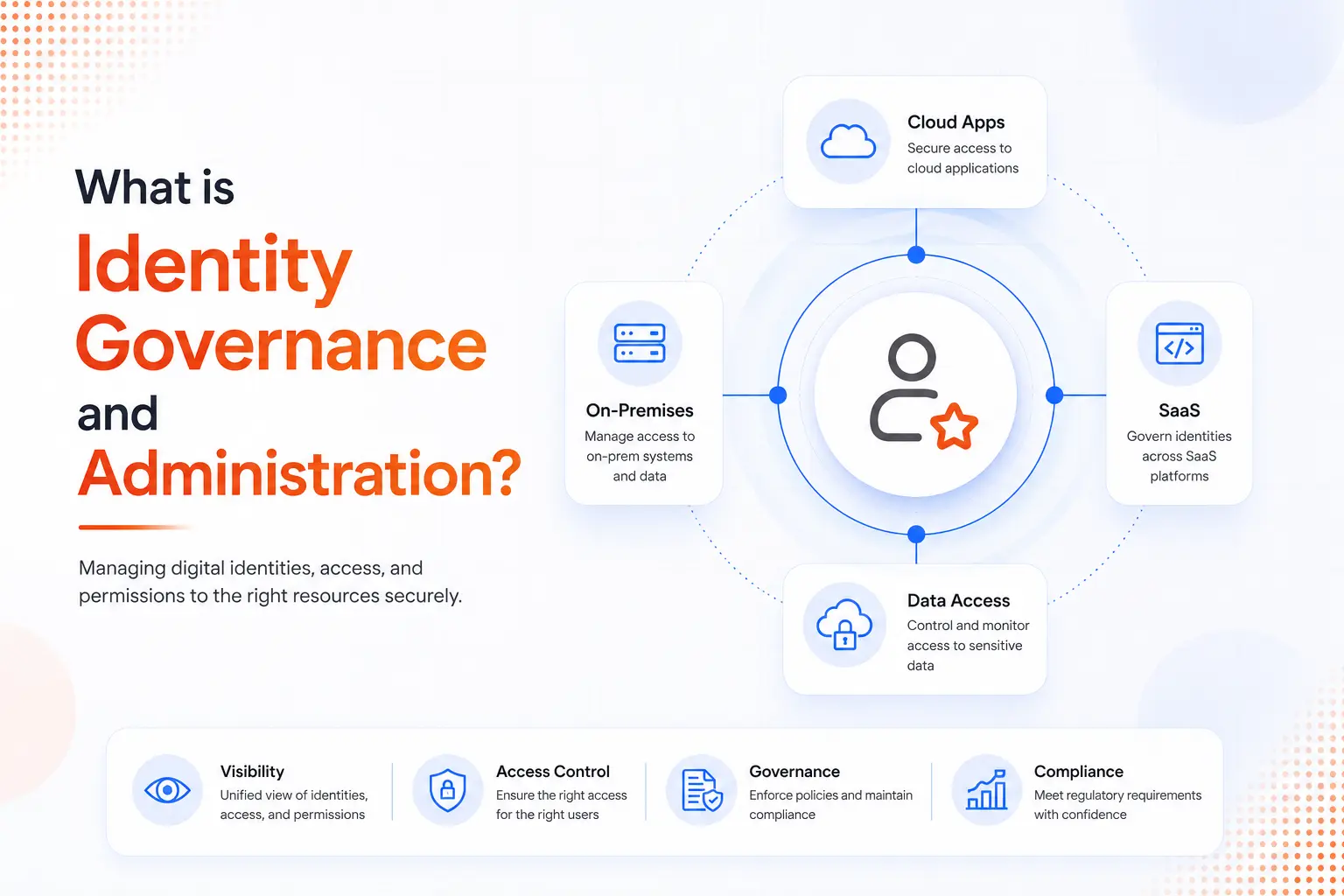
SailPoint provides identity security software for managing and governing identities, access, and permissions across enterprise environments. Its Identity Governance and Administration (IGA) capabilities are commonly used to manage access controls across complex IT systems, including cloud applications, legacy platforms, and business-critical systems.
However, SailPoint IGA can involve a high total cost of ownership, longer implementation timelines, and substantial resource requirements. Complex deployments may require specialized technical expertise for customization and integrations, while migrations from legacy environments can add further time and effort. This can make the platform more demanding for organizations with smaller teams or limited in-house technical capacity.
Common Reasons Teams Reassess Their IGA Platform
An IGA platform can continue to meet core requirements while becoming harder to operate as the organization's identity environment changes. Several factors can prompt teams to reconsider whether their current platform still fits their needs.
Implementation That Never Seems To End
Full identity rollouts often involve extensive planning, connector development, role modelling, workflow configuration, testing, and migration. These projects can take multiple quarters to complete, while your organization and application portfolio continue to change throughout the process.
Services Costs Outpace The License
The software license accounts for only part of the total investment. Connector development, role and policy modelling, workflow customization, implementation services, and ongoing support can add substantial costs, particularly during the first year.
Dedicated Admin Overhead
Complex configuration and rule models often require specialist identity expertise for routine administration. Mid-market teams may find it difficult to justify dedicated resources for managing connectors, policies, roles, workflows, and access reviews alongside their other security responsibilities.
Static Roles Struggle To Keep Up
Access requirements change as employees move between roles, contractors join or leave, and applications evolve. Manual updates to RBAC and SoD policies can lead to role explosion, entitlement creep, and access reviews based on outdated permissions.
Gaps In Non-Human Identity Governance
Service accounts, workloads, bots, APIs, and AI agents now form a growing part of the identity environment. When these identities remain outside the governance model, teams have limited visibility into their access, ownership, purpose, and lifecycle.
Growing Application And SaaS Sprawl
Each new application adds identities, entitlements, and access relationships to manage. As the application portfolio expands, integration work also increases, especially when new connections require custom development or specialist services.
These challenges often make renewal a broader business decision. The question becomes whether the current platform still delivers enough value to justify its cost, complexity, and ongoing operational demands. For teams reassessing their IGA strategy, the next step is to define the capabilities and operating model they need from an alternative.
What To Look For In A SailPoint Alternative
Choosing an IGA platform requires more than checking whether a product includes access reviews or provisioning. You need to understand how those capabilities fit into your environment and how much effort they will require from your team.
The following criteria can help you compare SailPoint alternatives on the factors that affect implementation, everyday administration, governance, and long-term value.
Time To Value
Production should happen in weeks, with priority connectors going live in days. A shorter implementation cycle helps your team start governance, lifecycle automation, and access reviews without committing to a multi-quarter program.
All-In Cost, Not Just License
The software license represents only part of the investment. Factor in governance, lifecycle automation, access reviews, implementation, integrations, and ongoing services. A unified platform should deliver these capabilities without creating a services bill that dwarfs the software cost.
Runs Without A Dedicated Team
Day-to-day governance should fit into your existing security or IAM operations. An intuitive admin experience helps security engineers manage access reviews, lifecycle workflows, policies, and routine changes alongside their other responsibilities.
Coverage of Every Identity
Identity governance needs to extend beyond employees and contractors. Include service accounts, workloads, bots, and AI agents in your evaluation so your governance model covers both human and non-human identities.
Deployment Flexibility
Your infrastructure requirements should guide the deployment model. Look for support for cloud, on-premise, and hybrid environments so you can align the IGA platform with your existing architecture.
Audit-Ready By Default
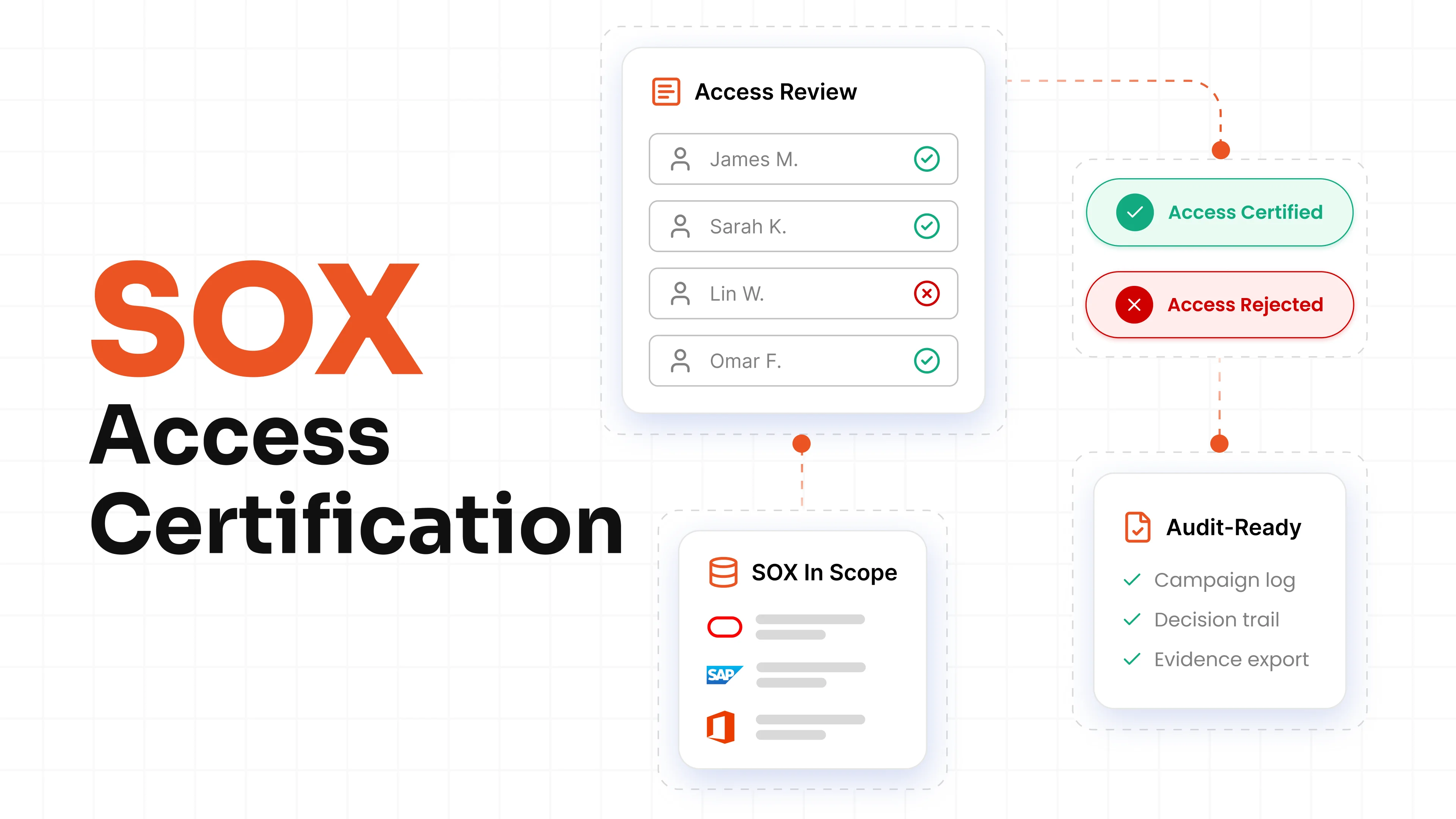
Audit preparation should not require a separate evidence-gathering exercise. Access certifications, SoD violations, approvals, and change history should remain available for review and export when you need to support SOX, ISO 27001, SOC 2, HIPAA, or GDPR requirements.
Custom Connector Support
Your application landscape will not always fit a vendor's connector catalog. Custom connector support gives your team a way to integrate applications that lack prebuilt connectors and address specific identity and access requirements without waiting for a new native integration.
Top SailPoint Alternatives Compared
The leading SailPoint alternatives differ in where they fit within an organization's identity environment. The comparison below provides a quick way to understand their primary strengths before looking at each platform in more detail.
| Platform | Deployment | Deployment Time | IGA Pricing | Key Trade-offs |
|---|---|---|---|---|
| miniOrange | Cloud, on-premise, hybrid | Weeks; connectors in days | Custom quote. Pricing varies based on users, deployment model, and required capabilities. | Newer to the top-tier enterprise IGA bracket than legacy incumbents |
| Saviynt | Cloud | 6+ months, often longer | Saviynt offers tiered packages, with pricing based on the selected capabilities and requirements. | Long, services-heavy rollout and admin overhead |
| Microsoft Entra ID Governance | Cloud | Varies by scope and environment | $7/user/month, billed annually. Requires an Entra ID P1 or P2 license. P1 costs $7/user/month, and P2 costs $10/user/month if not already included in an eligible Microsoft plan. | Complex deployment; steep admin learning curve |
| Okta Identity Governance | Cloud | Weeks for many deployments; varies by environment | $17/user/month, billed annually, through the Essentials Suite. The suite includes Access Governance, Lifecycle Management, and Workflows. | SCIM dependency; full-list reviews; IdP lock-in |
| Omada Identity | Cloud, On-Premise, and Hybrid | 12-week implementation program | Custom | Limited customization, fewer niche connectors, performance issues under heavy loads |
| CyberArk | Cloud and enterprise environments | Services-led, varies by scope and implementation | CyberArk does not publish a standalone IGA list price; costs depend on the Identity Security capabilities and deployment requirements. | PAM-first; workforce IGA still maturing |
Note: The table includes pricing published on the vendors’ official websites where available. Pricing and deployment timelines vary based on users, integrations, deployment model, features, and implementation scope.
How The Leading Alternatives Compare In Practice
A feature list only tells part of the story. Each platform has different strengths, integrations, deployment requirements, and areas of focus.
The following sections compare each option directly with SailPoint so you can see where the differences may matter for your organization.
1. miniOrange
miniOrange provides identity governance and administration (IGA) for managing identities, access, entitlements, and lifecycle processes across diverse environments. The platform supports human and non-human identities, access reviews, provisioning, deprovisioning, JML automation, SoD, and access requests.
It also provides cloud, on-premise, and hybrid deployments, along with 200+ integrations across applications, directories, SaaS platforms, and HR systems.
What Sets miniOrange Apart From SailPoint
The comparison between miniOrange and SailPoint is particularly useful for organizations weighing deployment flexibility, identity coverage, administration, and integration requirements.
| Capability | miniOrange | SailPoint |
|---|---|---|
| Time to value | Weeks; connectors in days | 12–18 months to full maturity |
| Cost model | Custom; lower TCO, no mandatory multi-year services | Custom; services often 2–3x the license |
| Who runs it | A security engineer, alongside other work | Typically, dedicated identity engineers |
| Deployment options | Cloud, on-premise, or hybrid | On-premise (IdentityIQ) or Identity Security Cloud |
| Non-human identities | Service accounts, bots, and AI agents in one framework | Human-identity core; NHIs are often out of scope |
| Fits your environment | Designed to fit how you already operate | Often expects an environment or process restructuring |
| Access reviews | AI-assisted, policy-guided certifications | Mature certification campaigns at scale |
| Identity coverage | Human and non-human identities | Human, non-human, and AI agent identities |
| Lifecycle governance | JML, provisioning, deprovisioning, and lifecycle automation | Lifecycle management, provisioning, and governance |
| Access governance | Access requests, reviews, entitlements, and SoD | Access requests, certifications, entitlements, roles, and governance |
| Integrations | 200+ integrations | Broad enterprise integration ecosystem |
Looking for more details? Explore the full miniOrange vs. SailPoint comparison.
Pros
- Supports cloud, on-premise, and hybrid environments
- Provides Non-Human Identity (NHI) governance for service accounts, bots, AI agents, and other machine identities
- Connects with 200+ business applications and enterprise systems
- Automates access changes across Joiner-Mover-Leaver (JML) events
- Supports access requests with defined approval workflows
- Helps review existing access and identify conflicting permissions
- Uses AI to surface unusual access patterns and potential identity risks
- Provides governance reports to support audits and compliance reviews
Cons
- Complex legacy environments may require detailed migration planning.
- Organizations with highly customized IGA environments should evaluate their existing roles, workflows, connectors, and policies before migration.
2. Saviynt
Saviynt provides a cloud-based identity security platform that combines identity governance, application access governance, and privileged access management.
It supports governance across human and non-human identities and provides capabilities for access requests, certifications, SoD, privileged access, and enterprise applications.
What Sets Saviynt Apart From SailPoint
Saviynt can be worth considering when an organization wants identity governance to sit alongside privileged access and application governance capabilities.
| Capability | Saviynt | SailPoint |
|---|---|---|
| Platform | Unified identity security platform | Identity security and governance platform |
| IGA | Identity governance, lifecycle, access requests, certifications, and SoD | Identity governance, lifecycle, access requests, certifications, and SoD |
| PAM | Privileged access capabilities | Privileged access and identity security capabilities |
| Application Governance | Application access governance | Application and entitlement governance |
| Identity Coverage | Human and non-human identities | Human, non-human, and AI agent identities |
| AI Capabilities | AI capabilities across identity security | AI-powered identity security and agentic capabilities |
| Architecture | Cloud-native platform | Identity Security Cloud and broader platform capabilities |
Pros
- Combines identity governance with privileged access controls
- Covers identity lifecycle, access governance, and privileged access
- Manages employee, contractor, service, and machine identities
- Helps enforce Separation of Duties (SoD) policies and support compliance requirements
- Supports governance across a wide range of enterprise applications
- Delivers identity governance and security through a cloud-based platform
Cons
- Its broader scope can introduce additional implementation and planning requirements.
- Organizations primarily looking for core IGA should evaluate which capabilities they actually need.
- Teams should assess the platform against their application landscape and available implementation resources.
3. Microsoft Entra ID Governance
Microsoft Entra ID Governance provides capabilities for access reviews, entitlement management, lifecycle workflows, provisioning, and Privileged Identity Management.
It is particularly relevant for organizations that already use Microsoft Entra ID and Microsoft 365 as core components of their identity environment.
What Sets Microsoft Entra ID Governance Apart From SailPoint
Microsoft Entra ID Governance can be attractive when an organization already has a significant investment in Microsoft identity services and wants governance capabilities within that environment.
| Capability | Microsoft Entra ID Governance | SailPoint |
|---|---|---|
| Platform | Governance integrated into Microsoft Entra | Identity security and governance platform |
| Access Reviews | Access reviews for applications and resources | Access certifications and governance capabilities |
| Entitlement Management | Access packages, approvals, assignments, and expiration | Access profiles, entitlements, roles, and governance |
| Lifecycle | Lifecycle workflows and provisioning | Lifecycle management and provisioning |
| Privileged Access | Privileged Identity Management | Privileged identity and access security capabilities |
| Identity Ecosystem | Strong Microsoft integration | Broad enterprise identity ecosystem |
| Deployment | Cloud | Deployment options vary by SailPoint product and requirements |
Pros
- Extends governance across Entra ID, Microsoft 365, Azure, and other Microsoft services
- Packages and governs access to applications, groups, and other resources
- Helps organizations regularly verify whether users still need assigned access
- Automates identity tasks based on employee lifecycle events
- Provides time-bound, controlled access to privileged roles and resources
Cons
- It provides the strongest fit when Microsoft already forms a significant part of the identity environment.
- Organizations with highly heterogeneous environments should evaluate integrations across their non-Microsoft applications.
- Teams should consider their long-term dependency on the Microsoft ecosystem.
4. Okta Identity Governance
Okta Identity Governance extends the Okta identity platform with capabilities for access requests, entitlement management, access certifications, governance reporting, lifecycle management, and workflow automation.
It works well for organizations that already use Okta for workforce identity and want to add governance to their existing identity processes.
What Sets Okta Identity Governance Apart From SailPoint
Okta can be particularly relevant when an organization's existing identity infrastructure already centers on Okta.
| Capability | Okta Identity Governance | SailPoint |
|---|---|---|
| Platform | Governance integrated with Okta | Identity security and governance platform |
| Access Requests | Self-service requests and approval workflows | Access requests and approval workflows |
| Access Certifications | Certification campaigns | Access certifications |
| Entitlement Management | Entitlement governance | Entitlement governance and access profiles |
| User Lifecycle | Lifecycle Management and Workflows | Lifecycle management and provisioning |
| Identity Ecosystem | Strong Okta ecosystem integration | Broad enterprise identity ecosystem |
| Deployment | Cloud | Deployment options vary by SailPoint product and requirements |
Pros
- Extends existing Okta identity processes into governance
- Lets users request access through a self-service portal
- Helps managers review and certify user access
- Controls access to specific applications and resources.
- Automates onboarding, role changes, and offboarding.
- Automates identity and access tasks across systems.
- Governance within an existing Okta environment
Cons
- Its value increases when Okta already plays a central role in the organization's identity architecture.
- Organizations should evaluate entitlement coverage across their full application environment.
- Teams should consider how the platform fits into environments with significant non-Okta identity infrastructure.
5. Omada Identity
Omada Identity is an IGA platform for managing identity lifecycles, access requests, entitlements, access certifications, and compliance. It supports cloud, on-premise, and hybrid environments through a flexible data model and predefined governance processes.
The company helps organizations manage identity governance across complex enterprise environments with configurable processes, flexible deployment options, and support for faster implementation.
What Sets Omada Identity Apart From SailPoint
Omada focuses on a flexible data model and predefined governance processes through its Process+ framework. It supports complex identity and entitlement relationships, built-in Separation of Duties (SoD) controls, and access governance across major enterprise applications.
| Capability | Omada Identity | SailPoint |
|---|---|---|
| Platform | Full IGA platform with flexible data model | Identity security and governance platform |
| Access Requests | Configurable requests and approval workflows | Access requests and approval workflows |
| Access Certifications | Compliance Workbench and certification campaigns | Access certification campaigns |
| Entitlement Management | Entitlement governance with built-in SoD controls | Entitlement governance and access profiles |
| Lifecycle | Process+ framework for JML automation | Lifecycle management and provisioning |
| Identity Ecosystem | Strong Microsoft and SAP integrations | Broad enterprise identity ecosystem |
| Deployment | Cloud, On-Premise, and Hybrid | Cloud and other deployment options |
| Implementation | 12-week implementation program | Varies by deployment and requirements |
Pros
- Flexible data model for managing complex identities, roles, and entitlements
- Strong access governance through certifications, approvals, and remediation
- Built-in Separation of Duties (SoD) controls for preventing conflicting access
- JML lifecycle automation for onboarding, role changes, and offboarding
- Pre-built integrations for major enterprise applications
- Cloud, on-premise, and hybrid deployment options
- 12-week implementation program for Omada Identity Cloud
Cons
- Limited customization for highly specific business processes
- Fewer niche connectors for custom or less common applications
- Large data imports and access review campaigns could create performance constraints
- Complex environments might require additional configuration and implementation support
6. CyberArk
CyberArk provides identity security capabilities with strong coverage for privileged access, identity protection, machine identities, and broader identity security.
Its acquisition of Zilla Security expanded its identity governance capabilities and made CyberArk a more significant competitor for organizations evaluating IGA alongside privileged access and identity security requirements.
What Sets CyberArk Apart From SailPoint
CyberArk can be particularly relevant when an organization places significant weight on privileged access and wants identity governance within a broader identity security portfolio.
| Capability | CyberArk | SailPoint |
|---|---|---|
| Core Focus | Identity security with strong privileged access capabilities | Identity security and governance |
| IGA | IGA capabilities through the Zilla portfolio | Mature identity governance capabilities |
| PAM | Established privileged access management | Privileged identity and access security capabilities |
| Machine Identities | Machine identity security | Non-human identity and machine identity governance |
| Secrets | Secrets management | Identity and access governance |
| Identity Coverage | Human, machine, and privileged identities | Human, non-human, and AI agent identities |
| Platform | Broader identity security portfolio | Unified identity security platform |
Pros
- Strong privileged access management (PAM) for securing high-risk accounts and access
- Established identity security across privileged and workforce identities
- Modern IGA capabilities through CyberArk's Zilla acquisition
- Machine identity security for workloads, applications, and automated processes
- Secrets management for protecting sensitive credentials and keys
- Privileged credential controls with secure storage and controlled access
- Broad identity security portfolio covering workforce, machine, and privileged identities
Cons
- Organizations primarily looking for core IGA should evaluate the wider CyberArk platform against their specific governance requirements.
- Teams should assess how their IGA capabilities fit with existing PAM and identity security investments.
- Organizations should evaluate the broader platform against the governance capabilities they actually need.
Switching From SailPoint to miniOrange
Moving from one IGA platform to another involves more than transferring identity data. Teams also need to account for existing roles, workflows, policies, integrations, and governance processes.
A phased migration can help organizations prioritize critical identity sources and applications before expanding governance across the wider environment.
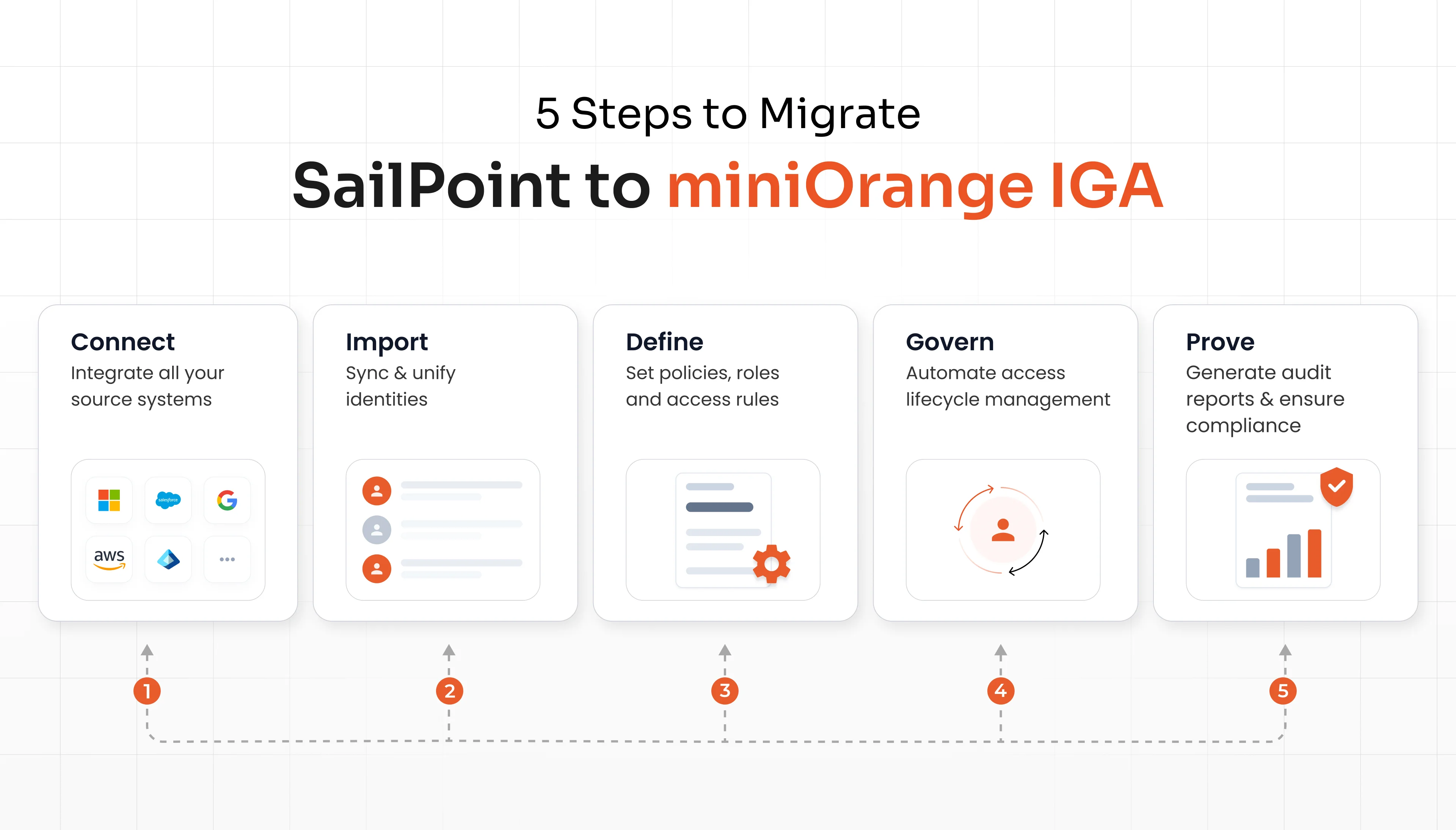
Step 1: Connect
Connect the directories, HR systems, applications, and identity sources that require governance.
Step 2: Import
Bring relevant users, groups, roles, and entitlements into miniOrange.
Step 3: Define
Configure birthright access, approval workflows, entitlement policies, role structures, and SoD rules.
Step 4: Govern
Automate JML processes, access requests, provisioning, deprovisioning, access reviews, certifications, and least-privilege controls.
Step 5: Prove
Maintain access decisions, approvals, review results, policy outcomes, and change history for audits and internal reviews.
The migration timeline depends on the applications, identity sources, connectors, roles, workflows, policies, and customizations involved.
Compliance Support
Identity governance helps organizations establish consistent access controls and maintain evidence that supports audits and compliance activities. It can help teams manage who has access, why that access exists, who approved it, when it was reviewed, and what changed over time.
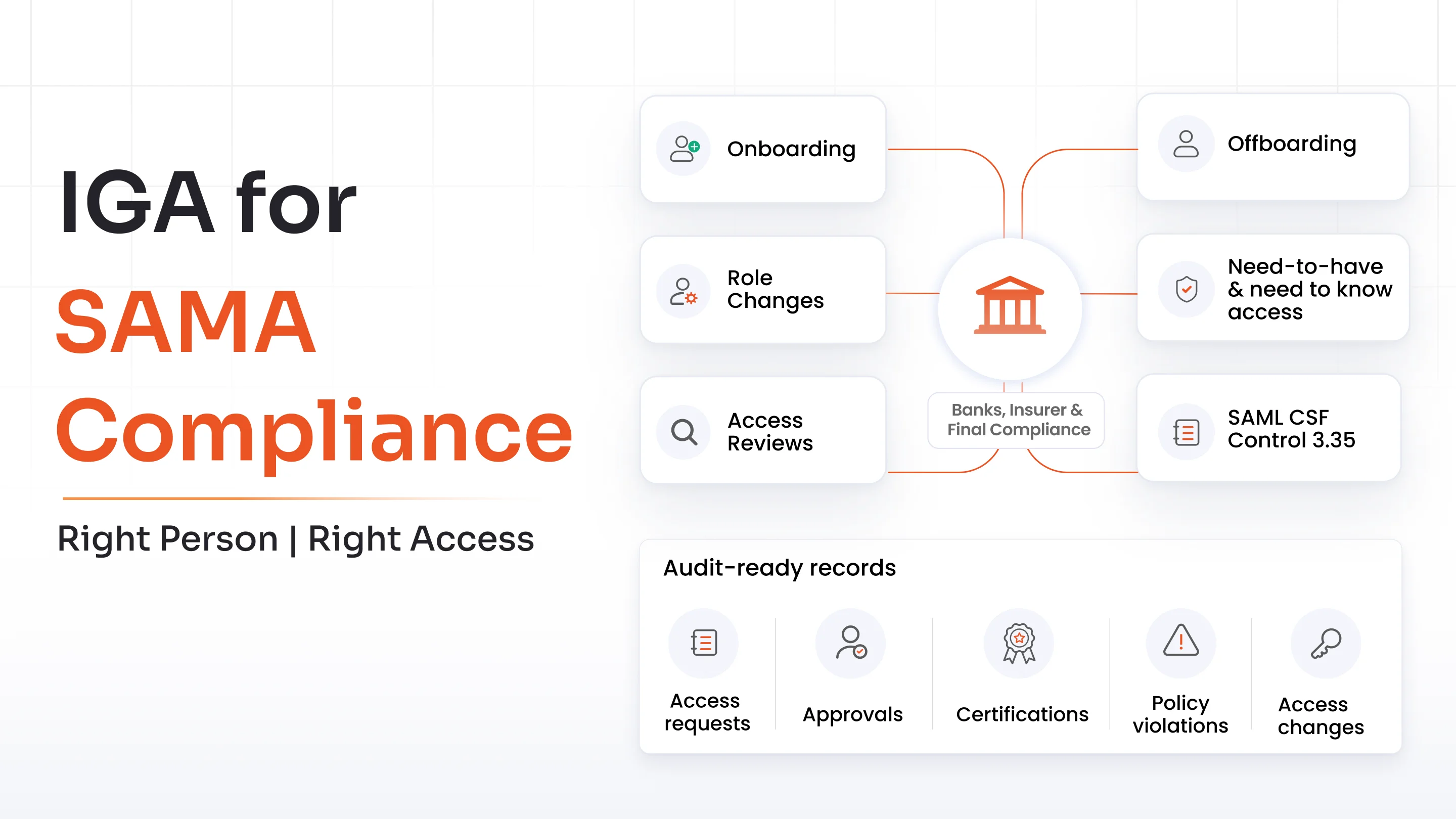
Common frameworks and regulations that organizations may address through identity governance include SOX, PCI DSS, ISO 27001, SOC 2, GDPR, HIPAA, NIST CSF, FedRAMP, CMMC, RBI, IRDAI, and the DPDP Act. The specific controls and evidence available depend on the organization's regulatory scope, internal policies, and implementation.
Segregation of duties also plays an important role in identifying conflicting permissions and reducing access-related risk.
Conclusion
Your IGA decision should ultimately come down to how well the platform fits the way your organization manages access today and where your identity environment is headed. A platform that can simplify governance while supporting growth can make it easier for teams to maintain control without adding unnecessary operational complexity.
If you are evaluating a SailPoint replacement or comparing the best identity governance tools, consider miniOrange IGA alongside the other platforms to see which capabilities best match your organization’s priorities.
Frequently Asked Questions
What does SailPoint do?
SailPoint provides identity governance and security capabilities for managing identities, access, provisioning, lifecycle processes, certifications, roles, entitlements, and governance policies.
What are the best SailPoint alternatives and competitors in 2026?
The platforms covered in this comparison are miniOrange, Saviynt, Microsoft Entra ID Governance, Okta Identity Governance, and CyberArk. The right choice depends on your identity stack, application environment, deployment requirements, identity types, governance needs, and internal resources.
Why do teams look for a SailPoint alternative?
Teams may reassess their IGA platform because of implementation effort, ongoing administration, total cost of ownership, identity coverage, changing access requirements, deployment requirements, and integration requirements.
How is miniOrange different from SailPoint?
miniOrange focuses on flexible deployment, broad identity coverage, lifecycle automation, access governance, and practical administration. It supports cloud, on-premise, and hybrid deployments and provides governance capabilities for human and non-human identities.
How long does it take to switch from SailPoint to miniOrange?
The timeline depends on the number of applications, identity sources, connectors, roles, workflows, policies, and custom configurations involved. A phased migration can help teams prioritize critical applications before expanding governance across the environment.
Does miniOrange govern non-human identities and AI agents?
Yes, miniOrange provides governance capabilities for non-human identities, including service accounts, bots, workloads, and AI agents.
Can miniOrange be deployed on-premise?
Yes, miniOrange supports cloud, on-premise, and hybrid deployment models.
Which compliance frameworks does miniOrange support?
miniOrange provides identity governance capabilities that can support requirements associated with SOX, PCI DSS, ISO 27001, SOC 2, GDPR, HIPAA, NIST CSF, and the DPDP Act. The exact controls and evidence depend on the implementation and applicable requirements.
Leave a Comment