

Data no longer stays within a single system. It constantly moves across endpoints, cloud platforms, emails, SaaS applications, and internal networks as part of everyday business operations.
This movement keeps businesses fast and efficient, but it also makes sensitive data harder to track and protect. A single file can be accessed, copied, or shared within minutes, often without visibility.
Most data breaches today are not the result of complex attacks. They happen because sensitive data was already exposed, misconfigured, or left unprotected somewhere in the environment.
This is where unified data security becomes important. Instead of relying on isolated controls, organizations need a connected approach that brings visibility, control, and continuous monitoring together.
In this blog, we'll break down what data security means today, how solutions like DLP, DSPM, and DDR work, and why combining them creates a stronger, more practical approach to protecting data.
What is Unified Data Security?
Unified data security is the approach of protecting sensitive data across all systems, environments, and stages of its lifecycle using a connected set of controls. Instead of managing data security in silos, it brings visibility, monitoring, and protection into a single framework.
In simple terms, it ensures that important data, like customer information, financial records, and internal documents, stays secure no matter where it exists or how it moves. This includes data stored on endpoints, shared over networks, or hosted in cloud platforms.
For modern businesses, unified data security focuses on three key areas: knowing where data exists, understanding how it is being used, and controlling who has access to it. By connecting these areas, organizations can reduce blind spots and manage data security more effectively across their entire environment.
Why Do Enterprises Need Unified Data Security?
Enterprises today deal with data spread across endpoints, cloud platforms, SaaS applications, and internal systems. Managing security in such environments using isolated tools creates gaps in visibility and control.
Here are the key reasons why enterprises need unified data security:
1. Data Is Distributed Across Multiple Environments
Enterprise data no longer stays in one place. It exists across cloud storage, employee devices, third-party apps, and internal systems. Without a unified approach, it becomes difficult to track where sensitive data resides and how it is being used.
2. Siloed Tools Create Visibility Gaps
Using separate tools for data protection, monitoring, and discovery often leads to incomplete visibility. Each tool operates independently, making it harder to get a complete picture of data risks across the organization.
3. Increasing Data Security Threats
Data security threats are becoming more frequent and harder to detect. Insider threats, accidental leaks, and unauthorized access are common risks. Without continuous monitoring and control, these threats can go unnoticed until damage is already done.
4. Compliance Requirements Are Getting Stricter
Regulations require organizations to track, protect, and report how sensitive data is handled. Unified data security helps maintain consistent policies, generate audit logs, and reduce compliance risks.
5. Need for Real-Time Monitoring and Response
Data security is no longer just about prevention. Enterprises need the ability to detect and respond to threats as they happen. A unified approach ensures continuous monitoring and faster response to suspicious activity.
6. Managing Data at Scale
As enterprises grow, so does the volume of data they handle. Managing security manually or through disconnected systems becomes inefficient. Unified data security simplifies operations by bringing visibility, control, and monitoring into one framework.
Which Solution Should You Choose for Unified Data Security?
This is where many organizations take the wrong approach. They try to choose between Data Loss Prevention (DLP), Data Security Posture Management (DSPM), and Data Detection and Response (DDR) as separate options.
In reality, these solutions are designed to work together, not replace each other. Each one addresses a different part of the data security lifecycle.
1. Data Loss Prevention (DLP): Controlling Data Movement
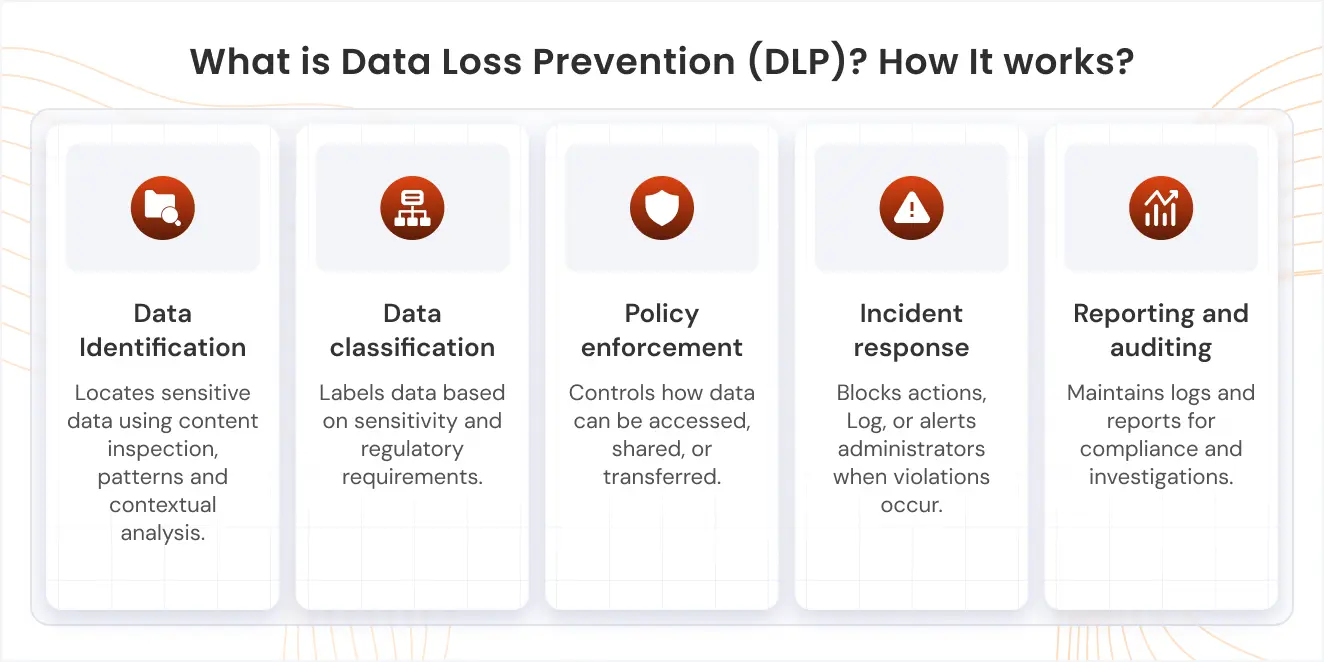
DLP focuses on controlling how sensitive data moves across systems. It helps prevent unauthorized sharing by applying policies across endpoints, emails, and cloud applications. This ensures that data does not leave the organization through risky or unapproved channels.
2. Data Security Posture Management (DSPM): Understanding Where Data Exists
DSPM helps organizations discover and classify sensitive data across environments, especially in the cloud. It identifies where data is stored and highlights risks like overexposed storage or misconfigured access. This gives teams the visibility needed before applying controls.
3. Data Detection and Response (DDR): Monitoring Data Activity
DDR focuses on monitoring how data is accessed and used in real time. It detects unusual behavior such as bulk downloads or unauthorized access attempts. When a risk is identified, it triggers alerts or automated responses to reduce potential impact.
Relying on only one of these creates gaps. Without DSPM, there is limited visibility into where sensitive data is stored. Without DDR, data activity goes unmonitored, making it harder to detect misuse. Without DLP, controlling how data moves becomes difficult.
That's why most organizations adopt all three as part of a unified data security solution. Together, they provide complete visibility, continuous monitoring, and active control over data across the entire environment.
Why DLP, DSPM & DDR Work Better Together?
DLP, DSPM, and DDR are not standalone solutions. Each one addresses a different part of how data is managed, secured, and monitored across its lifecycle.
DSPM provides the foundation by identifying and classifying sensitive data. It helps organizations understand where their data exists and where potential risks are present.
DLP builds on that by controlling how data moves. It ensures sensitive information is not shared, transferred, or exposed through unauthorized channels.
DDR adds continuous monitoring by tracking how data is accessed and used. It helps detect unusual behavior and enables faster response to potential threats.
When combined, these solutions create a connected security flow that covers the entire data lifecycle, from discovery to control to monitoring and response. Without this connection, organizations are left with gaps that make data harder to protect.
This is why a unified data security approach, built on DLP, DSPM, and DDR, is more effective than relying on individual tools.
Benefits of Unified Data Security
A unified data security approach brings visibility, control, and monitoring together into a single framework. Instead of managing data security in silos, it helps organizations handle risks more consistently across the entire data lifecycle.
Here are some key benefits:
- Insider Threat Detection and Monitoring: Unified data security makes it easier to track how data is accessed and used by internal users. Unusual actions like bulk downloads or unauthorized access can be identified early. With better visibility into user activity, organizations can detect risks sooner and take action before data is exposed.
- Real-Time Data Alerts: Security teams are notified immediately when suspicious activity is detected. This allows faster response to potential threats without waiting for manual checks. Alerts can be triggered based on behavior, policy violations, or unusual access patterns, helping teams stay proactive.
- Compliance Support and Risk Management: Meeting compliance requirements requires clear visibility into how data is handled. Unified data security helps maintain audit trails, enforce policies, and monitor usage across systems. This reduces the risk of compliance gaps and makes audits easier to manage.
- Complete Data Visibility: Organizations gain a clear understanding of where their data exists and how it flows across environments. This eliminates blind spots that often lead to security risks. With better visibility, teams can apply controls more effectively and prioritize high-risk areas.
- Reduced Exposure to Data Security Threats: Bringing DLP, DSPM, and DDR together helps cover different risk points across the data lifecycle. This reduces the chances of data leaks, misconfigurations, and misuse. Instead of reacting to threats, organizations can prevent them more effectively.
- Better Control Over Data Movement: Data movement across endpoints, cloud platforms, and networks can be monitored and managed more closely. Unauthorized transfers or risky sharing activities can be restricted. This helps ensure sensitive data stays within defined boundaries.
- Faster Incident Response: Real-time monitoring and alerts enable quicker response to security incidents. IT teams can identify the issue and take action without delays. Faster response reduces the overall impact of potential data breaches.
Implementation Challenges in Unified Data Security
Unified data security brings multiple capabilities together, but implementing it across complex environments is not always straightforward. As organizations try to connect visibility, control, and monitoring, several practical challenges start to surface.
1. Data Discovery and Classification
Identifying where sensitive data exists is often the biggest challenge. Data is spread across endpoints, cloud platforms, and applications, making it difficult to track. Without proper classification, applying the right level of protection becomes inconsistent and less effective.
2. Siloed Policy Enforcement
Policies are often applied differently across tools and environments. This leads to inconsistencies in how data is protected across systems. Without a unified approach, enforcing security standards becomes fragmented and harder to manage.
3. Unmonitored Data Movement Channels
Data does not always move through controlled or visible channels. It can be shared through personal apps, unmanaged devices, or unofficial workflows. This creates gaps in visibility, making it difficult to track how and where sensitive data is being transferred.
4. Limited Real-Time Monitoring
Not all environments support continuous monitoring of data activity. This delays the detection of unusual behavior or potential threats. Slower detection increases the chances of data exposure before action can be taken.
5. Managing Complex Environments
Modern IT environments include a mix of devices, cloud services, and applications. Each layer introduces its own management and security requirements. Handling data security across all these components adds complexity and increases the chances of misconfiguration.
6. Resource and Operational Constraints
Managing multiple tools and processes requires time, effort, and skilled resources. Many IT teams operate with limited capacity. This makes it difficult to maintain consistent security practices across the organization.
Best Practices to Implement Unified Data Security
Implementing unified data security starts with putting the right tools in place. Without the right combination of solutions, it's difficult to achieve visibility, control, and monitoring across your data environment. Once the foundation is set, processes and policies can be applied more effectively.
Here are some best practices to implement unified data security in your organization:
1. Start with the Right Security Stack
The first step is to deploy the right combination of tools. This typically includes Data Loss Prevention (DLP), Data Security Posture Management (DSPM), and Data Detection and Response (DDR). Each tool addresses a different part of the data lifecycle. Together, they create the foundation for visibility, control, and monitoring across your environment.
2. Discover and Classify Your Data
Once the tools are in place, the next step is understanding where your data exists. Sensitive data is often spread across endpoints, cloud platforms, and applications. Classifying data based on sensitivity helps prioritize what needs protection and ensures policies are applied correctly.
3. Connect and Align Your Tools
These tools should not operate independently. DLP, DSPM, and DDR need to work together to provide a unified view of data. Connecting them ensures that insights from one system can be used by another, improving overall effectiveness.
4. Define Clear Data Security Policies
Policies should define how data is accessed, shared, and transferred. These rules need to be consistent across all systems. Clear policies make enforcement easier and reduce the chances of gaps or misconfigurations.
5. Enable Continuous Monitoring and Alerts
Monitoring should be active and continuous. This helps detect unusual behavior such as unauthorized access or abnormal data movement. Real-time alerts ensure that issues are identified early and can be addressed quickly.
6. Control Data Movement Across Channels
Sensitive data should be controlled across endpoints, cloud apps, and networks. Restrictions on uploads, downloads, and sharing help reduce exposure. This prevents data from being transferred through unauthorized or risky channels.
7. Regularly Review and Optimize
Data environments evolve, and security controls need to keep up. Regular reviews help identify gaps and improve policies over time. Continuous optimization ensures your unified data security approach remains effective as your organization grows.
Achieve Unified Data Security with miniOrange
Data security threats are increasing in both frequency and impact. Organizations can no longer rely on isolated tools or reactive approaches.
They need a unified data security solution that provides visibility, control, and monitoring across the entire data lifecycle.
This is where miniOrange comes in.
miniOrange helps organizations strengthen data security by combining multiple capabilities into a single platform. It offers solutions for Data Loss Prevention (DLP), data discovery, data classification, and Data Security Posture Management (DSPM).
With miniOrange, IT teams can:
- Discover and classify sensitive data across systems
- Monitor data activity in real time
- Apply policies to control data movement
- Detect and respond to potential threats
- Maintain compliance with industry standards
Instead of managing separate tools, organizations get a unified approach to data security. This reduces complexity, improves visibility, and ensures better control over sensitive data.

Leave a Comment