

If you run any type of business that collects or processes personal data from customers in the EU, the General Data Protection Regulation (GDPR) applies to you. It does not matter if your company is based in Ohio, Texas, or California. If you serve even one customer living in the EU, GDPR applies to you.
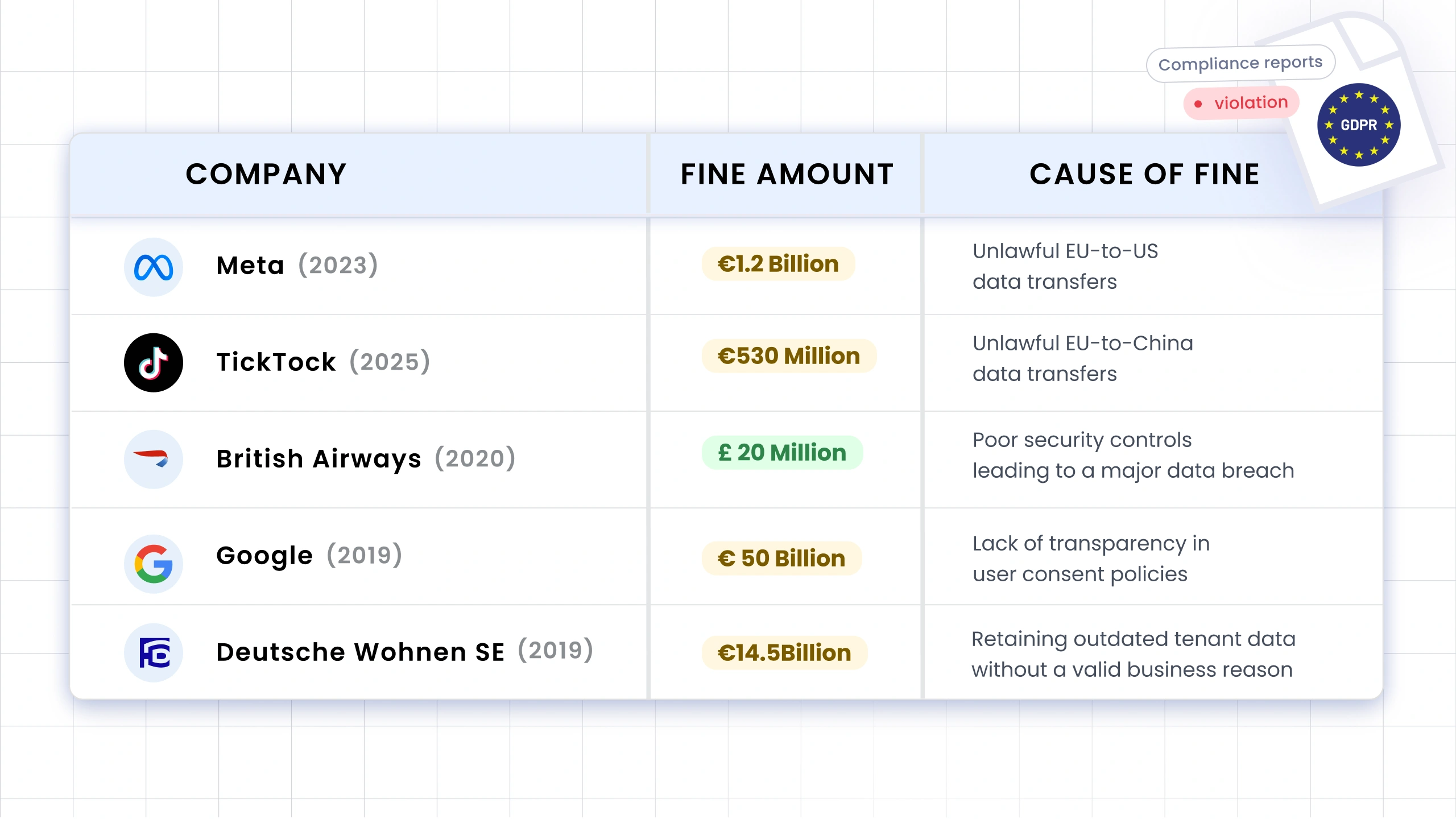
According to the DLA Piper GDPR Fines and Data Breach Survey (January 2026), cumulative GDPR fines have passed €7.1 billion. In 2025 alone, European regulators handed out roughly €1.2 billion in penalties. On top of that, data breach notifications have jumped to over 443 per day.
This isn't something you can fix by updating your website's privacy policy. You need a real, technical solution to secure sensitive customer data.
That's where DLP for GDPR compliance comes in.
Data Loss Prevention (DLP) solutions help organizations identify sensitive information, monitor how it is being used, and prevent unauthorized access or sharing.
Let's dive into how DLP supports GDPR requirements, the key capabilities that strengthen compliance efforts, and best practices for implementing a successful DLP strategy.
What Is the Role of DLP in GDPR Compliance?
GDPR applies to organizations that collect, process, or store personal data belonging to individuals within the European Union.
The regulation is built around several core principles, including:
- Lawfulness, fairness, and transparency
- Purpose limitation
- Data minimization
- Accuracy
- Storage limitation
- Integrity and confidentiality
- Accountability
From a customer's point of view, they get specific privacy rights. They have the right to access their data, the right to correct mistakes, and the right to erase their data. So, if a customer asks you to delete their records, you have to find and wipe every trace of that data quickly.
The challenge here is that most organizations store data in multiple places. This includes documents, emails, Slack messages, cloud storage folders, and more places that they aren't even aware of.
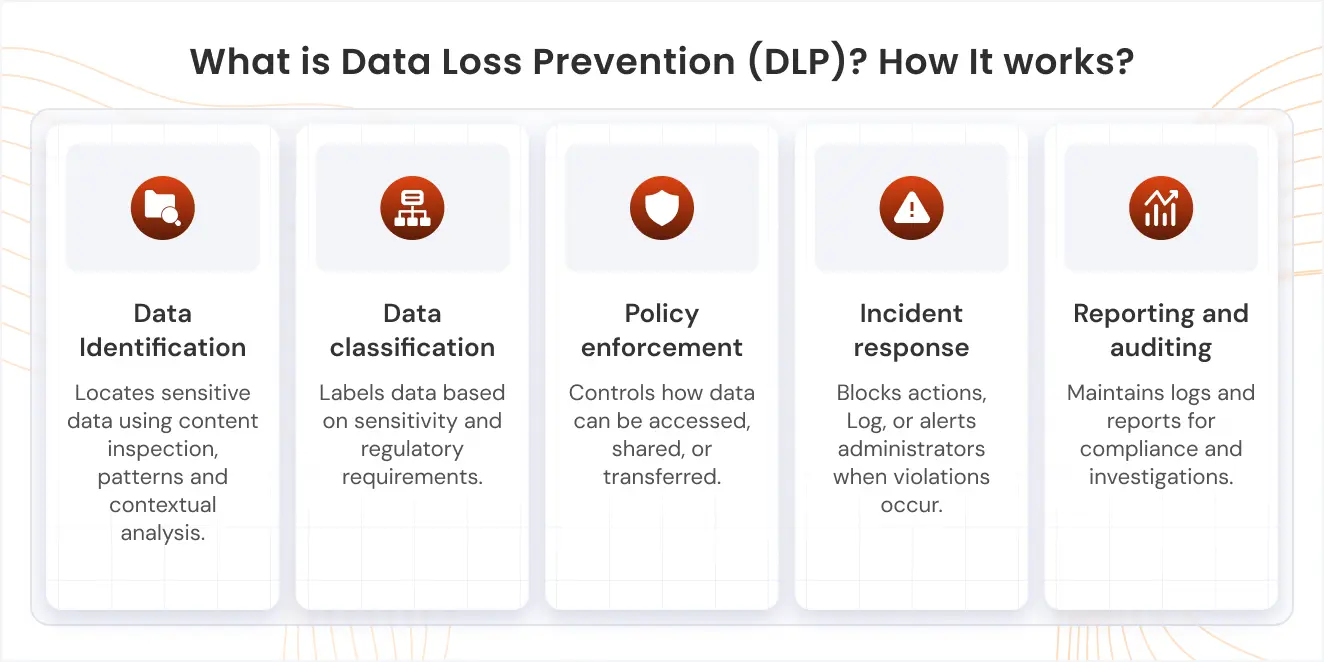
This is exactly where DLP solutions identify GDPR-related risks by tracking, monitoring, and securing sensitive information across your entire business network. They check your data in three distinct states:
- Data at rest: Files stored on hard drives, databases, or cloud servers.
- Data in motion: Data moving across your network, like an outgoing email or a file upload.
- Data in use: Information currently open in an app or copied to an employee's clipboard.
Once DLP finds sensitive data, it can apply protection policies, restrict unauthorized actions, and generate audit records for compliance reporting.
How Does DLP Help with GDPR Compliance?
DLP and GDPR go hand in hand. GDPR defines the legal expectations, and DLP provides the tools to meet them.
A DLP solution helps you:
- Discover personal data across systems
- Classify sensitive information
- Monitor data movement
- Restrict unauthorized sharing
- Detect policy violations
- Generate compliance reports
- Support incident response efforts
With these capabilities at your disposal, you can easily align with GDPR's security and accountability requirements.
Theory aside, let's look into the specific ways DLP contributes to GDPR compliance.
GDPR Fines That Made Headlines (And History)
Ways in Which DLP Solution Can Help with GDPR Compliance
Here's how a DLP tool uses intelligent automation to manage data safely throughout its lifecycle.
Data Discovery and Classification
As we highlighted before, organizations store data in a gazillion places. It becomes overwhelming to find and encrypt or redact data from those places when the time comes. A DLP solution takes care of that for you. It scans your entire corporate environment to find personal data.
Once it finds this data, it classifies the data based on sensitivity levels. The system tags the files automatically. If a customer exercises their right to erasure under GDPR, your team can search these tags. You can locate every single instance of that customer's data in minutes, no matter where it's stored.
Data Minimization Enforcement
GDPR states that you should only keep personal data for as long as you actually need it. Many organizations unintentionally retain excessive amounts of information over time, which is risky.
DLP helps by identifying stale data. You can then archive, encrypt, or safely delete those files. This keeps your data footprint small and compliant.
Access Controls and Monitoring
EU customer data shouldn't be visible to all. DLP gives you granular control over who can access different kinds of personal data. It ties access to roles and context, such as location, device, or time. It also records access and transfer events, which can be helpful for both internal investigations and regulatory reporting.
Reporting
GDPR places a strong emphasis on accountability. DLP helps by generating compliance reports and audit trails. You can show where personal data lives, who accessed it, and what protection actions were run. If a breach attempt occurs, you will have a clear timeline of events to show the Data Protection Authority (DPA). This helps you meet the strict 72-hour reporting deadline easily.
Implementing DLP for GDPR Compliance
Simply deploying a DLP solution doesn't guarantee compliance. You need to follow a broader strategy that combines both the technology and employee awareness.
1. Update DLP Policies
Start by aligning DLP rules with your privacy program and GDPR requirements. Map data flows and identify processing purposes. Then use that map to create policies for discovery, classification, access, and retention.
Review and update policies regularly to reflect legal guidance and business changes. Practical testing helps avoid overblocking and ensures workflows aren't disrupted.
2. Staff Training
Technology alone cannot prevent every data security incident. Human error is estimated to be the cause of approximately 60% of security breaches. That's why you must train your employees on:
- GDPR responsibilities
- Data handling procedures
- Security best practices
- DLP policy requirements
- Incident reporting processes
This will also help employees accept DLP controls, as they can understand why certain restrictions exist.
3. Integrate DLP
Implementing DLP for GDPR compliance is most effective when it fits into your ecosystem. That's why it's important to choose a DLP system that plugs directly into the tools your team uses every single day. This includes:
- Endpoints
- Email platforms
- Cloud storage
- SaaS applications
- Collaboration tools
- Network traffic
- Databases
Broader visibility means more effective protection.
How DLP Protects Personal Data Under GDPR
Now let's look at how DLP technologies protect personal information throughout its lifecycle.
Discover Sensitive Data
Modern DLP tools are capable of scanning both structured databases and unstructured files. They can even look into attachments, emails, documents, databases, and cloud storage. If an employee uploads a customer's passport in PDF format to a shared folder, the DLP tool can detect that and flag it immediately.
Monitoring Sensitive Data Movement
DLP simplifies GDPR compliance by keeping a close eye on data traffic across your entire corporate network. It watches files as they move between your internal servers, devices like laptops, cloud services, or SaaS apps. That visibility lets you detect anomalous transfers, such as large data exports or uploads to personal cloud accounts. Monitoring helps you act quickly and gather evidence for breach notifications.
Preventing Unauthorized Sharing
If an employee tries to perform an unsafe action, the DLP tool steps in to stop it. Depending on your corporate policies, the system can execute several automated actions:
Automated Remediation Actions:
- Block: It can block an email, file upload, external share, copy-paste action, or download when it contains sensitive personal data.
- Log: It can log the event, including the user, data type, destination, time, and action attempted.
- Notify: If any data is breached, or any policy is violated, the admin or the email mentioned in the policy will be notified informing about the attempt made to transfer the data.
- Quarantine: It can quarantine the email or data transfer for review instead of allowing it to proceed.
Protecting Cloud and SaaS Applications
Most teams rely heavily on cloud tools like Slack, Microsoft OneDrive, Google Drive, and Zendesk. These platforms make collaboration easy. But, at the same time, they also make it very easy to accidentally share sensitive customer records publicly.
Modern DLP integrates with these platforms through APIs. It scans every file and message shared in your corporate channels. It can even block employees from copy-pasting proprietary code or customer PII into public generative AI prompts. This keeps your data from leaking into public AI models.
Securing Remote and Hybrid Workforces
Remote work increases the surface for data exposure. Employees can access sensitive data from home networks on their personal devices. Traditional perimeter-based security models won't work here.
DLP solutions help secure remote and hybrid environments by monitoring data regardless of location. It supports BYOD scenarios by separating corporate data from personal data and applying protection only to business content.
That separation helps you respect employee privacy while protecting customer and employee personal data under GDPR.
Conclusion
GDPR requires organizations to take meaningful steps to safeguard the information they collect and process.
That's where data loss prevention GDPR strategies become essential.
DLP solutions help organizations discover sensitive information, classify data, monitor activity, prevent unauthorized sharing, and generate audit records that support compliance efforts.
The combination of DLP GDPR, strong governance policies, employee training, and continuous monitoring creates a more secure environment for personal data.
With the miniOrange DLP, you can discover and classify sensitive data, monitor data movement across endpoints, email, cloud, and SaaS apps, enforce granular security policies, and generate audit-ready reports, all from a centralized platform.
miniOrange DLP stops leaks before they happen and makes audit reporting less stressful.
FAQs
Is Data Loss Prevention (DLP) required for GDPR compliance?
No. GDPR does not specifically require organizations to deploy a DLP solution. However, GDPR requires organizations to implement appropriate measures to protect personal data. DLP helps meet these requirements by monitoring sensitive information, preventing unauthorized sharing, and reducing the risk of data breaches, making it a valuable technology for supporting GDPR compliance.
What types of personal data can a DLP solution protect under GDPR?
A GDPR DLP solution can identify and protect many types of personal data, including names, email addresses, phone numbers, passport details, national identification numbers, financial information, healthcare records, employee data, customer records, and other personally identifiable information (PII). Many modern DLP solutions also detect custom data patterns specific to an organization's business.
Does DLP work in Microsoft 365, Google Workspace, and other cloud applications?
Yes. Most enterprise DLP solutions integrate with cloud platforms such as Microsoft 365, Google Workspace, Salesforce, Slack, Dropbox, and other SaaS applications. These integrations allow organizations to monitor sensitive data, enforce security policies, and prevent unauthorized sharing regardless of where the data is stored.
What is the difference between DLP and encryption for GDPR?
Encryption protects sensitive data by making it unreadable without the proper decryption key. DLP goes further by discovering sensitive data, monitoring how it is used, enforcing security policies, preventing unauthorized transfers, and generating compliance reports.
How does DLP reduce the risk of GDPR fines?
DLP reduces compliance risk by identifying sensitive personal data, preventing accidental or intentional data leaks, enforcing access controls, and creating audit trails that demonstrate security measures. While no solution can guarantee compliance, implementing DLP helps organizations show they have taken reasonable steps to protect personal information under GDPR.

Leave a Comment