

Security breaches occur in 86% of cases because of unauthorized privileged credential access, while the PAM market reached $4 billion in 2025 because of rising identity-based threats which include ransomware and cloud sprawl. Organizations need to address their hybrid system problems and AI-based cyber threats during 2026 because their existing password storage systems fail to fulfill their requirements. Modern PAM platforms protect against these risks through their implementation of Zero Trust principles and JIT access and behavioral analytics systems.
The following guide assesses the 10 essential core capabilities that every PAM tool must provide. These include least-privilege RBAC, AI/ML-based anomaly detection, credential vaulting and session monitoring, phishing-resistant MFA, seamless IAM and SIEM integration, multi-cloud support, VPN-less remote access, and proven vendor maturity. Security leaders can use these PAM requirement criteria to select tools that meet NIST requirements while achieving the lowest possible average cost of breaches, estimated at $4.45 million.
What Is Privileged Access Management (PAM) and Why It Matters in 2026
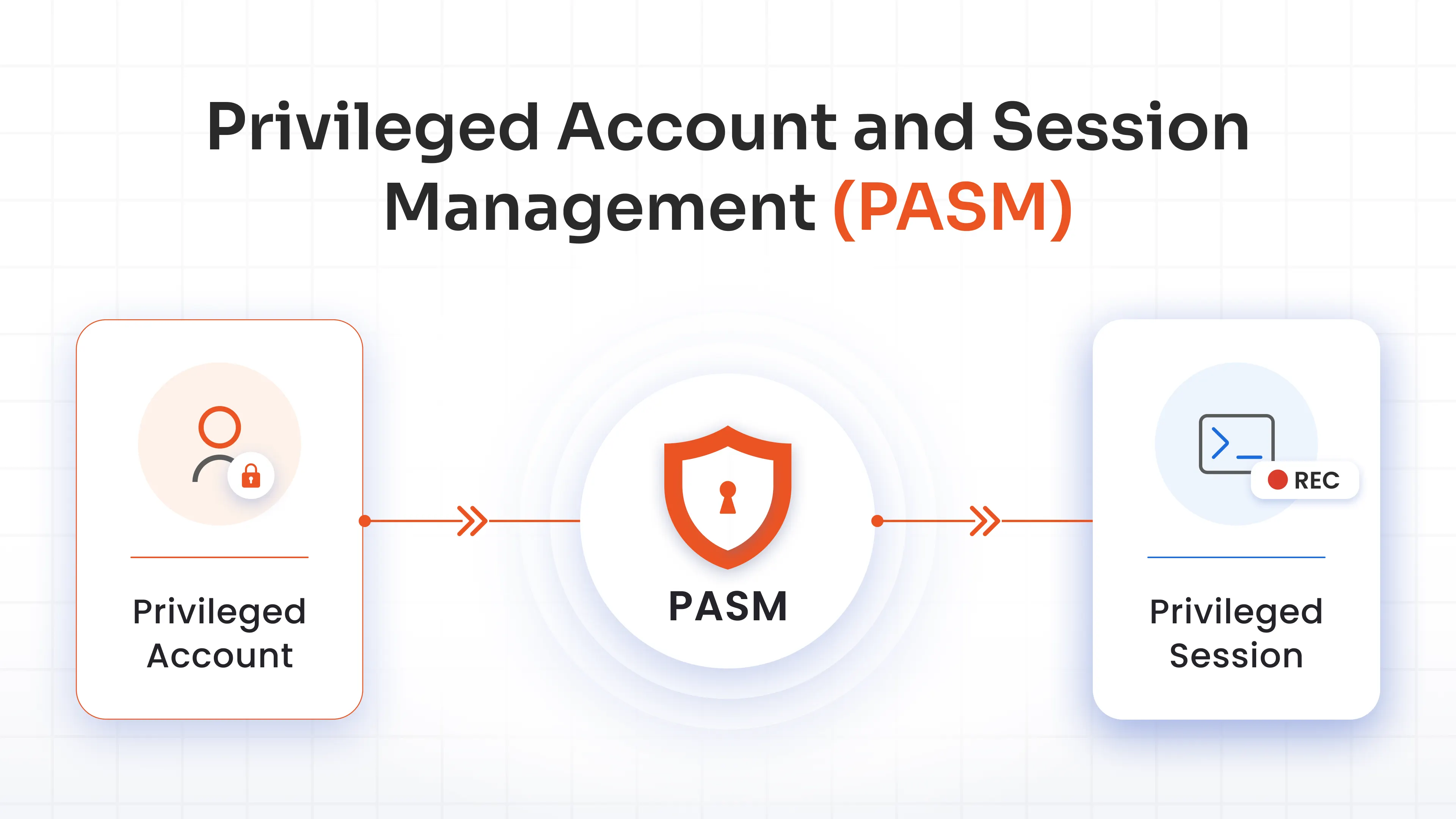
Privileged Access Management (PAM) protects elevated privileges, which include admin accounts, service accounts, machines, and API keys, while moving from basic password storage to complete identity security platforms that organizations need for their 2026 security requirements.
PAM as we Know of Today
The first version of PAM emerged as password vaults during the early 2000s to protect human administrator credentials through encrypted storage and basic password rotation systems, which defended against basic password theft and basic password sharing.
Privileged access management has developed into a full-fledged privileged identity security platform, which added least privilege enforcement, just-in-time (JIT) access, real-time session monitoring and AI-powered behavioral analytics for active threat detection capabilities.
The development process has followed the transition to Zero Trust security systems, which use ongoing authentication checks for all identity types within modern distributed networks.
Privileged Identities
Privileged identities include high-risk accounts with elevated permissions that, if compromised, allow attackers to access sensitive data, escalate privileges, or disrupt business operations. These identities span human IT administrators with root, domain admin, or superuser access; non-human service accounts used by applications for automated processes; machines such as servers, containers, IoT devices, and workloads requiring persistent access to network and database resources; and API keys that authenticate third-party integrations, microservices, and cloud APIs.
As modern enterprises manage more than ten times the number of non-human identities compared to human users, this growing identity sprawl significantly increases security risk.
Top Trends in PAM Driving 2026
The practice of hybrid work arrangements creates administrative challenges because managers who need to access privileged systems must work from various locations, which include their home office and remote endpoints and VPN connections, thus making their networks more vulnerable to phishing attacks and endpoint security threats.
At the same time, AI-driven attacks enable credential abuse, MFA bypass techniques, and adaptive malware, contributing to nearly 74% of reported security breaches. Multi-cloud adoption across AWS, Azure, GCP, and on-premises environments has accelerated the growth of non-human identities, forcing organizations to manage service accounts, machines, and API keys at scale while addressing rising shadow IT.
Modern PAM platforms mitigate these risks through just-in-time (JIT) access, continuous privilege monitoring, and AI/ML based behavioral threat detection.
Top 10 Features Every PAM Platform Needs in 2026
The following privileged access management requirements highlight the essential PAM features every organization must assess in 2026 to effectively manage privileged access and defend against modern threats.
1. Least Privilege Access & RBAC
A PAM provides strong protection by enabling organizations to implement both the principle of least privilege (PoLP) and role-based access control (RBAC). It enables users to access required resources that fulfill their work needs but blocks them from accessing unneeded resources. This approach reduces internal misuse and external breach risk by minimizing the number of potential attack paths. Role-based access models also reduce human error by automating privilege assignment and maintaining consistency across complex environments.
The PAM platforms operating in 2026 require two fundamental features, which consist of dynamic role mapping and policy-based privilege elevation. Organizations can create Zero Trust access policies through the implementation of Adaptive RBAC together with contextual access decision systems. Modern PAM systems must continuously validate access requests based on user context, justification, and defined policies to ensure both operational flexibility and strong security controls.
2. Just-in-Time (JIT) Privileged Access
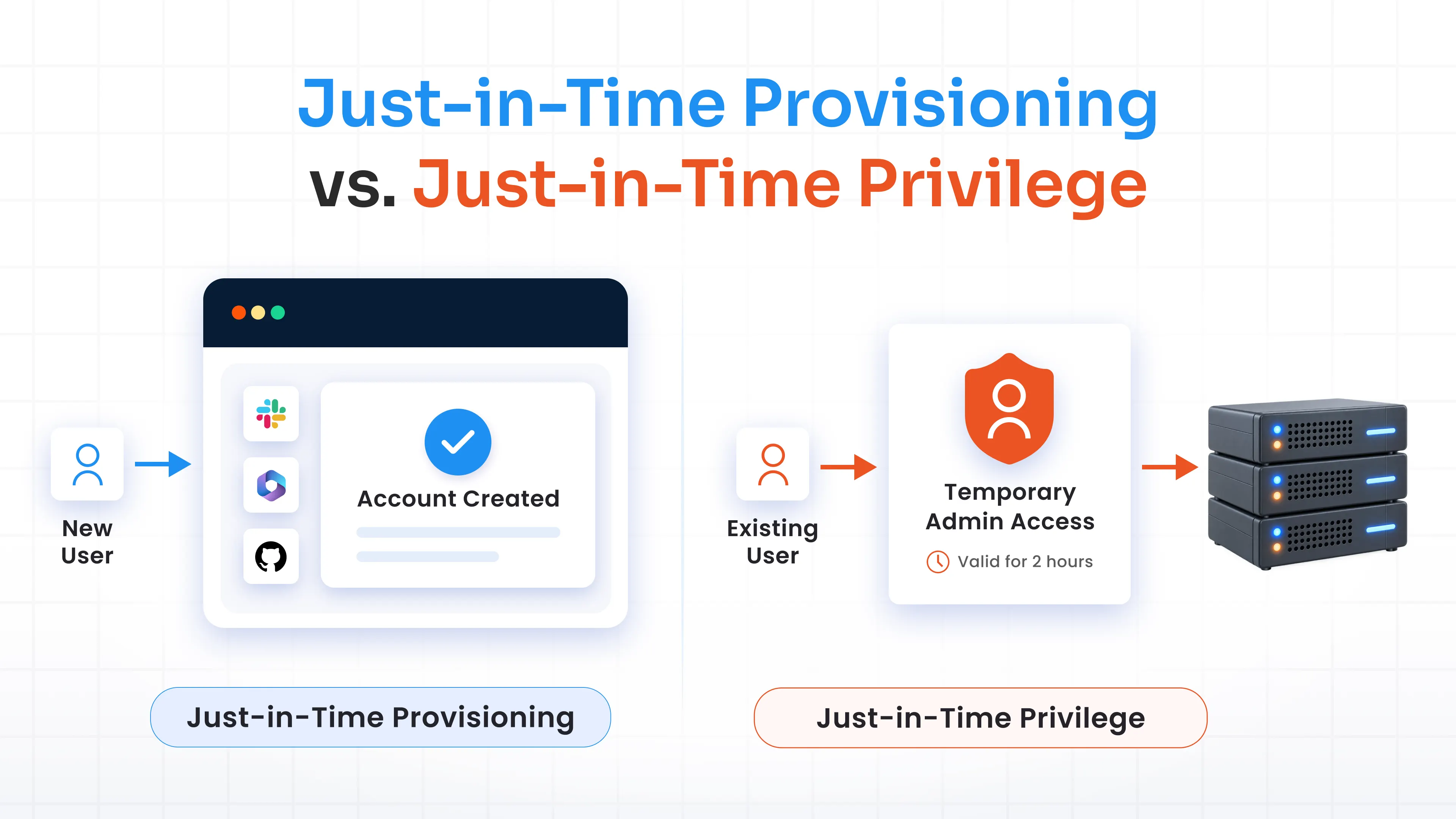
Just-in-Time (JIT) provisioning has evolved into a non-negotiable PAM capability. It enables users to gain privileged access through JIT, which allows them to request restricted access rights for defined time periods and particular work tasks. Access is automatically revoked once the task is completed, and all activity is logged for auditing purposes. Organizations can use this temporary access model to achieve Zero Standing Privileges (ZSP), which represents the current best practice for privilege management systems.
In the 2026 security landscape, PAM combine JIT access with automation and AI-powered approval workflows. JIT access decisions are based on evaluated risk levels, user behavior, and environmental context, enabling risk-based access control. This approach allows IT teams to maintain operational agility while preserving a strong security posture.
If you are looking for a deeper evaluation framework, Download our free PAM Buyer's Guide for a detailed breakdown of features, comparison checklists, and practical guidance that can save weeks of research and help avoid costly mistakes.
3. AI/ML Behavior Analytics & Anomaly Detection
AI and machine learning capabilities serve as fundamental elements that form the basis of modern PAM strategy. These security tools monitor typical user behavior to detect abnormal patterns, which activate security team alerts for suspected security threats. PAM systems detect security threats through their continuous monitoring of privileged sessions, which enables them to stop breaches at their beginning and identify insider anomalies and credential misuse.
Top PAM Providers for 2026 will employ artificial intelligence to perform both detection and predictive security protection. PAM uses data from all devices and sessions, as well as cloud workloads, to predict security threats that might occur. AI-driven analytics working with automation systems produce faster incident response and better policy enforcement, which leads to improved operational efficiency and enhanced threat protection.
4. Credential Vaulting & Automated Secrets Management
Any PAM platform depends on credential vaulting as its fundamental security component. A centralized encrypted vault system protects sensitive information by eliminating hardcoded credentials while it encrypts all passwords and SSH keys and API tokens. PAM runs automatically to perform credential rotation and randomization and logging operations, which prevent unauthorized system access to active credentials. It removes essential security weaknesses that exist in outdated systems while it decreases the amount of work IT personnel need to perform manually.
The current multi-cloud environment requires secrets management solutions, which need to handle both DevOps pipeline operations and machine identity management. PAM needs to have integrated connectors and APIs, which protect credentials during CI/CD workflow operations and when systems run in containerized environments. Organizations can achieve compliance through automated secret management, which operates from beginning to end without requiring developers to handle password management.
5. Privileged Session Monitoring & Recording
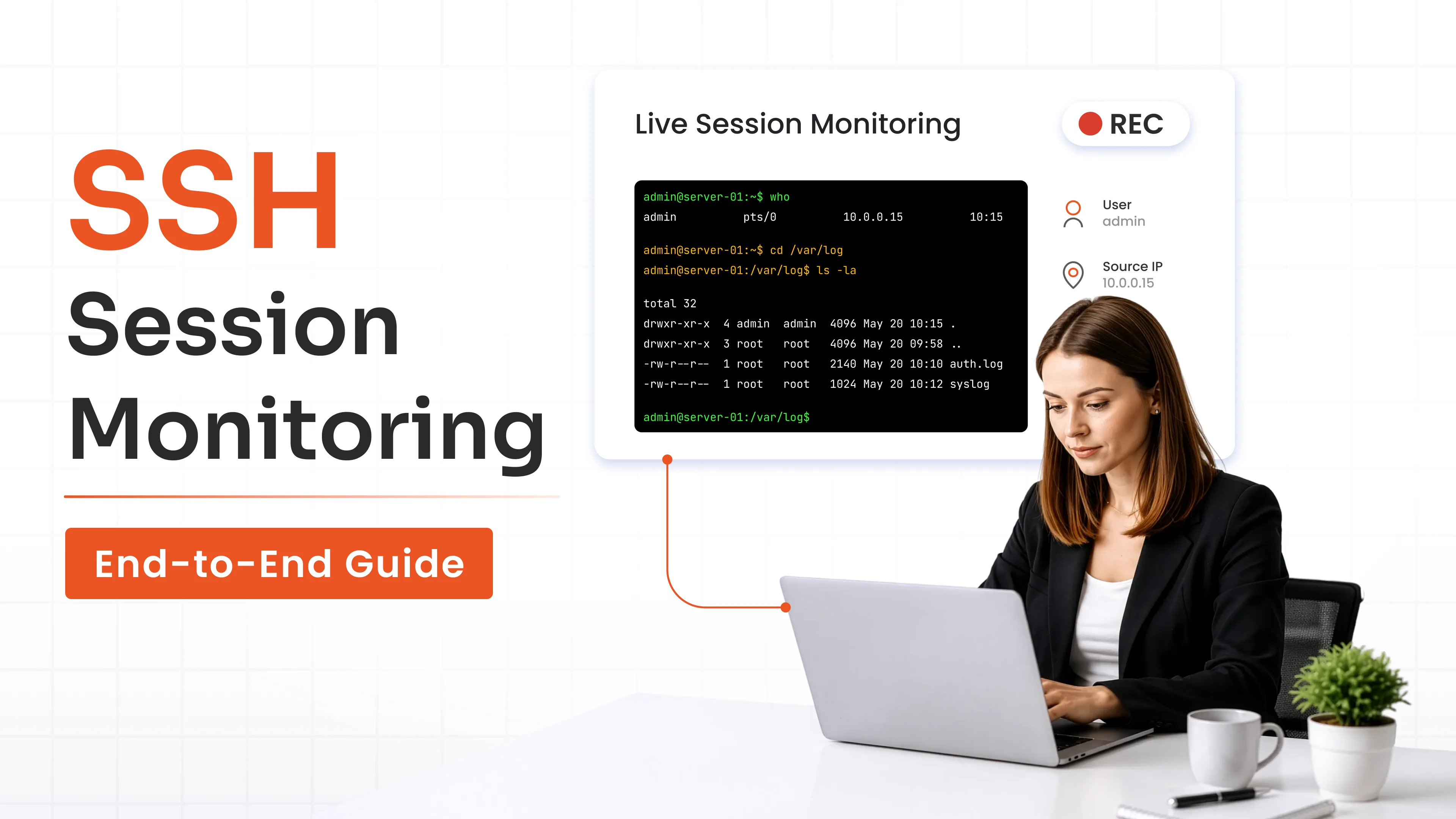
Privileged session monitoring gives visibility into every privileged action users take. It enables security teams to detect unauthorized activity through real-time tracking and access to recorded sessions for forensic analysis. This level of visibility helps prevent insider threats while supporting compliance with ISO 27001, NIST, and PCI DSS requirements.
When selecting a PAM, it must leverage AI-driven session tagging and real-time risk assessment to effectively monitor privileged activity. Advanced privileged session monitoring and recording capabilities should automatically detect anomalous behavior, interrupt high-risk actions, and trigger immediate alerts. By combining human oversight with automated analytics, organizations gain stronger visibility and control over privileged access across servers, databases, and cloud-based consoles.
6. MFA & Strong Identity Verification
Organizations achieve their best defense against unauthorized privileged account access through the security measure known as Multi-Factor Authentication (MFA). PAM uses three verification systems, which combine biometric authentication with OTPs and security keys to stop attackers from using stolen credentials for system access. MFA provides simple protection against phishing attacks, brute-force attempts and credential stuffing.
However, modern requirements go beyond traditional MFA. The current PAM platforms use FIDO2 technology for phishing-resistant MFA alongside their adaptive authentication systems. These systems verify trust through continuous device health monitoring, location tracking and behavioral pattern analysis, which enables smart, continuous authentication. Zero Trust security depends on the establishment of strong identity assurance systems.
7. Seamless Integration with Existing Tech Stack: IAM, SIEM, ITSM, and DevOps Tools
No enterprise security solution operates in isolation. The PAM system needs to operate as a single unit with current Identity and Access Management (IAM), SIEM, ITSM and DevOps systems to achieve complete system visibility and simplified governance. The unified integration system allows organizations to perform centralized auditing and enables automatic incident response and maintains policy consistency throughout their entire infrastructure.
In 2026, powerful APIs and prebuilt connectors make integration frictionless. Organizations can detect threats faster while their incident resolution becomes more efficient through the mutual exchange of contextual information between PAM tools and SIEM and ITSM platforms. The native integration of DevOps with Jenkins, Ansible and GitLab enables application security protection which operates without interrupting developer activities.
8. Cloud, Hybrid, and Multi-Cloud Support
Organizations that deploy their operations across hybrid and multi-cloud systems require new PAM systems because they need to defend their evolving workload infrastructure. Cloud-native PAM manages ephemeral identities and container access and API interactions, which traditional models fail to support. The implementation of access automation through policy-based systems enables organizations to maintain control over their resources, which exist across AWS, Azure, GCP and on-premises environments.
Modern PAM platforms provide complete visibility and single policy management capabilities, which support all deployment models. The organization supports federated identity and cloud integration to establish uniform security protocols, which defend privileged access across all environments that span physical servers and private data centers and public clouds.
9. Secure Remote Employees & Third-Party Vendor Access (VPN-less)
Organizations need to provide their distributed and third-party workers with secure remote access solutions that offer seamless connectivity. PAM enables users to establish encrypted connections with essential systems through VPN-less access which protects the organization's internal network from exposure. It also monitors all user activity throughout their engagement, from onboarding to offboarding.
Leading PAM platforms implement Zero Trust Network Access (ZTNA) principles, requiring authentication for each session and eliminating reliance on persistent network trust. This approach allows vendors and contractors to perform administrative tasks securely while maintaining continuous, uninterrupted operational performance.
10. PAM Vendor Track Record of Security & Support Maturity
Choosing the right PAM vendor goes beyond feature checklists because trust and maturity matter. A dependable PAM provider needs to show evidence of successful enterprise deployment experience and provide excellent customer assistance and maintain their product through updates and follow security best practices. The historical data needs to prove its ability to defend against real security threats.
Organizations in 2026 require vendors to invest major resources in research and development and to follow compliance rules and operate functioning vulnerability disclosure systems. The three fundamental elements that help organizations build enduring trust relationships include their ability to provide post-sale support, their flexibility during implementation and their speed when responding to customer needs. Your security journey requires vendors to function as strategic partners who will help you succeed instead of providing only security tools.
Final Thoughts
Choosing the right PAM tool in 2026 comes down to meeting modern security and operational demands without unnecessary complexity. A capable PAM platform must support Zero Trust principles, seamless cloud and hybrid integration, AI-driven threat detection, phishing-resistant MFA, and essential capabilities such as session recording, password management, and time-based access, all while remaining cost-effective and easy to manage.
miniOrange PAM offers advanced modern PAM capabilities, strong scalability, easy implementation, and end-to-end vendor support. If you want to see how these capabilities work in your environment and deploy them quickly, schedule a PAM demo today to evaluate how miniOrange fits your organization's needs.
FAQs
What is the difference between basic and modern PAM solutions?
Basic PAM protects on-premises environments through their credential storage in vaults and their password rotation features. The present modern PAM systems function under zero-trust principles, which unite AI-based threat detection with just-in-time access and cloud-based scalability.
What is required to make PAM work effectively?
The PAM requires least privilege access together with MFA and JIT provisioning and continuous monitoring and auditing and automation to function properly. The project will achieve success with executive support and its implementation will occur in stages.
Is PAM still necessary if we already use IAM and MFA?
Organizations need PAM because IAM manages regular user accounts, but PAM protects vital privileged accounts through vaulting and session management, which provides better security than traditional MFA protection.
What deployment model is best, on-premise or cloud-based PAM?
Cloud-based PAM offers improved scalability, automatic updates, and hybrid environment support, but on-premise offerings function best for organizations that require absolute data control and existing system compatibility.
Leave a Comment