

“Accept Cookies.”
It’s probably one of the most familiar buttons on the internet.
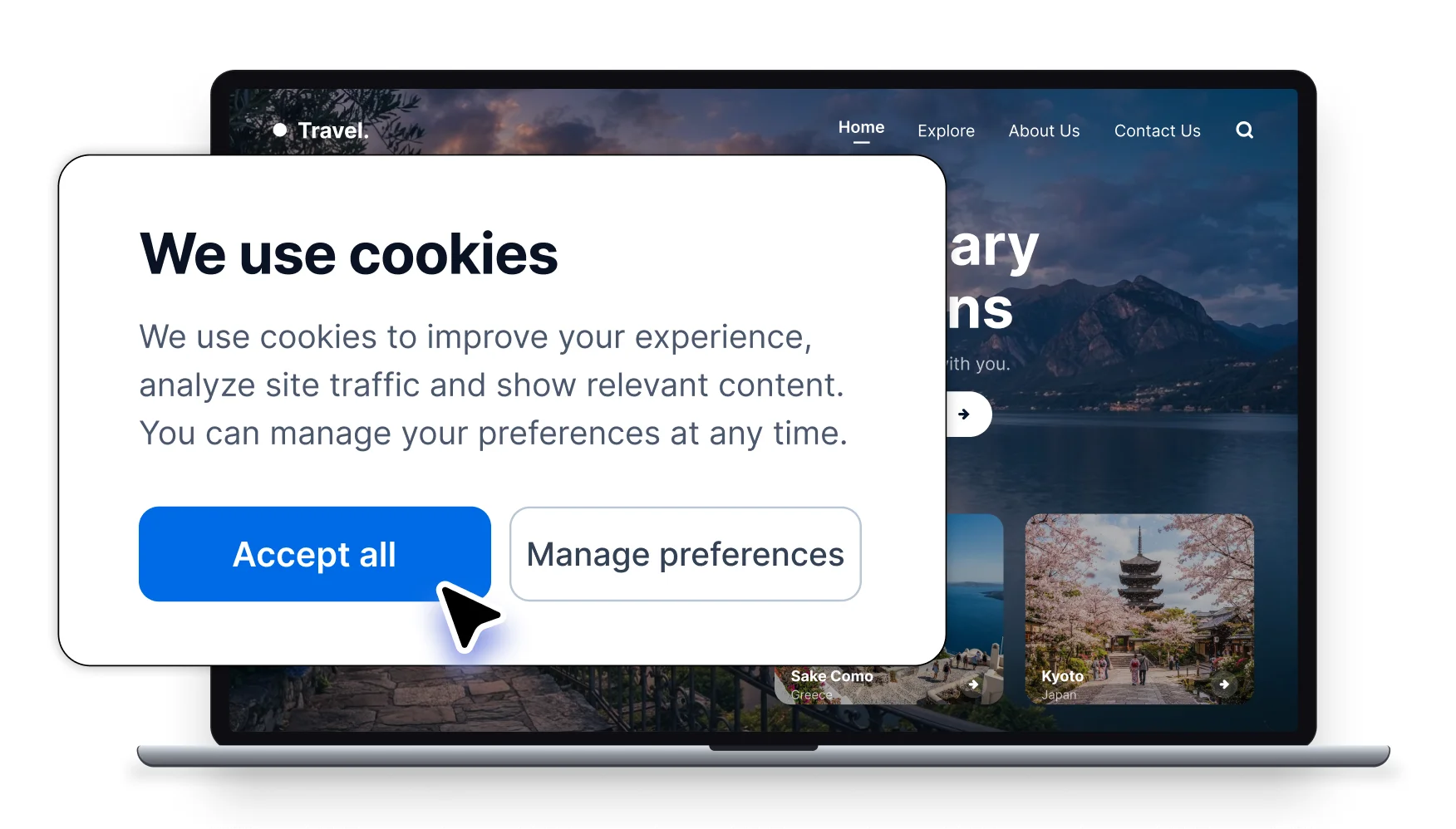 You visit a site, a popup appears, and you're asked to accept, reject, or customize your cookie preferences. Though it gets hella annoying, this little banner is actually a mandate as per numerous laws across the globe - GDPR, DPDPA, CCPA etc.
For many organizations, adding this banner feels like a major step toward privacy compliance.
You visit a site, a popup appears, and you're asked to accept, reject, or customize your cookie preferences. Though it gets hella annoying, this little banner is actually a mandate as per numerous laws across the globe - GDPR, DPDPA, CCPA etc.
For many organizations, adding this banner feels like a major step toward privacy compliance.
But here's the question: what happens after a user clicks "Accept"?
Can you prove when consent was given? Can users easily withdraw their consent later? What if someone asks to see the personal data you've collected about them or requests that it be deleted? These are the questions that a cookie banner solution alone cannot answer.
A cookie banner is only one small part of a much bigger privacy picture. For a Drupal website, privacy starts with understanding what data you collect, why you collect it, how you use it, and what happens when a user asks you to stop using it.
What is the purpose of a cookie banner?
At its simplest, a cookie banner is there to inform website visitors / end users that cookies may be used and, where required, and give them a choice about the types of cookies they want to allow.
Some cookies are necessary for the website to function; while others are used to remember preferences, understand how visitors interact with a website, aid in quantifying marketing campaigns, personalize experiences or support advertising and analytics.
That might sound harmless - or scary - depending on the way you look at it.
If you are collecting all such kinds of information - are you able to answer 3 simple questions -
- Why do you have that information? Purpose
- Why do you still have that information?
- If you are processing said information, is there auditable proof for it?
A Cookie Can Tell You More Than You Might Think
Depending on how cookies and other tracking technologies are configured, information associated with a visitor can include:
- IP address
- Device and browser information
- Approximate location
- Pages visited
- Time spent on a website
- Referring website
- Language and preferences
- Online identifiers
- Interaction and behavioral information
On their own, some of these details may not directly identify a person.
But when combined with other information, they can contribute to profiling an individual.
And cookies aren't the only way websites collect information.
A Drupal website may also collect personal information through registration forms, contact forms, newsletter subscriptions, surveys, account creation, downloads, purchases, or other interactions.
Now the privacy question becomes much bigger.
What Happens When Personal Data Is Collected
A visitor fills out a contact form on your Drupal website. They provide their name, email address, and phone number and hit Submit.
At that moment, the data has entered your organization’s ecosystem. It might be stored in Drupal, passed to a CRM, shared with a marketing platform such as Mailchimp, or processed by another service connected to your website. Now your user's data has moved across multiple systems.
So, the question is no longer just what data does your website collect, but rather what happens to that data after it is collected?
Disclosing that we’ll collect data is one thing, but proving what you’ll do with that data, and whether or not it can be accessed by your end users at any point - is something where most organizations would struggle.
This is where privacy responsibilities and global compliance laws come in.
When an organization collects personal information, users have the right to understand how that information is being handled - why it was collected, how it is being processed, who may have access to it, how long it will be retained, and what options they have to access, correct, or delete it.
Organizations also need to be able to account for what happens to that data throughout its lifecycle.
Privacy Laws Are Changing What Users Can Expect
The expectations around personal data have changed significantly. People are no longer expected to simply trust that an organization will handle their information responsibly. Privacy regulations increasingly give individuals more visibility into how their data is collected and used, along with greater control over what happens to it.
The GDPR, DPDP Act 2023, and CCPA/CPRA each approach privacy differently, but they all share a common principle: people should have meaningful transparency and control over how their personal data is handled.
For organizations, this means privacy cannot be treated as something that sits quietly in a website's footer or appears only when a cookie banner pops up. It needs to be built into how personal data is collected, processed, stored, shared, and eventually deleted.
And this is where things become more complex.
Your website may be the first place where personal data is collected, but managing privacy requires more than simply controlling what happens within Drupal. Organizations need a way to manage consent, privacy requests, user rights, and compliance as part of the larger data lifecycle.
This Is Where Data Privacy Becomes an Organizational Responsibility
For an organization, having visibility into this entire data journey is critical. You need to know what personal data exists, where it resides, how it moves between systems, and which applications or third parties are processing it. Doing this manually across spreadsheets, applications, databases, and teams can quickly become difficult to manage. This is where a dedicated privacy management platform can help. The miniOrange Data Privacy platform helps organizations manage privacy operations across their data environment, including capabilities for data discovery and classification, consent and preference management, data subject requests, privacy risk assessments, data mapping, and compliance activities.
So, what does this mean for a Drupal website?
It doesn't mean your Drupal website needs to solve your organization's entire privacy program by itself. A Drupal website is often the first point where an organization interacts with its users.
That makes privacy controls at the Drupal layer important.
The Drupal Privacy & Compliance Suite helps organizations manage privacy directly within their Drupal environment while addressing the broader need for responsible personal data management.
It can help organizations manage:
- Cookie and Consent Management - Give users clear choices about cookies and consent preferences while maintaining records of consent and related activities.
- Privacy and Consent Records - Maintain an audit trail of privacy-related activities and consent, helping organizations demonstrate how and when consent was collected.
- Privacy Policy Management - Manage and present privacy policies within Drupal so users can understand how their personal information is collected and processed.
- User Data Rights - Privacy isn't only about what an organization does with data. It is also about what the user can do with their data. Depending on the applicable regulation, users may have rights such as:
- Right to Know
- Right to Consent (Opt-In)
- Right to Refuse
- Right to Delete
- Right to Withdraw
Our Privacy Suite provides a platform through which users can exercise applicable privacy rights and organizations can manage those requests.
That changes the experience from:
“We have a privacy policy.”
to:
“Our users actually have a way to exercise their privacy rights.”
Privacy as a Responsibility
As we progress, organizations will need to demonstrate:
- What the user consented to
- When did he consent
- Which version of the policy or notice was presented
- Whether consent was later withdrawn
But when we take a step back, it is much bigger than just managing consent via Drupal. A website is just a channel, a medium through which consent is collected. Digital Personal Data Protection involves Data Discovery and Data Loss Protection across your organization. It takes into account your databases, your cloud storages like Google Cloud and Microsoft O365, your connected third party applications and more.
You’ll be expected to maintain auditable records of processing activities (RoPA) - you’ll need to have breach and incident notification systems in place.
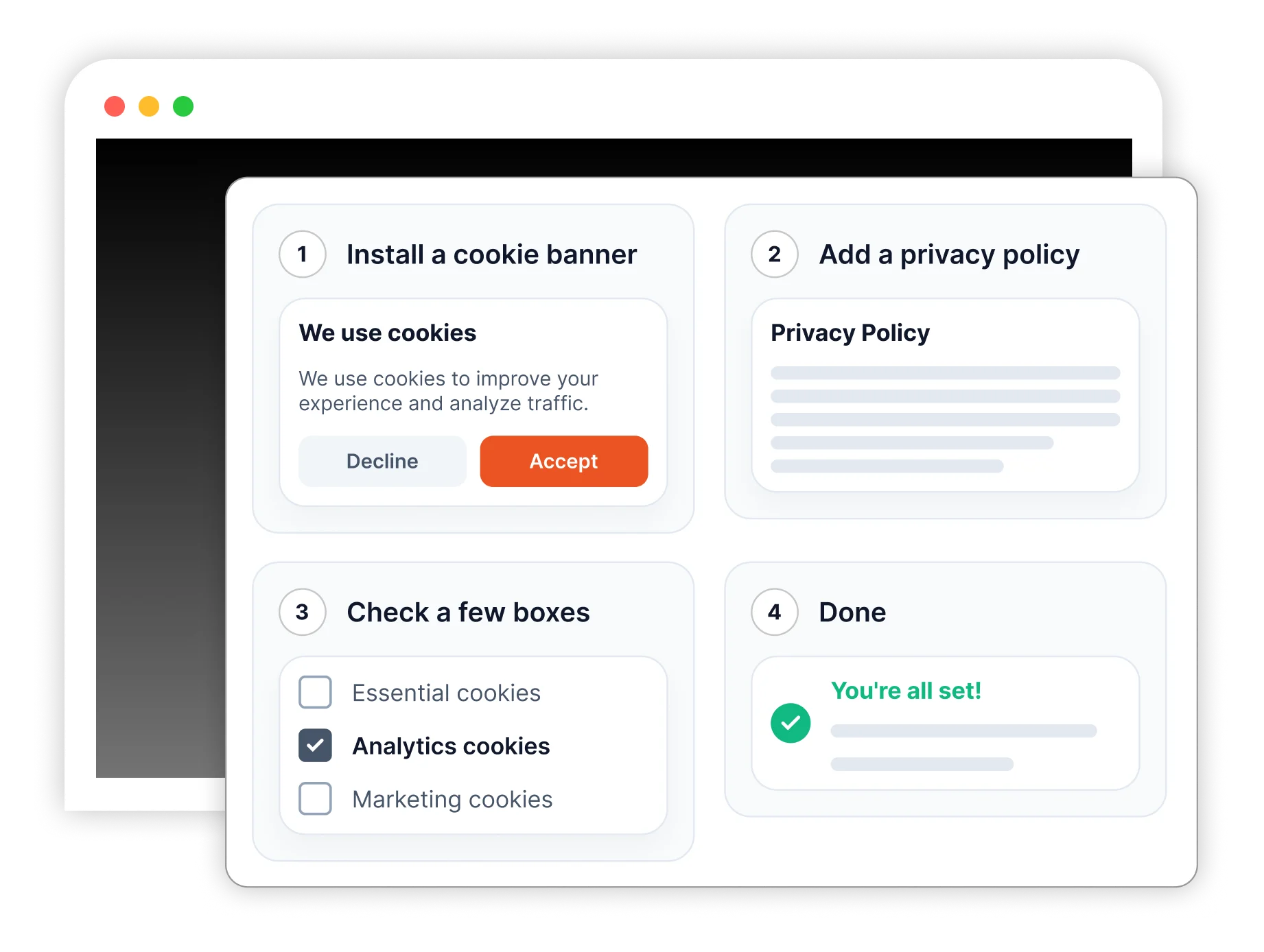
It can be tempting to think of privacy compliance as a checklist. Install a cookie banner -> Add a privacy policy -> Check a few boxes -> Done
But personal data doesn't work that way.
Data moves; Systems change; New integrations are added; Marketing tools get connected; CRMs are introduced; Users submit new types of information.
And privacy requirements continue to evolve.
That means privacy needs to be an ongoing process - not a one-time implementation.

Leave a Comment