As per Gartner, around 90% of the applications have become outdated or reached an end-of-life in 2025, mainly due to a lack of funding for modernizing these apps.
Legacy systems have served companies for years now, but their shortcomings can result in either of the paths: adopting modern trends or discarding them altogether.
Legacy applications aren’t equipped to handle evolving cybersecurity attacks and rampant data breaches. They’re also not suitable to elevate productivity and may endanger the overall financial well-being of an organization.
So, there is a need for legacy application modernization for better security, efficiency, and business growth. One of the ways to achieve this is by using an access gateway solution that is equipped with advanced Identity and Access Management (IAM) solutions.
miniOrange, a pioneer in Identity and Access Management (IAM), is one of the go-to vendors of organizations dealing exclusively with legacy apps and future-proofing them.
Let’s kickstart this blog by understanding the access gateway, the consequences of using legacy apps, and how the access gateway helps in uplifting legacy apps in the long run.
What is Access Gateway?
An access gateway is a security approach that acts like a security check or an endpoint between users and the internal resource they want to access. This security approach works flawlessly in both on-premise and hybrid environments.
Access gateway behaves like a reverse proxy solution, where it redirects the incoming users to an Identity Provider (IdP) for authentication. An additional layer of security can also be included in the form of Multi-Factor Authentication (MFA) for enhanced authentication.
Challenges of Using Legacy Applications
Legacy applications are not easy to handle, and they pose certain challenges, which are as follows:
- Outdated Authentication Methods: Many legacy apps rely solely on username/password logins, vulnerable to phishing, credential stuffing, and brute-force attacks.
- Lack of Modern Protocol Support: Absence of support for security protocols like SAML, OAuth, or OpenID Connect limits integration with cloud and SaaS solutions.
- Integration Difficulties: Legacy applications were not designed for interoperability, complicating connections with new systems or hybrid cloud environments.
- Compliance and Regulatory Gaps: Without centralized logging and fine-grained access control, legacy apps often fail to meet current regulatory mandates such as GDPR, HIPAA, or SOC 2.
The legacy application challenges can be overcome with the help of access gateway solutions, which are integrated with modern IAM platforms.
Bridging Modern Identity with Legacy Applications via Access Gateway
An Access Gateway supports legacy application modernization by acting as a secure intermediary (a reverse proxy) that allows on-premises legacy applications to integrate with modern cloud-based Identity and Access Management (IAM) systems without requiring changes to the legacy application's code.
An access gateway solution carries out this approach by enforcing the following solutions.
- Enabling SSO for Legacy Apps: Integrate Single Sign-On (SSO) into legacy apps, where the users get authenticated after redirection to an Identity Provider (IdP) via an access gateway.
- Implementing MFA: Add MFA for an extra layer of security to the legacy apps for user authentication through more than two MFA methods- SMS/email-based OTP, push notifications, hardware tokens, etc. Users are redirected for verification via an access gateway.
- Centralized Access Control: Manage users, permissions, and roles for legacy apps from a single dashboard or portal, simplifying policy enforcement.
- Seamless Integration: Legacy apps can be made compatible with HR platforms, Enterprise Resource Planning (ERP) systems, PeopleSoft, SAP, and Oracle EBS. Access gateway assures secure access without altering architecture or app code.
- Cloud and Hybrid Readiness: Modernization of legacy applications allows them to function in both hybrid and cloud environments.
- Integration with Cloud IdPs: The access gateway connects legacy systems to modern IdPs, such as Entra ID, Okta, or Google, using standard protocols (SAML, OAuth, or OIDC) on the cloud.

Enhancing Security and Compliance
Modernization of legacy systems with an access gateway helps to meet today’s compliance requirements and up-scale security.
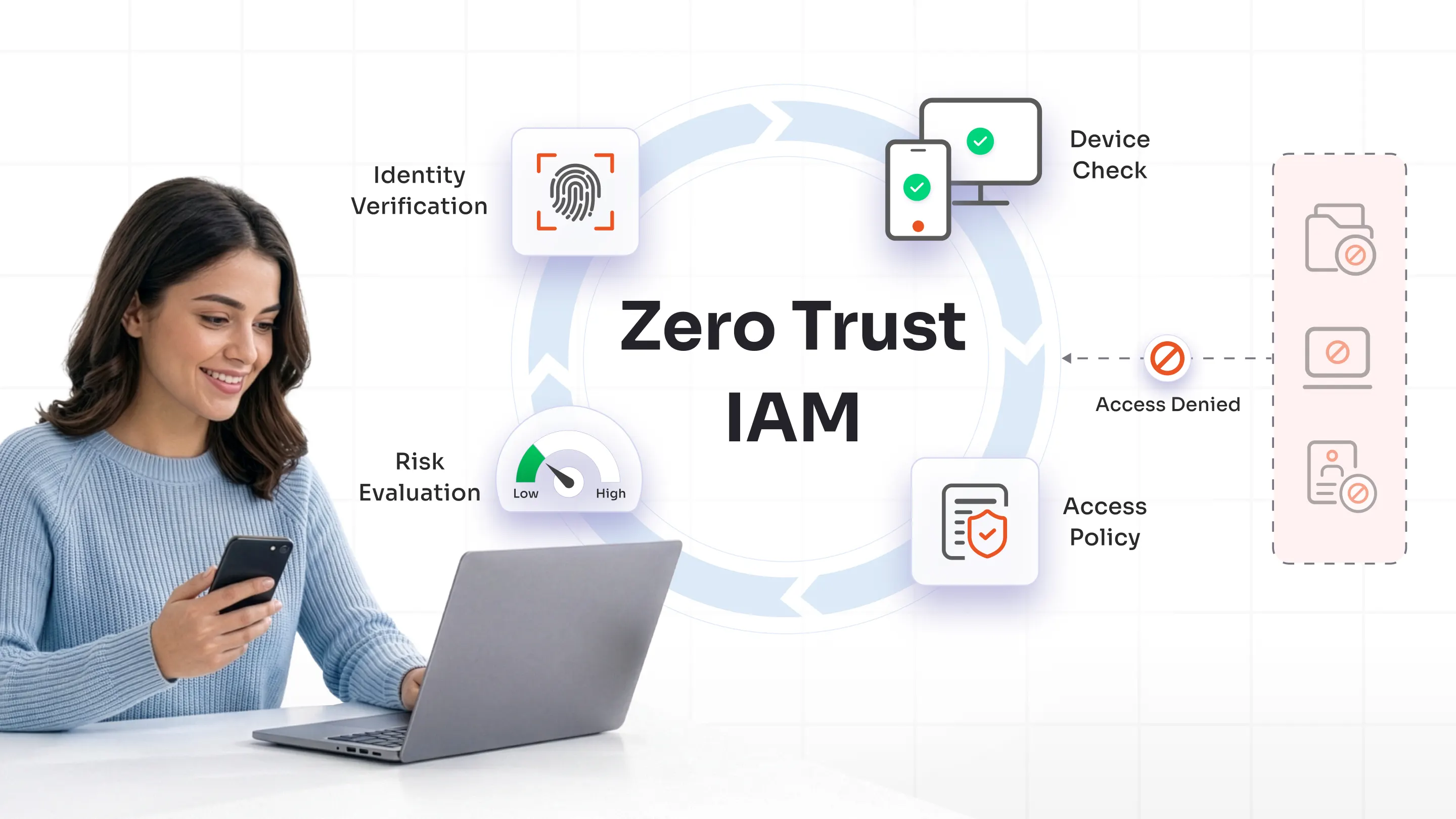
This is achieved through adhering to the Zero Trust Principles (ZTA). The access gateway solution operates on the principle of ‘never trust, always verify,’ which forms the core of the ZTA. It monitors every request and enforces granular access policies based on user roles, location, or device, reducing the attack surface and lateral movements of the threat entities.
Furthermore, centralized logging and detailed audit reports help to meet the compliance requirements (GDPR, HIPAA, etc.).
Benefits of Modernizing Legacy Apps with Access Gateway
- Enhanced Security: Integrating MFA and Single Sign-On reduces the risk of credential theft and unauthorized access, safeguarding the organization’s critical systems.
- Improved User Experience: A unified login portal eliminates password fatigue and simplifies access to multiple applications, raising end-user productivity.
- Reduced IT Overhead: Centralized policy management and reduced password reset frequency lighten support staff workload and cut maintenance costs.
These benefits translate into increased operational agility, better security posture, and a smoother modernization journey.
miniOrange Access Gateway vs. Traditional Modernization Approaches
| Approach | Characteristics | Limitations | miniOrange Access Gateway Benefits |
|---|---|---|---|
| Code Rewrite | Full app re-development | Time-consuming, high cost, and the risk of downtime | Faster deployment, averts code changes, and less security risks |
| VPN-Based Access | Network-level access | Broad access increases security risks; it has poor UX/UI | Better UI/UX, granular policies, and app-specific access |
| miniOrange Access Gateway | Centralized control, reverse proxy with MFA and SSO | Nothing in particular | Better compliance support, experience, and security |
Conclusion
Legacy application modernization is critical for securing business assets, meeting compliance, and enabling digital agility. miniOrange Access Gateway simplifies this journey by delivering SSO, MFA, centralized access control, and compliance-ready audit capabilities without invasive code rewrites.
By adopting Access Gateway, organizations can protect legacy systems, enhance user productivity, reduce IT overhead, and future-proof their IT landscape for hybrid and cloud deployments.
Modernize your legacy applications securely with miniOrange Access Gateway today and unlock the full potential of your enterprise security and digital transformation strategies. Connect with us to talk with an expert.
FAQs
Do legacy apps need to be rewritten or refactored?
No. One of the biggest benefits of Access Gateway is zero code change: organizations can layer SSO, MFA, and centralized access management on top of legacy systems without rewriting, refactoring, or rebuilding software, which avoids risk, cost, and downtime.
What types of legacy applications can be secured with miniOrange Access Gateway?
miniOrange Access Gateway supports a wide range of legacy web applications, including ERP (SAP, Oracle EBS), HR systems, financial software, and custom in-house apps, even those that lack modern authentication standards or APIs. It integrates with both on-premises and hybrid environments, requiring no source code changes.
Can Access Gateway scale for large enterprises?
Yes. Its architecture is designed to support thousands of concurrent users, multiple applications, high availability, and disaster recovery configurations, making it suitable for complex enterprise environments.
Leave a Comment