Hello there!
Need Help? We are right here!

Your DPDP Compliance Deadline Is Approaching. May 2027 is closer than you think.
Need Help? We are right here!
Search Results:
×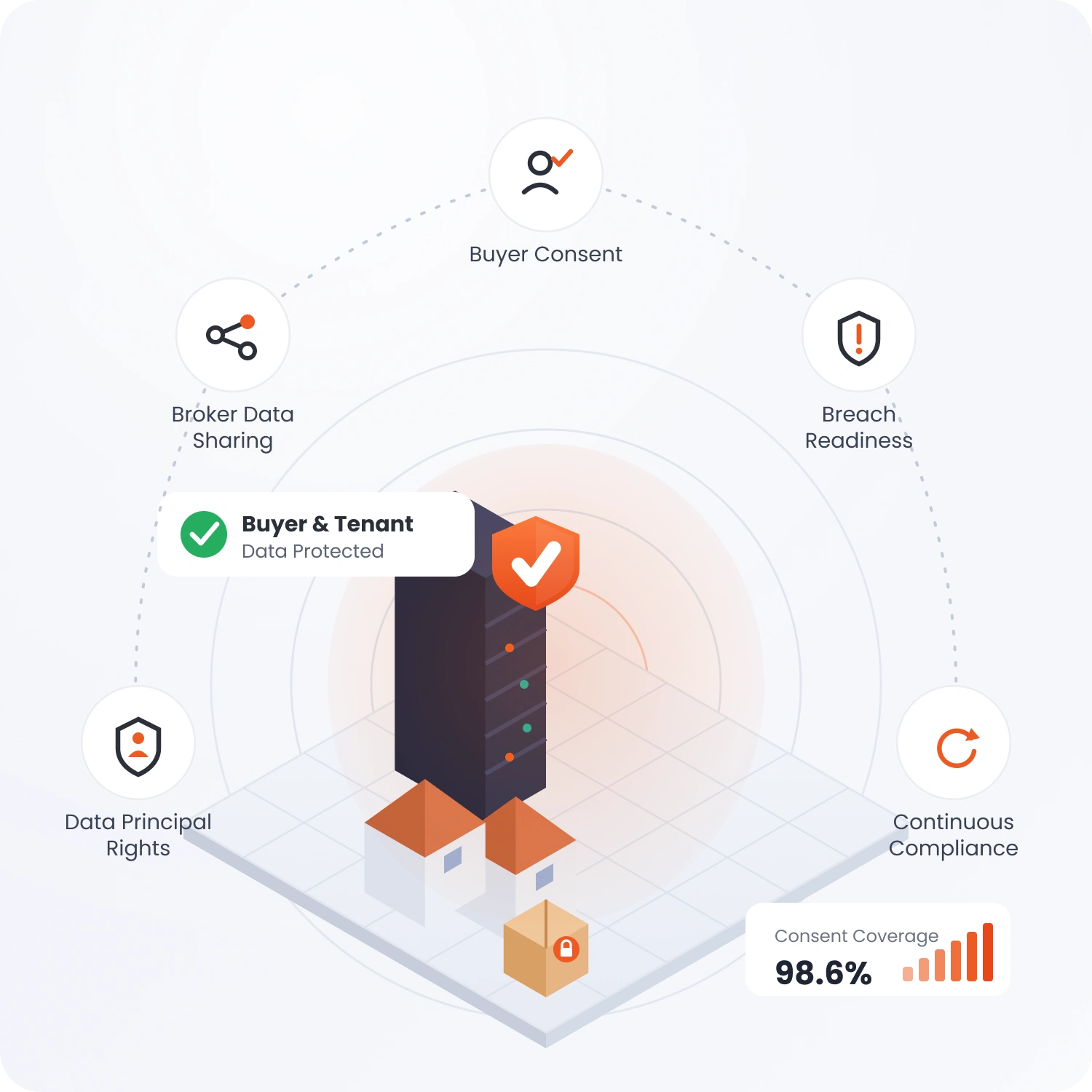
Map personal data at every stage to establish its purpose, access permissions, and retention requirements.

Lead forms, contact details, and visitor records require appropriate notices and defined processing purposes.

Buyer KYC data protection requires secure document handling, minimum necessary collection, and restricted access.

Sale deed, registration records, and handover documents require documented legal obligations and retention periods.
Personal data can reside in CRMs, property applications, shared drives, document repositories, and connected security systems.
PAN, identity documents, photographs, and address proofs require secure storage, controlled access, and justified retention.

Loan records, payment schedules, receipts, and bank-related documents require appropriate permissions and secure information exchange.

Contact details, vehicle registrations, maintenance records, and lease documents require tenant data privacy controls that prevent unauthorized disclosure.

Fingerprint templates, facial recognition records, and access credentials require restricted permissions, secure processing, and defined deletion procedures.

CCTV footage and incident recordings require appropriate notices, access restrictions, documented retrievals, and enforceable CCTV retention policies.

Enquiry records, site visit histories, and broker databases require controlled broker data sharing and secure transfer mechanisms.
miniOrange supports privacy management through data discovery, consent management, rights request workflows, and documented governance processes.
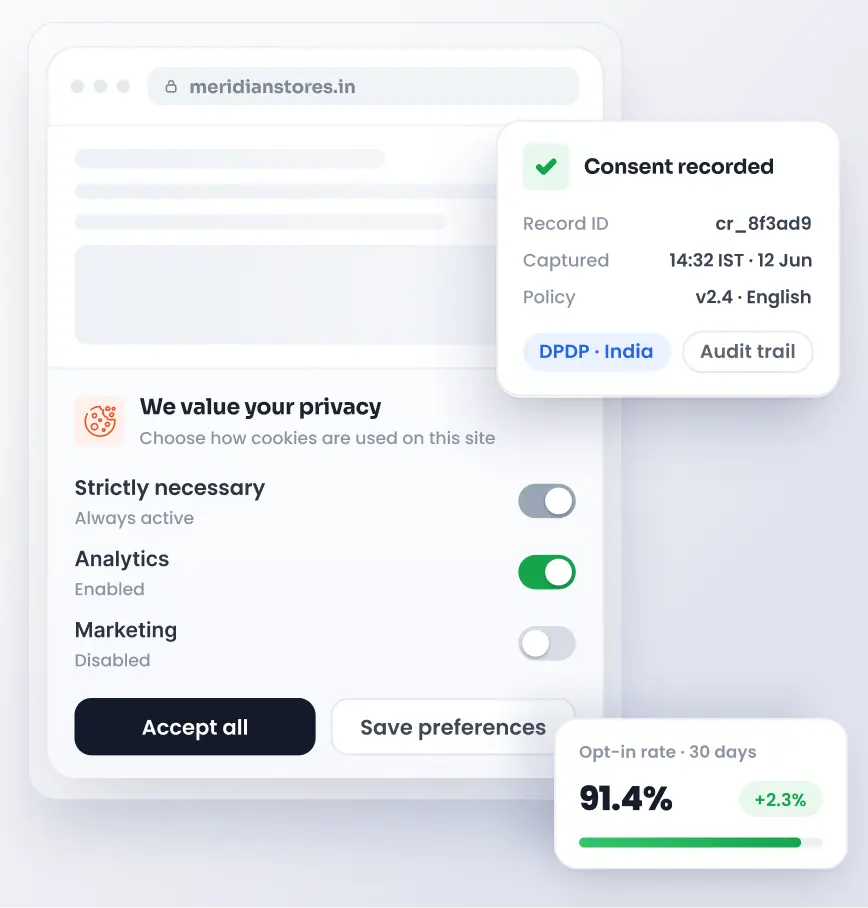
Capture consent and maintain records across property enquiries, booking forms, portals, and resident applications.
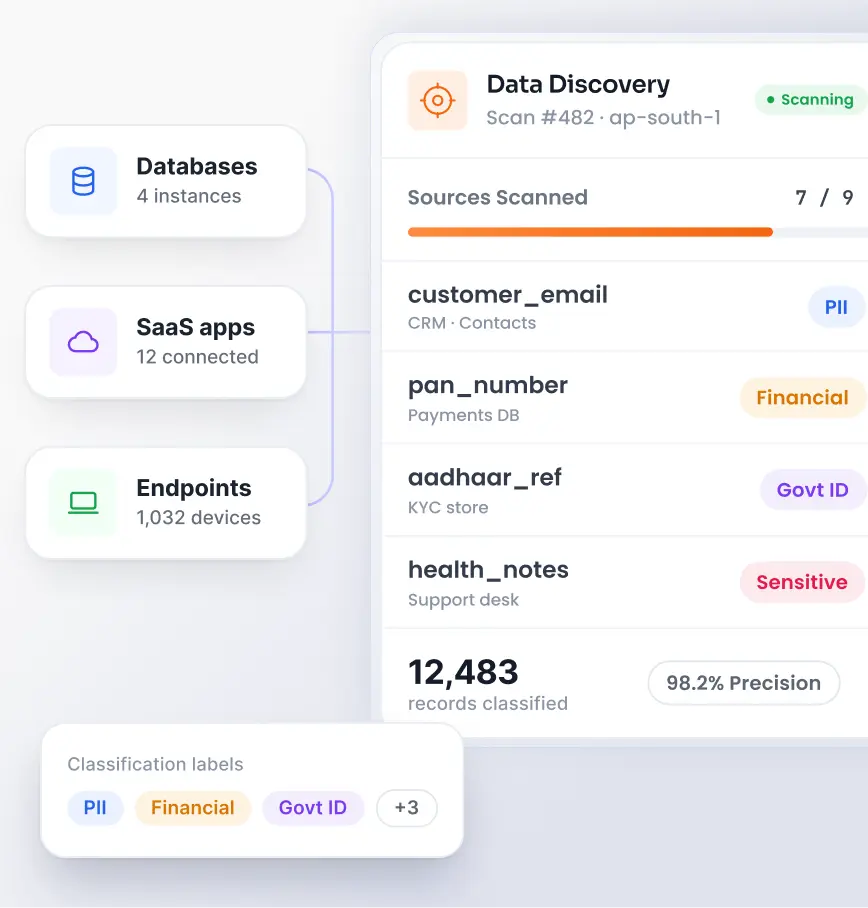
Identify personal data across business applications and document repositories to improve visibility into processing activities.
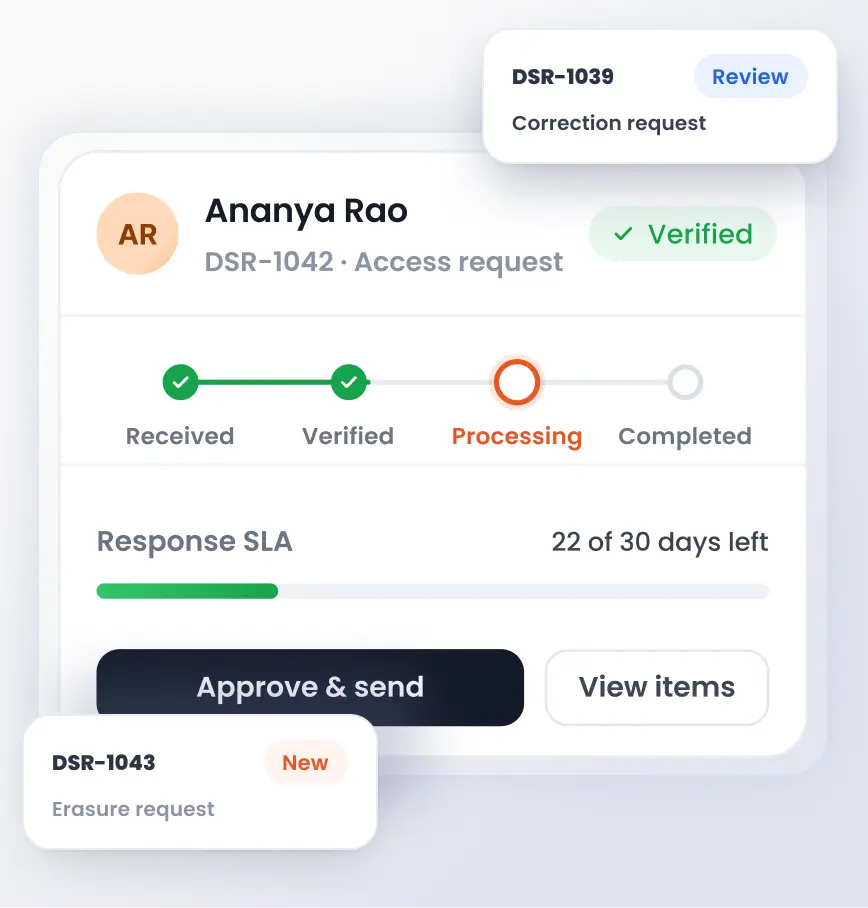
Coordinate privacy requests across teams and systems through structured workflows.
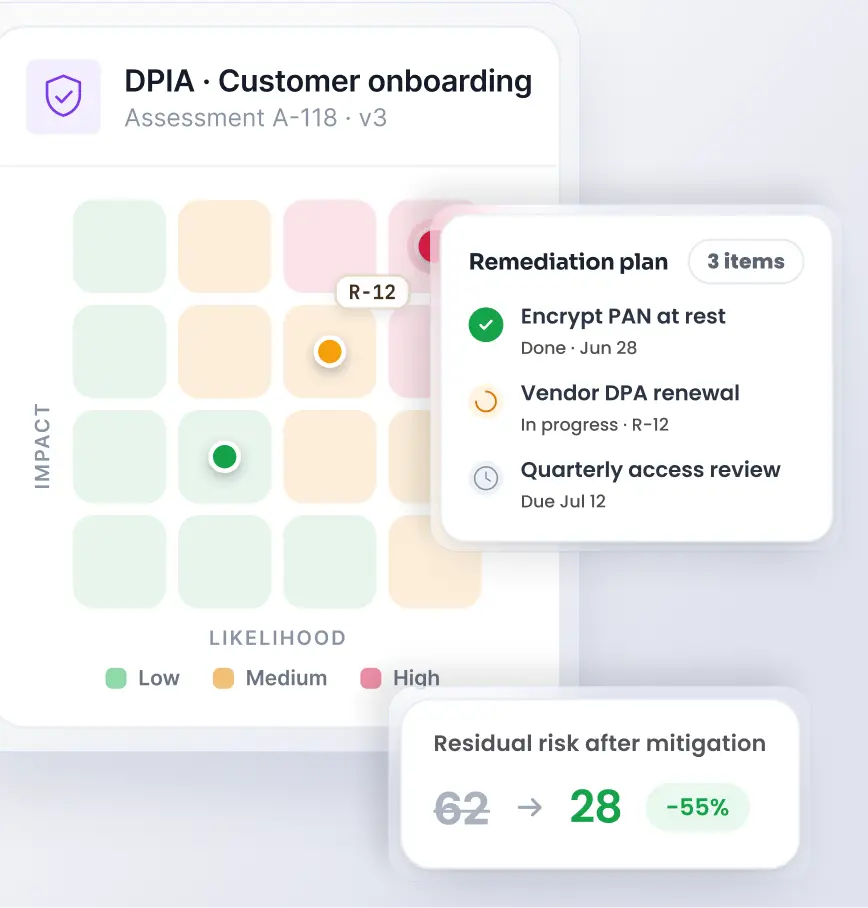
Apply controls to CCTV, visitor management, and biometric access systems.
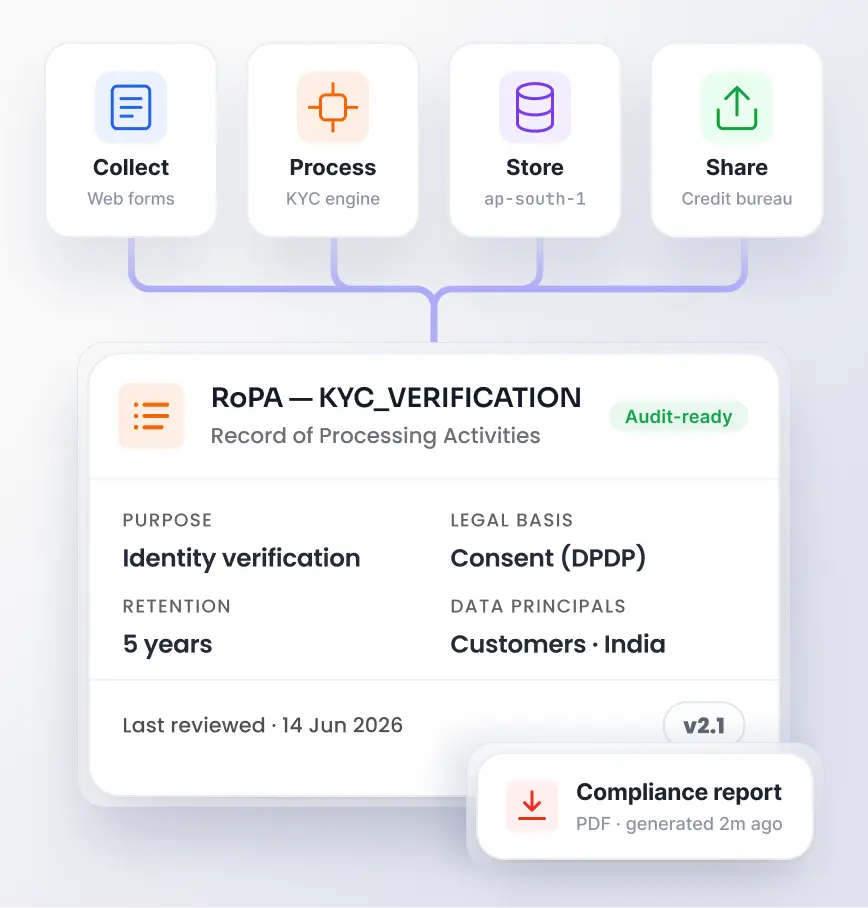
Govern personal data shared with brokers, security agencies, facility managers, and technology providers.
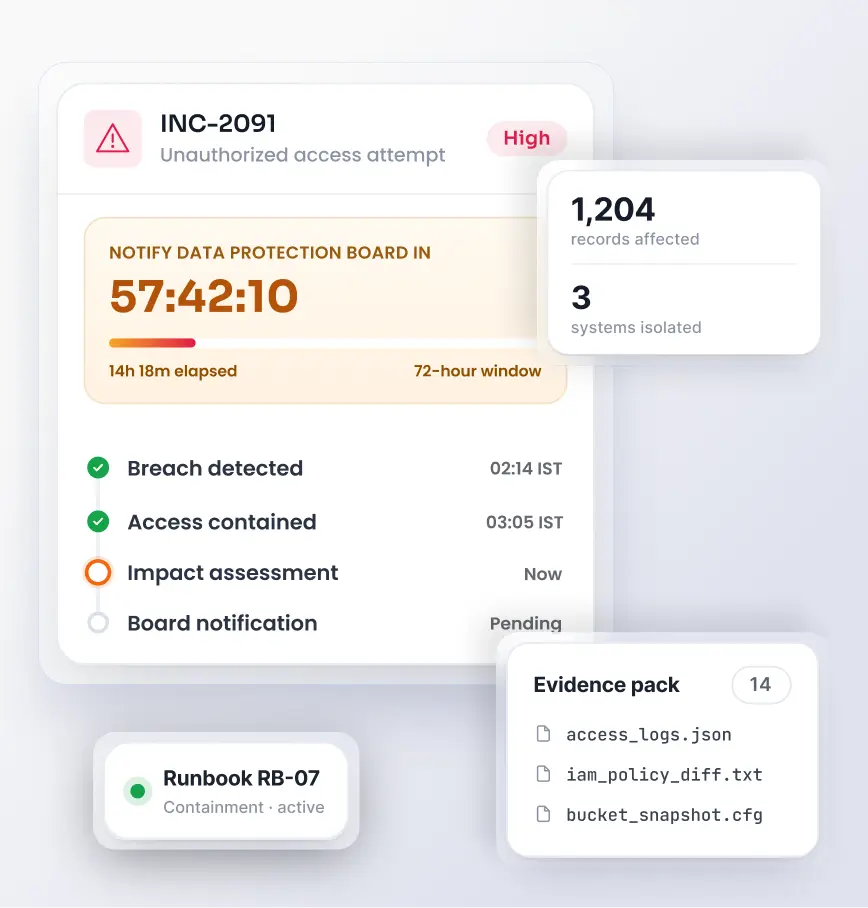
Establish procedures for record retention, incident escalation, and breach reporting.
Establish repeatable privacy controls across property operations through five implementation steps.
Discover personal data across CRMs, KYC repositories, property applications, CCTV systems, and vendor platforms. Identify the responsible Data Fiduciary and Data Processors.
Document processing purposes and applicable legal grounds. Provide appropriate notices and capture consent wherever required.
Remove unnecessary collection and establish retention schedules for KYC documents, visitor logs, and resident records.
Review broker agreements, vendor access, and data-sharing arrangements. Document responsibilities, security requirements, and deletion procedures.
Maintain audit trails, review permissions, test privacy workflows, and prepare incident response procedures.
Different property businesses need privacy controls tailored to their data collection, processing, and sharing practices.
Manage buyer information throughout sales, verification, registration, and possession.
Integrate PropTech data privacy controls into property portals, listing applications, and digital management platforms.
Protect buyer information exchanged between agents, brokerages, and developers.
Govern personal data collected through connected building and access management systems.
Protect resident registers, maintenance records, visitor information, and community app data.
Manage tenant verification, maintenance requests, contractor access, and surveillance records securely.
Coordinate data discovery, consent, retention, and privacy request workflows
across sales, legal, IT, and property management teams.
Coordinate privacy workflows and maintain visibility into personal data across property operations.
Maintain consent evidence and support withdrawal workflows for consent-dependent processing.
Apply documented retention policies while preserving records required by applicable laws.
Control third-party access and document the purposes for which personal data is shared.
Track request verification, internal tasks, responses, and completion across relevant systems.