Hello there!
Need Help? We are right here!

Need Help? We are right here!
Search Results:
×
Connect fragmented data sources to build a structured inventory of assets, fields, owners, and data relationships.
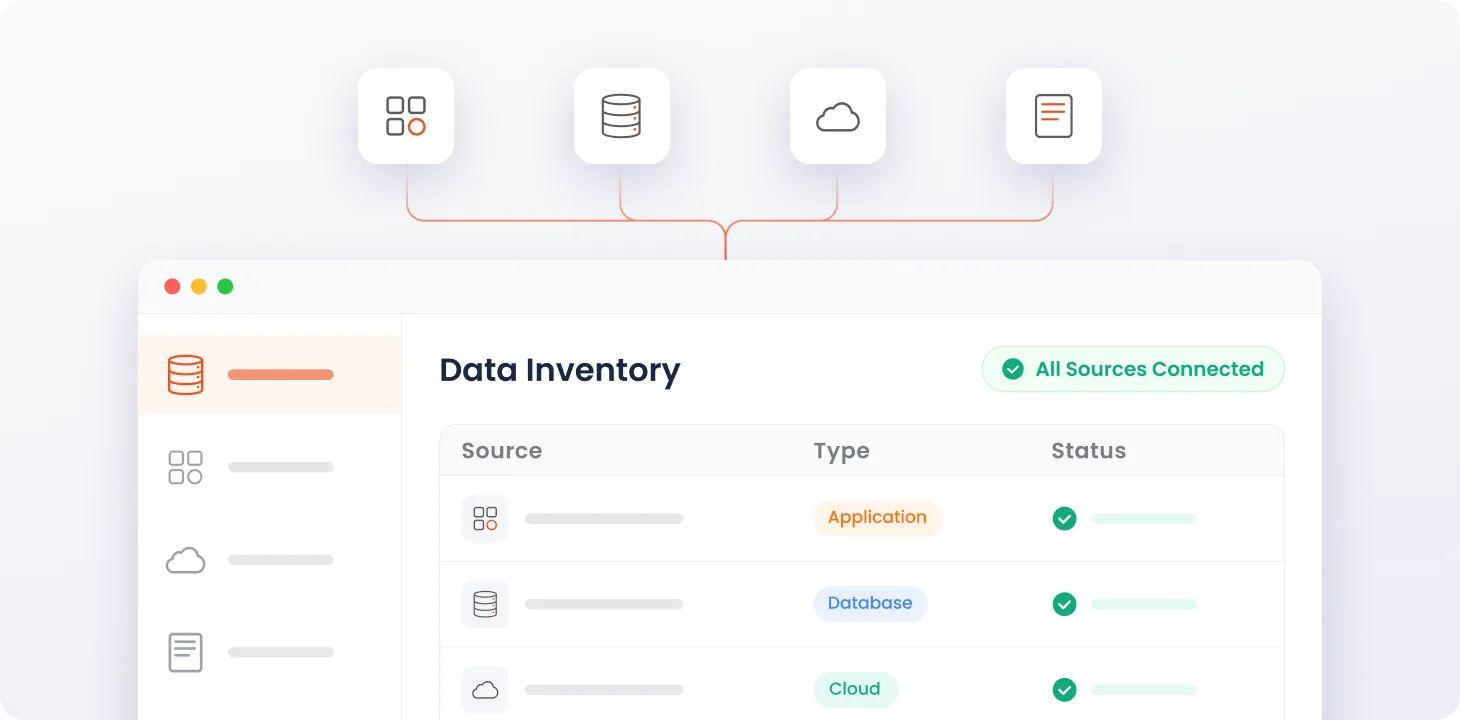
Bring databases, applications, SaaS platforms, and repositories together to create a comprehensive view of organizational data.
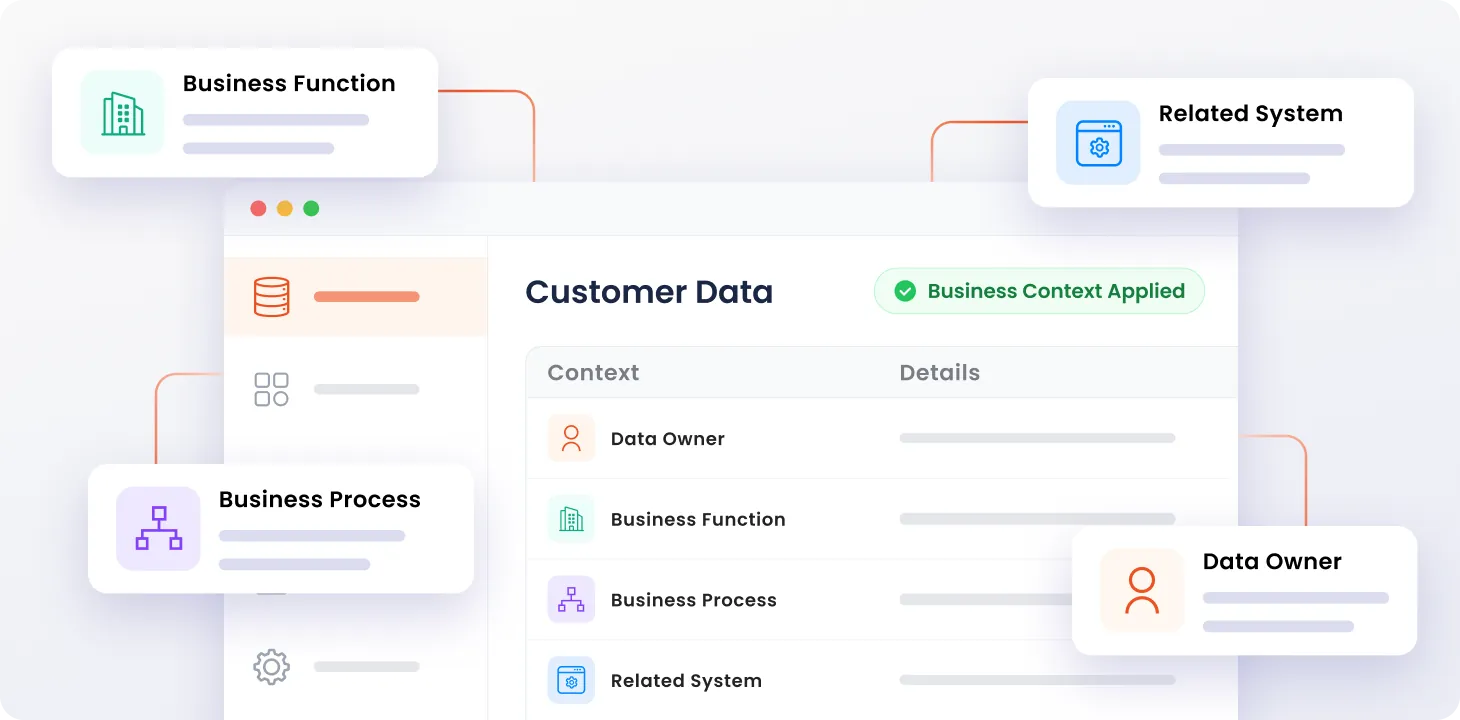
Relate data to its systems, processes, functions, and ownership to clarify its role across the organization.
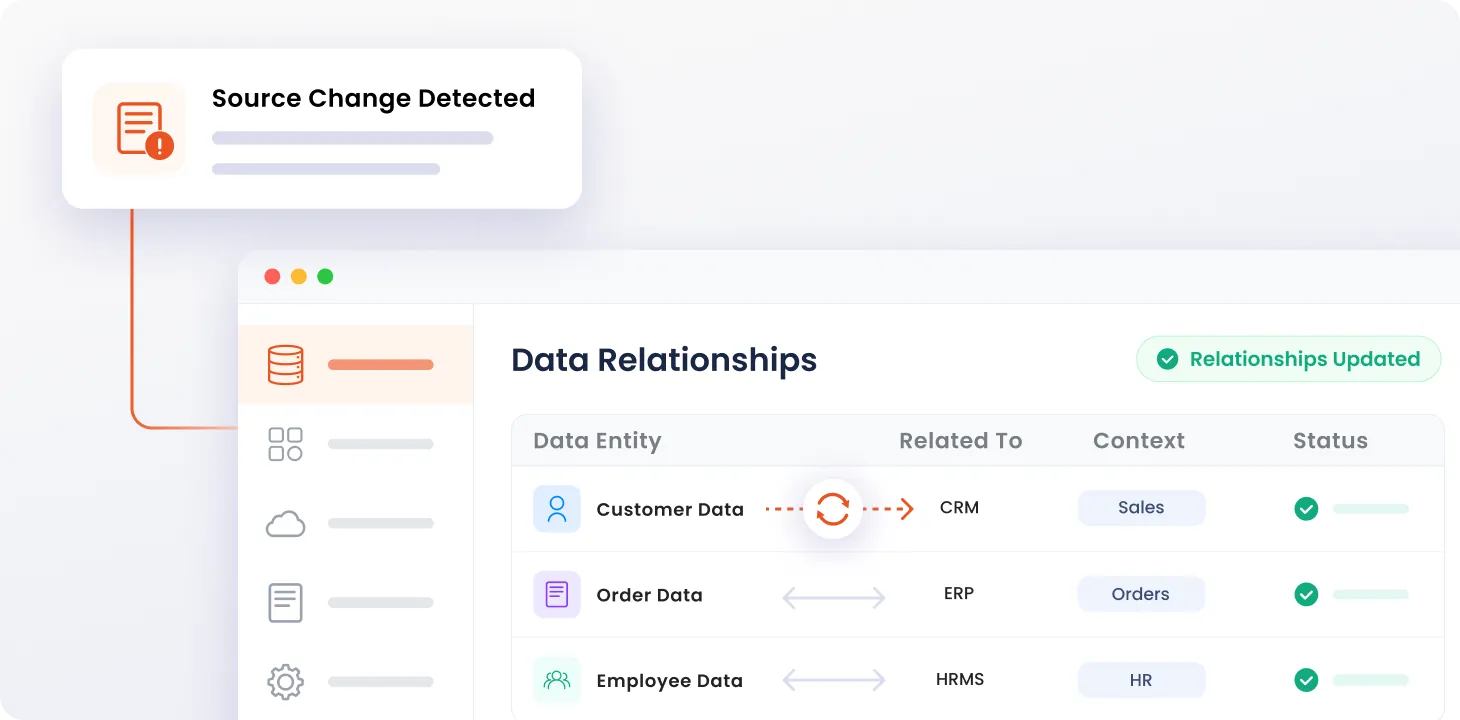
Reflect changes across sources, systems, and processes to maintain accurate relationships between connected data elements.
miniOrange turns complex data environments into structured intelligence for smarter privacy and compliance workflows.

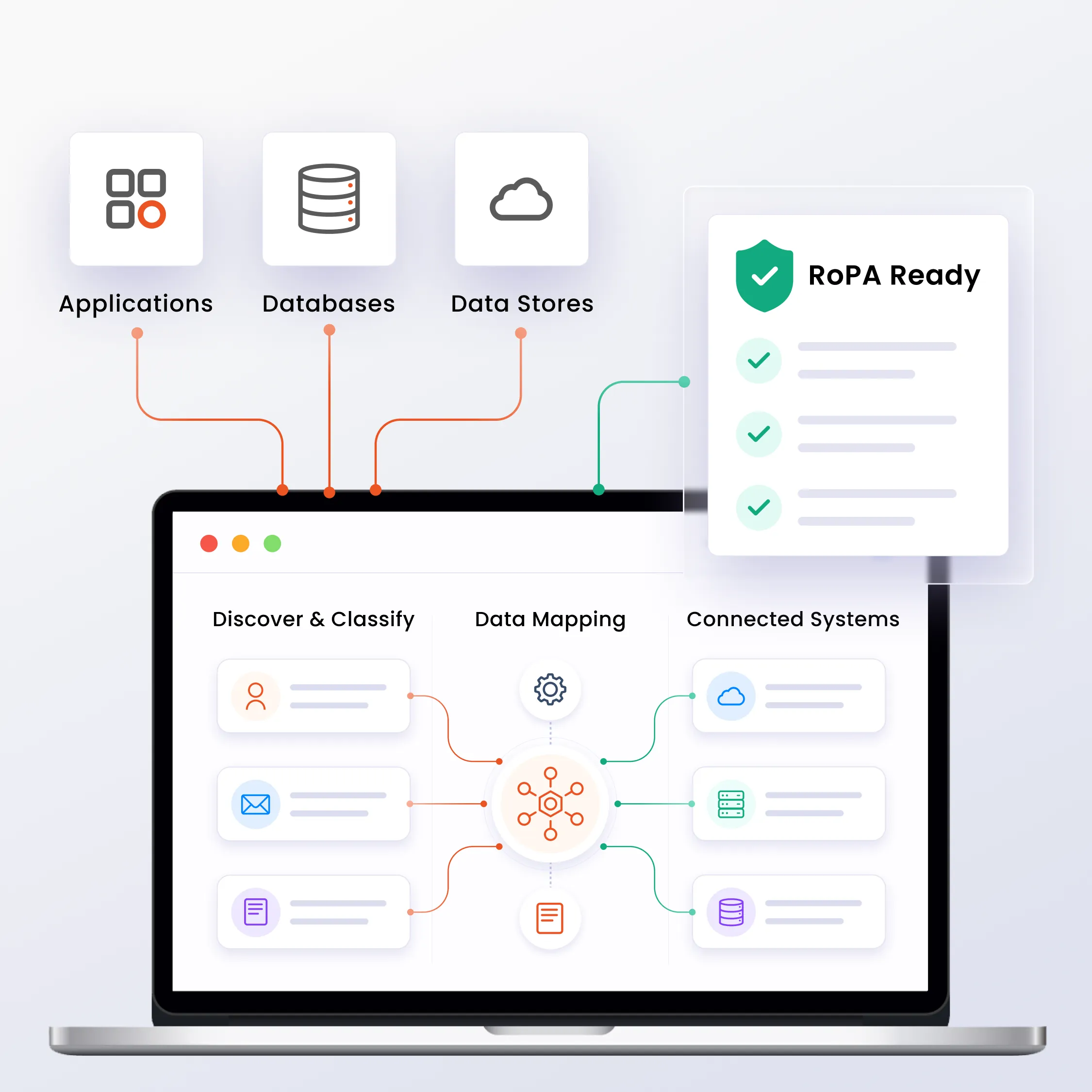
Automate data mapping by establishing data relationships and data flows across connected sources while continuously monitoring changes across systems.

Use automated data discovery to identify personal data, sensitive data, and data elements, then classify information by relevant data types.

Build a centralized data inventory containing data assets, data fields, attributes, sources, and data owners for structured information management.

Explore data flow visualization through source-to-destination relationships, tracing data movement and transfers across applications, systems, and third-party environments.

Use AI-assisted RoPA automation to organize mapped processing activities, purposes, data categories, subjects, and recipients into structured records.

Convert mapped information into compliance reporting, inventory reports, dashboards, audit trails, and audit evidence through structured reporting workflows.
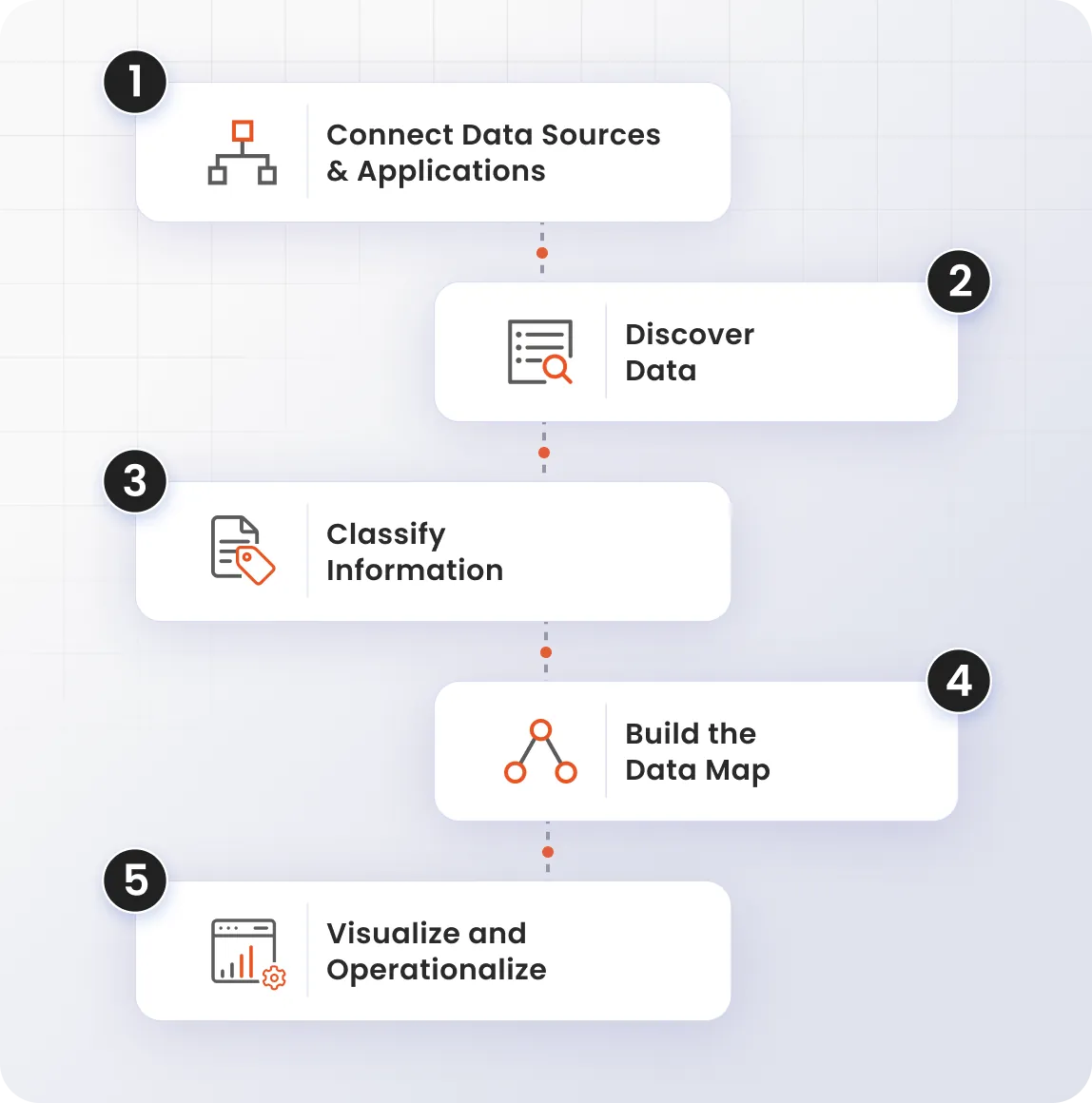
Connect supported data source integrations through connectors, APIs, and webhooks to bring enterprise applications into the mapping workflow.
Run automated data discovery across connected sources to identify personal data, sensitive data, and data assets within your environment.
Apply data classification to discovered information, organizing data categories, data types, and data elements for structured analysis.
Establish data flow mapping between sources and destinations to reveal data flows, relationships, and movement across connected systems.
Use data flow visualization, compliance reporting, and audit trails, while continuous data monitoring keeps mapped information current.
Link applications, databases, and data stores through supported connectors to begin mapping data
across your environment.











Select a deployment model that fits your infrastructure, data environment, and operational needs.

Multi-Tenant Cloud
Private
Cloud
100%
On-Premise
Connect processing activities, data flows, and cross-border data transfers to support GDPR compliance and GDPR Article 30 reporting.
Trace personal information, consumer data, and data sources to support CCPA compliance and privacy rights management.
Track personal data, processing activities, and data flows to support DPDP compliance, minimization, and privacy governance.
Document personal data processing, data transfers, and processing purposes to support PDPL compliance across connected systems.

Extend data mapping across a broader privacy compliance suite covering consent, data subject rights, assessments, and related privacy operations.

Bring privacy initiatives together with security and identity capabilities from the same technology ecosystem, reducing fragmented privacy operations.

Choose a technology provider established in 2014, with a longstanding focus on enterprise security, identity, and access management.
Data mapping connects data sources to the information they contain, organizing data assets into an inventory and showing how data flows between systems, applications, and destinations. It provides a structured view of where data resides and how it moves.
Data mapping software can use mapped information and processing activities to assist with RoPA creation. With AI-assisted RoPA generation, organizations can turn discovered data, processing context, and mapped relationships into structured processing records.
Data mapping connects data flows, sensitive information, processing activities, and third parties, giving privacy teams visibility into processing relationships. This mapped context can provide inputs for privacy risk assessments and DPIAs where further evaluation is required.
Data mapping helps privacy teams locate personal data by connecting data sources, assets, and fields within a centralized inventory. When responding to DSARs, teams can use this mapped information to identify relevant systems and data locations more efficiently.
Data mapping supports DPDP compliance by identifying personal data across connected sources, organizing it within a data inventory, and showing relevant processing and data-flow relationships. This visibility gives privacy teams a structured basis for managing personal data obligations.
Data mapping software can connect supported data sources and enterprise applications through connectors, APIs, and webhooks. Depending on the platform, connected environments can include databases, data stores, business applications, and other supported third-party systems.