Hello there!
Need Help? We are right here!

Your DPDP Compliance Deadline Is Approaching. May 2027 is closer than you think.
Need Help? We are right here!
Search Results:
×
When vendors process personal data on your behalf, their practices can affect third-party risk management under DPDP Act requirements.

Section 8(1) of the DPDP Act, 2023, provides that the Data Fiduciary remains responsible for processing undertaken by it or on its behalf by a Data Processor.

Section 8(2) requires a valid contract for relevant Data Processor engagements. Reviewing vendor agreements helps identify gaps in data protection responsibilities and contractual safeguards early.

Section 8(5) addresses reasonable security safeguards against personal data breaches. Rule 6 specifies measures, including access controls, logging, and backups, for vendor assessment and documentation.
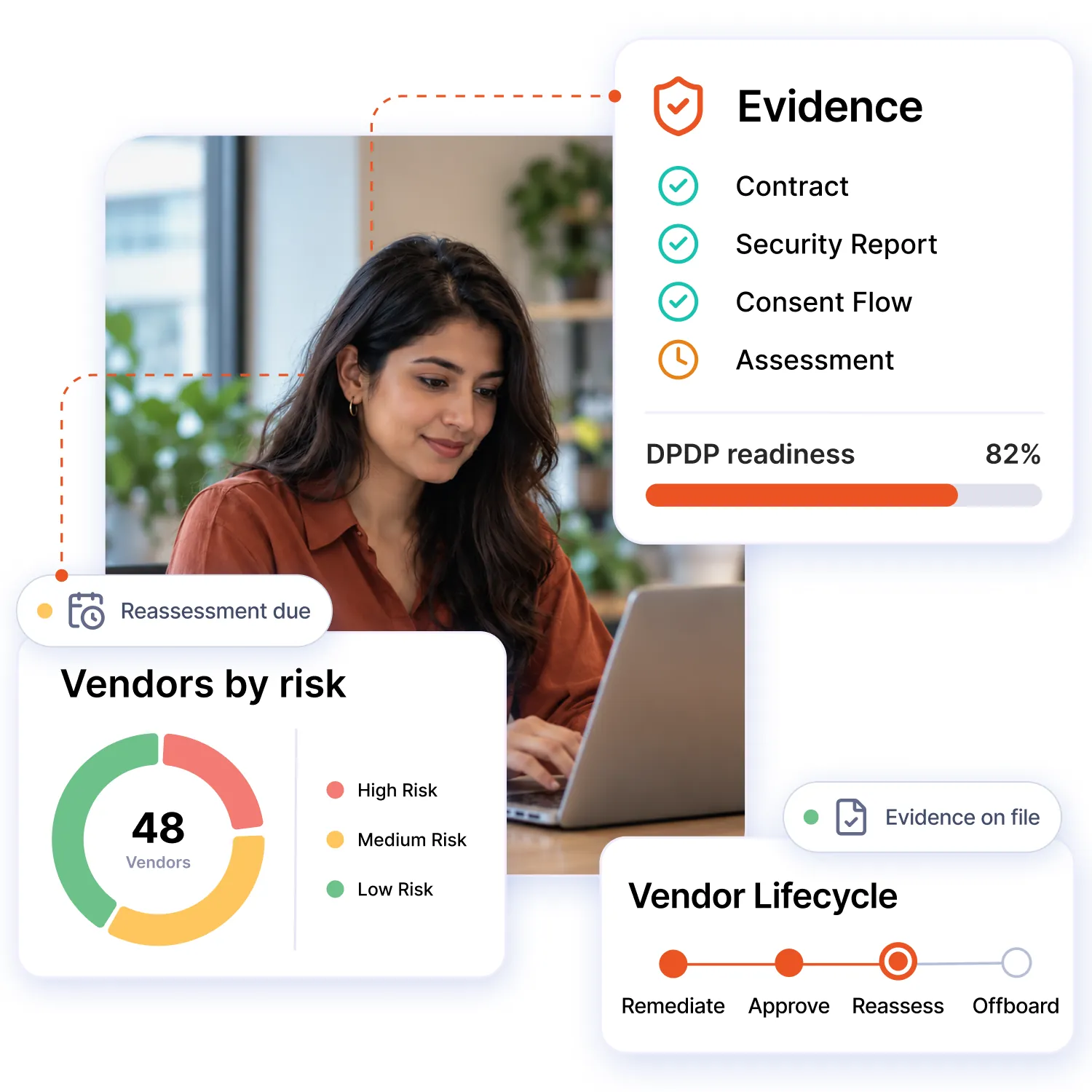
The miniOrange third-party risk management solution connects vendor intake, risk assessment, data protection reviews, remediation, and reporting in a structured workflow.
Centralize vendor records and capture the information needed to assess personal data access, processing purposes, business ownership, and third-party exposure.

Route low-risk vendors through predefined review and approval paths while directing higher-risk relationships toward additional scrutiny and human review.

Use vendor dependency data to inform continuity planning, test disruption scenarios, strengthen contingency plans, and support operational resilience decisions.
Coordinate risk ownership, collaborative acceptance, escalation, and offboarding requirements so unresolved risks and closure responsibilities remain visible to decision-makers.
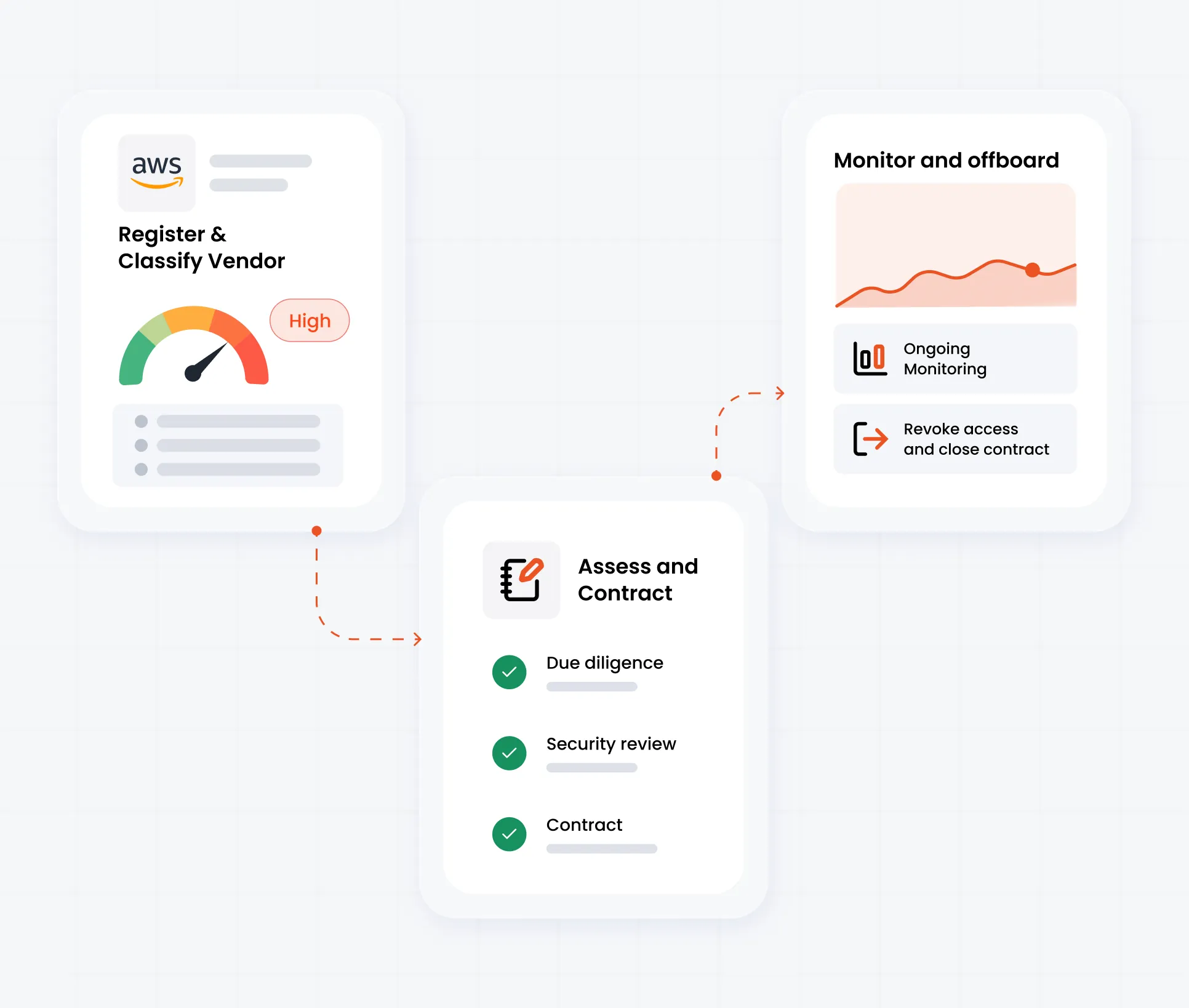
A structured third-party risk management software workflow should carry risk decisions through the complete
relationship lifecycle, including due diligence, contracting, ongoing review, and exit.
Register the vendor, establish processing purposes, identify business ownership, and determine the scope of the relationship.
Classify vendor exposure using data sensitivity, operational dependency, and defined risk criteria to determine assessment depth.
Review questionnaires, external evidence, security safeguards, and contractual provisions before documenting the engagement decision.
Reassess material changes, assign remediation, review risk acceptance, and escalate unresolved issues through defined governance workflows.
Coordinate access removal, personal data return or deletion, outstanding obligations, and retention of relevant closure evidence.
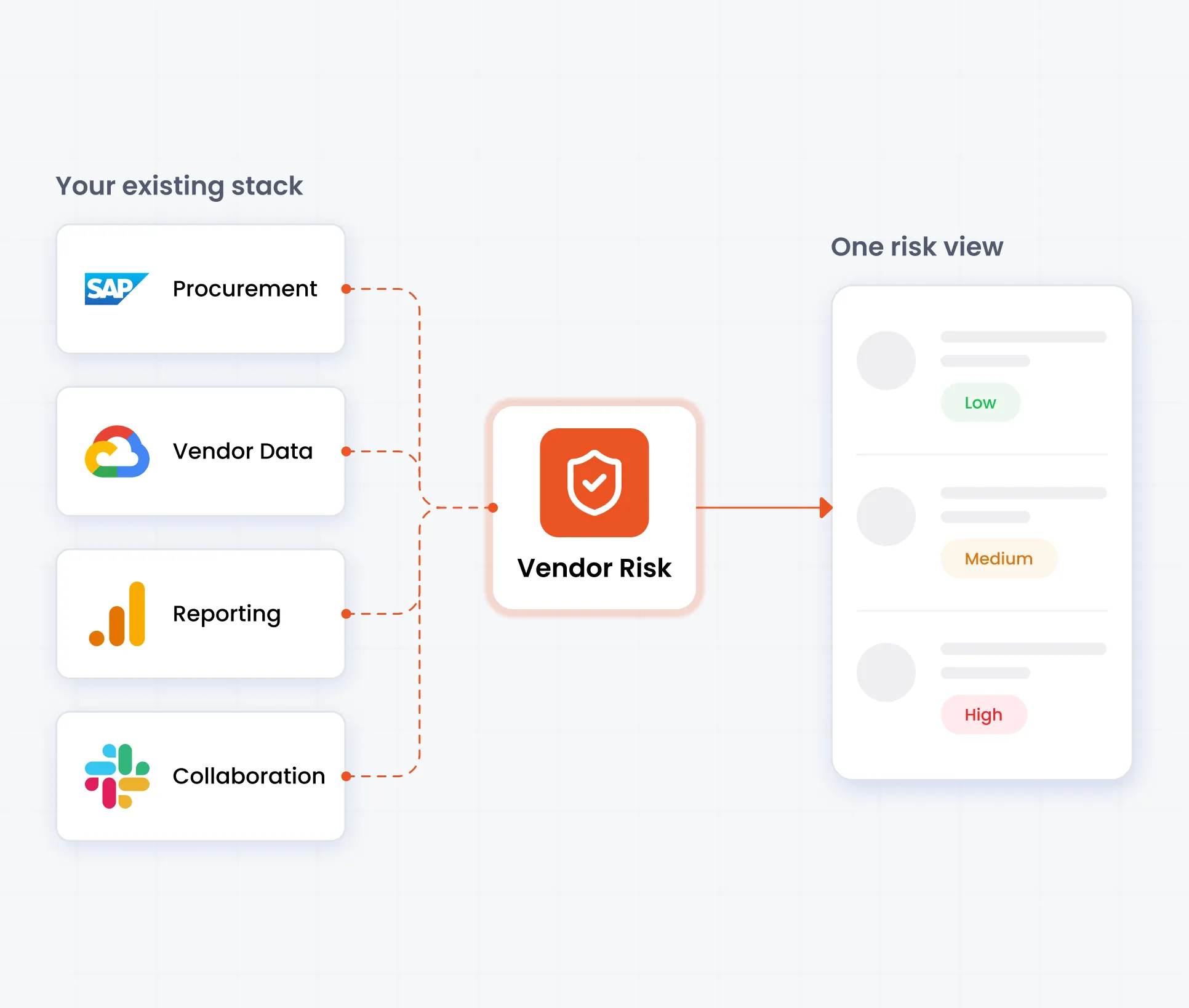
Integrate vendor data, risk intelligence, procurement workflows, monitoring feeds, and reporting systems within your existing technology stack.
Connect information across business functions to reduce data silos, streamline risk assessments, improve visibility into third-party relationships, and help teams make informed decisions using consistent, accessible, and actionable risk information.
Manage vendor exposure through a framework designed to support informed risk decisions, consistent assessments, and controls that fit your organization's operational requirements.
Assess third-party risks across security, privacy, compliance, and business continuity to establish a clearer view of vendor exposure.
Configure assessment workflows, risk criteria, approval paths, and remediation processes to align with your organization's governance requirements.
Connect vendor information and risk workflows with existing business systems to reduce fragmented records and support coordinated decisions.
Choose a deployment approach aligned with your infrastructure, data-handling requirements, and operational constraints.
A third-party risk assessment should examine personal data access, processing purposes, security controls, contractual protections, relevant subcontractors, and business dependencies. Findings should guide risk prioritization, remediation, approval decisions, and reassessment throughout the vendor relationship.
The Act does not prescribe a specific TPRM software product. Organizations can use documented processes or technology to assess vendors, review safeguards, and retain evidence. Their approach should reflect vendor exposure and applicable legal responsibilities.
Third-party risk management under DPDP Act requirements involves assessing vendors whose activities may affect personal data protection. It includes reviewing processing purposes, contractual safeguards, security measures, and operational exposure, then documenting remediation and risk decisions.
DPDP vendor risk management should examine consent where it is the applicable basis for processing, rather than assume consent is necessary for every activity. Reviewing documented purposes and relevant consent records can help identify inconsistencies requiring investigation.
Third-party risk management software can organize findings, assign action ownership, record risk acceptance, and track remediation when these workflows are supported. Clear escalation criteria help teams address unresolved exposure and maintain accountability for decisions.
Third-party risk management under DPDP Act obligations can inform readiness by helping organizations identify processor relationships, assess safeguards, review contracts, and document actions. TPRM complements legal advice and operational controls; software alone does not guarantee compliance.