

As a fintech organization, you depend on multiple systems like AWS, Databricks, Snowflake, Power BI, Stripe Treasury, Identity Providers (IdP), developer tools, internal operational platforms, and many more. Managing access and access level across platforms is often disconnected and spread across emails, Slack approvals, tickets, and sometimes spreadsheets.
Obviously, this is inefficient. There'll be delays in onboarding. But that's the least of your worries. Manual provisioning increases the risk of unauthorized access and excessive permissions. Not being able to revoke access at the right time is also a major risk. On top of that, there are auditing and governance challenges.
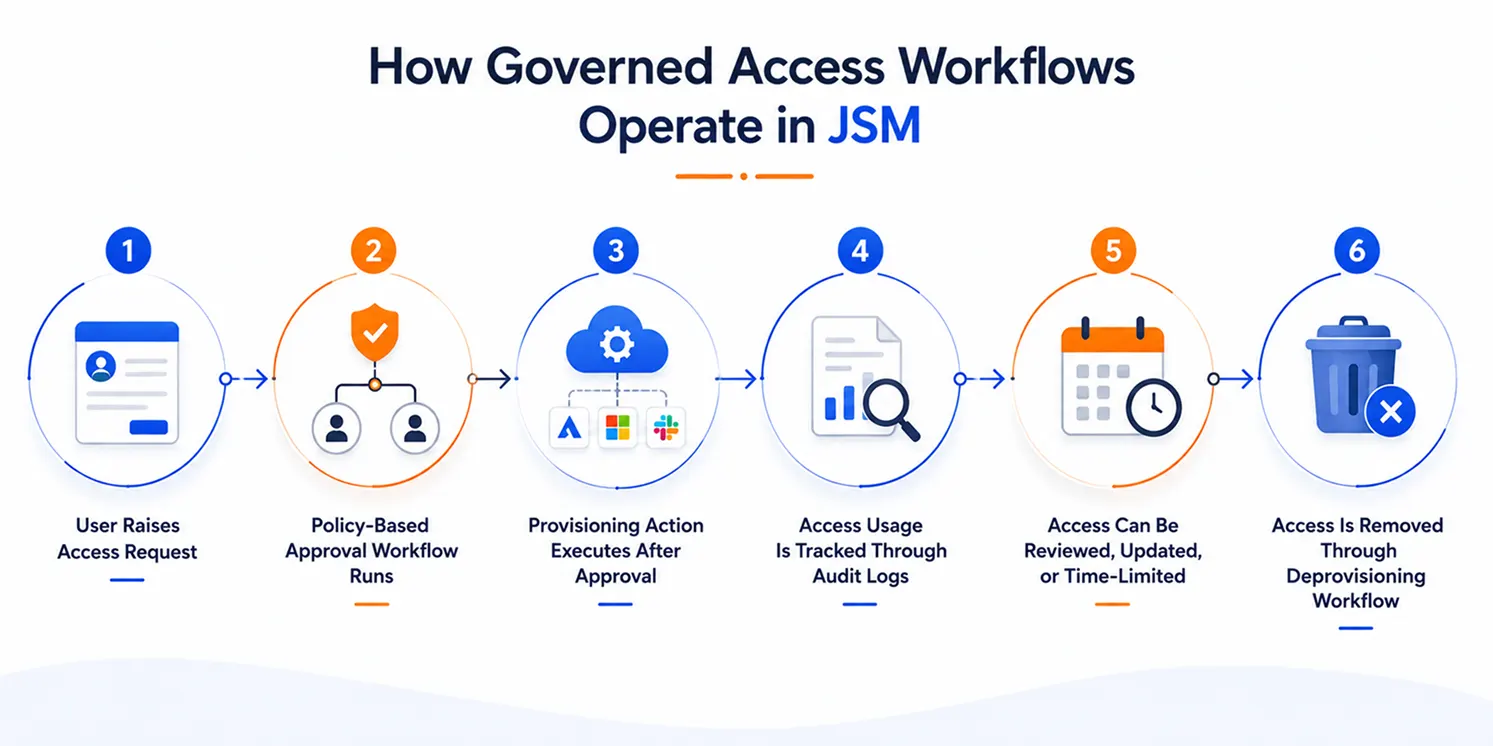
miniOrange solves this by centralizing requests and approvals in Jira Service Management (JSM) while automating provisioning. You get complete visibility across the access lifecycle. The question is practical: how can fintech teams govern the complete access lifecycle inside JSM—from request and approval to provisioning, review, temporary access control, and removal?
Why Access Governance Matters in Fintech
In simple terms, access governance is the structured process of controlling how users request, approve, provision, review, maintain, and lose access to organizational systems and applications.
While access governance matters in every industry, it matters even more in fintech, because fintech environments involve sensitive data and critical infrastructure. Employees, contractors, vendors, and admins often require access across multiple environments simultaneously.
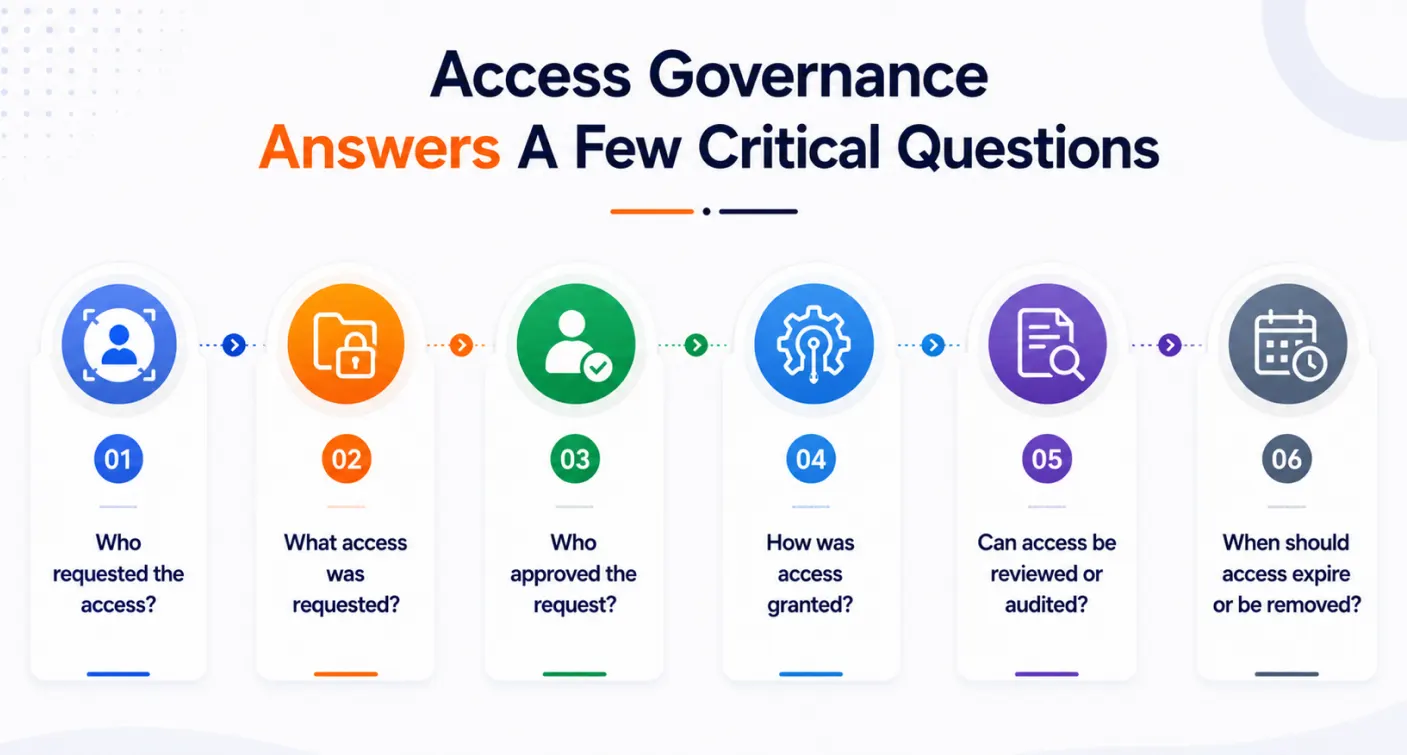
Manually managing access is an uphill battle. And the slope gets steeper as you scale.
Common Manual Access Governance Challenges in Fintech
Access governance is supposed to reduce operational challenges. But handling it manually often ends up creating more challenges than you stepped out to solve.
| Challenge | What Goes Wrong |
|---|---|
| Slow employee onboarding | New hires need access to GitHub, AWS, Jira, Entra ID, analytics tools, and more—each provisioned manually and separately before they can start contributing. |
| Standing privileged access | Permanent elevated access introduces unnecessary risk; temporary access becomes permanent when revocation is forgotten. |
| Manual approval chains | Informal routing delays provisioning and leaves limited visibility into where a request currently sits. |
| Offboarding gaps | Employees change teams or leave; contractors complete engagements—but access is removed from one system and not another. |
| Disconnected audit trails | Security and compliance stakeholders must reconstruct request histories from emails, chat conversations, ticket comments, or administrator notes. |
How Automated Access Governance Improves Fintech Operations
Automation does not remove governance. It strengthens governance by making processes more structured and repeatable.
The miniOrange Identity Governance, Auditing & Access Control via JSM app helps you govern the full access lifecycle inside JSM—from access requests and approvals to provisioning, temporary access control, reviews, and deprovisioning.
Centralized Access Requests Through JSM
Most fintech organizations already use JSM for operational requests. The miniOrange app turns JSM into a centralized access request portal for applications, access levels, and governance workflows.
Your users can request:
- Application access
- Access levels
- Temporary access
- Access removal
- Role-specific permissions
All from a familiar JSM interface. Instead of approvals happening over email or Slack, every request follows a governed path. You define what can be requested, who approves it, how provisioning should occur, and how access should be tracked or removed later.
Build Approval Workflows That Match Your Security Policies
The miniOrange app allows you to build policy-based approval workflows directly inside JSM. You can configure workflows based on the application, access level, approver, and organizational policies.
For instance, if a developer is requesting GitHub Contributor access, the request will be routed to the engineering manager. If they're requesting AWS operational access, the request will be routed to both a manager and an infrastructure owner.
This ensures approvals follow governance policy and makes them easy to manage at scale.
Automate Provisioning Across Connected Applications
This is where you move beyond basic ticketing. We not only centralize requests in JSM, but we also automate them.
Let's take a practical example: An employee requests access to Entra ID. The workflow defines the app, i.e., Entra ID; the access level, approver, and the target access group.
The approver simply has to apply the right tag to approve and trigger the workflow. That's it. Then the configured provisioning workflow can assign the user to the mapped access group in the connected application.
Control Temporary Access Without Manual Tracking
Temporary access is common in fintech, especially when you work with contractors. The problem is not granting temporary access—the problem is remembering to remove it later.
The miniOrange app addresses this through time-based access workflows. Users can request access for a specific duration. Approvers can review that timeframe and adjust it if needed. Access is automatically revoked once the approved time window expires.
This prevents temporary access from becoming permanent because it wasn't revoked at the right time.
Strengthen Offboarding and Access Removal Processes
Deprovisioning is equally important in access governance. The miniOrange app supports access removal and deprovisioning workflows directly within your governance model.
Users or managers can initiate removal requests through JSM. Approved workflows can trigger deprovisioning actions and maintain a clear activity trail inside the request lifecycle.
Maintain Audit Visibility Without Reconstructing History
The miniOrange app helps you maintain centralized audit visibility across your governance workflows. You can review activity such as:
- Request initiation
- Approval actions
- Provisioning events
- Access changes
- Revocation activity
The app also provides Audit Logs with filtering and export capabilities for troubleshooting, operational reviews, and reporting. You get a clear record of what happened, who approved it, and when actions occurred.
Because requests, approvals, provisioning activity, and audit logs live inside the same JSM workflow, you can review what users currently have, why they have it, and how it was approved—without rebuilding context from multiple systems.
Manual vs Automated Access Governance in Fintech
| Manual Access Governance | Governed Access Workflows via JSM |
|---|---|
| Email and Slack requests | Centralized JSM access requests |
| Informal approvals | Policy-driven approval workflows |
| Manual provisioning | Automated provisioning workflows |
| Limited audit visibility | Centralized audit logs and workflow history |
| Difficult access reviews | Governed lifecycle visibility |
| Delayed offboarding | Automated removal and deprovisioning |
Real Fintech Use Cases for Automated Access Governance
Here are real-world examples of how the miniOrange Identity Governance, Auditing & Access Control via JSM app works in fintech environments.
Engineering Access Management
Your engineering team constantly needs access to various tools. A developer requests:
GitHub – Payments API Repository – Contributor Access
Inside the miniOrange workflow, you can define the connected app, access level, approver, and provisioning behavior. The request, approval, provisioning action, and audit trail remain part of the same governed workflow.
Temporary Cloud Access
Your infrastructure engineer needs temporary operational access to troubleshoot a production issue. They submit:
AWS Operations Access – 8 Hours
The workflow can route approval to the appropriate owner and capture the requested duration. Upon approval, it can execute the configured provisioning workflow. Once the duration expires, it can revoke access. There's no need for any manual reminders.
Contractor Access Governance
Your fintech organization brings in an external consultant for a short engagement. They need access to a specific analytics environment for fourteen days. They simply submit a request through JSM, which includes the app, access level, and the duration for which they need it.
The workflow governs the entire lifecycle, including approval routing, time-bound provisioning, audit tracking, and access removal.
Conclusion
Manual governance processes become a contracting bottleneck as you scale. You'll end up with delays in onboarding, disconnected approvals, incorrect permissions, and limited visibility for audits.
JSM helps centralize requests and approvals. The miniOrange Identity Governance, Auditing & Access Control via JSM app helps you govern the full access lifecycle inside JSM, from requests and approvals to provisioning, temporary access control, audit visibility, reviews, and removal.
You gain a more structured approach to access governance without abandoning the operational platform your teams already use. And as your fintech environment grows, that structure becomes increasingly valuable.
Get the miniOrange Identity Governance, Auditing & Access Control app on the Atlassian Marketplace →
Frequently Asked Questions
1. How can fintech organizations govern the full access lifecycle in Jira Service Management?
With miniOrange's Identity Governance, Auditing & Access Control via JSM app, organizations can manage access requests, approvals, provisioning, temporary access, audit visibility, and deprovisioning through centralized JSM workflows.
2. Can you automate access provisioning in Jira Service Management?
Yes. With the miniOrange app, approved JSM workflows can trigger provisioning actions across connected applications such as Microsoft Entra ID, GitHub, Okta, AWS-connected workflows, Google Workspace, and other supported integrations.
3. How can fintech organizations manage temporary elevated access?
You can use policy-driven, time-based workflows inside Jira Service Management to manage temporary operational or privileged access. This helps you control approval paths, duration, and access expiration more consistently.
4. Can fintech organizations use Jira Service Management as a centralized access request portal?
Yes. Jira Service Management can serve as a centralized portal for access requests, approvals, and workflow tracking. Combined with the miniOrange app, you can manage governed access workflows from a single operational environment.
5. Why is access governance important for fintech organizations?
Fintech organizations manage sensitive systems, cloud infrastructure, developer tools, and operational platforms. Poor access governance can lead to delayed onboarding, excessive permissions, incomplete offboarding, limited visibility, and operational risk.
Leave a Comment