

Your ERP system doesn't know what a SAML assertion is. Neither does that 15-year-old internal tool running your warehouse floor. But your identity team just rolled out Microsoft Entra ID with conditional access, MFA, and zero trust policies everywhere.
That gap is what modern authentication for legacy applications closes. It's the layer that lets old, credential-bound systems plug into Single Sign-On (SSO), Multi-Factor Authentication (MFA), and centralized identity, without you touching a single line of their code.
If you're the one deciding how a 10-year-old ERP fits into your Entra ID rollout, or whether it's finally time to retire LDAP binds and NTLM, here's everything you need to know about legacy application modernization.
Why Legacy Applications Need Modern Authentication
Most legacy apps were built 10, 15, even 20 years ago, when authentication meant a login form and a password check against a local database or a directory bind.
Most legacy authentication methods were never built for a world where identity has to travel across cloud apps, VPNs, and mobile devices, or natively enforce modern MFA, device posture, location, or risk-based policies.
Meanwhile, the rest of your stack moved on. Your cloud apps sit behind an identity provider. Your workforce logs in once and gets access to everything they need to do their job.
The legacy apps didn't get the memo, and that's the gap attackers look for first. We've covered the specific risks in detail in our breakdown of legacy authentication risks, worth a read if you need to build the case internally.
Your legacy apps are running form-based, LDAP, WIA, header-based, and Kerberos authentication underneath. But none of these methods supports MFA natively or evaluates device posture, location, or risk before granting access.
For compliance teams, it's worse. GDPR, HIPAA, SOC 2, and PCI-DSS all expect some version of strong authentication and access visibility. An app with no MFA and no centralized logging is a gap your auditor will find.
Traditional vs Modern Authentication: What's Actually Different
Traditional authentication means the application itself checks who you are. It holds, or directly questions, the credential store, validates the password, and starts a session. Everything happens inside the app's own walls.
Modern authentication moves that job outside the app. It’s the current standard for verifying user identity where an identity provider (IdP) verifies the user, issues a signed token or assertion, and the app simply trusts that token instead of checking a password itself. Authentication and application become two separate things.
That distinction is the whole reason legacy apps have historically been left out of modern security stacks. Old apps assume they own authentication. Modern security models don't allow that.
| Aspect | Legacy/Traditional Authentication | Modern Authentication |
|---|---|---|
| Core method | Static usernames and passwords | Token-based, via protocols |
| Who verifies the credentials | The application itself | A central IdP |
| Session model | Static session cookie, often no expiry | Short-lived, signed token (SAML assertion, JWT) |
| MFA support | Rarely, and only if built in | Native, enforced at the IdP |
| Common protocols | Basic Auth, NTLM, LDAP bind, Kerberos | SAML 2.0, OAuth 2.0, OpenID Connect (OIDC) |
| Access control | Static, all-or-nothing | Conditional access based on device, location, and risk-based policies |
| Password exposure | Sent and stored per app | Centralized at the IdP |
| User experience | A separate login for every app | Single sign-on (SSO) across connected apps |
| Audit visibility | Scattered across each app’s own logs | Centralized at the IdP |
The fix is a translator that sits between the two models. And that's exactly what an Access Gateway is built to do, more on that shortly.
How Legacy Applications Authenticate Today
Legacy application authentication usually falls into one of five patterns. Before modernizing anything, you need to know which one you're dealing with, app by app.
Form-Based Authentication
The app renders its own login page, posts the username and password to its server, and validates them against a local database or LDAP/Active Directory. Simple, and completely disconnected from any identity provider or MFA policy sitting elsewhere in your stack.
LDAP Authentication
The app binds directly to an LDAP server or Active Directory with whatever credentials the user typed. It works. But the app now has a live line straight into your directory: no token, no expiry, no easy way to bolt on a second factor.
Windows Integrated Authentication
WIA uses NTLM or Kerberos under the hood, via SPNEGO, so a domain-joined machine authenticates silently in the browser. Great on the corporate LAN. It falls apart the moment someone's remote, on a personal device, or off the domain entirely.
Header-Based Authentication
The app never sees a password. It trusts an HTTP header, commonly something like REMOTE_USER, set by whatever sits in front of it, usually a reverse proxy or a web server module. That trust boundary is exactly the door a modern access gateway walks through.
Kerberos Authentication
A ticket-based scheme built into Active Directory. The client requests a ticket-granting ticket from the KDC, then a service ticket for each resource it wants to reach. No password crosses the wire, which helps. It's still tightly bound to the Windows domain and painful for anything cloud-facing or remote.
The Modern Authentication Stack That Helps Secure Legacy Applications
These are the building blocks. And most deployments combine several of them at once.
SAML 2.0
Security Assertion Markup Language is an XML-based standard for passing authentication assertions from an identity provider to a service provider. It's the default choice for a lot of enterprise SSO, and most legacy integration tools support it first because so many identity providers issue SAML assertions out of the box.
OAuth 2.0
Worth being precise here: OAuth 2.0 is an authorization framework, not an authentication protocol. It governs delegated access, letting an app get a scoped token to act on a user's behalf against an API, without ever seeing the user's password.
OpenID Connect (OIDC)
OIDC adds an identity layer on top of OAuth 2.0. It introduces the ID token, a signed JWT carrying claims like the user's email and name, which is what actually authenticates the user. Modern apps that need both login and API access typically pair the two.
Identity Providers (IdP)
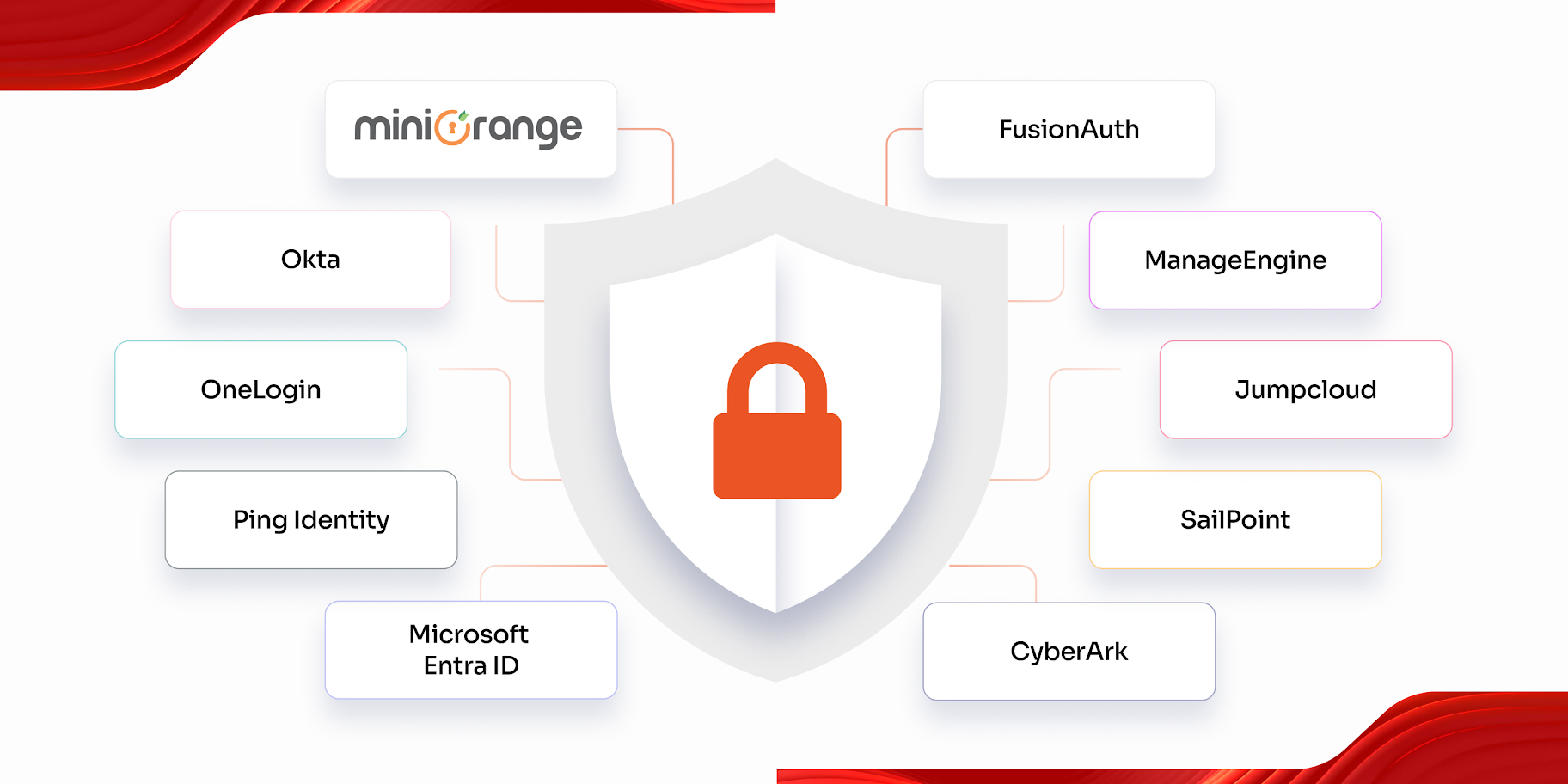
Microsoft Entra ID, Okta, Ping Identity, and Google Workspace all do the same core job: hold your directory, verify users, and issue signed tokens or assertions to every connected app, legacy ones included, once they're bridged in.
Single Sign-On (SSO)
One login, one trusted session, access to everything it's connected to. For a legacy app to join that world, something has to translate its native login into the SSO flow, since the app itself was never built to speak SAML or OIDC.
Multi-Factor Authentication (MFA)
A second proof of identity: something you have or something you are, on top of something you know. Instead of building MFA into each legacy app one by one, you enforce it at the identity provider or gateway layer, and every connected app inherits it automatically.
How to Enable Modern Authentication for Legacy Applications
Step 1. Assess the existing authentication method
Audit and catalog every app: is it form-based, LDAP, WIA, header-based, or Kerberos? You can't bridge what you haven't mapped, and missing even one quietly breaks the rollout later. Most legacy apps fall into a few buckets: homegrown or custom tools, third-party or commercial software, ERP, CRM systems like PeopleSoft, JD Edwards, and anything running header-based or LDAP-based authentication.
Step 2. Select a compatible identity provider
Microsoft Entra ID, Okta, Ping Identity, Google Workspace, or your existing Active Directory. The goal of this step is to connect your existing IdP to legacy apps and not replace it.
Step 3. Choose an authentication integration approach
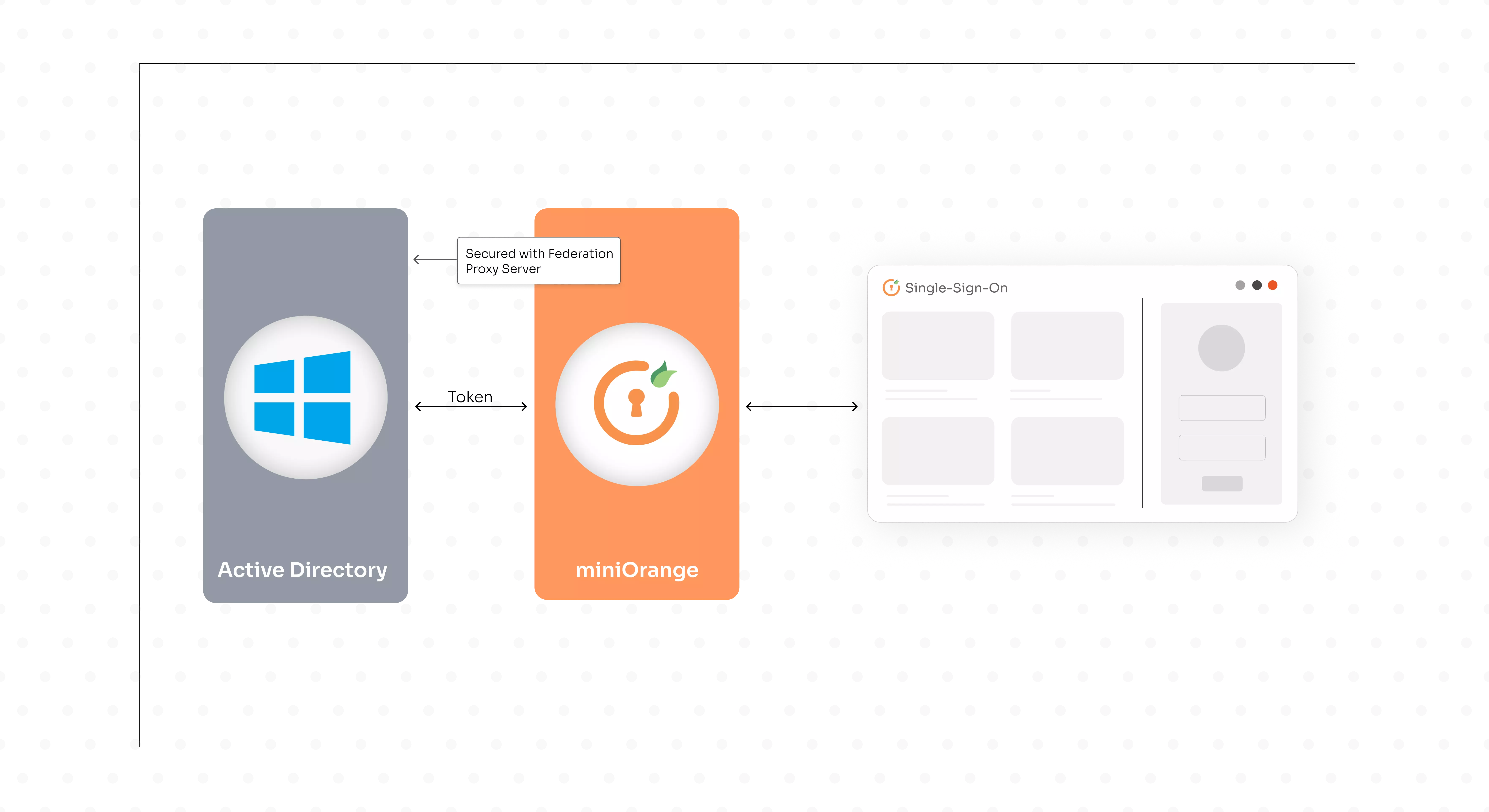
For most legacy web apps, a reverse proxy, an access gateway, sitting in front of the app, is the fastest path. It intercepts the request, handles the SAML or OIDC handshake with the identity provider, then hands the app a trusted session, often through the same header-based trust the app already understands.
Step 4. Configure Single Sign-On
Point the gateway or connector at your chosen identity provider and set up the trust relationship: metadata exchange for SAML, client ID, and client secret for OIDC.
Step 5. Enable Multi-Factor Authentication
Turn on MFA at the IdP or gateway layer. Because it sits in front of the app, every legacy application behind it inherits the same MFA policy automatically.
Step 6. Test authentication flows
Walk through every access path: login, logout, session timeout, and what happens when the identity provider is briefly unreachable. Legacy apps often have edge cases, like odd timeout behavior or fixed session lengths, that don’t match modern defaults. So, test with a real pilot group, not just your IT team.
Step 7. Roll out to production
Start with a pilot group, watch login success rates and support tickets, then expand. Keep the legacy fallback login path alive until the new flow has proven itself stable.
Challenges, Best Practices, & Choosing the Right Solution
Common Challenges
A few things show up again and again in almost every modernizing legacy application project. Worth knowing before you start.
- Incomplete app inventory: Teams modernize the apps they know about and miss the ones running quietly in the background: an old reporting tool, a vendor portal, a script using a service account.
- Session and timeout mismatches: Legacy apps often assume long, uninterrupted sessions. Modern token lifetimes are shorter by design. Get this wrong, and users get logged out mid-task.
- Header or cookie trust issues: If a gateway passes identity via header or cookie, the legacy app has to trust that gateway completely. Misconfigure it, and you've opened a spoofing risk instead of closing one.
- User resistance: Any change to login behavior, even a good one, gets pushback without clear communication. A new MFA prompt on a 15-year-old app can generate a lot of help desk tickets in week one.
When you're evaluating a solution to do this, there are a few things that matter more than the sales deck. For instance, here are a few things to weigh before choosing the right solution.
- Protocol coverage that includes the legacy side (LDAP, Kerberos, header-based) alongside SAML, OAuth, and OIDC.
- "No code changes" holds up for your actual app types, or just the easy ones.
- Compatibility with the IdP you already run, whether that's Microsoft Entra ID, Okta, Ping Identity, or Google Workspace.
- 10-app pilot and a 200-app enterprise-level scalability and ease of implementation without you needing to switch tools halfway through.
Best Practices
The gap discussed in this article is what miniOrange's Legacy Apps SSO & MFA solution is built to close, using an Access Gateway that sits in front of your legacy apps and connects them to SSO, MFA, and your existing identity provider.
Here are a few best practices that all good vendors follow for implementing modern authentication in legacy applications:
- Start with a pilot group, not a full rollout. Pick one department or one app, test authentication and authorization separately, and work out the details, then scale.
- Map every service account and headless integration, not just human logins. These get missed the most and cause outages later.
- Keep MFA policies consistent across legacy and modern apps. Users shouldn't get a different security experience depending on which app they're logging into.
- Document the fallback plan. Know exactly how to roll back if the new authentication flow breaks something in production.
Conclusion
Modern authentication for legacy applications works best as a layer added in front of what you already have, instead of a rip-and-replace project. Get the assessment right, pick an identity provider you can stand behind, and the rest is largely a matter of sequencing.
If you want the deeper architecture walkthrough, we've written separately about how Access Gateway supports legacy application modernization.
And if legacy apps are just one piece of your bigger identity rollout, our full IAM suite covers the rest.
FAQs
What is modern authentication?
Modern authentication is handled by a central identity provider instead of the individual application, using signed tokens or assertions (SAML, OAuth 2.0, or OIDC) instead of the app checking a password itself.
Can legacy applications use modern authentication?
Yes, most web-based legacy apps can, usually through a reverse proxy or access gateway that sits in front of the app and handles the modern authentication flow without touching the app's code.
Can I enable Single Sign-On without changing application code?
In most cases, yes. An access gateway intercepts the request in front of the app and passes a trusted session to it, commonly through the same header-based trust many legacy apps already rely on.
Which authentication protocols work best for legacy applications?
Depends on what the app already speaks. Header-based and LDAP-based apps integrate cleanly with a gateway approach, while apps that support SAML natively can connect straight to an identity provider.
Can I add Multi-Factor Authentication to legacy applications?
Yes. MFA gets enforced at the identity provider or gateway layer, so the legacy app inherits it without any native MFA support of its own.
Leave a Comment