
We log into tons of apps each day, running on digital identities. With just one click, you can access thousands of apps without breaking a sweat. However, digital identities bring with them cyber threats, which are growing sharper each day, and compliance is getting tighter. So, who is the right person to trust to safeguard your digital identities?
As an organization, you collect, store, analyze, and process sensitive data, which needs to be safeguarded with the right tech and tools. Identity and Access Management vendors or providers bring you the right products to secure identities and allow authorized access to apps and resources.
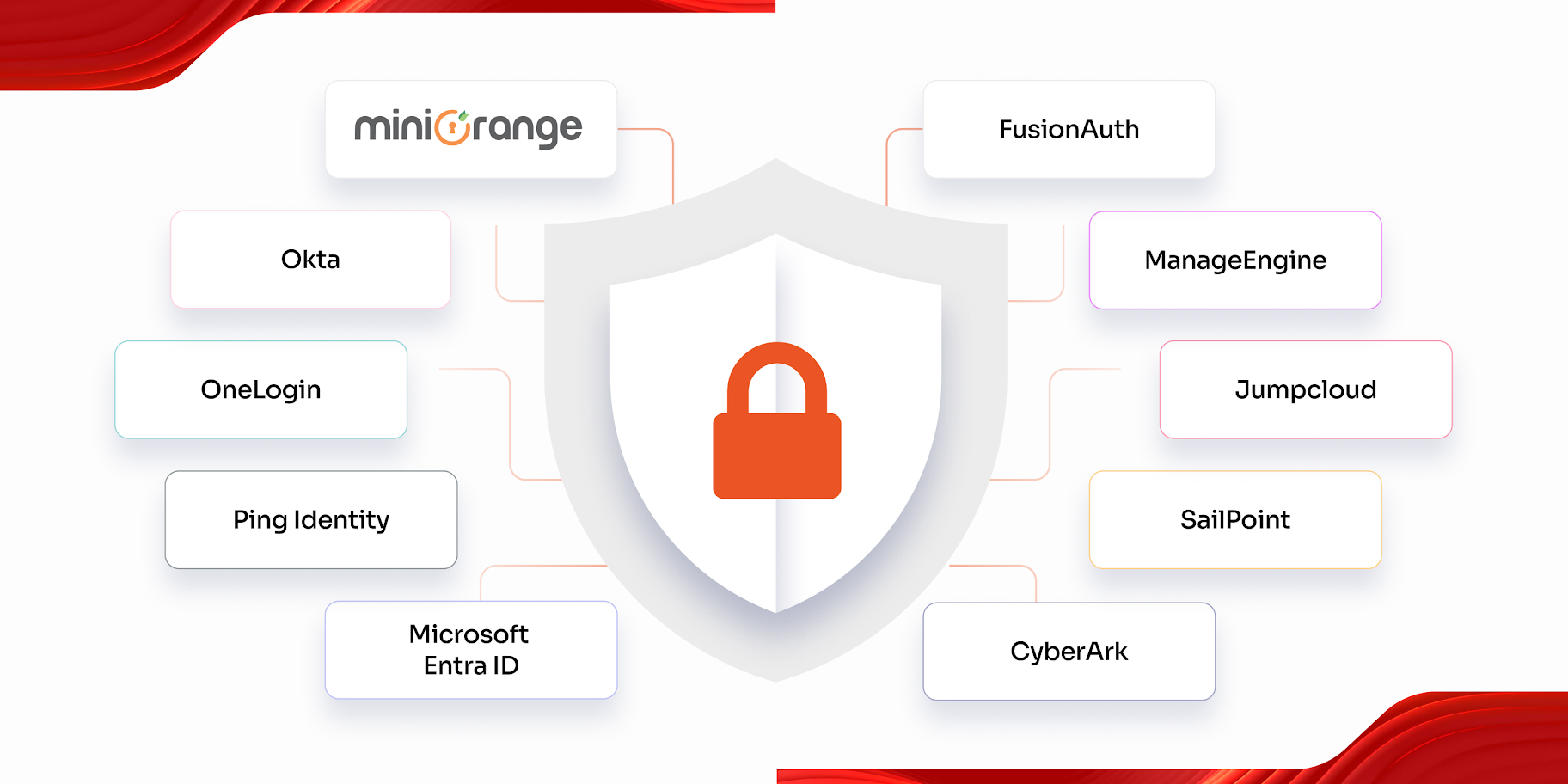
From Single Sign-On (SSO) and Multi-Factor Authentication (MFA) to Privileged Access Management (PAM) and Automated Provisioning, identity and access management companies like miniOrange have all the resources to protect your identities.
Now, let’s look at the top IAM companies or vendors that are dominating the cybersecurity field worldwide.
Top Identity and Access Management Vendors at a Glance
Selecting the right provider from a top IAM vendor list requires balancing strong Zero Trust architecture, scalable Single Sign-On (SSO), and seamless Multi-Factor Authentication (MFA). Let’s look at the leading vendors who provide exactly these capabilities.
| IAM Vendor | Best For | Key IAM Capabilities | Deployment | Ideal For |
|---|---|---|---|---|
| miniOrange IAM | Unified IAM and CIAM platform + flexible infrastructure | SSO, adaptive MFA, phishing-resistant MFA, and lifecycle management | Cloud, on-premises, and hybrid | SMBs, enterprises, educational institutes, and government |
| Okta | Rapid SaaS integration | Cloud SSO, adaptive MFA, and lifecycle management | Cloud-first enterprise setups | SaaS-heavy enterprises |
| Microsoft Entra ID | Microsoft integration | M365/Azure sync, conditional access, and MFA | Cloud and on-premises | Microsoft ecosystems |
| Ping Identity | Enterprise federation | Federated SSO, agentic and AI identity, and MFA | Multi-cloud, hybrid, and on-premises | Complex enterprise environments |
| OneLogin | Automated IDaaS | Lifecycle management, SSO, and MFA | Cloud and hybrid | Cost-effective, scalable, and ideal for SMBs |
| CyberArk | Privileged access | Unified workforce + PAM | Self-hosted or high-security internal infrastructure | High-security environments |
| SailPoint | Identity governance | RBAC, automated lifecycle management | Setting up using Virtual Appliances (VAs) or managing software artifacts | Regulatory compliance |
| JumpCloud | Directory replacement | Cross-platform device management | Cloud | Remote-first SMBs |
| ManageEngine AD360 | Hybrid and Windows environments | SSPR, lifecycle management, SSO, and adaptive MFA | On-premises | Mid-size to large enterprises |
| FusionAuth | Self-hosted CIAM needs | Passwordless authentication and single-tenant architecture | Private cloud or local infrastructure | Enterprises that need API-first, self-hosted CIAM |
Leading IAM Vendors in 2026
We evaluated this comprehensive IAM products list based on authentication capabilities, SSO, MFA, identity lifecycle management, integrations, deployment flexibility, security features, scalability, use cases, and overall enterprise fit.
This comparison breaks down top market vendors to help you select the ideal provider for your security architecture and operational needs.
1. miniOrange IAM
miniOrange is one of the leading IAM providers, covering a range of industries such as healthcare, banking and finance, education, e-commerce, and more.
It extends its cybersecurity expertise to varied CMS platforms such as WordPress, Drupal, and Joomla. The company also safeguards Magento and Shopify platforms, along with Atlassian and Learning Management Systems (LMS) like Moodle.
Pros
- miniOrange IAM products integrate with both cloud and on-premises environments.
- Simplifies the login process with SSO solutions that are compatible with all protocols, such as SAML, OAuth, and OpenID Connect (OIDC).
- miniOrange SSO is compatible with multiple Identity Providers (IdPs) such as Google, Microsoft, AWS, and more.
- Offers layered security in the form of 15+ MFA methods (email/SMS-based OTP, push notifications, biometric authentication, Google/Microsoft Authenticator, and more).
- Adheres to global regulatory standards such as HIPAA, GDPR, SOC, and more.
- miniOrange offers a flexible pricing plan that suits the requirements of all business sizes, with a starting price of $2/user/month.
Cons
- There’s scope for including intelligent features for rapid user authentication and authorization.
2. Okta
Okta is one of the most popular identity and access management vendors, with a strong focus on boosting security and access across multiple platforms and simplifying user access.
This platform is known for its cloud architecture that lets organizations manage user identity and access.
Pros
- Integrates with varied apps and services, making it an ideal option for diverse IT settings such as cloud, on-premises, and hybrid.
- Offers SSO, MFA, and user lifecycle management.
- Provides API security via solid authorization and authentication mechanisms for controlled backend access.
- Has a strong customer support system in place.
Cons
- It can have a complicated and slightly higher pricing structure, which is not suitable for small businesses. Its starter package sells at $6/user/month, and the essentials package at $17/user/month.
- It may become complicated to set up and use (for companies without a strong IT team), as Okta has several features.
- Okta’s SSO works best with applications that support SSO, but may not be compatible with older or customized apps.
3. Microsoft Entra ID
Previously known as Azure Active Directory (AD), Microsoft Entra ID is considered one of the best IAM vendors. It is designed to protect and manage identities for both on-premises and cloud architectures.
Pros
- A perfect choice for businesses using only Microsoft products, as Entra ID’s SSO product integrates with Microsoft 365 and connected apps.
- Comes with built-in Defender tools such as Intune, Defender, and more.
- Adds extra security with MFA products and adaptive security features for continuous threat detection.
Cons
- Implementation and configuration may require a steep learning curve.
- For organizations using non-Microsoft tools, integration with Entra ID can prove to be challenging.
- Pricing structure for advanced functions like Governance or P2 can be relatively costly.
4. Ping Identity
Ping Identity is one of the top IAM providers for businesses. It is popular for its flexibility, security, and innovation.
Pros
- The Ping Identity platform makes use of an AI engine called Helix, offering built-in intelligence for smarter protection.
- Offers personalized and safe experiences for diverse industries, including healthcare, finance, government, and media.
- Developed to reduce friction for users while maintaining high security, supporting innovation without compromising protection.
Cons
- Customization for complicated B2B and professional needs can be challenging in the initial phases.
- May need technical support for configuration.
- Relatively expensive, with its essential package priced at $35k annually and its plus package priced at $50k annually.
5. OneLogin
OneLogin is one of the leading identity and access management services, and it is well-known for simplifying business login processes. It also amplifies the efficiency and security of the systems at the same time.
Pros
- OneLogin lets users smoothly access their essential apps.
- OneLogin’s SSO and MFA capabilities offer policy-based access control.
- Admins can manage their apps from a centralized dashboard, offering security alerts for any disruptions.
Cons
- Reports of bugs and outages have been highlighted by users on review portals like G2.
- There’s potential for improving synchronization in user access and profiles, as it hampers operations.
- It can be an expensive vendor, with its advanced and expert packages priced at $4/user/month and $10/user/month, respectively.
6. CyberArk
CyberArk, formerly known as Idaptive, is one of the top IAM vendors known worldwide. It combines identity management and workforce access. Its IAM products offer lifecycle management, simplify user access, and provide auditing to meet compliance requirements.
Pros
- Comprises Customer Identity and Access Management (CIAM) tools.
- Integrates with cloud, on-premises, and hybrid architectures, and other security tools.
- Offers session recording, reporting, and auditing capabilities to meet various compliance requirements.
Cons
- Due to the wide range of features offered, not every one of them will be relevant to the users.
- CyberArk can be slightly expensive compared to its competitors, making it unsuitable for small or medium businesses.
7. SailPoint
SailPoint is a recognized leader in Identity Governance and Administration (IGA), providing a unified platform for managing and securing enterprise identities. It is also considered one of the top identity access management providers, along with IGA.
Pros
- SailPoint offers centralized management for all identities: human and machine.
- The dashboard offers a simplified view, making it easier for users to find and use features.
- Admins or managers can easily check who has access to which apps, decreasing assumptions and threat levels.
Cons
- The initial setup may require additional technical knowledge and planning to avoid mistakes.
- Access to features depends on licensing groups, as advanced features are available only with specific license plans.
8. JumpCloud
JumpCloud offers a unified, cloud-native platform for IAM with an emphasis on device management and simplified administration, but it may have limitations in deep enterprise features and premium support.
Pros
- Offers IAM products for Linux, Windows, and macOS environments.
- Implements a Zero Trust model with SSO, MFA, policy enforcement, and passwordless authentication.
- Easy-to-use interface for better navigation.
Cons
- Involves a steep learning curve for those with cloud-based directory systems.
- Expensive for larger enterprises due to the per-user pricing model and the need for add-ons.
9. ManageEngine AD360
ManageEngine AD360 is known as one of the top IAM providers for Windows Active Directory systems.
It is known to offer a wide range of identity and access management tools on a single console, which includes user behavior analytics, 360-degree user provisioning, anomaly detection, AI-driven access insights, and more.
Pros
- Around 1000+ built-in reports offer information on activities in cloud and on-premises directories and apps.
- Exports reports in HTML, PDF, CSV, and XLS formats.
- Offers simple installation and integration with enterprise apps, including SIEM, HRMS, and ITSM.
Cons
- Modular pricing can increase expenses substantially.
- Comes with a complicated user interface, which can be slow, hampering usage.
10. FusionAuth
FusionAuth is designed for developers and offers a comprehensive suite of features, such as MFA, single sign-on, and user management.
Pros
- FusionAuth’s SSO function is compatible with standard protocols, like OpenID Connect (OIDC) and OAuth 2.0, and integrates with social logins.
- Manages user logins, password resets, controls, and registrations with features like Role-Based Access Control (RBAC).
- Built around RESTful APIs so IAM products can be integrated into any framework or application.
Cons
- Its single-tenant function indicates a need for more direct setup and management compared to multi-tenant SaaS solutions.
- Users may find user and tenant settings confusing during the initial phases.
How to Choose the Right IAM Vendor?
Selecting the right provider requires evaluating how effectively top IAM products map to your organization's specific ecosystem, security posture, and growth strategy.
Balancing key criteria, such as deployment flexibility, integration breadth, governance capabilities, and user experience, ensures you select a platform that secures access without creating operational bottlenecks.
- Understand Your Organization's Needs: Define core requirements (SSO, MFA, provisioning, compliance), scale of operations, regulatory needs, and unique use cases.
- Scrutinize Integration Abilities: Make sure IAM can connect with your existing applications, directories (AD, LDAP, cloud apps), and workflows.
- Scalability and Flexibility: Choose an IAM vendor that can grow with your organization, supporting cloud, on-premises, and hybrid architectures without heavy reconfiguration.
- User Experience and Support: Prioritize vendors offering intuitive interfaces, self-service features, and customer support, especially during deployment and troubleshooting.
- Compliance and Security: Select IAM providers with security controls (Zero Trust, adaptive MFA) and tools to support data privacy standards like GDPR and HIPAA.
- Total Cost of Ownership: Compare pricing, ongoing support fees, and the need for external services or advanced modules before committing.
Benefits of Choosing miniOrange as an IAM Vendor
miniOrange is one of the leading Enterprise IAM vendors and products. It delivers a strong suite of IAM for modern organizations seeking flexible, cost-effective, secure identity management.
- Easy Integration: Over 6,000+ pre-built integrations for popular apps such as Salesforce, Google Workspace, Azure AD, etc., with support for industry-standard protocols (SAML, OAuth2, OIDC, SCIM).
- Top-Rated Support: Provides 24/7 global customer support and onboarding guidance for all deployment models for faster problem resolution.
- Comprehensive Features: Offers SSO, adaptive MFA (15+ authentication methods), lifecycle management, risk-based access, and password vault, accommodating a wide range of security scenarios.
- Flexible Deployment Options: Supports cloud, on-premises, and hybrid models for enterprises of all sizes, making transitions and integration simple.
- Meets Compliance Requirements: Built-in access governance, automated provisioning, and audit trails support regulatory needs for data protection and privacy standards.
Conclusion
miniOrange stands out for its extensive integration ecosystem, ease of deployment, adaptive multi-factor authentication, and reliable 24/7 support, making it a competitive choice for organizations seeking both robust security and a practical user experience in their IAM journey.
Careful vendor selection should align IAM features with business needs, integration plans, and compliance requirements for a future-ready, secure identity strategy.
FAQs
1. Which one is the best IAM provider?
The best IAM provider depends on your organization’s size, security requirements, existing technology stack, and budget. Leading IAM companies include miniOrange, Okta, Microsoft Entra, Ping Identity, and CyberArk.
2. Which trusted vendors are leading in identity security for retail businesses?
Retail businesses commonly consider miniOrange, Okta, Microsoft Entra, and Ping Identity for identity security. The right platform should support customer identity, workforce access, MFA, SSO, and scalable authentication across stores, apps, and e-commerce channels.
3. Is miniOrange IAM suite easy to set up and use?
miniOrange offers an IAM suite designed for streamlined deployment and administration. Its platform supports SSO, MFA, user lifecycle management, directory integrations, and pre-built connectors to help teams deploy identity security with less complexity.
4. What features should I look for in an identity and access management company?
When evaluating IAM companies, look for features such as single sign-on, multi-factor authentication, adaptive access controls, user provisioning and deprovisioning, role-based access control, audit logs, API integrations, and support for cloud, on-premises, and hybrid environments.
5. Which trusted identity security platform providers are leading in authentication and authorization?
Trusted identity security platform providers for authentication and authorization include miniOrange, Okta, Microsoft Entra, Ping Identity, and CyberArk.
Leave a Comment