
PII data discovery is the process of locating personally identifiable information across an organization’s systems. It helps teams identify where personal information resides, classify its sensitivity, and determine where protection is needed.
Effective discovery covers more than customer databases. It also examines documents, emails, cloud storage, shared drives, and other supported repositories.
A customer record may start in a CRM, but it rarely stays there. Someone exports it for reporting, attaches it to a support ticket, or includes it in an AI-generated summary. The original record may remain protected while these additional copies receive far less attention.
That is the practical challenge behind PII discovery: finding personal information where employees actually use it, not just where IT expects it to be.
This guide explains how discovery works, which capabilities matter, and how to turn findings into meaningful improvements in PII data security.
Why PII Data Discovery Matters for Organizations
A data discovery solution gives security and privacy teams a shared view of personal information across connected systems. Its value comes from using that visibility to reduce unnecessary exposure and improve data handling.
1. Reducing the “Blast Radius” of Data Breaches
The “blast radius” of a breach describes how much damage an incident can cause. Discovery helps teams find unnecessary copies of PII, identify excessive access, and prioritize cleanup.
When those findings lead to tighter permissions or approved deletion, fewer personal records may be exposed through a compromised account or repository. Discovery enables these actions; scanning alone does not prevent a breach.
2. Improving Privacy and Compliance Readiness
Organizations need to understand what personal information they hold before they can manage retention, respond to privacy requests, or explain their processing activities.
PII discovery provides part of that foundation by identifying relevant records and connecting them to systems and owners. It supports compliance work, but it does not establish a lawful basis for processing or guarantee compliance on its own.
3. Supporting Incident Response and Risk Prioritization
During an incident, knowing that a folder was accessed is only the starting point. Responders also need to understand whether it contained personal information and how sensitive that information was.
Discovery findings help narrow the investigation and prioritize affected repositories. They should be assessed alongside access logs and forensic evidence, rather than treated as proof that data was stolen.
4. Eliminating Shadow Data and Blind Spots
Shadow data includes unmanaged or overlooked copies of information, such as old exports, abandoned cloud stores, and files outside approved workflows.
Discovery can reveal these copies within its supported scope. However, a scanner cannot inspect a system it cannot locate or access, so asset inventory remains essential.
5. Building Customer and Stakeholder Trust
Trust depends on consistent handling, not just a privacy statement. Discovery helps organizations demonstrate that they understand where personal information resides and have a process for addressing exposure.
Clear ownership, documented remediation, and appropriate retention give customers and stakeholders stronger evidence of responsible data management.
Understanding PII and Its Sensitivity
Personally identifiable information is information that can identify a person directly or when combined with other linked or linkable information. It includes obvious identifiers, such as Social Security numbers, as well as records associated with an individual, such as employment or medical information.
Categories of PII
Sensitive and non-sensitive PII are useful working categories, but they are not universal legal classifications. The potential harm depends on the information, its context, and the other data available alongside it.
| Category | Common Examples | Security Considerations |
|---|---|---|
| Sensitive PII | Social Security numbers, passport numbers, financial account details, medical records, and biometric records | Exposure may create substantial risks, including identity theft, financial loss, or harm involving private information. Apply safeguards appropriate to the potential impact. |
| Non-sensitive PII, often better described as lower-sensitivity PII | Names, business contact information, general employment details, and ZIP codes | These details may carry less risk in some contexts, but combining fields or linking them to sensitive activities can increase potential harm. |
These distinctions reflect NIST’s guidance to evaluate individual fields, information combinations, and the context of use. “Non-sensitive” should never be interpreted as “requires no protection.”
For example, a name in a public business directory and the same name in a confidential medical record have different implications. A useful classification process assesses the surrounding record, not just the identifier.
Essential Features of PII Data Discovery Software
PII data discovery software should do more than return a list of matches. Look for capabilities that help teams verify findings, understand coverage, and assign the right follow-up actions.
1. Auditing and Reporting
Reports should show what was scanned, when the scan ran, which sensitive data categories were detected, and what happened next. Data discovery also reports failed connections, skipped files, and incomplete scans.
Discovery logs and remediation records help teams track progress and support audit preparation.
2. Classification and Labelling
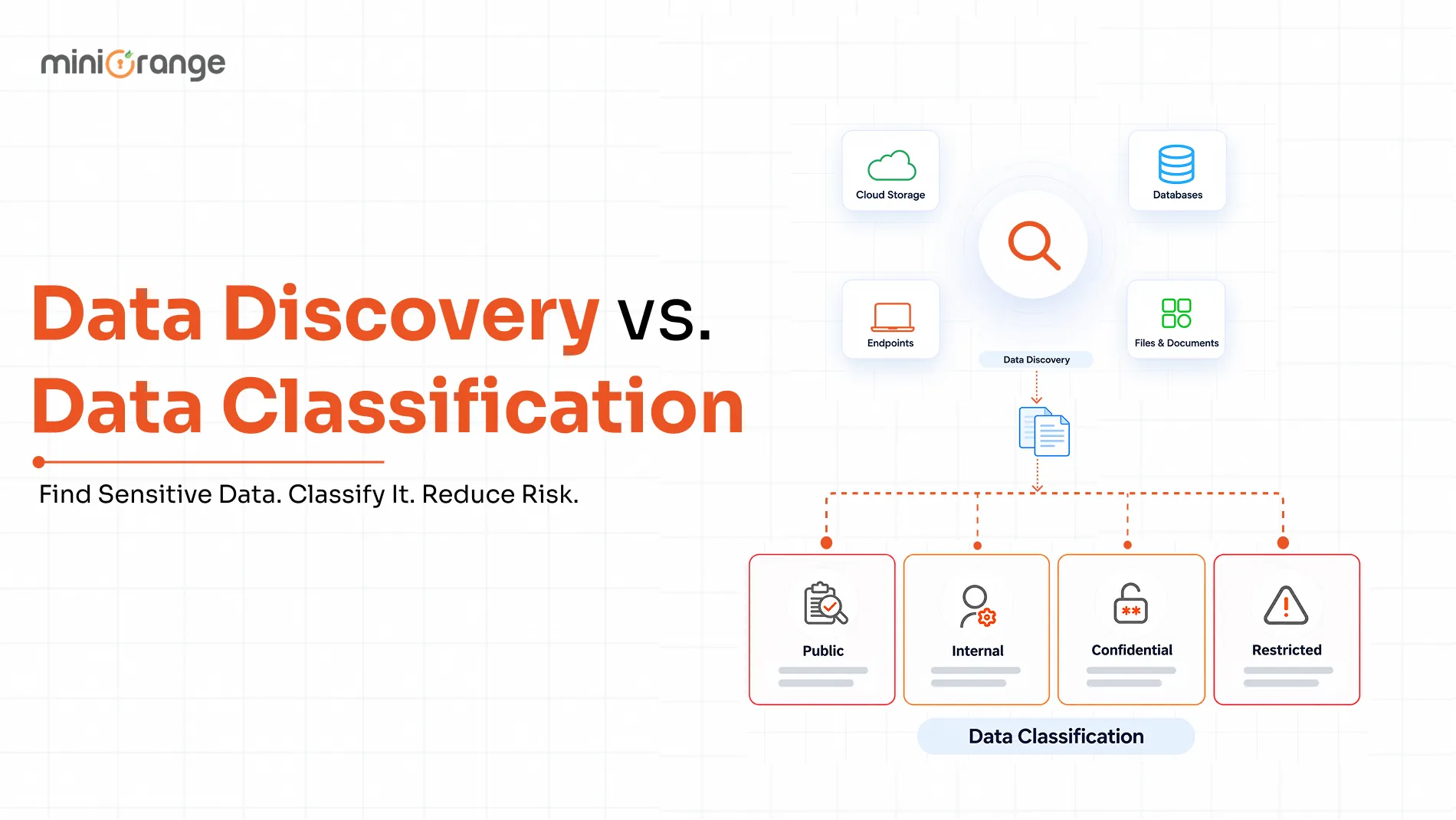
Classification adds meaning to discovered information. A tool may identify a record as customer PII and assign a sensitivity label such as “Confidential” or “Restricted.”
Check whether labels are stored only in the discovery catalog or also applied to source files. That distinction matters when downstream DLP, access, or retention controls depend on the label.
3. Automated Scanning and Detection
Automated detection can combine pattern matching or regexes, contextual analysis, and machine learning to identify personal information. Format support matters just as much as detection methods: databases, spreadsheets, PDFs, emails, and images require different processing capabilities.
How Do PII Data Discovery Tools Work?
Most discovery workflows follow four stages: connect, detect, classify, and prioritize. The depth of each stage depends on the product, its permissions, and the systems it supports.
1. Connect to Data Sources
The tool connects to approved repositories through supported integrations, APIs, or other scanning methods. Sources may include databases, cloud storage, endpoints, and business applications.
Define the scope before scanning. Confirm which accounts, folders, tables, and file types are included, and provide only the permissions required for the deployment. Connectivity is the foundation of coverage, not a guarantee that every item will be inspected.
2. Detect Sensitive Information
The detection engine examines content and, where supported, metadata for potential PII.
Common techniques include:
- Pattern matching for recognizable identifier formats.
- Keyword and contextual analysis to interpret surrounding text.
- Entity recognition to identify people and related information.
- Optical character recognition (OCR) to extract text from images and scanned documents.
Using several methods helps address the limitations of relying on a single pattern or keyword.
3. Classification and Labelling
Detected information is categorized by data type and sensitivity. Classification may also incorporate business context, ownership, and relevant policy requirements.
Discovery answers, “Where is the information?” Classification answers, “What is it, and how should it be handled?” Keeping those questions distinct makes it easier to connect findings to appropriate controls.
4. Risk Scoring and Remediation
Some tools combine sensitivity with exposure signals, such as access permissions and sharing, to prioritize findings. A restricted record available to a small authorized team requires a different response from the same information exposed broadly.
Remediation may involve permission changes, retention review, approved deletion, or DLP policy updates. Confirm which actions the product performs directly and which require integrations or manual approval.
The Importance of Contextual Awareness in PII Discovery
A matching number does not always tell you what a record means. Pattern matching can identify possible personal information, but context helps determine whether the match is relevant and how much attention it deserves.
Context operates at two levels:
- Content context: Surrounding words, document types, and relationships help distinguish personal information from unrelated content.
- Exposure context: Permissions, sharing settings, ownership, and usage help determine whether the information creates an immediate security concern.
This distinction prevents teams from treating every PII match as equally urgent. A confidential personnel record in a properly restricted repository may need continued governance. An unnecessary copy in a widely shared folder may need immediate attention.
Discovering PII in AI Workflows
AI workflows introduce additional places to inspect for personal information. PII may appear in training datasets, user prompts, retrieved documents, generated responses, and application logs. An AI system can process personal information during use even when that information is not used to train the underlying model.
Extend sensitive data discovery to the parts of the AI workflow your organization controls:
- Source documents and datasets prepared for AI use.
- Repositories connected to retrieval-augmented generation, or RAG.
- Stored prompts, responses, and conversation histories.
- Evaluation datasets, monitoring logs, and generated documents.
The goal is not simply to find PII in a chatbot response. It is to understand how that information entered the workflow, who could retrieve it, and where additional copies were retained.
Discovery should therefore work alongside access controls, data minimization, retention policies, and appropriate input and output safeguards. AI-generated content also deserves review because models can reveal or infer sensitive information about individuals.
PII Discovery Challenges That Can Undermine Coverage
Discovery results are only as useful as their coverage and accuracy. Understanding the limitations early helps teams avoid overstating what a scan has established.
1. Handling Large Volumes of Data
Large repositories can make full scans resource-intensive. Teams need to balance coverage, scan duration, application performance, and how quickly information changes.
A practical approach combines baseline scans with incremental rescanning, using a frequency that reflects repository risk rather than applying one schedule everywhere.
2. Unstructured and Complex Data Formats
Personal information does not always sit in a clearly labeled database column. It may appear inside documents, email threads, images, and scanned PDFs.
OCR and file-format support can extend coverage, but teams should verify how the tool handles unreadable, unsupported, or protected content. Those items require follow-up, not an assumption that they contain no PII.
3. Accuracy Issues: False Positives and Negatives
A false positive flags content that is not relevant to PII. A false negative misses information that should have been detected. Overly broad patterns create review work, while narrow rules can overlook variations. Contextual detection and validation help improve results, but organizations still need testing and ongoing tuning.
4. Managing Shadow Data and Human Errors
Employees create new exports, copies, and attachments as part of normal work. A clean repository today can contain unclassified information tomorrow. Recurring discovery helps identify these changes, while clear ownership and practical handling policies address the behaviors that keep recreating exposure.
5. Evolving Compliance Regulations and Context
A detector identifies information; it does not make a complete legal assessment. Applicable obligations depend on the relevant law and processing circumstances. Security, privacy, and legal teams should review classification rules and handling policies together, rather than assuming a built-in compliance template covers every requirement.
PII Discovery Best Practices for Reliable Results
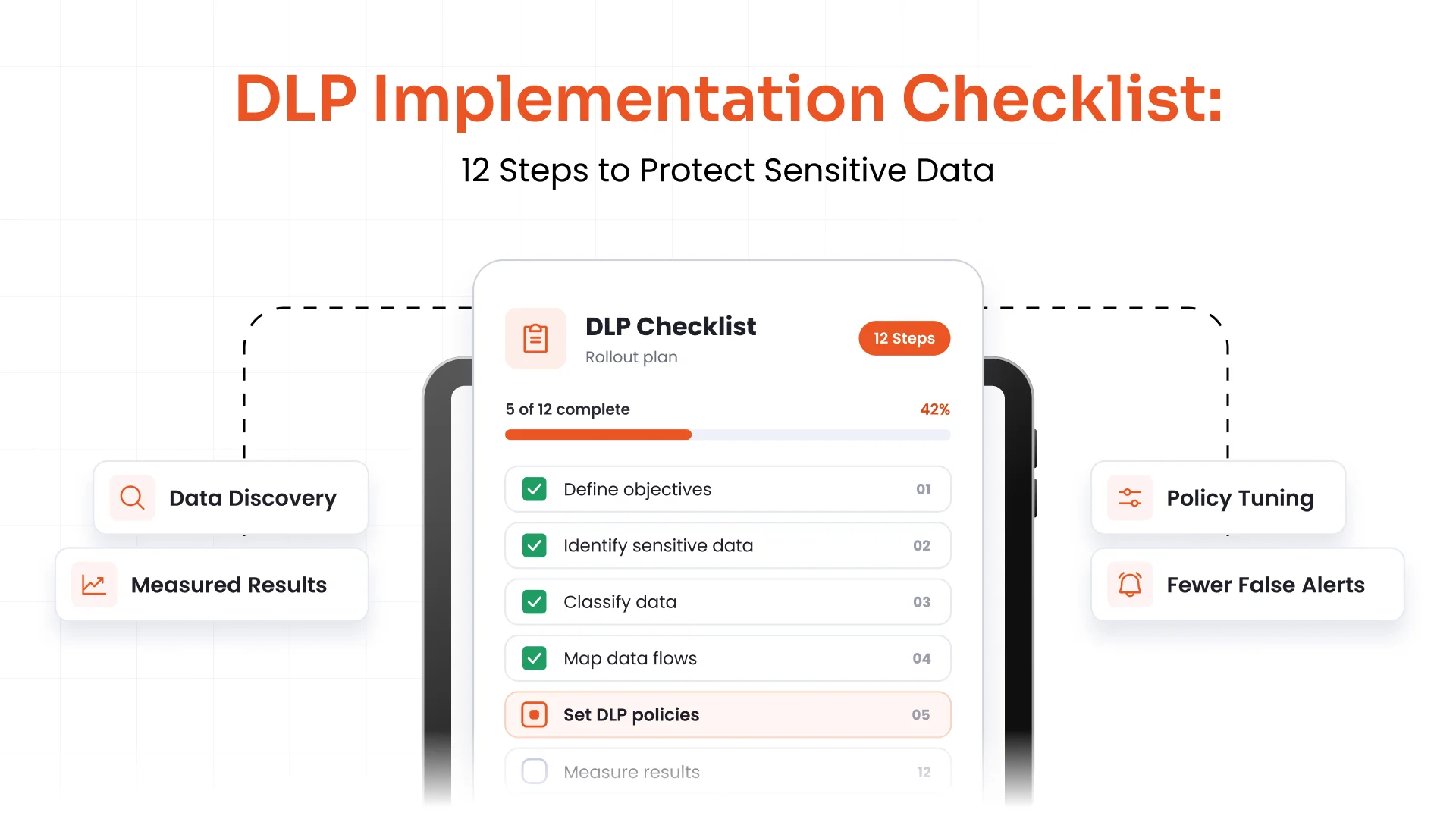
The most useful PII best practices turn discovery into a repeatable operational process. Establish what you will scan, how you will validate results, and who will act on confirmed findings.
1. Define Scope and Success Criteria
Document the repositories, PII categories, file types, and business processes included in the first phase. Then define measurable outcomes, such as scan coverage, detection accuracy, and remediation completion times.
Do not use the number of matches as the main success metric. A large count can indicate broad coverage, excessive duplication, or poorly tuned detection.
2. Start with High-Risk Repositories
Prioritize locations that combine sensitive content with meaningful exposure. Shared repositories, unmanaged copies, and broadly accessible personal records deserve early attention. Starting with a manageable group of high-risk sources also gives teams an opportunity to test detection and remediation workflows before expanding coverage.
3. Validate Results with Data Owners
Data owners can explain why a record exists, whether the finding is accurate, and which users need access. Review representative findings together before applying broad enforcement. Use the review to improve classification rules and confirm the appropriate response.
4. Schedule Recurring Scans and Monitor Changes
Use recurring scans and supported change-monitoring capabilities to keep the inventory current. Increase attention where content, permissions, or sharing change frequently.
Be precise about “continuous” discovery. Ask whether the product monitors events, scans on a schedule, or combines both approaches, and establish how quickly changes become visible.
5. Govern Findings and Limit Access to Scan Reports
Discovery reports can themselves contain sensitive information or reveal where valuable records reside. Restrict access by role, minimize exposed record content, and define how long reports are retained.
Assign each confirmed issue an owner and track its resolution. PII security improves when findings lead to controlled action, not when another report is generated.
Data Discovery: A Core Part of miniOrange DLP
miniOrange DLP brings discovery, classification, and policy-based protection into a broader data security workflow. Its published capabilities include scanning endpoints, servers, and supported cloud repositories for regulated information, identifying overlooked copies, and prioritizing remediation based on sensitivity and exposure.
Its data discovery offering also describes support for structured and unstructured information, contextual classification, automated labeling, and OCR-based scanning of images and scanned documents. These capabilities help teams build a clearer picture of where sensitive information exists before deciding how it should be protected.
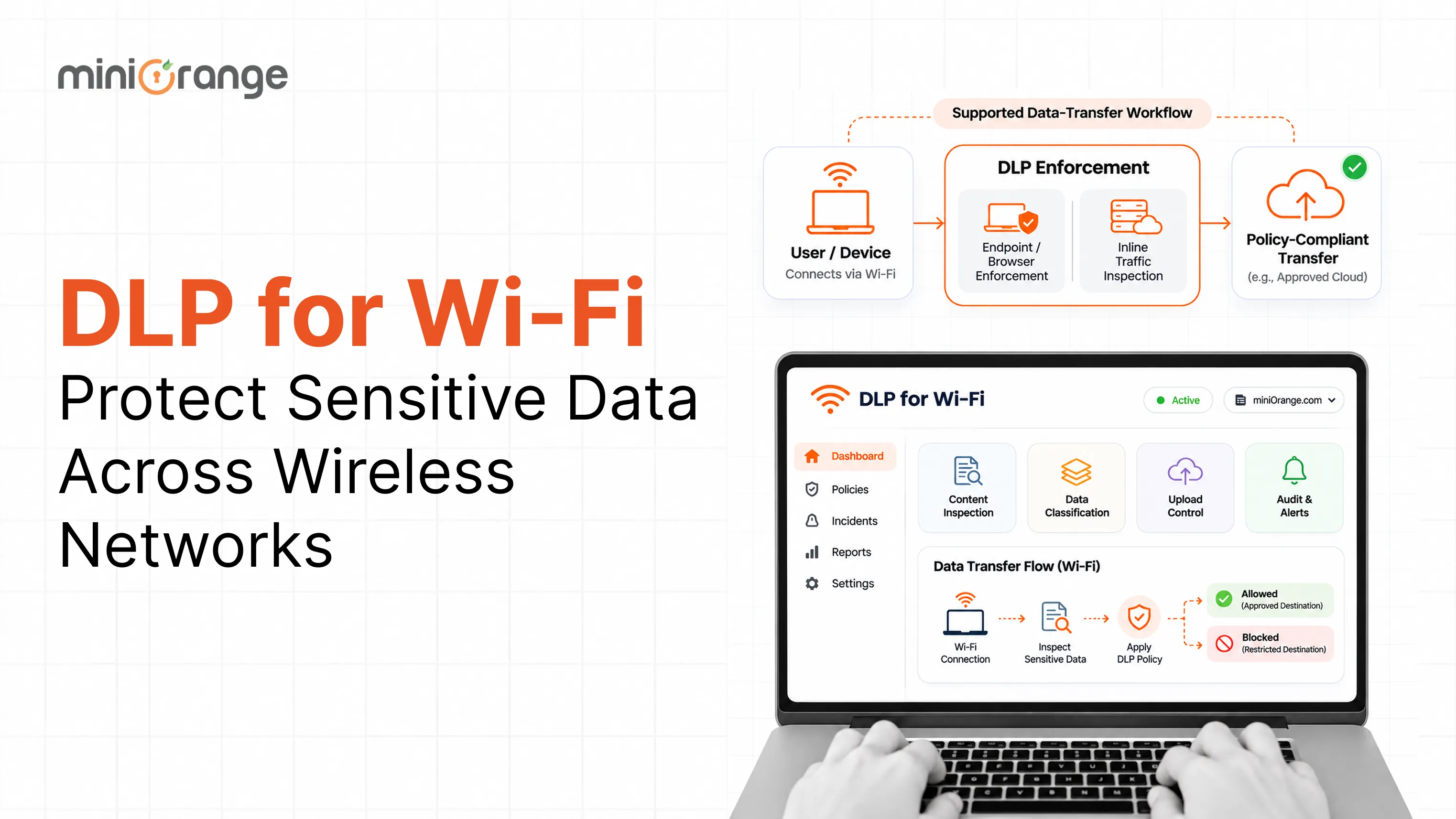
That connection matters. Discovery locates the information, classification informs handling, and DLP controls help prevent unauthorized use or transfer. During evaluation, confirm the connectors, file types, scanning methods, and enforcement options required for your environment.
Personal information will continue to move as employees work. A sustainable approach connects visibility with ownership and protection, then repeats the process as conditions change.
Contact us to discuss how miniOrange DLP and data discovery can support your organization’s PII protection requirements.
Frequently Asked Questions
1. What is PII data discovery?
PII data discovery is the process of locating personally identifiable information across supported systems and repositories. It helps organizations identify personal records, classify their sensitivity, and prioritize protection or remediation. Typical sources include databases, documents, email, cloud storage, and endpoints.
2. Who can use PII scanning tools?
Security teams, privacy teams, data governance professionals, compliance teams, and authorized IT administrators can use PII scanning tools. Data owners also help validate findings and approve handling changes. Access should reflect each person’s responsibilities because discovery results may contain sensitive information.
3. What is the difference between PII and personal data?
The terms overlap, but their exact scope depends on the framework or law. PII is commonly used in U.S. guidance and includes information that identifies someone directly or through linked or linkable information. “Personal data” is the term used under the GDPR for information relating to an identified or identifiable natural person.
4. How do PII discovery tools handle false positives?
Tools can reduce false positives through contextual analysis, refined detection rules, and combinations of detection methods. Organizations should validate sample findings, tune rules against representative content, and review results with data owners. Accuracy testing should also check for missed PII, since fewer alerts do not necessarily mean better detection.
About the Author

Content Writer
With a background in Journalism and extensive experience in SaaS and cybersecurity content writing, Chaitali Avadhani has contributed to creating various forms of impactful content pieces across multiple verticals. At miniOrange, her role is to craft SEO-friendly and lead-generating content around Identity and Access Management (IAM) products and cybersecurity as a whole.
Leave a Comment