

AI systems are evolving fast, but their security models are not keeping up. As organizations adopt Model Context Protocol (MCP) servers to power AI agents and automate workflows, a new attack surface is emerging.
Attacks such as prompt injection and tool poisoning are compromising MCP servers. 2025 news reports that researchers found the first known malicious MCP server hidden in a fake “postmark-mcp” npm package, which secretly copied every email it sent and forwarded it to an attacker’s server, exposing sensitive communications at scale.
To secure MCP servers effectively, organizations need to rethink identity. Specifically, they must treat MCP servers as non-human identities (NHIs) and apply modern IAM for machine identities.
This blog breaks down the risks, explains why traditional controls fall short, and shows how identity security for AI systems can close the gap.
What Is an MCP Server? (From a Security Perspective)
An MCP server is a component of the Model Context Protocol that sits between AI agents and external tools or data sources, standardizing and securing how generative AI apps call APIs, query data, and perform actions in real time.
MCP Servers as AI Tooling Gateways
At a high level, MCP servers act as intermediaries that connect AI agents with tools and systems.
From a security standpoint, they function as gateways that broker access between:
- AI agents making decisions
- External and internal tools
- APIs and services
- Enterprise systems and data sources
This positioning makes the MCP servers decision amplifiers. If an AI agent makes a flawed or manipulated decision, the MCP server executes it at scale. That execution often happens with elevated privileges.
Why MCP Servers Are Not “Just APIs”
It is tempting to treat MCP servers like APIs, but that mindset creates security blind spots.
MCP servers differ in several key ways:
- Persistent connections: Unlike stateless API calls, MCP interactions often maintain context over time
- Context-aware execution: Decisions are based on evolving inputs, not just a single request
- Privileged downstream access: MCP servers frequently hold credentials to multiple systems
- Autonomous invocation by AI agents: Actions are triggered without direct human involvement
This combination creates a dynamic, high-trust environment where traditional API security controls struggle to keep up.
Why MCP Servers Are Becoming a High-Risk Security Layer
As per a report, the MCP server market is expected to grow rapidly and is likely to garner a CAGR of 8.3% in the coming years. The rise of MCP servers is tightly linked to the growth of AI agents.
As organizations build autonomous workflows, MCP servers become the control plane that orchestrates actions across systems.
This shift introduces several risks:
- MCP servers act as centralized execution hubs, increasing their value as attack targets
- Attackers can bypass AI models and target MCP servers directly to manipulate outcomes
- Rapid adoption has outpaced security design, leading to inconsistent protections
In many environments, MCP servers are deployed quickly to enable innovation. Security teams often retrofit controls later, which creates gaps. These gaps are exactly what attackers look for.
The Unique Security Risks of MCP Servers
MCP servers face several security risks, which are as follows:
1. Identity Confusion: Who Is Actually Making the Request?
One of the biggest challenges in MCP server security is identity ambiguity.
In a typical flow, multiple identities may be involved:
- The human user
- The AI agent
- The MCP server
- Downstream services
Without clear identity boundaries, systems rely on implicit trust. This leads to identity inheritance issues where an AI agent may act with the permissions of a user or system without proper validation.
2. Prompt Injections
Prompt injections occur when hackers insert malicious code or instructions into data fields or input prompts. This influences AI models to carry out unintended commands, exposing sensitive data, and conducting harmful functions.
MCP servers are vulnerable to prompt injection. A notable real-world example is the Supabase MCP Lethal Trifecta attack - a classic indirect prompt injection attack. Here, the AI agent, using the MCP server, was compromised to expose a crucial database.
3. Over-Privileged MCP Servers
Many MCP servers are configured with broad access to simplify integration. This creates serious exposure:
- API keys with admin-level privileges
- Shared credentials across multiple agents
- No task-level access control
When everything has access to everything, any compromise becomes catastrophic. A single exploited MCP server can trigger high-impact actions across systems.
4. Tool Poisoning Attacks
Tool poisoning attacks are when an attacker hides malicious instructions inside the descriptions or responses of tools an AI agent uses (often via MCP servers), so the agent unknowingly follows those hidden commands instead of the user’s intent.
An example of this is the MCP Preference Manipulation Attacks (MPMA), which slowly changes the way AI agents select tools and rank. Hackers trick agents or AI models to select poisoned tools. This tends to cause operational failures for distributed MCP systems, along with the risk of exploitation and degradation of decision-making.
5. Lack of Trust Validation Between AI Agents and MCP Servers
In many architectures, trust is assumed rather than verified.
Common issues include:
- AI agents blindly trusting MCP responses
- No authentication of tool origin
- No validation of whether an action aligns with the intended behavior
This opens the door to manipulation. If an attacker can introduce a rogue MCP server or intercept communication, they can influence AI behavior in subtle but dangerous ways.
MCP Servers as Non-Human Identities (NHIs)
MCP servers behave like non-human identities because they authenticate, hold credentials, and initiate actions on behalf of users and AI agents without direct human involvement each time.
This function brings them closer to service accounts or bots than passive infrastructure, so they need full identity lifecycle management, access controls, and monitoring just like any other privileged identity.
Why MCP Servers Must Be Treated as Identities
MCP servers are not just infrastructure components. They behave like identities and should be secured accordingly.
Here is why:
- MCP servers act autonomously, making decisions based on inputs
- They execute actions, not just return data
- They hold long-lived credentials to other systems
This aligns closely with the definition of non-human identity security. Just like service accounts or bots, MCP servers need identity lifecycle management, authentication, and authorization controls.
Common NHI Security Failures
Organizations often repeat the same mistakes when managing machine identities:
- Hardcoded secrets embedded in code or configuration
- Missing credential rotation, leading to long-lived vulnerabilities
- No ownership or lifecycle management, making accountability unclear
- No audit trail, which complicates incident response
When these failures occur in MCP environments, the impact is amplified because of the server’s central role.
Real-World Attack Scenarios Targeting MCP Servers
We’ve listed out real-world scenarios where MCP servers are truly vulnerable:
Scenario 1: Rogue MCP Server Injection
This scenario was explained briefly in the “prompt injection” section and will elaborate in-depth here.
An attacker introduces a malicious MCP endpoint into the ecosystem. The AI agent connects without verifying identity.
The attacker then manipulates responses to influence agent decisions. This could lead to data exfiltration or unauthorized actions.
Scenario 2: Credential Abuse via Over-Permissive MCP Access
An MCP server holds admin-level API credentials. A prompt injection attack tricks the AI agent into triggering sensitive operations and giving away credentials.
From a sign-in perspective, everything appears legitimate because the MCP server is authorized. This makes detection difficult, resulting in credential abuse and data leakage.
Scenario 3: Lateral Movement Through MCP Trust Chains
A compromised MCP server calls downstream services using its credentials. Because there is no identity-based policy enforcement, the attacker moves laterally across systems.
The breach spreads quietly, often without triggering alerts.
Why Traditional Security Controls Don’t Protect MCP Servers
Traditional perimeter, network, and basic API security were designed for static services with clear, human-driven request flows, not autonomous AI agents calling powerful tools through MCP servers.
Traditional security lacks fine-grained, identity-aware controls for MCP-based interactions. Due to this, they often miss which AI agent did what, under which identity, and whether that action was actually authorized.
API Security Alone Is Not Enough
Many organizations rely on API security tools, but these fall short in MCP environments.
Limitations include:
- Token validation does not guarantee identity authenticity
- Lack of context-aware authorization
- No differentiation between AI agents and other clients
This makes it difficult to enforce identity-based security for APIs in AI-driven workflows.
Network Security Breaks Down in AI Architectures
Traditional network controls assume static environments. MCP servers operate differently:
- They span cloud environments and services
- Connections are often ephemeral
- Trust boundaries are fluid
This requires a Zero Trust approach where identity becomes the primary control plane.
IAM as the Foundation for Securing MCP Servers
How is IAM the foundation of securing MCP servers? Let’s understand it through three essential aspects: authentication, authorization, and least privilege.
1. Authentication: Establishing Trust Between AI Agents and MCP Servers
Strong authentication is the first step in securing MCP servers.
Key practices include:
- Mutual authentication between AI agents and MCP servers
- Cryptographic identity binding for services
- Identity federation across AI ecosystems to ensure trusted interactions
This ensures that both sides of the interaction can verify each other before any action is taken.
2. Authorization: Enforcing What MCP Servers Are Allowed to Do
Authentication alone is not enough. Authorization defines what actions are permitted.
Effective strategies include:
- Policy-based access control (PBAC)
- Per-agent and per-tool permissions
- Contextual authorization based on task, environment, and data sensitivity
This ensures that MCP servers operate within clearly defined boundaries.
3. Least Privilege for MCP Operations
Applying least privilege reduces risk significantly:
- Use task-scoped access instead of persistent admin rights
- Issue time-bound credentials and Just-in-Time (JIT) access
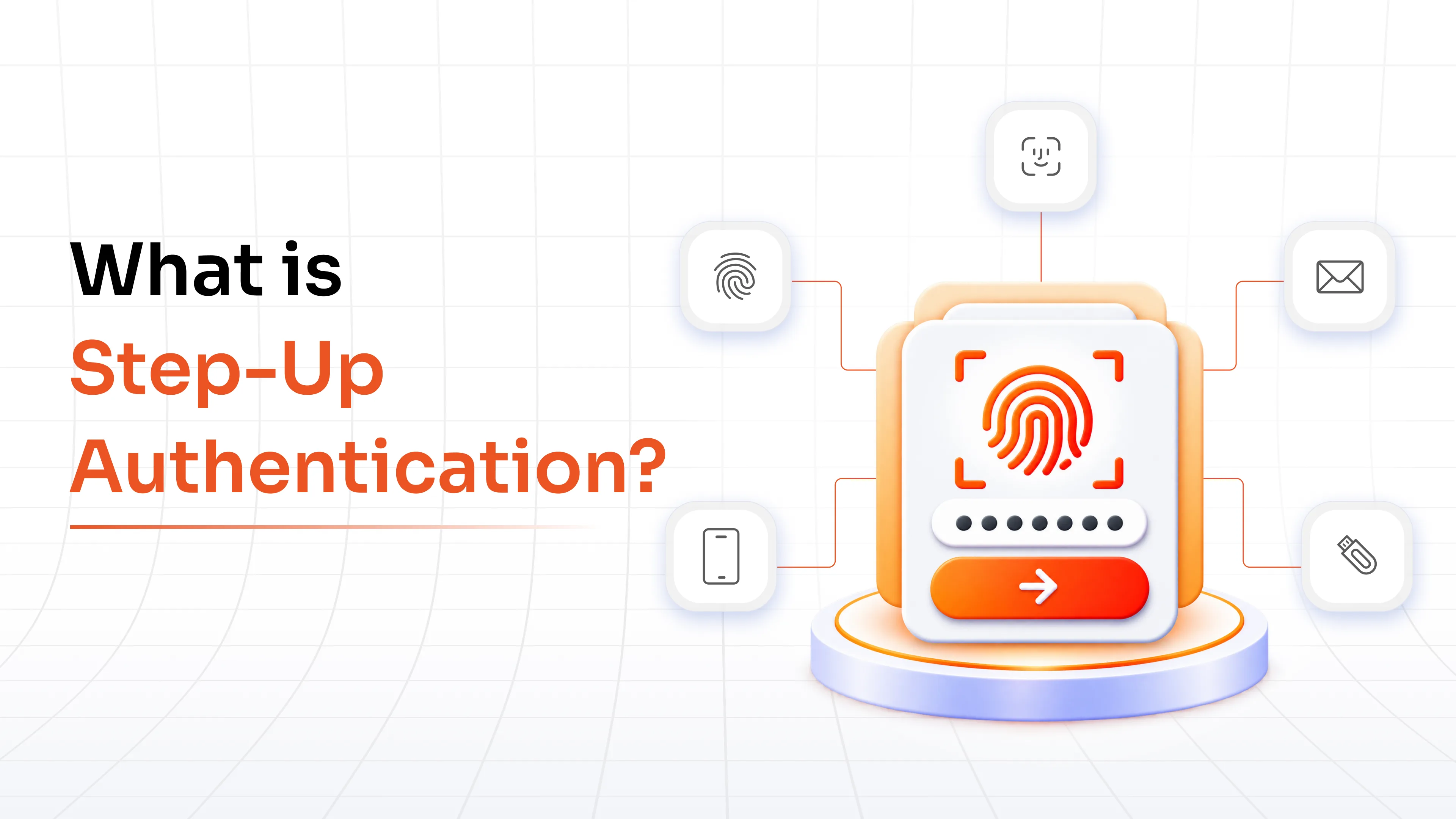
- Require step-up authentication for high-risk actions
This limits the blast radius of any compromise.
IAM-Driven Trust Model for MCP Ecosystems
An IAM-driven trust model for MCP ecosystems replaces assumed trust with verifiable identity at every hop, so both AI agents and MCP servers must continuously prove who they are before anything executes.
Trust Is Not Implicit, It Is Verified
In secure MCP architectures:
- MCP servers must prove their identity
- AI agents must validate tool authenticity
- Policies replace assumptions
This shift eliminates implicit trust and enforces verification at every step.
Separating Decision-Making from Execution
A strong design principle is separating reasoning from execution:
- AI agents handle decision-making
- MCP servers execute actions under strict policy control
- IAM acts as the enforcement layer
This separation reduces the risk of unchecked actions.
IAM Capabilities Required to Secure MCP Servers
1. Identity Lifecycle Management for MCP Servers
Organizations need full lifecycle control over the MCP identities:
- Secure onboarding and decommissioning of identities
- Automated credential rotation
- Clear ownership and accountability
Without lifecycle management, identities become unmanaged risks.
2. Fine-Grained Access Control for MCP Integrations
Granularity is crucial for minimizing risks:
- API-level and action-level permissions
- Conditional policies based on context and risks
- Dynamic access decisions
This assures precise control over what MCP servers can do.
3. Audit, Logging, and Forensics
Visibility is required for compliance and security controls:
- Every MCP action is tied to a unique identity
- Cross-system traceability
- Incident response readiness
This allows organizations to detect and investigate anomalies quickly.
Best Practices: Securing MCP Servers with IAM
Let’s now look at the best practices for protecting MCP servers with IAM:
1. Architecture Best Practices
- Treat MCP servers as non-human identities: Treat each MCP server like a distinct machine identity with its own credentials, policies, and lifecycle, not just as background infrastructure.
- Enforce mutual authentication across all interactions: Require both AI agents and MCP servers to strongly verify each other’s identity before exchanging any data or executing actions.
- Apply Zero Trust principles throughout the architecture: Design your MCP environment so no request is trusted by default, enforcing identity, context, and policy checks at every step.
2. Operational Best Practices
- Default to least privilege access: Give MCP servers only the minimum permissions they need for a specific task instead of broad or permanent access.
- Continuously rotate credentials: Regularly update and rotate keys, tokens, and certificates for MCP servers to reduce the impact of credential theft.
- Monitor for anomalous MCP behavior using behavioral analytics: Track MCP activity patterns and automatically flag unusual tool calls or access attempts that might indicate compromise.
3. Governance Best Practices
- Define clear ownership of MCP identities: Assign a specific team or owner responsible for each MCP server’s configuration, access, and risk posture.
- Include MCP systems in IAM reviews and audits: Evaluate MCP servers alongside human and other machine identities during regular access reviews and compliance checks.
- Align AI governance frameworks with security policies: Ensure your AI safety, usage, and compliance guidelines explicitly incorporate MCP identity, access, and monitoring requirements.
Future of MCP Security: Identity-Centric AI Infrastructure
MCP Servers as First-Class Security Principals
As AI matures, MCP servers will become first-class entities in security models:
- Identity-native AI tooling
- Policy-enforced execution layers
- Integrated IAM for machine identities
This evolution will make identity the backbone of AI security.
Regulatory and Compliance Implications
Regulators are focusing on AI accountability:
- Requirements for traceable automated actions
- Audits of non-human identities
- Stronger controls around AI-driven decision-making
Organizations that invest in identity security for AI systems today will be better prepared for future compliance demands.
Where IAM Platforms Like miniOrange Fit (Without the Sales Pitch)
Modern IAM platforms help organizations unify identity across complex environments.
In MCP ecosystems, they enable:
- Centralized identity governance for MCP servers and AI agents
- Unified policy enforcement across APIs, AI tools, and MCP servers
- Support for Zero Trust AI architectures at scale
This creates a consistent and secure foundation for managing both human and non-human identities.
Final Takeaway: Trust MCP Servers Only Through Identity
MCP servers are powerful, but that power comes with risk. Without proper controls, they can become the weakest link in AI systems.
Security in AI does not start with models. It starts with identity.
IAM provides the trust layer that MCP ecosystems require. It ensures that every action is authenticated, authorized, and traceable.
Secure MCP servers today, or spend tomorrow investigating breaches that could have been prevented.
If you are exploring how to implement identity-first security for AI systems, consider how platforms like miniOrange can help you bring IAM for machine identities into your MCP architecture at scale.
FAQs
What is an MCP server in AI systems?
An MCP server is a middleware layer that enables AI agents to interact with tools, APIs, and systems. It acts as a bridge between decision-making and execution.
Why are MCP servers a security risk?
They hold privileged access, operate autonomously, and often lack proper identity validation. This makes them attractive targets for attackers.
How does IAM secure MCP servers?
IAM provides authentication, authorization, and lifecycle management for MCP servers, ensuring only trusted identities can perform approved actions.
Are MCP servers considered non-human identities?
Yes, MCP servers function like machine identities because they act autonomously and access resources using credentials.
Can Zero Trust be applied to MCP architectures?
Absolutely. Zero Trust principles are essential for MCP security, focusing on continuous verification and least privilege access.
Leave a Comment