
What are Web Security Threats?
Broadly defined, web security threats are any malicious attempts to gain unauthorized access to a computer system, network, or data via the internet. These website security issues range from automated bot attacks to sophisticated social engineering. Essentially, any vulnerability in a web application or browser that a cybercriminal can exploit falls under this category. Understanding these web security threats is the first step toward building a resilient defence.
Why Web Security Issues Are Increasing in 2026
As we move through 2026, web security issues are escalating at an unprecedented rate. The integration of AI into hacking tools has allowed attackers to automate web security problems like credential stuffing and phishing at a massive scale. Furthermore, the rise of the "Internet of Things" (IoT) and remote work culture has expanded the attack surface, creating more web threats for enterprises to manage.
8 Common Web Security Threats
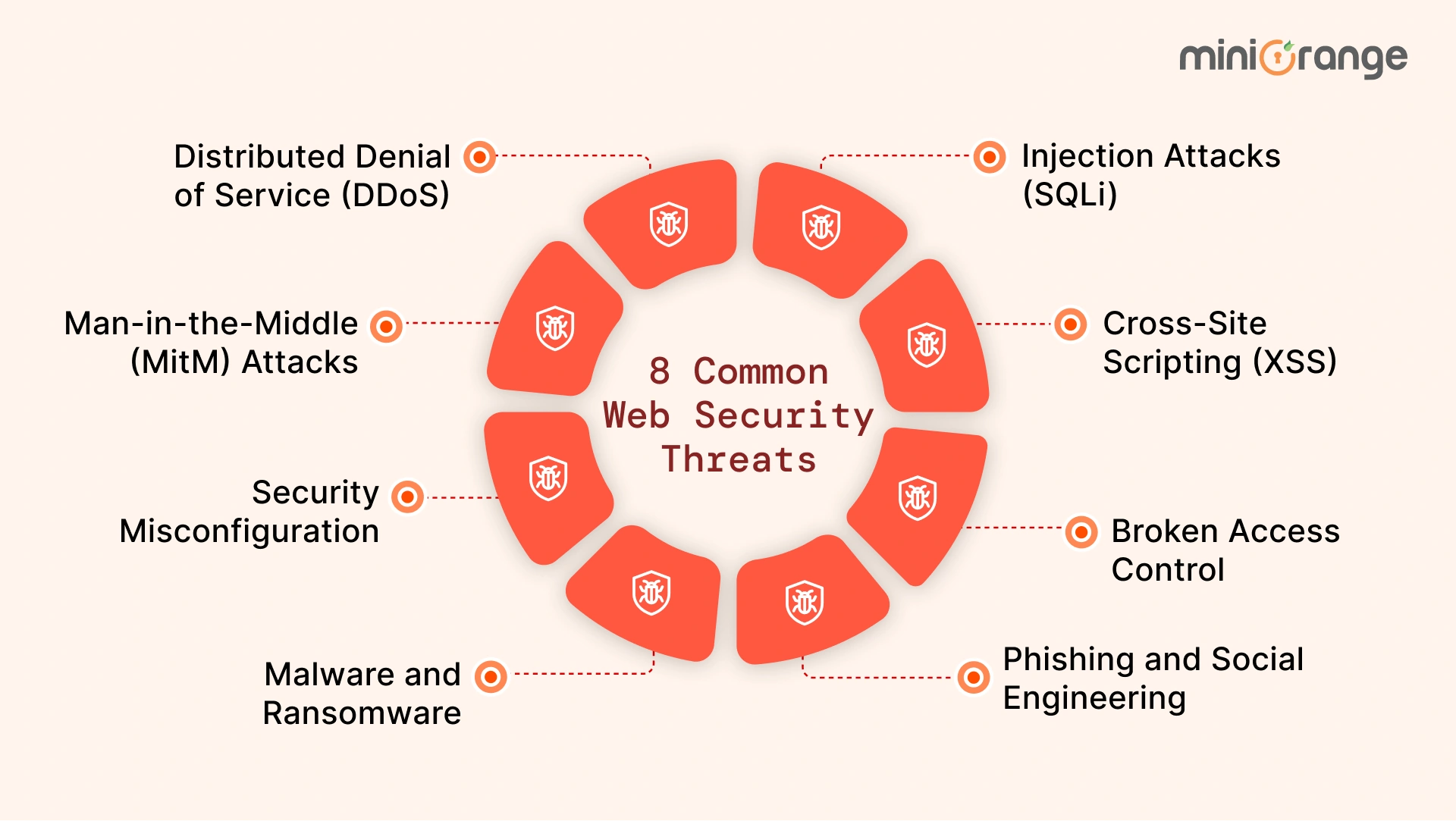
To protect your infrastructure, you must identify the common online threats that target modern enterprises. Here are the top eight web security concerns you should have on your radar:
1. Injection Attacks (SQLi)
Injection occurs when an attacker sends malicious data to an interpreter. SQL Injection (SQLi) remains one of the most dangerous website security issues, allowing hackers to view, modify, or delete data within an organization's database.
2. Cross-Site Scripting (XSS)
XSS is a prevalent web security threat where malicious scripts are injected into trusted websites. When a user visits the compromised page, the script executes in their browser, potentially stealing session cookies or sensitive user information, and it can compromise user sessions, steal credentials, and distribute malware to unsuspecting visitors.
3. Broken Access Control
This occurs when restrictions on what authenticated users are allowed to do are not properly enforced. Attackers can exploit these flaws to access unauthorized functionality or data, making it a major web security risk.
4. Phishing and Social Engineering
Phishing remains a top common online threat. By masquerading as a trustworthy entity, attackers trick employees into revealing login credentials or downloading malware, bypassing even the strongest technical firewalls.
5. Distributed Denial of Service (DDoS)
A DDoS attack aims to crash a website by flooding it with overwhelming traffic. This creates significant web security concerns as it can take an entire enterprise offline for hours or even days.
6. Man-in-the-Middle (MitM) Attacks
In a MitM attack, the perpetrator intercepts communication between two parties (like a user and a web server) to steal data. This is why encrypted HTTPS connections are vital for mitigating web security issues.
7. Security Misconfigurations
Often the result of human error, misconfigured servers or cloud storage are low-hanging fruit for hackers. These web security problems often include default passwords or open cloud buckets containing private data.
8. Malware and Ransomware
Malicious software designed to infect web servers or end-user devices continues to evolve. Ransomware, in particular, can encrypt entire enterprise databases, demanding payment for their release.
Business Impact:
- Financial Impact: Beyond the ransom demand itself, businesses face massive costs related to legal fees, regulatory fines (like GDPR/CCPA), and the high price of forensic recovery.
- Operational Impact: Ransomware can lead to total operational paralysis. When critical databases are encrypted, supply chains halt, customer support goes dark, and employee productivity drops to zero, often taking weeks to fully restore.
How to Prevent Website Security Issues and Strengthen Web Security
Implementing effective web security issues and solutions requires a multi-layered approach. To strengthen your defense:
- Adopt Zero Trust Architecture: Continuously verify users and devices before granting access.
- Regular Patching and Updates: Close known vulnerabilities in applications and plugins.
- Deploy a Web Application Firewall (WAF): Monitor and filter malicious HTTP traffic.
- Continuous Monitoring & Logging: Detects anomalies early.
- Employee Security Awareness Training: Reduce phishing-related risks.
Frequently Asked Questions (FAQs)
1. What do web security threats mean?
Web security threats refer to various types of cyberattacks that target websites and web-based applications to steal data, cause disruption, or gain unauthorized access.
2. What are the web security threats?
They include a wide range of attacks such as SQL injection, Cross-Site Scripting (XSS), DDoS attacks, and phishing.
3. What are the top web security threats?
While the landscape changes, the top web security threats usually involve injection flaws, broken authentication, and security misconfigurations.
4. What Is Web Application Security?
Web application security is a branch of information security that deals specifically with the security of websites, web applications, and web services. It involves using various tools and practices to ensure that web-based systems are protected from web threats.
Leave a Comment