
Identity is everything. Hamper it, and the individual is left with disrupted privacy, reputation damage, and endless fraud.
Attackers are always on the lookout for access to resources and accounts via identity theft, credential theft, and Account Takeover Attacks (ATO). So, it is paramount to leverage solutions that securely link a user’s identity with who they claim to be.
Identity assurance offers frameworks, components, and best practices to safeguard modern-day identities.
Key Takeaways:
- Identity assurance is about verifying and maintaining trust in digital identities beyond simple authentication.
- It involves identity proofing, continuous monitoring, and adaptive response mechanisms.
- Every sector, from finance to infrastructure, is vulnerable to identity-based attacks, making strong assurance frameworks essential.
- Governments, regulators, and enterprises increasingly mandate higher Identity Assurance Levels (IAL).
- Adopting identity assurance is not a one-time task but an evolving strategy shaped by regulations, risk appetite, and emerging threats.
What is Identity Assurance?
Identity assurance is nothing but the degree of confidence an organization has that a user’s claimed identity matches their real-world identity.
In simple terms, identity assurance is an ongoing process where organizations verify and maintain the integrity of users’ identities throughout the user lifecycle. It answers the fundamental cybersecurity question: Can we truly trust the identity we’re dealing with online?
Identity Assurance vs. Authentication: How Does it Differ?
It is quite normal to confuse authentication with assurance. They both differ from one another in terms of functionality.
1. Authentication
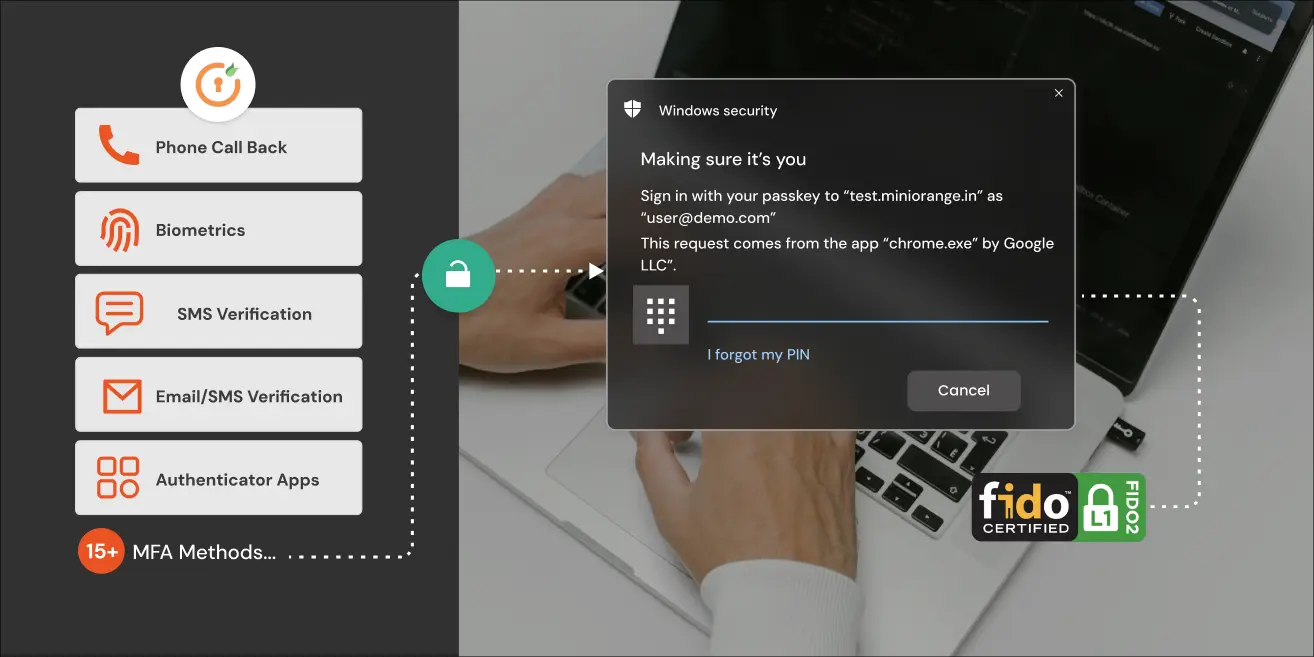
Authentication involves verifying identities at the time of account access (payments, logins, etc.). Here, credentials are verified via Multi-Factor Authentication (MFA) methods such as facial recognition, OTP, email links, etc. Authentication answers the question, ‘Is this the user who they claim to be at the moment?’
2. Identity Assurance
Identity assurance is quite different from authentication. It integrates authentication as one of its components, but also encompasses National Institute of Standards and Technology (NIST) guidelines to classify the level of confidence that can be placed in an identity.
Think of it this way: authentication is a lock on the door, while identity assurance is the process of confirming that the person holding the key should indeed have it.
For instance, an employee might log in successfully with multi-factor authentication, but continuous monitoring could later reveal login patterns inconsistent with their behavior. Without identity assurance, that subtle anomaly might go unnoticed.
Key Components of Identity Assurance
The key components of identity assurance are listed below:
- Authentication: Considered as the first line of defence, authentication involves verifying the identities of users via MFA solutions. But identity assurance expands authentication by implementing adaptive and contextual authentication measures, like user behavioral patterns, geolocation, and IP address.
- Identity Proofing: Here, the user’s claimed identity is verified to determine whether it corresponds to the claimed identity or not during the onboarding process. This is carried out via biometrics, document verification, and cross-referencing government databases.
- Continuous Monitoring: Continuous monitoring detects changes in user behavior, device posture, or access context that could indicate compromise after login.
- Adaptive Response: Adaptive response mechanisms automatically trigger step-up authentication, limit privileges, or temporarily block access based on detected risk.
Why Does it Matter in 2026 and Beyond for Organizations?
We have entered an era where digital trust underpins every transaction, and identity assurance is the backbone of that trust. The push for zero trust architectures, stringent data protection laws, and hybrid work environments makes identity-centric security the new priority.
Here are the top reasons why identity assurance in 2026 matters:
- Regulatory Compliance: Regulatory compliance, such as GDPR, India’s DPDP Act, and NIST’s Digital Identity Guidelines, is foundational to global business operations, including meeting KYC and Anti-Money Laundering (AML) mandates in healthcare and banking sectors.
- Account Takeover Prevention: Account takeover fraud resulted in nearly $13 billion in losses in 2023, as per the Javelin Strategy and Research and AARP. So, with identity assurance best practices such as device fingerprinting, continuous behavior analysis, and credential lifecycle management, fraudulent access is detected sooner rather than later.
- Government Services: Identity assurance ensures that government portals and service access remain reliable. Governments use strong assurance frameworks to verify citizens remotely without compromising privacy or usability. Platforms like GOV.UK Verify and Login.gov use the NIST Identity Assurance Levels (IAL) to let citizens securely access public benefits.
- Remote Work Security: Identity assurance keeps this distributed remote workforce secure by validating every session and ensuring access remains risk-aware. It offers confidence that remote identities are genuine, not threat actors leveraging stolen credentials.
Industries Affected by Identity and Authentication Attacks
Industries are impacted due to a need to gain sensitive data or financial assets. Understanding where and how they are attacked helps CXOs prioritize investment. The most prominent verticals affected are as follows:
- Critical Infrastructure: Healthcare, energy, and utilities sectors are at a constant risk and mainly face operational disruptions, for instance, threat entities impersonate as maintenance personnel to access systems.
- Financial Services: Primary targets for authentication attacks and identity theft. Threat entities try to access bank accounts, steal funds, and hijack online payment portals.
- Hospitality Industry: In hospitality and travel, attackers exploit loyalty programs and booking platforms to monetize stolen identities.
- Online Marketplaces and E-commerce: Online marketplaces and e-commerce platforms are often hacked during the festive season, like Christmas, Thanksgiving, or New Year, because people fail to double-check online offers/discounts or websites (fake or not) in a rush to buy gifts.
How Does Identity Assurance Work?
In practice, identity assurance functions through an interconnected ecosystem of verification, monitoring, and adaptive control.
- Authentication: The user’s identity is verified through initial proofing mechanisms, utilizing biometrics, documents, or authoritative data.
- Verification: Before granting any access, a user’s identity is verified. Under identity assurance, user ID validation is an ongoing and automated process, and it leverages several methods, such as biometrics, database verification, and other methods. The process mustn’t use knowledge-based factors or passwords.
- Monitoring: An overall assurance is maintained throughout the customer and employee lifecycle by continuously monitoring for unusual activities or patterns.
- Unification: A unified identity assurance ties together every stage of the user lifecycle, from onboarding to offboarding, closing the security gaps that may arise due to disconnected or manual processes.
This orchestration ensures that even if one layer fails, say a password breach, the overall identity assurance posture remains strong.
Understanding the NIST Identity Assurance Levels
The NIST recognizes identity assurance levels as a part of its Digital Identity Guidelines in the USA. Other countries have their own frameworks and terms for identity assurance.
The NIST’s Digital Identity Guidelines (NIST 800-63-3) have three Identity Assurance Levels (IALs) to categorize the confidence that can be placed in a claimed identity.
- IAL1: There’s no requirement to link the user to a particular real-life identity.
- IAL2: Requires evidence to link a claimed identity to the real-world identity via a government-issued identity card.
- IAL3: Needs physical presence for identity proofing through biometrics.
Adopting the appropriate IAL helps an enterprise align its identity policies with regulatory and operational needs while ensuring users are not overburdened by unnecessary friction.
Wrapping Up
Identity assurance is more than a security feature; it is the foundation of digital trust. As organizations move deeper into AI-driven and decentralized ecosystems, the ability to validate, monitor, and sustain genuine identities will define cyber resilience.
In 2026 and beyond, enterprises that invest strategically in identity assurance will not only reduce breaches but also meet evolving regulatory expectations and customer trust demands.
Strengthen Security with miniOrange
miniOrange, a pioneer in the cybersecurity domain, offers solutions to counter cybersecurity attacks through world-class Identity and Access Management (IAM) solutions, including Privileged Access Management, endpoint security, and Customer Identity Access Management (CIAM).
To know more about these products, just connect with our team of experts today.

Leave a Comment