

Every application, file, and system in your organization needs one thing before it can be trusted with data: proof of who is asking and what they're allowed to do. Without a consistent way to answer that question, businesses end up with orphaned accounts, over-permissioned employees, and access decisions nobody can explain during an audit.
Identity and Access Management (IAM) is the framework that answers it consistently. IAM combines the technologies, policies, and processes organizations use to manage digital identities and control access to applications, systems, and data. At its core, it relies on three connected functions: authentication, authorization, and access control.
So, how does IAM work? In simple terms: IAM works by verifying a user's identity, checking what they are allowed to access, and enforcing those access permissions. This guide breaks down each part of that process, the technologies behind it, and how to apply IAM well in practice.
What Is Identity and Access Management?
Identity and Access Management is a framework of technologies, policies, and processes used to manage digital identities and control what those identities can access. It governs the full lifecycle of a user's relationship with your systems, not just the moment they log in.
IAM typically covers:
- User identity creation - establishing a digital identity when someone joins the organization, becomes a customer, or is granted system access
- Authentication - verifying that the person behind the identity is who they claim to be
- Permission management - defining and maintaining what each identity is allowed to do
- Access monitoring - tracking login activity and access behavior over time
- Account removal - revoking access when it's no longer needed
A simple way to visualize the IAM flow:
Identify → Authenticate → Authorize → Allow or Deny Access → Monitor
Each stage depends on the one before it. A weak identity foundation makes authentication unreliable; weak authentication makes authorization decisions meaningless, since you can no longer be confident about who is actually asking for access.
What Is Authentication?
Authentication verifies who the user is. It's the checkpoint where a system confirms that the person logging in matches the identity they're claiming.
Authentication Factors
Authentication relies on one or more of the following:
- Something you know - a password or PIN
- Something you have - a phone, security key, or hardware token
- Something you are - a fingerprint, face scan, or other biometric marker
Combining two or more of these factors is the basis of Multi-Factor Authentication (MFA), which significantly reduces the risk of compromised credentials being enough to gain access on their own.
Authentication Technologies
- Passwords
- Multi-Factor Authentication
- Passwordless authentication
- Biometrics
- Risk-based (adaptive) authentication
Example: An employee enters a password and then approves a login notification on their phone. The password proves something they know; the phone approval proves something they have.
What Is Authorization?
Where authentication asks "who are you," authorization asks "what are you allowed to do?" Authorization decides what an already-authenticated user can access, based on defined rules rather than the login event itself.
Authorization decisions may depend on:
- Job role
- Department
- Location
- Device
- Time of access
- Security risk level
- Sensitivity of the resource being requested
Example: A finance employee can view invoices, but only a finance manager can approve payments. Both employees authenticate the same way - the difference lies entirely in what their roles authorize them to do next.
What Is Access Control?
Authorization sets the rule; access control is what enforces it in the system. Access control is the mechanism that actually allows, limits, or blocks a user's actions in real time.
Access control shows up across:
- Application permissions
- File access
- Database permissions
- API access
- Network access
- Session restrictions
Example: A user may be allowed to view a document but prevented from editing or deleting it. The authorization policy said "view only"; access control is what actually stops the delete button from working.
Authentication vs Authorization vs Access Control
These three terms are often used interchangeably, but they describe distinct stages of the same process.
| Concept | Main Question | Example |
|---|---|---|
| Authentication | Who are you? | Logging in with a password and MFA |
| Authorization | What can you do? | Checking whether you can edit a file |
| Access Control | How is access enforced? | Allowing view access but blocking edits |
Key point: Authentication verifies identity, authorization decides permissions, and access control enforces those permissions. Getting this distinction right matters — a system that authenticates well but authorizes poorly still leaves data exposed to people who simply shouldn't have reached it.
How IAM Works: Step-by-Step Process
Putting these pieces together, here's what a typical IAM workflow looks like from start to finish.
Step 1: User Identity Is Created The user is added to an identity directory or IAM system, establishing a single authoritative record of who they are.
Step 2: User Requests Access The user tries to access an application, system, or file.
Step 3: IAM Verifies the User The user signs in using a password, MFA, biometrics, or another authentication method.
Step 4: IAM Checks Access Policies The system reviews the user's role, department, device, location, and risk level against defined policies.
Step 5: Access Is Allowed or Denied The user receives only the permissions they are authorized to use — nothing more.
Step 6: User Activity Is Monitored IAM records login attempts, access activity, and permission changes for visibility and audit purposes.
Step 7: Access Is Updated or Removed Permissions are changed when the user changes roles, and removed entirely when they leave the organization — closing the loop on the identity lifecycle.
Important IAM Technologies and Protocols
A handful of standard protocols make modern IAM interoperable across applications and vendors:
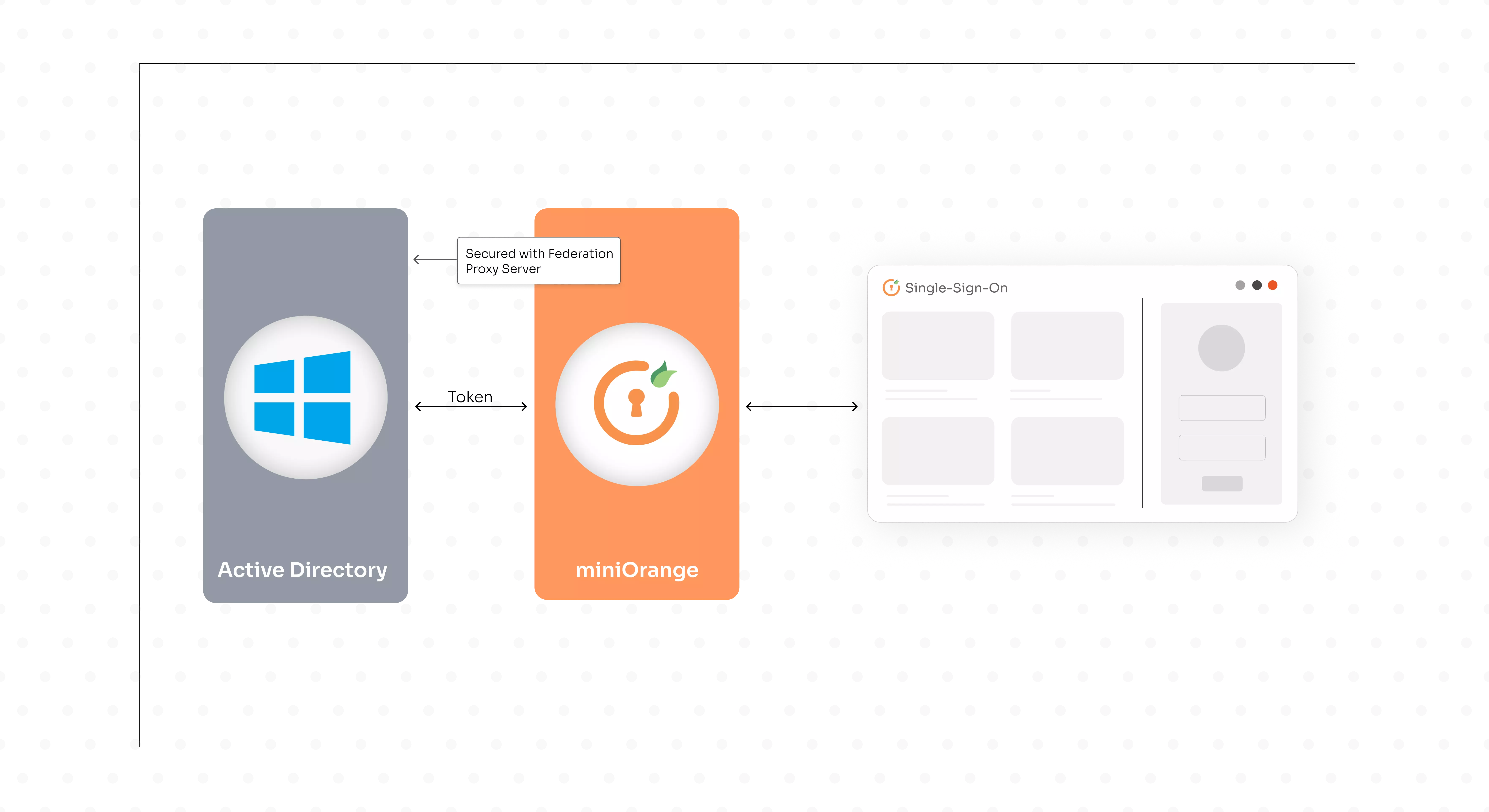
- Single Sign-On (SSO) - allows users to access multiple applications with one login
- Multi-Factor Authentication (MFA) - requires more than one method of identity verification
- SAML 2.0 - used mainly for enterprise Single Sign-On
- OAuth 2.0 - allows applications to access resources without sharing user passwords (an authorization protocol, not an authentication one)
- OpenID Connect (OIDC) - adds a user authentication layer on top of OAuth 2.0
- LDAP - stores and manages user and group information in directories
- Role-Based Access Control (RBAC) - assigns permissions based on job roles
- Attribute-Based Access Control (ABAC) - assigns access based on attributes such as department, location, device, or risk
Real-World IAM Examples
Employee Access An employee uses SSO and MFA to access approved work applications without juggling separate passwords for each one.
Customer Access A banking customer signs in and completes additional verification — step-up authentication — before making a large payment.
Contractor Access A contractor receives temporary access to a single application, which expires automatically when the contract ends, removing the need for manual offboarding.
Benefits of IAM
- Reduces unauthorized access
- Improves overall security posture
- Supports least-privilege access
- Simplifies user login
- Speeds up onboarding and offboarding
- Centralizes access policies
- Improves compliance reporting
- Reduces password-related support requests
- Improves visibility into user access
- Supports Zero Trust security
Common IAM Challenges and Risks
Even well-intentioned IAM programs run into recurring problems:
- Excessive user permissions
- Inactive or orphaned accounts
- Weak passwords
- MFA fatigue attacks
- Poorly designed roles
- Misconfigured SSO
- Stolen tokens or sessions
- Privileged account misuse
- Manual access removal
- Limited visibility into service accounts
- Broken application authorization
IAM Best Practices
- Use a central identity provider
- Enable MFA for important applications
- Follow least-privilege access
- Remove inactive accounts
- Automate employee onboarding and offboarding
- Review permissions regularly
- Protect administrator accounts
- Monitor login and access activity
- Use RBAC or ABAC based on business needs
- Apply deny-by-default access policies
- Test application authorization controls
- Update access when employees change roles
How miniOrange Brings IAM Together
Most of the risk in IAM shows up in the gaps between these stages — authentication that isn't backed by adaptive risk checks, roles that were never cleaned up, or access that wasn't revoked when someone left. miniOrange closes those gaps with a single, unified platform rather than a patchwork of point tools.
- Single Sign-On (SSO) gives users one-click access to every approved application, backed by SAML 2.0, OAuth 2.0, and OpenID Connect - without creating a security gap.
- Multi-Factor Authentication (MFA) adapts to risk in real time, not just at login, covering something-you-know, something-you-have, and something-you-are factors.
- Role-Based and Attribute-Based Access Control enforce least-privilege access automatically, so authorization decisions stay consistent as roles, departments, and risk levels change.
- Identity Governance automates the joiner-mover-leaver lifecycle, so access is granted, adjusted, and revoked without manual follow-up - supporting SOC 2, ISO 27001, and NIST-aligned audit requirements.
Because miniOrange works with your existing directory and application stack, teams get faster time to value than with heavyweight legacy vendors - identity security without the complexity, right-sized for SMBs and enterprises alike.
Conclusion
IAM protects applications and data by verifying identity, deciding permissions, and enforcing access policies. Authentication confirms who someone is, authorization determines what they're allowed to do, and access control makes sure that decision holds up in practice. Together, they form a system that's only as strong as its weakest stage.
If your organization hasn't reviewed its IAM processes recently, now is a good time — orphaned accounts, stale roles, and inconsistent MFA coverage tend to accumulate quietly until an audit or incident brings them to light.
FAQs
What is IAM and how does it work?
IAM manages digital identities and controls who can access applications, systems, and data by verifying identity, checking permissions, and enforcing access decisions.
What is the difference between authentication and authorization?
Authentication verifies who the user is. Authorization determines what the user is allowed to access.
What is access control in IAM?
Access control is the method used to allow, limit, or block access to resources based on authorization decisions.
Is SSO authentication or authorization?
SSO is mainly an authentication method that allows users to access multiple applications after signing in once.
Is OAuth an authentication protocol?
OAuth 2.0 is mainly used for authorization. OpenID Connect (OIDC) is used for authentication.
What is the difference between RBAC and ABAC?
RBAC assigns permissions based on roles. ABAC assigns permissions based on attributes such as location, device, department, and risk.
Leave a Comment