Hello there!
Need Help? We are right here!

Your DPDP Compliance Deadline Is Approaching. May 2027 is closer than you think.
Need Help? We are right here!
Search Results:
×
The DPDP Act establishes specific data principal rights concerning individuals and their personal data. Organizations need defined procedures to receive requests, verify identities, coordinate rights request fulfilment, and address grievances.

Manage the right to access personal data through a structured process that helps teams identify relevant information, coordinate retrieval, and prepare appropriate responses.

Coordinate correction and erasure requests across relevant systems. Track assigned actions and document outcomes, including cases requiring additional review.

Organize grievance redressal through defined ownership, response tracking, and documented decisions. Record and route requests involving the right to nominate.
The miniOrange data principal rights management software coordinates request intake, verification, data discovery, fulfillment workflows, and reporting across your organization.
Provide individuals with a self-service portal to submit requests and share the information needed to initiate data principal rights fulfilment.
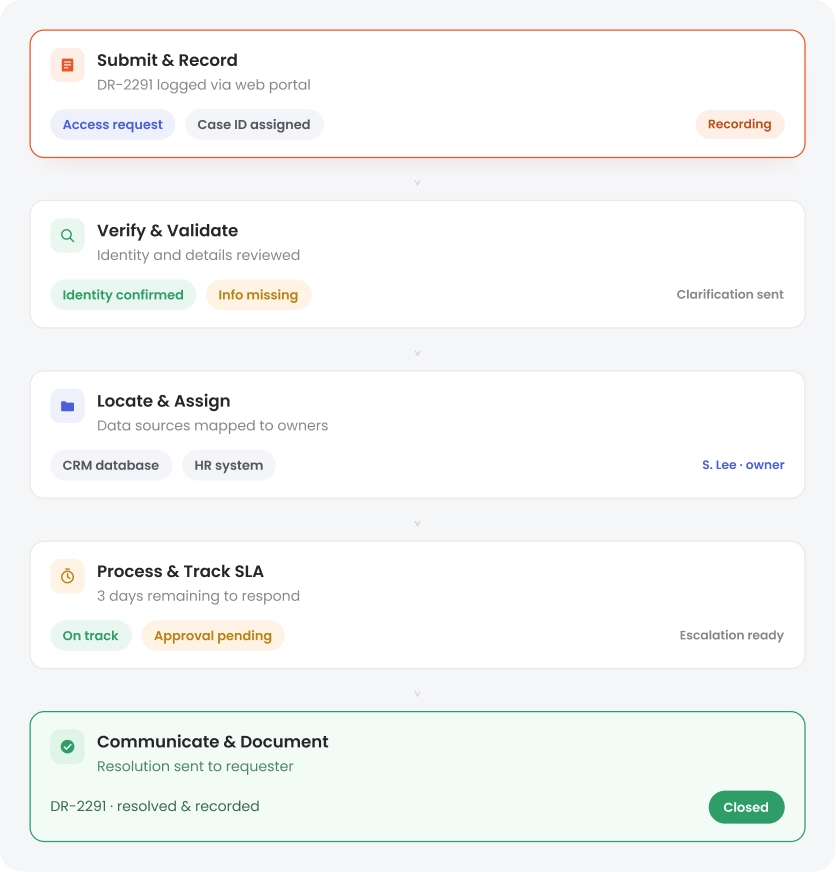
A structured workflow to receive, verify, assign, track, and document data principal rights requests from intake through resolution.
Capture the request through the designated channel, classify the right being exercised, and create a traceable record. This establishes the starting point for assigning ownership and monitoring progress.
Verify the requester's identity using appropriate procedures and review the submitted information. Route incomplete requests for clarification before proceeding with sensitive actions.
Identify relevant data sources and assign retrieval, correction, or erasure tasks to responsible teams. Coordinate dependencies between system owners and processors where required.
Coordinate rights request fulfilment activities, monitor internal deadlines, and follow up on outstanding tasks. Route cases requiring additional review, approval, or manual intervention through the appropriate process.
Communicate the outcome through the appropriate channel and record the actions taken. Retain relevant request details, decisions, and completion records to support traceability and subsequent review.
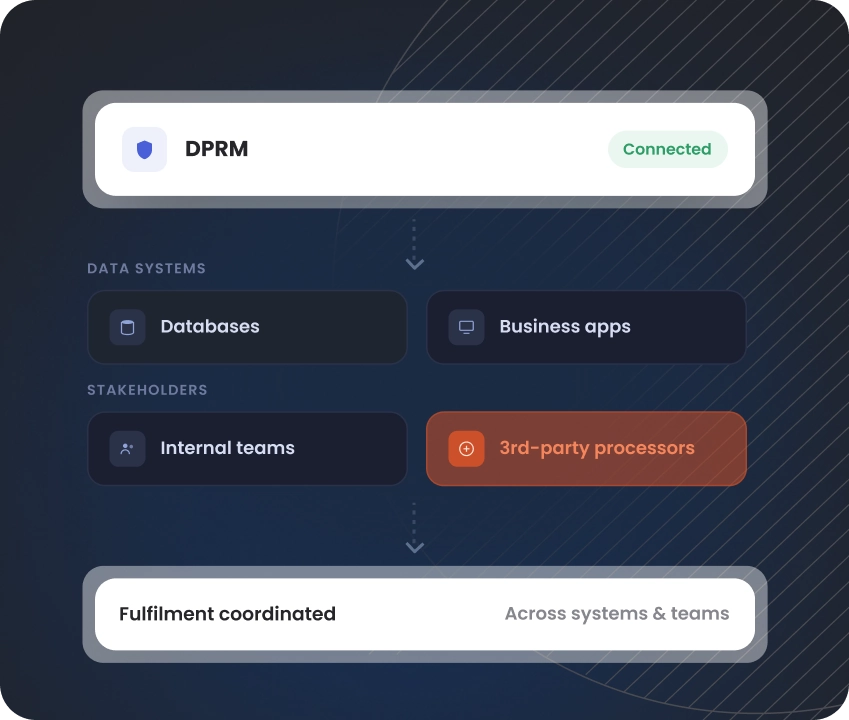
Rights fulfilment can involve databases, business applications, internal teams, and third-party processors.
Connect the DPDP rights management solution with relevant systems and stakeholders, subject to supported integrations, to coordinate actions and track fulfilment across your environment.

Cloud SaaS

Private Cloud

100% On-Premise
Organize request intake, verification, task assignment, progress tracking, and documented resolution into a defined operational process.
Help responsible teams identify outstanding tasks, monitor request progress, and follow up on actions requiring attention.
Define responsibilities for participating teams and maintain records that help explain how requests were handled and resolved.
Align data principal rights management workflows with your organization's privacy procedures and applicable obligations, while accounting for your existing environment.
DPRM software can coordinate erasure requests across relevant systems by assigning tasks, tracking responses, and recording outcomes. Actual deletion depends on system capabilities, integrations, and applicable retention requirements.
Organizations should follow appropriate identity-verification procedures proportionate to the request and the risk of unauthorized disclosure. Verification should occur before sensitive information is disclosed or relevant actions are authorized.
No. Consent withdrawal concerns processing based on consent, while access, correction, erasure, grievance redressal, and nomination are distinct rights or mechanisms under the DPDP framework.
No. DPRM software can organize workflows and automate supported tasks, but some requests require human review, additional verification, approvals, or manual action.
Rule 14 of the DPDP Rules, 2025 requires the Data Fiduciary to publish its grievance redressal period. The period must be reasonable and cannot exceed 90 days.
A DPRM workflow can help record and route nominee-related requests and maintain relevant records. Processing must follow applicable DPDP provisions, verification requirements, and established procedures.