Hello there!
Need Help? We are right here!

Your DPDP Compliance Deadline Is Approaching. May 2027 is closer than you think.
Need Help? We are right here!
Search Results:
×
Bring privacy into every data interaction with the security, control, and scale enterprises demand.
Integrations
Years of Identity Security Experience
Customers Across the Globe
The DPDP Act, 2023, requires SDFs to conduct periodic Data Protection Impact Assessments and audits. Establish a documented assessment process to identify risks to Data Principals, evaluate processing activities, and more.

Conduct DPIAs and audits every 12 months as required under Rule 13 for Significant Data Fiduciaries. Maintain assessment schedules, review records, and supporting documentation.

Evaluate how personal data processing activities may affect Data Principals. Identify privacy risks, assess their severity, and establish appropriate mitigation measures.

Maintain DPIA findings, mitigation records, and assessment documentation. Support reporting of significant observations to the Data Protection Board as required under the DPDP Rules.
Use structured DPIA workflows to identify processing risks, coordinate stakeholders, track mitigation, and maintain assessment documentation.

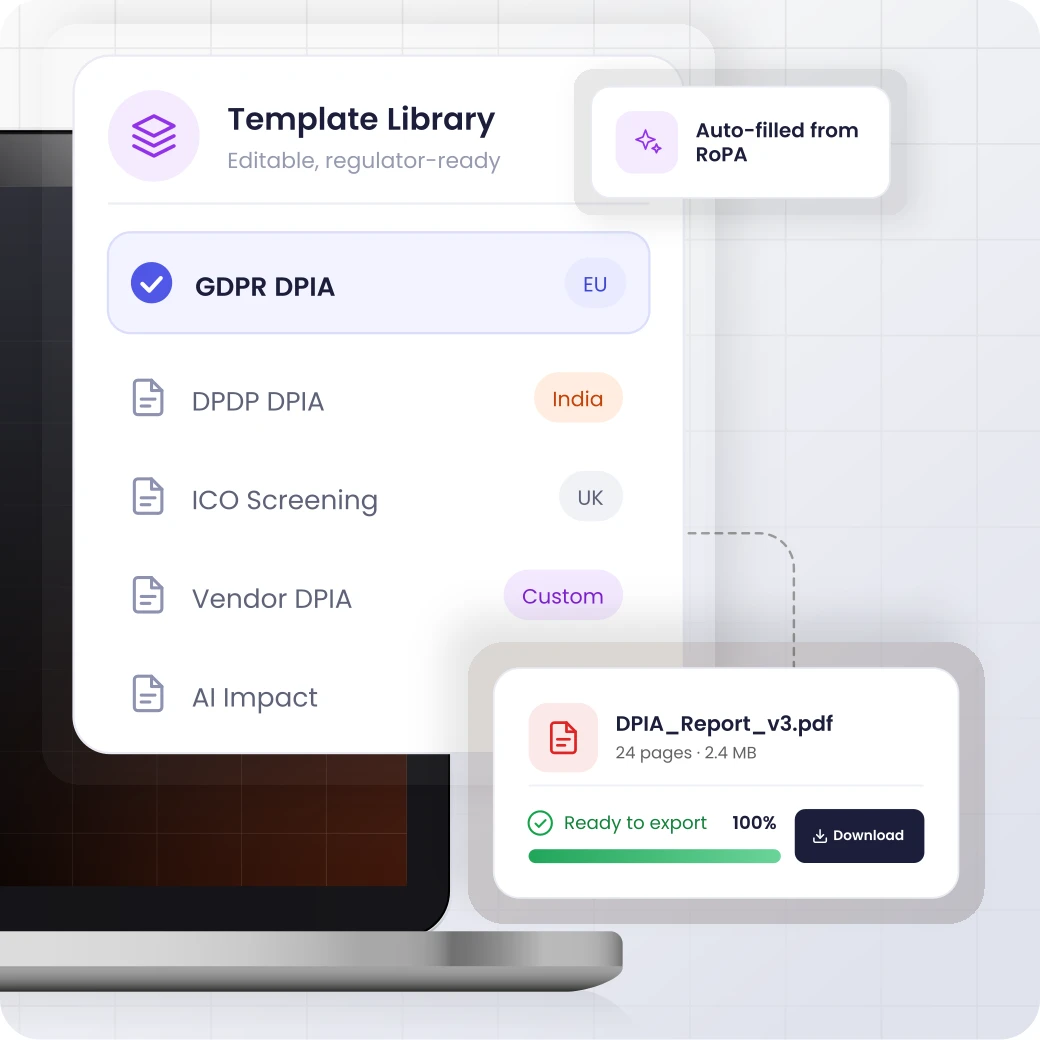
Start assessments with structured questionnaires and configurable DPIA templates. Standardize screening across processing activities and document assessment requirements.

Evaluate privacy risks using likelihood and impact criteria. Classify findings, determine risk severity, and document residual risk.

Convert assessment findings into actionable remediation tasks. Assign responsibilities, monitor progress, and maintain records of mitigation activities.

Coordinate assessments across privacy, legal, IT, and business teams. Enable DPO reviews, stakeholder inputs, and documented approvals.

Connect DPIA assessments with Records of Processing Activities (RoPA) and data mapping. Use processing information to establish assessment context.

Generate structured DPIA reports and retain assessment records. Maintain findings, review decisions, and supporting documentation for audits.
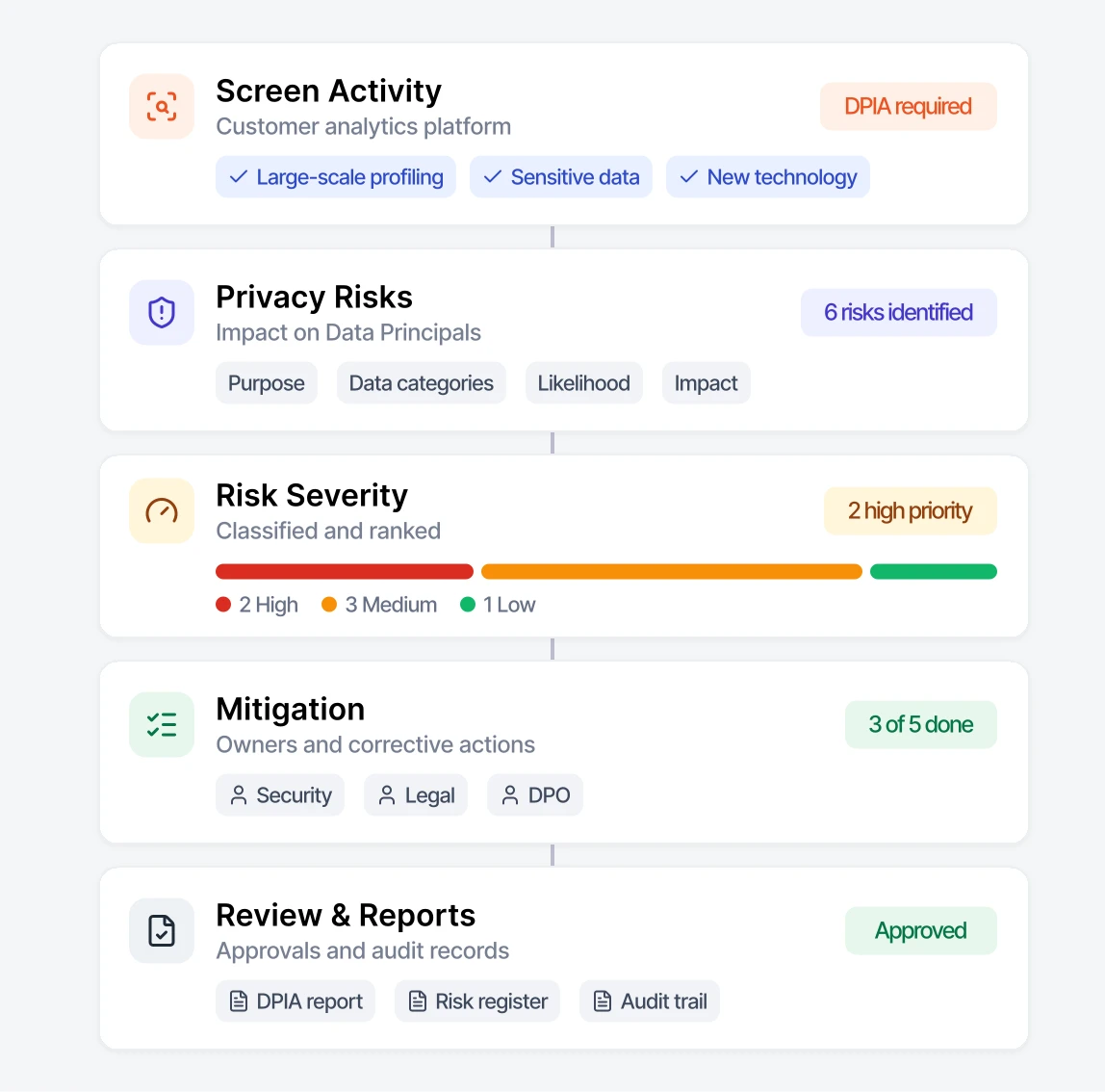
Manage privacy assessments through five connected stages, from initial screening to documented review.
Identify processing activities that require a Data Protection Impact Assessment using screening questionnaires and predefined criteria.
Evaluate potential risks to Data Principals based on processing purposes, data categories, likelihood, and impact.
Classify identified risks and determine their priority for further assessment and mitigation.
Assign remediation responsibilities, document corrective actions, and track mitigation progress.
Complete stakeholder reviews, document assessment decisions, and maintain DPIA reports and supporting records.
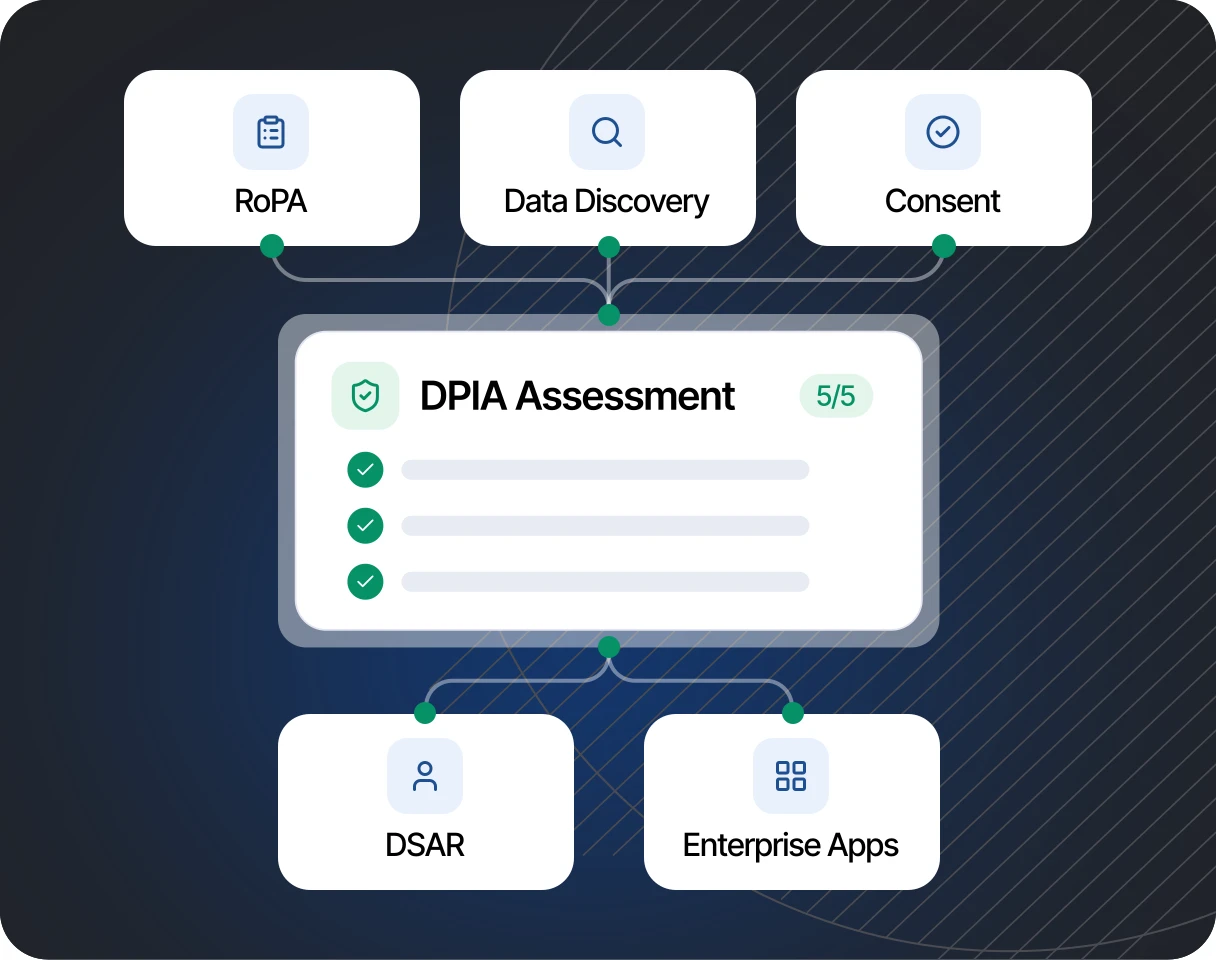
Bring processing records, data inventories, and privacy governance workflows together to establish a consistent assessment process.
Records of Processing Activities (RoPA)
Data Discovery and Classification
Consent Management
Data Subject Access Request (DSAR) Management
Enterprise Applications and Data Sources
Choose a deployment approach that aligns with your organization's infrastructure, data governance requirements, and operational policies.

Cloud (SaaS)

Private Cloud

On-Premises
Bring privacy assessments, data governance, and compliance documentation together through miniOrange's data protection ecosystem.

Connect DPIA workflows with data discovery, RoPA, and related privacy management capabilities.
Standardize screening, risk evaluation, stakeholder reviews, and mitigation documentation.

Support cross-functional assessments involving privacy, legal, IT, and business stakeholders.

Maintain assessment findings, review decisions, and supporting evidence for compliance activities.

Extend privacy governance through miniOrange's consent management, DSAR, data discovery, and DPDP compliance solutions.
The Data Fiduciary is responsible for meeting applicable DPIA obligations. For Significant Data Fiduciaries, assessments are conducted as required under Section 10 and Rule 13. Organizations can assign internal privacy, legal, IT, and business stakeholders to manage different assessment activities.
DPIA software can support role-based workflows by assigning assessment tasks, review responsibilities, mitigation actions, and approval stages to designated stakeholders.
The Data Protection Officer (DPO), where appointed, serves as a key contact for privacy governance and compliance. Under the DPDP framework, SDFs must appoint a DPO based in India who represents the SDF under the Act. The DPO can participate in assessment reviews and privacy risk oversight.
Yes. A DPIA platform can coordinate inputs from legal, IT, security, privacy, and business teams, keeping assessment activities and responsibilities documented.
The Data Fiduciary remains accountable for applicable obligations. Privacy teams and designated stakeholders can identify risks, evaluate their impact, and coordinate mitigation measures.
Structured workflows can document stakeholder reviews, approval decisions, assigned responsibilities, and assessment updates to establish accountability.
For Significant Data Fiduciaries, the DPDP Rules require periodic audits. An independent data auditor is also required under Section 10. Auditors examine relevant controls, records, and compliance evidence.
DPIA software can help maintain assessment schedules, assign task deadlines, monitor mitigation progress, and retain assessment history for periodic reviews.