

Your team may know which databases power the business. That does not mean it knows where every sensitive record lives.
Customer information can spread into reporting tables, development environments, archived databases, and temporary exports. As applications change, the gap between documented data locations and actual storage can grow.
Database data discovery helps close that gap. It identifies sensitive information inside databases and gives security, IT, and compliance teams the context needed to protect it. Discovery and classification capabilities can also produce labels and reports that support more targeted monitoring and audit preparation.
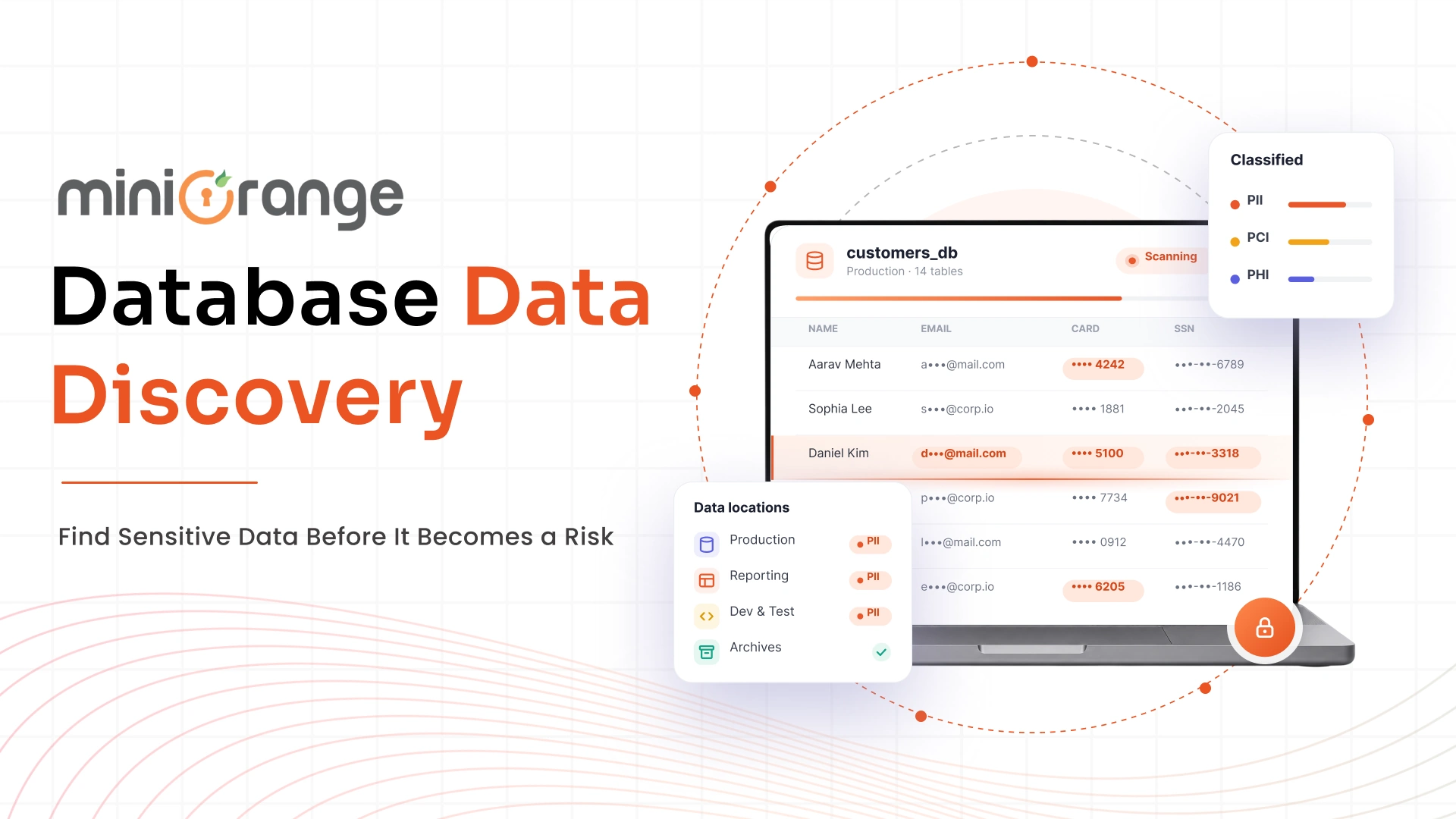
This guide explains how database data discovery works, what it can uncover, how it differs from database activity monitoring, and where it fits into a broader data protection program.
What Is Database Data Discovery?
Database data discovery is the process of identifying where data resides within databases and determining which information is sensitive, regulated, or business-critical. It can examine database metadata, stored content, or both, depending on the scanning method and platform capabilities.
In a security context, the goal is to answer practical questions:
- Which databases contain sensitive information?
- Which tables, columns, or document fields hold that information?
- What type of data is present?
- How sensitive is it?
- Who owns the data and should review the findings?
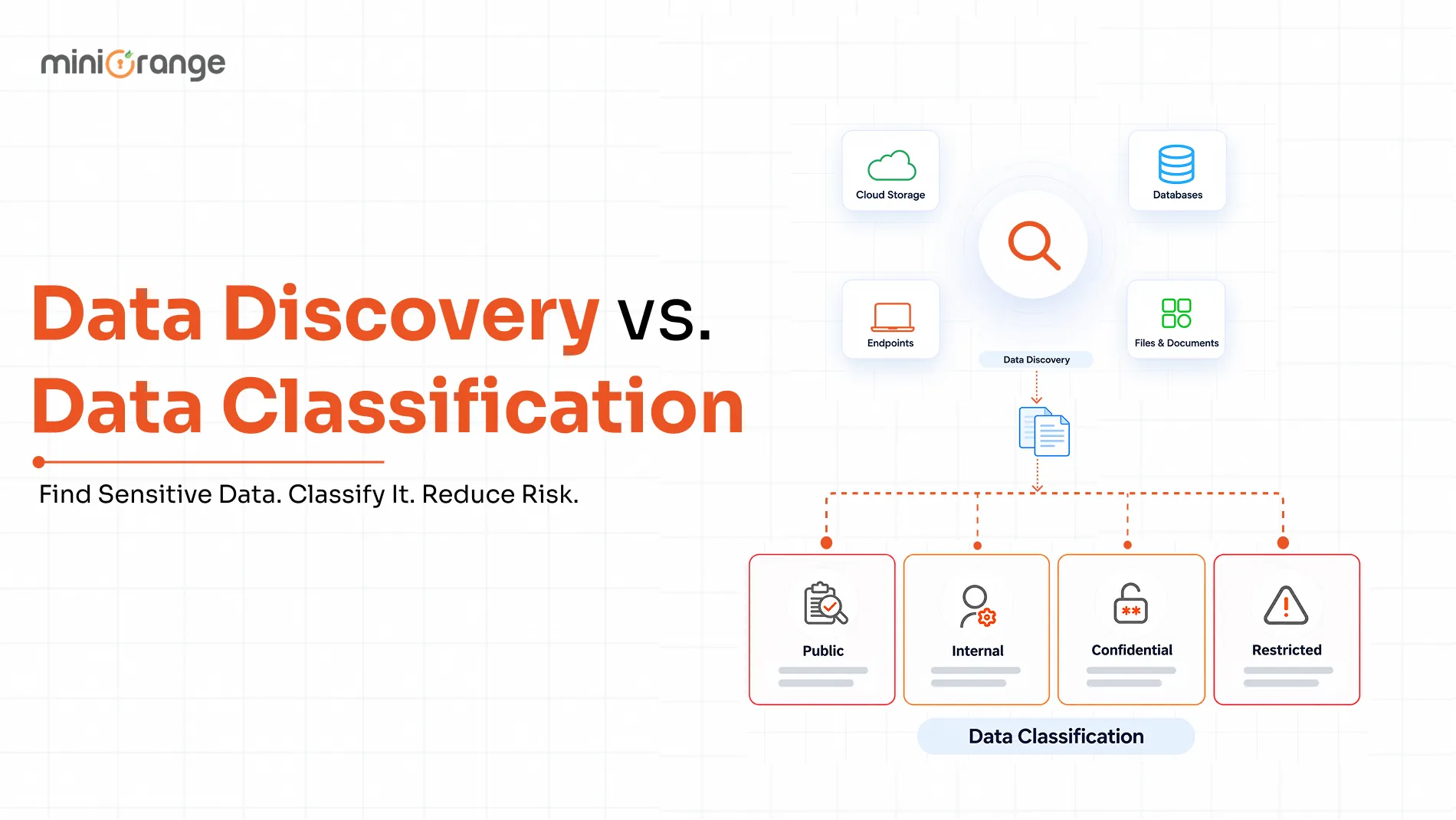
Discovery and classification are closely connected, but they serve different purposes. Discovery locates information. Classification assigns meaning to it, such as “personal information,” “financial data,” or “restricted.”
The result should be more useful than a list of database names. A workable inventory connects sensitive data to its location, classification, responsible owner, and review status.
One distinction matters: Database data discovery in cybersecurity is not the same as exploring business data to find sales trends or reporting insights. Here, the focus is understanding what needs protection.
Why Is Database Data Discovery Important?
Database data discovery gives organizations a clearer view of sensitive information so they can prioritize protection, reduce unnecessary exposure, and support governance. The value comes from connecting what a database contains with the controls it needs.
1. It Makes Protection More Targeted
Not every database requires the same handling. A database containing public product information has different risks from one containing customer identity records or confidential financial details.
Discovery provides the context needed to make those distinctions. Classification can then support decisions about access, monitoring, and other protective controls.
For security teams, the practical benefit is focus: Start with the data whose exposure would matter most.
2. It Helps Identify Unnecessary Copies
Sensitive information does not always remain in its original production environment. Duplicate, unused, and misplaced data can increase the number of locations a business must protect.
Discovery can help identify those locations and support decisions about removing information that no longer serves a valid purpose. IBM describes identifying duplicated, unused, or no-longer-critical data as part of reducing the data attack surface.
The right response is not automatic deletion. Findings should go to the data owner for validation against business needs, retention requirements, and legal holds.
3. It Improves Risk Prioritization
A sensitivity label is useful, but it does not tell the whole story. Teams also need to understand whether sensitive data is exposed, misplaced, or accessible more broadly than intended.
Discovery findings become more actionable when combined with exposure and business context. That combination helps teams decide which issues deserve immediate attention and which can follow a planned remediation schedule.
4. It Supports Audit Preparation
Audit preparation becomes harder when teams must repeatedly reconstruct where regulated information resides.
Classification inventories and reports provide a starting point for explaining the database environment. They can document which columns have been classified and how sensitive information is distributed. However, they are evidence of visibility, not proof that every required control is working.
How Does Database Data Discovery Work?
Database data discovery generally follows a repeatable cycle. Exact capabilities vary by database engine and scanning approach.
1. Define the Scope and Data Categories
Start by deciding what the discovery program needs to find and where it should look.
The scope may include production databases, reporting environments, development systems, and archived stores. Separately, define the information categories that matter to the organization, such as personal information, payment data, health information, and confidential business records.
A practical planning checklist includes:
- Database engines and hosting environments
- Database owners and technical contacts
- Sensitive data categories
- Approved scanning permissions
- Scan schedules and operational limits
- Rules for storing and reviewing findings
Treat this as a coverage plan. A scan cannot provide visibility into a source that was never included or could not be accessed.
2. Establish Controlled Access
The scanning process needs an approved way to inspect the selected sources.
As an implementation practice, use the minimum permissions necessary for the selected method. Some approaches inspect metadata, while others require access to stored values. Confirm those requirements before granting access.
Also define how the process will handle credentials, connections, and findings. Discovery should not create a second, poorly controlled repository of sensitive records.
3. Inspect Metadata
Metadata-based discovery examines information about the database, such as table and column names. It can identify likely sensitive fields without reading every stored value.
However, names are not always reliable. A clearly named field can help classification, while an abbreviated or misleading field name can hide its purpose.
Content-aware approaches inspect stored information using supported detection methods. Depending on the platform, these may include predefined patterns and contextual analysis. The distinction matters when evaluating coverage: A metadata scan and a content scan do not provide the same evidence.
4. Assign Information Types and Sensitivity Levels
After identifying potentially sensitive fields, assign classifications that make the findings usable.
Two useful attributes are:
- Information type: What the field contains, such as financial or health information.
- Sensitivity level: How carefully the organization needs to handle it.
These attributes should remain distinct. Knowing that a field contains personal information does not, by itself, establish its business impact or required handling. Use a consistent classification policy, so different teams do not apply conflicting labels to similar data.
5. Validate Findings With Data Owners
Automated recommendations need review. A likely match is not always a confirmed finding, and an unflagged field is not necessarily safe.
Ask data owners or subject matter experts to confirm classifications, investigate uncertain fields, and correct inaccurate recommendations.
Validation is especially important before findings trigger disruptive actions. Begin with visibility and review, then expand enforcement after the classifications are reliable.
6. Prioritize Remediation and Repeat Scanning
Discovery should lead to an accountable action, not just another dashboard.
Depending on the finding, the next step may be reviewing access, applying masking, investigating an unexpected copy, or assessing whether the data should still be retained. Assign each issue an owner and track it through resolution.
Repeat discovery as the environment changes. Continuous scanning can help identify new repositories and newly introduced sensitive information, but organizations should confirm the actual scan frequency and coverage available for each source.
For operational reporting, track more than the number of findings. Useful measures include source coverage, unresolved findings, validated classifications, scan failures, and time to remediation.
Types of Sensitive Data Found in Databases
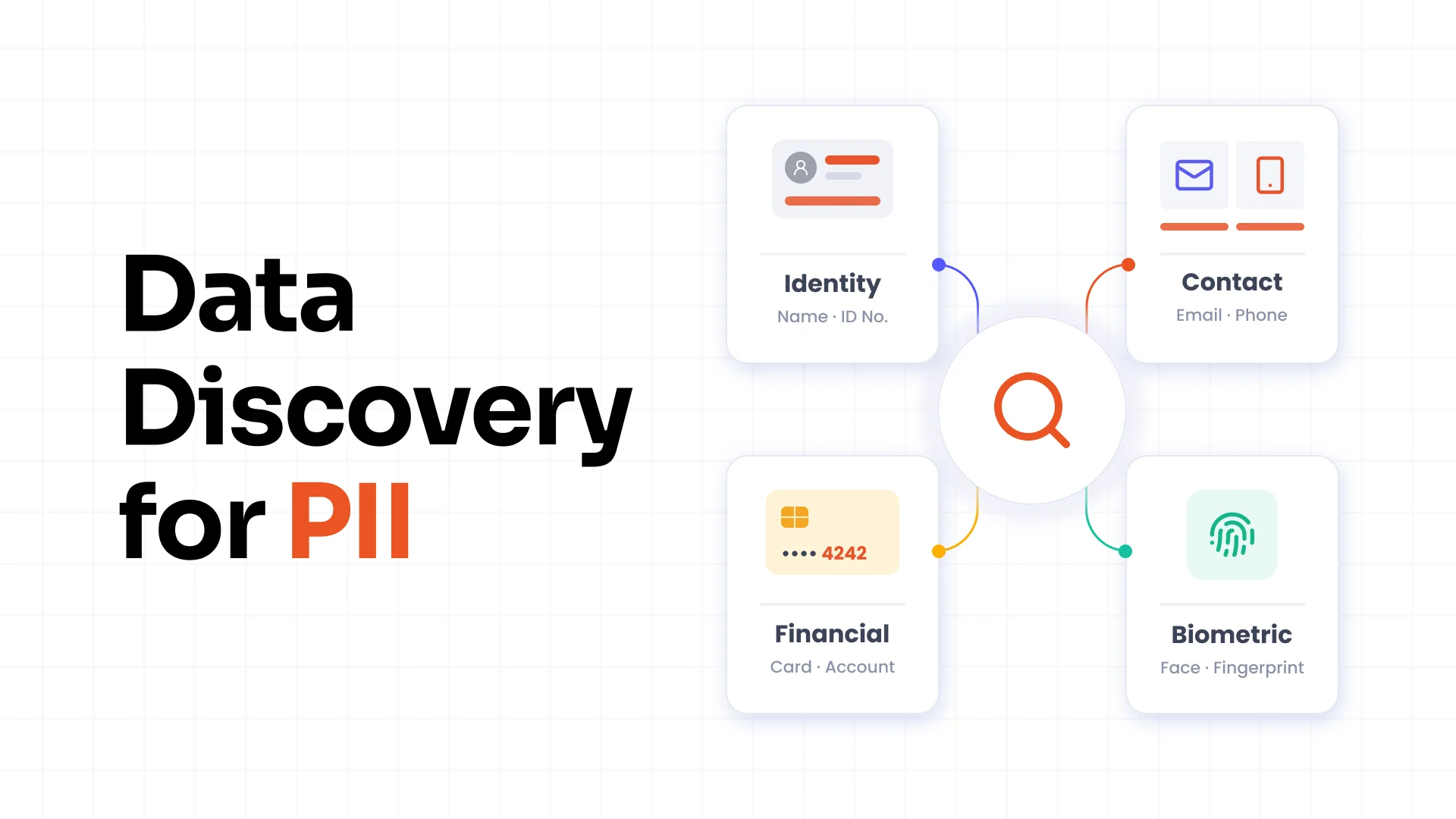
Database discovery can identify several categories of sensitive information. The relevant categories depend on the organization’s industry, business processes, and legal obligations. Discovery platforms commonly distinguish personal, health, payment-related, financial, and confidential business data.
| Data Category | What It May Include | Why It Needs Attention |
|---|---|---|
| Personal information | Names, contact details, government identifiers, and customer records | It can identify people or reveal information about them. |
| Health information | Patient details, treatment records, and health-related billing information | Its sensitivity depends on the information and applicable legal context. |
| Payment account data | Primary account numbers and associated cardholder information | It can bring systems within the scope of payment security requirements. |
| Financial information | Bank details, payroll records, invoices, and internal financial reports | Exposure can create fraud, confidentiality, and business risks. |
| Confidential business information | Pricing, contracts, forecasts, and proprietary records | It may reveal commercially valuable information. |
| Cryptographic secrets | Keys and other security-sensitive assets | Exposure can undermine protections applied elsewhere. |
Supported detection categories vary. miniOrange, for example, lists personal, health, payment-related, financial, and confidential information among its detection categories.
Also, a field does not become low-risk just because it contains an internal identifier rather than a name. Review how records connect across tables and systems. Classification should reflect the meaning of the information in context, not only its visible format.
Database Data Discovery vs. Database Activity Monitoring
Database data discovery identifies what sensitive information exists and where it resides. Database activity monitoring, or DAM, observes database activity to help identify misuse, theft, tampering, or other suspicious behavior.
The simplest distinction is content versus activity.
| Comparison Point | Database Data Discovery | Database Activity Monitoring |
|---|---|---|
| Primary question | What sensitive data is stored here? | What is happening to the database and its data? |
| Main focus | Data locations, information types, and classifications | Access, behavior, and database operations |
| Typical output | Inventories, labels, and classification reports | Activity records, alerts, and investigation evidence |
| Common use | Identifying sensitive fields and informing protection priorities | Investigating access and detecting suspicious behavior |
| Key limitation | Does not, by itself, explain every access event | Activity alone may not establish the sensitivity of affected data |
These are complementary capabilities, not competing approaches. Discovery provides context about the information at risk. DAM helps teams understand what users and applications are doing with the database.
Classification can also enrich auditing. Azure SQL Auditing, for example, can include the sensitivity classifications of data returned by a query in its audit records. That connection helps teams interpret activity in terms of the information involved.
Neither capability should be confused with database performance monitoring, which focuses on operational health, resource use, and performance rather than primarily on sensitive-data security.
How Database Data Discovery Supports DLP and Compliance
Database data discovery helps teams find sensitive data and understand where it is stored. These findings guide DLP policies and help teams document how regulated data is classified and reviewed. However, discovery alone does not prevent data leaks or ensure compliance.
1. It Gives DLP Policies Better Context
DLP controls need a way to distinguish sensitive information from ordinary business content.
Discovery and classification can provide that context. Depending on integration capabilities, findings may inform detection rules, labeling, monitoring priorities, or enforcement policies.
The integration details matter. A classification stored inside a database does not automatically become a label on every exported spreadsheet or report. Verify how information types, labels, and policies move between systems before assuming protection follows the data.
2. It Helps Address Data After Export
Protecting a database does not fully address what happens after an authorized user exports information.
Endpoint, email, and cloud DLP controls can inspect or restrict supported data movements outside the database. miniOrange, for example, documents content inspection and controls for transfers involving email, removable media, and cloud environments.
This creates a practical division of responsibilities:
- Discovery identifies sensitive information at rest
- Database security controls manage access within the database environment
- DLP controls address supported handling and transfer channels
- Monitoring and audit processes help investigate activity
The effectiveness of this model depends on coverage across each stage.
3. It Supports Data Mapping and Governance
Privacy governance requires more than knowing that a database exists. Teams need to understand what personal information it contains and how that information fits into business processing.
Data mapping helps establish what personal data is held, where it resides, and how it flows through an organization. Discovery can contribute technical findings to that process, while business owners supply purpose, ownership, and processing context.
For that reason, treat discovery findings as an input to governance records, not a complete replacement for them.
4. It Produces Evidence, Not a Compliance Guarantee
Classification reports can support audits by showing identified sensitive fields and their assigned labels. PCI DSS also provides a clear reason to understand where payment account data is stored, processed, or transmitted.
However, visibility is only one part of compliance. Organizations still need to assess applicable requirements and verify the relevant access, retention, security, and operational controls.
A useful compliance record should show not just what was found, but who reviewed it, what action followed, and whether the issue was resolved.
How miniOrange Helps Discover Sensitive Data in Supported Data Sources
miniOrange helps organizations identify and classify sensitive information across supported databases, files, email, and cloud storage. It uses predefined detection patterns and contextual analysis to recognize personal, financial, health, and confidential business data.
Centralized reporting helps teams review findings and prioritize information that needs protection. Coverage depends on the data source, so confirm compatibility with your database environment before deployment.
Conclusion
Database data discovery turns an uncertain data landscape into an inventory teams can review and act on. It helps identify sensitive fields, establish classifications, and direct attention toward information that needs stronger protection.
The strongest starting point is a clearly defined scope: Know which databases matter, what information you need to find, and who will validate the results. Then connect confirmed findings to access reviews, retention decisions, monitoring, and DLP controls.
Success is not the largest number of scan results. It is knowing which sensitive data requires attention, assigning responsibility, and confirming that the necessary action happened.
Leave a Comment