

Most M&A due diligence checklists cover financials, legal exposure, and culture fit in real depth. Identity and access management barely gets a mention, if it gets one at all.
But there’s a major gap that tends to show up fast after close. Employees from the acquired company need working access on Day 1, while the security team is still piecing together what accounts exist, who owns them, and which ones should have been shut off weeks earlier.
This guide covers the risks regarding IAM for mergers and acquisitions, a phase-by-phase integration roadmap, the capabilities that matter most before Day 1, and a checklist for IT and security teams.
Key takeaways
- Most identity problems that surface after a deal closes trace back to the same source: standing access, orphaned accounts, and privileges nobody got around to revoking.
- Getting people working on Day 1 and building a permanent, governed setup are two separate projects, not one.
- Non-human identities, service accounts, API keys, and automation credentials are consistently the least visible and least governed part of a merged environment.
- Identity federation lets both organizations keep working through existing credentials without an immediate platform migration, buying time for the rest of the integration.
- Phishing attempts against the acquired company can spike as much as 400% in the weeks right after a deal is announced.
Why Identity Management Breaks Down During M&A
M&A moves on deal timelines, not IT timelines. Legal wants to close in 90 days. Finance wants Day 1 revenue continuity. Nobody schedules six months for two directories to become one.
That mismatch is where IAM for mergers and acquisitions breaks. Two companies almost never run the same identity setup: different directories, different role models, different approval chains, different tooling entirely. Bolting them together under deal pressure means shortcuts, and shortcuts in identity management during M&A mean standing access that nobody's watching.
Everyone needs to work on Day 1, acquirer and acquired alike. That pressure to keep things running usually wins out over the instinct to lock things down first. Accounts get preserved "for now." Groups get merged without review. Federation gets patched together instead of designed, sometimes by whoever happened to have admin rights on both sides that week.
NIST's Cybersecurity Framework 2.0 makes the point directly: understand your current-state identity controls before you start combining environments, not after.
What Makes This Harder Than Standard IT Integration
- Two identity providers, two sets of assumptions about who approves what
- Mismatched role-based access control (RBAC) and attribute-based access control (ABAC) models that don't map cleanly onto each other
- Orphaned accounts inherited from the acquired company, some active for months
- Non-human identities (service accounts, API keys, automation credentials) are buried inside application stacks where nobody owns them
- A compliance footprint that just got wider, sometimes overnight
Any one of these is manageable on its own. Stack all five during the same 90-day deal window, and the identity team ends up doing due diligence, integration, and cleanup at once.
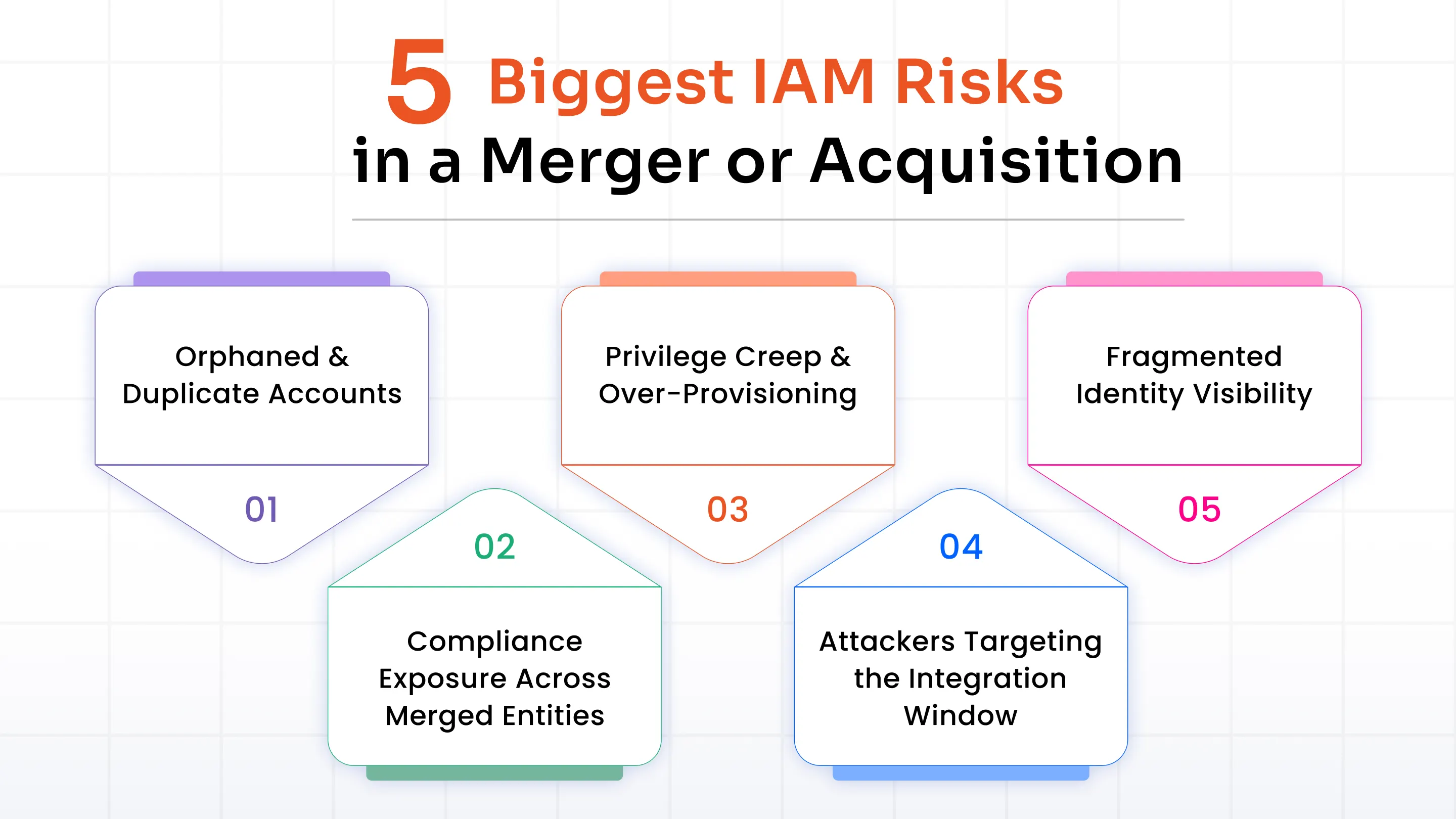
The 5 Biggest IAM Risks in a Merger or Acquisition
Risk 1: Orphaned and Duplicate Accounts
Former employees and contractors from the acquired company often keep working access long after they've left. Nobody owns the deprovisioning process during a deal, so accounts just sit there. One dormant admin account with standing privileges is often all it takes for credential abuse to turn into a real breach.
Risk 2: Compliance Exposure Across Merged Entities
Merging companies means inheriting whatever compliance obligations came with the deal: HIPAA, SOX, GDPR, PCI DSS, and sometimes all at once.
A healthcare acquirer buying a fintech, or vice versa, ends up answerable to regulators it never dealt with before the ink dried. Auditors expect one unified trail of who accessed what, not two separate logs from two separate systems. The first audit after close is usually the one that finds the gaps.
Risk 3: Privilege Creep and Over-Provisioning
Roles shift fast during a merger, and access rarely shifts back down. People pick up "temporary" permissions during the transition that never get revoked, then move teams again six weeks later and pick up more on top of it. Reviewing that manually across two organizations at once doesn't scale, and unused privilege is exactly what insider threats and compromised accounts feed on.
Risk 4: Attackers Targeting the Integration Window
Public M&A announcements are a signal to threat actors, not just investors. Vendors have reported that phishing attempts targeting the acquired company can jump as much as 400% after a deal is announced. Misconfigured service accounts and credential stuffing attacks spike in that same window, right when defenses are thinnest.
Risk 5: Fragmented Identity Visibility
The acquirer's IAM platform doesn't automatically see what's happening in the acquired company's environment, and vice versa. SaaS sprawl makes this worse: shadow apps, forgotten logins, and access nobody logged anywhere. You can't secure what you can't see, and right after close is exactly when visibility is at its worst. Solid identity governance and administration closes that gap.
Phase-by-Phase Roadmap: IAM for Mergers and Acquisitions
Phase 1: Pre-Deal Due Diligence (Before Announcement)
Identity risk should show up in due diligence next to financial and legal risk, not after.
- Audit the target's identity provider setup and directory structure
- Inventory privileged accounts and non-human identities, including service accounts and API keys
- Assess the target's compliance posture against your own obligations
- Check IdP compatibility (Okta, Microsoft Entra ID, on-premises Active Directory, or something else entirely)
- Flag high-risk access gaps before you sign, not after
Phase 2: Day 1 Readiness (Deal Close)
Day 1 is when access either works or it doesn't, and there's no redo.
- Map out access by user type and role before employees show up
- Set up SSO federation between the two identity providers so credentials work without a rebuild
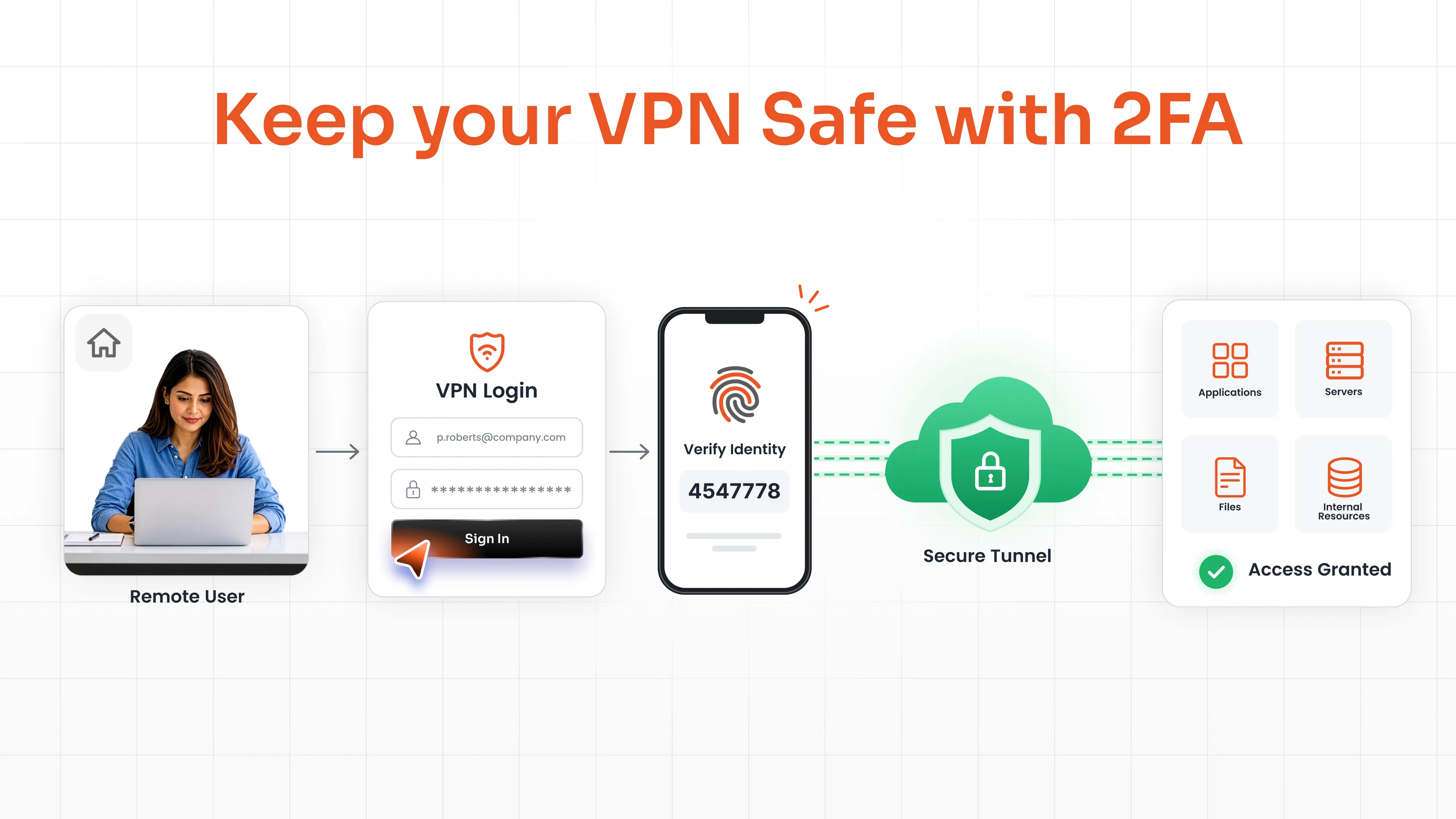
- Enforce MFA for every new identity from the start, no exceptions
- Disable orphaned and unused accounts before they become a liability
- Apply least-privilege as the default, not an aspiration
- Deploy a co-existence model that lets both environments run side by side while you sort out the rest
Phase 3: Post-Merger Identity Consolidation (Weeks 2-12)
This is where the real cleanup happens, once the Day 1 fire drill is over.
- Run a full access review cycle across both organizations
- Rationalize RBAC and ABAC roles so they mean the same thing in both environments
- Migrate or federate remaining identities, whichever fits the timeline
- Set up SCIM provisioning tied to the combined HRMS
- Audit non-human identities and decommission the ones nobody claims
Phase 4: Long-Term Access Governance (Month 3 onwards)
Once the dust settles, the goal shifts from damage control to a governance model built to last.
- Consolidate onto a single IAM and identity governance platform
- Move toward risk-based authentication and passwordless access where it makes sense
- Build recurring access certification into the calendar, not just the audit season
- Unify compliance reporting across the combined organization
- Extend governance to non-human identities and any AI agents now running in the environment
| Phase | Timeline | Primary Goal | Key Actions |
|---|---|---|---|
| Phase 1: Due Diligence | Pre-deal | Access identity risk | IdP audit, privilege inventory, compliance gap analysis |
| Phase 2: Day 1 Readiness | Deal close | Secure access from Day 1 | SSO federation, MFA enforcement, orphan account cleanup |
| Phase 3: Identity Consolidation | Weeks 2-12 | Govern and rationalize access | Access reviews, role mapping, SCIM provisioning, NHI audit |
| Phase 4: Long-term access Governance during acquisition | Month 3+ | Normalize under one policy | Unified IGA, recurring certification, compliance reporting |
Key IAM Capabilities You Need Before Day 1
Not every IAM solution is built for M&A timelines. Most platforms are designed to manage identity for one organization that grows slowly and predictably. A merger demands something different: bridging two IdPs overnight, onboarding a few thousand new identities without doubling admin headcount, and running on whatever infrastructure the acquired company happens to have.
Here's what actually matters when you're evaluating a platform for a deal, not just for day-to-day operations.
The capabilities that matter most in a deal look different from what a platform needs for ordinary, day-to-day life. Here are a few capabilities that matter.
1. Identity federation and Single-sign on (SSO)
This combination lets acquired users log in through their existing credentials while the two systems sort themselves out behind the scenes, instead of forcing a rebuild before anyone can work.
2. Automated provisioning
Automated provisioning, through SCIM, replaces the alternative. Which is to manually create access for a few thousand people, one ticket at a time.
3. Access review workflows
A workflow that moves quickly helps catch the excess entitlements an acquired organization usually brings.
4. Deployment flexibility
Without deployment flexibility, the cloud, where the acquirer already lives, and on-premise, where the target's regulated systems can't move yet. On the other hand, with deployment flexibility, both running side by side keeps the platform from becoming the bottleneck.
5. Privileged access controls
Privileged access controls with multi-factor authentication activated carry particular weight during the integration window, since that's typically when admin accounts are most likely to be temporarily over-permissioned just to get the deal done, and when attackers are paying closest attention.
| Capability | Relevance to M&A Integration |
|---|---|
| Identity federation/SSO bridging | It lets acquired users to authenticate without a full IdP migration on Day 1 |
| Automated provisioning (SCIM) | Scales onboarding across hundreds or thousands of new identities with manual effort |
| Access review workflows | Speeds up identifying and fixing excess entitlements from the acquired organization |
| Flexible deployment (cloud, on-prem, hybrid) | Covers scenarios where the acquired organization can’t immediately migrate to a cloud IdP |
| Privileged access controls | Restricts high-risk admin access during the integration window |
| Audit and compliance reporting | Produces one access audit trail across both environments |
IAM M&A Checklist: 20 Actions for IT and Security Teams
A quick reference you can hand to your team. Print it, paste it into a ticket, whatever gets it read.
Pre-merger
- Audit the target's identity provider and directory structure
- Inventory privileged accounts and non-human identities
- Identify likely orphaned accounts before close
- Map compliance gaps between the two organizations
- Decide: federate first or migrate first
- Define the Day 1 access model in writing
Day 1
- Turn on SSO federation between identity providers
- Enforce MFA for every new identity
- Disable orphaned accounts
- Apply least-privilege by default
- Turn on SCIM provisioning
- Tell employees what's changing and why
Post-merger (Weeks 2-12)
- Run a full access review across both organizations
- Rationalize RBAC and ABAC roles
- Migrate or federate remaining identities
- Decommission unclaimed non-human identities
- Automate lifecycle management through the combined HRMS
- Set a recurring access certification cadence
- Unify compliance reporting
- Retire the redundant IAM platform
On-Premise vs. Cloud IAM During M&A: What to Consider?
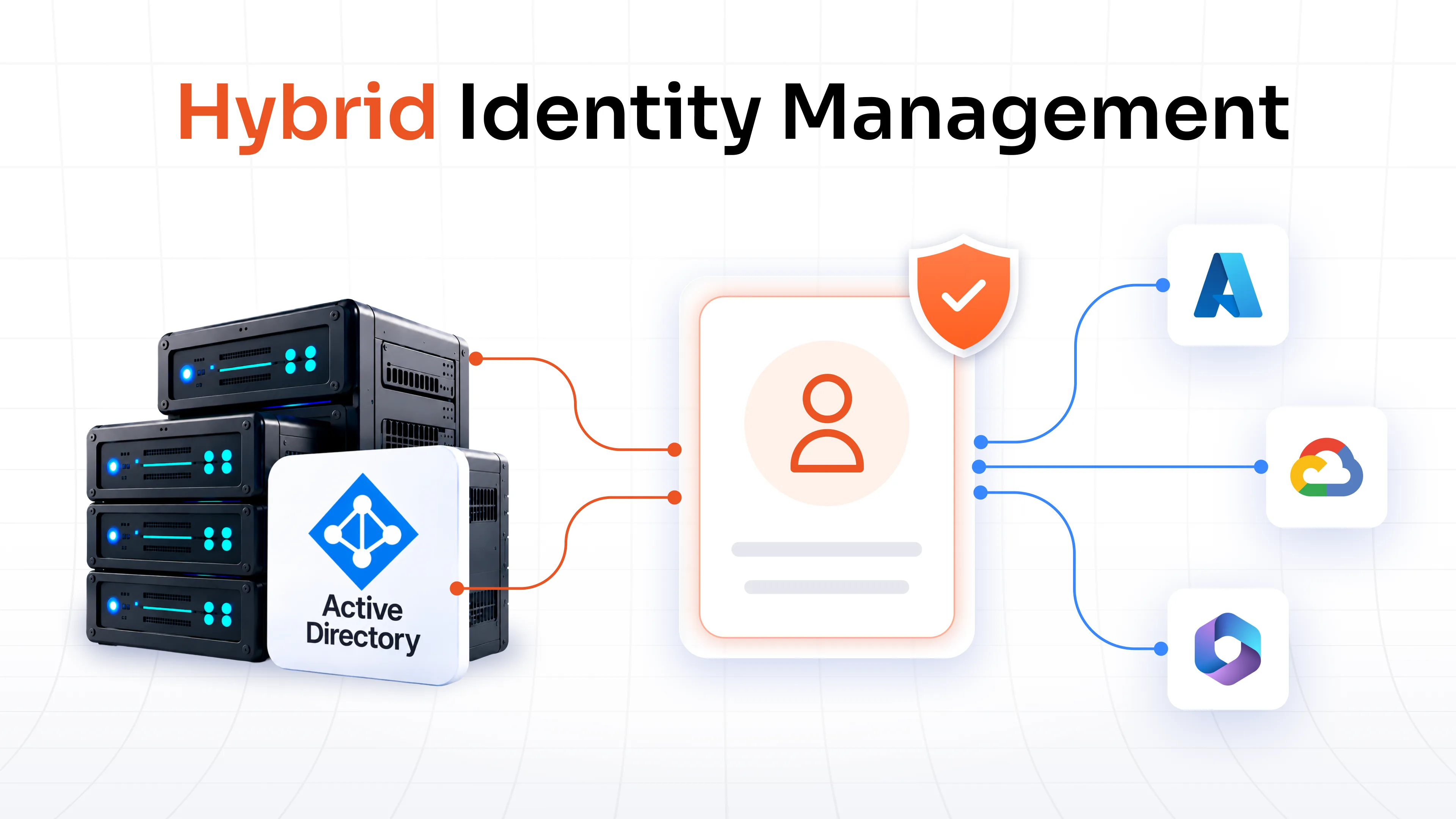
Cloud-only platforms like Okta and Microsoft Entra ID work fine when both companies already live in the cloud. They start to strain the moment the acquired company runs anything on-premise, which happens more often than the cloud-first crowd likes to admit: regulated industries, older infrastructure, government contracts, all of it.
That mismatch shows up fast. An acquirer running fully in the cloud can hit friction the moment the target's finance system, or its regulated workloads, sit behind an on-premise directory that isn't going anywhere soon. Forcing a full migration to close that gap on a deal timeline usually backfires: broken authentication, delayed Day 1 access, a security team firefighting instead of governing.
| Scenario | Recommended Deployment Model |
|---|---|
| Both organizations are cloud native | Cloud IAM with SSO federation between IdPs |
| Acquirer is cloud, target is on-prem | Hybrid IAM: Cloud-to-on-prem federation with phased migration |
| Both organizations run regulated on-prem workloads | On-prem or hybrid IAM with air-gapped environment support |
| M&A involves the government or the defence sector | On-prem IAM with full data residency control |
Platforms like miniOrange run cloud, on-premise, and hybrid, so the deployment model follows the deal instead of forcing the deal to follow the platform. That matters most in the scenarios where a forced cloud migration would blow through the Day 1 timeline before you've even started on access reviews.
How miniOrange Supports IAM Integration Post-Merger
miniOrange is built to handle the integration parts of IAM for mergers and acquisitions that trip up most platforms: multiple identity providers running at once, deployment models that don’t match between the two organizations, and a compliance footprint that just got more complicated.
- SSO federation across multiple identity providers, so users authenticate without a forced Day 1 migration
- SCIM provisioning that onboards new identities automatically as HR data flows in
- Access request management and access review workflows built for large, fast-moving user bases
- Flexible deployment across cloud, on-premise, and hybrid environments, so the platform adapts to the deal instead of the other way around
- Privileged access controls for the accounts that matter most during the integration window
- Compliance and audit reporting that covers both organizations from one dashboard
- Non-human identity governance, so service accounts and API keys don't get lost in the shuffle
miniOrange works with over 30,000 organizations across various countries. Whatever identity setup the target company is running, there's a good chance we've already integrated something like it.
FAQs
What is IAM integration in a merger or acquisition?
It's combining two companies' identity systems, directories, access policies, and authentication workflows into one working setup. Done right, it covers Day 1 access for every employee and closes the post-merger security risks that come from inherited accounts and mismatched permissions.
Why is IAM for mergers and acquisitions so often overlooked?
Deal teams prioritize financial and legal diligence, and IAM gets treated as an IT task instead of a security function. The consequences don't usually show up until weeks or months after close, by which point the standing access problem is already baked in.
How long does IAM integration take post-merger?
Full IAM integration post-merger, the point where both organizations run on one governance model, typically takes 3 to 12 months, depending on org size, system complexity, and how many deployment models you're bridging. But larger, more regulated organizations tend to land toward the longer end of that range, since every rationalized role needs a compliance sign-off before it ships.
What happens to orphaned accounts during a merger?
They carry over. Nobody deliberately keeps them active; they just don't get flagged unless someone runs a pre-merger audit specifically looking for them. That audit is the fix, and it's cheap compared to what an exploited dormant account costs later.
Should we migrate to a single identity provider or federate during M&A?
Federate first. It's the fastest path to a working Day 1 without forcing a rebuild under deadline pressure. Migration is the long-term identity consolidation for M&A, but it belongs in Phase 3 or 4, not Phase 2.
How does miniOrange handle IAM integration for hybrid M&A scenarios?
SSO federation across multiple identity providers, SCIM provisioning, access reviews, and deployment that runs in the cloud, on-premise, or both. No forced Day 1 cutover, no waiting on a migration that isn't ready.
Does tighter access control slow employees down after a merger?
A little, and that's normal. Least-privilege access and MFA add a step compared to the free-for-all some acquired employees are used to. That friction is the tradeoff for closing the exact gaps attackers look for during the integration window, and it settles once people adjust.
Does IAM integration cover data backup, device security, and the rest of M&A IT integration?
No, and it shouldn't try to. Security integration during M&A is a bigger initiative covering devices, networks, applications, and data, not just identity. This guide focuses specifically on the IAM piece of that picture because it's the piece that moves fastest and gets the least attention.
Leave a Comment