
An employee leaves the company, but their SaaS account remains active. A contractor still has access to a project workspace months after the contract ends. Someone changes departments and keeps permissions from their previous role.
Meanwhile, IT is managing identities, human and non-human across multiple directories, cloud platforms, SaaS applications, and third-party tools.
Individually, these accounts may seem insignificant. Across hundreds or thousands of applications and users, they create a much larger problem: identity sprawl. The organization may have no reliable way to determine how many identities exist, who owns them, what access they have, or whether that access is still justified.
This blog explains how identity sprawl develops, the security and compliance risks it creates, and the role of identity security and enterprise identity management in keeping identities visible, governed, and under control.
What Is Identity Sprawl?
Identity sprawl is the uncontrolled growth and distribution of digital identities, accounts, credentials, permissions, and authentication methods across an organization's technology environment.
An employee might have one identity in Active Directory, another account in a cloud application, a separate SaaS login, elevated access to a development platform, and an account created by a third-party service. When these identities are created and managed independently, the organization may struggle to maintain a complete and accurate view of access.
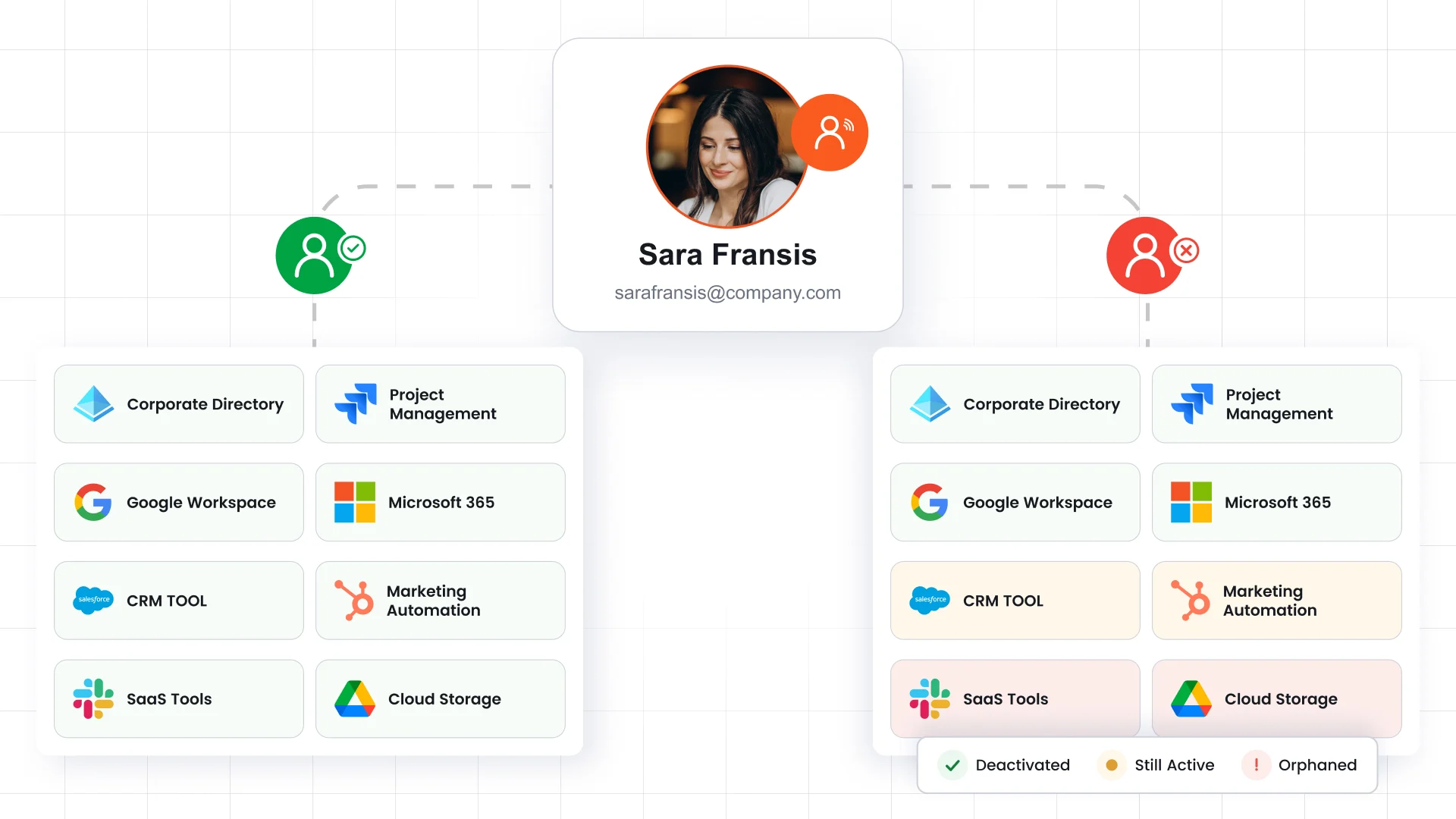
Let’s put this into perspective with an analogy:
Imagine giving an employee a separate ID card for every system they use. Each card has its own permissions and expiration date, and there is no single record showing which cards they hold or whether they are still needed. As the employee changes roles or leaves the organization, some cards may continue to provide access because they were never updated or deactivated.
Digital identities can accumulate in much the same way, creating a growing collection of accounts and permissions that are difficult to track and manage.
For enterprise identity management, the objective is to create a consistent way to discover, govern, provision, modify, and remove identities and access across this environment.
Why Identity Sprawl Happens
Identity sprawl rarely results from one decision. It typically develops as organizations add applications, users, infrastructure, and business processes over time. Weak processes around identity lifecycle management can then allow these identities to accumulate.
Cloud and SaaS Growth
Cloud platforms and SaaS applications make it easy for teams to adopt new tools without extensive infrastructure work. A department can deploy a business application within hours, creating new identities and access requirements in the process.
This flexibility creates a challenge for cloud identity management and SaaS identity management. If applications are onboarded independently, identities may exist outside the organization's central directory or access controls. IT teams may also have limited visibility into which applications employees are using and what permissions those applications receive.
Multiple Identity Providers
Organizations often operate several identity providers because of legacy infrastructure, acquisitions, regional requirements, or application-specific authentication.
One business unit may use Active Directory, another may use a cloud identity provider, while a recently acquired company continues using a separate directory. Without synchronization and centralized governance, the same individual can end up with multiple identities across the enterprise.
Manual User Provisioning
Manual account creation is another major contributor to identity sprawl. When administrators create accounts individually, processes become dependent on tickets, spreadsheets, emails, and human intervention.
As the number of applications grows, keeping those accounts aligned with employee status becomes increasingly difficult. Manual provisioning also creates inconsistencies in naming, permissions, and access approval.
Poor Offboarding
Offboarding is particularly important because identities can remain active after an employee, contractor, or partner leaves.
A delayed or incomplete offboarding process can leave accounts, API credentials, tokens, VPN access, and application permissions active. These accounts may eventually become forgotten identities that have no legitimate business owner.
Mergers and Acquisitions
Mergers and acquisitions often bring different directories, applications, naming conventions, authentication mechanisms, and access policies into a single organization.
Until those environments are consolidated, duplicate identities and disconnected access records can persist. The resulting complexity makes it harder to determine which accounts should remain active and which should be retired.
Shadow IT
Employees may adopt applications without involving IT, particularly when they can register using a corporate email address or create accounts through self-service.
This shadow IT introduces identities that security teams may not know about. Even when the application itself is legitimate, unmanaged access can create gaps in visibility and governance.
Third-party Vendors
Partners, contractors, consultants, and managed service providers may require access to internal systems and SaaS platforms. These external identities often follow different onboarding and offboarding processes than employees.
Without clear ownership and expiration controls, vendor accounts can remain active beyond the duration of the engagement.
Common Signs Your Organization Has Identity Sprawl
The presence of multiple identities does not automatically indicate a problem. The bigger concern is whether those identities can be identified, governed, and retired when they are no longer required.
Common indicators of identity sprawl include:
- Employees maintaining multiple credentials for the same business function
- Duplicate user identities across directories or applications
- Dormant or inactive accounts that have no current business purpose
- Users retaining excessive permissions after changing roles
- Manual account creation across multiple applications
- Delays in access requests and approvals
- Inconsistency in MFA policies across applications
- Unused SaaS licenses assigned to inactive users
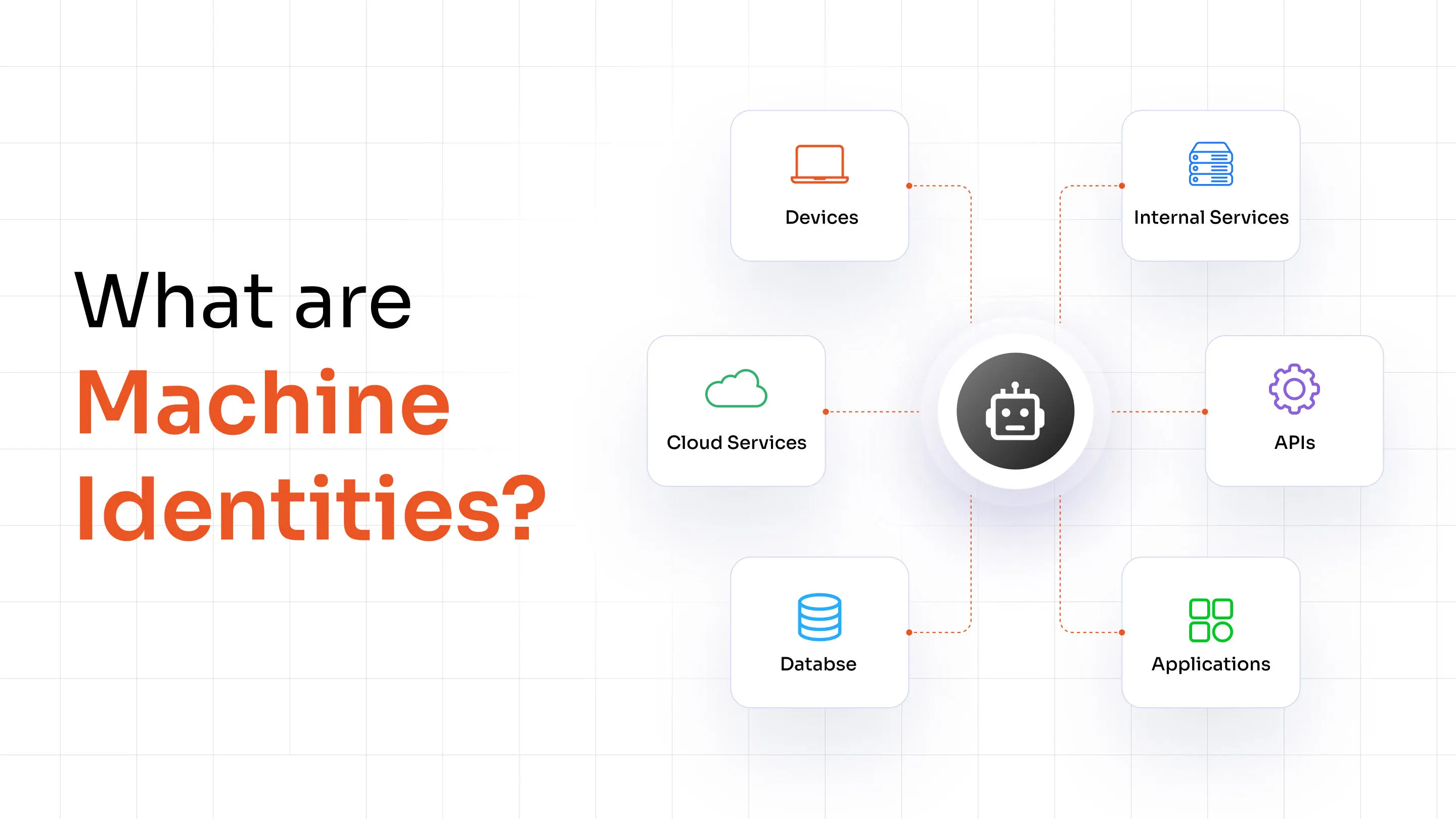
- Limited visibility into service accounts and non-human identities
- Accounts that lack a clearly defined owner
The presence of several of these indicators suggests that existing identity management processes may not scale with the organization's environment.
One of the more serious indicators is the presence of orphan accounts. These are accounts that remain active without a current user, business owner, or valid reason for access. When organizations cannot reliably identify, review, and retire such accounts, it is a strong sign that identity sprawl has moved beyond an administrative inconvenience and become an identity security concern.
Risks of Identity Sprawl
The security impact of identity sprawl comes from the gap between the identities that exist and the identities the organization actively governs. Every unmanaged account, excessive permission, or forgotten credential can increase identity risk.
Increased Attack Surface
Every active identity can represent a potential path into an organization's systems. Attackers frequently target credentials because compromised accounts can provide legitimate-looking access without immediately triggering traditional security controls.
As identities spread across applications, directories, APIs, and cloud platforms, the number of accounts and authentication points that security teams must protect increases.
Orphan Accounts
Orphan accounts are accounts that remain active even though the original user is no longer associated with the organization, application, or business process.
They can result from incomplete offboarding, employee transfers, forgotten service accounts, or third-party access that was never removed. Because these accounts may receive little attention, attackers can exploit them as low-visibility access paths.
Privilege Creep
Privilege creep occurs when users accumulate access over time without losing permissions that are no longer necessary.
For example, an employee may move from an individual contributor role to a management position and later join a privileged project. If previous access is never reviewed or removed, the resulting account can have far more privileges than the employee's current responsibilities require.
Applying least privilege access helps reduce this exposure by limiting permissions to what users need for their roles.
Compliance Failures
Regulated organizations need to demonstrate that access is controlled, reviewed, and removed appropriately. Disconnected identities make it harder to produce reliable evidence for audits.
When organizations cannot explain who has access, why access exists, or when access was last reviewed, they may face audit findings and additional remediation work.
Productivity Loss
Identity sprawl also affects employees and IT teams. Users may need to manage multiple credentials, request access repeatedly, or wait for administrators to create accounts manually.
IT teams, meanwhile, spend time troubleshooting duplicate accounts, resetting passwords, reviewing tickets, and reconciling disconnected identity records.
Higher IT Costs
Unused accounts can translate directly into wasted SaaS licenses and administrative overhead. Organizations may continue paying for application seats assigned to inactive users while IT teams maintain unnecessary accounts and integrations.
Over time, these operational costs make identity sprawl a business efficiency issue as well as a security concern.
How Identity Sprawl Impacts Compliance
Identity sprawl creates compliance challenges when organizations cannot maintain a reliable view of who has access to systems and data. Duplicate accounts, dormant users, excessive permissions, and inconsistent authentication controls can make it difficult to prove that access is properly authorized and regularly reviewed.
For this reason, identity governance and access governance are important parts of a compliance strategy. They help organizations establish consistent processes for granting, reviewing, modifying, and removing access. Regular access reviews can then verify that permissions still match a user's role and business responsibilities.
Identity and access controls are relevant across several major regulations and security frameworks:
- SOX: Organizations need appropriate controls over access to systems that support financial reporting and related processes.
- HIPAA: Requires safeguards to limit access to electronic protected health information to authorized users.
- PCI DSS: Requires organizations to control access based on business need and maintain unique user identification and authentication.
- ISO 27001: Includes controls for managing user access and restricting access to information and systems.
- NIST: Provides guidance covering account management, least privilege, access enforcement, and disabling or removing unnecessary accounts.
- GDPR: Requires appropriate technical and organizational measures to protect personal data and the systems used to process it.
The requirements differ across each framework, but the underlying expectation is similar: organizations should know who has access, ensure that access is appropriate, review it periodically, and remove it when it is no longer required. Identity sprawl makes each of these activities harder when identities are scattered across disconnected systems.
Identity Sprawl vs Identity Silos
| Factor | Identity sprawl | Identity silos |
|---|---|---|
| Definition | Uncontrolled growth of identities, accounts, credentials, and permissions across the environment | Identity data and authentication systems isolated within separate departments, applications, or platforms |
| Cause | Rapid application growth, manual processes, poor offboarding, shadow IT, and fragmented access management | Separate directories, business units, legacy systems, acquisitions, or application-specific identity stores |
| Business impact | Increased security exposure, duplicate accounts, excessive access, higher costs, and administrative complexity | Limited visibility, inconsistent policies, duplicated identity data, and difficult cross-system access management |
| Solution | Centralized governance, automation, lifecycle controls, identity analytics, and continuous monitoring | Directory integration, synchronization, federation, centralized identity management, and common access policies |
An organization can experience both problems at the same time. Identity silos can create the conditions for identity sprawl because disconnected systems make it harder to manage identities consistently.
How to Detect Identity Sprawl
Before implementing identity governance controls, organizations need to understand what identities and access already exist. Detection should cover employees, contractors, partners, service accounts, privileged identities, and application accounts.
Here’s what a practical assessment should include:
Build an identity inventory. Identify accounts across directories, SaaS applications, cloud platforms, databases, endpoints, and other critical systems. Record the account owner, source, status, role, and access level where possible.
Perform access reviews. Compare current access with job responsibilities and identify permissions that no longer have a clear business justification.
Review directory synchronization. Check whether identities are synchronized consistently between authoritative directories and downstream applications. Failed or incomplete synchronization can create duplicate or stale accounts.
Find unused accounts. Identify inactive, dormant, and expired accounts, particularly those with privileged or sensitive access.
Audit permissions. Look for excessive permissions, conflicting roles, inactive entitlements, and accounts with access that exceeds business requirements.
Use identity analytics. Analytics can help identify unusual access patterns, duplicate identities, dormant accounts, privilege anomalies, and other indicators of identity risk.
The goal is to create a reliable identity inventory that can be continuously updated rather than treated as a one-time audit exercise.
Best Practices to Prevent Identity Sprawl
Effective identity sprawl management depends on establishing consistent controls across the identity lifecycle. Organizations should focus on reducing duplicate identities, automating repetitive processes, and regularly validating whether access is still appropriate.
These IAM best practices can help keep identity environments manageable as applications, users, and access requirements grow.
Centralize Identity Management
Create a consistent identity foundation for employees, contractors, and other users. Applications should connect to an authoritative identity source wherever possible so that user information and access changes do not have to be managed independently in every system.
Automate User Provisioning
Use automated user provisioning to assign application access based on defined attributes such as role, department, or location. This reduces manual account creation and helps ensure that new users receive the right access from the start.
Automate Deprovisioning
The same process should work in reverse. Automated deprovisioning can remove access when a user leaves, changes roles, or no longer requires an application. This is critical for preventing dormant accounts from accumulating across the environment.
Implement Single Sign-On
Single Sign-On reduces the number of separate credentials users need to maintain by providing a centralized authentication experience across applications. It also gives security teams a common point for enforcing authentication policies and controlling application access.
Enforce Least Privilege
Review permissions against what users actually need to perform their current responsibilities. Applying least privilege access and removing outdated permissions helps prevent access from accumulating as employees move between roles, teams, and projects.
Regular Access Reviews
Make access reviews part of the identity lifecycle rather than treating them as an occasional audit exercise. Regular access reviews can identify unused applications, excessive permissions, inactive accounts, and access that no longer has a clear business justification.
Adopt Identity Governance
Use identity governance to formalize how access is requested, approved, reviewed, and revoked. Governance controls are particularly valuable in larger environments where access decisions are spread across multiple applications, departments, and administrators.
Enable SCIM
Use SCIM provisioning where supported to keep application accounts synchronized with the organization's identity source. This can automate account creation, updates, and deactivation without requiring administrators to repeat the same changes across individual applications.
Support Zero Trust
Apply Zero Trust principles so access decisions are based on identity, context, and policy rather than assumed trust. Combining strong authentication with least privilege and ongoing access evaluation helps limit what a compromised identity can reach.
How IAM Solutions Help Reduce Identity Sprawl
Identity sprawl grows when identity data and access decisions are scattered across applications, directories, and administrative systems. An IAM platform can bring these controls into a common layer, giving security and IT teams a clearer view of identities and reducing the manual reconciliation that fragmented environments require.
miniOrange takes this unified IAM approach by bringing authentication, lifecycle management, governance, provisioning, and privileged access into one platform. This gives organizations a central way to manage identities across applications while reducing duplicate accounts, stale access, and disconnected identity processes.
- Centralized authentication: SSO and multi-factor authentication (MFA) reduce the number of independent login systems teams need to manage.
- Consistent identity updates: Identity Lifecycle Management and SCIM carry identity changes across applications, reducing the risk of accounts being left behind when users join, change roles, or leave.
- Greater access visibility: Governance controls show who has access and why, making it easier to review and manage permissions.
- Stronger privileged access controls: Privileged Access Management helps isolate and control high-risk privileged identities.
- Support for legacy applications: Access Gateway can bring applications that do not fit neatly into a modern identity architecture under centralized authentication and access controls.
The result is greater control over the identity lifecycle, with fewer places for identities and permissions to become detached from their owners. For organizations dealing with complex application environments, this can mean less manual administration, faster access changes, better audit visibility, and a lower risk of unmanaged identities accumulating over time.
Conclusion
Every new application, employee, contractor, and cloud service can introduce another identity into the enterprise. Without the right controls, those identities gradually become harder to see, harder to govern, and harder to remove. That is what makes identity sprawl both a security concern and an operational challenge.
The answer is not to slow down adoption. It is to make identity a controlled part of that growth. Effective identity sprawl management combines centralized identity management with automation, continuous monitoring, and clear ownership of access. Identity governance provides the oversight needed to keep permissions justified, while automation ensures those decisions continue to be enforced as users join, change roles, or leave.
Ultimately, organizations need to know three things about every identity: who it belongs to, what it can access, and whether that access is still necessary. Making these questions part of everyday identity operations helps organizations reduce risk, strengthen compliance, and keep access under control as they scale.
FAQs
What is identity sprawl?
Identity sprawl is the uncontrolled growth and distribution of user accounts, credentials, permissions, and digital identities across an organization's applications, systems, directories, and cloud services. It can make visibility, access control, and account lifecycle management more difficult.
Why is identity sprawl a security risk?
Identity sprawl increases the number of identities and access paths an organization must protect. Dormant accounts, excessive permissions, duplicate identities, and inconsistent authentication controls can create additional opportunities for unauthorized access.
How do orphan accounts contribute to identity sprawl?
Orphan accounts are accounts that no longer have an active user or clear business owner. Because they can remain enabled after employees leave or access is no longer required, they can increase the organization's attack surface and make access reviews more difficult.
How does identity governance reduce identity sprawl?
Identity governance establishes controls for access requests, approvals, entitlement management, access certifications, segregation of duties, and lifecycle processes. These controls help organizations maintain visibility and ensure that access remains appropriate.
What tools help manage identity sprawl?
Organizations commonly use IAM and related technologies such as SSO, MFA, lifecycle management, SCIM, IGA, PAM, directory integration, and identity analytics. The right combination depends on the organization's applications, identity architecture, regulatory requirements, and access model.
What's the difference between identity sprawl and identity silos?
Identity sprawl refers to the uncontrolled expansion of identities and access across an environment. Identity silos refer to identity systems or identity data that operate separately and are difficult to manage centrally. Identity silos can contribute to identity sprawl by limiting visibility and synchronization.
About the Author

Content Writer
As a seasoned content specialist, Saloni Walimbe specializes in bridging the gap between intricate cybersecurity frameworks and the end-user. With extensive professional experience and a postgraduate degree in Marketing, she has a proven track record of navigating highly technical industries like IT and market research. At miniOrange, she focuses on creating streamlined, strategic narratives that simplify the complexities of the cybersecurity landscape, ensuring mission-critical information is both professional and easy to digest for a global audience.
Leave a Comment