Bamboo SAML Single Sign On (SSO) with PingFederate
Bamboo SAML app gives the ability to enable SAML Single Sign On for Bamboo Software. Bamboo Software is compatible with all SAML Identity Providers. Here we will go through a guide to configure SSO between Bamboo and your Identity Provider. By the end of this guide, users from your Identity Provider users should be able to login and register to Bamboo Software.
 Try it for free
Pre-requisites
To integrate your Identity Provider(IDP) with Bamboo, you need the following items:
- Bamboo should be installed and configured.
- Bamboo Server is https enabled (optional).
- Admin credentials are set up in Bamboo.
- Valid Bamboo Server Licence.
Download and Installation
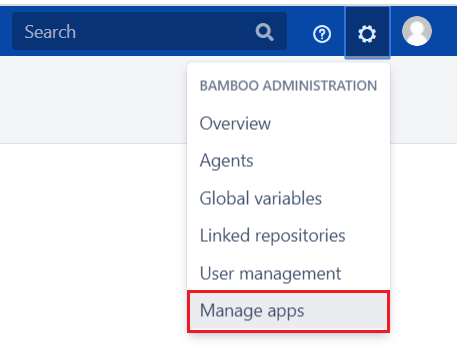
- Log into your Bamboo instance as an admin.
- Navigate to the settings menu and Click Manage Apps.
- Click Find new apps or Find new add-ons from the left-hand side of the page.
- Locate Bamboo SAML Single Sign On/SSO, SAML SSO via search.
- Click Try free to begin a new trial or Buy now to purchase a license for Bamboo SAML Single Sign On/SSO, SAML SSO.
- Enter your information and click Generate license when redirected to MyAtlassian.
- Click Apply license.
Step 1: Set Up PingFederate as Identity Provider
- Login to your Ping Federate user admin dashboard.
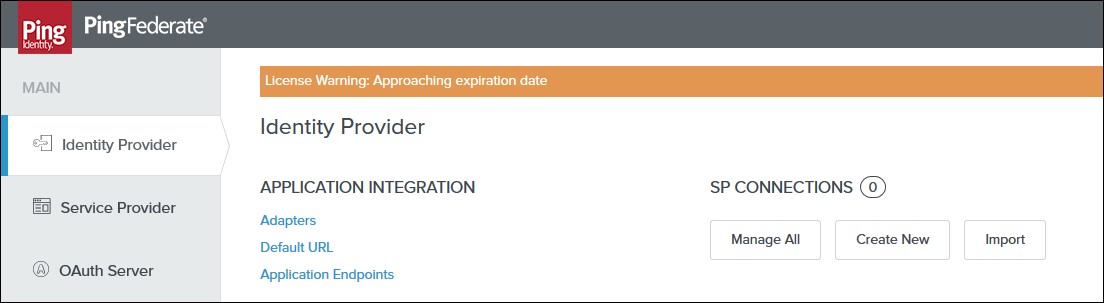
- Click on the Identity Provider in the left navigation menu.
- Under SP CONNECTION, click on Create New button.
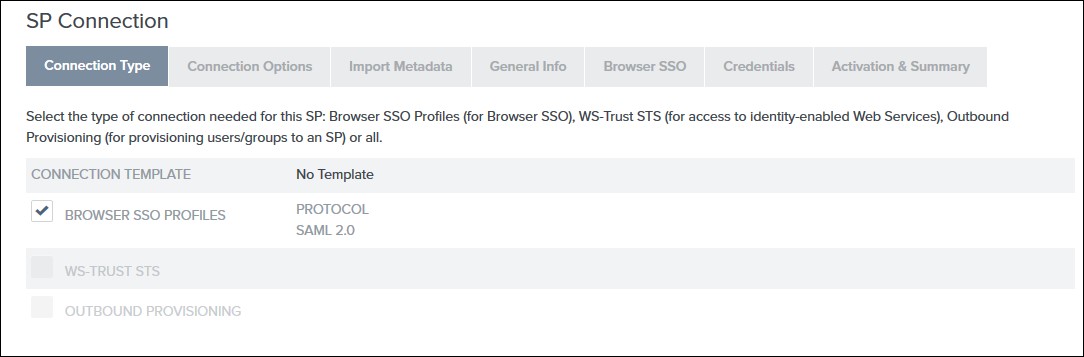
- Select the Browser SSO Profiles connection template on the Connection Type tab and click Next.
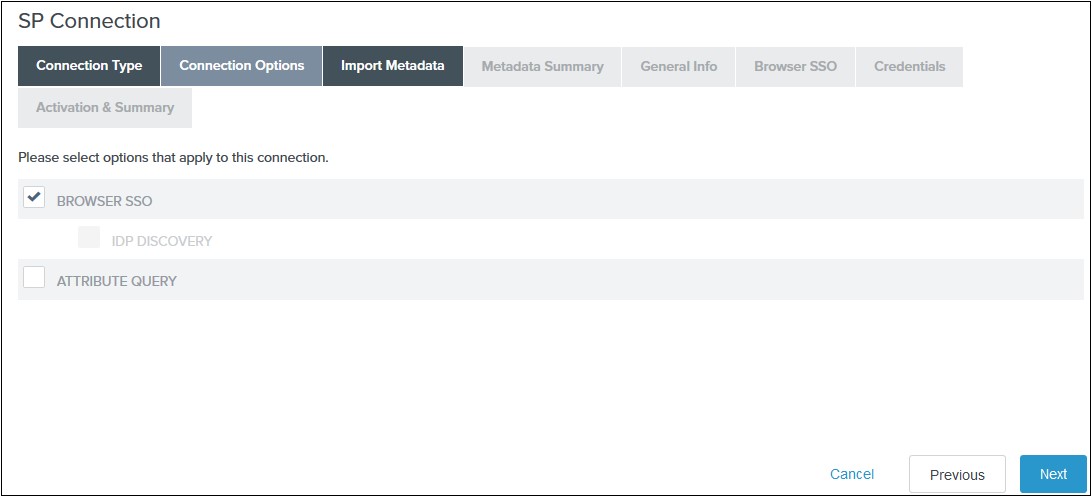
- Select Browser SSO on the Connection Options tab and click Next.
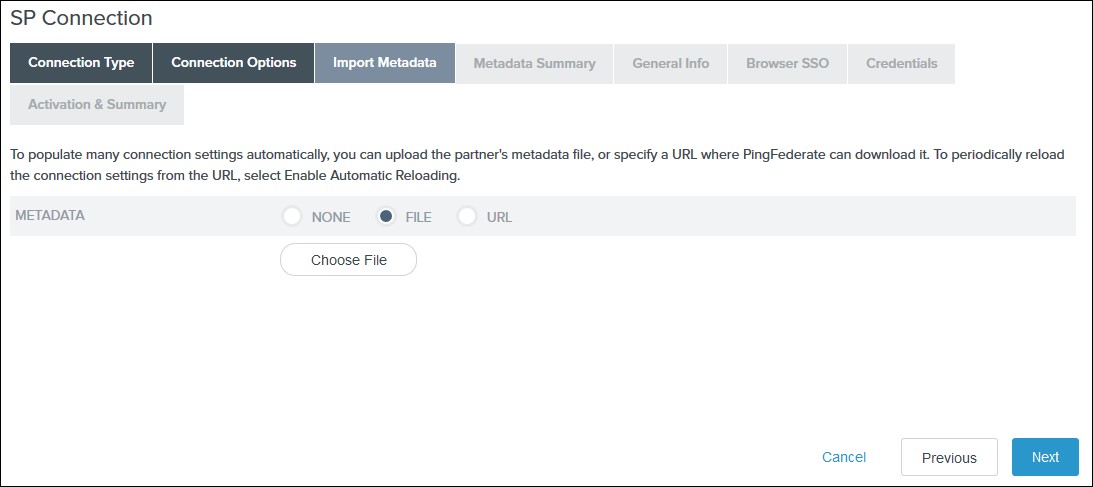
- Select File as the method for importing metadata and click Choose File to choose the miniOrange SSO plugin’s metadata on the Import Metadata tab or you can add SP Metadata information manually by selecting the None Option. You will need to copy SP Entity ID, SP ACS URL, and Certificate from Service Provider Tab.
- Review the information on the Metadata Summary tab and click Next.
- In the General Info tab ensure that the Service Provider’s Entity ID, Connection Name, and Base URL fields pre-populate based on the metadata. Click Next.
- Navigate to the Browser SSO tab and click on the Configure Browser SSO. You will be redirected to Browser SSO Setup wizard.
- Navigate to the Protocol Settings tab of the Browser SSO
wizard and click on the Configure Protocol settings.
-
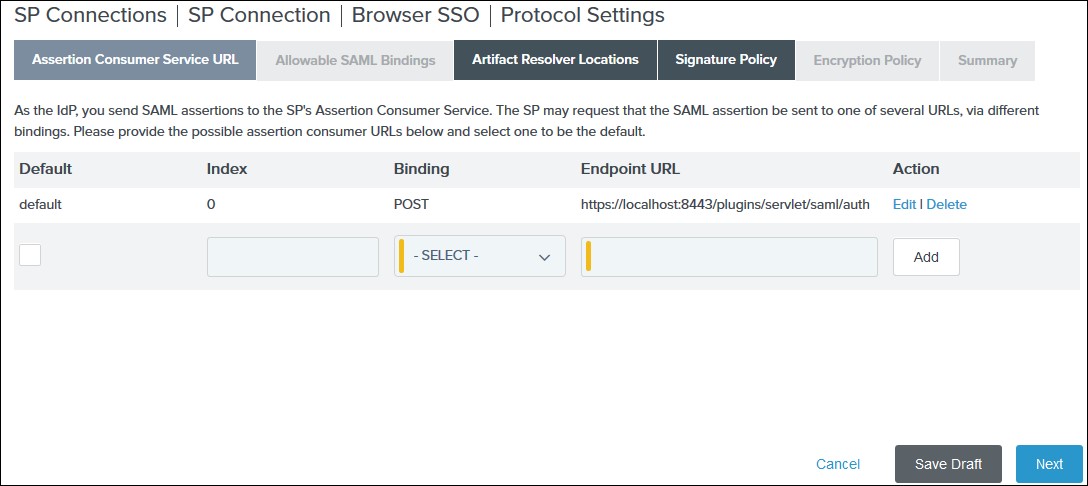
1) Select POST for Binding and specify the single
sign-on endpoint URL in the Endpoint URL field on
the Assertion Consumer Service URL. Click Next.
2) Select POST on the Allowable SAML Bindings tab and click Next.
3) Select your desired signature policies for assertions on the Signature Policy tab and click Next.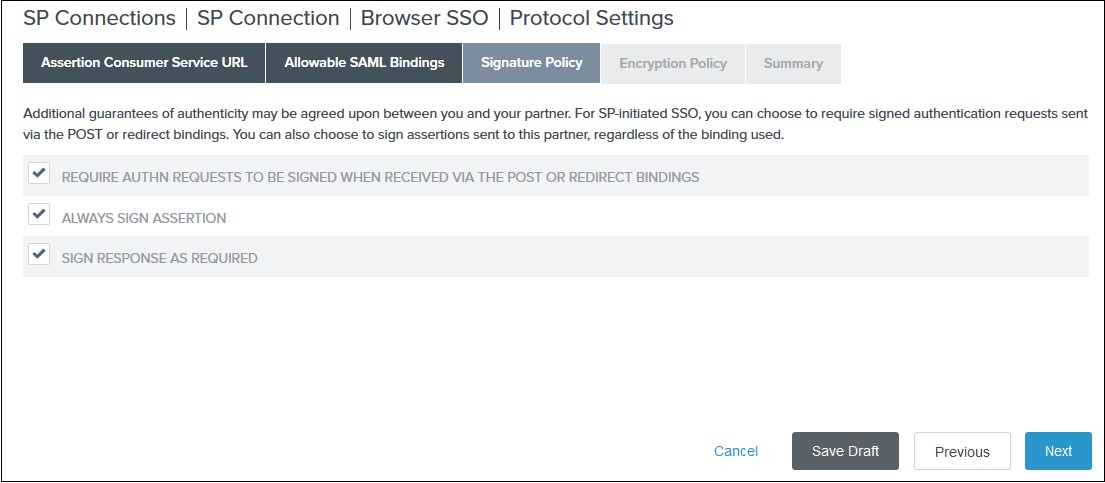
4) Select your desired encryption policy for assertions on the Encryption Policy tab and click Next.
5) Click Done on the Protocol Settings Summary tab.
6) Click Done on the Browser SSO Summary.
- Navigate to the Credentials and click on the Configure
Credentials. You will be redirected to the Credentials setup wizard.
-
1) Select the Signing Certificate to use with the Single Sign-On service
and select Include the certificate in the signature element in the
Digital Signature Settings tab. Click Done.
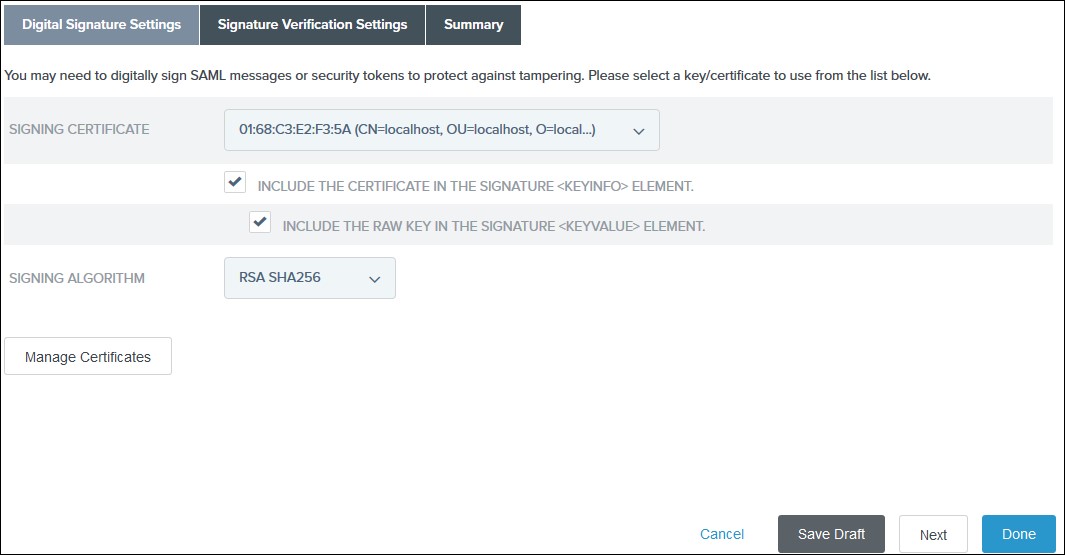
2) Click Done on the Summary.
3) Click Next on the Credentials.
- Select Active for the Connection Status on the Activation & Summary tab and click Save.
- Now, navigate to the Ping Federate User Admin dashboard Identity Provider.
- Click Manage All under SP Connections.
- Click Export Metadata for the desired service provider connection.
- Click Export on the Export & Summary tab and click Done.
All the information required to configure the Ping Federate as SAML IDP i.e. plugin’s metadata is given in the Service Provider Info tab of the miniOrange plugin.
-
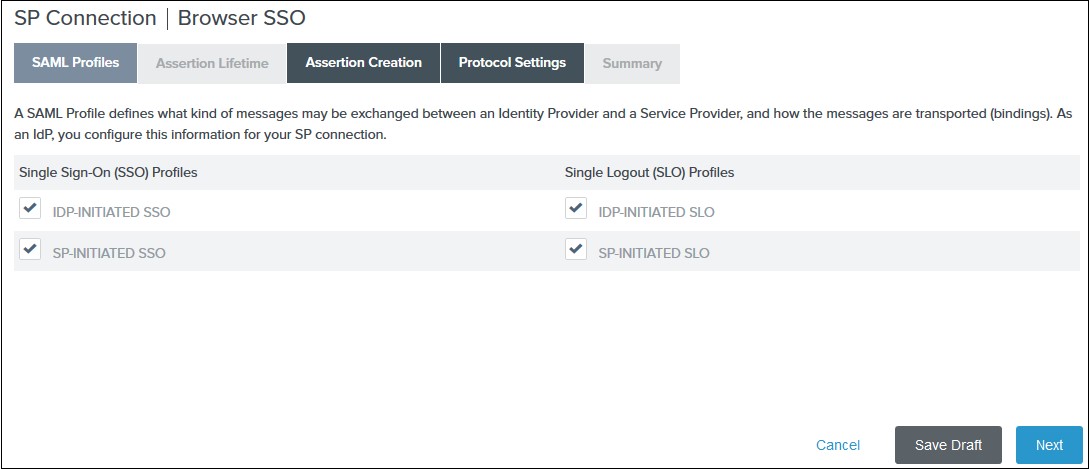
1) Select the IdP-Initiated SSO and SP-Initiated SSO options
on the SAML Profiles tab and click
Next.
2) Enter your desired assertion validity time from on the Assertion Lifetime tab and click Next. By default, it is configured 5 minutes for both. 3) Navigate to the Assertion Creation and click on the Configure Assertion Creation. You will be redirected to the assertion creation setup wizard.
-
I. In the Identity Mapping tab select STANDARD and click
Next.
II. Select a Subject Name Format for the SAML_SUBJECT on the Attribute Contract tab and click Next.
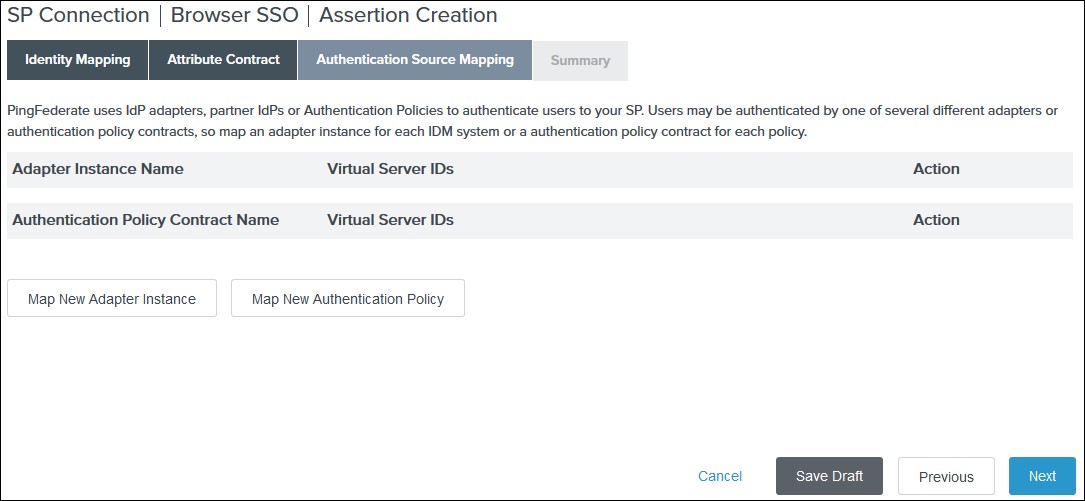
III. Click Map New Adapter Instance on the Authentication Source Mapping.
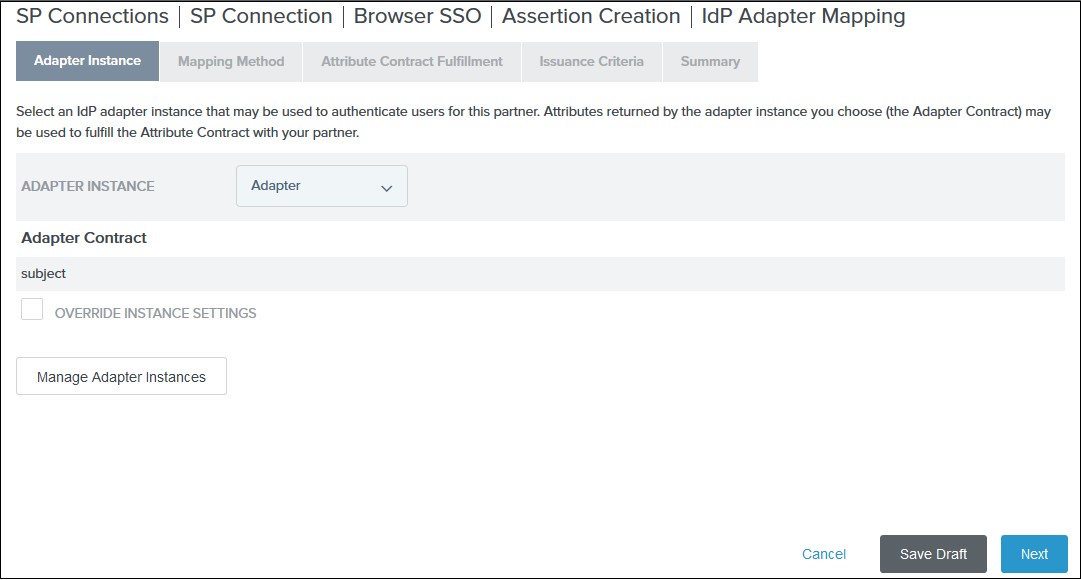
IV. Select an Adapter Instance and click Next. The adapter must include the user’s email address.
V. Select the Use only the adapter contract values in the SAML assertion option on the Mapping Method tab and click Next.
VI. Select your adapter instance as the Source and the email as the Value on the Attribute Contract Fulfilment tab and click Next.
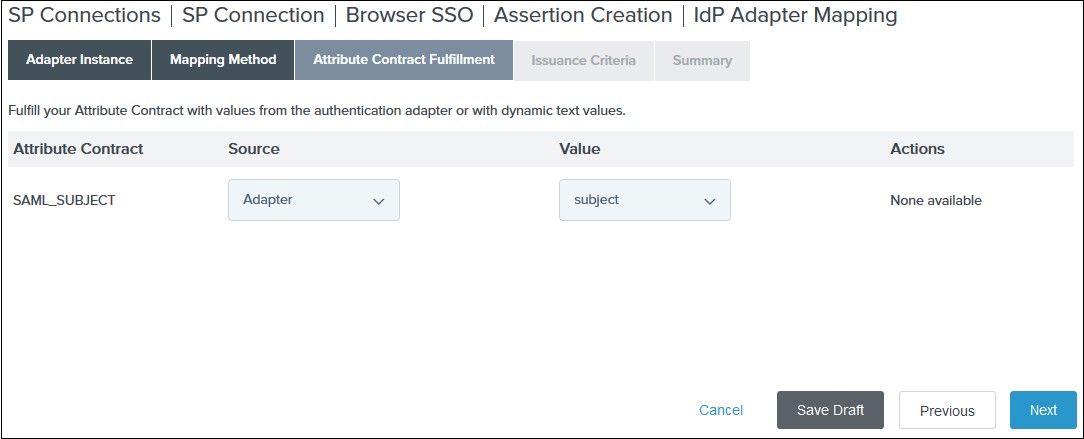
VII. (Optional) Select any authorization conditions you would like on the Issuance Criteria tab and click Next.
VIII. Click Done on the Summary. IX. Click Next on the Authentication Source Mapping tab. X. Click Done on the Summary tab. XI. Click Next on the Assertion Creation
Step 2: Set Up Bamboo as Service Provider
Configuring Single IDP
With the information you have been given by your IDP team, you can configure IDP settings in 3 ways:
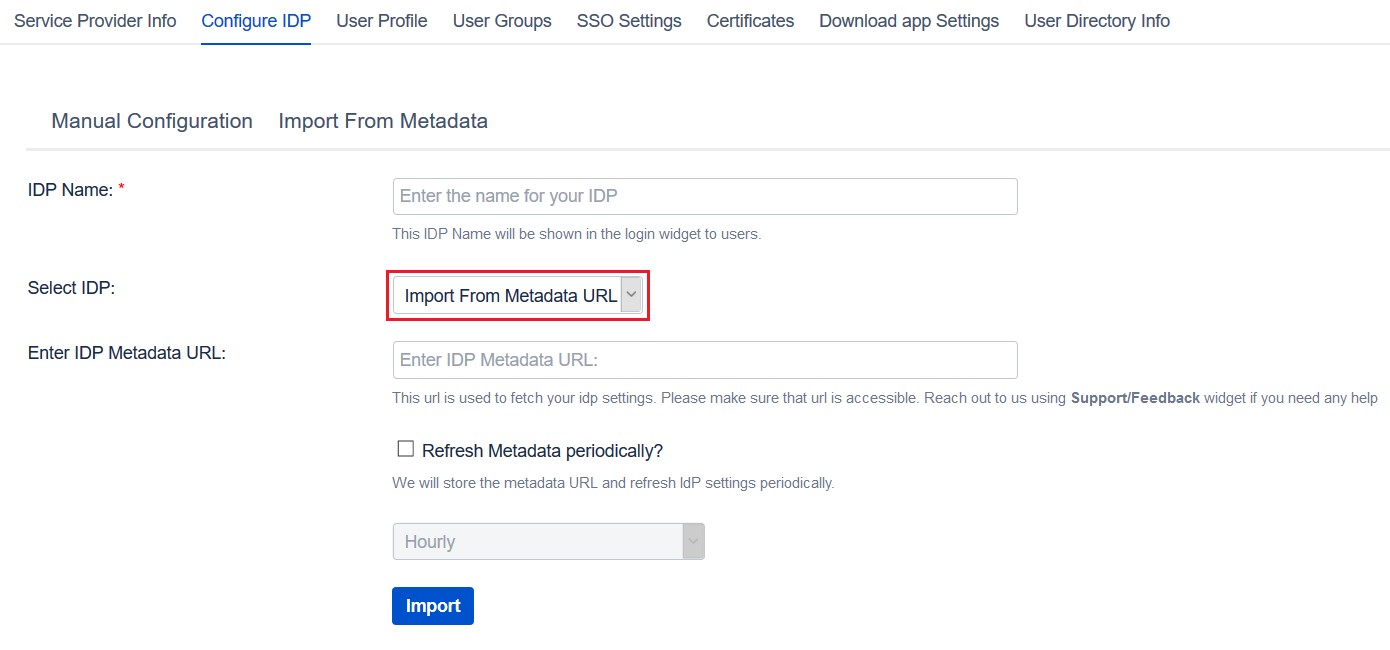
 A. By Metadata URL
- Click on Import from Metadata in Configure IDP tab.
- Select IDP: Import From Metadata URL
- Enter IDP metadata URL: Enter your metadata URL
- If your IDP changes certificates at intervals (Eg. Azure AD), you can select Refresh metadata periodically. Select 5 minutes for the best results.
- Click Import.
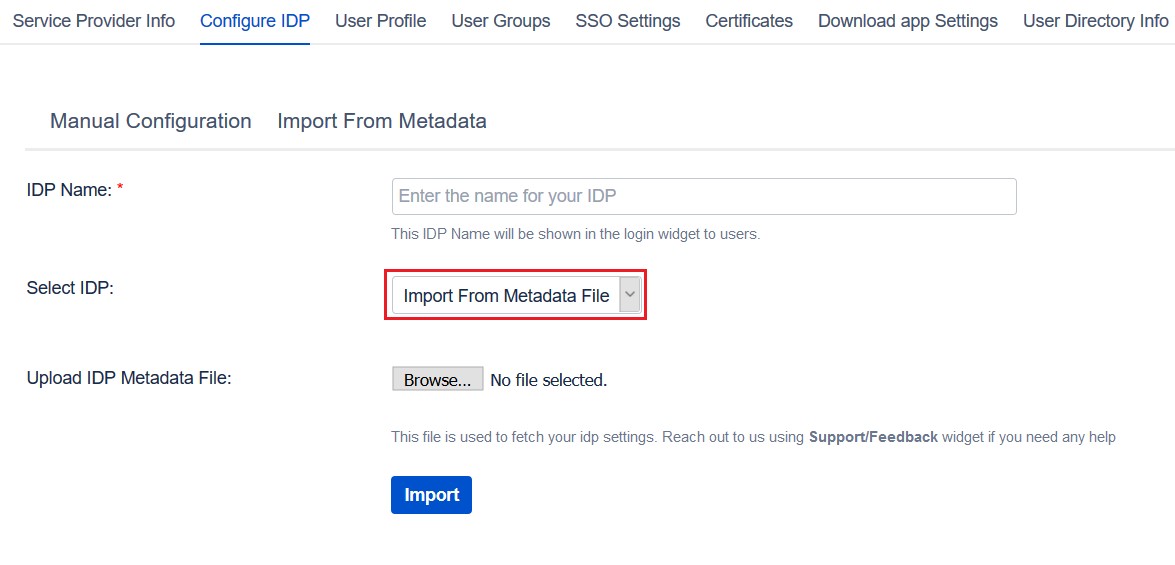
B. By Uploading Metadata XML File
- Click on Import from Metadata in Configure IDP tab.
- Select IDP: Import from Metadata File
- Upload metadata file.
- Click Import.
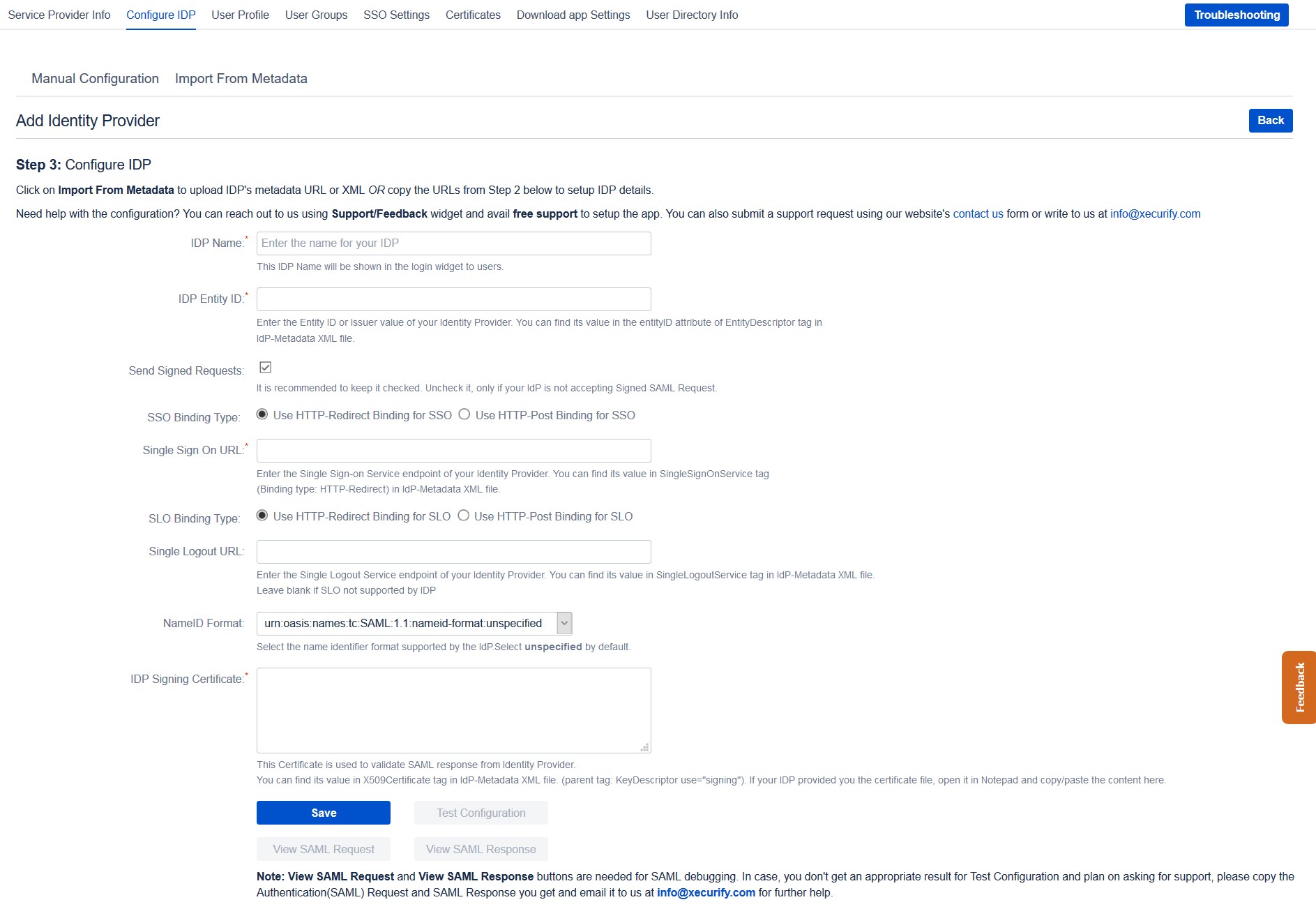
C. Manual Configuration
Go to Configure IDP tab and enter the following details:
- IDP Entity ID
- Single Sign On URL
- Single Logout URL
- X.509 Certificate
Configure New IDP
If you already have one IDP & you are looking to add Second IDP then you can do it by performing the following steps.
- Navigate to Configure IDP tab.
- Click on Add new IDP.
- It will present a blank form & you can configure new IDP using steps from Single IdP Setup.
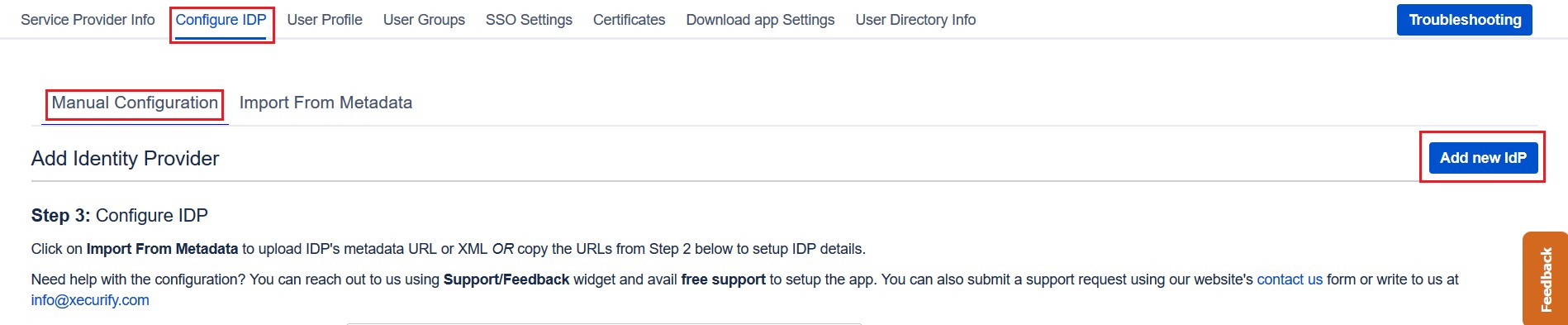
Configure multiple IDPs
If you have configured more than two IDPs then it will show you the list of IDP that you have configured with Bamboo.
Click on Add new IdP button for adding new IDP on Bamboo. The steps for adding new IDP will remain the same.
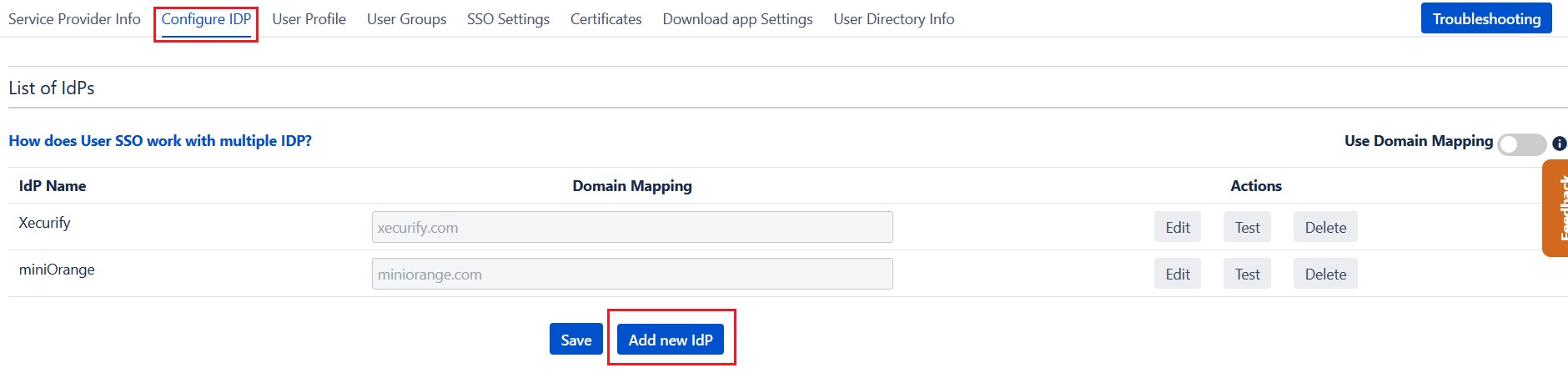
An operation that you can perform with List of IdPs page.
- Add / delete Identity Provider.
- Test Connection between bamboo & IdP by click on Test button for respective IDP.
- Edit the IdP configuration by clicking on the Edit button.
- You can allow an only specific set of users to access Bamboo by using Domain Mapping.
Single Sign-On with Multiple Identity Provider(IDP)
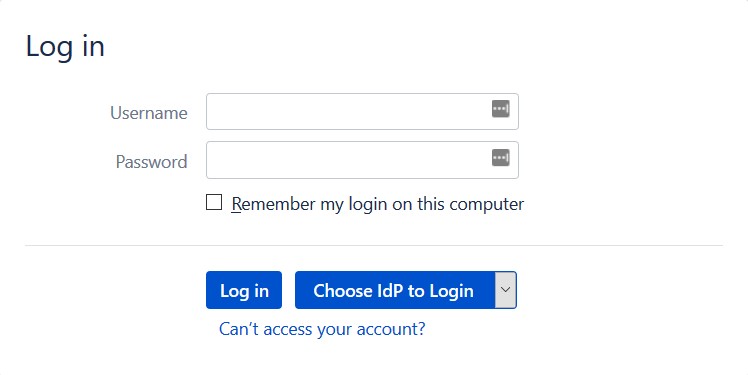
Select your IdP from the list. It will redirect you to selected IdP login page.
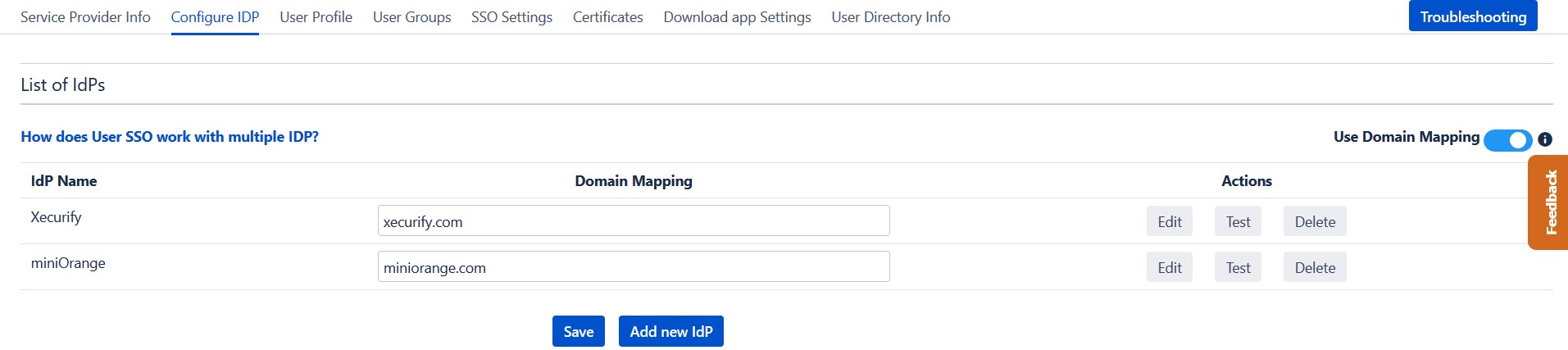
Configure Domain Mapping
- You can enable domain mapping using Use Domain Mapping option.
- Once enable it, you need add domain name against each IDP.
- After enabling Domain Mapping it allows SSO only for those users whose domain matches with the specified one.
Single Sign-On using Domain mapping
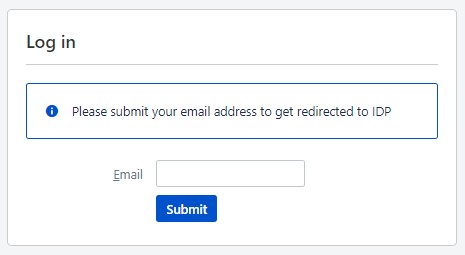
- Enter the user email address. It will check your domain name with the configured domain if it matches then it will redirect you to the respective Identity Provider Login page.
- This is how the login screen would appear after enabling domain mapping.
Step 3: Setting up Bamboo user profile attributes
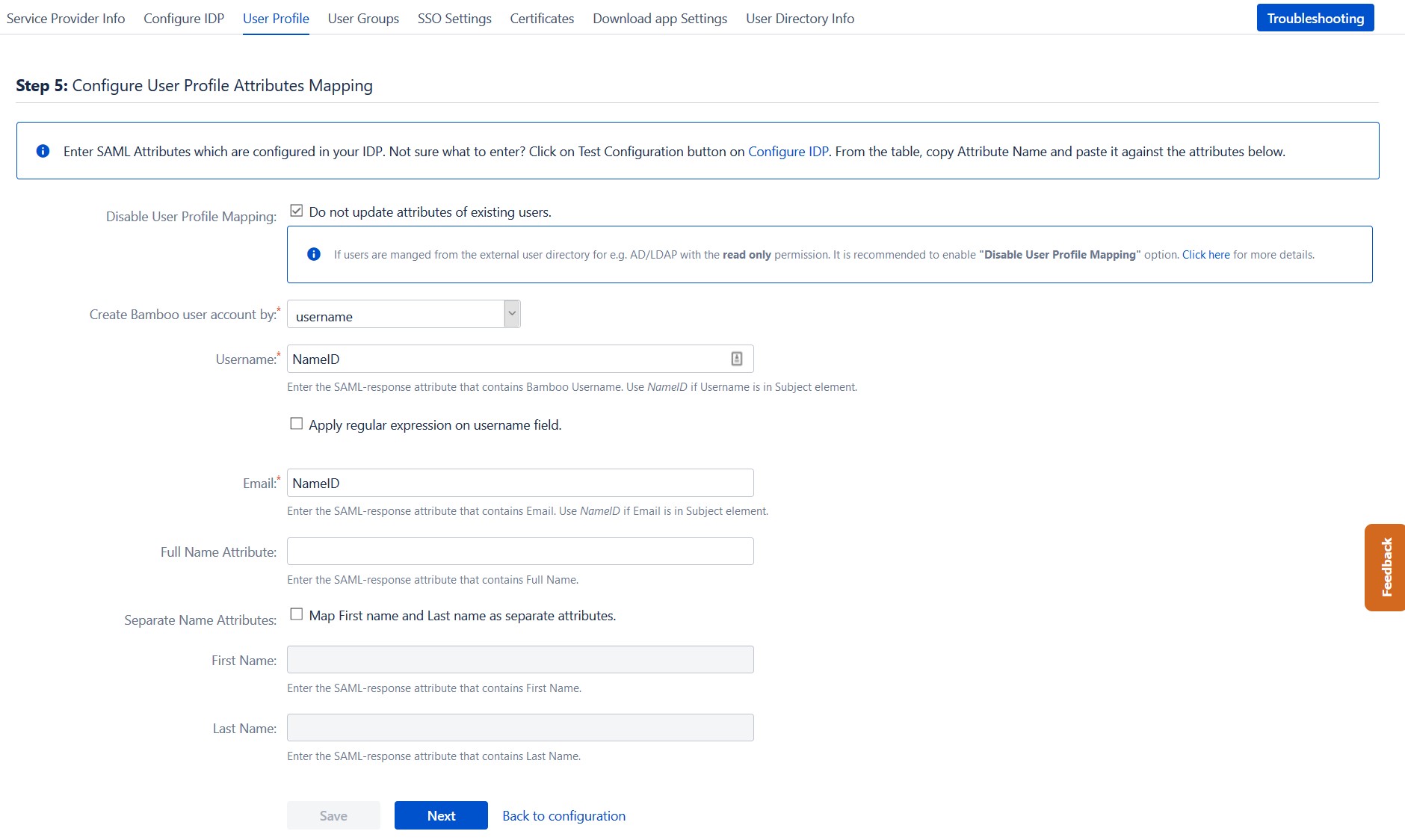
We will be setting up user profile attributes for Bamboo. If your users are stored in a directory that is Read Only, please check Disable Attribute Mapping in User Profile tab and follow steps given in Matching a User.
a. Finding correct attributes
- Go to Configure IDP tab. Scroll down and click on Test Configuration.
- You will see all the values returned by your IDP to Bamboo in a table. If you don't see value for First Name, Last Name, Email or Username, make the required settings in your IDP to return this information.
- Once you see all the values in Test Configuration, keep the window open and go to User Profile tab.
b. Setting profile attributes
- In this tab, fill the values by matching the name of the attribute. For instance, if the Attribute Name in the Test Configuration window is NameID, enter NameID against Username
- Setting up both Username and Email is required if you want to let users register. If you want existing users to the only login, configure the attribute using which you will match the user in Bamboo.
c. Matching a User
When the user logs into Bamboo, one of the user's data/attribute coming in from the IDP is used to search the user in Bamboo. This is used to detect the user in bamboo and log in the user to the same account.
- Go to User Profile tab.
- Select Username or Email for Login/Search Bamboo user account by.
- Enter the attribute name from IDP which corresponds to Username or Email using Finding Correct Attributes
Step 4: Assigning groups to users
We will be setting up user group attributes for Bamboo. If your users are stored in a directory that is Read Only, please check Disable Group Mapping in User Groups tab and skip to set default group.
4.1 Setting default group
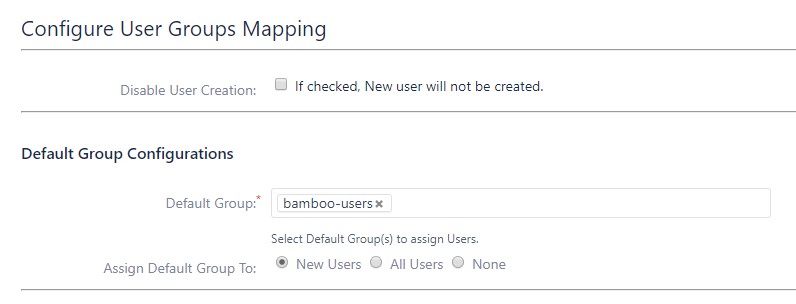
- Select the users' Default Group in the tab User Groups. If no group is mapped, users are added by default to this group.
-
You can enable default groups for All Users or
New Users using the option. Select
None if you don't want to assign any default group to
SSO users. Using the option
Enable Default Groups for.
4.2 Finding Group Attribute
- Just like we found attribute name for user profile attributes, we find group attribute.
- Go to Configure IDP tab. Scroll down and click on Test Configuration.
- You will see all the values returned by your IDP to Bamboo in a table. If you don't see value with groups, make the required settings in your IDP to return group names.
- Once you see all the values in Test Configuration, keep the window open and go to User Groups tab.
- Enter the attribute name of group against Group Attribute.
Check Disable Group Mapping option if you don't want to update groups of existing users.
4.3 Group Mapping
Group Mapping can be done in two ways:
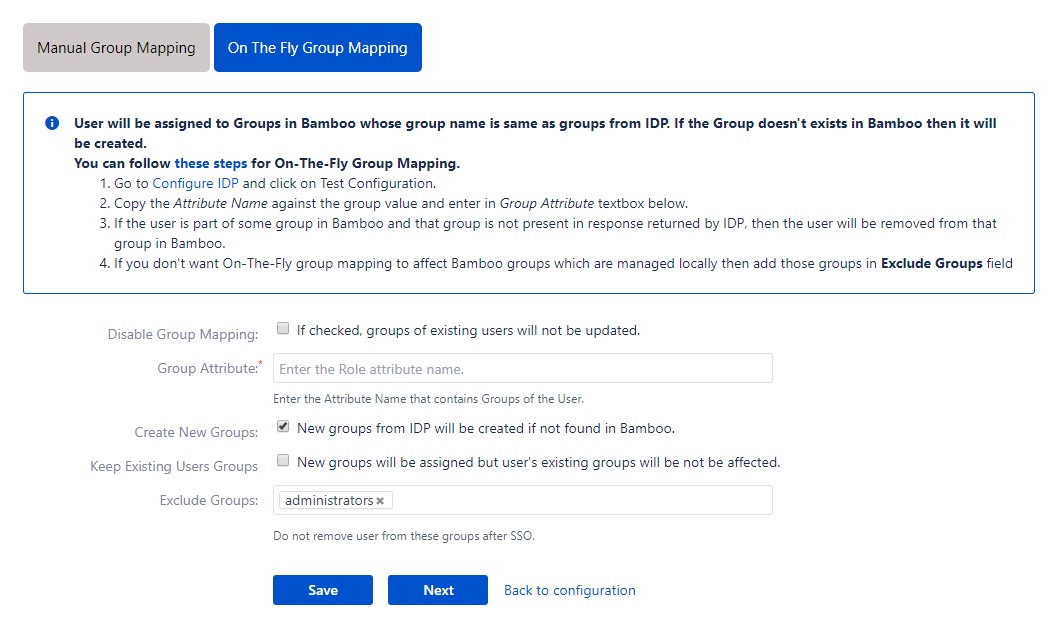
- Manual group mapping: If the names of groups in Bamboo are different than the corresponding groups in IDP, then you should use Manual group mapping.
- On-The-Fly group mapping: If the names of groups in Bamboo and IDP are same, you should use On-The-Fly group mapping.
I. Manual Group Mapping
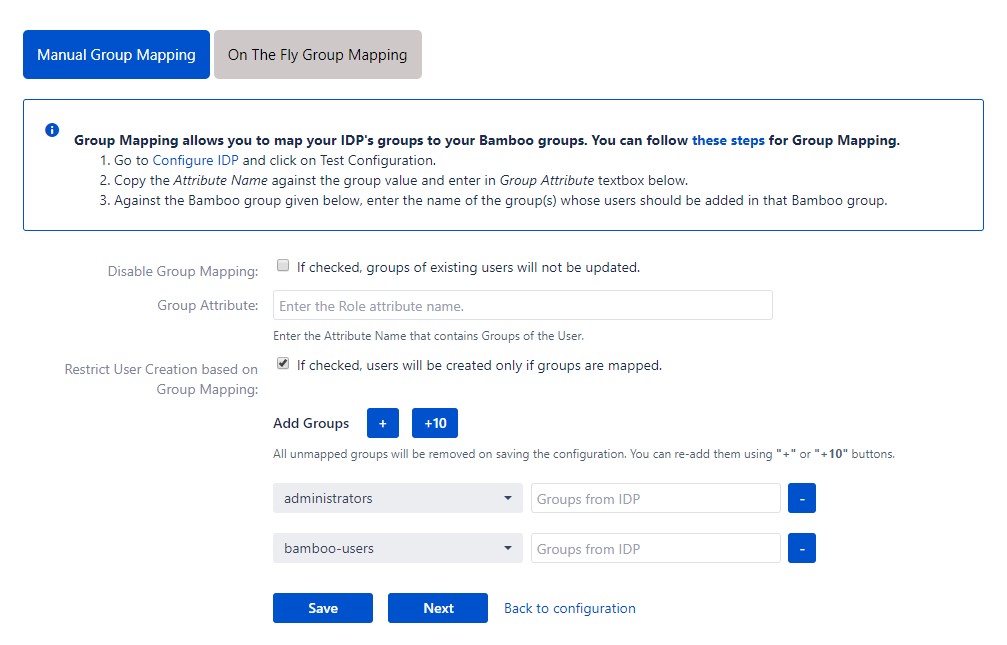
- Check Restrict User Creation Based on Group Mapping option if you want new users to be created only if at least one of the user's IDP groups is mapped to a group in the application.
- For mapping, first select a Bamboo group from the dropdown which lists all groups present in Bamboo and then enter the name of the IDP group to be mapped in the textbox beside
- For example, if you want all users in 'dev' group in IDP to be added to bamboo-users, you will need to select bamboo-users from the dropdown and enter 'dev' against bamboo-users.
- Use '+1' and '+10' buttons to add extra mapping fields.
- Use '-' button next to each mapping to delete that mapping.
II. On-The Fly Group Mapping
- Check Create New Groups option if you want new groups from IDP to be created if not found in Bamboo.
- If the user is part of some group in Bamboo and that group is not present in the SAML response returned by IDP, then the user will be removed from that group in Bamboo.
-
If you don't want On-The-Fly group mapping to affect
Bamboo groups which are managed locally then add those groups in
Exclude Groups field.
Step 5: SSO Settings
The settings in SSO Settings tab define the user experience for Single Sign On.
a. Sign In Settings
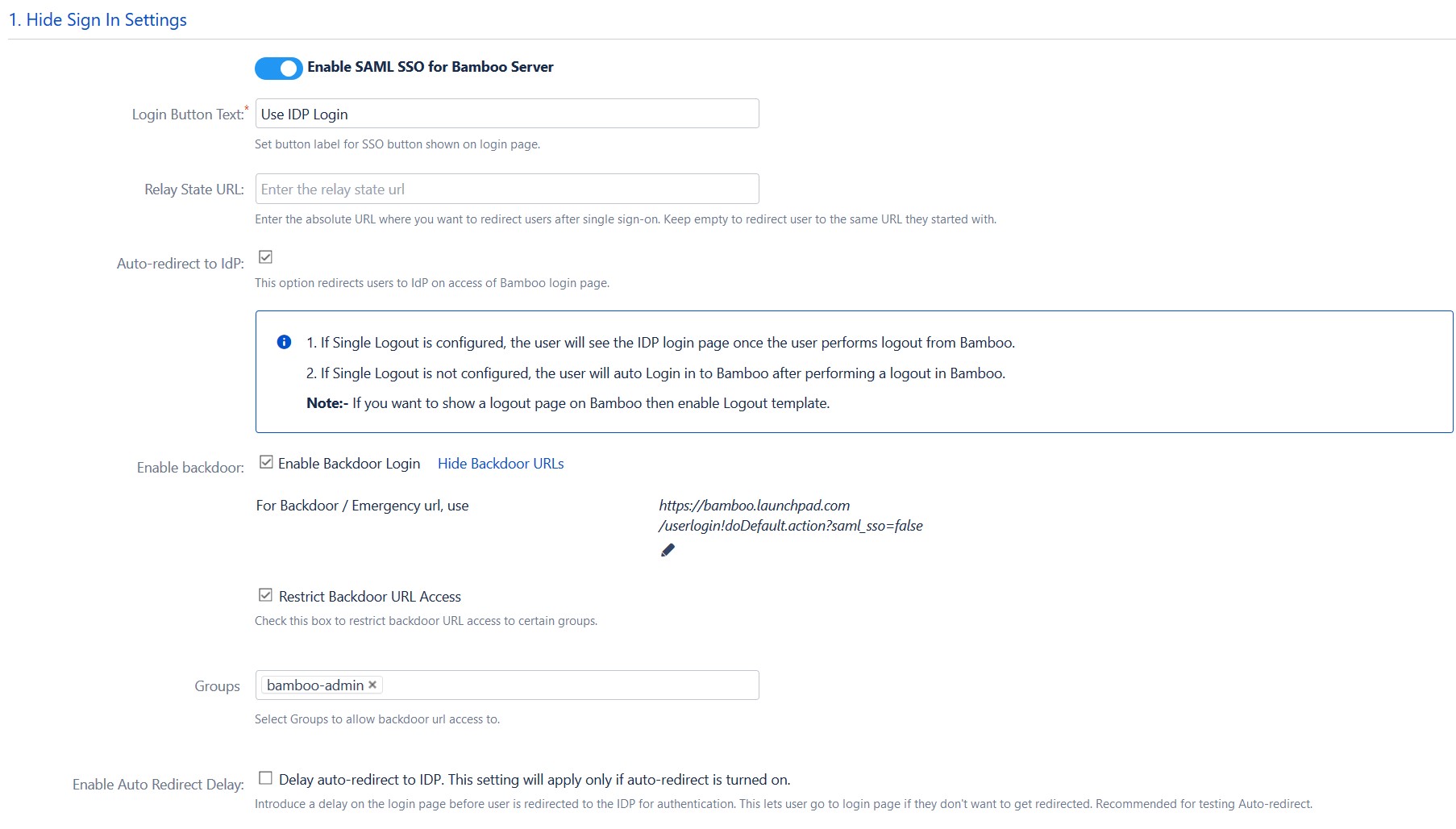
- Set Enable SSO for Bamboo Server to allow SSO for Bamboo users.
- Set button text for button on login page using Login Button Text.
- Set redirect URL after login using Relay State. Keep this empty for coming back to the same page user started from.
-
Enable Auto-redirect to IDP if you want to allow users to
login only using IDP. Enable backdoor for emergency.
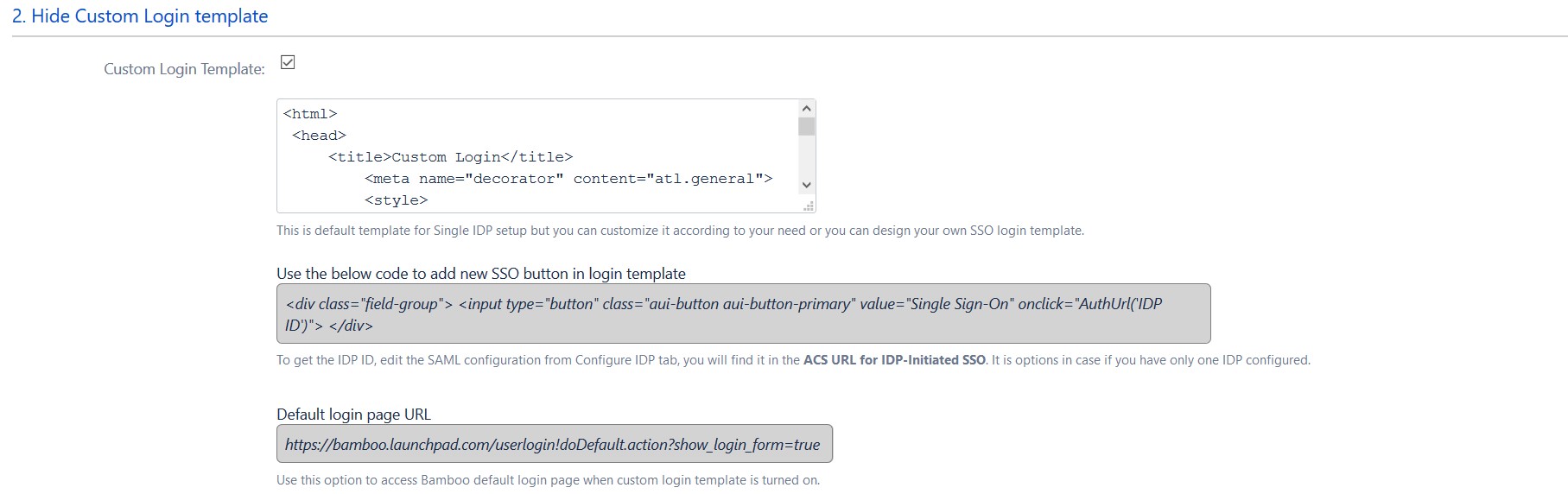
b. Custom Login Template
Design your own login template that will be used to initiate SSO.
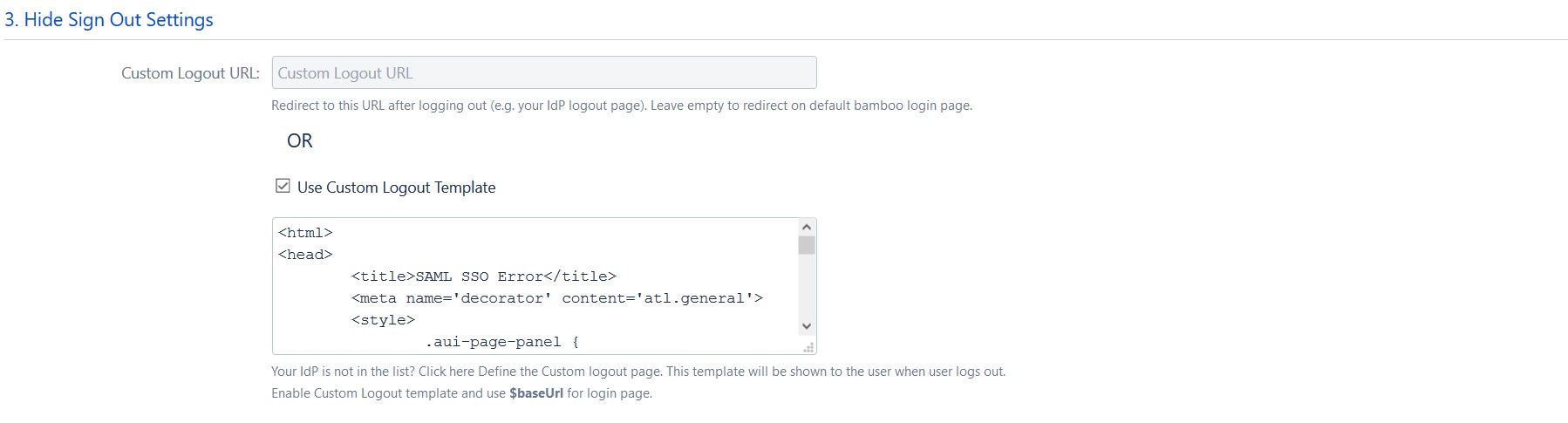
c. Sign Out Settings
Set Logout URL or Logout Template to redirect users after logout action.
d. SSO Error Settings
Set error template to redirect users to a custom error page instead of login page. Use this if you have Auto-redirect to IDP enabled.

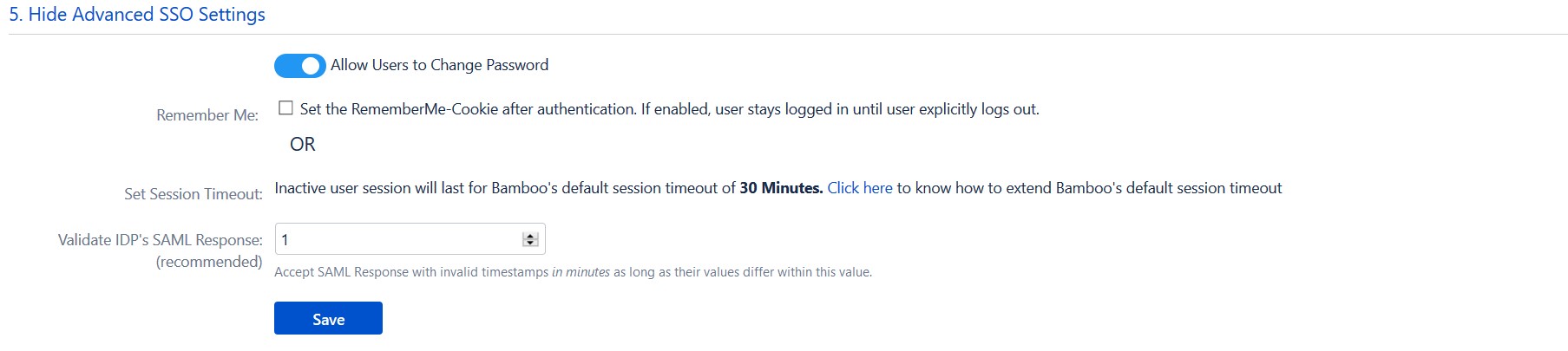
e. Advance SSO Settings
- Allow Users to Change Password: Disable if you don't want user to change their local bamboo credential.
- Remember me cookies: If enabled, user stays logged in until user explicitly logs out.
- Validate IDP's SAML Response: Configure time difference(in minute) here In case Bamboo server time is not in sync with your IDP's time.
Additional Resources
Did this page help you?