

AI agents can access databases, call APIs, retrieve files, execute commands, and interact with enterprise applications. To do any of this, they need credentials. And you have to monitor these credentials. The traditional approach you follow for managing normal credentials will not work here.
Credential management for AI agents should ensure that every agent has a distinct identity, receives only the access it needs, and uses credentials that security teams can monitor, rotate, and revoke through privileged password management.
Let's look at why AI agents create additional credential security challenges and the best practices you can follow to manage their credentials securely.
Why Is Credential Management Important for AI Agents?
It’s stating the obvious, but AI agents are very different from human users. They autonomously operate at machine scale and speed. This creates challenges, as traditional credential management tools were built for humans, not for bots that make their own decisions.
Here is why you need a new approach.
1. Unmanaged AI Agent Credentials
We cannot speak for every company, but many developers deploy AI agents quickly. They skip standard security reviews. The credentials are created outside established security processes.
There is no visibility into who created those credentials and which agent is using them. This makes it difficult to identify unauthorized access and revoke credentials when an agent is retired.
2. Credential and Secret Sprawl Across AI Agents
Every agent you deploy requires a secret. As you deploy more agents, these secrets multiply. This leads to massive secret sprawl.
Attackers actively hunt for these scattered credentials to breach your network.
3. Excessive Privileges and Unauthorized Access
Agents often inherit the permissions of the human who deployed them. In most use cases, these permissions are too broad and go beyond what the AI agent actually needs.
For instance, an AI agent integrated for analyzing sales meetings might get admin rights to your CRM.
Now, AI agents will not misuse those permissions intentionally. But an attacker can manipulate them to do so. The more access a credential provides, the greater the potential damage.
4. Long-Lived Credentials and Lack of Visibility
Many AI agent integrations rely on static API keys that remain valid until someone revokes them.
If an agent no longer needs a credential, that credential may remain active. The same problem occurs when a developer leaves a project or an agent is decommissioned without a proper access review.
Long-lived credentials increase the period during which an exposed secret can be misused. Traditional tools fail to track how and when agents use these static credentials, making the problem worse.
9 Best Practices for AI Agent Credential Management
Managing AI agent credentials requires controls for identity, access, credential distribution, rotation, and monitoring. Follow these password management best practices to protect your resources.
1. Assign Unique Credentials to Every AI Agent
Give every AI agent distinct credentials. Never share human user credentials with an AI tool, as that makes it difficult to distinguish their activities and identify which agent performed a particular action.
Also, do not reuse service account credentials across multiple agents. Unique credentials ensure you can track exactly which agent took a specific action.
2. Store AI Agent Credentials in a Centralized Secure Vault
Do not store secrets in configuration files or code repositories for obvious reasons. They can be accessed by anyone who has access to those repositories. Store all agent credentials in a secure vault.
Centralized secrets management will help you control exactly who or what can access them.
Where your architecture supports it, use a trusted runtime or intermediary service to retrieve the required credentials. Keep raw secrets outside the agent's reasoning context rather than relying on the agent to protect them.
3. Use Short-Lived and Task-Specific Credentials
Whenever the authentication system supports it, prefer temporary credentials that expire after a specific task or session. This limits how long a compromised credential remains useful.
Configure credentials around three requirements:
- Duration: Set an expiry that matches the expected task or session.
- Scope: Limit access to the specific resource or operation.
- Revocation: Ensure you can invalidate the credential when the task ends or when suspicious activity occurs.
OAuth-based token exchange, workload identity federation, and temporary cloud access mechanisms can help implement these patterns.
4. Enforce Least-Privilege Access
Limit the permissions you give each AI agent to those required to complete its assigned tasks, especially when it is acting on behalf of a human. It should operate within clearly defined boundaries.
The user's existing access can provide an upper boundary, but the agent's permissions should be narrowed to what its task actually requires.
5. Implement Automated Credential Rotation
Even when credentials are stored in a secure vault, they can become liabilities. Implement automated password rotation to change secrets on a set schedule.
Avoid applying the same rotation interval to every credential. Short-lived tokens should expire according to their defined lifetime, while static passwords and keys need appropriate rotation and revocation policies.
Here, Privileged Access Management (PAM) solutions can automate rotation based on configured schedules or usage events. This removes human error and cuts off attackers trying to use stolen, outdated keys.
6. Secure Application Credentials, API Keys, and SSH Keys
AI agents rely heavily on machine-to-machine secrets, which should be secured. You need:
- Application password management to centralize application credentials and control how authorized applications retrieve them.
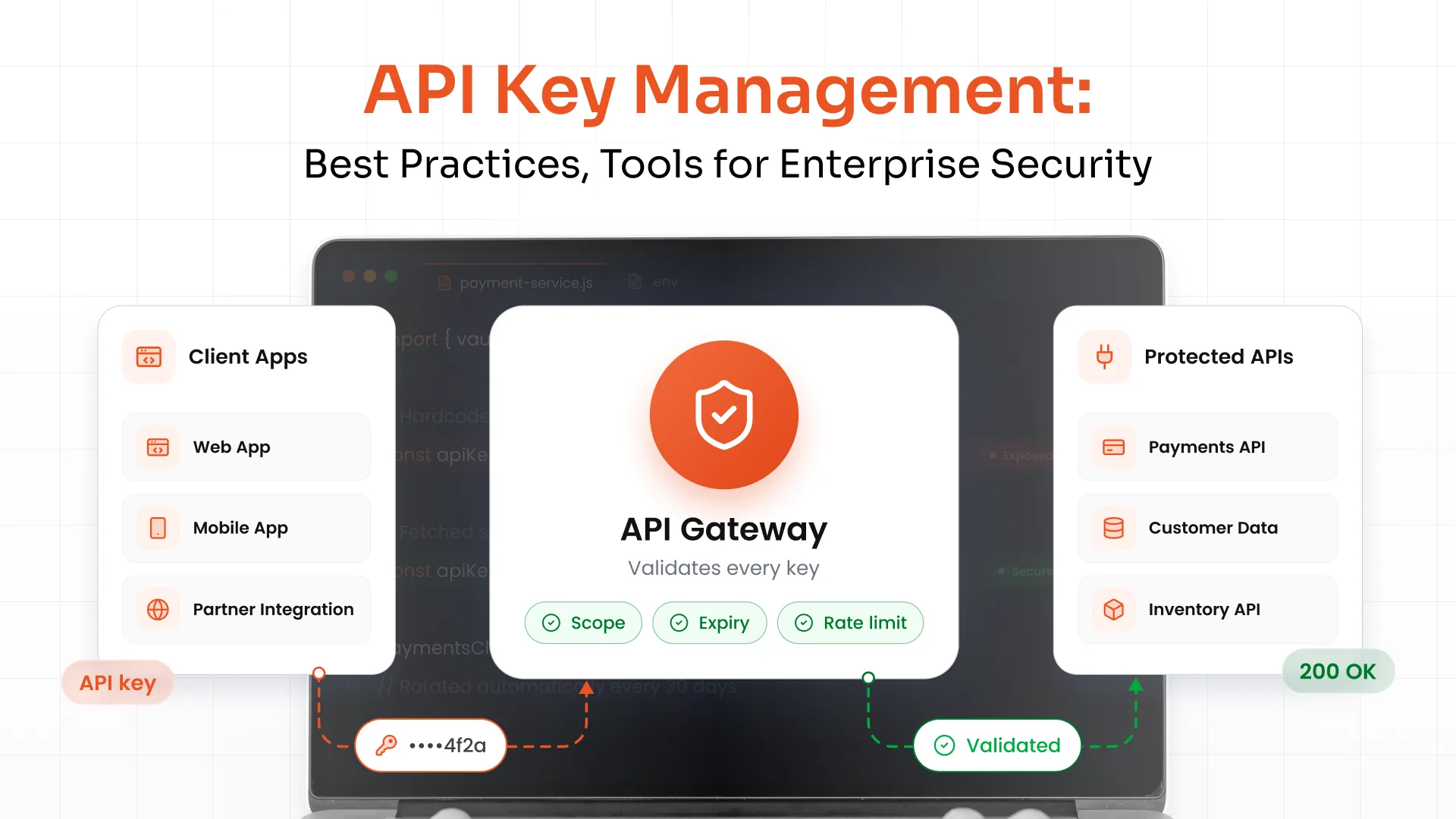
- API key management to apply scopes, expiry policies, usage restrictions, and revocation procedures.
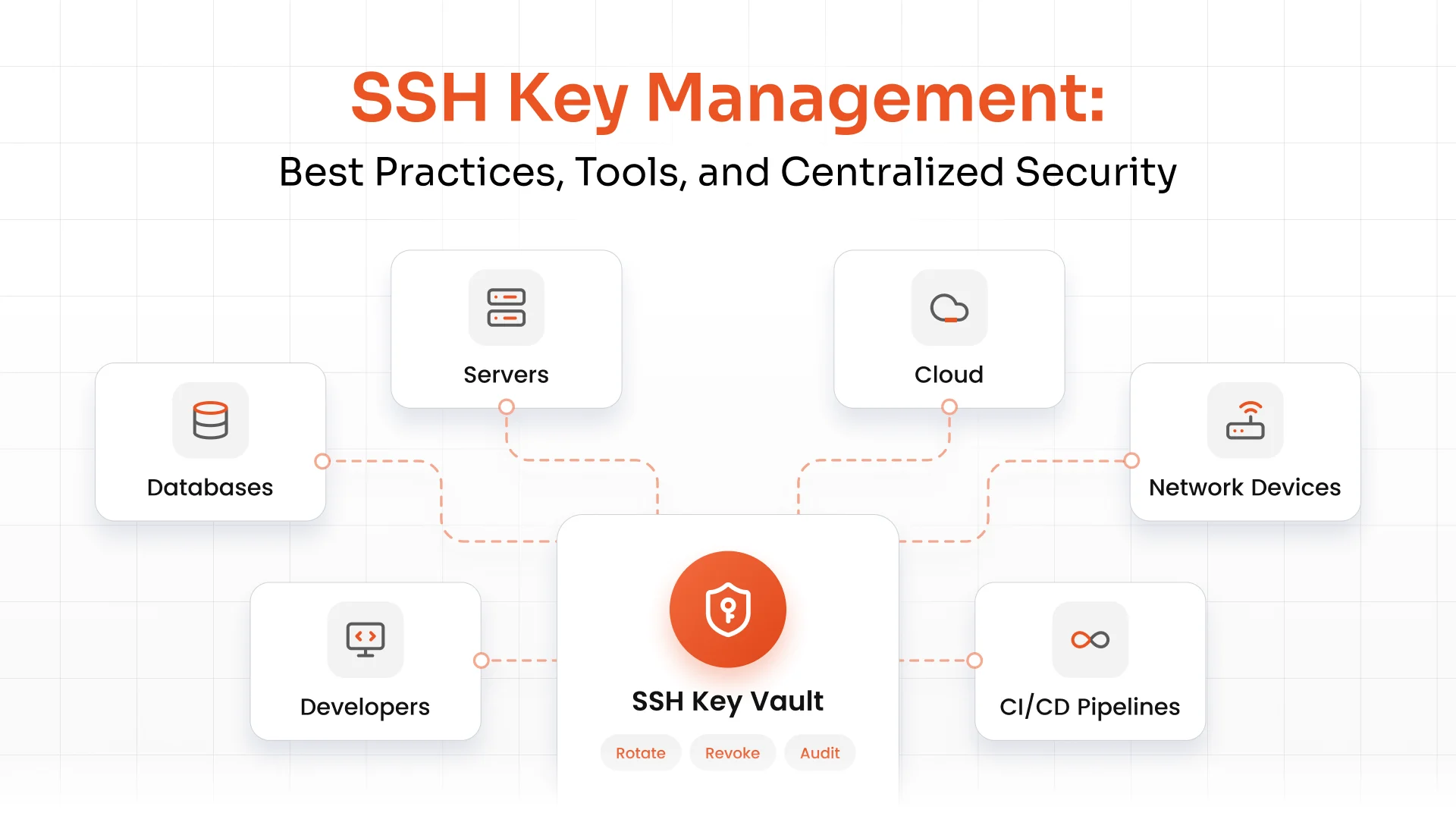
- Centralized SSH key management to maintain an inventory, restrict key usage to approved systems, and rotate or revoke keys when necessary.
7. Implement Just-in-Time Privileged Access
Do not leave privileged access permanently enabled. Use Just-in-Time (JIT) access so that an authorized identity receives elevated privileges only when required. Access is limited to a defined period and revoked when the approved access window ends.
8. Use Credential Injection to Prevent Credential Exposure
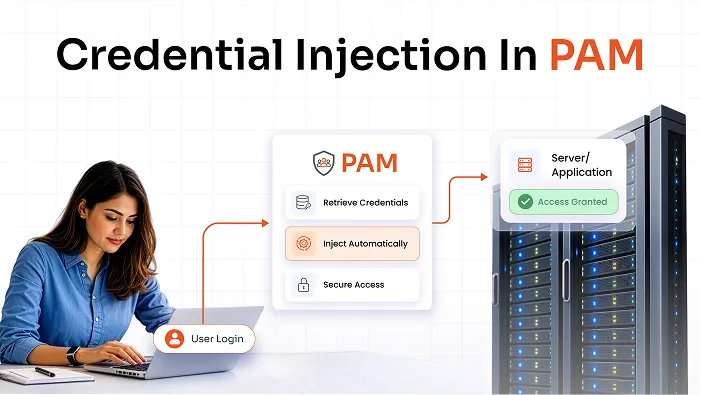
Giving an AI agent direct access to the underlying password creates another opportunity for credential exposure. Avoid passing privileged passwords through prompts, tool definitions, logs, or other locations that the agent can access unnecessarily.
Instead, use credential injection to pass secrets directly into the agent's workflow at runtime. The agent does not see the actual password. This is particularly useful for securing human-operated privileged application sessions.
9. Monitor, Audit, and Revoke AI Agent Credentials
Monitor AI-agent access in real time. Log every API call and database query. If an agent acts suspiciously, you need the ability to revoke its credentials instantly. This will also help you meet compliance requirements.
Revoke credentials when an agent is decommissioned, its permissions change, or its owner leaves the organization.
AI Agent Credential Management vs. Traditional Credential Management
Traditional credential management primarily focuses on credentials used by human users. AI agents can perform multi-step tasks autonomously and access multiple applications at a lightning-fast pace. The old-school approach cannot keep up.
Here are the key differences:
| Security aspect | Traditional Credential Management | AI Agent Credential Management |
|---|---|---|
| Identity | Primarily manages human and established application identities. | Includes autonomous non-human identities alongside any human identity delegating the task. |
| Credential lifetime | Often relies on persistent passwords, keys, and service account credentials. | Favors short-lived, task-specific credentials wherever supported. |
| Access permissions | Generally relies on predefined roles and permissions. | Requires permissions scoped to the agent, task, resource, and runtime context. |
| Access requests | Commonly involves human-driven requests or predefined application workflows. | May involve programmatic, task-driven requests for access to tools and resources. |
| Monitoring | Often relies on periodic credential reviews and access audits. | Requires ongoing visibility into agent activity, credential use, and access decisions. |
| Accountability | Primarily tied to a named employee or application owner. | Requires agent-level attribution, including the associated owner or delegating user. |
The bottom line is that you have to be extra careful with AI agent workflows.
How Does miniOrange PAM Password Management Help Secure AI Agent Credentials?
AI agent security requires an identity framework to identify agents, authorization policies to control their actions, and credential management to protect the secrets they use to access enterprise resources.
The miniOrange PAM solution complements these controls by securing privileged credentials and access to critical infrastructure. It gives you a centralized platform to manage privileged accounts, service accounts, application credentials, SSH keys, and other sensitive secrets.
Here are the capabilities:
- Centralized credential storage: Store sensitive privileged credentials, API keys, certificates, service account credentials, and SSH keys.
- Application-to-application password management: Applications can retrieve assigned credentials through authenticated API requests.
- Automated credential rotation: Rotate supported privileged and application passwords based on configured schedules or events.
- Just-in-Time privileged access: Grant temporary, need-based privileged access.
- Credential injection: Secure privileged web application access by injecting credentials into target applications without exposing the password.
- Privileged session monitoring and auditing: Monitor privileged sessions and maintain audit records to support compliance.
However, PAM is one part of the overall security architecture. With miniOrange Privileged Password Management, you can bring privileged credentials under centralized control, enforce access policies, automate password rotation, and maintain visibility into privileged activity.
FAQs
Why should AI agents have separate credentials from human users?
If an AI agent uses a human's credentials, it inherits all that human's permissions. This causes immediate over-privileging. If the agent makes an error or gets hacked, it can access sensitive resources it never actually needed. Separate credentials limit the blast radius and guarantee clear audit trails.
How often should AI agent credentials be rotated?
You should rotate them as frequently as possible. Ideally, you want ephemeral, short-lived tokens that expire the moment a task finishes. For credentials that cannot be dynamic, use automated rotation to change them daily or weekly.
What is the difference between credential management and secrets management?
Credential management handles the broader lifecycle of user and machine identities, such as usernames, passwords, and access rights. Secrets management focuses specifically on securely storing, transmitting, and auditing highly sensitive digital authentication credentials, like API keys, SSH keys, and tokens used by non-human identities.
Leave a Comment