
Traditional Identity and Access Management (IAM) relies on authentication methods, predefined roles, and access policies to control who can access business applications and data. These controls remain essential, but they do not always provide enough context to identify unusual behavior or changing access risks.
AI in Identity and Access Management (IAM) adds another layer of intelligence by analyzing login context, user behavior, device information, access patterns, and identity activity. This can help organizations detect risks that static IAM rules may miss.
AI-powered IAM can support adaptive access, identity threat detection, access reviews, privileged account monitoring, and governance of non-human identities. Organizations can also introduce these capabilities without replacing their existing IAM infrastructure.
How AI Is Transforming IAM
The biggest change AI brings to IAM is the ability to evaluate context and behavior, not just credentials.
Traditional IAM typically makes access decisions using predefined conditions. For example, a user may be allowed to access an application if they provide the correct password and complete MFA.
AI-powered IAM can consider additional signals, including:
- User and device behavior
- Login location
- Time of access
- Network information
- Application activity
- Previous access patterns
- Changes in user behavior
This allows organizations to move from static access rules toward more risk-based and context-aware access decisions.
Traditional IAM vs. AI-Powered IAM
| IAM Area | Traditional Approach | AI-Powered Approach |
|---|---|---|
| Authentication | Verifies credentials and MFA | Adds context and risk signals to authentication decisions |
| Access control | Uses predefined policies and roles | Uses behavioral and contextual signals to identify risk |
| Threat detection | Focuses on known rules and events | Identifies unusual behavior and access patterns |
| Access reviews | Relies heavily on periodic manual reviews | Uses activity and risk insights to prioritize reviews |
| Privileged access | Uses predefined controls and permissions | Adds behavioral monitoring to identify unusual privileged activity |
AI does not replace the existing IAM stack. It adds intelligence to authentication, access control, governance, and monitoring.
AI Access Management: Using Risk to Control Access
One of the most practical uses of AI in IAM is risk-based access management.
Not every login presents the same level of risk. A user signing in from their usual device and location may not need the same level of verification as someone signing in from a new device or an unusual location.
AI and behavioral analysis can help IAM systems evaluate these signals and apply an appropriate access policy.
| Login Context | Potential Risk | Possible Response |
|---|---|---|
| Known device and normal location | Low | Allow access |
| New device or unusual location | Medium | Require additional verification |
| Unusual location combined with abnormal behavior | High | Block or escalate the request |
AI and Adaptive Authentication
AI-powered access management can make authentication more context-aware.
Instead of applying the same authentication requirement to every login, organizations can use risk signals to determine when additional verification is needed.
For example:
- A normal login can proceed with standard authentication.
- A login from a new device can trigger MFA.
- A high-risk login can be blocked or sent for additional verification.
This approach can improve security without adding unnecessary authentication steps to every login.
AI Identity Security and Continuous Monitoring
A valid password does not necessarily mean that a login is safe.
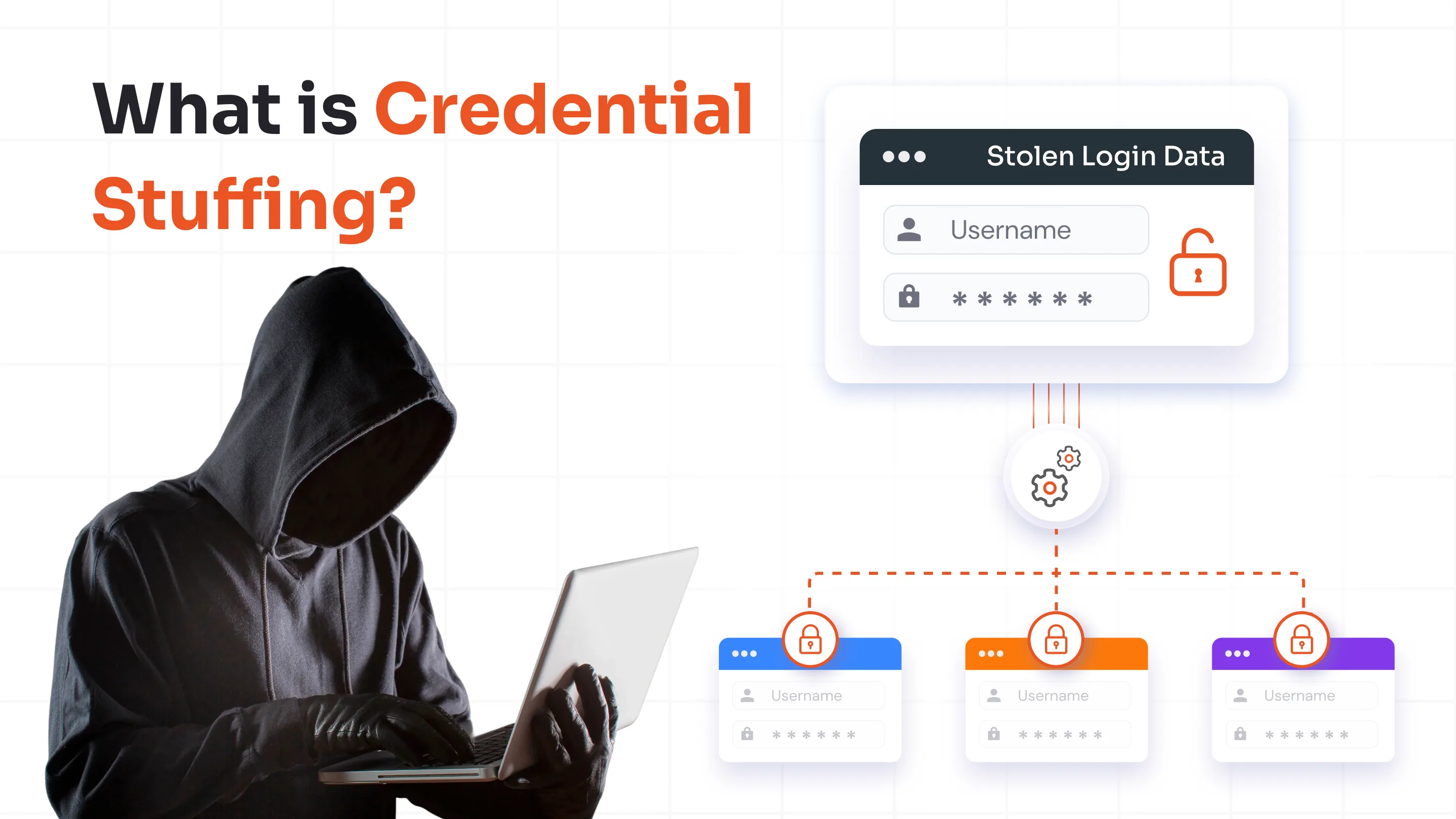
If an attacker obtains valid credentials, traditional authentication may treat the attacker like the legitimate user. AI identity security adds another layer by analyzing what happens after authentication.
AI-powered IAM can compare current activity with established user behavior and identify significant changes.
For example, a user may normally:
- Access applications during business hours
- Use the same few devices
- Work from expected locations
- Access a specific set of applications
A sudden change in these patterns can indicate a potential security risk.
| Activity | What It May Indicate |
|---|---|
| Login from an unfamiliar device | Possible credential misuse |
| Access from an unusual location | Suspicious login activity |
| Access to applications outside the user's normal pattern | Possible privilege misuse |
| Unusual activity after authentication | Possible account compromise |
| Sudden change in access behavior | Potential identity threat |
This supports continuous identity monitoring instead of relying only on a single authentication decision.
Behavioral analysis can also monitor activity during an active session. Changes in location, device, application usage, or resource access can be flagged when they do not match established patterns.
This works alongside Single Sign-On (SSO) solution, which simplifies authentication across applications while AI-powered controls add additional context to access decisions.
AI in Identity Governance and Administration (IGA)
AI can also improve Identity Governance and Administration (IGA).
IGA teams need to answer questions such as:
- Who has access to a particular application?
- Does the user still need that access?
- Has the user's role changed?
- Are there unused permissions?
- Does the user's access match similar users?
- Which access should be reviewed first?
These questions become harder to answer as organizations add more users, applications, and permissions.
Identity Governance and Administration (IGA) can centralize access governance, lifecycle management, access certifications, and policy enforcement. AI can add another layer by helping identify unusual or potentially unnecessary access.
How AI Can Improve Access Reviews
Instead of treating every entitlement as equally important, AI can help prioritize access that deserves attention.
It can help identify:
- Unused access
- Excessive permissions
- Access that differs from a user's peer group
- Permissions that remain after a role change
- Potentially risky access combinations
AI in IGA vs. Manual Access Reviews
| Review Activity | Manual Approach | AI-Assisted Approach |
|---|---|---|
| Unused access | Manually identify inactive permissions | Prioritize potentially unused access |
| Peer comparison | Difficult to perform at scale | Compare access against similar users |
| Role changes | Depends on manual review | Highlight access that may no longer match the role |
| Review prioritization | Reviewers often treat items equally | Prioritize higher-risk access |
AI does not remove the need for managers or security teams to approve access decisions. It helps them focus on the decisions that need attention.
AI for Privileged Access Management
Privileged accounts require additional protection because they can make high-impact changes to applications, infrastructure, and data.
Examples include:
- System administrators
- Database administrators
- Security administrators
- Cloud administrators
- Other users with elevated permissions
AI-powered IAM can help identify unusual behavior from privileged accounts.
For example, an administrator who normally performs routine configuration tasks may suddenly access large amounts of sensitive data. A significant change in behavior can be flagged for investigation.
AI can support privileged access security by helping teams:
- Detect unusual privileged activity
- Identify abnormal access patterns
- Prioritize high-risk events
- Monitor privileged sessions
- Investigate potential misuse
This works alongside Privileged Access Management (PAM) controls that restrict and monitor access to critical systems.
AI and Non-Human Identity Management
IAM is no longer limited to employees and customers.
Organizations also manage:
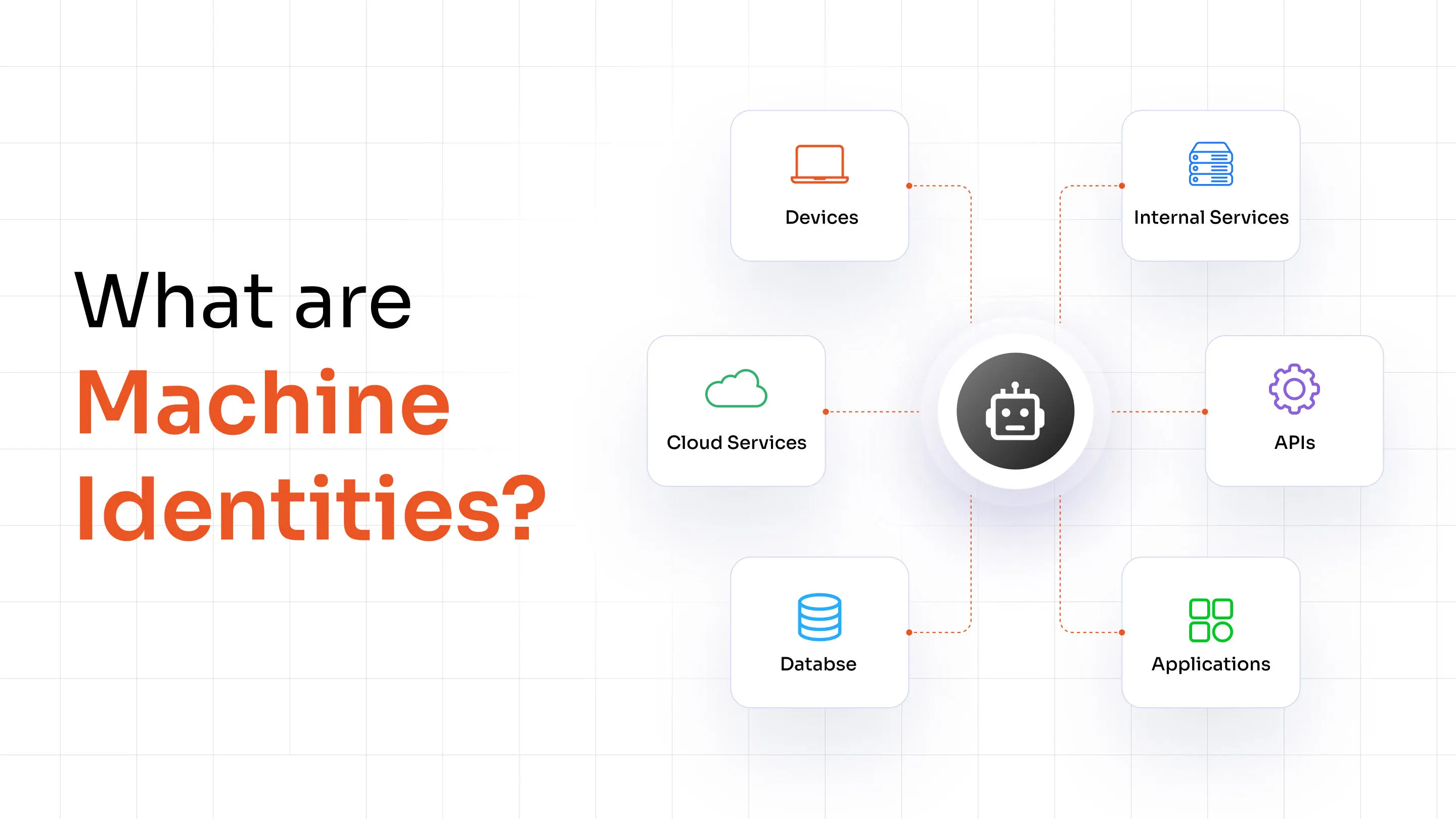
- Service accounts
- Applications
- API keys
- Bots
- Workloads
- AI agents
These are often referred to as non-human identities (NHIs).
AI makes this area even more important because AI agents can access applications, APIs, and enterprise resources with limited or no direct human intervention.
Traditional IAM approaches were largely designed around human users. AI agents require additional controls for identity, authentication, authorization, lifecycle management, and activity monitoring.
miniOrange provides dedicated AI agent identity management capabilities for authenticating agents, applying least-privilege access, and governing non-human identities.
How AI Agent Identity Management Works
A secure approach should give each AI agent a defined identity and access scope.
The process can include:
1. Register the AI agent as a managed identity.
2. Authenticate the agent before it accesses a resource.
3. Apply access policies based on its role and purpose.
4. Limit permissions using least-privilege principles.
5. Monitor activity and maintain audit records.
6. Review or revoke access when the agent's role changes or it is retired.
This extends IAM governance beyond human users to the growing number of machine and AI identities in enterprise environments.
Read more about IAM for AI Agents
Key Benefits of AI-Powered IAM
AI does not solve every identity security problem. Its main value is helping security and IT teams analyze identity and access data more efficiently.
Key benefits include:
- Faster detection of suspicious activity through behavioral and contextual analysis
- Reduced manual access reviews by prioritizing potentially unnecessary permissions
- Better risk-based access decisions using identity, device, location, and behavior signals
- Stronger privileged and non-human identity governance through continuous monitoring and risk analysis
Challenges of Using AI in IAM
AI can improve identity security, but organizations also need to manage its limitations.
| Challenge | Why It Matters | What Organizations Can Do |
|---|---|---|
| False positives | Normal activity may be flagged as risky | Tune policies using real usage data |
| Poor identity data | Incomplete data can reduce recommendation quality | Clean and standardize identity data |
| Incorrect recommendations | Models may make poor decisions when context is missing | Keep human review for important decisions |
| Over-automation | Teams may rely too heavily on automated decisions | Keep human oversight for high-impact actions |
False Positives
Too many false positives can create alert fatigue. If security teams receive alerts for normal activity too often, they may start ignoring them.
AI-powered IAM should therefore be tuned using real organizational data before teams rely heavily on automated decisions.
Identity Data Quality
AI recommendations depend on the quality of the identity data being analyzed.
Organizations should maintain:
- Accurate identity records
- Clear account ownership
- Consistent entitlement names
- Reliable activity logs
- Updated role information
Poor identity data can result in poor access recommendations.
Human Oversight Still Matters
AI should support identity and access decisions rather than automatically control every high-impact decision.
For privileged access, major policy changes, and other sensitive actions, organizations should maintain an appropriate human approval process.
Conclusion
AI is not replacing the core components of Identity and Access Management.
Passwords, MFA, SSO, access policies, lifecycle management, IGA, and PAM remain important. AI adds another layer by helping organizations understand risk, context, and behavior across these controls.
The practical value of AI-powered IAM comes down to three things:
- Detect unusual identity activity earlier
- Prioritize access decisions that need attention
- Apply security controls based on context and risk
Organizations can start with a focused use case such as access reviews or adaptive authentication and expand as their identity data and processes mature.
Explore miniOrange Identity and Access Management to see how authentication, adaptive access, identity governance, privileged access, and AI-agent security can work together in one IAM platform.
FAQs
How is AI transforming Identity and Access Management?
AI is transforming IAM by adding behavioral, contextual, and risk-based analysis to traditional identity controls. It can help organizations detect unusual activity, prioritize access reviews, identify identity threats, and make access decisions based on more than credentials and predefined rules.
Does AI replace passwords and MFA?
No. AI does not replace passwords or MFA. It can work alongside authentication controls by helping determine when additional verification or stronger access controls may be appropriate.
How does AI detect stolen credentials?
AI can analyze activity after authentication and compare it with established user behavior. An unfamiliar device, unusual location, unexpected application access, or other abnormal activity may indicate that valid credentials are being misused.
How does AI help with access reviews?
AI can analyze access and usage information to help identify unused permissions, unusual entitlements, role mismatches, and other access risks. This allows reviewers to focus on higher-priority access decisions.
Can AI be used for privileged access management?
Yes. AI can help identify unusual behavior involving privileged accounts and prioritize suspicious activity for investigation. It works alongside PAM controls such as privilege management, credential protection, and session monitoring.
How does AI help manage non-human identities?
AI and identity governance can help organizations monitor and manage service accounts, applications, bots, API keys, workloads, and AI agents. These identities can be assigned defined access policies, monitored for unusual activity, and governed throughout their lifecycle.
About the Author

VP Engineering, IDP Technology
Pratish has over 10+ years of experience in the Cyber Security Domain. Have spent years building secure and reliable backend systems, on-premise & cloud-native SaaS products, and various Cyber Security products with a core focus around Identity and Data Security.
Leave a Comment