

Picking the best endpoint security for business depends on your org's size, stack, and how much in-house security muscle you actually have.
CrowdStrike Falcon leads on pure detection, Microsoft Defender wins on value for M365-heavy shops, miniOrange is the strongest choice for mid-market businesses that need identity-first device security without the enterprise price tag, and IBM MaaS360 covers the UEM-first crowd that needs mobile + BYOD sorted from a single console.
This blog walks you through all seven of the best endpoint security software in detail.
What is Endpoint Security Software?
Every laptop, phone, server, and tablet your team uses is an endpoint. Endpoint security software protects those devices from malware, ransomware, unauthorized access, and data theft, usually through a combination of real-time threat detection, behavioral analysis, and automated response.
The category has expanded well past traditional antivirus. Today's best endpoint security providers handle device management, identity enforcement, web content filtering, and threat intelligence, often from a single agent running on each device.
7 Best Endpoint Security Software Providers
1. miniOrange

miniOrange is a security company with over 30,000 customers globally, known primarily for its identity and access management platform. Its UEM product, miniOrange MDM, brings mobile device management, application control, and endpoint policy enforcement under a single dashboard.
For mid-market organizations that can't justify Microsoft E5 licensing or CrowdStrike's enterprise tiers, miniOrange is the clearest choice to get both IAM and device management from a single vendor without the cost or complexity of enterprise-first platforms. Gartner recognized it as a "Strong Performer" in the 2025 Voice of the Customer for Access Management.
Key features:
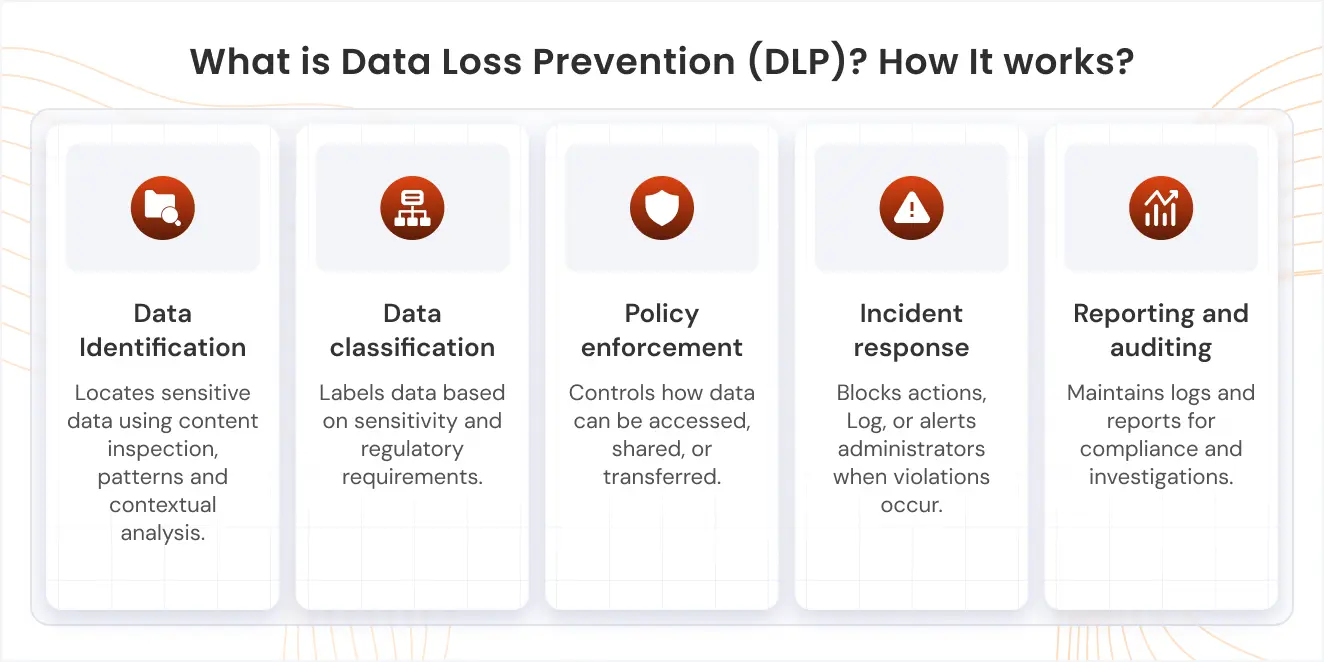
- Device controls to manage USP transfers, screenshots, clipboard misuse, and file transfers.
- Email DLP to scan outbound emails & attachments across Gmail, Outlook, & Office 365 in real time.
- Cloud Access Security Broker (CASB) for SaaS apps like M365 and Google Workspace
- Granular policy enforcement based on file type, data sensitivity, location & behaviour.
- Mobile Device Management (MDM) for Android, iOS, Windows, and macOS
- Kiosk mode with single-app and multi-app configurations
- Real-Time Alerts & Analytics to monitor anomalies, track file flows, and take action.
Integrations: Works with Azure AD, Active Directory, LDAP, SAML, OAuth, OpenID Connect, Okta, Google Workspace, Microsoft 365, Shopify, WordPress, VPNs, and legacy business systems.
Best for: Mid-market organizations (50–2,000 employees) that want a unified identity + device security platform without stitching together 3 separate vendors. Particularly strong for companies in healthcare, retail, logistics, and education, managing mixed fleets of company-owned and BYOD devices.
2. Cisco Secure Endpoint
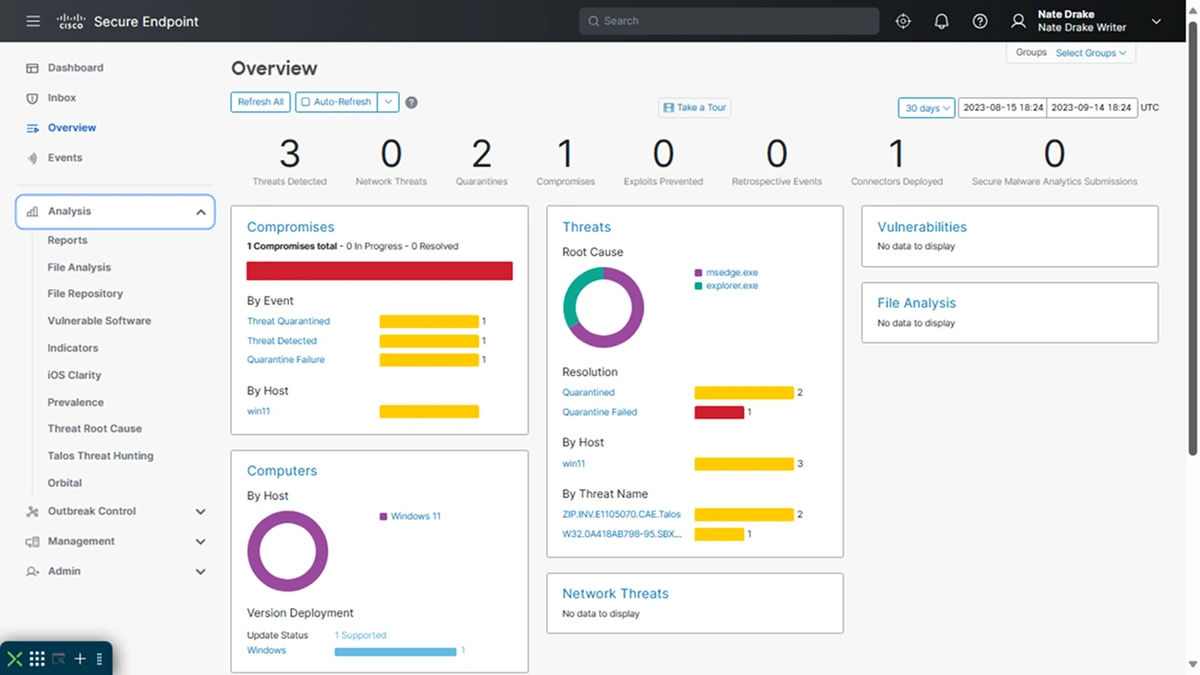
Cisco Secure Endpoint (previously AMP for Endpoints) is Cisco's cloud-managed endpoint protection platform. It uses behavioral analytics, machine learning, and retrospective analysis to catch threats even after they've bypassed initial defenses.
The retrospective analysis piece is real: if Cisco's cloud intelligence identifies a file as malicious after it's already landed on a device, Secure Endpoint can trace it back, show every device it touched, and retroactively quarantine it.
Key features:
- Behavioral analytics and machine learning-based threat detection
- Retrospective analysis to identify threats post-infection
- Cloud-managed endpoint protection with on-premises option
- Integration with Cisco Talos threat intelligence (one of the largest commercial threat research teams)
- Cisco SecureX and XDR integration for unified visibility
- Device trajectory to map the full scope of an attack
- Automated containment and remediation workflows
Integrations: Deep integration with Cisco's portfolio: Umbrella, Meraki, Firepower, SecureX, and Duo Security. Third-party SIEM integration available.
Best for: Organizations already invested in Cisco networking or security infrastructure. The product genuinely gets more useful the more Cisco stacks you run. Also, a solid pick for enterprises that need retrospective threat analysis and a large in-house threat intelligence feed.
3. CrowdStrike Falcon
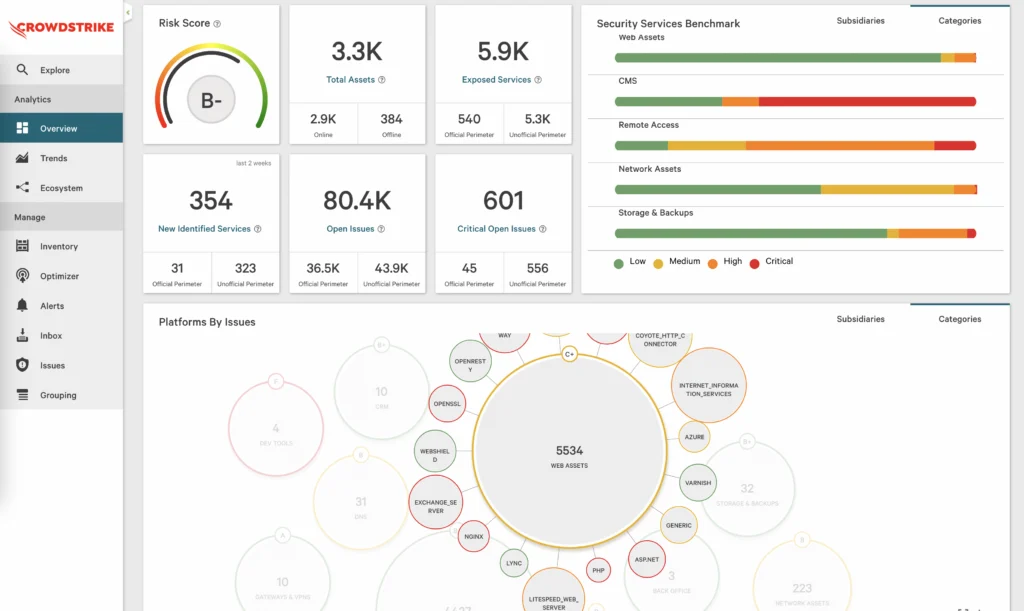
CrowdStrike Falcon is a cloud-native endpoint security platform built around AI-based behavioral detection. Its single lightweight agent covers threat prevention, EDR, identity protection, and cloud workload security.
Where traditional tools match against known signatures, Falcon detects by behavior, which matters because 82% of attacks in 2025 involved no malware at all (CrowdStrike 2026 Global Threat Report).
Key features:
- Falcon Prevent (NGAV): AI-based prevention of malware and fileless attacks
- Falcon Insight XDR: endpoint and cross-domain detection and response
- Falcon Intelligence: threat intelligence tied directly to adversary profiles
- Falcon Discover: asset visibility and hygiene across the environment
- Falcon Identity Protection: identity threat detection and response
- Real-time indicators of attack (IOAs) correlated with adversary behavior
- Cloud workload protection for VMs, containers, and cloud environments
- Falcon Complete: fully managed MDR option
Integrations: 300+ third-party integrations across SIEM, SOAR, identity, cloud, and IT management. Native integrations with Splunk, AWS, Azure, Google Cloud, Okta, and major ticketing systems.
Best for: Mid-to-large enterprises with a security operations team or SOC. Also, the top pick for organizations with high-value targets, complex threat environments, or compliance requirements demanding documented incident response.
4. IBM MaaS360
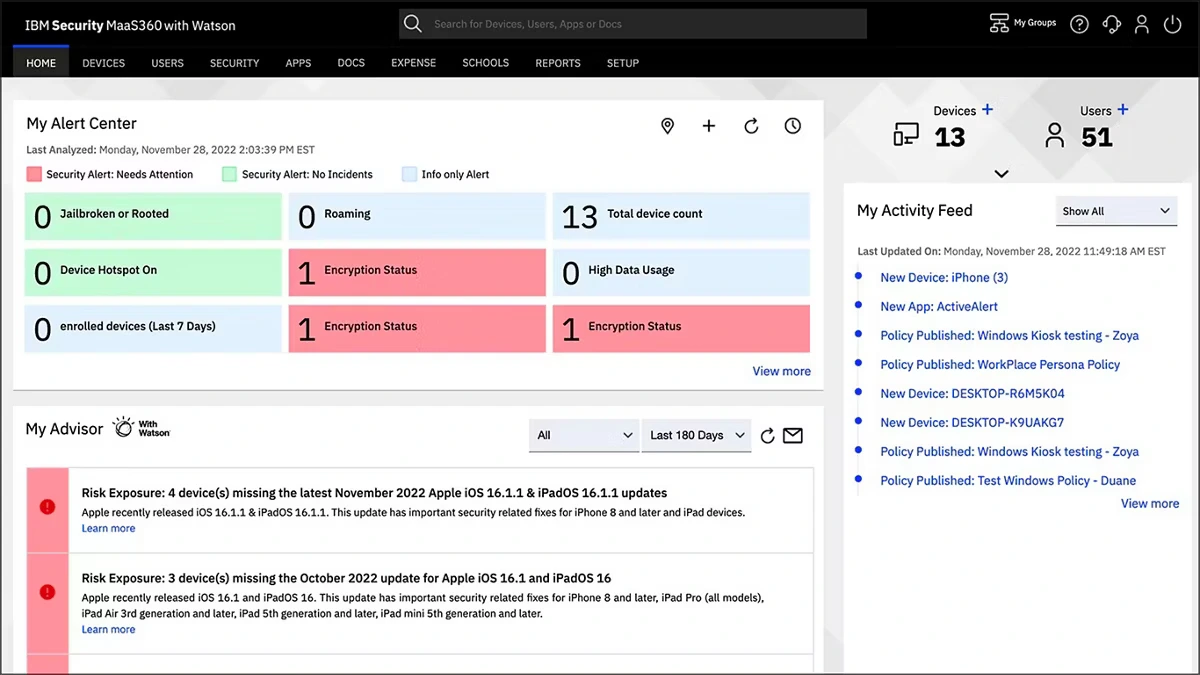
IBM MaaS360 is a cloud-based Unified Endpoint Management platform with Watson AI built into its threat advisory and policy recommendation layers. It covers mobile devices, laptops, and tablets across Android, iOS, macOS, Windows, and ChromeOS, all from a single dashboard.
The Watson Advisor flags policy configuration gaps, gives device-specific security recommendations, and updates risk scores in real time based on behavioral signals. For lean IT teams managing a large, diverse fleet, that kind of automated intelligence matters.
Key features:
- Unified device enrollment across all major OS with over-the-air provisioning
- Watson AI-powered security advisor and policy recommendations
- Secure Container for BYOD: separates corporate and personal data without full device management
- Conditional access and single sign-on
- Mobile threat defense (enterprise tier): protection against phishing, network attacks, and malware
- SIEM integration (enterprise tier)
- App management, secure document sharing, and secure browser
- Compliance monitoring and audit trail
Integrations: Works with IBM Security portfolio, SAML/SSO providers, Active Directory, Google Workspace, M365, and major SIEM platforms.
Best for: Mid-market organizations (1000–2,000 employees) with a mix of corporate and BYOD devices, especially those already in the IBM ecosystem or planning to. Strong fit for regulated industries like financial services, healthcare, and manufacturing.
5. Symantec (Broadcom)
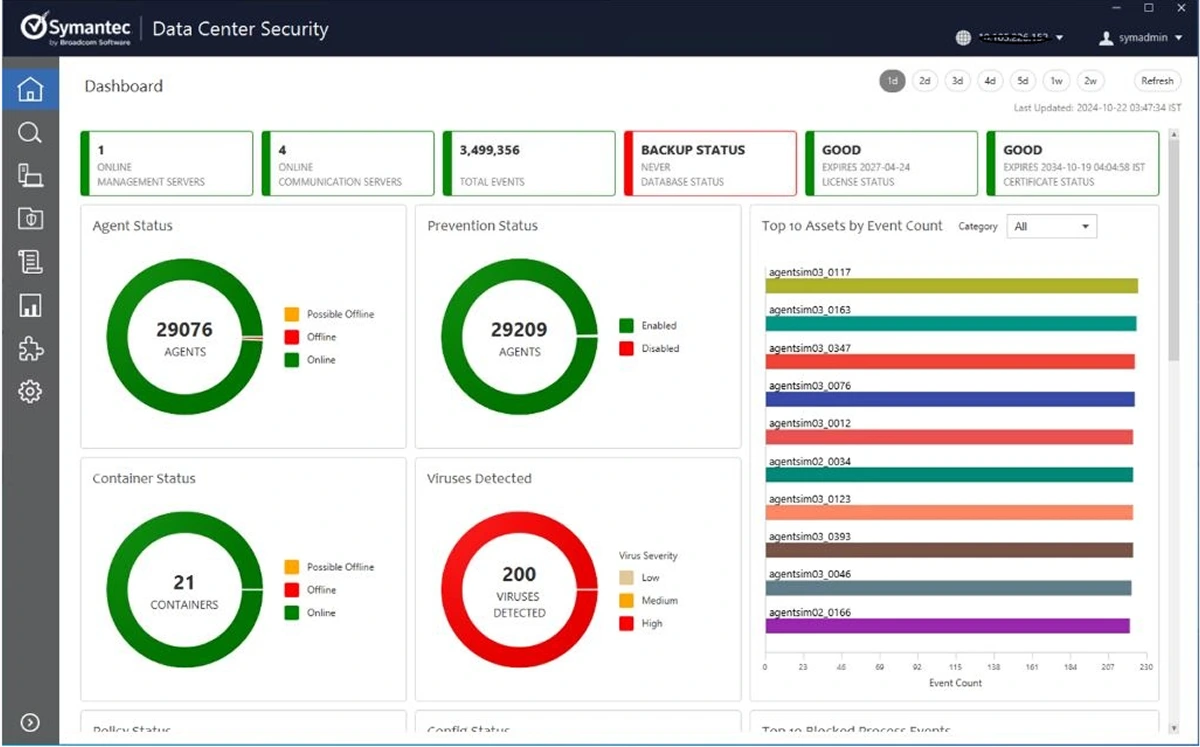
Symantec is one of the oldest endpoint security brands in the market. Since Broadcom's acquisition, it sits as Symantec Endpoint Security (SES), available in standard and Complete editions, with the new Symantec CBX platform combining SES with Carbon Black EDR and XDR capabilities.
The product has real depth: behavioral isolation, Active Directory security, exploit prevention, machine learning, intrusion prevention, and firewall are all in the base. SES Complete adds Threat Hunter technologies for more proactive detection. It supports on-premises, hybrid, and cloud deployments, which matters for enterprises with legacy infrastructure that they can't move.
Key features:
- Advanced malware and ransomware prevention
- Behavioral isolation and exploit prevention
- Machine learning and behavioral analysis
- Intrusion Prevention System (IPS)
- Device control and application control
- Active Directory security
- Threat Hunter technologies (Complete edition)
- On-premises, hybrid, and cloud-based management console
- Single agent for all endpoint types, including mobile
Integrations: Native integration with Broadcom's security portfolio. Third-party SIEM integration available. Reviewers note limited integration depth with non-Broadcom products.
Best for: Large enterprises with existing Symantec/Broadcom deployments that want to avoid migration risk. Strong for organizations with legacy on-premises infrastructure or critical systems. Also, a choice for highly regulated industries like healthcare, utilities, and critical infrastructure.
6. Microsoft Defender for Endpoint
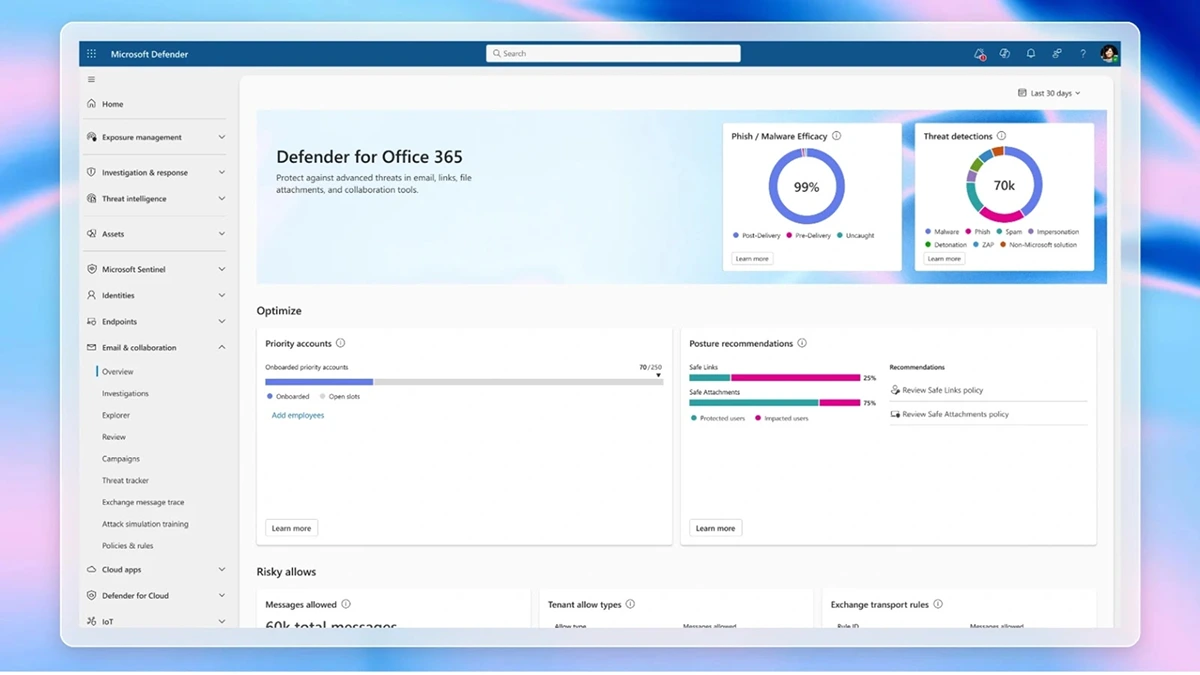
Microsoft Defender for Endpoint is an AI-powered EPP and EDR/XDR platform built into the Microsoft 365 ecosystem. It draws on 84 trillion daily signals and 10,000+ security experts, and has been a Gartner Magic Quadrant Leader for 6 consecutive years.
The pricing argument is the most disruptive thing happening in endpoint security right now. For organizations holding Microsoft 365 E5 licenses, Defender for Endpoint P2 (full EDR/XDR) is included at zero marginal cost. If you're already paying for M365 E5 for Teams, Exchange, and SharePoint, you already own this.
Key features:
- AI-powered threat prevention, detection, and response
- Automated investigation and response (AIR)
- Tamper protection and attack surface reduction rules
- Microsoft Security Copilot integration (AI-assisted investigation)
- Defender XDR: correlates signals across endpoints, identity, email, and cloud
- Vulnerability management and exposure assessment
- Integration with Microsoft Intune for device management
- Threat intelligence from Microsoft's global signal network
Integrations: Deep integration with the entire Microsoft security stack (Sentinel, Intune, Entra ID, Purview, Azure). Third-party SIEM integration via API.
Best for: Organizations already running Microsoft 365, especially those on E5 licensing. Security teams that want unified visibility across identity, email, cloud, and endpoint in a single console.
7. Trend Vision One (TrendAI)
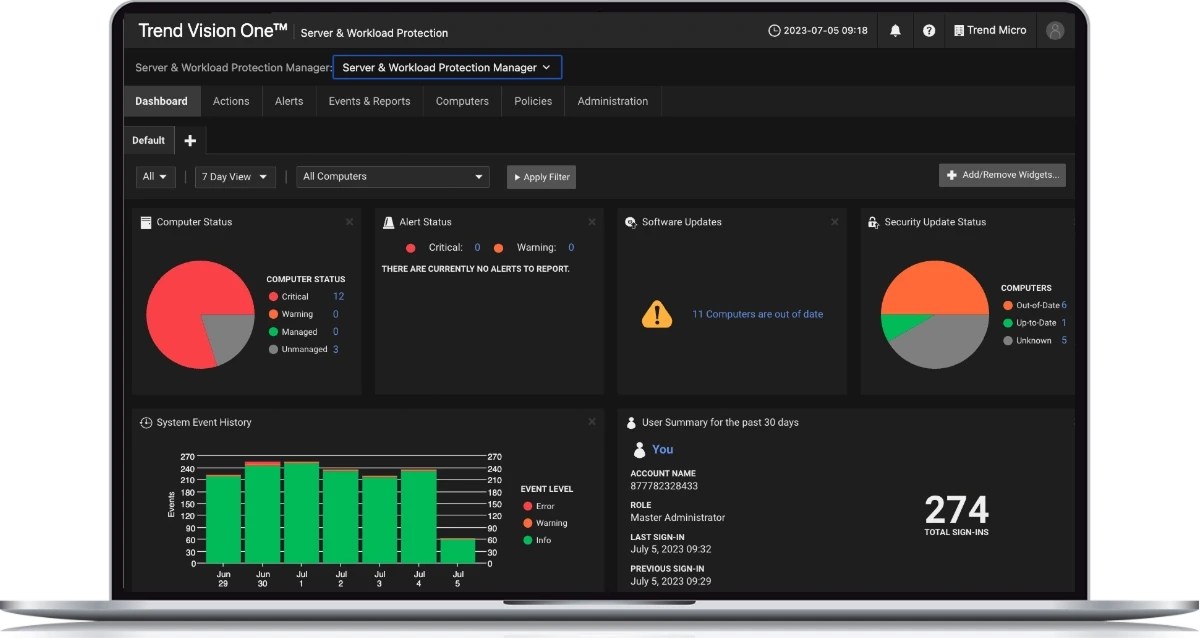
Trend Vision One, now rebranded as TrendAI Vision One, is Trend Micro's extended detection and response platform. It correlates signals across endpoints, servers, cloud workloads, email, and network from a single console. Trend Micro has been a Gartner Magic Quadrant Leader for Endpoint Protection Platforms for 21 consecutive years, longer than any other vendor on this list.
The platform is purpose-built for security operations teams that need to see across the whole environment, not just endpoints. The correlation engine maps threats across attack surfaces and shows where they originated, what they touched, and what else may be affected.
Key features:
- XDR across endpoints, email, servers, cloud, and network
- Endpoint Security with NGAV and behavioral analysis
- Agentic SIEM and SOAR for security operations
- Cyber Risk Exposure Management for vulnerability and risk scoring
- Threat Intelligence from Trend Micro Research (Zero Day Initiative)
- Attack surface discovery and risk prioritization
- Managed Detection and Response (MDR) service option
- Support for legacy and non-standard server environments
Integrations: 150+ third-party integrations, including AWS, Azure, Google Cloud, Splunk, ServiceNow, and Palo Alto. Also integrates with Microsoft 365 and Okta.
Best for: Mid-to-large organizations with complex, multi-layered environments where visibility across email, cloud, network, and endpoint from one console matters. Strong fit for teams that want XDR without rebuilding their stack, and for environments with legacy systems.
Quick Comparison Table
| Endpoint security software | Top capabilities | Best for |
|---|---|---|
| miniOrange | Data security, Policy breach alerts for endpoint, email, and cloud, and IAM integration. | Easy migrations, regulatory compliance support, and scalability from SMBs to enterprises. |
| Cisco Secure Endpoint | Behavioral analytics, retrospective analysis, Talos threat intel | Cisco-heavy enterprises |
| CrowdStrike Falcon | AI detection, XDR, EDR, identity protection | Enterprises with SOC needing best-in-class detection |
| IBM MaaS360 | UEM, Watson AI advisor, BYOD containerization | Mid-market with mixed corporate/BYOD fleets |
| Symantec (Broadcom) | Malware prevention, IPS, behavioral isolation | Large enterprises with legacy infrastructure |
| Microsoft Defender | XDR/EDR, M365 integration, Entra ID | M365/E5 organizations |
| Trend AI Vision One | XDR, NGAV, SIEM/SOAR. Legacy device support | Complex multi-layer environments |
Benefits of Endpoint Security Solutions
Endpoint security has a reputation as a compliance checkbox. The actual case for it is more concrete.
The average breakout time for an adversary, from initial access to lateral movement across your network, is now 29 minutes. Your window to catch and contain a breach before it spreads is under half an hour.
- Real-time threat detection
- Secure web gateways and web content filtering
- Device management capabilities
- Centralized audit trails
Types of Endpoint Security Solutions
The category is broad. Here's how the main types differ.
Endpoint Protection Platforms (EPP)
EPP is the prevention layer. They stop known threats using signatures, machine learning, and behavior patterns before they can execute. Think of EPP as the lock on the door. Traditional antivirus is a subset of EPP.
Endpoint Detection and Response (EDR)
EDR assumes some threats will get past the lock. EDR continuously monitors endpoint activity (processes, files, network connections, user behavior) and alerts on anomalies. It records everything so security teams can investigate what happened, trace how far an attack spread, and roll back changes. EPP prevents; EDR detects and responds.
Extended Detection and Response (XDR)
XDR takes EDR's logic and applies it across the full stack, correlating signals from endpoints, email, network, identity, and cloud workloads in a single platform. Where EDR gives you visibility into one endpoint, XDR gives you visibility across an entire attack chain.
Next Generation Antivirus (NGAV)
NGAV is EPP without the legacy signature database at the center. It uses machine learning, behavioral analysis, and exploit prevention instead of, or alongside, signature matching. Most modern EPP platforms include NGAV by default.
Unified Endpoint Management (UEM)
UEM manages the device itself: enrollment, policy enforcement, app deployment, remote wipe, patch management, and compliance monitoring across all device types (mobile, desktop, server). UEM isn't a threat detection tool by itself, but it's the operational foundation that ensures the security configurations are in place and maintained.
Mobile Threat Defense (MTD)
MTD specifically addresses security risks on mobile devices: phishing through SMS and mobile browsers, malicious apps, network-based attacks, and device vulnerabilities. Most enterprise endpoint platforms now include MTD as a module.
How to Choose the Best Endpoint Security Software
No two organizations have the same threat model, stack, or IT bandwidth. Before shortlisting your endpoint security vendors, align on a few criteria that tend to determine the outcome.
- Existing tech stack
- In-house security capability
- Device mix and ownership mode
- Legacy infrastructure
- Compliance requirements
- Total cost of ownership
For most mid-market organizations, the shortlist comes down to two questions: are you already on a dedicated platform, and do you have a dedicated security team? If the answer to both is no, a unified platform like miniOrange endpoint security gets you the most coverage with the least complexity.
Frequently asked questions
1. What is endpoint security for business?
Endpoint security for business is the software that protects the devices employees use to do their work, including laptops, mobile phones, tablets, and servers, from cyber threats like malware, ransomware, phishing, and unauthorized access.
2. What are the top endpoint security providers?
The top-rated endpoint protection providers in 2026, based on Gartner Peer Insights ratings and market presence, are CrowdStrike Falcon (4.7 stars, 3,068 reviews), SentinelOne Singularity (4.7 stars, 2,875 reviews), and Microsoft Defender for Endpoint (4.4 stars, 1,926 reviews).
3. What is the difference between EPP and EDR?
EPP (Endpoint Protection Platform) focuses on prevention: stopping threats before they execute using signatures, machine learning, and behavioral rules. EDR (Endpoint Detection and Response) focuses on what happens when prevention isn't enough
4. What is mobile threat defense?
Mobile Threat Defense (MTD) is a security solution specifically designed for smartphones and tablets. It protects against phishing via SMS and mobile browsers, malicious applications, network-based attacks (like man-in-the-middle on public Wi-Fi), and device vulnerabilities.
5. What is a secure web gateway?
A secure web gateway (SWG) is a security solution that filters and monitors web traffic to block malicious websites, prevent malware downloads, and enforce acceptable use policies. It sits between users and the internet, inspecting traffic in real time.
6. What are the benefits of endpoint security?
Core benefits of endpoint security include: real-time threat detection, behavioral analysis, automated response, centralized device management, audit logging, and mobile threat protection
7. What is threat intelligence in endpoint security?
Threat intelligence in endpoint security is the continuously updated data about adversary tactics, attack infrastructure, and malware behavior that security platforms use to improve detection accuracy.
8. How does machine learning improve endpoint security?
Machine learning models trained on large datasets of normal and malicious behavior can identify threats that have never been seen before. Instead of matching a file against a known bad signature, an ML model evaluates whether a process is behaving like malware, regardless of its name or origin.

Leave a Comment