
Organizations in 2026 are managing an average of 3-5 times more machine identities than human users, with explosive SaaS sprawl and fragmented access controls across hybrid cloud environments. Despite massive security investments, a large sum of organizational budgets focus on detection tools while neglecting the foundational identity data quality and hygiene that attackers exploit.
Identity-driven breaches now account for the majority of security incidents, with credential abuse appearing in 22% (Verizon Data Breach Investigations Report) of all breaches and identity-related incidents costing organizations over $10 million in 44% of cases (RSA ID IQ Report). This growing complexity across modern IT ecosystems, spanning cloud infrastructure, remote workforces, IoT devices, and AI-powered applications, creates dangerous blind spots.
What Are Identity Security Blind Spots?
Identity security blind spots are unmanaged, unmonitored, or misconfigured access points where authentication controls, data encryption, device management, and network security fail to provide adequate protection. These vulnerabilities emerge from shadow IT, fragmented identity data across disconnected systems, incomplete device security, weak encryption practices, and the explosive growth of unmanaged machine identities that bypass centralized access management.
Why Identity Blind Spots Threaten Overall Security?
Critical Exposure Points Creation
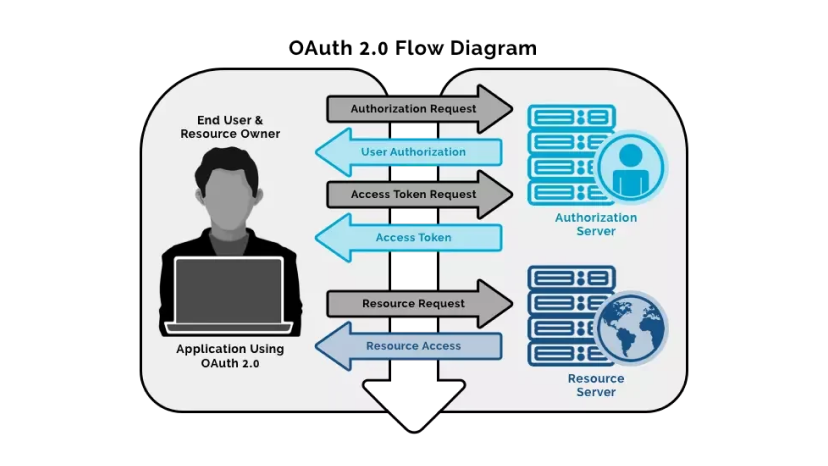
The explosion of shadow SaaS adoption, misconfigured cloud permissions, OAuth token theft, and MFA fatigue attacks creates critical exposure points that organizations cannot see or control. Traditional security systems typically don't collect the necessary telemetry to identify these issues, requiring data correlation from multiple sources, including identity logs, network traffic, cloud activity, and device access patterns.
Machine Identity Explosion
The proliferation of machine identities, service accounts, API keys, and application credentials is multiplying faster than human identities, introducing massive blind spots as these non-human accounts typically lack proper monitoring, encryption, rotation, and lifecycle management. Unlike human identities, machine identities form complex, undocumented webs of interconnection where a compromised low-privilege service account can provide lateral movement paths.
Poor Identity Hygiene
Poor identity hygiene and fragmented access management create an environment where even sophisticated security tools operate with incomplete information, generating false positives while missing genuine threats that slip through cracks between disconnected systems. Organizations allocate heavy budgets for prevention and identity data quality measures, creating a cycle where poor data leads to excessive alerts.
Financial Impact and Detection Delays
Identity-related breaches cost organizations significantly more than general data breaches, with limited visibility into privileged accounts directly contributing to delayed threat detection and prolonged attacker dwell time. As we approach 2026, these blind spots will intensify as AI-driven attacks, deepfake authentication bypass, and agentic AI usage create new identity verification challenges that traditional security controls cannot address.
The Top 15 Critical Identity Security Blind Spots
Blind Spot 1: Weak Credential Management
Weak, reused, or default passwords remain a primary entry point for attackers, with credential-based attacks increasing 71% year-over-year. Users resort to predictable patterns or password reuse across multiple platforms. Stolen credentials provide attackers with legitimate access to sensitive data and network resources, enabling them to "log in" rather than "hack in".
How miniOrange Solves This: Customizable password policies enforce strong credential standards across all applications, complemented by 15+ MFA methods, including passwordless authentication, biometric verification, and hardware tokens to secure every access point.
Blind Spot 2: Unmanaged Network Devices
Routers, switches, firewalls, and IoT devices often lack integration with centralized identity management systems, relying instead on default credentials or locally managed accounts. These network infrastructure devices provide privileged access to critical systems but rarely receive the same security scrutiny as user accounts.
How miniOrange Solves This: miniOrange MFA protection extends to network devices like routers, switches, VPN, and firewalls without requiring agents, ensuring secure authentication for all infrastructure access.
Blind Spot 3: Insecure Operating Systems
Outdated operating system versions, unpatched vulnerabilities, and security misconfigurations create exploitable weaknesses that attackers leverage for privilege escalation and lateral movement. Without OS-level access controls and compliance validation, unauthorized users can access sensitive data from non-compliant systems, bypassing application-layer security measures entirely.
How miniOrange Solves This: OS-based conditional access policies block authentication from outdated or non-compliant systems while providing detailed compliance reporting for audit requirements.
Blind Spot 4: Mobile Device Vulnerabilities
Bring Your Own Device (BYOD) policies and unmanaged mobile endpoints accessing corporate resources without proper security controls create significant data exposure risks. Lost or stolen mobile devices with cached credentials provide attackers with immediate access to enterprise systems without triggering traditional security alerts.
How miniOrange Solves This: Integration with Mobile Device Management (MDM) platforms enforces device compliance checks, manages secure MFA tokens on mobile endpoints, and implements conditional access based on device security posture.
Blind Spot 5: Cloud Application Misuse
Unauthorized SaaS adoption and shadow cloud applications bypass centralized identity controls, creating unmonitored access paths to sensitive business data. Cloud application misconfigurations and excessive permissions granted during initial setup remain undetected, enabling data exfiltration and unauthorized third-party integrations.
How miniOrange Solves This: miniOrange SSO enforcement across all cloud applications using SAML, OAuth, and OpenID Connect protocols, providing unified access control and comprehensive visibility into SaaS usage.
Blind Spot 6: Lack of Centralized Identity Management
Fragmented identity data scattered across multiple directories, cloud platforms, and application silos prevents comprehensive security visibility and consistent policy enforcement. This fragmentation creates dangerous gaps where attackers exploit inconsistencies between systems, accessing resources through identity data discrepancies that no single tool can detect.
How miniOrange Solves This: A unified identity management platform provides centralized user provisioning, directory synchronization, and single-pane-of-glass visibility across cloud, on-premise, and hybrid environments.
Blind Spot 7: Missing Role-Based Access Controls (RBAC)
Over-permissioned users receiving broad access rights instead of role-specific permissions violate least privilege principles and expand the attack surface unnecessarily. Without proper RBAC implementation, every compromised account creates a threat with excessive privileges to access sensitive data, modify configurations, and escalate to administrative control.
How miniOrange Solves This: Comprehensive role-based access control with policy-driven permissions, Attribute-Based Access Control (ABAC), and automated role assignment based on user attributes and group memberships.
Blind Spot 8: Inactive or Orphaned Accounts
Dormant accounts from departed employees, contractors, or role changes maintain active credentials and system access long after their legitimate need expires. Manual deprovisioning processes fail to remove access across all connected systems, leaving orphaned accounts as persistent attack vectors. Moreover, organizations often lack monitoring to detect when dormant accounts suddenly become active.
How miniOrange Solves This: SCIM-based provisioning and deprovisioning instantly removes access across all applications when users depart or change roles, eliminating orphaned account risks.
Blind Spot 9: No Device Trust Validation
Unknown, unmanaged, or potentially compromised devices accessing sensitive corporate data without trust verification create significant security risks. Without device fingerprinting and continuous trust assessment, stolen devices with cached credentials can still authenticate successfully. Compromised endpoints running malware may also gain access to protected resources.
How miniOrange Solves This: Adaptive authentication evaluates device posture, security compliance, and risk factors before granting access to sensitive applications.
Blind Spot 10: Inconsistent Authentication Across Platforms
Multiple disconnected login systems across on-premise, cloud, and SaaS environments create security gaps and inconsistent authentication enforcement. Users maintain separate credentials for each platform, leading to password reuse, weak authentication practices, and the inability to enforce uniform MFA policies.
How miniOrange Solves This: Unified SSO integration enables consistent authentication policies across all platforms with identity brokering for disparate protocols, unifying authentication experiences.
Blind Spot 11: Lack of Encryption for Sensitive Data
Unencrypted data at rest in storage systems and in transit across networks exposes sensitive information to interception and unauthorized access. Authentication tokens, session cookies, and API credentials transmitted without proper encryption provide attackers with credential theft through man-in-the-middle attacks and network sniffing.
How miniOrange Solves This: Authentication tokens and session data receive industry-standard TLS encryption in transit, while Privileged Access Management (PAM) vaults privileged credentials with AES-256 encryption for data security at rest.
Blind Spot 12: Poor Visibility into Access Logs
Fragmented audit trails scattered across multiple systems prevent comprehensive security monitoring and forensic investigation of security incidents. Without unified visibility and real-time access monitoring, suspicious patterns like impossible travel, privilege escalation, and lateral movement go undetected until significant damage occurs.
How miniOrange Solves This: Centralized access logging, real-time activity monitoring, comprehensive audit reports, and exportable compliance documentation track all authentication and privileged access events.
Blind Spot 13: Misconfigured Access Policies
Configuration errors in access control rules, permission assignments, and authentication policies create unintended security exposures and compliance violations. Cloud platform misconfigurations grant overly broad permissions to users and service accounts, while complex policy syntax leads to administrator mistakes.
How miniOrange Solves This: Guided policy configuration wizards, pre-built templates for common scenarios, policy validation tools, and automated compliance checks prevent misconfigurations.
Blind Spot 14: Privilege Sprawl and Inactive Privileged Accounts
Privileged accounts accumulate excessive permissions over time without proper review or revocation, creating toxic combinations that violate least privilege principles. Without automated discovery and lifecycle management, IT teams cannot track which privileged accounts exist, who uses them, or when permissions should be revoked.
How miniOrange Solves This: Automatic discovery catalogs all privileged accounts, while Privilege Elevation & Delegation Management (PEDM) enforces least privilege with Just-In-Time (JIT) access and automatic privilege revocation.
Blind Spot 15: Fragmented User Lifecycle Management Across Systems
Organizations lack centralized control over user identities throughout their lifecycle, from onboarding through role changes to offboarding, resulting in orphaned accounts, inconsistent access rights, and manual errors across multiple applications and directories. Without automated provisioning and deprovisioning, departed employees and contractors retain access to sensitive systems, while new users experience delays in receiving necessary permissions.
How miniOrange Solves This: SCIM-based provisioning, HR-driven provisioning, and synchronized deprovisioning across all connected applications ensure accurate identity records and timely access updates throughout the entire user lifecycle.
Best Practices for Eliminating Identity Security Blind Spots
Centralize Identity and Access Management
Adopt a unified IAM framework that consolidates identity stores, authentication methods, and access policies into a single control plane. This reduces fragmentation and ensures consistent enforcement of security policies across cloud, on-premise, and hybrid environments. Centralization also improves visibility, making it easier to detect anomalies and respond to threats in real time.
Enforce Encryption Everywhere
Ensure strong encryption is applied across all stages of data handling, at rest, in transit, and during authentication workflows. Use modern encryption standards and key management practices to safeguard sensitive information from interception, leakage, or tampering. Encryption should be embedded into every layer of your infrastructure, not treated as an add-on.
Extend MFA to All Access Points
Move beyond basic MFA for logins and enforce it across all entry points, including VPNs, cloud applications, administrative access, APIs, and remote sessions. Adaptive MFA can further enhance security by adjusting authentication requirements based on risk signals such as location, device posture, or user behavior.
Integrate Network Access Control with Device Management
Combine NAC with endpoint/device management to ensure only trusted and compliant devices can access corporate resources. Validate device health, patch levels, encryption status, and security posture before granting access. This helps prevent compromised or unmanaged devices from becoming entry points for attackers.
Automate Lifecycle and Credential Management
Implement automated workflows for user onboarding, role changes, and offboarding to eliminate delays and manual errors. Ensure timely deprovisioning of access and regular credential rotation to reduce the risk of orphaned accounts or stale permissions. Automation also helps maintain compliance and audit readiness by enforcing consistent policies across the identity lifecycle.
Conclusion
Identity security blind spots spanning unmanaged devices, weak encryption, poor access management, and insufficient network security expose organizations to preventable breaches and data loss. Addressing these vulnerabilities requires comprehensive solutions combining secure IAM, robust PAM, device management, and network access controls.
miniOrange delivers modular yet integrated platforms, IAM for centralized access management and secure authentication, and PAM for privileged credential security and session monitoring, that work independently or together to eliminate identity blind spots and protect data across devices and networks.
Frequently Asked Questions
What is the biggest identity security blind spot affecting data protection?
Shadow access through unmanaged accounts and identity misconfigurations are major gaps, contributing to a significant share of breaches. Fragmented identity data across systems creates blind spots that attackers exploit.
How do identity blind spots compromise device and network security?
Unmanaged devices, weak authentication, and poor endpoint hygiene allow attackers to bypass controls. Cached credentials and missing endpoint protection often serve as entry points.
Why is encryption critical for identity security?
Encryption protects credentials and session data from interception and unauthorized access. Without it, attackers can steal tokens and bypass authentication safeguards.
How does network access control address identity blind spots?
Network Access Control (NAC) enforces device compliance and authentication before granting access. It checks device health and integrates with identity systems for adaptive security.
Can IAM and PAM secure both data and device access?
Yes, IAM secures authentication across users and devices, while PAM protects privileged access. Together, they enable controlled access with monitoring and credential protection.
About the Technical Expert

VP Engineering, IDP Technology
Pratish has over 10+ years of experience in the Cyber Security Domain. Have spent years building secure and reliable backend systems, on-premise & cloud-native SaaS products, and various Cyber Security products with a core focus around Identity and Data Security.
About the Author

Content Writer
Minal is an experienced B2B content writer. She has written over 250 articles across industries like UI/UX, real estate, automotive, digital marketing, SaaS, AI & ML, and cybersecurity. She brings her interest in cybersecurity to life by creating clear, engaging content tailored for technical, non-technical, and creative pieces. Her aim is to simplify complex topics, highlight product value, and connect with both technical and non-technical audiences.
Leave a Comment