
The daily workforce logs into your apps from multiple locations, which include residential homes, business sites and international offices, whereas on-premise users need a better security approach in the face of rising threats. The number of remote workdays will increase by 70% by 2025, according to Gartner. Users who access on-premises applications through unprotected networks and unsecured personal devices become exposed to higher security threats.
Staff members who work between home and office environments create major security risks for their organizations. Staff members connect to their work networks by using home Wi-Fi networks and public hotspots while working on unsecured personal devices that do not have encryption and fail to receive software updates. The combination of 76% organizational cyberattack surface and 73% remote worker personal device usage creates an environment that makes phishing attacks, ransomware incidents, and data breaches more probable.
The direct internet connection to on-premise applications creates security vulnerabilities that become targets for attackers who use brute-force attacks, credential stuffing and zero-day exploits. Security leaders report that unpatched VPN vulnerabilities lead to maximum ransomware attacks and most of them express concerns about third-party backdoor vulnerabilities. Organizations now use zero-trust models because these systems have replaced traditional VPN systems.
The miniOrange Access Gateway system resolves security issues by delivering protected and efficient application access that users can operate easily. The system functions as an encrypted gateway that protects internal applications from internet exposure while implementing robust authentication and detailed access management, and secure access for all users, including employees and contractors, and partners, without requiring VPNs. The article shows how miniOrange Access Gateway (MAG) provides secure access to legacy enterprise application features through its integration methods.
What is miniOrange Access Gateway?
miniOrange Access Gateway delivers on-premises access management with seamless integration for your existing apps. This solution empowers your business with:
- Single Sign-On (SSO) for frictionless logins across every platform.
- Multi-Factor Authentication (MFA) that strengthens account security - no exceptions.
- Centralized access control to simplify and secure how users connect.
- Reverse proxy deployment for streamlined protection, even for legacy systems.
With miniOrange Access Gateway, you get ironclad security, smooth user experiences, and the freedom to scale, without compromise.
Security Challenges in On-Premises Applications
The security protocols of legacy on-premise applications do not support modern authentication methods, including MFA, because they use outdated authentication standards. Organizations experience various security threats because their outdated legacy systems use obsolete authentication methods which allow attackers to steal passwords and guess them successfully, while making system breach detection through monitoring and auditing activities more difficult.
The restricted growth potential of on-premises applications prevents them from meeting your evolving security requirements.
Organizations struggle to fulfill their regulatory needs because their on-premises applications maintain special designs that store confidential data.
Multiple on-premise applications face a major challenge with user access rights management because organizations need to create centralized access controls with flexible permission systems to prevent security threats.
The solution of these security issues stands as an essential requirement. The miniOrange Access Gateway enables organizations to protect their outdated systems through authentication and access control updates, which establish simple security frameworks that scale efficiently and maintain regulatory compliance.
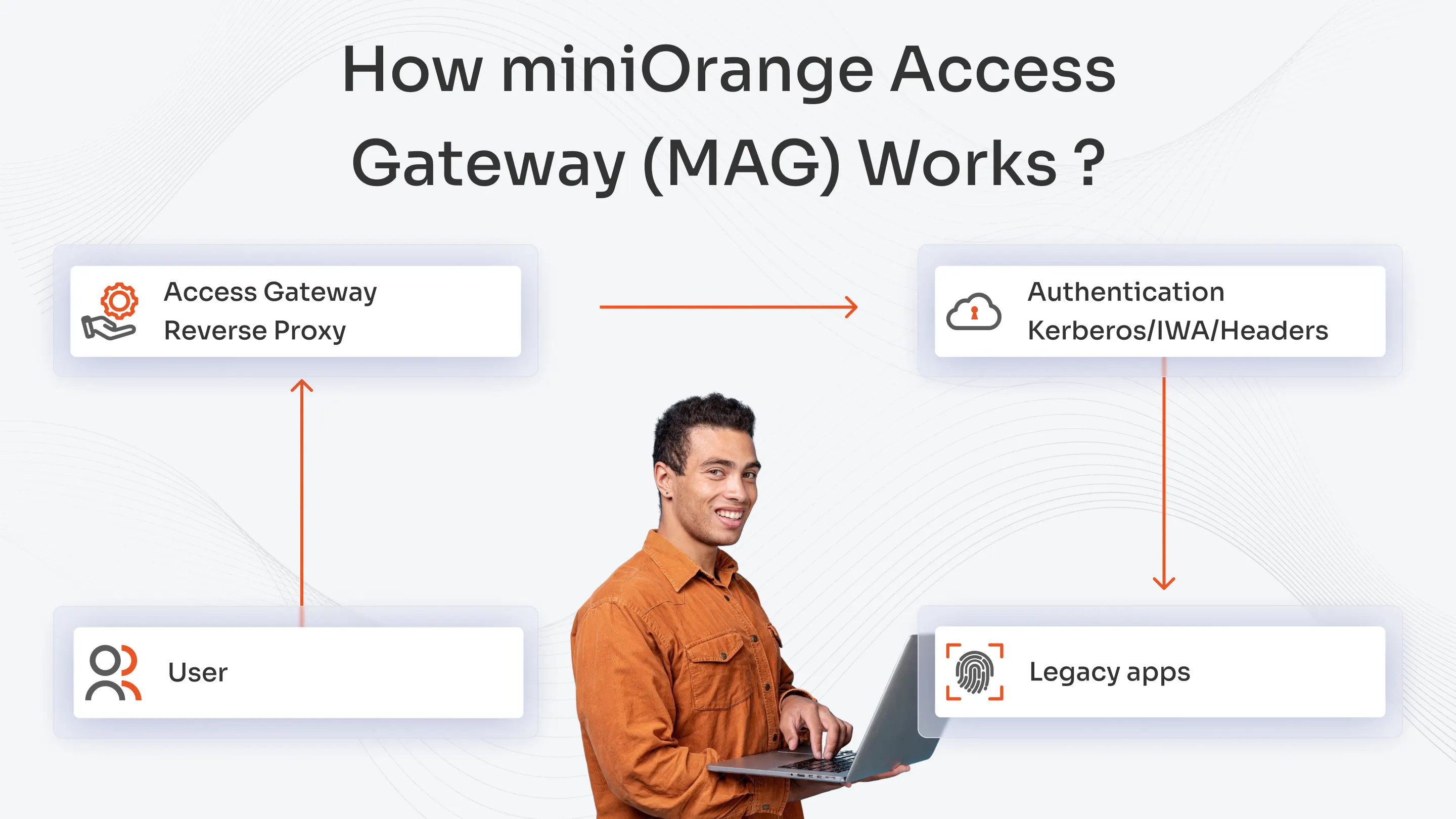
How miniOrange Access Gateway Works to Up Your Legacy Security
The security solution, miniOrange Access Gateway, protects applications running in cloud environments, on-premise locations, and legacy systems. The solution functions as a reverse proxy system, which provides centralized authentication and zero-trust protection through a codeless implementation.
- Single Sign-On (SSO): Users need to authenticate only once to access their authorized applications through SAML and OAuth and header-based authentication methods. The system decreases password reset needs to 20% while enhancing employee productivity between old and new systems.
- Multi-Factor Authentication (MFA): The system uses adaptive multi-factor authentication which requires OTPs and push notifications and biometric authentication and FIDO2 tokens for every login attempt. The system performs real-time threat blocking through risk-based authentication even when applications do not support built-in authentication.
- Centralized Access Control: The system provides administrators with a unified interface to create access policies, which supports authentication through Active Directory, Google Workspace and LDAP. The system maintains complete session records of all user sessions, which enables fast compliance checks and audit operations.
- Reverse Proxy Deployment: The gateway operates as a reverse proxy to protect backend applications through traffic filtering, which stops hackers from performing lateral movement attacks. The system operates without interruption during its most demanding usage time.
- Granular Access Policies: The system allows administrators to create access rules through role-based access and IP location restrictions and device health checks and time-sensitive access permissions which follow organizational policies. The authentication process becomes more secure when users perform sensitive operations.
MAG Integration with Existing On-Premises Applications
Bringing advanced security to your legacy apps doesn’t have to be a trouble, as miniOrange Access Gateway makes it simple and smooth.
- Seamless Integration: miniOrange Access Gateway deploys as a reverse proxy behind your firewall and connects legacy apps without code changes or downtime. It injects authentication headers, tokens, or credentials transparently, enabling modern SSO and MFA on older systems. Teams roll it out quickly, often in days, while preserving app functionality and performance.
- Authentication Methods Supported:
- Kerberos & URL Authorization: The system protects Windows applications and custom endpoints through Kerberos and URL Authorization which use Active Directory tickets for authentication and perform fundamental URL validation.
- Integrated Windows Authentication (IWA): The system uses Integrated Windows Authentication (IWA) to provide domain access through NTLM or Kerberos authentication, which eliminates the need for user authentication.
- Header-Based Authentication: The system enables header-based authentication to send user identity information through HTTP headers for applications that need particular login information.
- Use Cases: Organizations protect Oracle E-Business Suite with header injection for ERP workflows. PeopleSoft and JD Edwards gain SSO for HR and finance teams. Siebel CRM and QlikView handle analytics securely through IWA or Kerberos. These integrations support hybrid environments and scale across PHP, Java, or other app stacks.
By connecting your legacy systems with the latest advanced security, miniOrange Access Gateway lets you upgrade authentication without skipping a beat or slowing down your business.
miniOrange Access Gateway Benefits Beyond Security
The miniOrange Access Gateway doesn’t just boost security, it also streamlines workflows, cuts IT workload, ensures compliance, and scales effortlessly as your organization grows. With Single Sign-On, automated policy enforcement, and seamless deployment options, it’s built to support both users and administrators in any environment.
- Enhanced User Experience: Users gain access to multiple applications through Single Sign-On after performing a single login process. The system resolves password problems, which allows users to work at increased speeds while completing their daily work tasks efficiently. Users can access the system through web browsers because it needs no additional software or complicated installation procedures.
- Reduced IT Overhead: The number of support requests and troubleshooting calls that IT teams need to handle decreases. The gateway system performs authentication functions and policy enforcement through its basic operation, which supports existing directory infrastructure. Teams spend their time creating strategies because they need to avoid ongoing system maintenance work.
- Compliance Assurance: The system provides detailed logs and policy enforcement capabilities, which fulfill requirements from GDPR and SOC2 standards. The system monitors all system access attempts while producing inspection-ready audit reports, which users can use for monitoring purposes. The system creates trust bonds with users at the same time as it protects organizations from legal risks.
- Scalability: The solution maintains performance levels when organizations expand their user base and application collection. The solution allows users to deploy their system across cloud environments and on-premises locations and hybrid configurations for adaptable expansion. The system operates without interruption during peak usage times because of its high availability feature.
miniOrange Access Gateway vs. Traditional VPNs
The miniOrange Access Gateway outshines traditional VPNs by adopting a Zero Trust security model that verifies user identity before granting access, unlike VPNs that trust all users inside the network perimeter. It also offers a superior user experience with browser-based Single Sign-On and Multi-Factor Authentication, full legacy app support through header-based authentication, and flexible deployment across cloud, on-premises, and hybrid environments, making it a smarter, more scalable access solution.
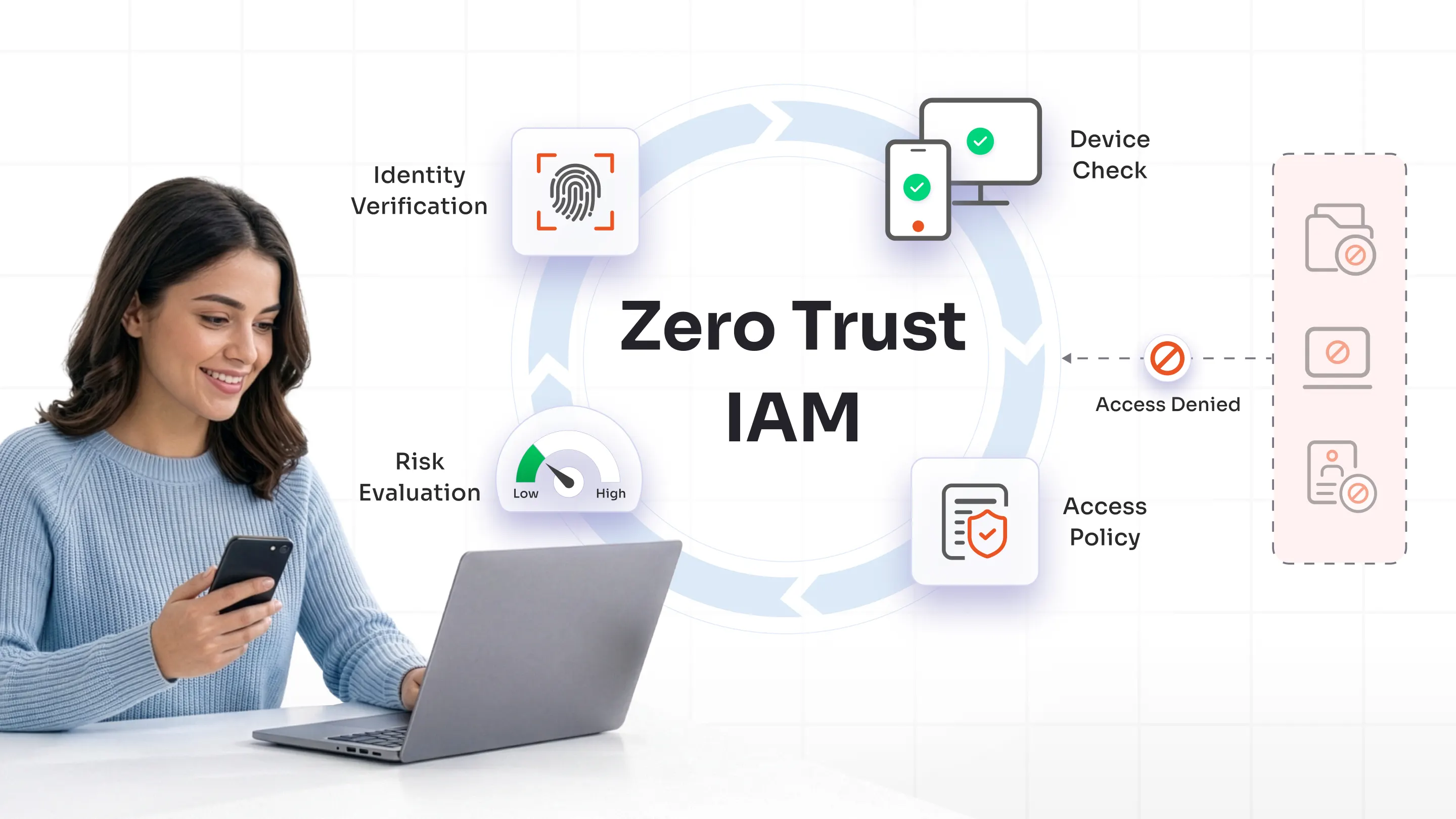
- Security Model: Traditional VPNs operate with a network perimeter security model, which grants full access to all users who exist within the network boundaries. The Access Gateway from miniOrange implements Zero Trust security by authenticating users and their devices through identity verification before enabling network access.
- User Experience: VPNs create performance delays for users who need to access resources and users must download additional client software. The Access Gateway available through web browsers lets users access Single Sign-On and Multi-Factor Authentication features which offer fast and secure authentication methods.
- Legacy App Support: Standard on-site applications and specialized applications that operate from physical locations create difficulties for VPN connection establishment. The Access Gateway provides complete application compatibility through its header-based authentication system, reverse proxy functionality, and additional flexible authentication methods.
- Deployment Flexibility: VPNs function through established network frameworks, which prevent them from expanding beyond their predefined boundaries. The Access Gateway platform enables organizations to protect their resources across cloud and on-premises,2 and hybrid environments without interrupting their current systems.
Getting Started with MAG for Better Security
The security gap between traditional on-premises applications and contemporary authentication requirements gets closed by miniOrange Access Gateway (MAG). The solution provides robust access protection through its combination of strong authentication mechanisms and unified single sign-on and adaptive multi-factor authentication without requiring expensive system updates. The solution unifies identity and access management functions into one platform, which enables organizations to achieve simplified compliance and defend their internal systems from modern security threats.
Your organization needs to improve its current on-premises security system. The miniOrange Access Gateway solution enables your organization to achieve complete protection and control through its advanced security features.
FAQs
How does an access gateway strengthen security during user login and verification?
An Access Gateway acts as a gatekeeper between users and internal applications, verifying identity, enforcing multi-factor authentication, and applying security policies before granting access. It blocks unauthorized entry even if credentials are compromised, ensuring access is controlled, logged, and secure.
Can an access gateway protect both legacy and modern applications without requiring changes to the applications?
An Access Gateway can protect both legacy and modern applications without changing the application itself. The access gateway acts as an intermediary proxy, securing access to legacy, on premise or cloud based applications without modifying any code.
What role does an access gateway play in implementing a Zero Trust security model?
To implement a Zero Trust security model, an access gateway will verify every access request made by all users and devices, enforce granular access policies, and limit access to only those resources that are needed to minimize the attack surface.
How does an access gateway help meet compliance and audit requirements?
An access gateway will also support compliance and audits of access requests made by users through centralized logging and detailed reporting of who accessed what, when and how. This will help organizations comply with regulations like GDPR, HIPAA, and SOC 2.
What types of authentication and access control methods do access gateways typically support?
Access gateways support various authentication and access control methods, including biometrics, hardware tokens, one-time passwords (OTP), and adaptive risk-based authentication that adjusts methods based on user behavior and context.
Leave a Comment