


Privileged access has become significantly more complex over the last few years. Security teams are managing Windows and macOS devices, administrators rely on native tools to do their jobs, network infrastructure continues to expand, and operational technology environments are becoming increasingly interconnected. At the same time, manual approval processes and fragmented controls often create more friction than protection.
Over the past several months, our PAM experts have worked closely with customers to understand the operational challenges they face every day. One thing became clear: organizations need stronger controls without disrupting how people work. That's exactly what our engineering team focused on while building the latest enhancements to the miniOrange PAM solution.
Why Endpoint Privilege Management Needs to Work Across Windows and macOS
Modern organizations rarely operate in a single operating system environment. Employees and administrators work across Windows, macOS, and Linux devices, yet many endpoint privilege management strategies still rely on separate tools and disconnected policies. This often leads to inconsistent controls, excessive privileges, and increased operational complexity.
Microsoft estimates that removing administrator rights can mitigate more than 90% of critical vulnerabilities. Yet many organizations still struggle to apply least privilege controls consistently across endpoints.
Based on conversations with customers, our endpoint PAM solution experts found that security teams wanted a simpler way to manage privileges without introducing more complexity. They needed a solution that could secure both Windows and macOS devices while preserving user productivity.
Consistent Policies Across Every Endpoint
The latest release, miniOrange PAM 2.5.0 introduces native Endpoint Privilege Management for macOS alongside enhancements to Windows endpoint controls. Instead of maintaining separate policies, administrators can now apply policies that automatically adapt to the appropriate operating system.
This helps organizations establish more consistent endpoint privilege management and reduces the risk of configuration gaps across mixed environments.
Simplifying Endpoint Administration
As environments grow, managing devices individually becomes difficult. To address this challenge, our engineering team focused on making endpoint administration easier and more scalable.
Organizations can now group devices together, manage policies at scale, and roll out agent updates gradually instead of updating every endpoint at once. These staged deployments help teams reduce disruptions and validate changes before broad implementation.
For urgent situations, the platform also includes a high-priority Kill Switch capability that allows administrators to quickly contain applications or devices when immediate action is required.
Bringing Least Privilege to Modern Endpoints
Our goal wasn't simply to add support for another operating system. It was to make endpoint privilege management easier to implement across diverse environments.
By extending endpoint PAM capabilities across Windows and macOS, organizations can eliminate unnecessary privileges, simplify administration, and strengthen endpoint security without disrupting users.
Database Admin Shouldn't Have to Choose Between Security and Productivity
Database administrators live inside their tools. Whether it's DBeaver, pgAdmin, SQL Server Management Studio, or MySQL Workbench, these platforms are essential to managing performance, troubleshooting issues, and keeping business applications running.
Unfortunately, traditional privileged access solutions often introduce unnecessary friction. Manual credential retrieval, copy-pasting passwords, and forcing teams into unfamiliar workflows can slow operations and increase risk.
Through discussions with customers, our PAM experts noticed a common pattern: database teams wanted stronger security, but they didn't want to abandon the tools they trust. Security should support existing workflows, not replace them.
Security Should Fit the Way Administrators Work
For our engineering team, the goal was simple. Bring security closer to how administrators already work.
Instead of requiring users to switch interfaces or manually retrieve credentials, the miniOrange PAM solution now enables secure database connectivity while preserving familiar workflows. Administrators can continue working through the tools they know best while the platform protects credentials behind the scenes.
Continue Using Preferred Database Tools
Organizations can securely connect to:
- MySQL
- PostgreSQL
- Oracle Database
- Microsoft SQL Server
- MongoDB
Using familiar clients such as:
- DBeaver
- pgAdmin
- SQL Server Management Studio
- MySQL Workbench
- MongoDB Compass
This approach allows database teams to remain productive while security teams gain stronger governance and visibility.
Protect Credentials Without Sacrificing Visibility
Copying and sharing passwords creates unnecessary risk. That's why our PAM engineers focused on eliminating manual credential handling altogether.
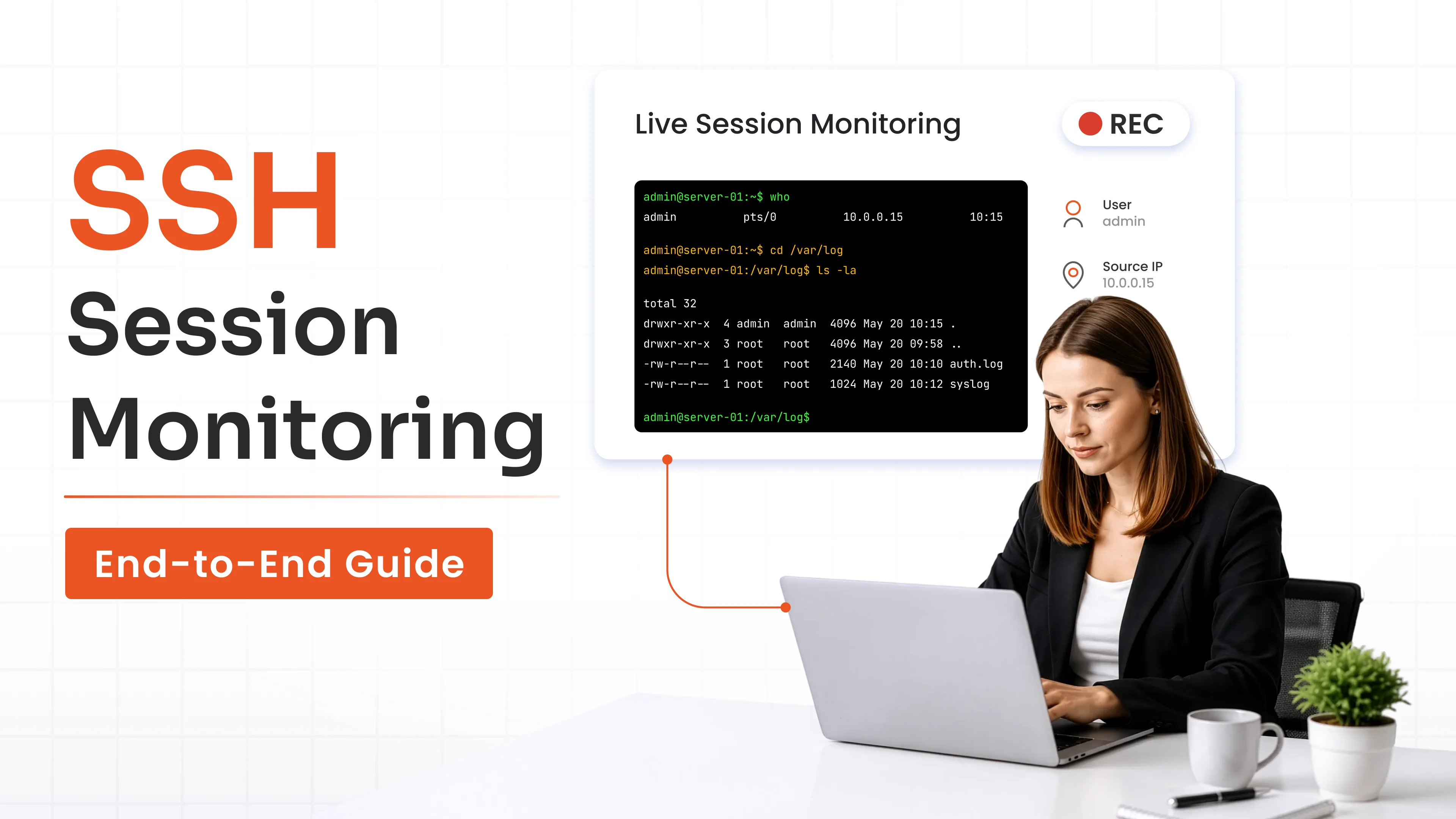
Credentials remain protected inside the platform while secure connections are established in the background. At the same time, database sessions and queries are fully audited, giving security teams better visibility without changing the administrator experience.
The result is a simpler and more secure approach to privileged database access, one that balances productivity with stronger governance.
Making Privileged Access Requests Easier to Govern
As organizations grow, privileged access decisions become harder to manage. Approvals are often scattered across email threads, Teams messages, and ad hoc conversations. Requests get delayed, accountability becomes unclear, and maintaining audit trails turns into a manual process.
Through conversations with customers, our PAM experts noticed that many organizations were struggling to balance speed with governance. Teams needed access quickly, but security leaders also needed confidence that every decision could be traced and justified.
Moving Beyond Manual Approvals
Traditional approval chains don't scale. Different applications, resources, and teams require different levels of oversight, and relying on manual coordination often creates bottlenecks.
To address this challenge, we introduced a visual workflow engine that helps organizations automate access decisions based on their own requirements. Instead of relying on email approvals, teams can establish structured workflows that are easier to manage and audit.
Flexible Workflows for Different Business Needs
Not every access request should follow the same process. Some requests may require multiple approvers, while others need immediate access based on predefined conditions.
Organizations can now implement:
- Multi-level approval workflows
- Maker-checker controls
- Delegated approvals
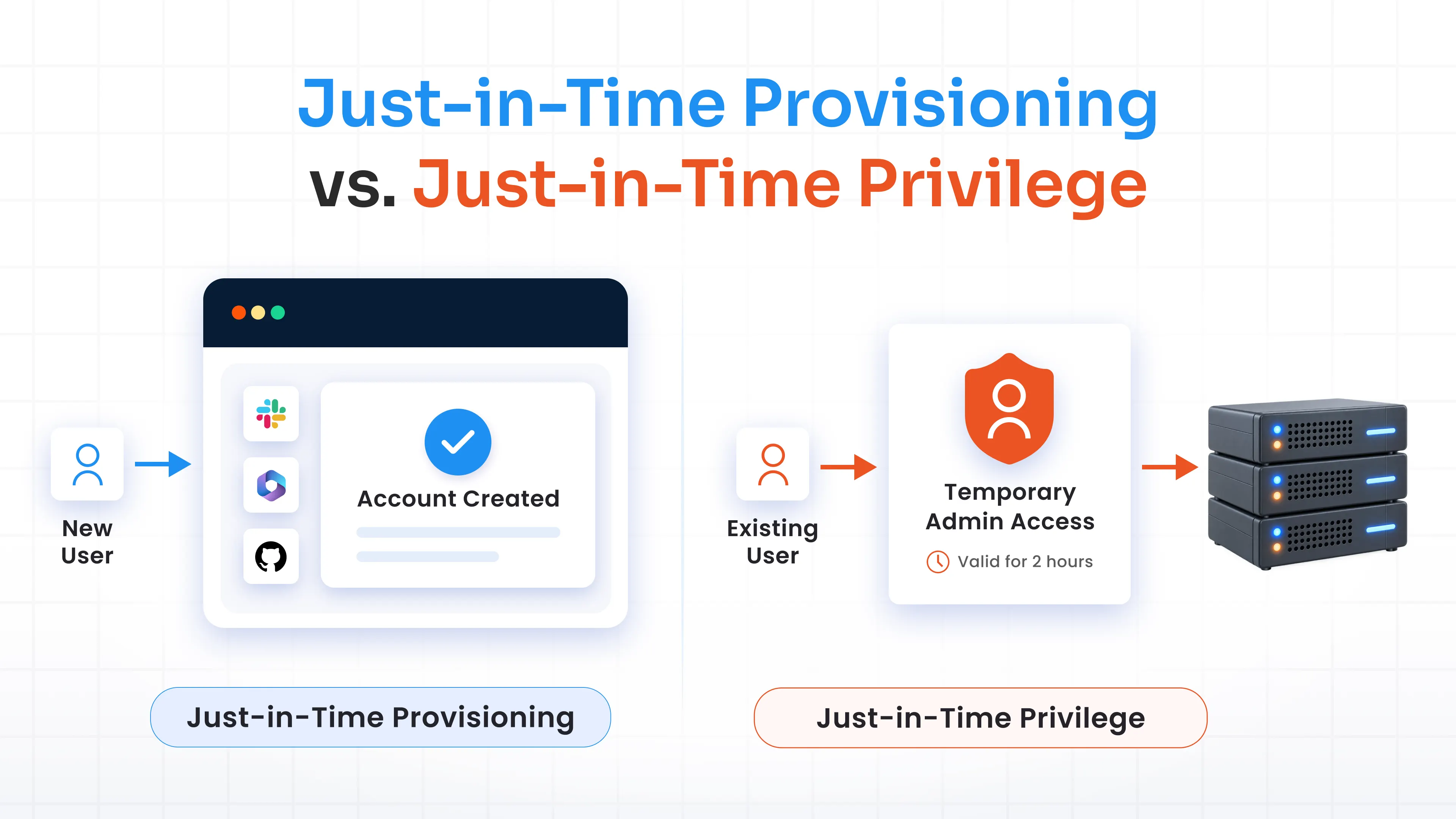
- Just-in-time access approvals
This gives security teams greater flexibility while ensuring that privileged access remains governed and accountable.
Faster Decisions with Better Accountability
Our goal wasn't simply to automate approvals. It was to help organizations remove unnecessary delays without compromising governance.
By replacing disconnected approval processes with structured workflows, the platform enables faster access decisions, clearer accountability, and stronger audit trails. This allows security teams to focus less on chasing approvals and more on reducing risk.
Privileged Access Has Expanded Beyond Servers
Privileged access management has traditionally focused on servers and applications. But infrastructure has changed dramatically. Organizations now manage routers, switches, firewalls, and industrial systems that are just as critical as traditional IT assets.
According to Gartner, 75% of organizations are expected to converge IT and OT security functions, reflecting the growing need for unified governance across these environments.
Over the past several months, our engineering team has seen a clear shift in customer requirements. Organizations no longer want separate tools for servers, network devices, and operational technology. They want a unified approach that provides visibility and consistent controls across the entire infrastructure landscape.
Bringing Network Infrastructure Under Centralized Governance
Network devices form the backbone of modern operations, but they are often managed independently from the rest of the privileged access ecosystem. This separation creates visibility gaps and increases administrative complexity.
To help close these gaps, the miniOrange PAM solution now extends privileged access controls to network infrastructure, enabling organizations to govern routers, switches, and firewalls using a common framework.
As a result, teams can establish consistent policies and gain better insight into administrator actions across critical infrastructure.
Securing Operational Technology Environments
Industrial systems are becoming increasingly connected to enterprise networks. As this convergence continues, operational technology environments require the same level of protection and visibility as traditional IT systems.
Our PAM experts recognized that organizations needed stronger governance for assets such as:
- PLCs
- SCADA systems
- HMIs
- DCS platforms
- RTUs
Extending privileged access controls to these environments helps reduce blind spots and strengthen the security of critical operations.
Building a Unified View Across IT and OT
Managing IT and OT environments separately often creates inconsistent policies and fragmented visibility. Security teams need a simpler way to govern every privileged asset without adding operational complexity.
That's why our engineering team focused on bringing servers, network devices, and industrial systems under a unified framework. The goal wasn't simply broader coverage. It was to help organizations simplify administration, improve visibility, and establish consistent controls across modern infrastructure.
Because privileged access no longer ends at the server. It extends across every system that keeps the business running, and security platforms must evolve to reflect that reality.
Strong Authentication Should Be Easy for Users
Passwords remain one of the weakest links in cybersecurity. According to Microsoft, password attacks now exceed thousands of attempts every second, making compromised credentials a constant threat. At the same time, security teams face another challenge: users expect access to be simple and seamless.
Through conversations with customers, our PAM experts found that organizations wanted stronger authentication without creating more friction. The goal wasn't to add more steps. It was to make secure access easier for users and harder for attackers.
Moving Beyond Passwords
Our engineering team continued investing in phishing-resistant authentication to help organizations reduce their reliance on passwords.
The platform now supports WebAuthn-based authentication methods, including:
- Windows Hello
- Face ID
- Touch ID
- Hardware security keys such as YubiKey
Because private keys remain on the device, these methods provide stronger protection against phishing attacks while delivering a more convenient login experience.
Building a Stronger Identity Foundation
Authentication is only one part of the identity journey. Managing users consistently across systems is equally important.
To simplify identity lifecycle management, our engineers introduced a centralized identity framework that provides a common approach to provisioning and managing users. This helps organizations maintain a stronger identity and access controls while reducing administrative complexity.
Ultimately, stronger security shouldn't come at the cost of usability. By combining phishing-resistant authentication with a simplified identity foundation, the miniOrange PAM solution helps organizations improve security without disrupting users.
Visibility Matters as Much as Access Control
Controlling access is only part of the security equation. Security teams also need context. During investigations, audits, and compliance reviews, understanding who accessed what and why is just as important as controlling access itself.
Over the past several months, our PAM experts heard a common concern from customers: they needed richer visibility across privileged activities without relying on manual reporting and fragmented logs.
Better Context for Investigations
To help security teams understand privileged activity more effectively, our engineering team expanded visibility across the platform.
Organizations can now benefit from:
- Expanded SIEM logging across PAM and endpoint PAM environments
- Session summary notifications
- Advanced filtering for recorded sessions
- Detailed policy and allocation audits
These capabilities help teams investigate incidents faster and reduce the time spent searching for information.
Greater Visibility into Elevated Activity
Knowing that an event occurred is important, but understanding whether it involved elevated privileges is equally critical.
The latest enhancements make it easier to distinguish privileged processes from standard activity. This provides greater context during investigations and helps security teams understand how elevated privileges are being used throughout the environment.
Simplifying Compliance and Audits
Maintaining audit readiness shouldn't require excessive manual effort.
Richer logs and improved visibility help organizations support compliance requirements while strengthening accountability. Instead of piecing together information from multiple systems, teams gain a clearer view of privileged activity across their infrastructure.
As privileged environments become more distributed, visibility becomes just as important as access control itself.
Supporting Service Providers and Global Teams
As organizations scale, administration becomes more complex. Managed service providers and global enterprises often need to manage multiple environments while maintaining isolation, visibility, and operational efficiency.
Our engineering team recognized that security teams needed a simpler way to manage distributed environments without adding overhead. That feedback led to enhancements designed specifically for service providers and global organizations.
Centralized Multi-Tenant Administration
Managing multiple customers or business units separately can quickly become difficult.
To simplify administration, the platform now includes a Super Admin Dashboard that enables:
- Multi-tenant management
- Shared license allocation
- Centralized administration
- Improved operational efficiency
This allows service providers to manage multiple environments from a single interface while maintaining separation between tenants.
Built for Global Teams
Security platforms should adapt to users, not the other way around.
To support distributed teams, our engineers expanded language support across the platform. Organizations can now work in more than 25 languages, including right-to-left layouts for improved accessibility.
Language preferences remain consistent across sessions, helping teams around the world work more efficiently and making the platform easier to adopt across regions.
As organizations continue to grow, administration should become simpler, not more complicated. These enhancements help security teams scale operations while delivering a consistent experience to users everywhere.
Small Improvements That Make a Big Difference
Not every enhancement needs to be a headline feature. In many cases, the biggest impact comes from improvements that make everyday tasks easier, faster, and more reliable.
Through customer conversations, our PAM experts found that administrators spend a significant amount of time managing repetitive tasks, troubleshooting delays, and dealing with operational bottlenecks. While these issues may seem small individually, they add up quickly as environments grow.
That's why our engineering team focused on refining the day-to-day experience alongside introducing new capabilities.
Faster Operations and Better Performance
Managing privileged access shouldn't slow teams down. To improve performance and scalability, the platform now delivers:
- Faster and more reliable RDP streaming
- Significantly quicker bulk operations
- Leaner deployments with smaller containers
- More flexible scheduling for scans and imports
These improvements help organizations scale operations more efficiently while reducing administrative overhead.
Enhancing Everyday User Experience
Small usability enhancements can make a meaningful difference over time. Based on customer feedback, our engineers introduced several improvements designed to simplify daily tasks.
Organizations can now benefit from:
- Session expiry warnings that prevent unexpected interruptions
- Favorite resources for faster access to frequently used systems
- Configurable MFA cool-down periods to reduce repeated prompts
- Faster resource provisioning and management
Individually, these changes may seem minor. Together, they help create a smoother experience for administrators and users alike.
Building Privileged Access Around How Teams Work
Modern privileged access management is no longer just about storing passwords in a vault. Organizations need broader controls that protect endpoints, preserve native workflows, automate approvals, improve visibility, and strengthen authentication without slowing users down.
Over the past several months, our PAM engineering team has worked closely with customers to understand the operational challenges they face every day. One message came through consistently: security solutions should adapt to the way people work, not force people to adapt to the security platform.
That philosophy shaped every enhancement introduced in this release.
From endpoint privilege management across Windows and macOS to secure database workflows, automated access approvals, expanded infrastructure support, and deeper visibility, our goal was to help organizations simplify privileged access security while reducing complexity.
With the latest enhancements, the miniOrange PAM solution takes another step toward making privileged access simpler, smarter, and better aligned with how modern teams operate.
FAQs
Does miniOrange PAM support Endpoint Privilege Management for macOS?
Yes. The latest release extends endpoint privilege management to macOS alongside Windows, enabling organizations to enforce least privilege policies across mixed environments from a centralized platform.
Which databases are supported by miniOrange PAM?
The miniOrange PAM solution supports MySQL, PostgreSQL, Oracle Database, Microsoft SQL Server, and MongoDB. Administrators can continue using native tools such as DBeaver, pgAdmin, SQL Server Management Studio, and MySQL Workbench.
Can miniOrange PAM automate privileged access approvals?
Yes. The platform includes a visual workflow engine that supports multi-level approvals, maker-checker controls, delegated approvals, and just-in-time access workflows.
Does miniOrange PAM support network devices and OT systems?
Yes. The platform extends privileged access management to routers, switches, firewalls, and operational technology assets such as PLCs, SCADA systems, HMIs, DCS platforms, and RTUs.
Does miniOrange PAM support passwordless authentication?
Yes. The platform supports phishing-resistant authentication methods, including Windows Hello, Face ID, Touch ID, and hardware security keys such as YubiKey through WebAuthn.
Leave a Comment