
Single Sign-On (SSO) means fewer password headaches, faster access, and better security for human users. But the same cannot be said for AI agents.
SSO, a core part of Identity and Access Management (IAM), which was initially built for humans, can no longer be used for AI agents. For humans, it was quite simple - just log in once, and authenticate across connected apps.
However, when an AI agent tries to authenticate the same way, the traditional access model breaks fast.
This blog unpacks why traditional SSO falls short for AI agents, how modern authentication flows need to be redesigned for autonomous systems, and what your security team should actually be doing about it right now.
Why Traditional SSO Fails for AI Agents
SSO was designed around one fundamental assumption: a human is at the keyboard. The entire flow, from the login screen to the session cookie, is built on human interaction signals. AI agents violate almost every one of those assumptions.
Traditional SSO relies on browser-based redirects, interactive login prompts, and user-driven consent screens. An AI agent has none of that. It can't click "Allow Access." It doesn't have a session that persists the way a browser tab does. And critically, it often needs to authenticate across multiple services simultaneously, sometimes within milliseconds, without any human in the loop.
Beyond the mechanics, there's a deeper problem: traditional SSO ties authentication to a user identity.
An AI agent isn't a user. It's a non-human principle that needs its own identity model, its own credential lifecycle, and its own set of permissions that don't inherit from any human account. When organizations try to work around this by giving agents a shared service account or a static API key, they create exactly the kind of standing privilege that attackers love.
The result? Overprivileged agents sitting on long-lived credentials with no audit trail, no rotation policy, and no scoping.
How AI Agents Handle SSO Requests
Getting the right SSO solution for AI agents means rethinking the flow from scratch, not retrofitting a human-centric model.
1. Authentication Flow
For autonomous agents, the authentication flow needs to be entirely programmatic, built around a machine-optimized OAuth 2.0 Device Flow rather than the browser-based redirects human SSO relies on.
The flow breaks down into three distinct steps:
a. Scope Declaration
Before a token is ever issued, the agent declares exactly what it needs. Task-specific OAuth scopes are requested at token generation time, not assumed after the fact. This forces explicit, auditable permission boundaries at the start of every workflow rather than relying on inherited or ambient access.
b. Cryptographic Handshake
Agents don't authenticate with passwords. Instead, they use X.509 certificates or hardware-backed keys, such as those stored in a TPM (Trusted Platform Module) or a cloud provider's HSM.
This eliminates an entire class of credential-based attacks. There's no password to phish or brute-force. The identity proof is cryptographic and tied to the agent's hardware or certificate infrastructure.
c. Context Binding
This is where agent SSO gets meaningfully more powerful than traditional service account auth. Tokens aren't just scoped to permissions; they also include certain parameters: the approved IP range the agent is expected to operate from, geolocation constraints, and the authorized compute zone.
If a token is somehow exfiltrated and replayed from outside those parameters, the identity provider rejects it outright. The token is only valid in the exact context it was issued for.
2. Session Lifecycle Management
Human SSO sessions can last hours or days. Agent sessions should be measured in minutes, sometimes seconds. Short-lived tokens, typically with expiry windows of 5 to 15 minutes, reduce the blast radius if a token is ever compromised.
3. Crucial Security Layers
Beyond the core flow, two security layers are non-negotiable. First, mutual TLS (mTLS) between the agent and the identity provider ensures both parties are who they claim to be, preventing token interception at the transport layer.
Second, token binding ties the access token to the specific client instance, so even if a token is exfiltrated, it can't be replayed from a different environment.
Types of SSO Workflows for AI Agents
Not all agents are the same, and their SSO workflows shouldn't be either.
1. Context-Aware Authentication
Context-aware authentication evaluates signals beyond just identity, including the agent's current task, the sensitivity of the resource being accessed, the environment it's running in (production vs. sandbox), and the time of day.
An agent requesting read access to a CRM record during a routine sync workflow should face a lighter authentication burden than the same agent requesting to export bulk data at 2 AM.
This is similar to adaptive MFA for humans, but for agents, context signals come from the orchestration layer: task metadata, workflow state, and runtime environment flags rather than device posture.
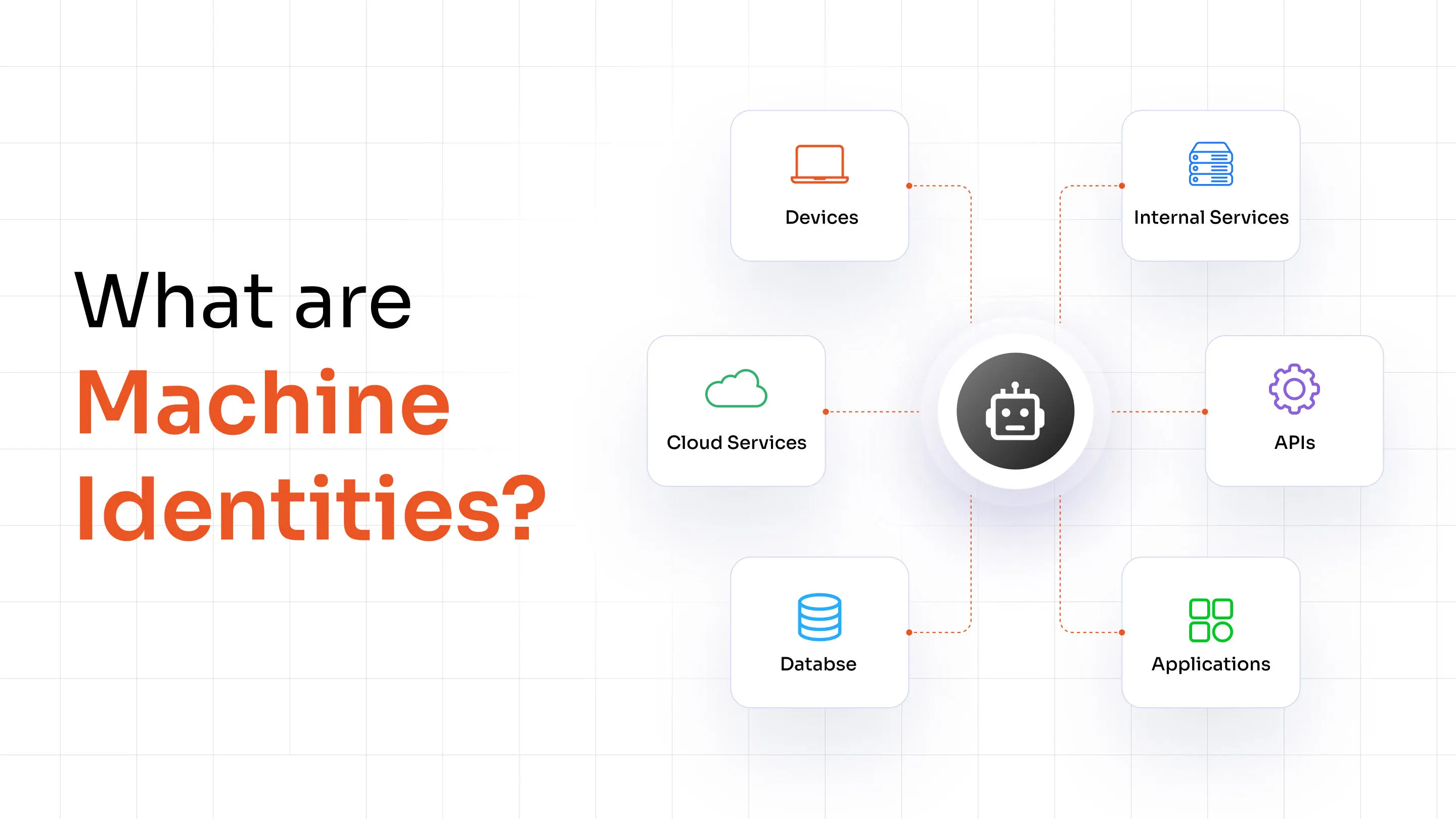
2. Machine Identity Management
Machine identity management treats each AI agent as a distinct non-human identity with its own certificate, credential, and lifecycle. Platforms like SPIFFE/SPIRE issue cryptographic identities to workloads at runtime, so each agent instance gets a short-lived X.509 certificate or JWT SVID (SPIFFE Verifiable Identity Document) that proves its identity to other services without static credentials.
This approach is critical in multi-agent systems where agents call other agents. Without workload identity, you can't meaningfully audit which agent took which action in a chain of autonomous decisions.
3. Ephemeral Credential Lifecycle
Ephemeral credentials are single-use or very short-lived secrets generated on demand and destroyed after use. For AI agents, this means the agent never holds a persistent credential in memory or configuration.
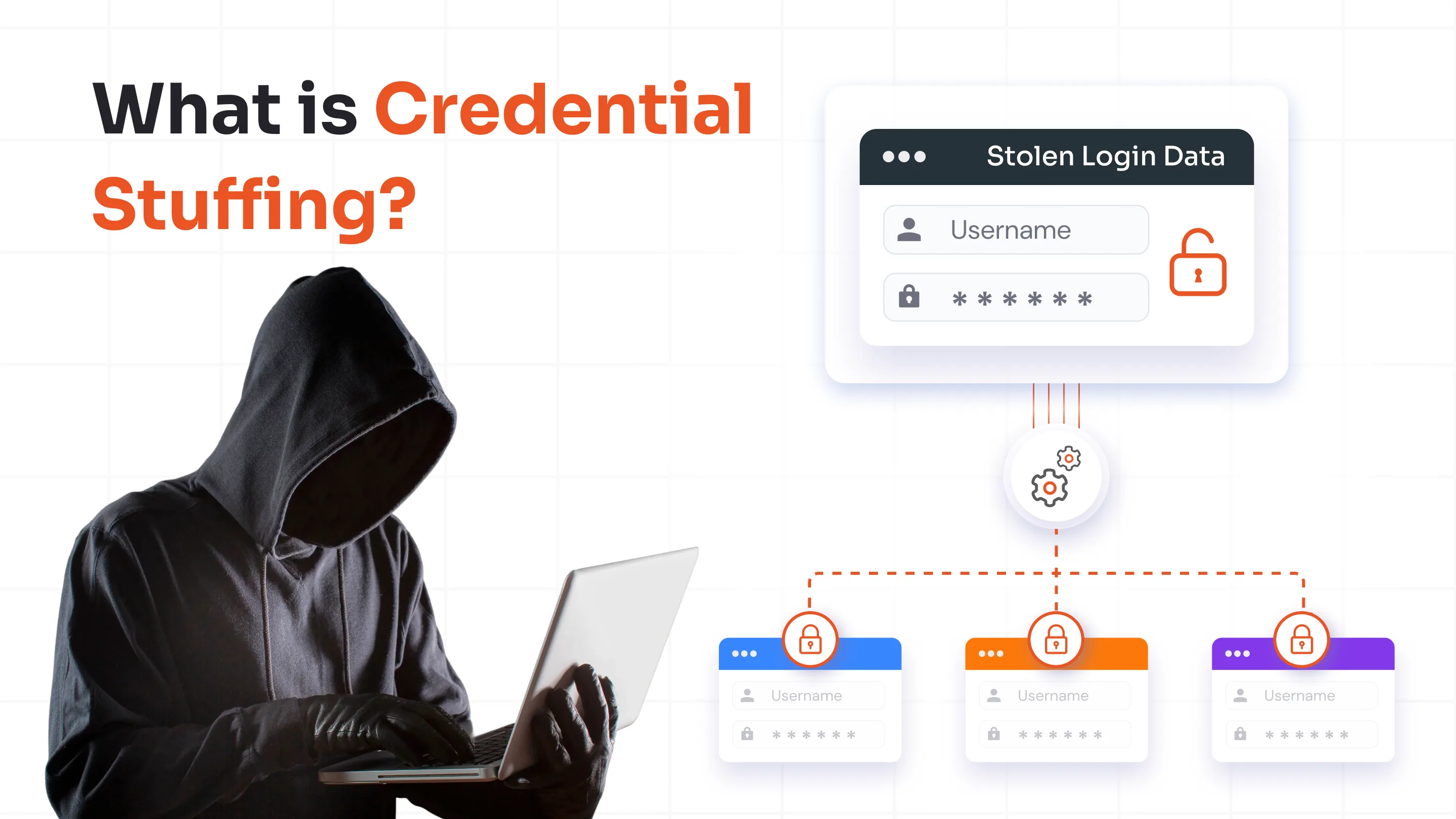
This eliminates an entire class of credential-stuffing and secret leakage attacks. There's nothing to steal if the credential doesn't exist beyond the moment of use.
4. Federated Agent Identity
In enterprises running multi-cloud or hybrid environments, agents need to authenticate across identity domains. Federated identity for agents extends the same OIDC-based federation model used for human cross-domain SSO, but applies it to workload identities.
An agent running in AWS can present an identity token that's trusted by an Azure AD-protected service, without static credentials on either side.
Why SSO is a Strategic Advantage for AI Agent Security
SSO for AI agents isn't just a security checkbox. When implemented correctly, it actively improves operational efficiency and reduces long-term risk. It brings with it many advantages, such as:
1. Granular Access Control
SSO tied to a proper identity platform lets you enforce role-based access control (RBAC) at the agent level, not the user level. An agent that summarizes support tickets needs read access to the ticketing system. It does not need write access, API access to billing, or any access to HR data.
SSO allows you to define and enforce those boundaries programmatically, and update them instantly across every service the agent touches.
2. Reduced Attack Surface
Every static API key and shared service account in your environment is a liability waiting to be exploited. SSO with ephemeral, scoped tokens replaces that entire class of credentials.
The attack surface doesn't just shrink; it becomes dynamic, which makes it far harder for attackers to map and exploit.
3. Better Monitoring and Auditing
When every agent authenticates through a centralized identity provider, every access event flows through a single audit log.
This single log allows you to answer questions like: which agent accessed which resource, under which workflow, at what time, with what scope?
This level of auditability isn't just useful for security investigations. It's increasingly required by compliance frameworks like SOC 2, ISO 27001, and the EU AI Act.
SSO Authentication Flow for AI Agents
Here's how a properly implemented SSO flow works for an autonomous agent, step by step:
- Agent initiates request: The agent determines it needs access to a protected resource and prepares an authentication request with its client credentials or a signed JWT assertion.
- OAuth 2.0 / OIDC flow: The agent sends the request to the authorization server using the Client Credentials Grant or JWT Bearer Token flow. No browser, no redirect, no human interaction.
- Identity provider validates: The IdP (Okta, Azure AD, Ping Identity, etc.) verifies the agent's identity against its registered client profile, checks its allowed scopes, and evaluates any policy conditions.
- Scoped token issued: The IdP returns a short-lived access token scoped to exactly the permissions the agent needs for this task. Nothing more.
- JIT access granted: The agent uses the token to access the target resource. If Just-in-Time (JIT) access provisioning is in place, the actual resource permission is created at this moment and removed when the token expires.
- Audit log written: Every step of the flow, from the authentication request to the resource access, is written to the centralized audit log with full context: agent ID, task ID, scopes used, timestamp, and outcome.
This flow should be the standard for any AI agent operating inside enterprise systems.
What are the Best Practices to Minimize AI Agents' Permissions?
Reducing the permissions your AI agents carry is one of the highest-ROI security investments you can make right now. Based on this, we’ve listed out our best practices that you can start implementing.
1. Enforce Least Privilege Access
Every agent should be provisioned with the minimum permissions needed to complete its specific function, and nothing else. This requires a clear mapping of agent roles to required scopes before deployment, not after.
By resisting the temptation to give agents broad access, you’re preventing vulnerabilities in case an agent is compromised.
2. Implement JIT Access
Just-in-Time access means the agent's permissions don't exist until they're needed and disappear as soon as the task is done.
Combined with short-lived tokens, JIT access ensures there's no standing privilege for attackers to exploit, even if they gain access to the agent's runtime environment.
3. Adopt Zero Trust and Continuous Authorization
Zero Trust for AI agents means never assuming a previously authenticated agent remains trustworthy throughout a session.
Implement continuous authorization checks at meaningful points in the workflow, especially before high-sensitivity actions like data exports, external API calls, or write operations on critical systems.
SSO for AI Agents: Aligned with the Regulatory Frameworks
Regulatory pressure on AI systems is accelerating. The EU AI Act, NIST AI RMF, and updated guidance from frameworks like SOC 2 Type II and ISO 27001 are all moving in the same direction: AI systems need traceable, auditable, and controllable access to enterprise resources.
SSO for AI agents directly supports compliance in several ways. Centralized authentication logs satisfy audit trail requirements. Scoped, short-lived tokens demonstrate access control rigor.
Furthermore, machine identity management provides the accountability trail for regulators. And Just-in-Time supports data minimization principles under GDPR and similar privacy regulations.
If your organization is working toward AI governance maturity, getting SSO right for agents isn't just a security best practice. It's a compliance prerequisite.
SSO Implementation Checklist for Autonomous Agents
Before you deploy or scale AI agents in your enterprise environment, work through this checklist:
- Isolate LLM from auth flows: Never pass raw credentials, tokens, or secrets to the language model itself. The LLM should orchestrate tasks, not handle authentication directly.
- Use short-lived tokens with automatic rotation: Set token Time to Live (TTLs) between 5 and 15 minutes and ensure your agent runtime handles refresh automatically.
- Enforce RBAC per agent role, not per user: Agent permissions should map to function, not to the human user who deployed the agent.
- Add a full audit trail for every agent action: Log authentication events, resource accesses, scope usage, and task completions with enough context to reconstruct any workflow.
- Avoid browser automation for auth: Always use OAuth 2.0 programmatic flows.
- Implement network micro-segmentation per agent type: Limit network access so agents can only reach the services they're authorized to interact with, reducing lateral movement risk.
- Register agents as distinct non-human identities: Each agent type (and ideally each agent instance in high-stakes environments) should have its own registered client in your IdP.
- Test your revocation path: Regularly verify that revoking an agent's identity immediately and fully removes its access across all connected systems.
FAQs
Why do AI agents need Single Sign-On (SSO)?
AI agents need SSO because they operate across multiple enterprise systems simultaneously, and without centralized authentication, every service integration becomes its own credential management problem.
What security risks does SSO help reduce in AI systems?
SSO eliminates credential sprawl, closes the audit gap, and shrinks the attack surface.
Can SSO improve security for AI-powered APIs?
Yes, and it does so in a way that static API keys fundamentally cannot. When AI agents authenticate to APIs through an SSO-backed OAuth 2.0 flow, the token issued is scoped to specific endpoints and operations.
How does SSO help manage multiple AI agents across enterprise applications?
As enterprises scale from one or two agents to dozens, managing individual credentials per agent per application becomes operationally unsustainable. SSO solves this by providing a single control plane where every agent's identity, permissions, and access events are centrally managed.
Does SSO support AI agents working across multiple cloud platforms?
Yes, through federated identity using OIDC or SAML, an agent's identity established in one cloud environment can be trusted by services in another, without static cross-cloud credentials.
Can SSO prevent unauthorized AI agent access?
At the authentication layer, SSO ensures that only agents with a registered, verified identity can obtain access tokens, preventing unauthorized access.
About the Author

Content Writer
With a background in Journalism and extensive experience in SaaS and cybersecurity content writing, Chaitali Avadhani has contributed to creating various forms of impactful content pieces across multiple verticals. At miniOrange, her role is to craft SEO-friendly and lead-generating content around Identity and Access Management (IAM) products and cybersecurity as a whole.
Leave a Comment