

AI agents are starting to operate inside real business workflows, not just as assistants but as execution layers. They fetch data, trigger actions, and connect systems without pausing for human validation at every step.
Access control used to be tied to who was requesting access. With AI agents, the question shifts to what is acting, why it is acting, and how far that action is allowed to go in a single flow, making AI agent access control more lucrative than ever.
The challenge is not scale alone; it is unpredictability. An agent can combine multiple permissions in ways that were never explicitly intended, especially when interacting across APIs, datasets, and services.
This creates three immediate concerns:
- Access paths become harder to define and control
- Actions can extend beyond the original scope of intent
- Visibility into agent-driven activity becomes fragmented
Without a structured approach to access control for AI agents, organizations shift from governing access to reacting after misuse.
What Is AI Agent Access Control?
AI agent access control defines how autonomous agents are allowed to interact with systems, data, and services. It governs what an agent can access, what actions it can take, and the conditions under which those actions are permitted.
This is not a direct extension of traditional models, but a shift toward identity-driven and context-aware access enforcement. AI agents introduce continuous execution, multi-step workflows, and decision-making without human checkpoints. As a result, access control must shift from static permission assignment to real-time, identity-driven enforcement.
Instead of asking “does this entity have access,” the model evaluates:
- What is the agent trying to do right now
- Whether that action aligns with its role and scope
- Whether the current context makes the action safe
Key Components of AI Agent Access Control
Effective access control for AI agents depends on multiple layers working together rather than isolated permission checks.
Identity
AI agents cannot rely on shared tokens or reused credentials without introducing serious risk. A distinct identity ensures every action can be traced back to a specific agent. It also enables tighter control over authentication, simplifies auditing, and allows organizations to manage agents as first-class entities within AI agent IAM frameworks.
Permissions
Permissions must be tightly scoped to prevent agents from accessing more than they need. Broad permissions increase the chances of unintended actions, especially in multi-step workflows. Fine-grained permissions help ensure that agents operate within clearly defined boundaries, reducing misuse while supporting precise access control for AI agents across systems.
Context
Context brings adaptability to access control. Instead of granting static access, decisions are evaluated in real time based on conditions such as environment, usage patterns, or anomalies. This helps prevent misuse even when permissions are valid, making systems more resilient and aligned with modern AI security policies.
Execution Scope
AI agents often chain multiple actions together, which can lead to unintended outcomes if not controlled. Execution scope limits how actions can be combined, ensuring agents stay within their intended purpose. This prevents privilege escalation across workflows and keeps agent behavior aligned with defined AI agent security best practices.
Lifecycle Controls
AI agents are not static entities. The AI agent lifecycle, including roles, capabilities, and usage patterns, changes over time. Lifecycle controls ensure that access is continuously aligned with these changes. This includes provisioning, updating permissions, and decommissioning agents when no longer needed, reducing long-term risk and maintaining strong AI agent access control policy hygiene.
How It Differs from Traditional Models
Traditional access control was built around human behavior and predictable usage patterns. AI agents break those assumptions.
Traditional access control
- Designed for human users
- Relies on static roles and long-lived credentials
- Evaluates access at login or request time only
- Limited visibility into chained or automated actions
AI agent access control
- Designed for autonomous, non-human identities
- Uses short-lived credentials and identity-based authentication
- Enforces access continuously during execution
- Evaluates context, behavior, and intent in real time
- Scales across distributed systems and multi-agent workflows
Why Traditional Access Models Fail for AI Agents
Most organizations still rely on legacy approaches that create significant gaps when applied to AI systems. Traditional models assume predictable usage patterns and bounded actions, which do not hold true for autonomous agents operating across systems.
1. Static API Keys and Tokens
Static credentials were built for predictable, user-driven access, not autonomous execution. When used by AI agents, they remain active regardless of context and are difficult to rotate or revoke at scale. If exposed, they can be reused without detection. Their long-lived nature and lack of identity binding make them unsuitable for dynamic environments.
2. Over-Permissioned Access
To prevent disruptions, access is often granted broadly instead of being scoped precisely. This leads to agents having more permissions than required for their tasks. In multi-step workflows, this excess access can be unintentionally misused. Over time, these permissions accumulate, making it harder to track what is actually necessary and increasing overall risk.
3. Lack of Visibility
Traditional systems are not designed to monitor continuous, automated activity across multiple services. As agents operate independently, their actions can go untracked or poorly logged. This lack of visibility makes it difficult to understand behavior, detect anomalies, or investigate incidents, leaving organizations without clear insight into how access is being used.
4. No Context-Aware Enforcement
Access decisions are typically static and made at a single point in time. They do not account for changing conditions during execution. This means agents can continue performing actions even when behavior becomes unusual or risky. Without context-aware controls, there is no mechanism to adapt access based on real-time signals or environmental changes.
5. Inconsistent Enforcement
Access controls are frequently implemented in silos, leading to variations across environments. An agent may have restricted access in one environment but broader permissions in another. These inconsistencies create gaps that are difficult to identify and manage. Over time, this leads to policy drift, making enforcement unreliable and increasing the likelihood of exposure.
Core Principles of AI Agent Access Control
To build secure AI systems, organizations must adopt modern principles tailored for non-human identities.
Principle of Least Privilege
Agents should only have access to what they absolutely need, nothing more. The principle of least privilegereduces the risk of unintended actions, especially in multi-step workflows where permissions can be combined. By limiting access to specific tasks and resources, organizations can contain potential misuse and ensure agents operate within clearly defined boundaries.
Identity-First Access
Moving away from shared credentials toward identity-based access ensures each agent is uniquely identifiable. This allows organizations to authenticate, authorize, and monitor agents individually. It also improves accountability, making it easier to track actions, enforce policies, and manage access consistently across systems and environments.
Context-Aware Decision Making
Access decisions should adapt based on real-time signals such as environment, risk levels, and behavioral patterns. This ensures that even valid permissions are evaluated against current conditions. By incorporating context, organizations can prevent misuse, detect anomalies early, and enforce more precise and dynamic control over agent activities.
Continuous Verification
Authentication should not be treated as a one-time event. Every action performed by an agent must be continuously validated to ensure it aligns with defined permissions and the current context. This approach helps detect deviations in behavior, reduces the risk of misuse, and maintains control throughout the entire execution lifecycle.
Auditability and Traceability
Every agent action must be logged, traceable, and tied to a specific identity. This level of visibility is critical for monitoring, compliance, and incident response. Detailed audit trails help organizations understand how access is being used, investigate issues efficiently, and maintain accountability across all agent-driven interactions.
Best Practices for AI Agent Access Control
Define Access Based on Agent Roles
Not all agents are equal, so access should be aligned with what each agent is designed to do. Categorizing agents by function helps ensure permissions are purpose-driven rather than broadly assigned. This reduces unnecessary exposure and makes it easier to control how agents interact with systems, especially as their responsibilities evolve over time.
Implement Fine-Grained Access Controls
Broad permissions expand the potential impact of every action an agent takes, especially in interconnected workflows. Fine-grained controls ensure access is limited to specific resources, actions, and timeframes. By narrowing access at this level, organizations can prevent unintended behavior, reduce misuse, and maintain tighter control over how agents interact with sensitive data and services.
Adopt Identity-Based Access for AI Agents
Static credentials are difficult to manage and create long-term risk. Assigning each agent a unique identity allows for better authentication, authorization, and tracking. Combined with short-lived access mechanisms, this approach reduces the chances of credential misuse and ensures access remains controlled, temporary, and aligned with the agent’s intended function.
Apply Context-Aware Access Controls
Access decisions should not remain fixed once granted. Evaluating context, such as environment, behavior, and usage patterns, allows organizations to adapt access dynamically. This helps prevent risky actions even when permissions are valid, ensuring agents operate safely within changing conditions and reducing the likelihood of misuse.
Ensure Consistent Enforcement Across Environments
Inconsistent access controls across environments create gaps that are difficult to detect. Standardizing policies and enforcement ensures agents behave the same way in development, testing, and production. This consistency reduces misconfigurations, prevents unintended access, and strengthens overall control across distributed systems.
Enable Continuous Monitoring and Auditing
Without visibility, it is difficult to understand how agents are using access. Continuous monitoring provides insight into agent behavior, while detailed logs support investigation and compliance. This makes it easier to detect unusual activity, respond quickly to issues, and maintain accountability across all agent-driven operations.
Continuously Review and Update Access Controls
AI agents evolve over time, and their access requirements change with them. Regular reviews help ensure permissions remain aligned with actual usage. Removing unused access and updating controls based on behavior reduces long-term risk and prevents outdated permissions from becoming a security gap.
Common Mistakes to Avoid in AI Agent Access
Even mature organizations fall into these traps:
Using Shared API Keys Across Agents
Sharing credentials across agents removes accountability and makes it impossible to trace actions accurately. It also increases the impact of a single credential leak across multiple systems.
Granting Broad Permissions for Speed
Assigning wide access to avoid friction often leads to unnecessary exposure. Over time, this creates agents with excessive privileges that are difficult to audit and control effectively.
Ignoring Environment-Specific Restrictions
Applying the same access across environments increases risk. Production systems require stricter controls, and failing to differentiate access can lead to unintended or high-impact actions.
Lack of Monitoring and Observability
Without proper monitoring, agent activity remains unclear. This limits the ability to detect anomalies, investigate issues, and maintain visibility into how access is being used.
Treating AI Agents Like Traditional Users
AI agents do not behave like human users. Applying the same access models ignores their autonomous nature, leading to gaps in control, enforcement, and overall security posture.
How IAM Enables AI Agent Access Control
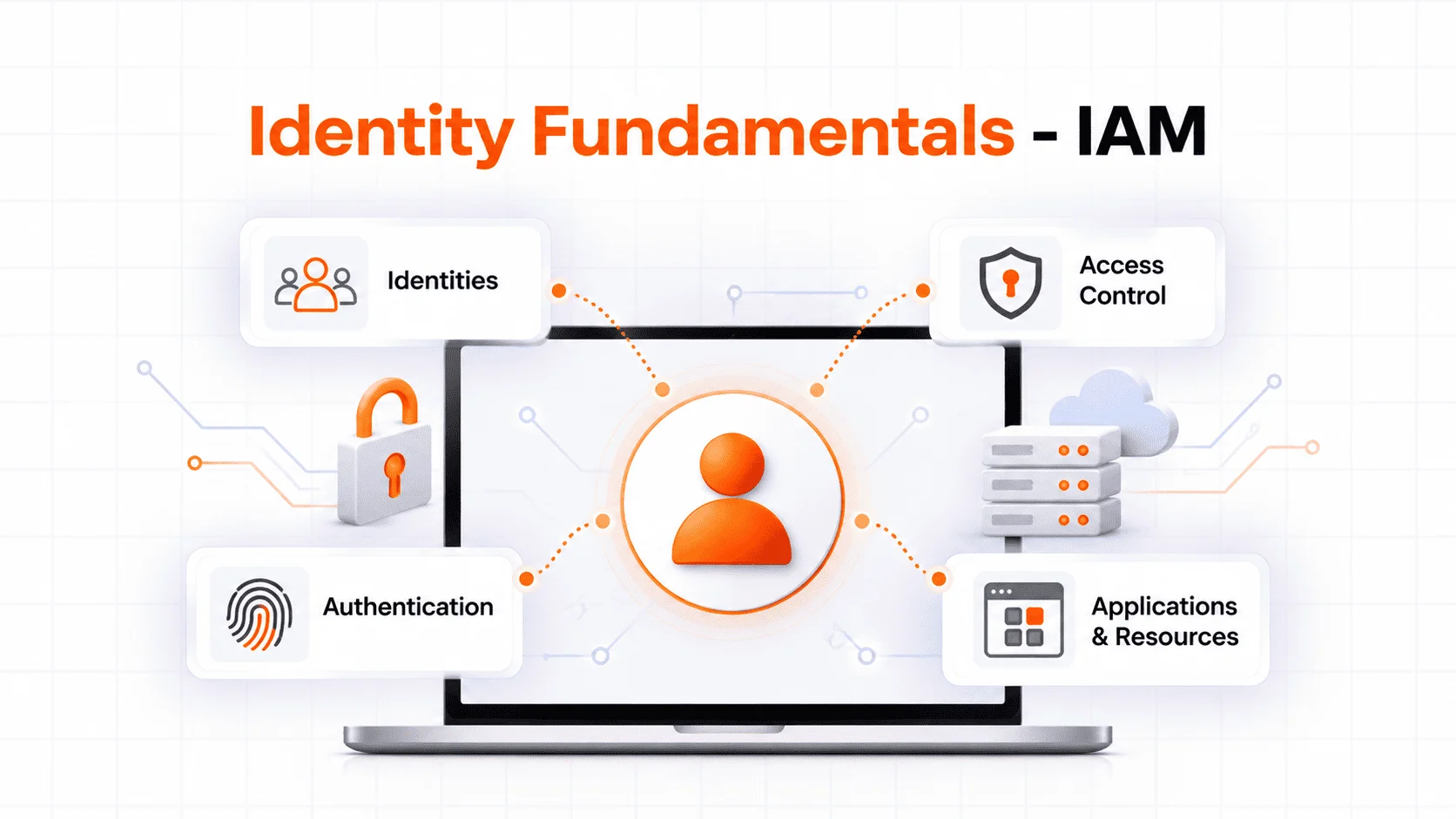
Identity and Access Management (IAM) for AI agents provides the control layer required to manage AI agents as first-class identities. It replaces fragmented, password-based access with structured, policy-driven enforcement.
Centralized Identity Management
Each AI agent is assigned a unique, verifiable identity that can be provisioned, updated, and decommissioned through a single control plane. This removes reliance on shared credentials and ensures every action is tied to a specific agent. It also supports lifecycle management, so access evolves as agent roles or capabilities change, reducing the risk of unmanaged identities.
Policy-Based Access Control
Access is enforced through defined policies using role-based and attribute-based models. Permissions are mapped to agent roles, resource sensitivity, and contextual attributes rather than static assignments. This approach enables least privilege at scale while maintaining flexibility, ensuring agents only access what is required under defined conditions.
Seamless Integration with APIs and Workflows
Access control is applied directly at the points where agents operate, including APIs, services, and orchestration layers. As agents execute tasks or trigger workflows, each interaction is validated in real time. This ensures consistent enforcement across interconnected systems and prevents unauthorized actions during execution.
Unified Enforcement Across Environments
Policies are consistently enforced across development, staging, and production environments through centralized definitions. This eliminates variations caused by manual configurations and reduces policy drift. As a result, agents follow the same access rules regardless of where they are deployed, improving reliability and security.
Comprehensive Logging and Auditing
All access requests, authentication events, and actions performed by agents are recorded in detail. These logs provide visibility into agent behavior and ensure every activity is traceable to a specific identity. This supports monitoring, compliance, and faster investigation of any anomalies or misuse.
The Future of AI Agent Access Control
The landscape is evolving quickly, and access control must evolve with it.
Zero Trust for AI Agents
Every interaction must be verified, regardless of origin, with zero-trust models. Agents cannot be trusted based on prior authentication and must be continuously validated throughout execution.
Adaptive Access Control
Access decisions are becoming dynamic and responsive to behavior, risk signals, and context. Policies adjust in real time to prevent misuse even when permissions exist.
Identity as the Security Perimeter
Identity is emerging as the primary control layer. Instead of relying on network boundaries, access is governed based on who or what is acting at any given moment.
Securing AI Agents Starts with Rethinking Access Control
AI agents are reshaping how systems operate, but they also introduce continuous, autonomous access that traditional models cannot control effectively. Securing them requires a shift toward identity-driven access, fine-grained permissions, and context-aware enforcement. Organizations that invest in robust access control for AI agents reduce operational risk while maintaining scalability.
Platforms like miniOrange enable organizations to assign verifiable identities to AI agents, enforce fine-grained policies, and continuously monitor agent activity across APIs, applications, and hybrid environments.
FAQs
What is AI agent access control?
It refers to controlling what AI agents can access, what actions they can perform, and under what conditions those actions are allowed.
Why are traditional access control models not suitable for AI agents?
They rely on static permissions and assume human behavior, while AI agents operate autonomously, continuously, and across multiple systems.
How does identity-based access improve AI agent security?
It assigns each agent a unique identity, enabling better authentication, tracking, and enforcement of permissions without relying on shared credentials.
What is context-aware access in AI systems?
It evaluates access decisions based on real-time factors like environment, behavior, and risk, rather than relying only on predefined permissions.
How can organizations secure AI agents at scale?
By combining identity-based access, fine-grained controls, continuous monitoring, and consistent enforcement across all environments.
Leave a Comment