
Customer Identity and Access Management (CIAM) platforms manage how customers register, authenticate, access applications, manage their profiles, and interact with digital services. They also handle privacy, security, integrations, and large volumes of customer identities without creating unnecessary friction.
Most CIAM vendors cover the same basic requirements. But the differences show up when you want to migrate, or when you start supporting a partner portal with business customers and hundreds of users.
That makes it important to understand the CIAM capabilities you need before evaluating vendors. This guide therefore covers the core CIAM capabilities to evaluate, additional requirements buyers often overlook, and a practical checklist for comparing CIAM platforms.
What are CIAM Capabilities?
CIAM capabilities are the functions a customer identity platform needs to register, authenticate, authorize, and protect customer identities. Each one usually spans several features on a vendor’s product page.
For example, social login is a feature. Registration that stays fast on mobile, captures consent, and handles duplicate accounts is a capability.
So when you’re comparing two vendors and both state MFA, but only one mentions ‘Support step-up checks’ for when a customer changes a payment method, you know which one to pick.
For a broader introduction to the topic, see our guide to Customer Identity and Access Management (CIAM).
12 Core CIAM Capabilities to Evaluate
These 12 capabilities cover the customer identity lifecycle, from first sign-up to account recovery. Each comes with a question that separates a real answer from a sales answer.
Customer Registration and Onboarding
Registration is where you lose people first. The platform should support email and phone sign-up, social login, and progressive profiling, which collects extra details over later visits instead of in one long form.
Other features of this capability include consent during registration, duplicate account detection, customizable registration workflows, and self- and invitation-based registration.
Authentication
Authentication verifies that a customer is the person associated with the account. As customer applications can serve users across different devices, regions, and risk levels, a CIAM platform should support multiple authentication methods such as username & password, social login, SSO, MFA, passwordless authentication, passkeys, OTPs, and more.
A platform should also let you apply different methods to different applications or user groups
For example, a low-risk customer portal might use passwordless authentication, while an application that has financial information may also require MFA (Multi-Factor Authentication).
Adaptive and Risk-Based Authentication
Traditional authentication can treat every login attempt the same way. Adaptive authentication checks for contextual signals to confirm if additional verification is needed.
The signals could be device information, IP address, location, login history, unusual behaviour, network characteristics, previous authentication activity, etc. This lets an organization apply stronger controls when risk changes without adding the same level of friction to every customer interaction.
The goal is to challenge risky logins and leave normal ones alone. Check our guides on
MFA, SSO, and passwordless MFA for more details.
Authorization and Access Control
Authentication proves who someone is. Authorization decides what that customer can access.
A free-tier customer shouldn’t see paid features, and one dealer shouldn’t see another dealer’s orders. For this, check for features like:
- Role-based access control (RBAC)
- Attribute-based access control (ABAC)
- Policy-based access control
- Organization-level access
- Resource-level permission
- Fine-grained permission
- Group-based access
Centralized Customer Identity & Profile Management
Your one customer shows up in 3 ways: website, app, and social login. A central directory merges them into a single profile with consistent data. For this, check for:
- custom identity attributes
- admin search at scale
- attribute mapping
- customer directory management
- group and role management
- account linking
- profile updates
While checking this capability, pay attention to the data model as well.
Session and Token Management
Session and token management is a technical component of CIAM that can easily get overlooked.
After login/authentication, an app maintains the customer’s authenticated state through sessions, access tokens, review tokens, refresh tokens, session timeout, session revocation, token rotation, etc.
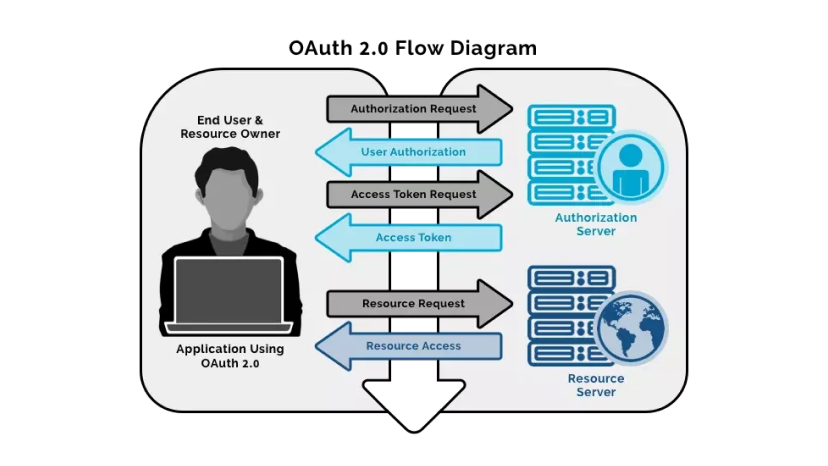
A stolen token is as good as a stolen password if you can’t revoke it fast enough. Also check how the platform handles token lifetimes, scopes, refresh flows, and revocation for apps working on protocols like OAuth 2.0 and OIDC.
Consent, Preference, and Privacy Management
Regulations like GDPR and CCPA expect you to record what a customer agreed to and when. The CIAM platform should store consent with timestamps, let customers change it, and support access and deletion requests.
Look for consent collection and withdrawal, privacy preference management, consent records, audit history, etc.
Ideally, privacy controls should also work as part of the customer journey rather than being treated as a separate administrative process.
Self-Service Account Management & Recovery
Customers expect to manage their accounts without contacting support for routine tasks like password resets, username recovery, MFA enrollment and reset, account unlock, device management, account deletion/deactivation, etc. without contacting support.
Recovery is also an attack path, so check that it can’t be used to get around MFA. A platform should protect recovery workflows with appropriate verification and risk controls.
Identity Orchestration & Customer Journey Management
Customer journeys rarely follow one authentication path.
Orchestration chains steps such as sign-up, identity verification, risk check, and welcome email into one workflow. Without it, every change to a journey becomes a developer ticket.
For example, you may want to include MFA only for high-risk transactions. A configurable identity journey can let you do that without forcing you to rebuild the entire app’s authentication flow.
Identity orchestration can include:
- Registration flows
- Authentication journeys
- Conditional authentication
- Account linking
- Custom workflows, etc.
Fraud Prevention & Account Takeover Protection
Customer login pages attract credential stuffing, bots, and fake sign-ups. For this, look for rate limiting, bot detection, breached password checks, account lockout controls, anomaly detection, and risk scoring that triggers step-up authentication.
Account takeover protection should extend beyond the initial login. Attackers may target password resets, account changes, session tokens, or newly added authentication methods after gaining access.
Scalability, Performance, & Availability
CIAM infrastructure sits in the path of customer access. Authentication failures or slow identity services can prevent customers from reaching an application.
A platform should therefore be able to support your expected identity volume, authentication traffic, geographic distribution, and availability requirements.
Your requirements may look very different depending on whether you have 50,000 customers or tens of millions. Ask vendors to show a demo of how the platform handles your expected traffic patterns rather than relying only on a maximum identity count.
APIs, SDKs, Federation, and Extensibility
Your developers will spend their time in this layer. This is because CIAM is not an isolated system. It needs to connect with applications, directories, IdPs, customer databases, analytics, and other services.
For this, check for REST APIs, SDKs for your stack, and standards support: SAML, OAuth 2.0, OIDC, and LDAP in the vendor’s page. Check whether the APIs and SDKs support the specific operations your application needs or not. A long integration list doesn’t automatically mean that a platform will fit your architecture.
4 CIAM Requirements Buyers Often Overlook
The core capabilities above cover day-to-day customer identity management. The additional requirements discussed below can become important during the implementation and long-term operation.
Identity Migration
Moving existing customers to a new CIAM platform is often the hardest part of a CIAM project. So before you make a decision, ask whether the platform can import password hashes, including other data transformations, in your current format, migrate users gradually on first login, and run alongside your existing/old system.
Without these, you may force a password reset on every customer, creation of unnecessary support requests, and lead to a huge number of abandoned accounts.
B2B and B2B2C Capabilities
Consumer and business customers have different identity structures.
A B2B CIAM platform must support organizations, administrators, delegated access, organization-specific policies, and users who belong to multiple organizations.
A B2B2C environment adds another layer because one organization may provide services to its own customers through your platform.
For this, you need to look for:
- Multi-tenancy
- Organization-level roles
- External identity federation
- Multiple identity providers, etc.
Deployment Flexibility and Data Residency
Where identity data is stored and how the CIAM platform is deployed can affect security, compliance, architecture, and operational requirements. Depending on your organization, you may need cloud, hybrid, on-prem, or private-cloud deployment options.
For this, you need to look for,
- Supported deployment models
- Encryption controls
- Data and backup data locations
- Disaster recovery
- Administrative access controls
AI-Era Identity Capabilities
Your customers now send AI agents to act for them, and your own apps call APIs on behalf of the users. In such cases, identity controls need to differentiate between the human user, the application, and the agent acting on the user’s behalf. Test for agent identity,, delegated authorization with scoped and short-lived tokens, and audit trails that show whether a human or agent has acted.
Many vendors talk about this before they ship it, so ask what’s in production today.
CIAM Vendor Evaluation Checklist
Copy this table into a spreadsheet, mark each capability, and score vendors side by side. The priority column reflects what most CIAM projects need. Move rows up or down based on your use case.
A checkmark means little without proof. Even a vendor that says yes to all 16 should show you each one working in a live environment.
How to Evaluate a CIAM Platform
The checklist tells you what to look for. This process tells you how to run the evaluation.
- Step 1. Map Customer Journeys: Write down sign-up, login, recovery, and account changes for each app. Note where customers drop off today.
- Step 2. Identify your Identity Populations: Consumers, business partners, and any internal or machine users have different needs. This decides whether the B2B rows are must-haves.
- Step 3. Define Mandatory Requirements: Turn your customer journeys and identity populations, and your vendor evaluation checklist discussed above into a list of must-have requirements. Separate these from features that would simply be nice to have.
- Step 4. Evaluate Architecture: Check each vendor’s architecture against your requirements, including tenancy, data storage, deployment model, integrations, APIs, and supported protocols.
- Step 5. Test security controls: Run bursts of failed logins against a test tenant, revoke sessions, and walk through recovery as an attacker would.
- Step 6. Evaluate Migration: Test how existing customer identities, profiles, credentials, consent recovers, and other data would move to the new platform. Check whether migration can happen in phases if needed.
- Step 7. Run a proof of concept: Pick one real journey and one migration batch. Involve your developers, since API quality shows up here.
- Step 8. Calculate total cost of ownership: Add licensing per active user, implementation, hosting, support, and the engineering time to maintain custom flows.
How miniOrange Delivers These CIAM Capabilities
miniOrange CIAM covers the registration, authentication, identity management, and privacy capabilities below for both B2C and B2B identities. It deploys in the cloud, hybrid, on-premises, or private cloud, and connects to your stack through REST APIs, SDKs, and 6,000+ pre-built integrations.
| Capability | What miniOrange provides | Learn More |
|---|---|---|
| Registration | Branded registration, social login, progressive profiling | Authentication and registration |
| Authentication | SSO, MFA, passwordless with passkeys, magic links, biometrics, and OTP | Passwordless login |
| Adaptive authentication | Context-based policies and risk-based authentication | Risk-based authentication |
| Identity management | Centralized repository, unified profiles, lifecycle automation, role-based access | User management |
| Consent and privacy | Access for partners, vendors, suppliers, and dealers with SSO, MFA, and RBAC | CIAM solution |
| B2B Identity | Access for partners, vendors, suppliers, and dealers with SSO, MFA, and RBAC | CIAM solution |
| APIs and SDKs | REST APIs, SDKs, SAML, OAuth 2.0, OpenID Connect, LDAP | Integrations |
| Deployment | Cloud, hybrid, on-premises, and private cloud, with data residency | CIAM solution |
Conclusion
Choosing a CIAM platform requires looking beyond the feature list and ensuring that it fits your customer journeys, identity model, security requirements, integrations, and long-term growth.
Use the checklist in this guide to compare vendors against the requirements that matter to your environment. Test those requirements with real customer journeys and migration scenarios before making a decision. This gives you a clearer picture of how each platform will work in your environment, not just how it looks in a product demo.
Learn more about miniOrange CIAM.
FAQs
What are the core capabilities of CIAM?
Registration, authentication, authorization, identity and profile management, session and token management, consent and privacy, self-service recovery, fraud prevention, scalability, and APIs and SDKs. Together, these cover the customer identity lifecycle from sign-up through account recovery.
What features should a CIAM solution have?
SSO, social login, MFA, passwordless authentication, adaptive risk-based checks, progressive profiling, consent management, role-based access, session and token controls, bot and fraud detection, and REST APIs with pre-built integrations for your existing apps and identity providers.
Which CIAM capabilities are must-have?
Registration, authentication with MFA and passwordless options, authorization, centralized profiles, session and token management, consent management, self-service recovery, fraud protection, scalability, and APIs. Migration joins the list if you're bringing over existing customer accounts.
What CIAM capabilities does B2B need?
Organization-level identity: delegated administration so a partner's admin manages their own users, federated SSO with the partner's identity provider, and role-based access per company. Add API-level authorization if partners integrate system-to-system rather than logging in directly.
How do CIAM capabilities differ from workforce IAM?
Workforce IAM secures employees, typically hundreds or thousands of accounts, under heavy governance. CIAM handles external users at far higher volume, so registration speed, consent, self-service, and fraud protection carry more weight than internal access controls.
What CIAM capabilities support passwordless authentication?
Passkeys (FIDO2/WebAuthn), magic links, biometrics, and one-time passwords, plus a fallback path for customers who lose a device. Adaptive authentication then decides when a passwordless login still needs a second check.
How important is identity migration when selecting a CIAM platform?
Very, if you have existing customers. Hash import, gradual migration on first login, and parallel running decide whether customers notice the switch. Test one real migration batch during your proof of concept before committing.
About the Author

Content Writer
Stutee writes about cybersecurity and identity security, covering technologies such as MFA, IAM, PAM, and endpoint management. Her work focuses on translating what products do into why audiences should care, ensuring technical depth does not come at the cost of readers clarity.
Leave a Comment