

Whether it is peak shopping season, festive sales, or a regular business day, cyber attackers continuously look for opportunities to steal cardholder data. High-traffic periods increase transaction volumes and create more entry points for compromised credentials, insider misuse, and unauthorized access. During these spikes, even small gaps in access control can lead to large-scale exposure of sensitive information.
PCI DSS v4.0.1 reflects this evolving threat landscape by placing stronger emphasis on access control, identity verification, and continuous monitoring. Organizations are now expected to maintain clear visibility into who is accessing sensitive systems, why access is granted, and what actions are performed within the Cardholder Data Environment (CDE). This shift moves compliance from a checklist approach to a continuous security practice.
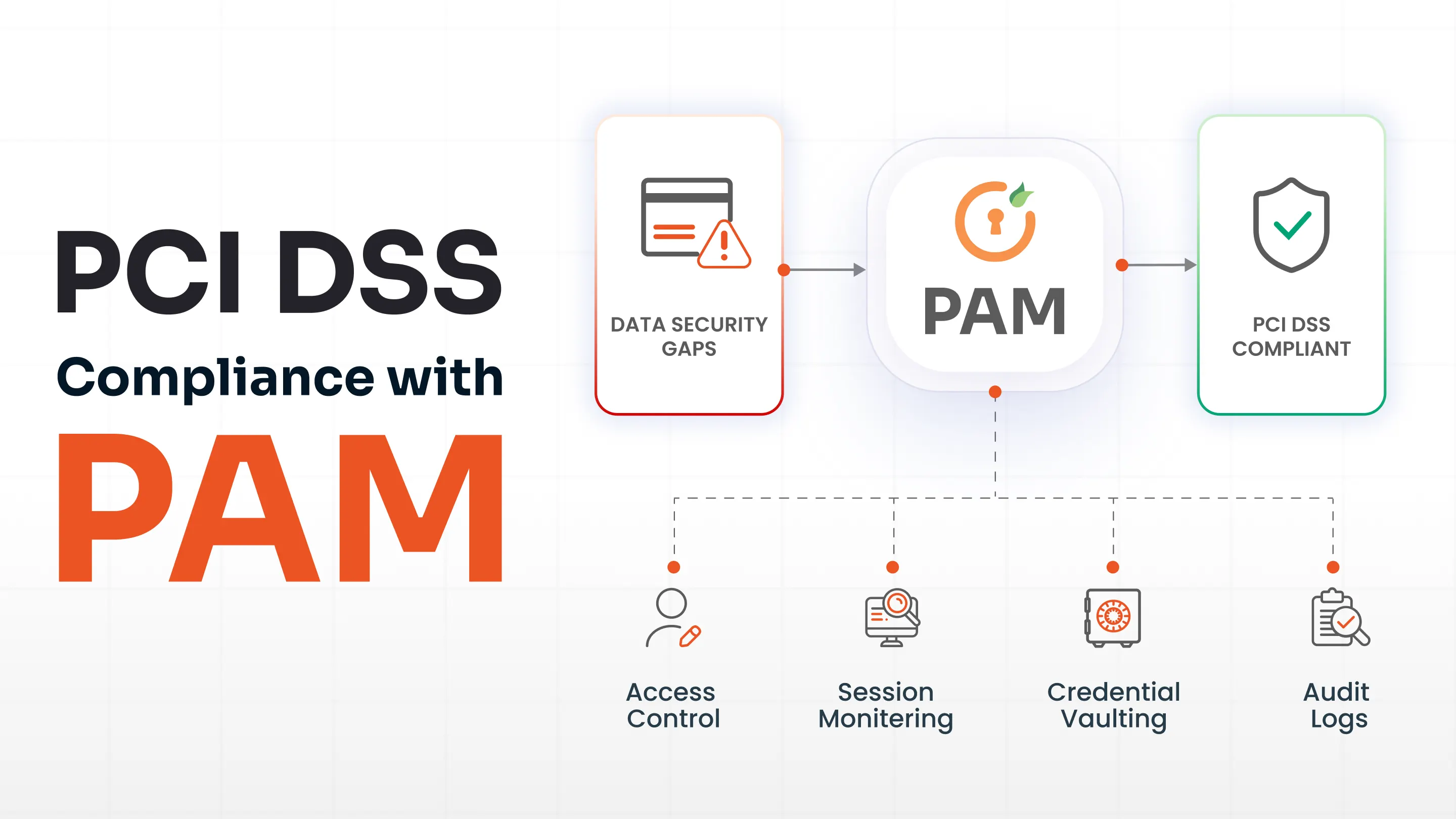
What Is Privileged Access Management in PCI DSS?
Privileged Access Management (PAM) is a security framework that controls and monitors access to systems handling cardholder data. In PCI DSS environments, it focuses on accounts with elevated permissions, such as administrators, database owners, DevOps engineers, and IT teams who can directly impact sensitive infrastructure.
Instead of allowing persistent or unrestricted access, PAM introduces a controlled access layer. Permissions are granted based on roles, approved for specific tasks, and revoked automatically after use. This ensures that access remains limited, intentional, and fully traceable across the Cardholder Data Environment.
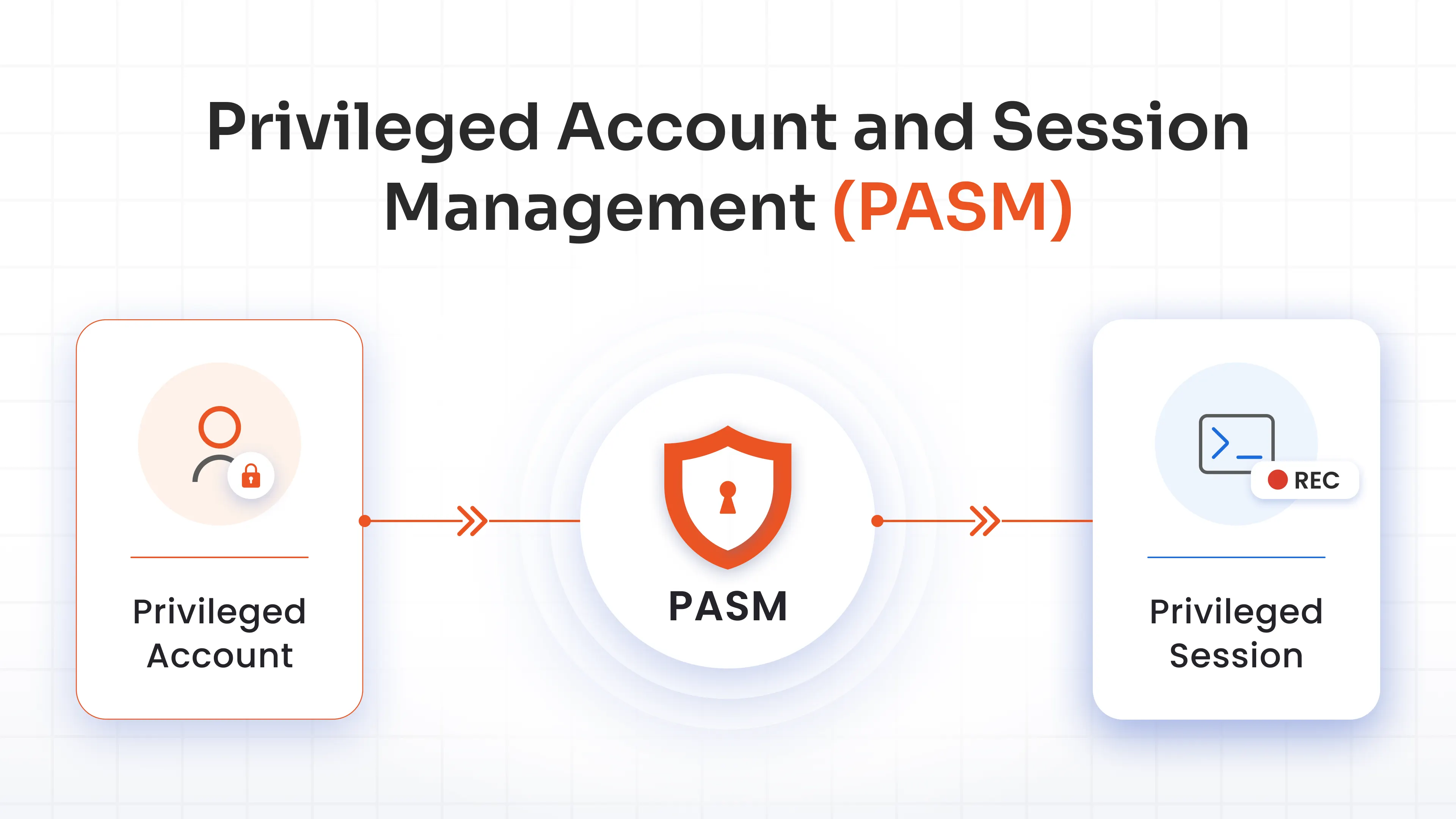
Beyond access control, PAM strengthens visibility and accountability. Every privileged session is monitored, recorded, and logged, allowing organizations to track user behavior in real time and during audits. This level of control is particularly important in environments where multiple teams interact with critical systems.
In modern compliance strategies, PAM acts as a bridge between identity management and infrastructure security. It ensures that even if credentials are compromised, misuse can be limited, detected, and audited effectively.
Why PAM Is Essential for PCI DSS Compliance
Privileged accounts are one of the most targeted attack vectors because they provide deep system access. A single compromised account can expose sensitive data, disrupt operations, and bypass multiple layers of defense.
A strong privileged access strategy helps reduce this risk by:
- Enforcing least privilege access across systems
- Eliminating shared credentials and improving accountability
- Monitoring and recording user activity for audits and investigations
- Supporting compliance with PCI DSS requirements 7, 8, and 10
In many breach scenarios, attackers exploit excessive permissions or dormant accounts that were never revoked. Without proper controls, these risks remain hidden until damage occurs.
By introducing structured access control and continuous monitoring, organizations can reduce exposure, detect anomalies faster, and maintain a consistent compliance posture. This makes PAM a foundational component of privileged access management for PCI DSS.
How miniOrange PAM Helps Meet PCI DSS Requirements
PCI DSS includes 12 requirements designed to secure cardholder data and enforce strong security practices. While these requirements span multiple areas, access control, monitoring, and authentication play a central role across most of them.
miniOrange PAM supports these requirements through centralized access management, credential vaulting, session monitoring, and detailed audit logging. This unified approach reduces complexity while strengthening compliance.
1. Network Security Controls
PCI DSS requires organizations to protect the Cardholder Data Environment (CDE) from unauthorized network access. This includes restricting direct exposure of critical systems, enforcing secure access pathways, and preventing lateral movement across the network. The objective is to reduce the attack surface and ensure that only authenticated and authorized connections are allowed.
PAM strengthens this by acting as a secure access gateway to the CDE, removing the need for direct system exposure. All privileged access is brokered through a centralized layer that authenticates users before connecting them to target systems. This controlled approach enforces session-level access, supports network segmentation strategies, and significantly limits lateral movement across the environment, ensuring access is tightly governed end-to-end.
2. Secure Configurations
Default passwords and weak configurations remain one of the easiest entry points for attackers. PCI DSS requires eliminating vendor-supplied credentials because even a single exposed account can compromise the entire environment. Relying on manual updates doesn’t work at scale.
PAM address this by centralizing credential management, vaulting privileged credentials, removing shared admin accounts, and enforcing automatic, policy-based password rotation. This ensures credentials are never exposed to users and are not static or reused.
3. Protect Stored Cardholder Data
PCI DSS mandates strong protection of stored cardholder data through encryption and strict access control. PCI requires encryption, masking, or truncation. Even with encryption, limiting who can access the data is essential to reduce exposure. PAM reduces exposure by restricting who can access sensitive data.
miniOrange PAM enforces least-privilege access to systems handling sensitive data, ensuring that only authorized users can access critical environments. Enforces least privilege access to databases by preventing unauthorized privileged data access, data stored with encryption (AES-256).
4. Protect Data in Transit
PCI DSS requires organizations to use strong cryptography to secure cardholder data during transmission over open and public networks. Any unencrypted or weakly protected communication channels increase the risk of interception, man-in-the-middle attacks, and data exposure, making secure protocols and encrypted connections mandatory for compliance.
PAM enforces encrypted privileged sessions across SSH, RDP, and HTTPS using secure tunneling, eliminating insecure direct connections. It ensures all remote administrative access is protected with strong cryptographic standards, while centrally managing keys and session security to prevent unauthorized interception of sensitive data in transit.
5. Protect Against Malware
PCI DSS requires organizations to protect systems from malicious software and ensure antivirus mechanisms are actively maintained and updated. Malware often targets privileged accounts to execute high-impact actions, escalate access, and move laterally across systems, making unrestricted admin access a critical risk.
This risk can be reduced by PAM, by limiting privileged access and shrinking the attack surface. It enforces controlled, least-privilege access while preventing unauthorized execution of malicious actions. With real-time session monitoring and anomaly detection, it identifies suspicious behavior, generates alerts, and restricts admin-level misuse, effectively stopping malware from exploiting privileged accounts.
6. Develop and Maintain Secure Systems
PCI DSS requires organizations to maintain secure systems and applications by regularly applying security patches and following secure development practices. Uncontrolled access to production environments during updates increases the risk of misconfigurations, unauthorized changes, and unpatched vulnerabilities.
miniOrange PAM secures this process by enforcing controlled access to production and DevOps environments. It ensures only authorized users can perform system updates, with approval workflows for critical changes. All activities are logged through detailed audit trails, providing full visibility and accountability while preventing unauthorized modifications during patching and maintenance.
7. Restrict Access to Cardholder Data
PCI DSS requires organizations to restrict access to cardholder data based on a strict business “need-to-know” basis. Granting excessive or persistent privileges increases the risk of misuse, insider threats, and unauthorized data exposure, making fine-grained access control essential for compliance.
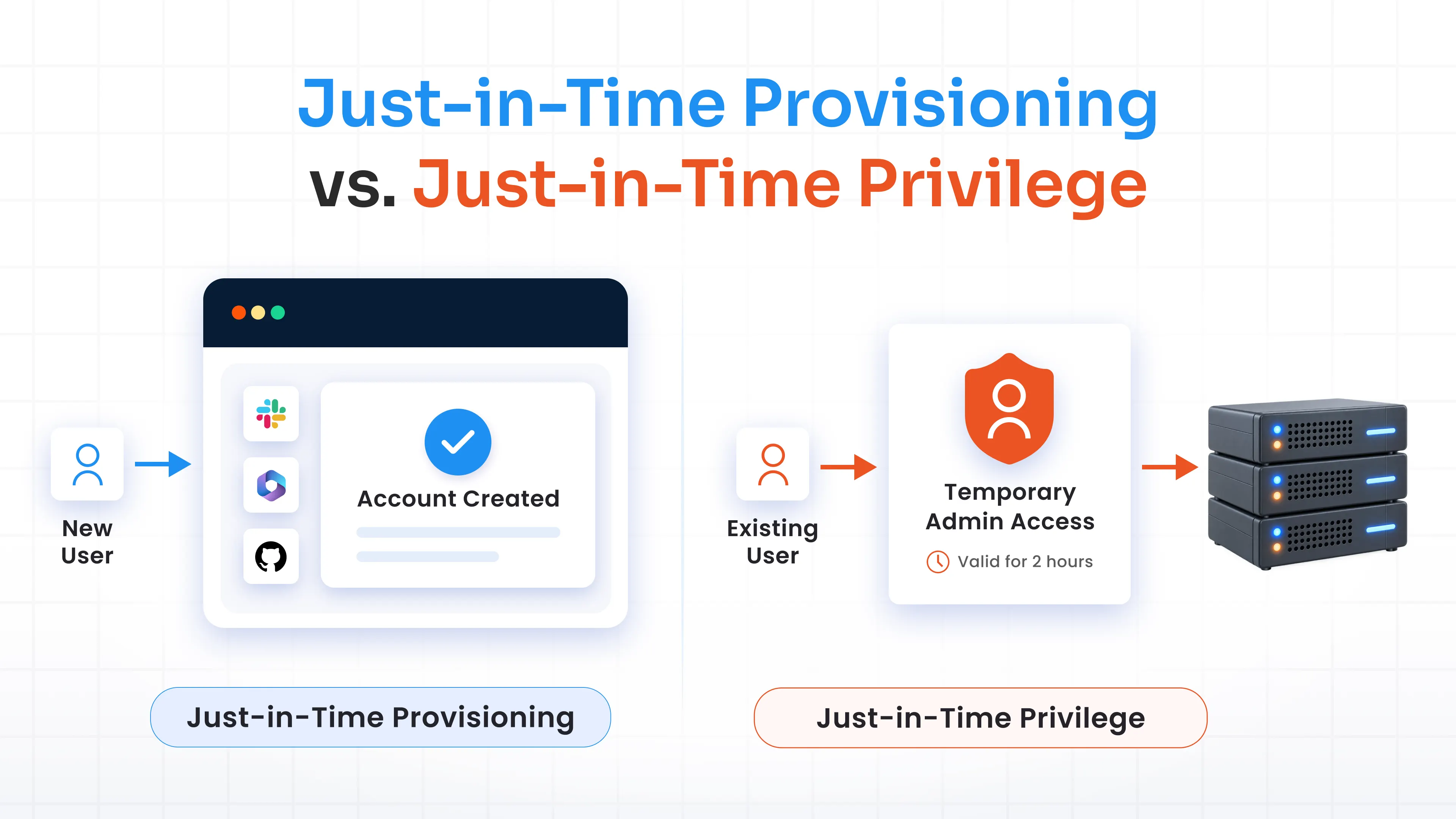
miniOrange PAM enforces this through granular role-based access control (RBAC) and Just-in-Time (JIT) privileged access. It provides time-bound access approvals aligned to specific tasks, ensuring users only get access when required and only for the required duration. This eliminates standing privileges and tightly controls who can access sensitive systems and data
8. Identification and Authentication
PCI DSS requires assigning a unique ID to every user with system access and enforcing strong authentication, including mandatory Multi-Factor Authentication (MFA) in v4.0. Shared credentials and weak authentication mechanisms increase the risk of unauthorized access and make accountability nearly impossible.
miniOrange PAM strengthens this by eliminating shared credentials and enforcing identity-based access controls. It integrates built-in MFA and SSO to verify every user, while ensuring all privileged activities are tied to a unique identity. This provides complete traceability and accountability across systems, reducing the risk of credential misuse and unauthorized access.
9. Physical Security
PCI DSS requires organizations to restrict physical access to systems that store or process cardholder data. While this focuses on securing physical environments, relying solely on physical controls is insufficient in modern, distributed infrastructures.
PAM complements this by enforcing strict logical access controls over critical systems. It replaces direct credential-based logins with secure, session-based access, ensuring all privileged activity is monitored and controlled. This adds a strong layer of protection, even if physical access controls are bypassed.
10. Monitoring and Logging
PCI DSS requires continuous tracking and monitoring of all access to network resources and cardholder data. Without comprehensive logging and real-time visibility, detecting unauthorized or suspicious activity becomes nearly impossible.
Privileged access management provides full session recording, tamper-proof audit logs, and real-time alerts for anomalous behavior. It integrates seamlessly with SIEM tools to support compliance reporting and incident response, ensuring complete visibility into all privileged activities.
11. Regular Testing of Security Systems
PCI DSS mandates regular testing of security systems, including vulnerability scans and penetration testing, to ensure controls remain effective. Lack of visibility into privileged access can create blind spots during these assessments.
PAM enhances this by providing detailed activity logs and visibility into privileged access risks. These logs support audit validation, help identify anomalous behavior, and strengthen penetration testing efforts by verifying that access controls are functioning as intended.
12. Information Security Policy
PCI DSS requires organizations to establish and maintain an information security policy for all personnel. However, policies alone are ineffective without consistent enforcement across systems and users.
PAM solutions, like miniOrange PAM, operationalizes these policies through centralized, policy-based access control. It enforces consistent rules across environments, provides a unified governance dashboard, and ensures all privileged access aligns with defined security policies, making compliance measurable and enforceable.
Our Thoughts
Protecting cardholder data requires more than isolated controls. It demands consistent visibility, controlled access, and accountability across systems. As PCI DSS v4.0.1 strengthens requirements around authentication, monitoring, and access governance, organizations need a practical way to enforce these controls without adding complexity.
With PCI DSS compliance with PAM, businesses can secure privileged accounts, enforce least privilege access, and maintain detailed audit trails across the Cardholder Data Environment. miniOrange PAM provides a unified approach that helps reduce risk, simplify audits, and support long-term compliance.
FAQs
How to meet PCI DSS compliance?
Meet PCI DSS compliance by implementing strong access controls, encrypting cardholder data, monitoring system activity, and securing configurations. Using PAM helps manage privileged access, enforce least privilege, and maintain audit-ready visibility.
What are the 12 requirements of PCI DSS?
The 12 PCI DSS requirements cover network security, secure configurations, data protection, encryption, access control, authentication, monitoring, testing, and security policies. Together, they ensure protection of the Cardholder Data Environment (CDE).
Can I achieve PCI compliance without PAM?
Yes, PCI DSS compliance is possible without PAM, but it is more complex and harder to sustain. PAM simplifies compliance by automating access control, reducing risks, and improving visibility into privileged activities.
Why is PAM important for PCI DSS 4.0?
PAM is important for PCI DSS 4.0 because it enables least privilege access, continuous monitoring, and strong authentication. It also helps organizations maintain audit readiness and secure privileged accounts effectively.

Leave a Comment