Access Builds Across Systems
Each new app, group, or service account adds permissions. Over time, excessive permissions can build up across systems without anyone checking them regularly.
Need Help? We are right here!

Search Results:
×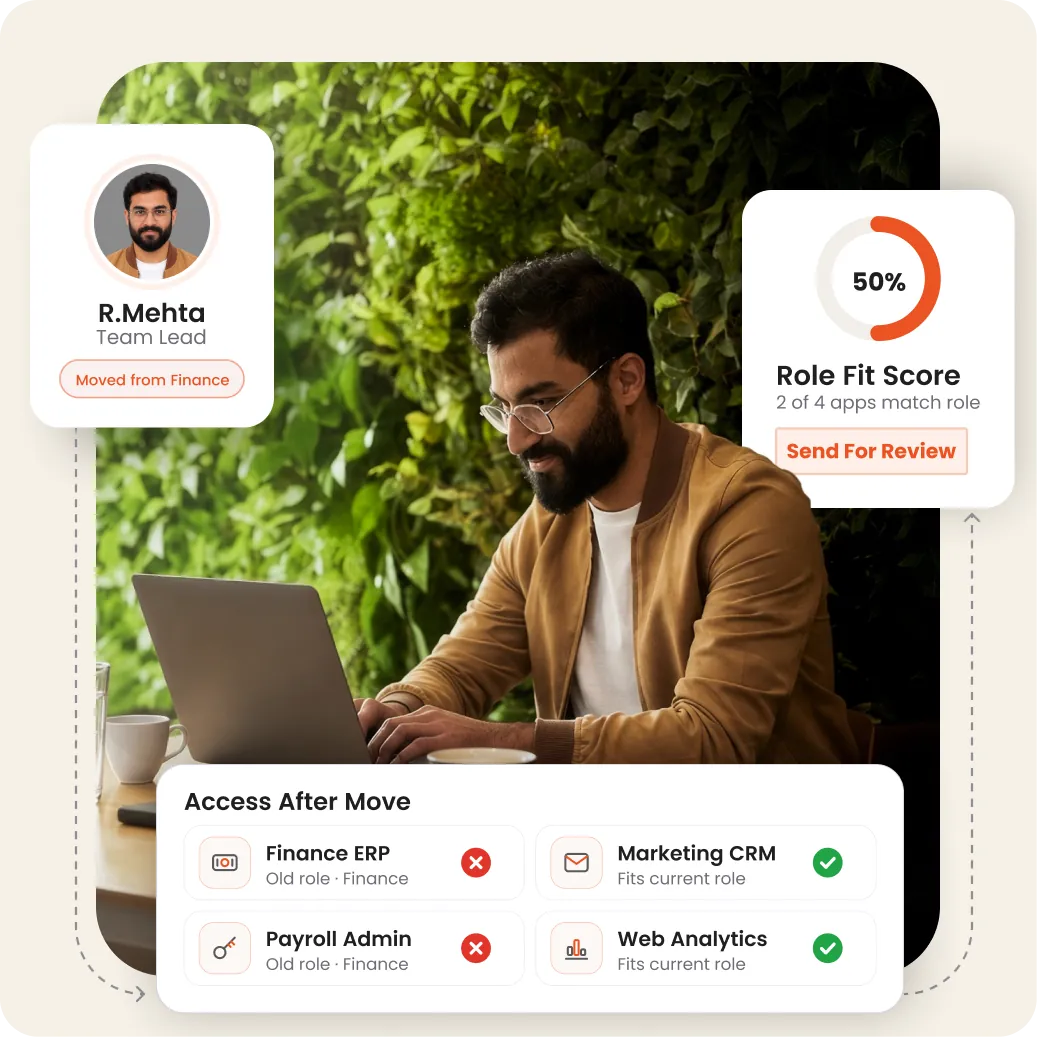
Identity anomaly detection in IGA checks if employees have access to systems they no longer need. For example, it flags if someone keeps their old permissions after changing roles, or holds unusual access that their coworkers lack. These alerts help teams review and remove unnecessary permissions. A warning simply means the access needs to be double-checked, and it does not mean a cyberattack is happening.
Risky permissions can look like routine access and go unnoticed until an audit or incident brings them to light.
Identity anomaly detection helps teams spot access that needs a closer look before it becomes a bigger problem.
Each new app, group, or service account adds permissions. Over time, excessive permissions can build up across systems without anyone checking them regularly.
Access rules check for specific problems, like creating vendors and approving payments. They may miss payment permissions left behind after a team move.
Employees change teams or roles, but often keep their old permissions. This leaves them with access they no longer need for their work.
Reviewers receive long permission lists with little explanation. Without clear details about what needs attention, they may approve access without checking it closely.
miniOrange IGA works as identity anomaly detection software that flags odd access, explains why, and sends each finding to the right owner.

Identify unusual access by comparing users with peers and role expectations

Show why each access pattern is flagged

Rank findings by risk and business impact

Route findings for justification, expiry, removal, or escalation

Record decisions and supporting evidence for audits
Bring permissions, role details, and access history together to help your team make informed
decisions about what to keep, review, or remove.

Compare each person’s permissions with peers in similar roles to find access that others do not hold and may need review.

Find a rare entitlement or excessive permissions, such as access that few people hold or that goes beyond what a job needs.

Spot old permissions that remain after someone changes teams, jobs, or responsibilities, helping reviewers address privilege creep and access drift.

Flag access that does not fit someone’s current job, department, or employment status, such as permissions kept after leaving the company.

Highlight permissions that appear unused or no longer needed, and send them for review before deciding whether to remove them.

Extend non-human identity governance to service accounts, bots, and AI agents, and spot service account risk where your setup allows.

Rank findings by access sensitivity, peer difference, lifecycle context, and policy signals. Identity risk analytics put the riskiest items first.

Every finding shows its reason, such as a peer difference, role mismatch, or leftover permission, so explainable risk replaces guesswork.

Send flagged access for review or changes, and keep the finding, reviewer’s reason, decision, and outcome together as audit evidence.
A procurement analyst gets transferred to Inventory Management but retains payment approval rights. Standard Segregation of Duties
(SoD) rules miss this single orphaned permission, but Identity Anomaly Detection flags the contextual mismatch immediately.
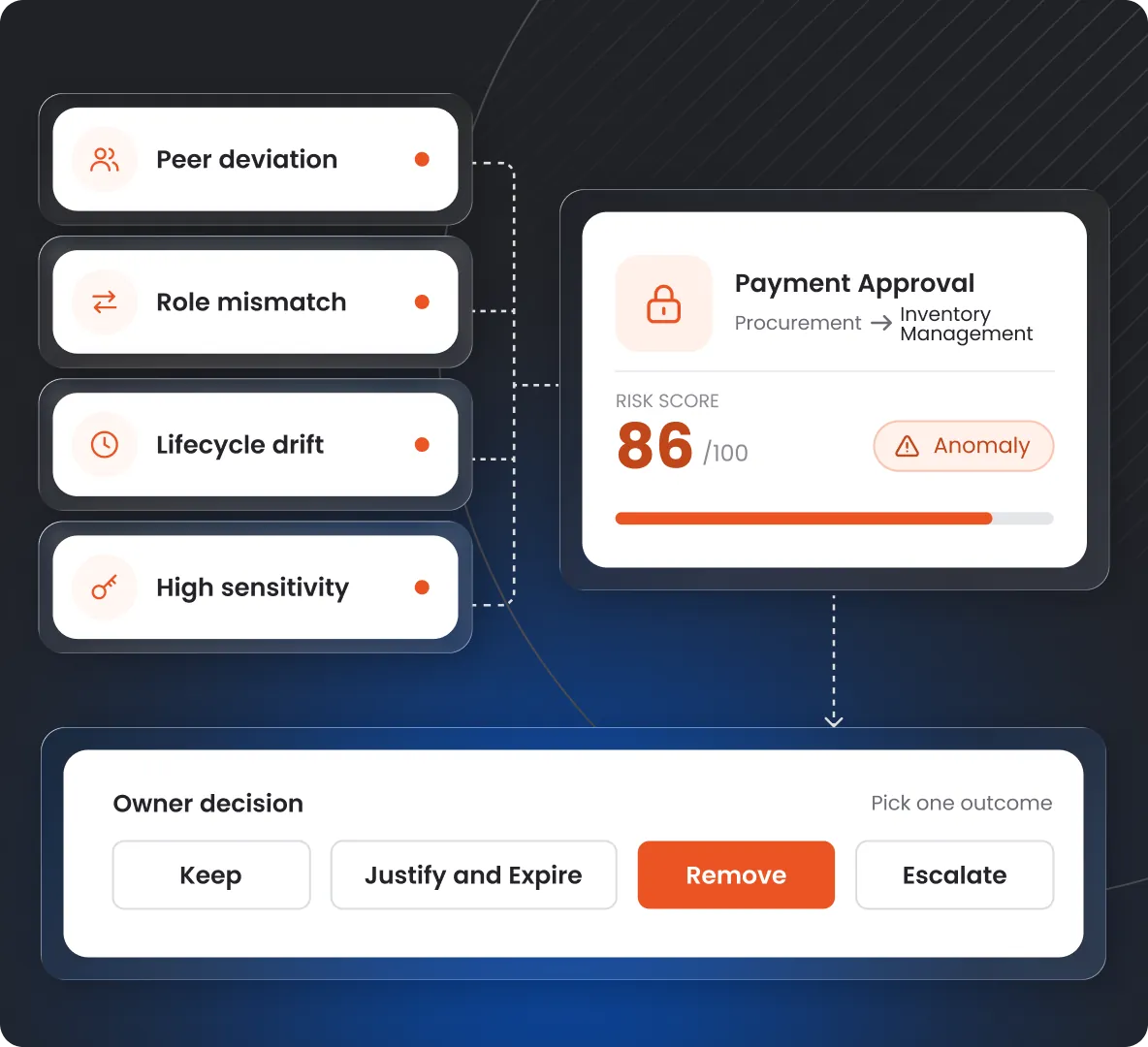
Peer Deviation: No one else on the employee's new team has payment approval rights.
Role Mismatch: Approving financial transactions does not match the responsibilities of the new job.
Lifecycle Drift: The permission is simply a leftover that was missed during the team transfer.
High-Impact Privilege: Payment approval is a sensitive right that no one should hold unless strictly necessary.
The miniOrange IGA platform allows the reviewer to simply look at the issue and make an informed choice:
Keep | Justify and Expire | Remove | Escalate
Five clear steps take raw identity data through access anomaly detection to a recorded decision.
Gather information about people, the systems they can access, their job changes, and past access checks.
Bring the information together to understand what access people need for their jobs and daily work.
Find access that people may not need and put the biggest risks first for closer checking.
Show why the access looks wrong and ask the right person to check whether it belongs.
Save what was decided, record any access changes, and learn from the results for future checks.
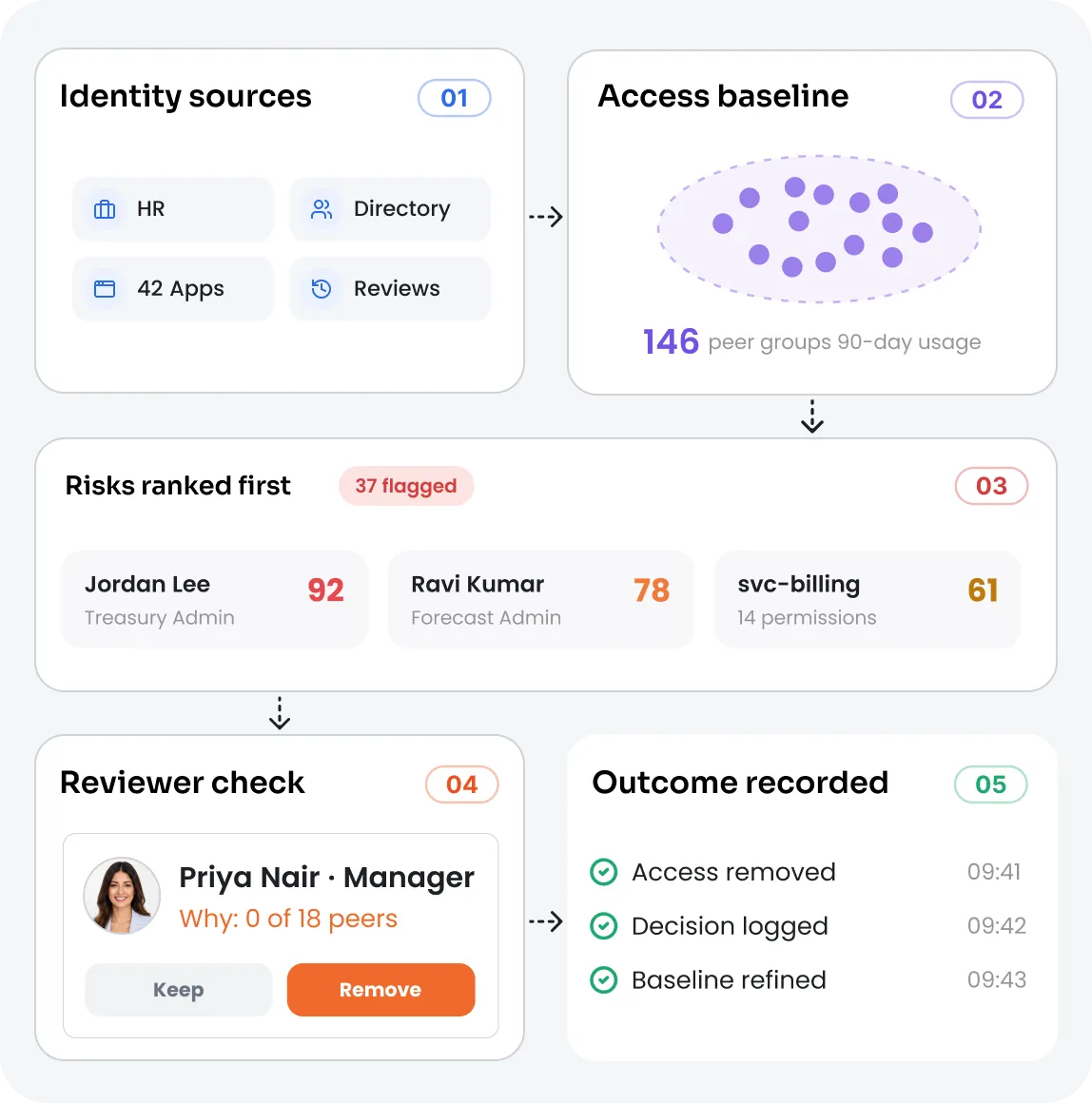
miniOrange IGA reads your connected sources to see who holds access and why.
Department, manager, role, contractor or employee status, and lifecycle events shape what normal looks like.
Accounts, groups, permissions, and high-impact entitlements show how access connects across apps.
Past reviews, approvals, exceptions, segregation of duties outcomes, and remediation records add helpful history.
Usage and sign-in details join in only when your connected source and product setup allow it.
Identity anomaly detection supports the daily work of access governance teams, from cleaner reviews to safer contractor and machine access. Here are five places where teams put it to work.
Reviewers spend their limited time on the access that deserves it most.
Track findings, review decisions, and actions together to
reduce unnecessary access and simplify audit preparation.
Access Control

Healthcare

ISMS

Type II

Privacy

Payments

Cybersecurity

India

Privacy

Payments

Cybersecurity

India
Reviewers see the full context behind each flag, with identity, access, and review history in one place.
Employees, contractors, and automated accounts share one access review process, where supported, so all access gets checked.
Each finding reaches the right reviewer with segregation of duties and lifecycle context attached, so teams spend their time on the riskiest access and give routine items less attention.
Connect existing identity systems and apps with cloud, on-premise, or hybrid deployment to fit your needs.
Identity anomaly detection finds access that looks unusual compared with a user's peers, role, and history. Each finding is a prompt to investigate, not proof of an attack.
It surfaces a rare entitlement, excessive permissions, privilege creep, access drift, role mismatches, dormant access, and stale access. It also covers service accounts, bots, and AI agents where your setup allows.
Access reviews confirm access on a schedule, and segregation of duties checks catch conflicting permissions. Identity anomaly detection adds a third lens by pointing out what looks unusual, so reviewers know where to look first.
Peer group analysis compares a user with people in similar roles or teams. Permissions that few peers hold stand out as outliers, so reviewers quickly ask whether the user truly needs them. This makes identity outlier detection faster and clearer.
Yes, where your setup allows. miniOrange IGA extends non-human identity governance to service accounts, bots, and AI agents, so teams handle machine identities with the same process they follow for people.
Yes. Findings flow into access reviews or remediation workflows, where reviewers keep, justify and expire, remove, or escalate the access. The IGA platform logs the reviewer, reason, and follow-up action.