Hello there!
Need Help? We are right here!

Need Help? We are right here!
Search Results:
×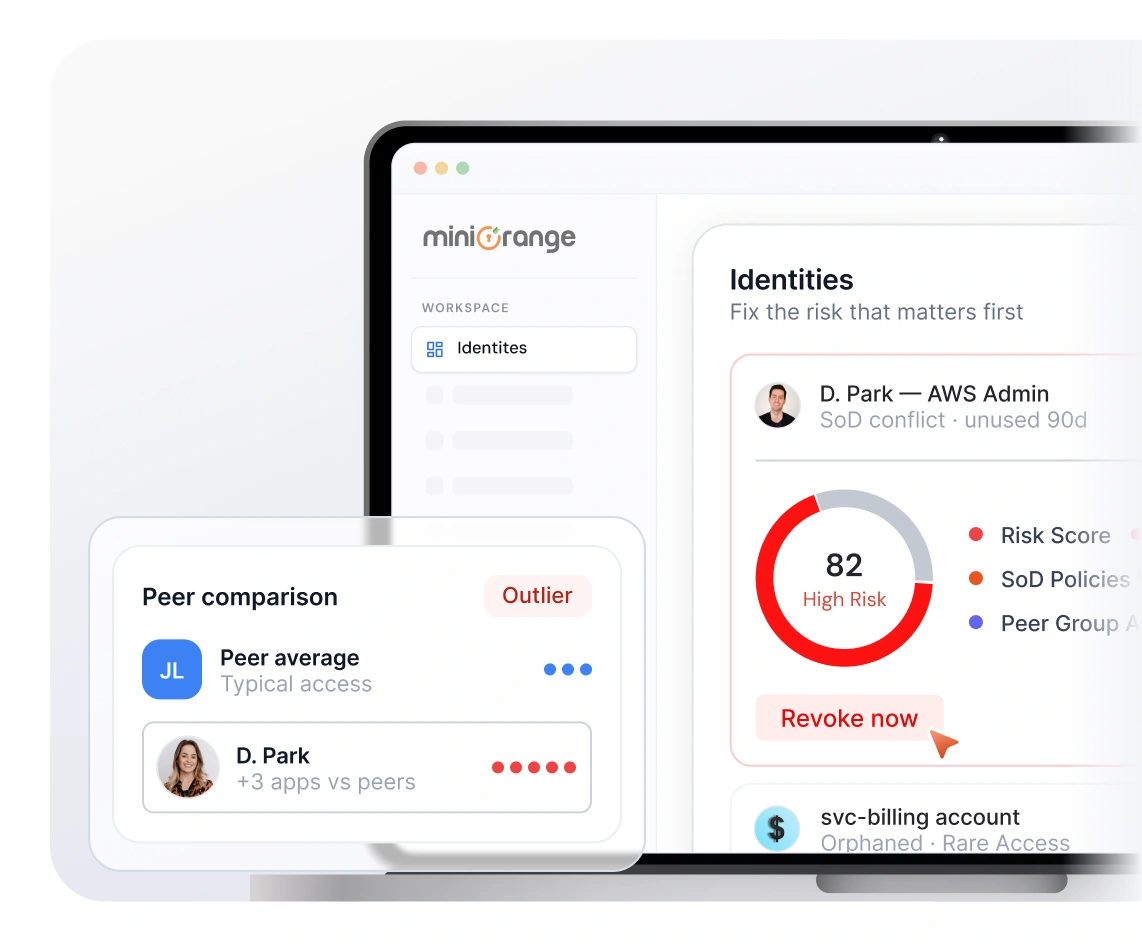
Every identity in your environment carries some level of risk, but not all risk is equal. Identity risk scoring assigns a clear, dynamic score to every identity, account, and permission based on what it can access, how sensitive that access is, how the user behaves, and whether that access looks normal compared to their peers.
It creates a ranked view of exposure that tells your team what is at risk, how much the risk is, and where to act first.
When everything is flagged but nothing is prioritized, teams either chase low-impact cleanup or stall completely, and the access that creates real business risk remains untouched.

Identity and security tools surface thousands of issues. Teams are left to sort through a growing backlog without clear direction.

Every access issue is treated the same, and nothing gets resolved at the speed real risk demands. This slows remediation and weakens your overall risk posture.

Manual risk reviews create inconsistencies because decisions vary by person, team, and application. This makes access decisions harder.

Without a single, common score, it is difficult to measure identity risk consistently across users, entitlements, and apps.

High-risk users with excessive or privileged access can be hard to spot when low-risk findings dominate review queues. This makes it easier to miss serious exposures.

Traditional certification campaigns send reviewers through every access item in the same order with the same urgency. This leaves genuinely dangerous entitlements buried at the bottom of the queue.
miniOrange IGA continuously calculates a dynamic risk score for every identity and access combination by evaluating access sensitivity, toxic combinations, abnormal behavior, and peer deviation.
The results are checked continuously, and the score adapts in real time as conditions change (a new role assignment, spike in after-hours activity, or accumulating set of entitlements). The result is a single, prioritized view of risk that turns scattered findings into clear action.
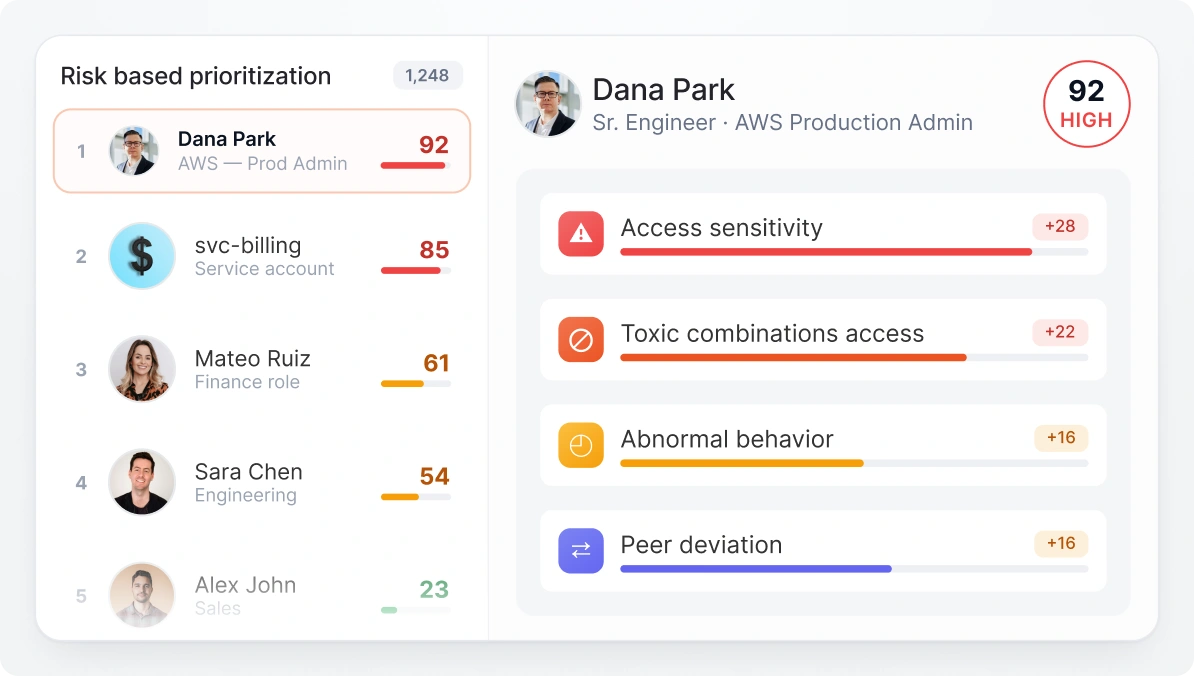
A unified approach to measuring, comparing, prioritizing, and acting on identity risk across your environment.
Score every identity, account, and entitlement using a unified model built around real access exposure and contextual signals.
Benchmark access against peer groups, roles, and policies to surface access that looks abnormal or excessive.
Rank remediation tasks based on measurable risk instead of volume or guesswork. Teams can focus their effort where the potential impact is the highest and improve risk prioritization.
Use the score to support risk-based access, smarter approvals, and more focused reviews, so the highest-risk users and entitlements get attention first.
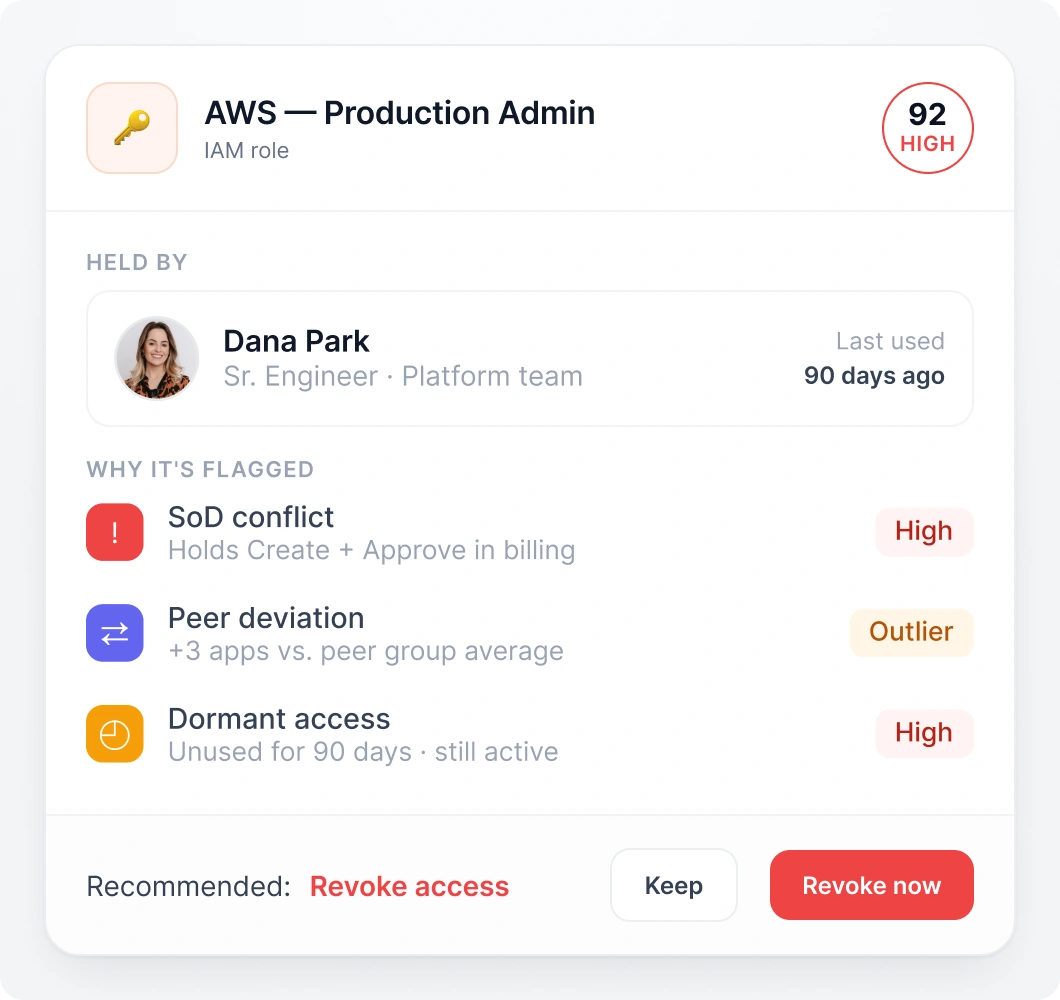
Move from a static review process to a continuous, context-aware identity risk scoring for faster, smarter decisions.
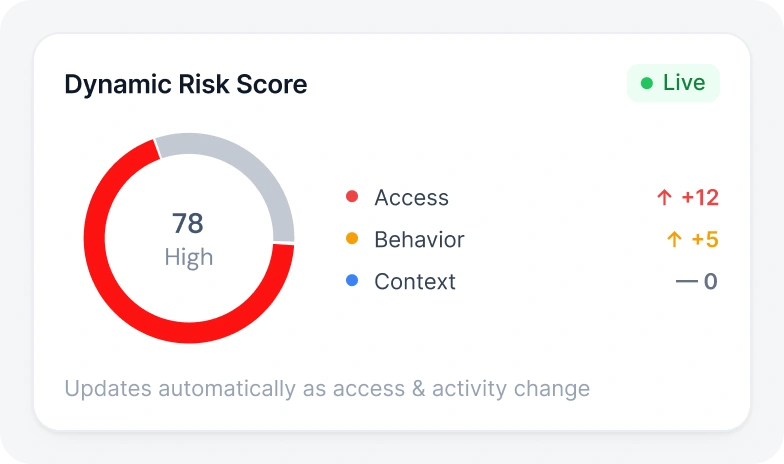
Score every identity based on access, behavior, and context, with scores updating automatically as entitlements, activity, or exposure change.
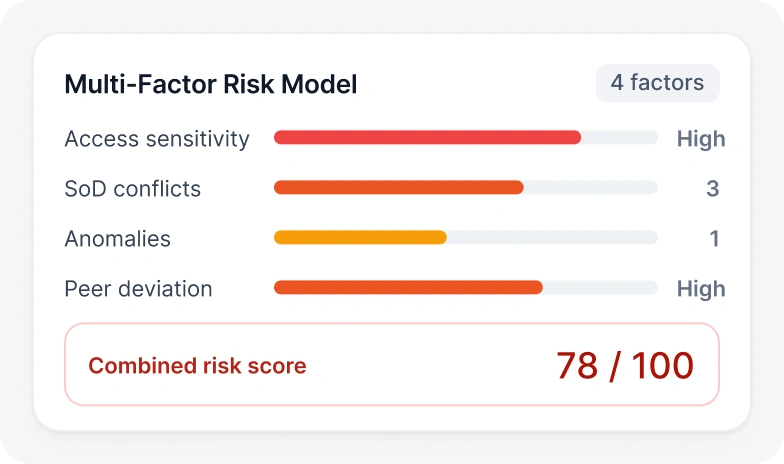
Combine access sensitivity, SoD conflicts, toxic combinations, anomalies, and peer deviation into one comparable score. This gives a complete view of identity and access management risk assessment.
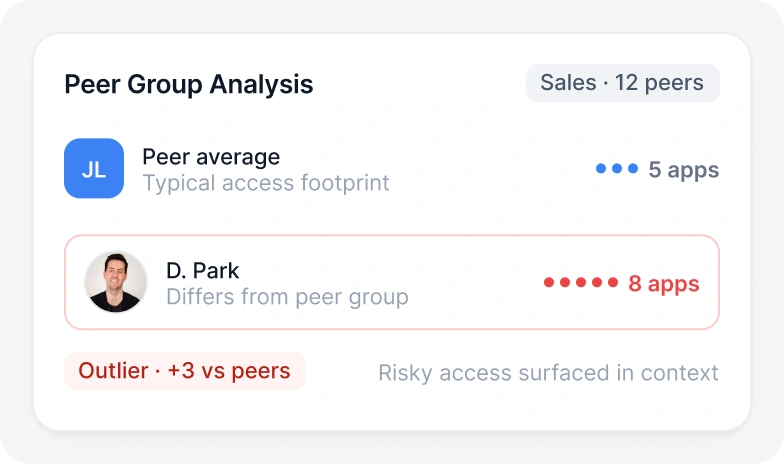
Flag identities whose access differs from peers in the same role or department. This helps surface risky access that appears legitimate in isolation but looks abnormal in context.
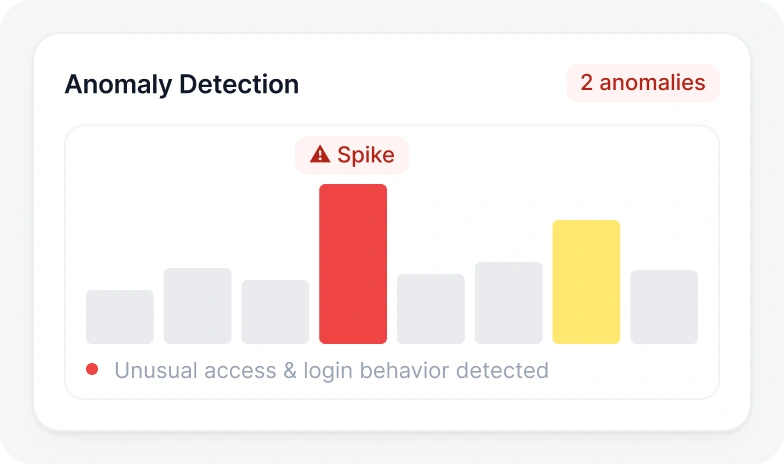
Detects unusual access and behavior patterns that increase an identity’s risk score, such as unexpected login behavior, abnormal access activity, or suspicious changes in usage patterns.
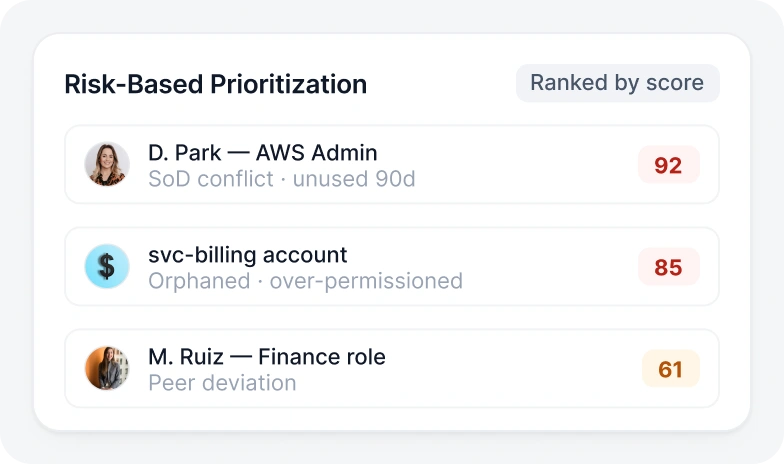
Rank identity, account, and entitlement issues by score, so teams can remediate the highest-risk items first. This improves operational efficiency.
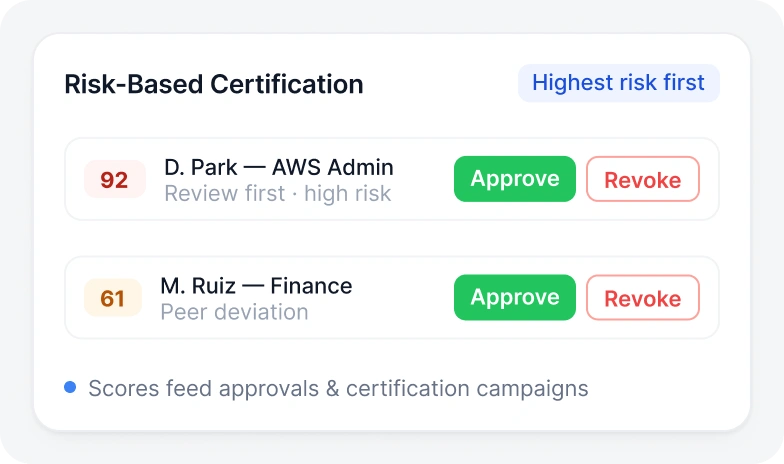
Feed the scores directly into approvals and certification campaigns, so reviewers can evaluate the most critical access first.
From the first signal to the final decision — risk scoring runs continuously and focuses on what matters the most.

Gather identities, accounts, entitlements, roles, and other data across apps, cloud, and systems.

Evaluate access sensitivity, policy conflicts, toxic combinations, anomalies, and peer deviation to understand risks.

Assign a dynamic risk score to each identity and access combination.

Prioritize high-risk identities and entitlements for remediation, certification, or further investigation.

Use the score to make risk-based access decisions, smarter approvals, and more focused reviews.
The miniOrange IGA platform supports major regulatory frameworks, helping organizations stay audit-ready at all times.
Ensure continuous compliance with automated controls, reporting, and access certification workflows.
View Compliance Frameworks
Access Control

Healthcare

ISMS

Type II

Privacy

Payments

Cybersecurity

India

Privacy

Payments

Cybersecurity

India
Quickly sort large volumes of risk findings so teams can work on the identities and entitlements with the highest exposure first. This reduces backlog and improves remediation efficiency.
Guide reviewers toward the access that deserves the most scrutiny instead of spreading effort evenly across every user and permission. This makes certifications more effective and less time-consuming.
Use risk scores during access requests and approvals to apply stronger controls where risk is higher and reduce friction where risk is lower. This supports smarter, more adaptive governance.
Identify users whose access stands out from peers in similar roles or departments, helping uncover overprovisioning, hidden privilege, or unusual access paths. This strengthens visibility into identity risk.
miniOrange IGA is designed to make identity risk scoring actionable inside real governance programs, not just visible in dashboards.

miniOrange aligns with existing governance processes, review cycles, and approval flows, helping teams adopt stronger risk controls without redesigning everything from scratch.

Works across cloud, on-premise, and hybrid environments, so you can score and govern access across a broader application landscape.
Use a flexible, no-code approach to tailor scoring logic around your policies, business roles, and risk tolerance. That helps your organization measure the risks that matter most.
Common questions about identity risk scoring, risk prioritization, and risk-based access governance.