SaaS Sprawl Hides Risk
Teams adopt applications faster than IT can track them, leaving accounts, permissions, and sensitive data outside central controls.
Need Help? We are right here!

Search Results:
×
Hundreds of cloud apps, unmanaged access paths, and manual processes make it difficult to know who has access to what.
Teams adopt applications faster than IT can track them, leaving accounts, permissions, and sensitive data outside central controls.
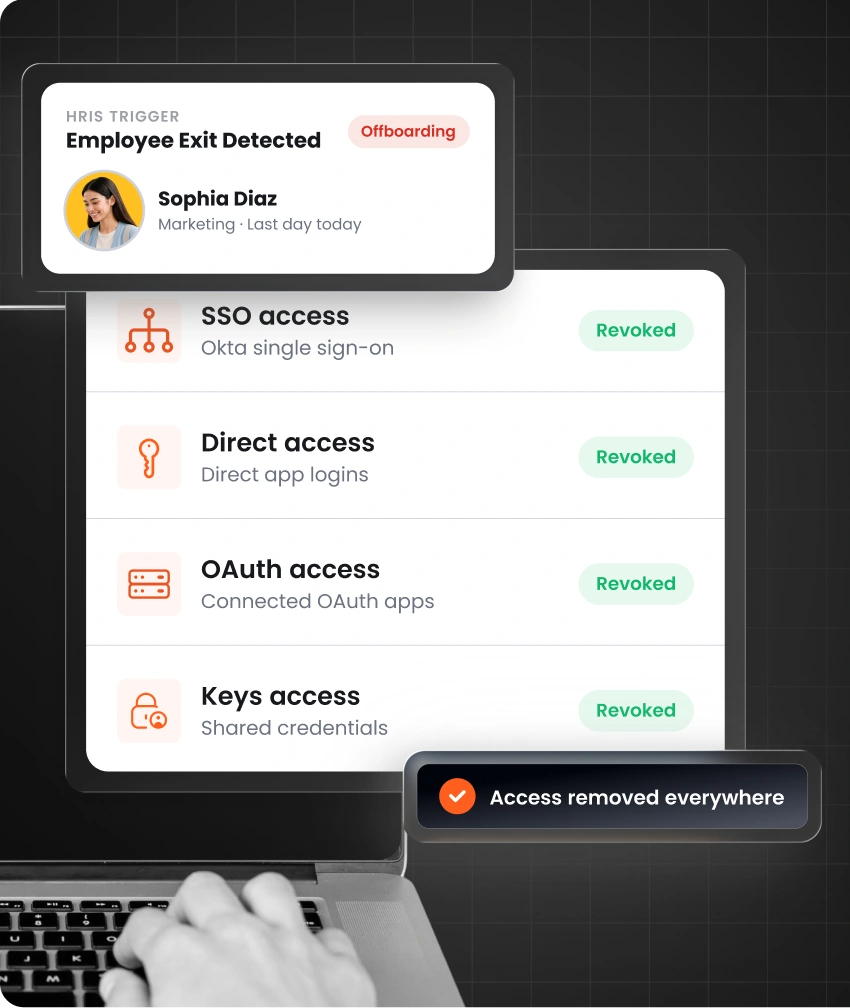
Employee departures can leave contractor accounts, service accounts, credentials, and other access active across your SaaS environment.
Scattered information across dozens of applications leaves teams collecting screenshots and spreadsheets when audits or customer reviews begin.
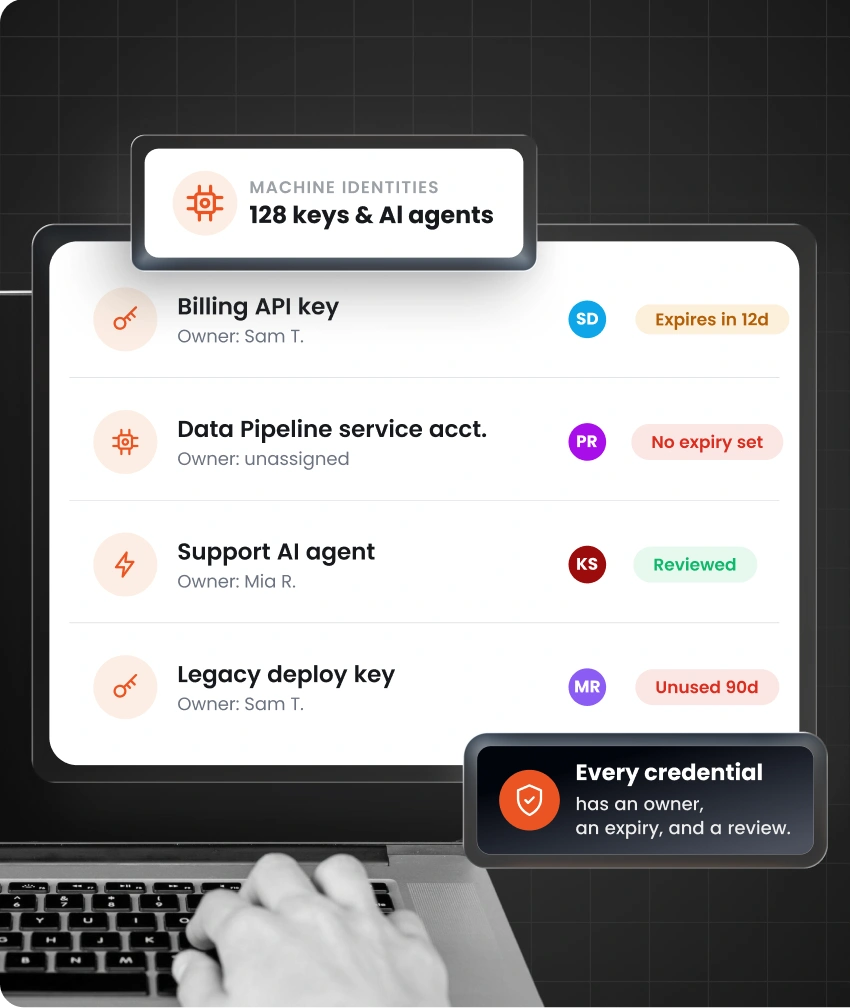
API keys, service accounts, and AI agents can remain active without clear ownership, making them difficult to review and govern.
A growing SaaS company can run hundreds of cloud applications, each with its own users, roles, and permissions. As teams adopt new tools, identities and access multiply across the environment.
SaaS identity governance brings this access under control. It manages the identity lifecycle from onboarding and role changes to offboarding. It also handles access requests and reviews, identifies risky permissions, and keeps records ready for SOC 2, ISO 27001, HIPAA, GDPR, and SOX regulations.
Bring identity and access information together to understand relationships between people, applications, accounts, and permissions.

See every app, identity, account, and permission.

Update access when people join, change roles, or leave.

Run regular access reviews and capture approvals.

Keep audit evidence ready for auditors and customers.
Manage identities, access, permissions, and governance across your SaaS environment through one unified IGA dashboard.

Connect to your HRIS to manage joiner-mover-leaver workflows, provide day-one access, and automatically remove access when employees leave.

Run scheduled access certifications aligned with SOC 2 CC6 and ISO 27001 Annex A access control requirements continuously.

Let employees submit access requests through Slack, route approvals to the right owners, and provide access without unnecessary delays.

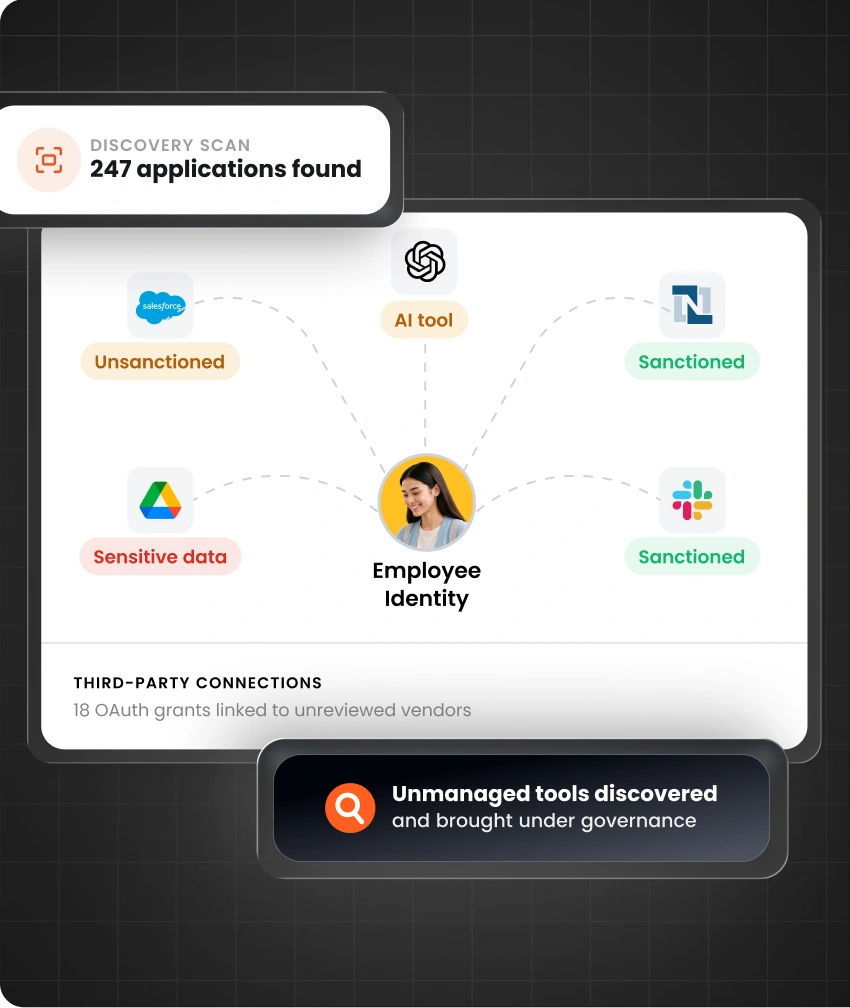
Discover shadow IT and SaaS sprawl, then map user identities, applications, and entitlements across your entire environment.

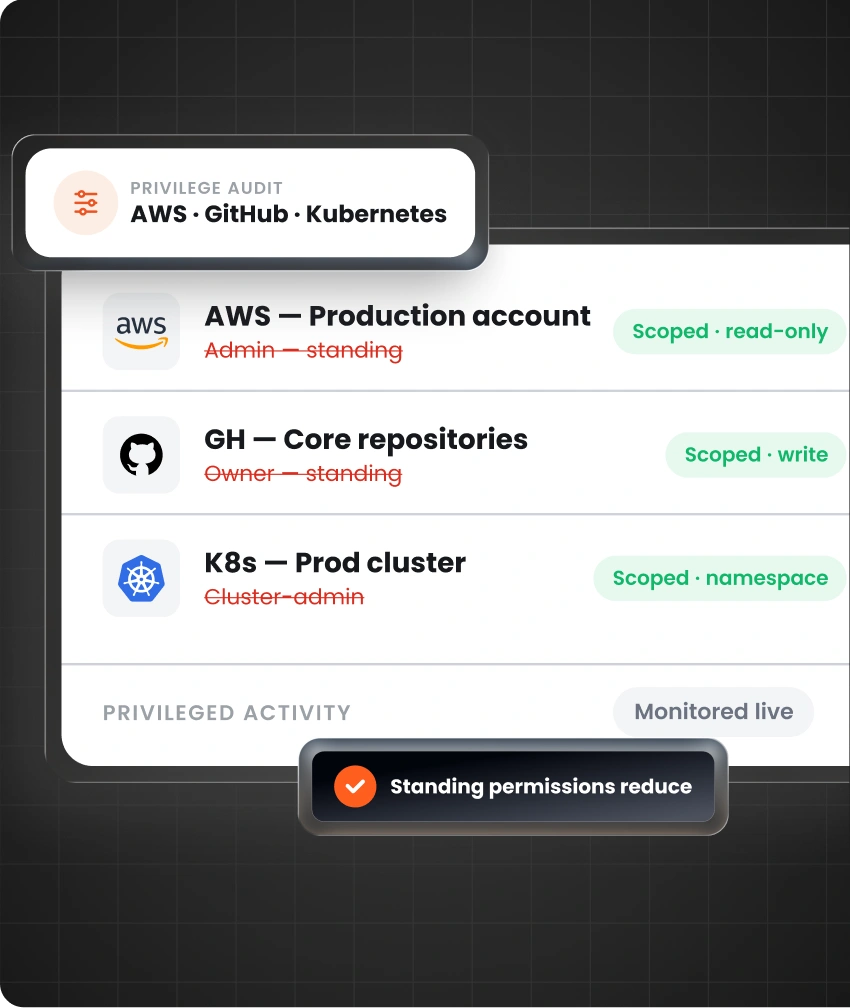
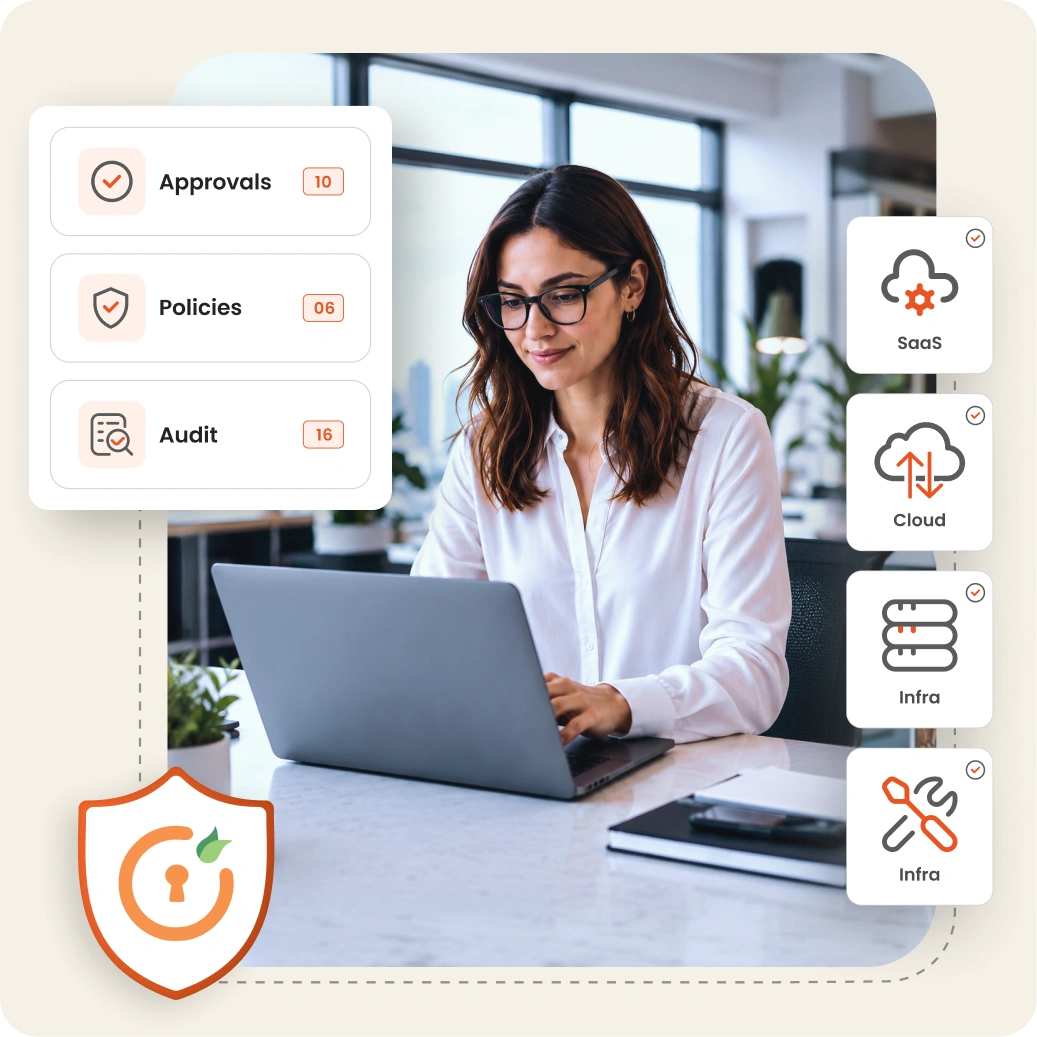
Extend governance to AWS, GitHub, and Kubernetes so production access consistently follows least-privilege principles.

Give API keys, service accounts, and AI agents named owners, expiry dates, and scheduled access reviews for better control.

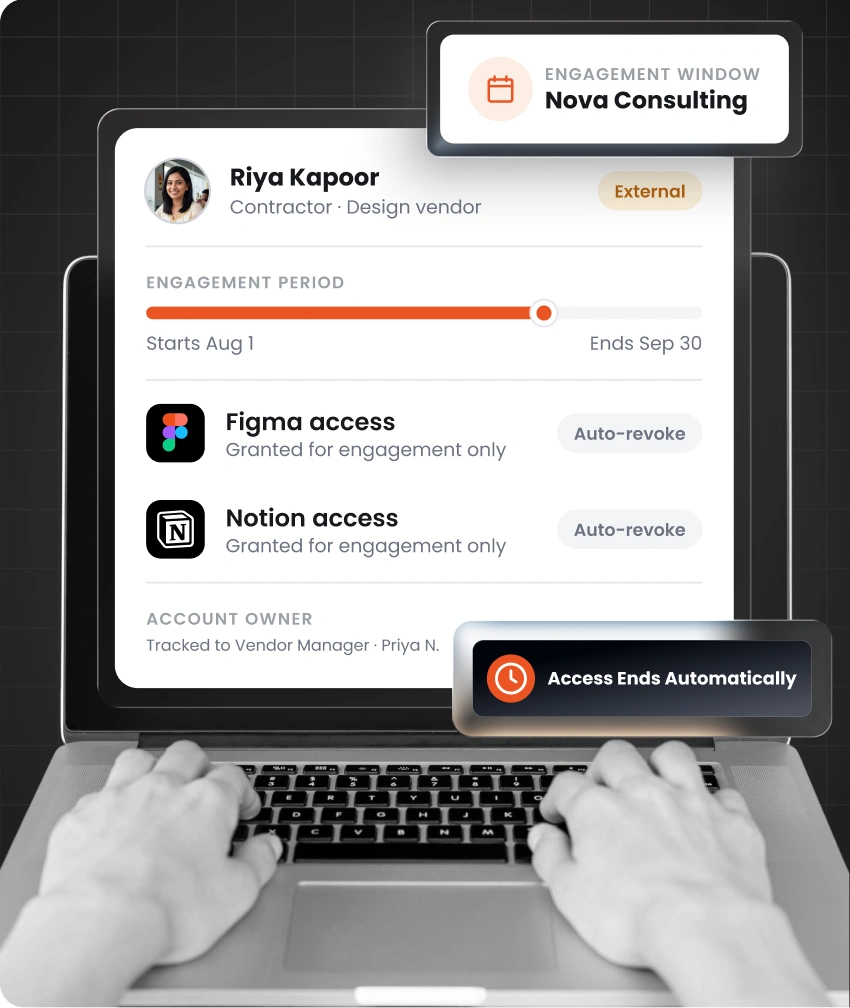
Set time-bound access for contractors, agencies, and vendors based on their engagements, with automatic expiry when access ends.

Identify unused licenses and excessive permissions during access reviews to reduce privilege creep and unnecessary software costs.

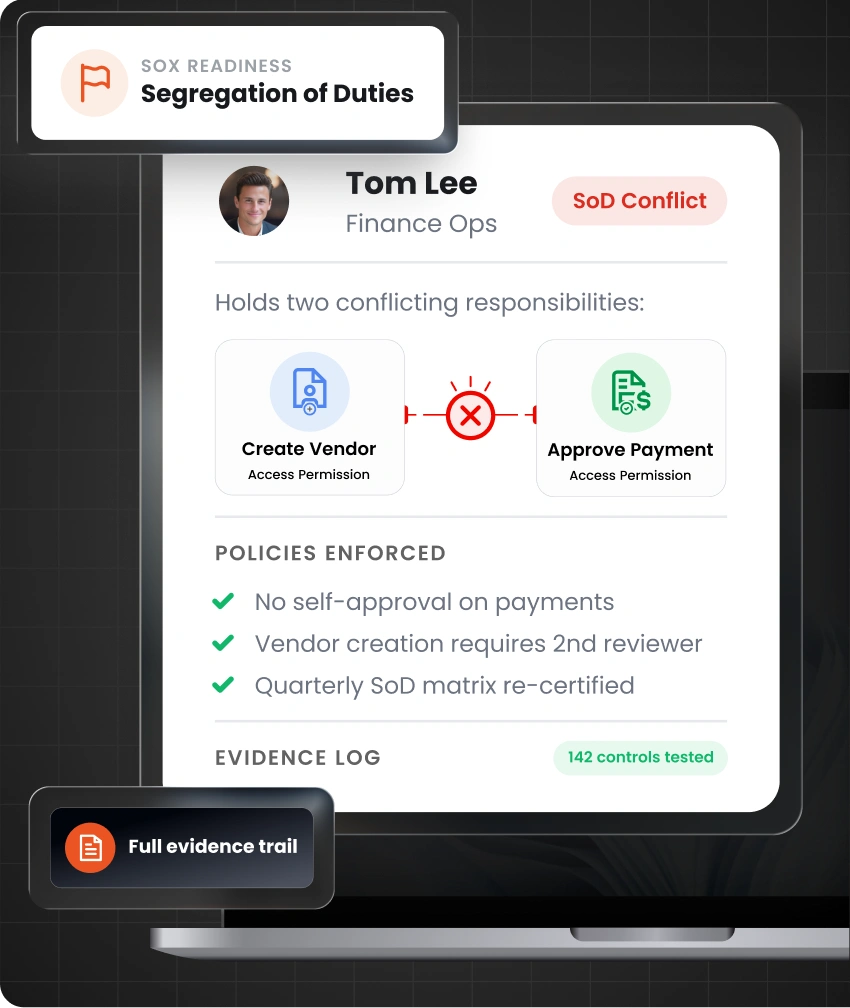
Generate assessor-ready evidence for SOC 2, ISO 27001, HIPAA, and GDPR without manually compiling compliance records.
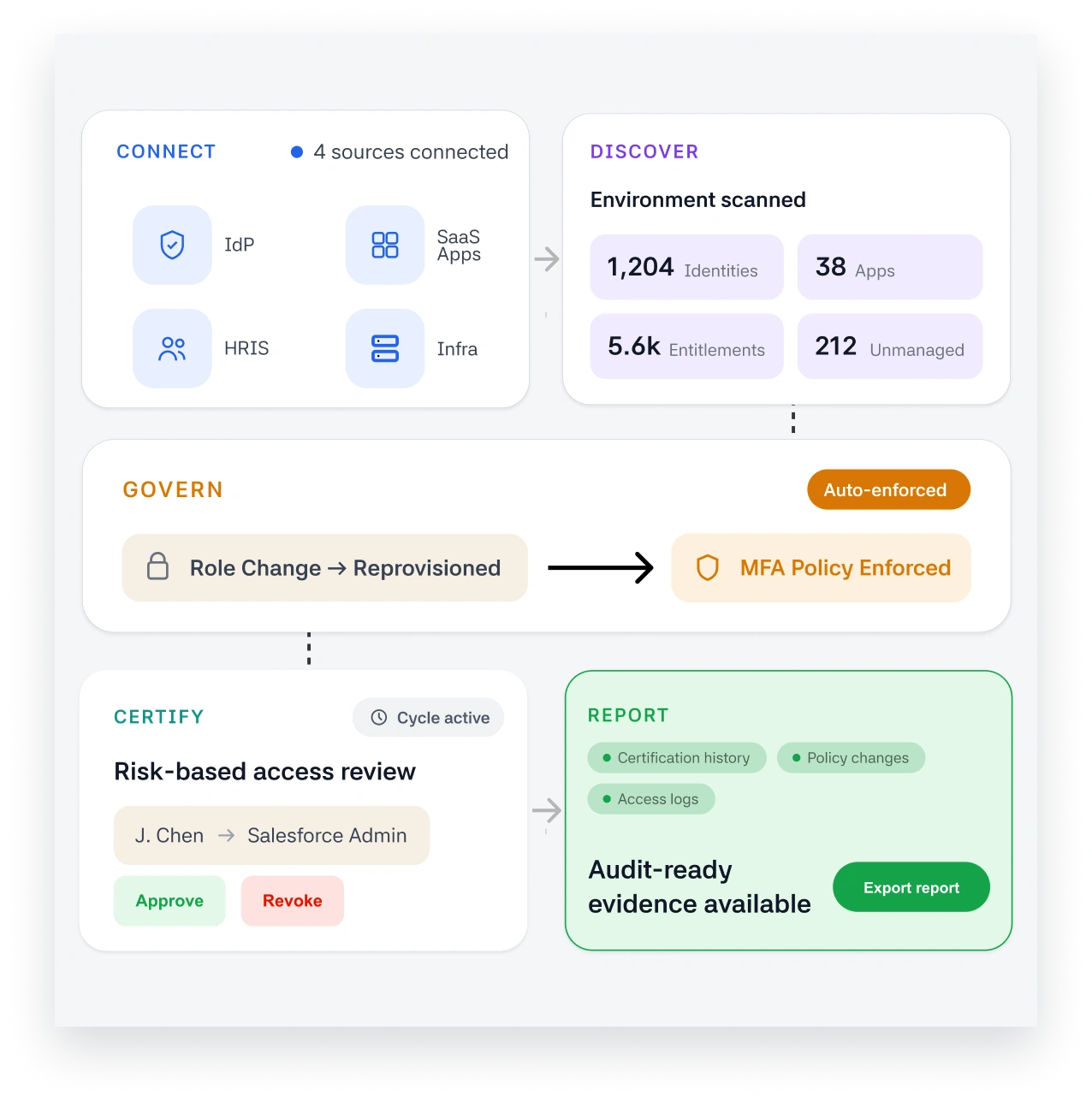
Connect your identity sources, discover access across your SaaS stack, govern lifecycle changes, certify permissions, and export audit-ready evidence from one platform.
Bring your IdP, HRIS, SaaS apps, and infrastructure together.
Map identities, applications, entitlements, and unmanaged access paths.
Manage lifecycle changes and enforce appropriate access controls.
Run risk-based reviews and revoke unnecessary access.
Export audit-ready evidence for reviews and assessments.
Pick a scenario to see how miniOrange handles the access work behind it.
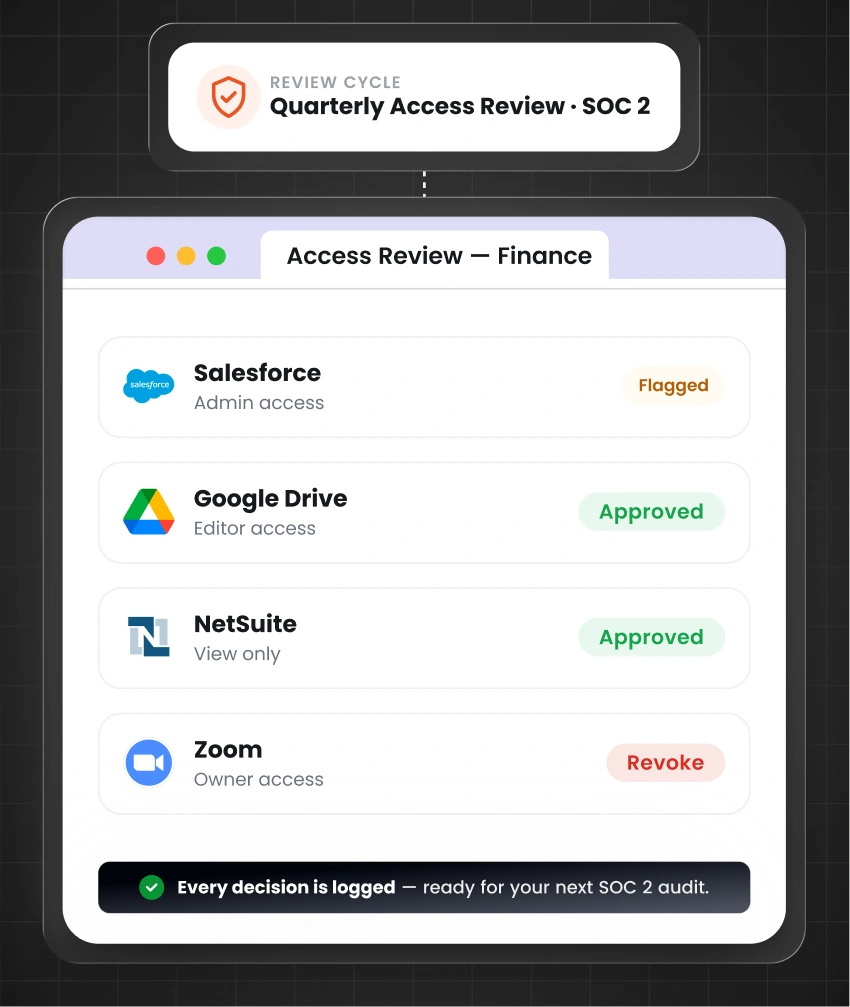
Run recurring access reviews across your SaaS stack and keep reviewer decisions ready for every audit.
Maintain current records and evidence to support audits, customer reviews, and compliance requirements.
Ensure continuous compliance with automated controls, reporting, and access certification workflows.
View Compliance Frameworks
Type II

ISMS

Privacy

Healthcare

Payments
Access Control

Privacy

Cybersecurity
No-code workflows and drag-and-drop policies help your team launch identity governance quickly without lengthy engineering projects or heavy implementation work.
Connect SaaS applications, identity providers, HR systems, cloud infrastructure, and internal tools through a broad library of integrations.
Automate repetitive identity tasks and access processes with a platform designed to scale without adding unnecessary administrative overhead.
Prepare for SOC 2 Type II, ISO 27001, HIPAA, PCI DSS, FedRAMP, SOX, and other requirements with stronger access controls and continuously available evidence.
Support a growing workforce and SaaS environment with a resilient cloud platform designed for scale, with private-cloud deployment options when required.
Get help from identity specialists around the clock for deployment, configuration, troubleshooting, and ongoing governance needs.
Common questions about SaaS identity governance, SOC 2 access reviews, and non-human identity management.
SaaS identity governance manages who has access to your SaaS applications, infrastructure, and internal systems. It covers identity lifecycle management, permissions, access requests, reviews, remediation, and compliance evidence across employees, contractors, and non-human identities.
IGA automates access reviews, provisioning, deprovisioning, approvals, and remediation while keeping a record of each decision. This gives teams consistent access controls and readily available evidence for SOC 2 audits.
Yes, SaaS application discovery helps identify applications employees adopt outside IT’s approved stack. It brings shadow IT into view, shows who uses each application, and helps teams assess and govern the associated access.
An SMP focuses primarily on discovering, managing, and optimizing SaaS applications, licenses, and spending. IGA focuses on identity and access, including permissions, lifecycle management, access reviews, least privilege, and compliance.
Deployment time depends on your applications, identity sources, workflows, and governance requirements. With prebuilt integrations and no-code configuration, teams can reduce implementation effort and start governing access without a lengthy professional services engagement.
Yes, IGA extends governance beyond human users to API keys, service accounts, integrations, and AI agents. Teams can assign ownership, manage permissions and expiry, conduct reviews, and remove identities that no longer need access.
x
Your download should start now. If not, please email us at igasupport@xecurify.com or contact us.
Please enter your work email-id