Hello there!
Need Help? We are right here!

Need Help? We are right here!
Search Results:
×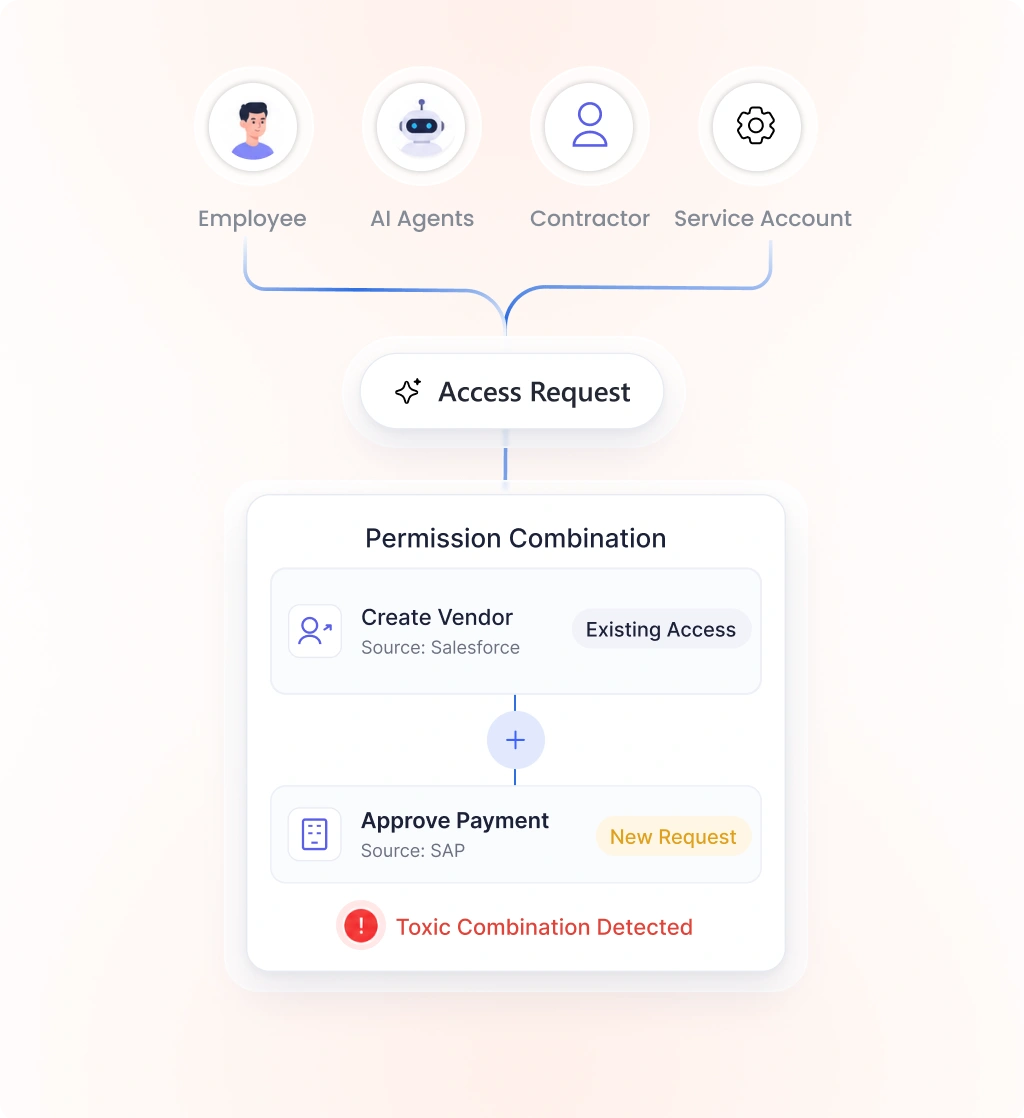
A toxic access combination occurs when two or more permissions, harmless on their own, combine to create serious risk. Think of an employee who can both create a vendor and approve payments to that vendor. Each of these permissions is legit, and when put together, they open the door to fraud.
Toxic combinations often violate Separation of Duties (SoD) and are a leading cause of audit failures, insider fraud, and data breaches. This is especially true when entitlements are granted across different systems by different teams with no shared visibility.
Most access risks hide in plain sight, scattered across systems that were never designed to talk to each other. Understand why these risks keep slipping through the cracks.

A single permission rarely raises a flag on its own. But when the same identity holds a second permission, the pairing creates an exploitable gap that access reviews aren’t designed to catch.

Toxic access combinations often span multiple apps. Because each app enforces access in isolation, no single system sees what a user can do once permissions add up across the full stack.

Every role change, project assignment, and temporary access grant adds a layer of entitlement. Without regular cleanup, privilege accumulates, leading to privilege creep.

Most organizations discover toxic access combinations during an audit or after a fraud incident. Late detection costs include remediation and damage caused by excessive entitlement.

Periodic access certifications rely on managers manually reviewing spreadsheets of entitlements, a process that does not scale as identities and applications multiply.

Service accounts, RPA bots, and AI agents are provisioned quickly, often with broad permissions, and rarely reviewed. They can hold risky access combinations without anyone noticing.
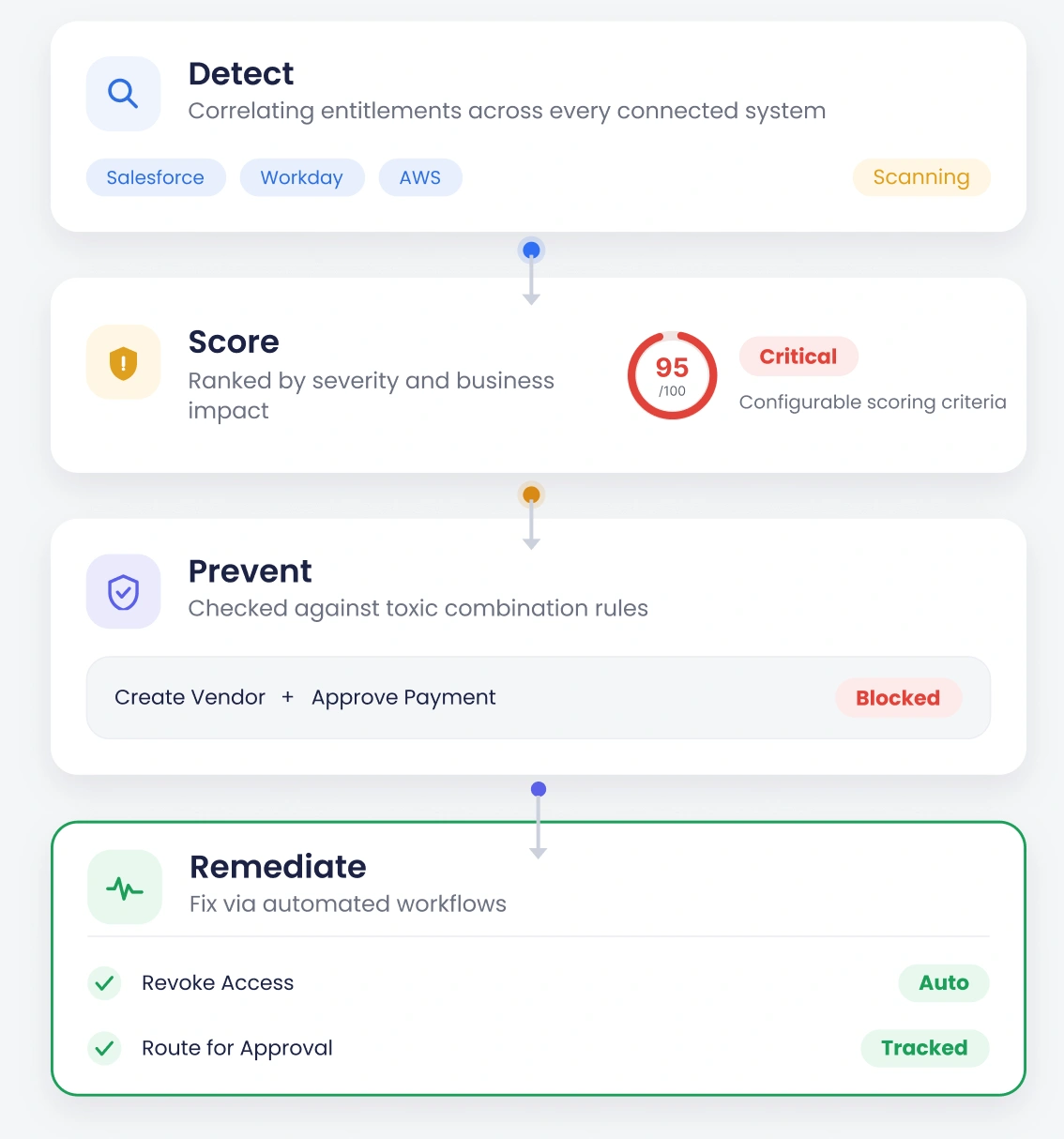
Detects risky access combinations across apps and cloud environments by continuously correlating entitlements from every connected system.
Prioritize what matters by ranking each risk based on its severity and business impact. Use a configurable scoring criterion so remediation is focused on the highest threat first.
Stop risky combinations from being created at the time access is requested. Check every access request against toxic combination rules before approval.
Fix existing issues by removing or adjusting access through automated workflows. Revoke, right-size, or route entitlements for approvals, backed by a full audit trail.
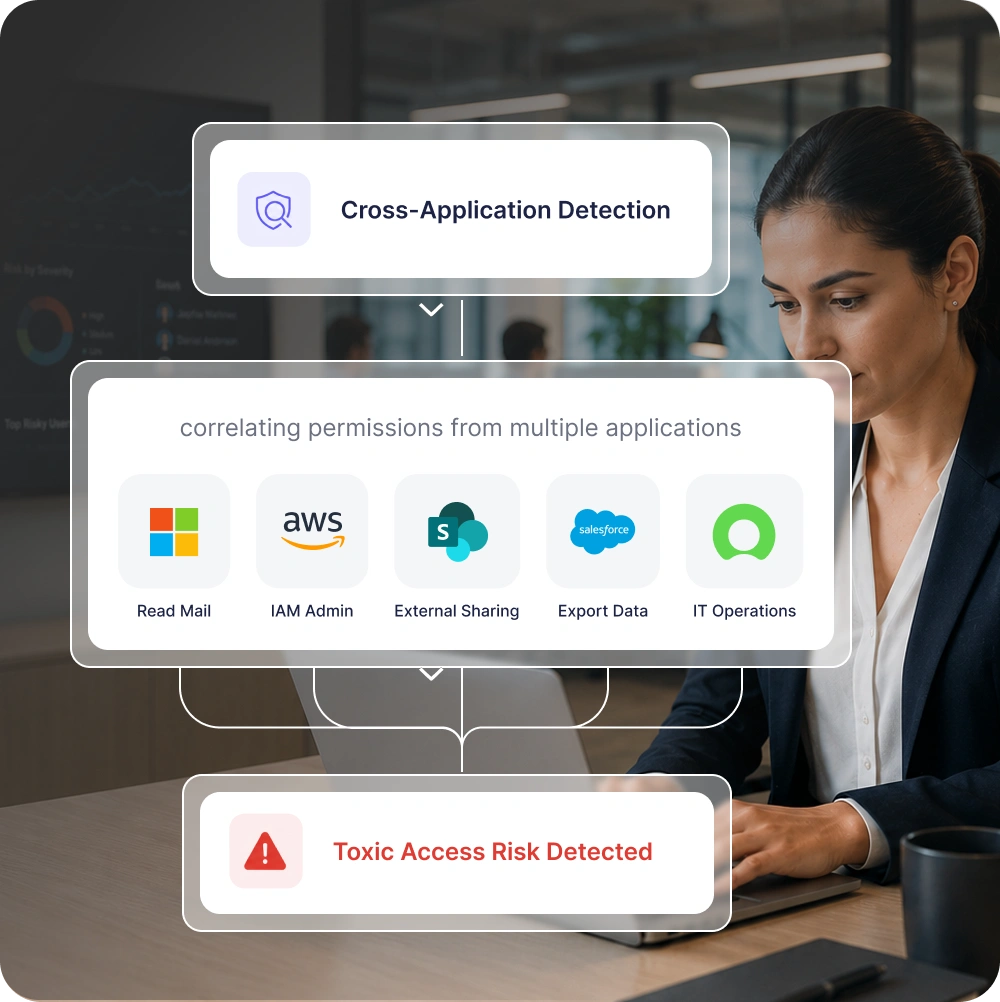
Find toxic combinations that span multiple apps and cloud platforms, not just within a single system. Correlate entitlement data across the entire identity landscape and catch risks that are missed.
Define what “toxic” means for your business with a no-code rule engine that covers SoD violations and beyond. Build, test, and adjust rules directly, without scripts or engineering support.
Flag and block any access request that would create a toxic combination before it is ever approved. This turns access risk detection into a preventive control, not a reactive audit exercise.
Prioritize the most dangerous combinations first with built-in, risk-based access scoring. Rank factors based on business impact and exposure, so remediation starts with the highest risks first.
Detects toxic access for service accounts, bots, and AI agents across cloud platforms. Extend the same detection logic to machine identity risk, a category most legacy tools overlook.
Revoke, right-size, or apply mitigating controls for access exceptions, with a full audit trail. When access can’t be removed, document the business justification, approvals, and mitigating controls for compliance and risk reduction.
Getting from scattered entitlements to continuous access monitoring takes five straightforward steps.

Gather identities, entitlements, and roles across apps and cloud environments through pre-built connectors, giving a unified view.

Set toxic combinations and SoD rules with a no-code approach. Let security and compliance teams encode risk logic without IT dependency.

Continuously identify risky access combinations as they emerge, rather than relying on point-in-time snapshots.

Rank each finding by severity and business risk, so remediation teams always know which combinations demand immediate attention.

Revoke, right-size, or apply mitigating controls. Use automated workflows that route fixes to the approver and log every action.
See how you can put toxic access detection to work where it matters most at your organization.
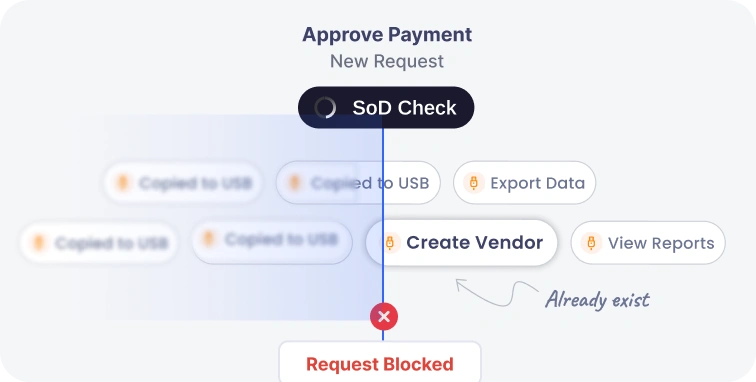
Detect and block create-and-approve combinations at the request time, such as when one identity can both initiate and authorize a payment. This is the most common fraud in the financial sector.
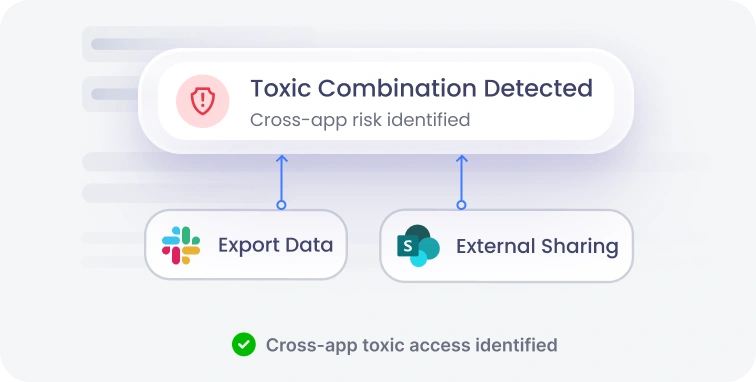
Catch cross-app toxic access, like the pairing of data access, export rights, and external sharing permissions, that no single system flags alone.
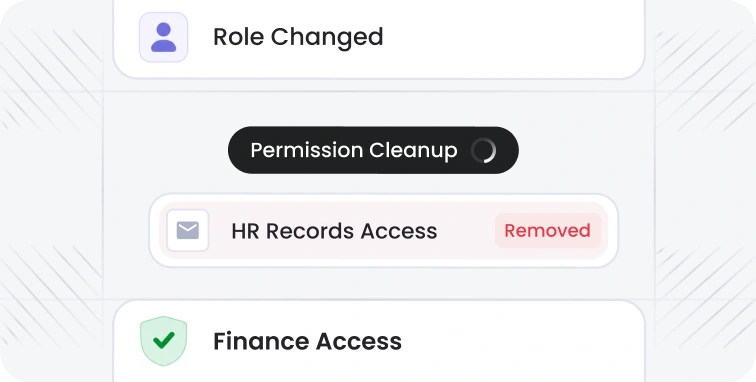
Clean up permission accumulation left behind by role changes, transfers, and completed projects. This prevents privilege creep.
The miniOrange IGA platform supports major regulatory frameworks, helping organizations stay audit-ready at all times.
Ensure continuous compliance with automated controls, reporting, and access certification workflows.
View Compliance Frameworks
Access Control

Healthcare

ISMS

Type II

Privacy

Payments

Cybersecurity

India

Privacy

Payments

Cybersecurity

India
Works with your existing setup, so you can start governing access without reworking your environment. Pre-built connectors integrate with the systems you already run.
Continuously monitors and prevents issues instead of relying on periodic checks, so new toxic combinations get caught the moment they appear rather than at the next scheduled review.
Supports cloud, on-premise, and hybrid environments without forcing tradeoffs, so you get consistent toxic access detection regardless of where your applications and data live.
Lets you define and manage rules easily without depending on consultants and keeps the toxic combination logic in the right hands.
Common questions about toxic access detection, SoD violations, and risky entitlement combinations.