

Gulf Cooperation Council (GCC) enterprises are rapidly adopting cloud technologies and rolling out massive AI initiatives, with many moving from pilots into production. More systems now connect through APIs.
That progress also expands your privileged attack surface. When you give users unchecked access to critical systems, even one compromised identity can bring everything down.
Implementing a Privileged Access Management (PAM) solution for GCC is mandatory to enforce least privilege, control privileged credentials, provide temporary access, monitor sessions, and secure endpoints.
It can also help you put security controls into practice as you work toward applicable cybersecurity and compliance requirements.
Why Privileged Access Has Become a Critical Security Issue for GCC Enterprises
Rapid Digital Transformation Is Expanding the Privileged Attack Surface
You are moving workloads to the cloud and building hybrid infrastructures with heavy reliance on AI agents and APIs. Every new tool or cloud environment creates a new privileged access point, expanding your attack surface. It becomes incredibly hard to track who has access to your critical data.
Critical Infrastructure Increases the Impact Of Privileged Account Compromise
GCC countries house massive critical infrastructure. Energy, oil and gas, utilities, telecommunications, financial services, healthcare, and government sectors all rely on interconnected systems. The impact of a privileged account being compromised here can be vast.
Third-Party and Remote Privileged Access Creates Additional Risk
Your team may depend on contractors, managed service providers, system integrators, IT vendors, cloud providers, and remote administrators. They need access to your systems to do their job. Managing this access can become increasingly difficult without effective PAM for GCC.
Dangers of Uncontrolled Privileged Access
Uncontrolled privileged access creates several risks that can quickly become business problems:
- Privilege escalation and lateral movement: Attackers can use a compromised account to gain higher privileges and move from one system to another.
- Credential theft and privileged account compromise: Criminals actively hunt for admin credentials because they can provide direct access to sensitive systems and resources.
- Excessive and standing privileges: Users who retain administrative access all the time have more opportunity to misuse or lose those privileges.
- Uncontrolled third-party and vendor access: External users may retain access longer than necessary or receive more privileges than their role requires.
- Privileged session abuse and limited visibility: Without a PAM solution for GCC, it can be difficult to determine what happened during a privileged session.
- Endpoint privilege abuse: Local administrator rights can allow users or malicious software to perform actions that should require elevated approval.
- Privileged access abuse by insiders: Legitimate users can misuse excessive privileges, intentionally or accidentally.
8 Reasons GCC Organizations Need PAM
1. To Enforce Least Privilege
Admins need limited access for most use cases. Providing them with unrestricted access is risky.
A PAM solution lets you limit access based on what a user needs to perform a specific task. It has granular access controls that let you define which privileged resources users can access and what level of access they receive.
With PAM for GCC, you can apply role-based and granular access controls while keeping privileged permissions tied to user identities. This reduces unnecessary access and limits the potential impact of a compromised account.
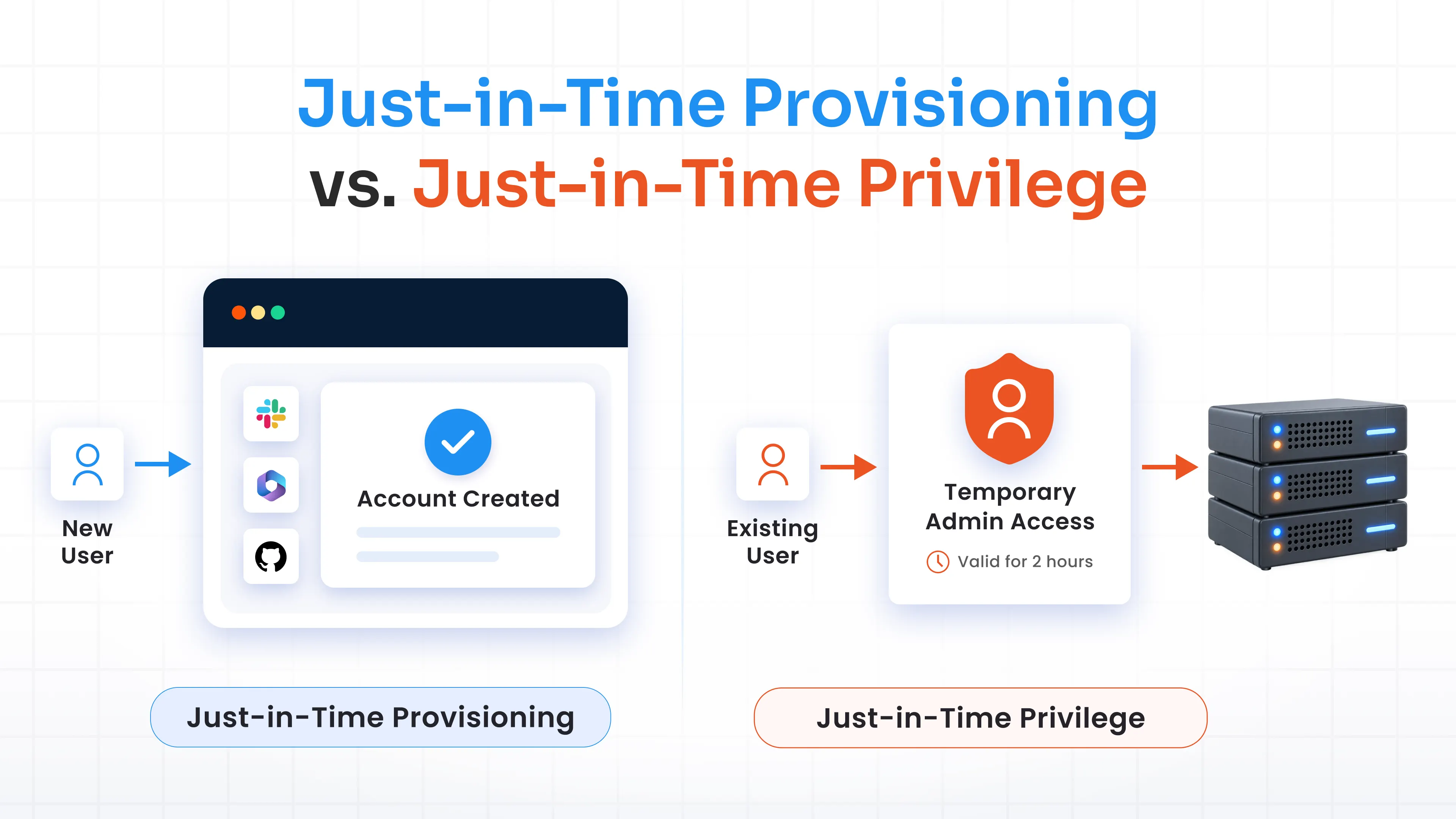
2. Replace Standing Privileges With Just-in-Time Access
Standing privileges are risky, as an attacker gets wide access when an account is compromised.
Just-in-time (JIT) access addresses this concern by taking a different approach. It grants privileges only for a specific task and a specific timeframe. When the job is done, it revokes the access immediately.
So, even if an account is compromised, the attacker still won’t have unrestricted access. That’s why a PAM solution for GCC is highly effective against credential theft.
3. Cloud and Hybrid Environment Security
Managing access becomes more and more complicated as you migrate workloads to AWS, Azure, or private clouds. You may have administrators working across cloud services, on-premises infrastructure, databases, servers, applications, and hybrid environments.
A PAM solution for GCC organizations can help centralize privileged access controls across all of these environments.
4. Third-Party and Vendor Access Security
External users like contractors need access to your systems for their work. But they don’t need permanent access.
You can use privileged access controls to provide them with controlled access based on their role and requirements. You also have capabilities such as time-bound access, approval workflows, MFA, and session monitoring to maintain visibility and control.
5. Monitor Privileged Sessions & Activities
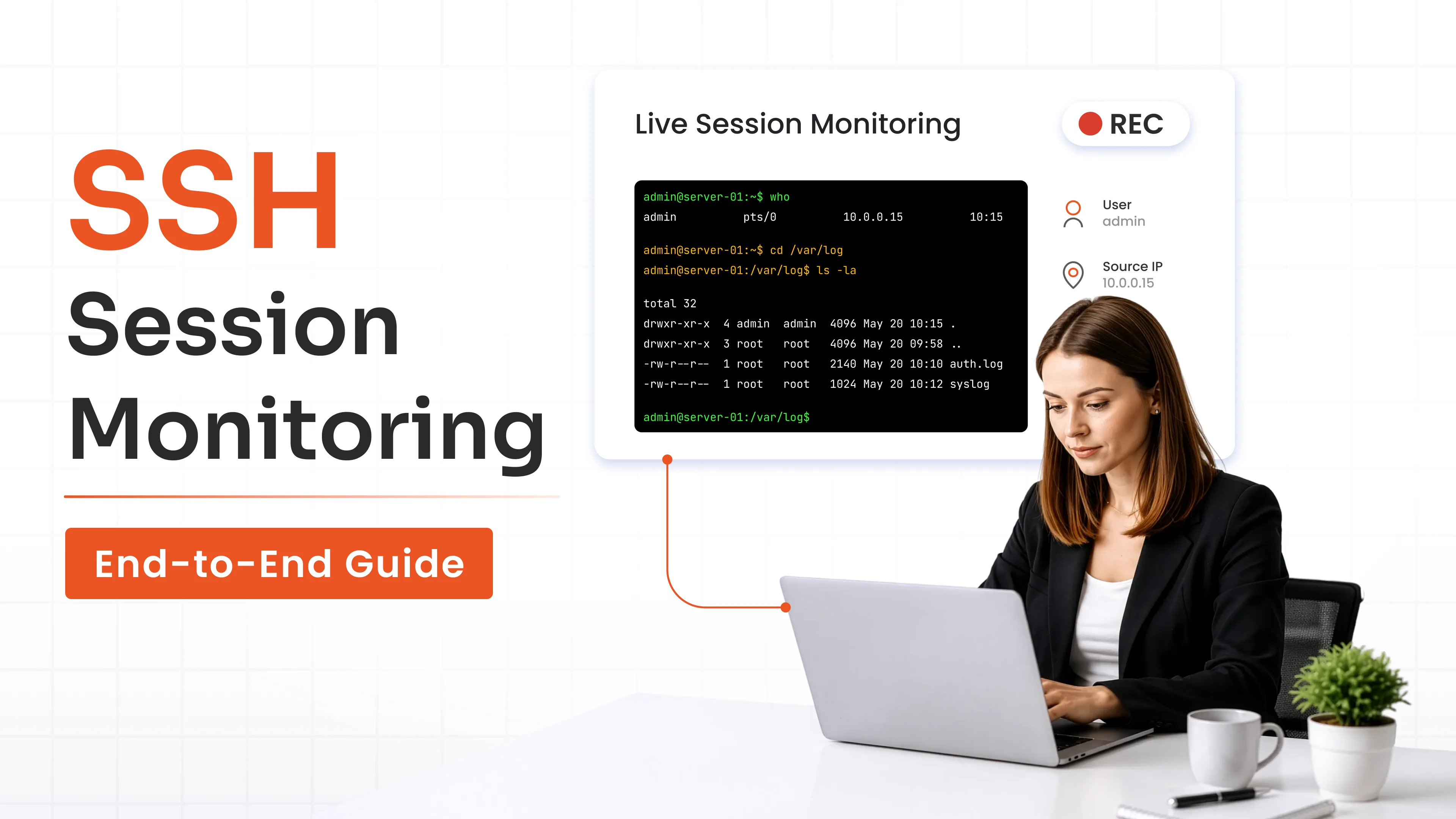
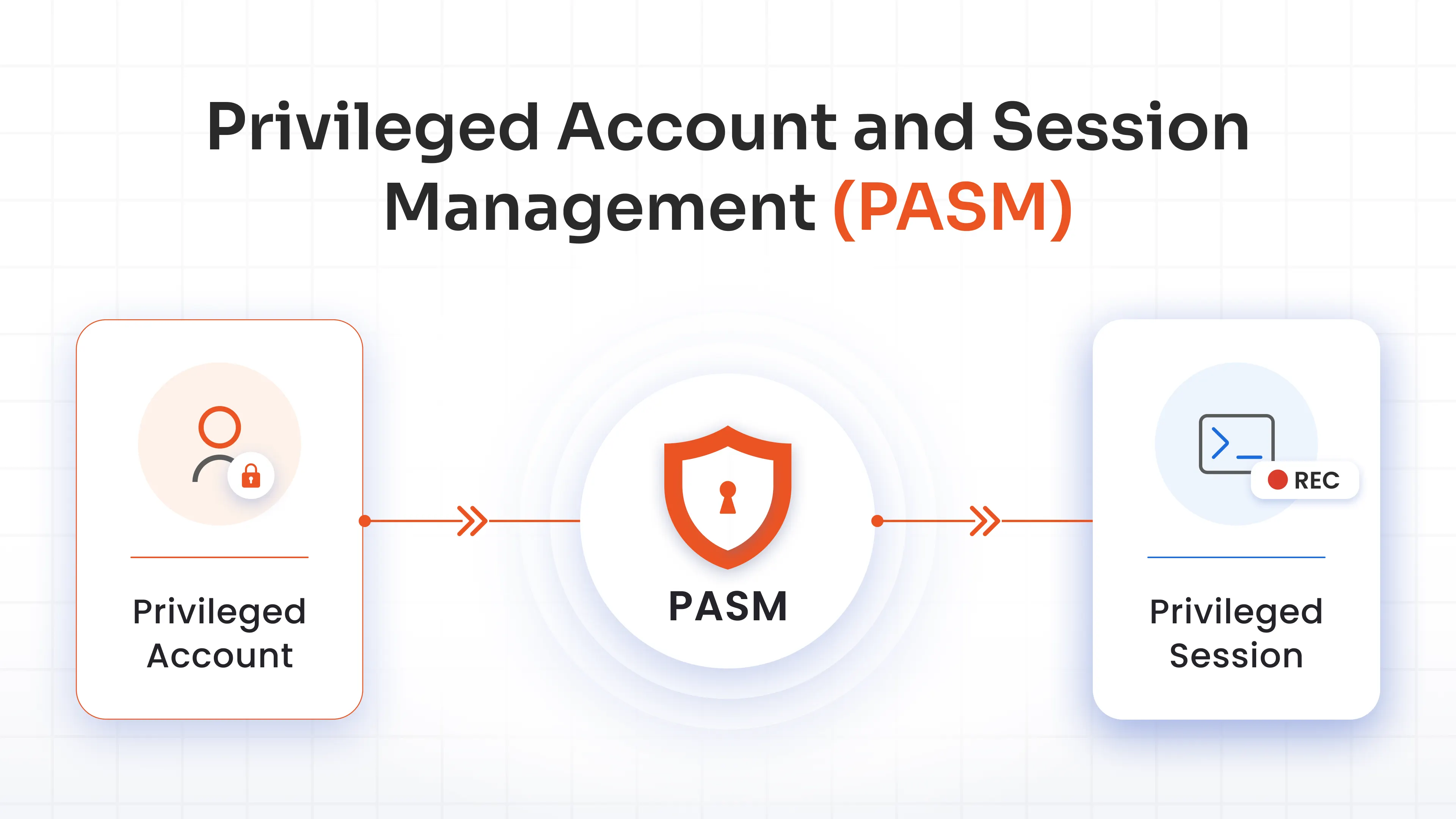
A PAM solution for GCC enterprises not only lets you control privileged activities but also lets you know what happened in those sessions. It has session monitoring and recording capabilities that let you investigate suspicious behavior and maintain records for auditing.
If you find anything out of the ordinary, you can also terminate the session immediately.
6. Secure Endpoint Privileges
If users have local administrator privileges, malicious software or compromised accounts may be able to make unauthorized system changes. That’s why you need to remove local admin rights from standard business laptops and desktops immediately.
PAM for GCC organizations helps enforce least privilege, control application privileges, and prevent unauthorized privilege escalation.
7. Protect Privileged Credentials
Even a single exposed privileged credential can be risky, as it can provide access to many critical systems.
A PAM platform can provide a controlled place to store and manage privileged credentials. Password rotation can further reduce the value of credentials that may have been exposed.
8. Control AI and Non-Human Identities
AI agents are now a part of infrastructure for most organizations. They also have access to sensitive systems, which means they can create persistent access paths if their credentials and permissions are not properly governed.
A PAM for GCC can provide centralized credential management, access controls, and audit trails for these identities.
If you are pushing AI initiatives, PAM gives you a way to extend privileged access controls beyond traditional administrator accounts.
PAM and GCC Cybersecurity Compliance
GCC cybersecurity frameworks increasingly require organizations to control, minimize, authenticate, monitor, and audit privileged access. A robust PAM solution in the Middle East helps you operationalize these controls efficiently. Implementing PAM ensures you stay compliant, avoid heavy fines, and easily breeze through your next security audit.
| Country | Relevant framework/regulation | Privileged-access relevance |
|---|---|---|
| Saudi Arabia | NCA ECC, CSCC, CCC, OTCC, SAMA | Access control, critical systems, cloud, and privileged access |
| UAE | UAE Information Assurance Regulation | Explicit privilege management, MFA, logging, and auditing |
| Qatar | NIA Standard / sector-specific requirements | Privileged accounts must be controlled, minimized, and accountable |
| Kuwait | CBK CORF / national cybersecurity initiatives | PAM, JIT, risk-based access, and behavioral analytics in the financial-sector maturity model |
| Bahrain | National Cybersecurity Framework / CNI Controls | Least privilege, limiting privileged accounts, and monitoring |
| Oman | Government information security policies/controls | Need-based, event-based privileged access, expiry, and separate admin accounts |
How miniOrange PAM Reduces Privileged Risks for GCC Enterprises
miniOrange provides a powerful PAM solution for GCC designed to eliminate the risks of uncontrolled access without slowing down your workforce.
Our platform is identity-centric. Every single access request is tied back to a verified, authenticated user identity.
We take a cloud-first, agentless approach. Our platform is extremely lightweight and can be easily deployed across cloud, on-premises, or hybrid infrastructure.
With miniOrange, you can easily deploy JIT access, instantly secure remote third-party connections, and record privileged sessions in real time. We help you enforce the principle of least privilege effortlessly across your entire IT landscape.
FAQs
What are the top PAM solutions available for GCC companies?
miniOrange is a top PAM solution for GCC companies that provides privileged credential management, just-in-time access, session monitoring, password rotation, and endpoint privilege management.
How to implement PAM for GCC-based enterprises?
Start by identifying privileged accounts, credentials, users, endpoints, and third-party access paths across your environment. You can then use a PAM solution such as miniOrange PAM to centralize privileged access controls, secure credentials, enforce access policies, and monitor privileged activity.
Which vendors offer PAM tools tailored for GCC markets?
miniOrange offers a PAM platform that supports cloud, on-premises, and hybrid environments, with capabilities for privileged access, credential security, session monitoring, JIT access, and endpoint privilege management.
Where can I buy PAM licenses compatible with GCC systems?
You can purchase PAM licenses directly from a PAM vendor or through its authorized sales channels based on your deployment and licensing requirements. miniOrange provides PAM licensing options for organizations that need to secure privileged access across cloud, on-premises, and hybrid environments.
Why do GCC organizations need a PAM solution?
As cloud adoption, remote administration, third-party access, and digital transformation expand, privileged access becomes harder to control. A solution like miniOrange PAM can help you enforce least privilege, reduce standing access, secure privileged credentials, and monitor privileged sessions.
Leave a Comment