

A security token is a physical device, digital object, or software credential that helps verify a user's identity before granting access to a system, application, network, or account. Depending on the type, it can generate a one-time password (OTP), store cryptographic credentials, or work with an authentication system to prove that the person requesting access possesses the authorized token.
The term “security token” can also refer to a type of blockchain-based financial asset that represents ownership in a stock, bond, or other regulated asset. This article focuses on security tokens used for authentication and cybersecurity. We’ll also discuss its correlation with hardware keys, mobile apps, and OTPs.
What Is a Security Token?
A security token is an authentication credential used to verify that a person is authorized to access a protected resource.
For example, a company might give an employee a hardware security token that generates a new OTP every 30 seconds. When the employee signs in, they enter the code along with their username and password. The authentication system checks the code before allowing access.
Security tokens can be implemented in different ways. Some are physical devices, such as hardware tokens and security keys. Others are software-based and run on smartphones, computers, or other devices.
Common examples include:
- Hardware security tokens: Physical devices that generate or store authentication credentials.
- Software security tokens: Credentials generated or stored by software on a trusted device.
- OTP tokens: Tokens that generate a temporary code for authentication.
- FIDO2 security keys: Hardware devices that use public-key cryptography for phishing-resistant authentication.
- Contactless tokens: Tokens that communicate with a reader or device without requiring a physical connection.
The basic idea is the same: the token provides evidence that the person trying to sign in possesses an authorized authentication credential.
How Do Security Tokens Work?
The exact process depends on the type of security token and the authentication system using it. An OTP token, for example, works differently from a FIDO2 security key.
A typical token-based authentication flow looks like this:
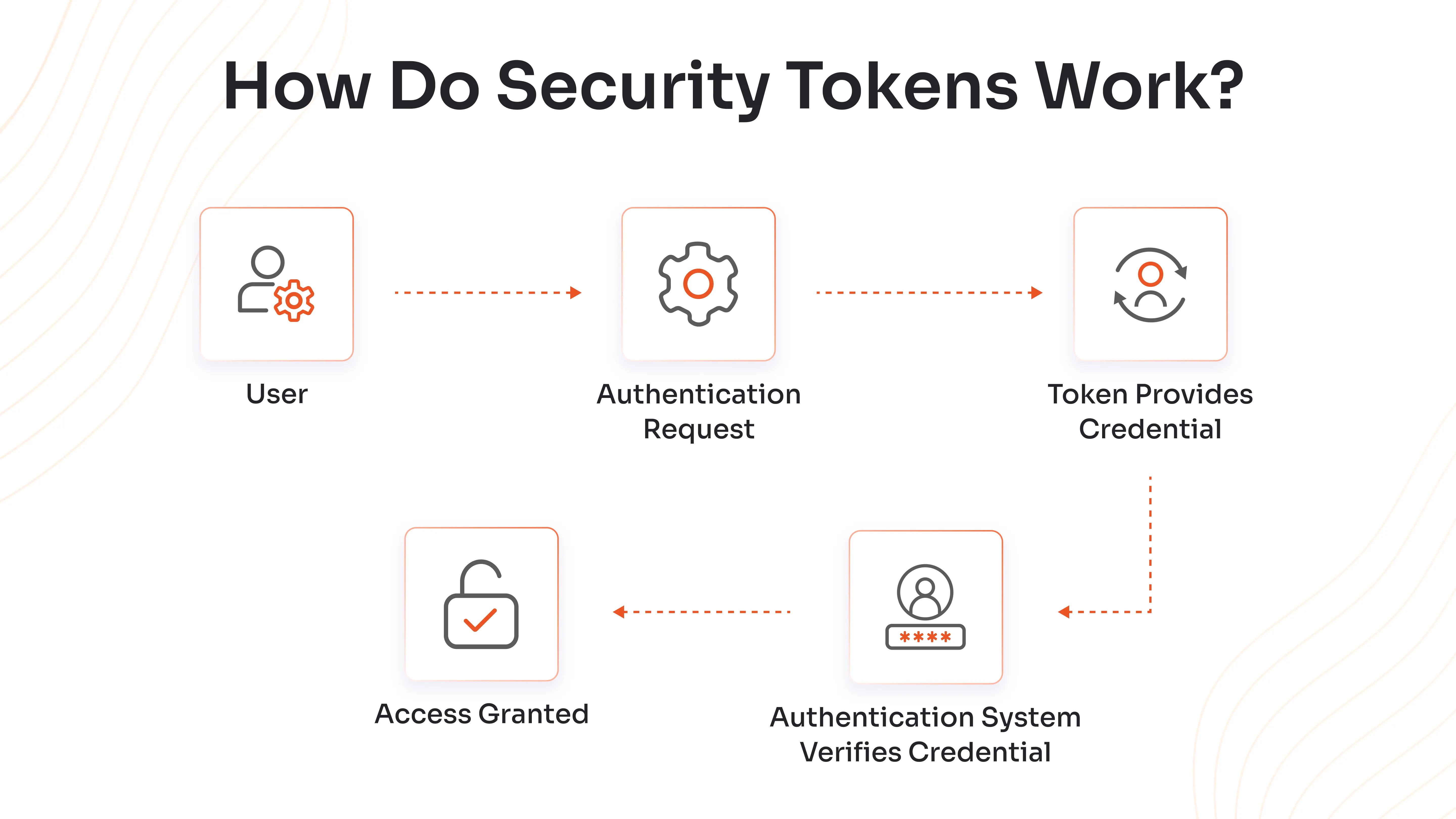
Here's what happens in a typical login:
- The user starts a login: The user enters their username and begins authentication.
- The authentication system requests proof of identity: Depending on the configuration, the system may request an OTP, a security key, or another credential associated with the user's token.
- The token provides authentication data: An OTP token generates a temporary code. A FIDO2 security key can use cryptographic keys to respond to an authentication challenge.
- The system verifies the response: The authentication system checks whether the credential is valid and associated with the user.
- Access is granted or denied: If the authentication succeeds, the user can access the requested resource. If it fails, access is denied.
Static vs. dynamic security tokens
Security tokens can also be distinguished by whether the credential they provide remains the same or changes over time.
A static token uses a credential that doesn't change between authentication attempts. A fixed password stored on a device is a simple example, although static credentials provide less protection if someone obtains them.
A dynamic token generates or produces authentication data that changes. OTP tokens are a common example because the code is valid for a limited period or a particular authentication event.
Dynamic credentials make it harder for an attacker to reuse authentication data captured from an earlier login.
Types of Security Tokens
Security tokens can be classified in more than one way. One classification describes where the token is implemented (hardware and software tokens), while another describes how it communicates with the authentication system (connected, disconnected, and contactless tokens).
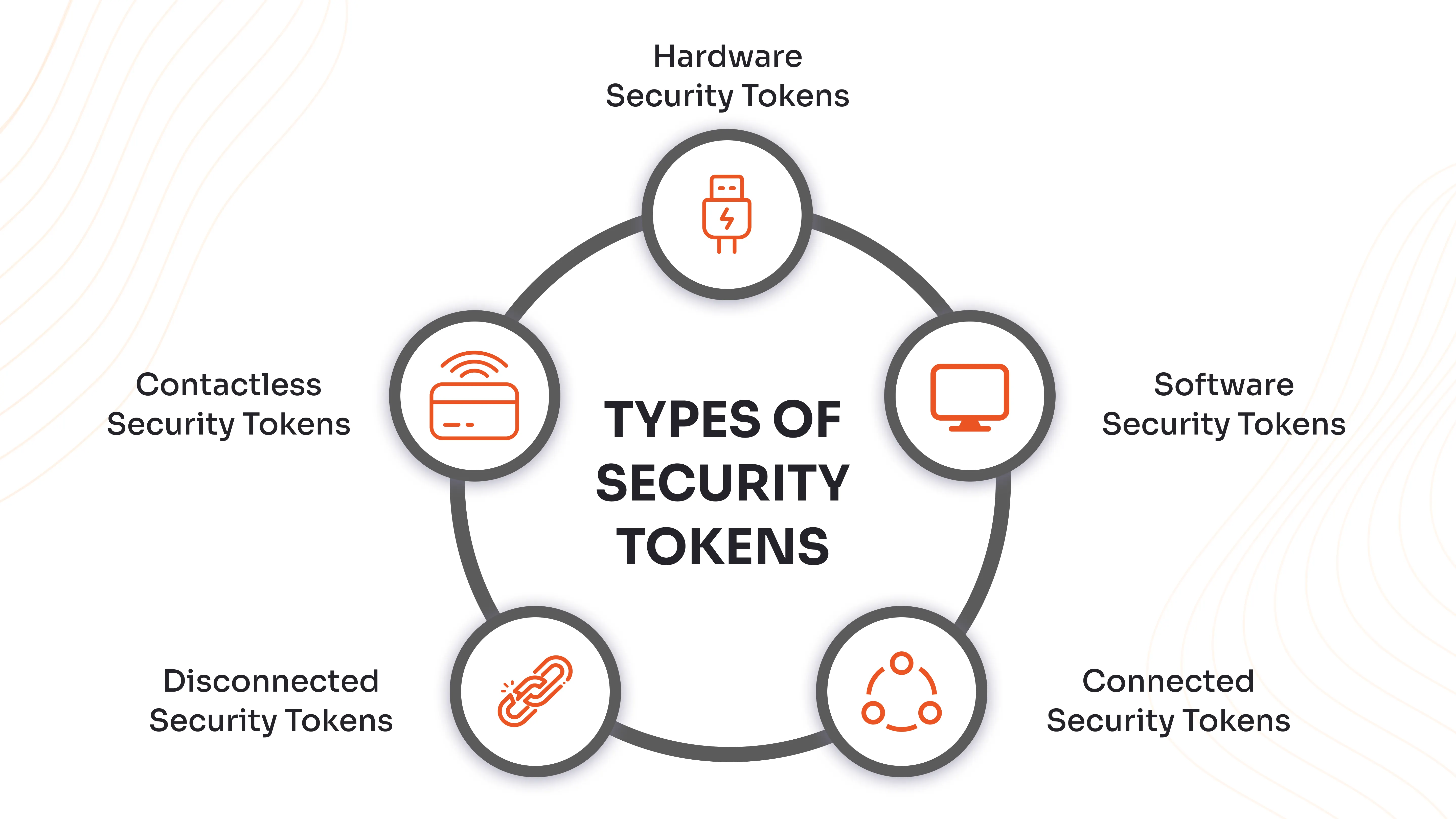
Hardware security tokens
A hardware security token is a physical device used to authenticate a user. Examples include OTP key fobs, smart cards, USB security keys, and other dedicated authentication devices.
A hardware token can store cryptographic credentials or generate temporary authentication codes. Because the credential is tied to a physical object, an attacker generally needs access to the device as well as any additional information required to use it.
Software security tokens
A software security token is implemented through software rather than a dedicated physical device. For example, an authentication application on a smartphone can generate OTP codes. Software-based tokens can be easier to distribute because employees don't need a separate physical device.
Their security depends partly on the device, application, and authentication mechanism used to protect the credential.
Connected security tokens
A connected security token communicates directly with another device during authentication.
USB security keys are a common example. A user can connect the key to a computer, and the authentication system can communicate with it as part of the login process.
Disconnected security tokens
A disconnected token doesn't need a direct connection to the computer or application being accessed.
An OTP hardware token that displays a temporary code is one example. The user reads the code from the token and enters it into the login screen.
Contactless security tokens
A contactless security token communicates wirelessly over a short range.
Smart cards and security devices using technologies such as NFC can support contactless authentication. The user may simply bring the token close to a compatible reader or device.
These categories can overlap. For example, one hardware token could be contactless, while another could connect through USB.
How Are Security Tokens Used in MFA?
A security token can be used as one factor in multi-factor authentication (MFA).
MFA requires authentication using 2 or more different types of factors, such as:
- Something you know: a password or PIN
- Something you have: a security token or security key
- Something you are: a fingerprint or other biometric
For example, a user could enter a password and then provide an OTP generated by a hardware token. The password is the knowledge factor, while the token is the possession factor.
A token by itself isn't automatically MFA. If a user authenticates using only a token, they're using a single authentication factor. MFA comes from combining different factor types.
Security tokens vs. authentication tokens
The terms sound similar, but they describe different things.
A security token is a credential or device used to help authenticate a user.
An authentication token is generally a digital value that an authentication system uses to represent an authenticated user or session. For example, after a successful login, an application might issue a token that the user’s browser or application presents when requesting protected resources.
So, a security token can help a user prove their identity, while an authentication token can be used to maintain or communicate that authenticated state.
What Are the Benefits of Security Tokens?
Security tokens can strengthen authentication by adding a credential that an attacker can't obtain simply by guessing or stealing a password.
1. Stronger authentication
A security token adds another credential to the authentication process. Depending on the technology, it can use temporary codes or cryptographic credentials instead of relying entirely on a static password.
2. Protection against compromised passwords
Credentials are a common entry point for attackers. Google Cloud's Threat Horizons H1 2025 report found that 47.1% of analyzed cloud security incidents involved weak credentials as the primary entry point.
Security tokens can reduce this risk by adding another way to verify a user's identity. Depending on the token type, the user may need a physical device, a generated one-time code, or a cryptographic credential to complete authentication.
3. Support for MFA
Security tokens can provide the “something you have” factor in an MFA setup. Organizations can combine them with passwords, PINs, biometrics, or other authentication factors.
4. Reduced dependence on static passwords
OTP tokens and cryptographic security keys can reduce how much authentication depends on reusable passwords.
This can limit the damage caused when a password is exposed or reused across services.
5. Support for phishing-resistant authentication
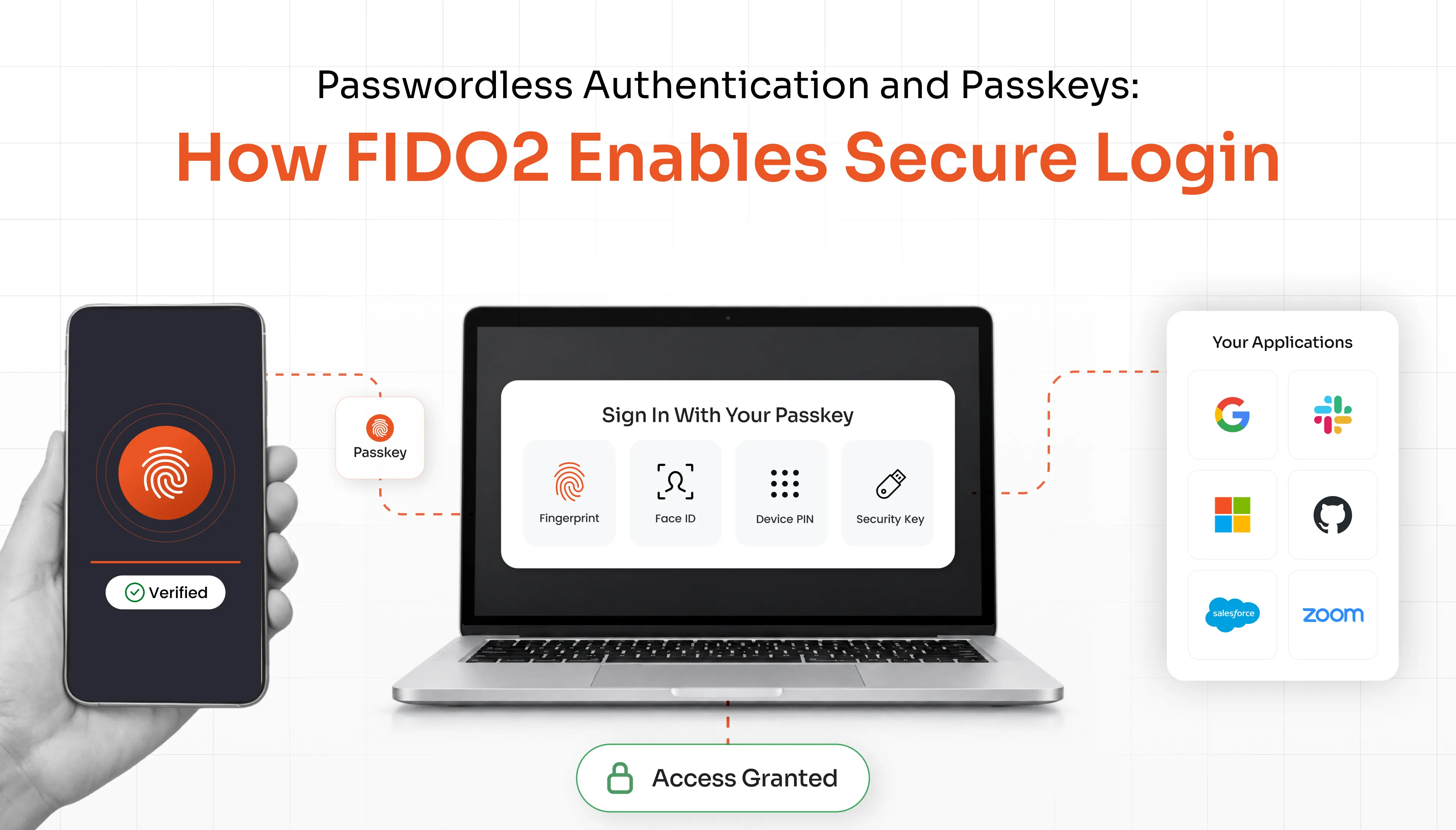
Some security keys, particularly those based on FIDO2 and WebAuthn, use public-key
cryptography and are designed to resist phishing attacks.
The authentication response is tied to the legitimate website or service. When implemented as part of a phishing-resistant MFA solution, this approach makes it much harder for attackers to trick users into giving away reusable authentication credentials.
What Are the Risks and Limitations of Security Tokens?
Security tokens don't remove every authentication risk.
Loss or theft is one of the most obvious problems. If an employee loses a physical token, the organization needs a process for revoking it and issuing a replacement. Device dependency can also create problems. A software token may become unavailable when a phone is lost, replaced, or reset.
User convenience varies by token type. Carrying a hardware token or connecting a security key can add an extra step to the login process. Organizations also need to consider recovery procedures. A strong authentication system needs a secure way for users to regain access when their token is unavailable.
Finally, security depends on the technology being used. A basic OTP token and a FIDO2 security key don't provide the same protections against phishing and credential theft.
Security Tokens in Cybersecurity vs. Financial Security Tokens
“Security token” has another meaning in the financial and blockchain space.
A financial security token is a digital asset that can represent ownership or rights in an underlying asset. It can be subject to securities laws and regulatory requirements.
That is different from the authentication security token discussed throughout this article.
The cybersecurity meaning relates to proving identity and controlling access. The financial meaning relates to digital ownership or investment assets.
The context matters when you see the term “security token.”
Security Tokens vs. Other Authentication Methods
Security tokens are one of several ways organizations can authenticate users.
| Authentication methods | How it works | Common considerations |
|---|---|---|
| Password | User provides a secret they know | Can be stolen, guessed, or reused |
| OTP | User provides a temporary code | Code expires, but some OTP methods can be phished |
| Security tokens | User provides a credential from a physical or software token | Adds a possession factor |
| Passkey | Device uses cryptographic credentials to authenticate | Designed for strong, phishing-resistant authentication |
| FIDO2 security key | Physical key uses public-key cryptography | Strong protection against phishing |
The right choice depends on the applications being protected, the organization's security requirements, user needs, and the authentication methods supported by those applications.
How to Choose the Right Security Token for Your Organization
Start with the type of authentication you need to support.
If users need temporary codes, an OTP token may be appropriate. If phishing resistance is a major requirement, FIDO2 security keys are a stronger option.
Then consider:
- Authentication requirements: What factors does your organization need?
- Application compatibility: Do your applications support the token technology?
- User environment: Will employees use desktops, mobile devices, shared systems, or remote applications?
- Recovery: What happens when a token is lost or unavailable?
- Administration: Can IT teams enroll, revoke, replace, and manage tokens centrally?
- Security requirements: Does the token provide the level of protection required for the accounts and systems being protected?
How miniOrange Helps Secure Access With MFA
The miniOrange Multi-Factor Authentication (MFA) solution adds an additional authentication step when users access protected applications and systems.
Organizations can configure MFA policies based on their users, applications, and authentication requirements. miniOrange supports multiple authentication methods, allowing organizations to use the methods that fit their existing environment.
For organizations using security tokens as part of their MFA strategy, centralized policy and user management can make it easier for administrators to control authentication across applications.
Conclusion
A security token is a physical device or software credential that helps verify a user's identity during authentication. It can generate One-Time Password (OTP), store cryptographic credentials, or work with security protocols such as FIDO2 to protect access to applications and systems.
Security tokens can be used as a possession factor in MFA, but the specific protection they provide depends on the type of token and authentication technology behind it.
FAQs
How does a security token protect against stolen passwords?
A security token can provide an additional authentication factor. If an attacker steals a user's password, they may still be unable to sign in without the credential provided by the user's token.
What should I do if my security token is lost or stolen?
The lost token should be reported to the organization's IT or security team so it can be revoked. A replacement token can then be issued and associated with the user's account.
Are security tokens more secure than passwords?
Security tokens can provide stronger protection than passwords alone, particularly when they use temporary credentials or cryptographic authentication. Their security depends on the type of token and how it's implemented.
Can security tokens be used for multi-factor authentication?
Yes. A security token can provide the possession factor in MFA. For example, an organization can require a password plus an OTP from a security token.
Leave a Comment